








When it comes to power tools and particularly cordless drills, I tend to covet top-of-the-line models. For example, the Milwaukee M18 2904 Hammer Drill is the most capable drill I’ve ever tested because it has enough torque to drill a 1-inch hole with a paddle bit and can handle tasks like driving a lag bolt into wood or burying a 3-inch wood screw in 0.4 seconds flat.
And while these qualities are undoubtedly impressive, how necessary are they really for the average homeowner? If you want a drill that reliably bores clean holes through wood or drives in fasteners for a basic home improvement project, do you really need something that’s built for the rigors of a professional job site? Especially when that premium design costs several hundred dollars?
There are certainly more affordably priced drill-drivers out there that meet the average person’s drilling needs. One of those is the Skil PWRCore 20. I recently tested this cordless drill alongside a dozen others, and it offered the best value of the bunch. It doles out enough power to handle work around the home, is lightweight and easy to maneuver, and comes with a surprising selection of helpful features.
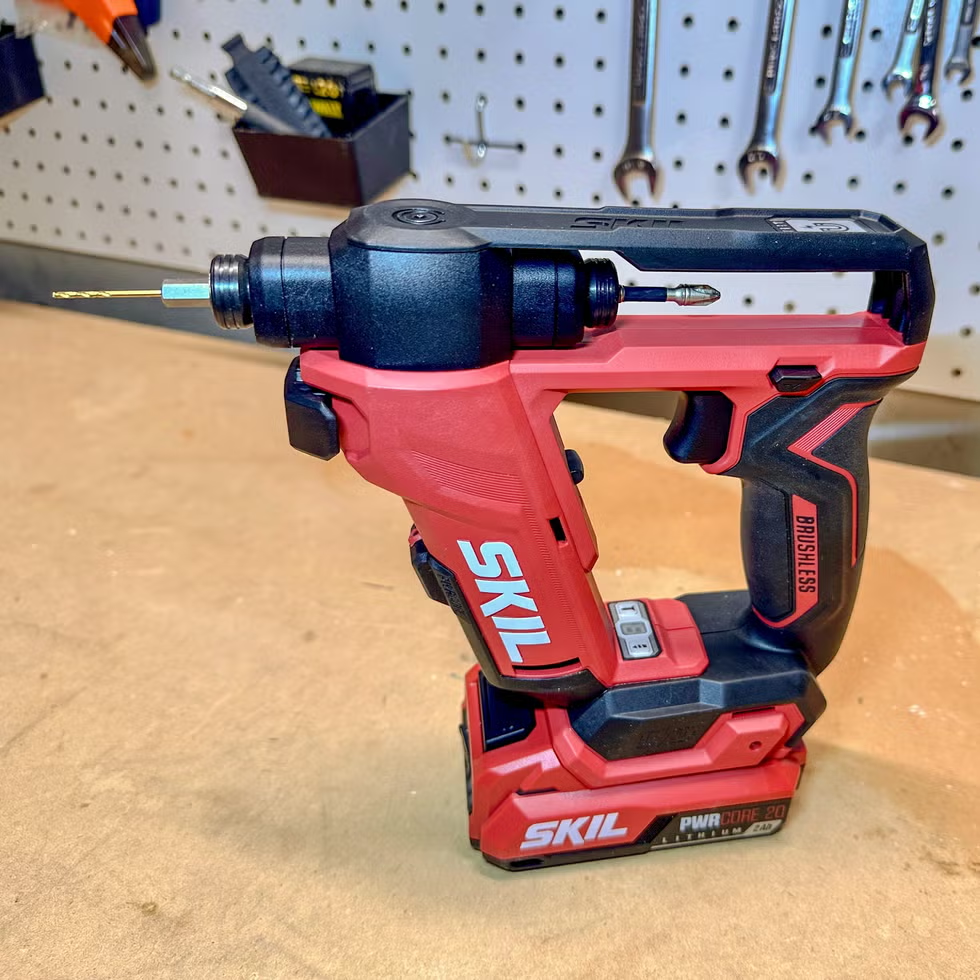
| Max Speed | 1,800 rpm |
| Torque | 400 inch-pounds |
| Weight (tool only) | 2.23 lb |
| Head Length | 6.1 in. |
The Skil PWRCore’s max speed of 1,800 rpm and 450 inch-pounds of torque may not match the speed and torque of the top cordless drills. For example, the Ryobi 18V One+ Compact Cordless Hammer Drill was the speediest drill I tested at 2,100 rpm and the FLEX 24V Brushless Cordless Hammer Drill was the most powerful, putting out 1,400 inch-pounds of torque. But for tasks like hanging a shelf and installing cabinetry, the PWRCore’s abilities are more than satisfactory.
While testing this drill, it took me just three seconds to bore a 1/2-inch hole through a 2x4 with a twist drill bit. I drilled 10 holes in quick succession and didn’t experience any lag or binding in the wood. The Skil PWRCore also handled driving duties admirably, burying 3-inch screws in a couple of seconds.
One test that tripped the tool up was when I attempted to drill using a 1-inch paddle drill bit. While the holes were completed, I got bogged down on roughly every third hole I drilled with this larger bit. While this may seem disappointing, this is not a use case that’s typical for most DIYers. The Skil PWRCore doesn’t match the performance of some of my favorite premium drills, but it doesn’t have to.
The PWRCore weighs just under 2 pounds as a bare tool, putting it amongst the lightest drill-drivers I’ve tested. Of the non-compact tools I tested, only the Bosch 18V 1/2-Inch Brushless Hammer Drill-Driver came close at 2.5 pounds as a bare tool. Naturally, this light weight means less hand and wrist fatigue, especially if you’re using the tool to complete a time-consuming project.
In addition to weighing less, the PWRCore is also compact. Its narrow, streamlined body measures 6.1 inches from the tip of the chuck to the back of the head. That’s a full inch shorter than any of the other cordless drills I tested. This compact design allows it to fit into tighter spaces than bulkier cordless drills.
The Skil PWRCore has fairly basic controls but operates with two speed settings, which is nice when you want to drop the speed to boost torque when using hole saws, paddle bits, or larger drill bits. It also has 17 torque adjustments for driving in fasteners of virtually any size.
Skil is one of a handful of brands that treat its LED work lights thoughtfully. This drill’s LED light wraps around its base, which produces a bright light that diffuses evenly over the work area. Whereas most drills’ work lights shut off a second or two after drilling, the Skil’s light can be set to stay on so you can keep your space lit when you’re not drilling. It’s a nice feature if you happen to be working under a cabinet or in some other dimly lit area and need constant light.
While the Skil PWRCore may lack the metal chuck you’ll find on pricier drills, it does have plenty of rubber molding around the body to protect it from abuse, giving it a sturdier, more durable feel than most cordless drills at this price point.
The Skil PWRCore is an exceptional homeowner-focused drill. While it doesn’t have the muscle you’ll find with most premium cordless drills, it has enough power to handle a pretty full workload for most DIYers. It’s also one of the easiest to use 20-volt cordless drills I’ve tested thanks to its light weight and compact size. Best of all, you can find the kit, which includes a battery and rapid charger, for under $100.
While the Skil PWRCore drill is a great budget-priced option, it may not meet the needs of more demanding users. If you find yourself drilling larger holes with paddle bits or through denser materials like concrete, it may make sense to invest in a more powerful drill, like the Milwaukee M18 2904 cordless hammer drill.
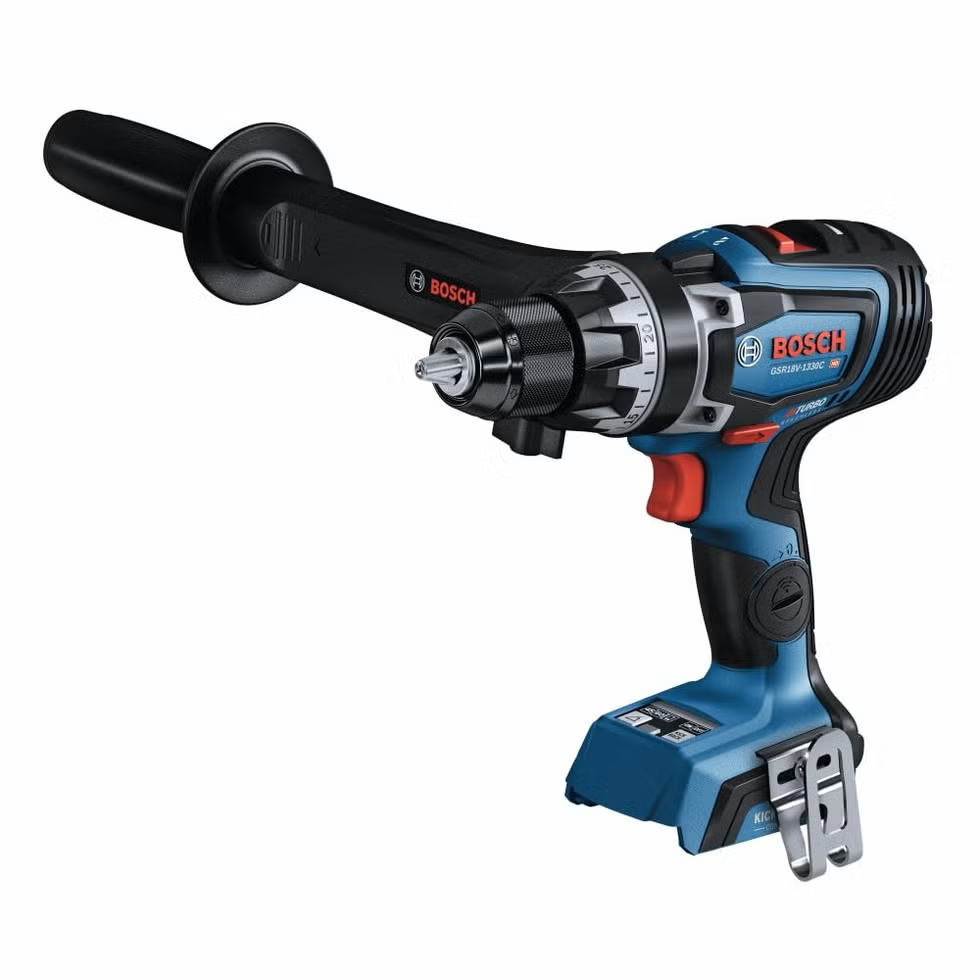
Best Overall

Best for Power

Best Drill Features

Tony Carrick is a full-time freelance writer who specializes in technology, home improvement, DIY, home security, and outdoor recreation. He’s tested and written about everything from home security systems to power tools to gas grills. His product guides, how-to articles, and feature stories can be found in such publications as Bob Vila, Angi, U.S. News and World Report, Field & Stream, Futurism, and Switchful. When Tony isn’t writing, he can be found working on his latest home improvement effort at his home in North Carolina.

John Gilpatrick is a Senior Reviews Editor for Popular Mechanics, covering tools, home appliances, yard and garden accessories, and smart home tech. He previously worked for Men’s Health and has bylines on numerous other websites, covering topics as disparate as nutrition, tech, and pet care. He is also a former film critic who’s unusually fond of the Star Wars prequels, and he appeared on Pop Culture Jeopardy in 2025 while wearing jorts and a fanny pack. He is a member of the Online Film Critics Society (OFCS).
此内容由惯性聚合(RSS阅读器)自动聚合整理,仅供阅读参考。 原文来自 — 版权归原作者所有。