






Hiking boots are the obvious answer when picking your choice of footwear for your trail up the mountain, as their thick soles and high ankles can handle most types of terrain. Trails are unpredictable, and a sturdy pair of boots can feel reassuring. For me, though, trail sneakers give me the same feeling. (Some of them, at least.)
More hikers, such as myself, are skipping boots entirely and heading out in these kinds of sneakers. Before judgment ensues, I’m not referring to basic running shoes or flat soles like adidas Sambas or your low-top Converse. I’m mostly talking about trail sneakers that can handle dirt, rocks, and rough conditions just as well as a hiking boot.
This is certainly a stance that gets pushback. I know this firsthand, because I have gotten it from my colleagues. But, wearing a hiking sneaker is just as valid as a boot.
There are lots of opinions on this one. I asked Pavlína Černá, Senior Features Editor at Popular Mechanics and avid hiker, to chime in on her love for hiking boots, as I know she’s never one to wear trail sneakers on the mountain.
“I am expecting a different fit from hiking boots than I do from my [trail] running shoes—they have to be spacious inside in a different way, to account for my feet swelling but also thicker socks I prefer to wear,” Černá said. “I have the taller ones that protect my ankles when I step wrong which has proved to be very useful on several occasions—they generally have better traction and they're more durable—whether it comes to mud, snow, or water.”
While she does bring up some good points, trail sneakers have changed, and a lot of the old tradeoffs have narrowed. For example, when it comes to waterproofing, plenty of trail sneakers now use Gore-Tex, a water-resistant, breathable layer built into a shoe that keeps water out while still letting heat and sweat escape.
In practice, it means your feet stay dry in wet conditions without overheating. So, this holds up well in wet grass, shallow puddles, and rain without the bulk of a boot.
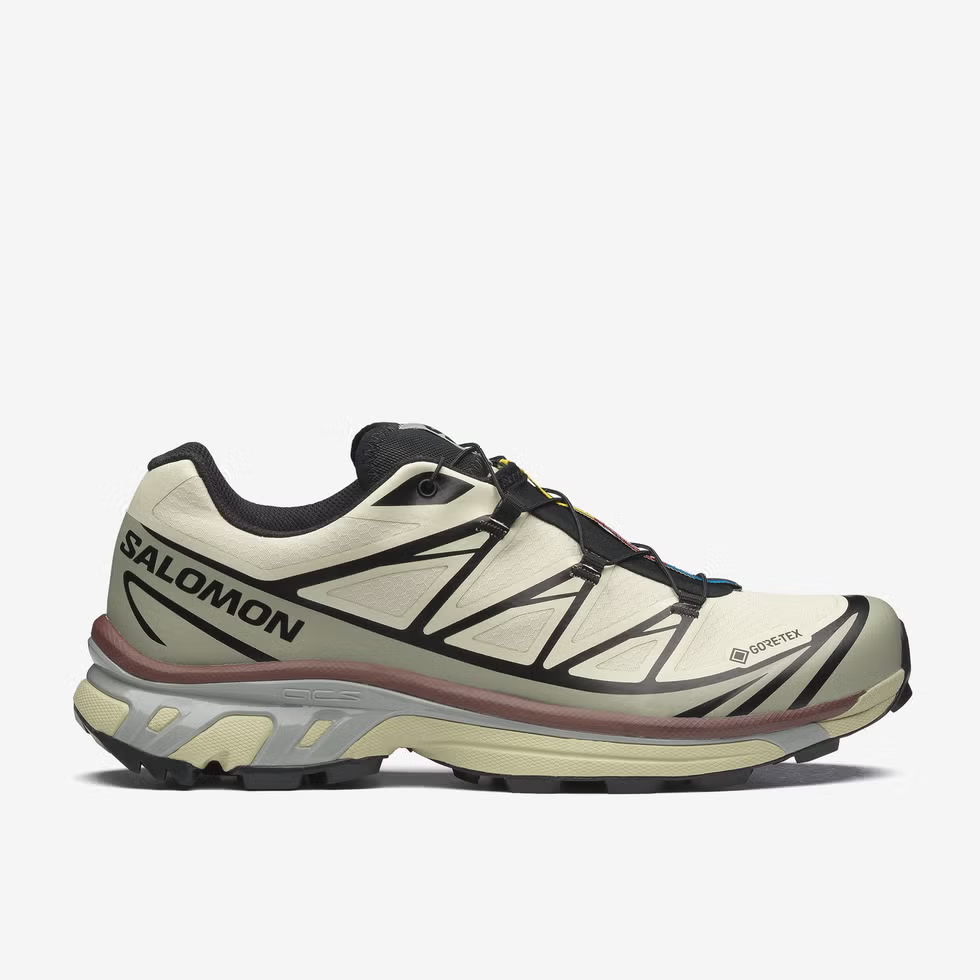
Traction has improved too. Modern outsoles grip loose dirt and slick rock in a way that feels reliable, not tentative. The Salomon XT 6’s are a good example of this. These are my personal go-to because it feels virtually impossible to experience wet socks while wearing them. Though, a better version for a hike would probably be the XA Pro 3D V9s, which the company designed with trail running in mind.
Fit is one area where boots still make a strong case. Černá’s point about swelling and thicker socks is real, especially in colder conditions. But trail sneakers have improved here as well.
Many trail models now offer wider toe boxes and more forgiving materials, so your feet have room to expand without feeling sloppy or unstable. They also don’t require the same break-in period, which makes them easier to trust right away.

Getting feet wet isn’t the only concern of my colleagues, though. Running Reviews Editor Amanda Furrer raises another stressor: “I prefer boots because the trails in Pennsylvania are like walking on daggers and I hate stuff getting in my shoes.”
While I understand her point about the “dagger” problem, many trail sneakers now include rock plates or reinforced midsoles that take the edge off sharp terrain. You still get ground feel, but not in a way that makes every step punishing.
The bigger shift, though, is in how they handle stability. Structured uppers and more rigid midsoles give sneakers a locked-in feel that’s much closer to boots than people expect.
It’s hard to deny, though, that boots still have the edge in terms of ankle support. The higher cut offers protection, especially on uneven ground. But, restricting movement with a higher rise isn’t the only way to feel stable, though. Some trail sneakers allow your ankle to move more naturally, which can improve balance and make it easier to recover when you step wrong.
For example, trail running shoes from brands like Salomon, Brooks, and La Sportiva handle rough ground, so they naturally feel stable when hiking. One big reason is the wider heel platform, which gives you more surface area on the ground and helps keep you from tipping when the trail gets uneven. They also tend to sit a bit lower than bulky hiking boots, so your foot stays closer to the ground and feels more controlled this way, providing more level than a wobbly feeling a regular, non-trail running shoe would give.
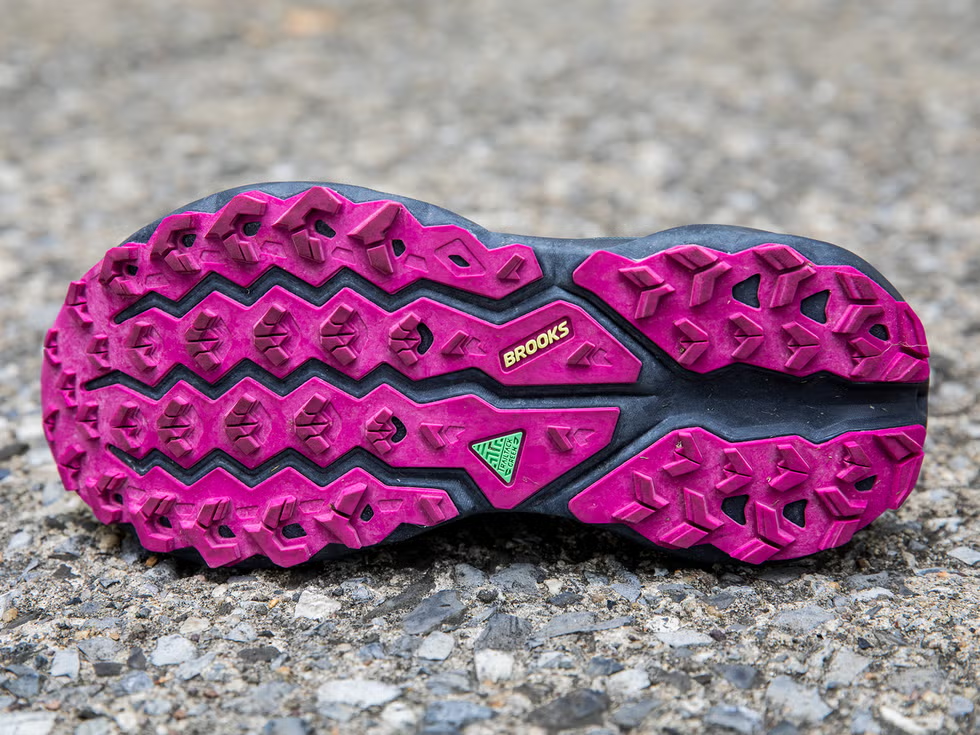
The grip and structure underneath matter just as much. Trail shoes have deep, aggressive lugs that bite into dirt, mud, and rock, giving you traction going up or down. Many also include a rock plate and a firmer midsole, which keeps the shoe from twisting too much when you land on something awkward.
On top of that, a snug heel and secure upper keep your foot locked in place so it is not sliding around inside. All of these details work together to give you solid footing without the stiff, heavy feel of traditional hiking boots.
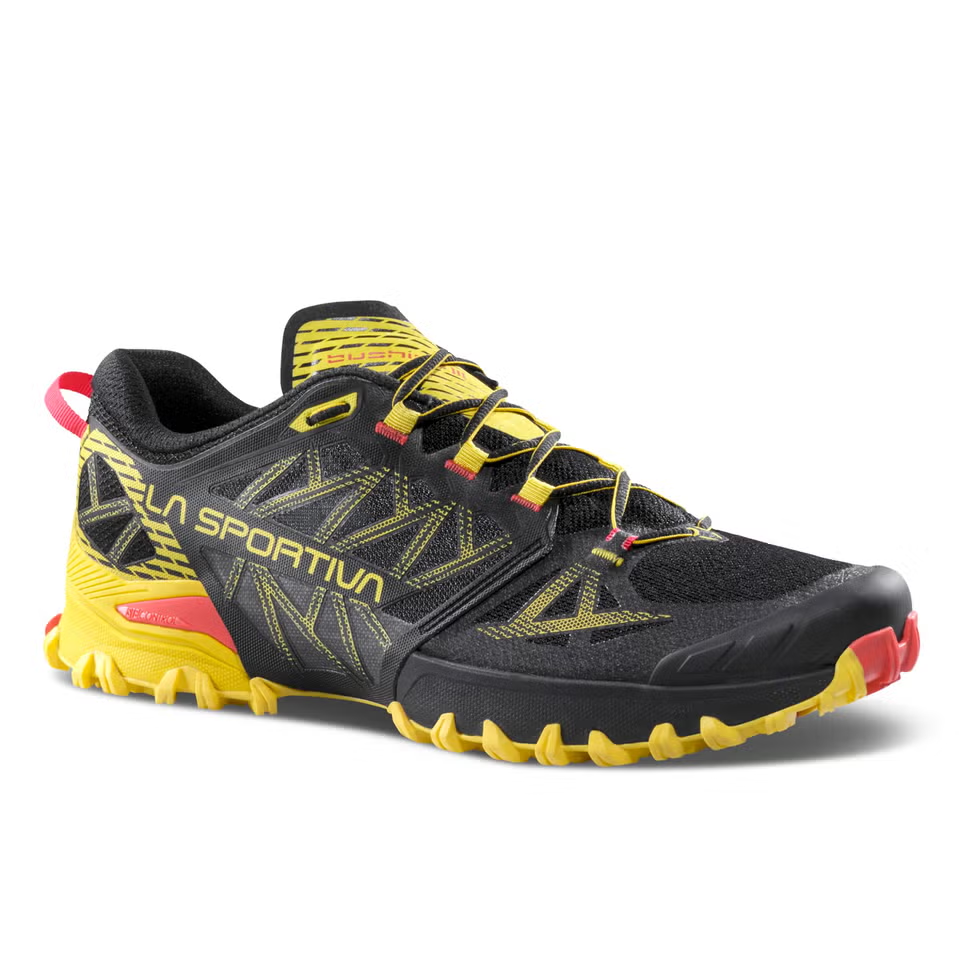
Again, the Salomon XA Pro 3D V9s are great for supporting this type of support. They’re not the only brand, as the Brooks Cascadia 19s are also a solid option. Even the La Sportiva Bushido IIIs are excellent in this case, don’t let their rather low top fool you as they’re great for ankle support.
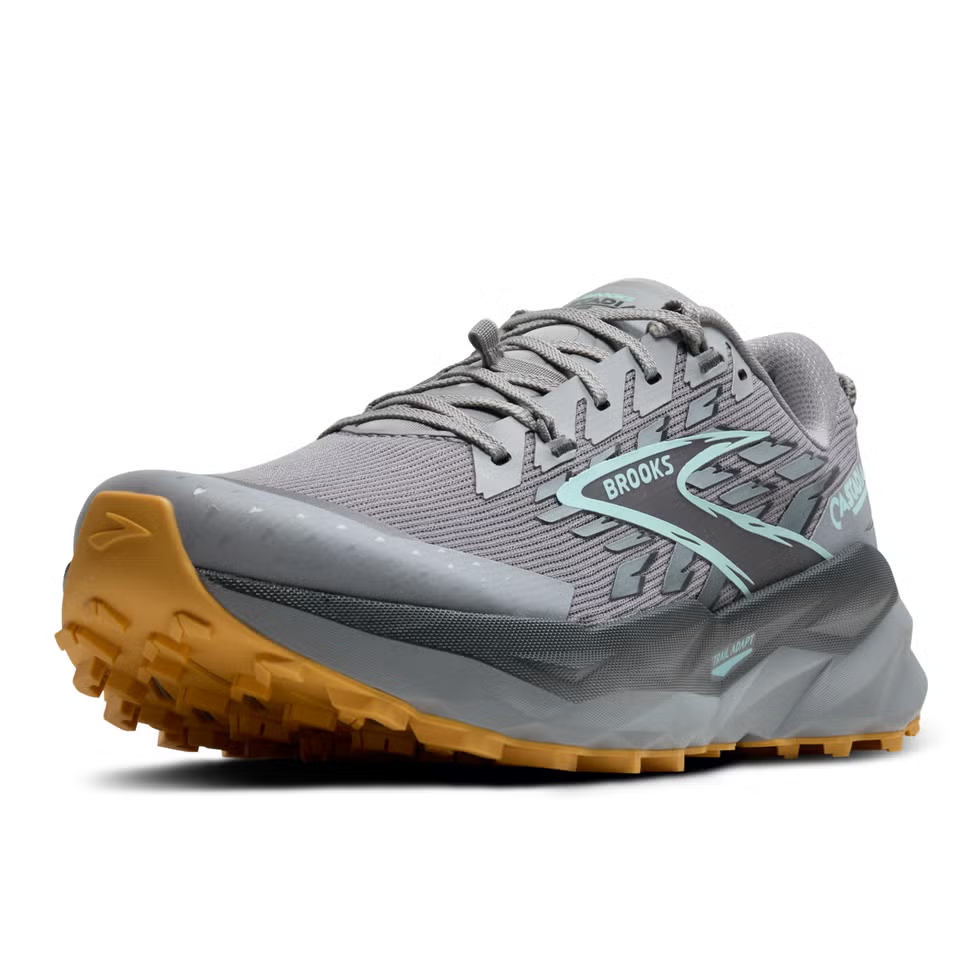
Weight is another factor that becomes obvious over time. Boots are heavier, and that adds up over the course of a long hike. There’s a reason hikers say weight on your feet costs more than weight on your back. Lighter sneakers reduce fatigue, which in turn helps you stay sharp and steady later in the day.
Boots still have their place. Heavy packs, deep mud, snow, or extended off-trail travel are all situations where the added structure can help. But those are specific use cases, not the baseline for most hikes.
For day hikes and maintained trails, and even for plenty of rougher routes, modern trail sneakers can do the job. Brands like Salomon have built entire lineups around this idea, combining waterproofing, grip, and support in a lighter package.
In my opinion, the idea that you need hiking boots feels more like tradition than necessity. If boots are still your style, then by all means, continue to go for that. However, if your trail shoes can handle different types of terrain, they’re not a compromise—they’re just a different approach.
Easy to Slip On
Gives Room for Speed
Brooks
Men’s Cascadia 19My Personal Favorite
Best Overall

Josiah is the Digital Content Producer for the commerce team at Popular Mechanics, Best Products, Runner’s World, and Bicycling Magazine. He also writes for “BIO Buys”—a column on Biography.com—giving readers the lowdown on what products their favorite celebs are using. In another life, Josiah was an editor at ThePioneerWoman.com, where he sharpened his expertise on all things lifestyle, food-news, and entertainment. Outside work related matters, he’s a fan of Studio Ghibli films, unimportant reality TV drama, and melancholy Lorde songs.

Xavier Piedra is a Senior Reviews editor at Popular Mechanics, Runner’s World, and Best Products. Xavier’s previous experience includes editing shopping, home, and lifestyle content at major outlets such as Real Simple, Better Homes & Gardens, Popsugar, and more. When he isn’t thinking about the best products for readers, Xavier is likely watching the latest flicks at a nearby AMC, or filling out his physical video game collection.
此内容由惯性聚合(RSS阅读器)自动聚合整理,仅供阅读参考。 原文来自 — 版权归原作者所有。