












Here’s what you’ll learn when you read this story:
Rising out of the sands of Egypt’s Al-Bahnasa archaeological site are the ruins of what used to be the ancient city Per-Medjed. Founded during the 25th Dynasty, it flourished as a trade hub for centuries—even after Alexander the Great conquered it and renamed it Oxyrhynchus. While it may not look nearly as impressive today as it did thousands of years ago, its glorious past still speaks out in the form of rare artifacts and gilded mummies.
Mummification continued even after an influx of Greeks and Romans followed their emperors to Egypt. Upon arrival, the newcomers incorporated their own traditions into the mummification ritual, including inserting bundles of Greek papyri into the body cavities left by the removal of its organs, which preceded the embalming process. Oxyrhynchus contains a trove of such Greek papyri that were used for funerary and other purposes, but until now, those found inside mummies contained spells meant to guide the deceased on the treacherous journey to the afterlife. When archaeologists Maite Mascot and Esther Ponce Melado led a team from the University of Barcelona in excavations at Al-Bahnasa, however, they discovered a fragmented papyrus inside a mummy that told a different kind of story. It, unlike the others, contained an unexpected excerpt from Homer’s Iliad.
Known as the Catalog of Ships, the section of the Iliad buried with this unidentified mummy begins with Homer invoking the Muses to remind him exactly how many ships carried the Greek forces to Troy (Ilium). It begins:
I could not recount their numbers nor name them,/Not if I had ten tongues and ten mouths, /And an unbreakable voice and a brazen chest within,/Unless the Olympian Muses, daughters of aegis-bearing /Zeus, would remind me how many came under Ilium.
The text then goes on to describe the fleet of 1,186 ships that swarmed the shores of Troy. It provides an exhaustive list of contingents, including their captains and the region of Greece they hailed from.
Ancient Egyptians who could afford it would commission a personalized and lavishly illustrated Book of the Dead—a scroll of spells intended to guide the soul to the realm of the gods—or, at the very least, they would purchase a mass-produced version with a blank space for the name of the deceased. It’s possible that the papyri found inside other Al-Bahnasa mummies served a similar spiritual purpose, even though they were written in Greek letters rather than Egyptian hieroglyphs. Perhaps this individual was wealthy enough to commission a passage from the Iliad as a personal talisman for the afterlife.
Also found at the Al-Bahnasa site were three gold tongues in the mouths of mummies. Gilding after death was meant to replicate the flesh of the gods, which was believed to be pure gold, as depicted in images of them painted with the precious metal. Mummification practices that featured gilding were meant to mirror deities and to allow the dead to communicate with them (other parts of the mummy’s body, such as fingers and toes, were also covered in gold leaf). The faces of two other mummies unearthed at Al-Bhanasa had evidently been gilded as well.
According to a recent press release, Hisham El-Leithy—Egyptian Secretary General of the Supreme Council of Antiquities—explained that “this discovery offers new insights into funerary practices in the city of Bahnasa during the Greek and Roman eras, indicating that this discovery adds an important literary and historical dimension to the site.”
Best Garden Hose
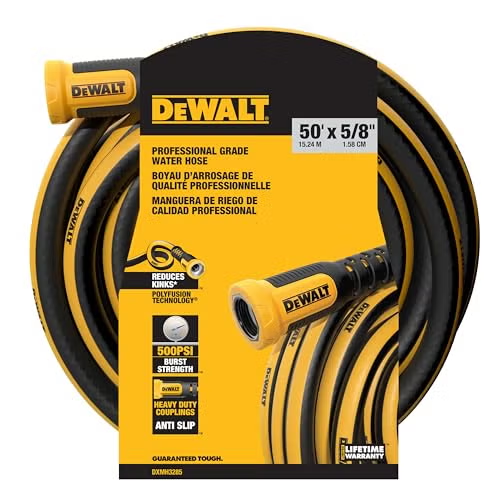
Now 15% Off
Weed Puller
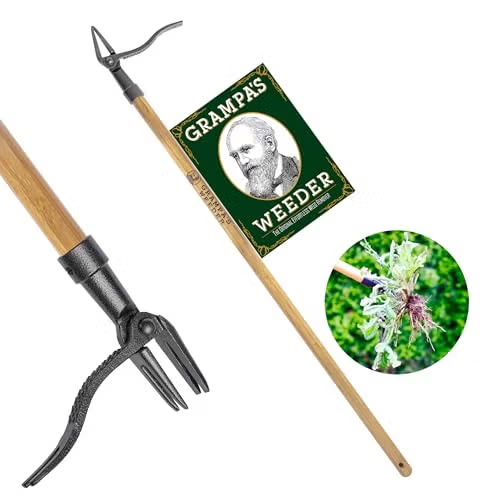
Now 10% Off
Best Spreader

Now 13% Off
Best Value Thatch Rake

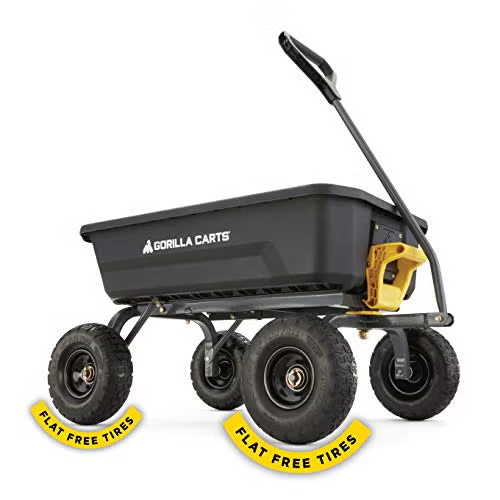
Best Garden Cart
此内容由惯性聚合(RSS阅读器)自动聚合整理,仅供阅读参考。 原文来自 — 版权归原作者所有。