


I’m always skeptical about the usefulness of most compact portable power stations. To maintain their small size, their power output doesn’t cut it for much beyond recharging devices. And that raises the question: Why not opt for a power bank, which costs less and is even more compact? But EcoFlow’s River 3 Plus changes the equation.
What stood out to me about River 3 Plus—and the reason why I wanted to review it—was that it weighs just 10 pounds but outputs 600 watts. That’s not typical of power stations of this size. Often, they are limited to around 300 watts or so, which isn’t a lot, especially if the station is outputting 120-volt AC power.
EcoFlow gets past this problem in its River series by using Gallium Nitride (GaN) semiconductor technology (which it calls X-GaN) in the inverter and charging circuits, which replaces silicon to deliver high efficiency in a smaller form factor. For the River 3 Plus, it seems to pay off.
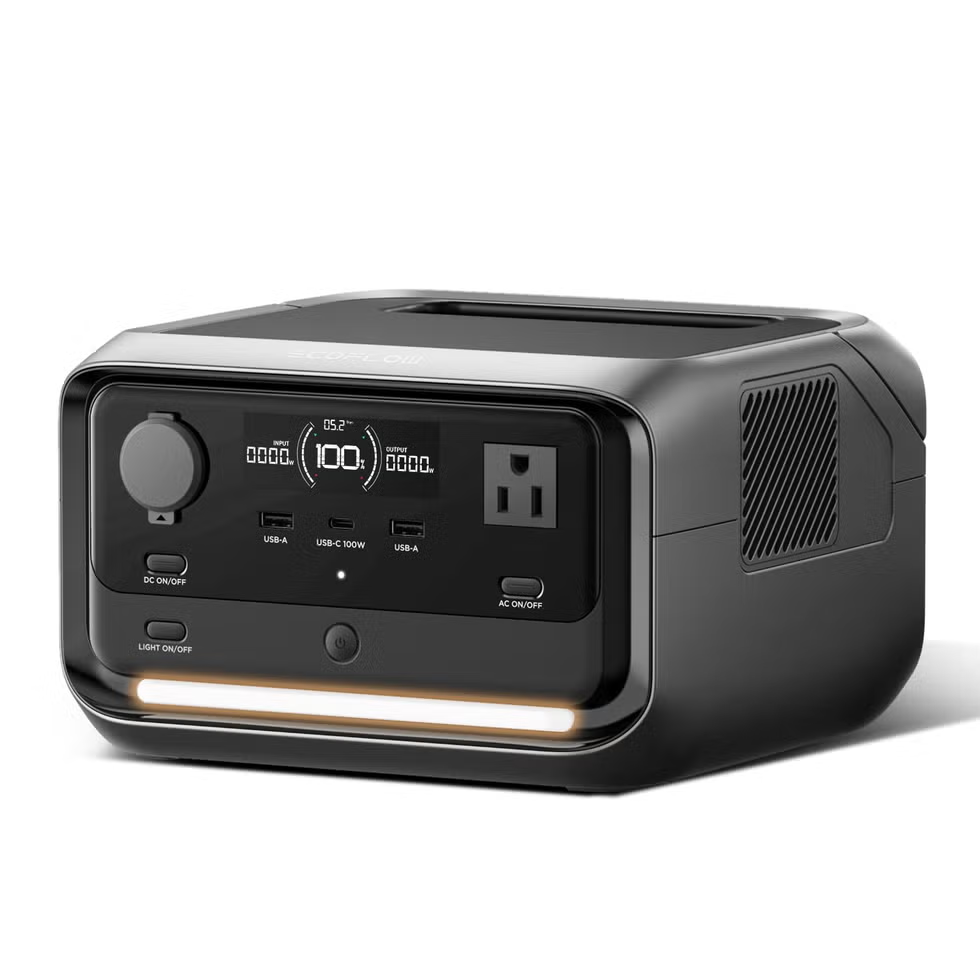
Now 10% Off
| Watts | 600 W (1,200 W in XBoost mode) |
| Capacity | 268 Wh |
| Outputs | 3 x 120 V AC; 2 x USB-A; 1 x USB-C (100 W); 1 x 12-Volt DC |
| Weight | 10.4 lb |
Like many power stations I’ve tested, I ran the River 3 Plus through its paces by powering different types of devices and small appliances, such as a monitor, a laptop computer, a tower fan, and even a refrigerator. Additionally, I recharged a phone using the USB ports and simulated a blackout to test out its uninterruptible power supply (UPS) capability. I also ran it through two types of recharging, including fast-charging from an AC outlet and solar energy recharging using a 200-watt portable panel.
Sometimes, smaller power stations look a bit bigger in real life than they do in the advertising, but the River 3 Plus is the opposite. Out of the box, it was smaller than I expected, but still had a decent array of outputs, including two USB-A ports, one 100-watt USB-C port, a 12-volt car port, and three 120-volt AC outlets. All of this in a lightweight design that’s the size of a toaster is impressive (though I would have preferred two USB-C ports and just one USB-A).
The River 3 Plus has a 600-watt output, but supports up to 1,200 starting watts for appliances that draw a lot of power (like a space heater or refrigerator) or tools that need that initial boost. There’s a power-boost mode, too, that runs devices continuously up to 1,200 watts, but you have to be careful because this type of feature could potentially damage sensitive equipment, like a TV.
The capacity of the lithium-iron phosphate (LiFePO4) battery is not quite as large as the power output, rated at just 286 watt-hours, which is typical for power stations of this size, but you can expand that to 572 watt-hours or 858 watt-hours using expansion batteries that connect at the base of the station. At best, you’ll get around 8 to 12 hours from this station if you're powering a few low-watt devices.
During my tests, I put the output to good use, powering a laptop, monitor, and a low-powered fan for an entire workday, while also topping off my phone battery at one point, and I still had power left to go at the end of the day. Later, I even ran a two-slot toaster on it with no problem, something you usually cannot do with a lower-powered compact power station that typically only outputs 300 watts.
For a more rigorous test on a different day, I was able to power my refrigerator for an impressive 3 hours and 45 minutes. I’m not saying this is an appropriate home backup solution, but it could deliver some relief during a brief blackout situation. It’s also designed to act as a UPS with a 10-millisecond transfer time, which also worked flawlessly for me. I didn’t even notice any interruption of power in my computer devices attached to it.
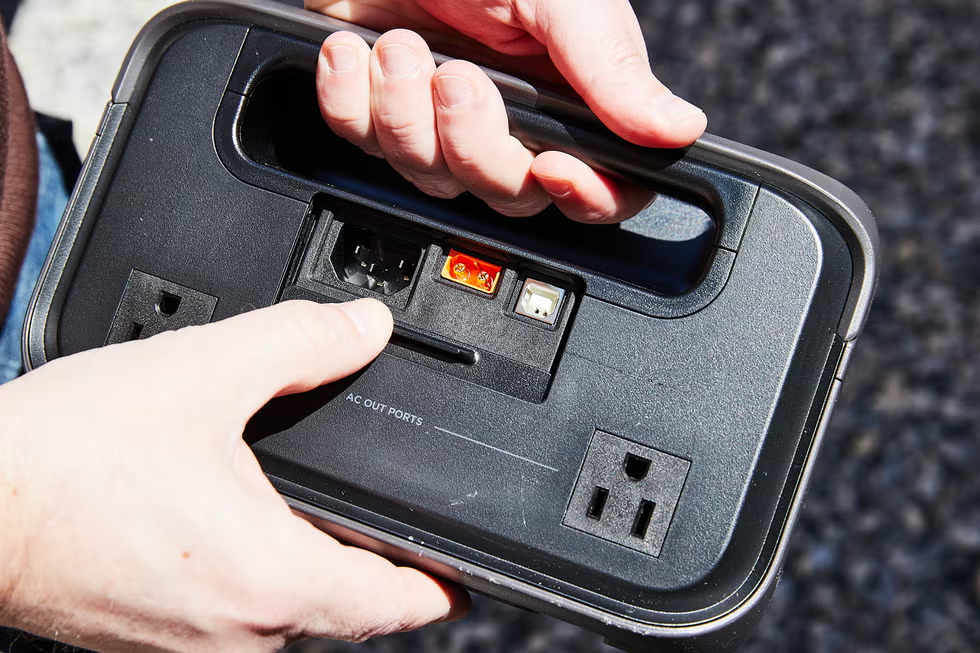
The back of the unit features two AC outlets and coverable inputs for AC charging, solar or 12-volt charging, and a USB data port that can be used optionally when the station is in UPS mode.
There are three ways to recharge the River 3 Plus: AC power up to 650 watts, solar power up to 220 watts, or direct current from your car’s 12-volt outlet (cable included). During my test, the station recharged from 0 to 100 percent in just under 50 minutes, which is consistent with EcoFlow’s fastest advertised recharging time.
Solar recharging was simple, too. While I didn’t have an EcoFlow panel on hand, I used a 200-watt portable panel from Anker. It had trouble detecting the panel in auto mode, so I used the app to specify solar charging, and it worked fine, pulling in around 138 watts on a perfectly sunny day, which is normal efficiency for most panels. With a station this small, you could easily recharge it using solar in around two hours, so long as the conditions are ideal.
The River 3 Plus is perfect if what you’re looking for is a small backup with a UPS for a home office that can also power the occasional TV or small appliance. It might work well on a short camping trip, too, where you need some extra power for your devices and need to inflate an air mattress, but also want to pack lightly. It’s not meant for long-term power, especially if you plan to power something like a refrigerator. So if you’re a camper who needs something that will last a few days, you’d be better off with something like the EcoFlow Delta 3 Plus.
EcoFlow’s real achievement here, though, is the compact design and near-silent operation—it’ll never get in the way or cause a distraction. In that regard, the River 3 Plus is one of the best compact power stations we’ve seen.
Best Value
Now 46% Off
Most Durable
Many Port Options
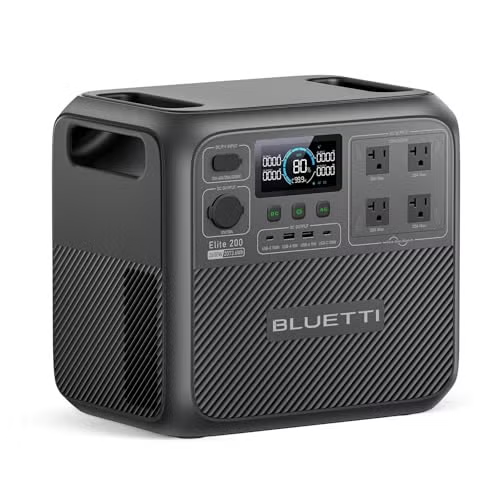
Now 16% Off

David is a Reviews Editor for Hearst’s Enthusiast Group, contributing to Popular Mechanics, Runner’s World, Bicycling, Best Products, and Biography. He has over 25 years of experience writing about and reviewing consumer electronics, kitchen appliances, DIY products, outdoor gear, and more. He also spent years covering the ever-changing world of online retail. To relax, he loves experimenting with new recipes, tweaking his smart home setup, and spending time outdoors on his bike or camping.

Brad Ford has spent most of his life using tools to fix, build, or make things. Growing up he worked on a farm, where he learned to weld, repair, and paint equipment. From the farm he went to work at a classic car dealer, repairing and servicing Rolls Royces, Bentleys, and Jaguars. Today, when he's not testing tools or writing for Popular Mechanics, he's busy keeping up with the projects at his old farmhouse in eastern Pennsylvania.
此内容由惯性聚合(RSS阅读器)自动聚合整理,仅供阅读参考。 原文来自 — 版权归原作者所有。