





About 7 million people in the United States have impaired vision, making vision loss one of the most common disabilities among American adults, the U.S. Centers for Disease Control and Prevention (CDC) reports. The CDC also warns that early detection and treatment are key in stopping the progression of vision loss—but that advice could change as new kinds of therapies show promise for restoring eyesight.
A research team at the Massachusetts Institute of Technology (MIT) may have found a cure for a common kind of vision loss that is effective in patients of all ages. In their study, published in the journal Cell Reports in November 2025, the MIT team tested whether anesthetizing a faulty retina could “reboot” vision, according to researchers—and it actually worked.
According to a co-author of the study, Mark Bear, PhD, their recent findings could reshape the way we think about vision loss.
The study focused on a particular kind of vision impairment called amblyopia—more commonly known as the lazy eye. Amblyopia typically starts in childhood when another underlying condition causes communication to break down between the eyes and the brain. In patients with amblyopia, the brain gradually becomes dependent on the “good” eye, causing vision in the unused eye to decline.
Current methods aren’t always successful, especially if the patients are inconsistent with topical treatments or have already reached adulthood.
The team’s new experimental treatment offers a different approach—one that doesn’t require patients to remember daily medication. In the study, the researchers anesthetized the retinas in mice’s lazy eyes with a chemical called tetrodotoxin, which some spiny species like pufferfish and porcupines naturally carry. After the treatment disabled the eyes for two days, researchers saw restored visual responses in the mice’s visual cortexes, the area of the brain that processes information from the eyes. In other words, the bad eye “could be inactivated and ‘brought back to life,’” Bear explains in a press release, meaning the researchers found what is essentially a biological reset button.
Bear says in an email that the next step for the team’s research is to recreate the experiment on other species with more advanced visual systems, as the treatment method is invasive and human eyes are complex. But they’re “cautiously optimistic that these findings may lead to a new treatment” for patients with amblyopia in the future.
An estimated five million people are unable to see the world around them because they suffer from an advanced form of age-related macular degeneration (AMD) called geographic atrophy. The condition destroys photoreceptors in the retina, which play a key role in turning light into images in your brain. Patients gradually lose their central vision, which experts previously thought was irreparable. But now a tiny device, smaller than a single grain of rice, could change that.
Experts across 17 different hospitals developed the photovoltaic retina implant microarray (PRIMA) system, which is a device that is helping blind patients regain their ability to read. In an ongoing clinical trial across five countries, the team found that the chip was effective in 84 percent of patients. After treatment, patients on average were able to read five lines of a standard vision chart, whereas before the implant, some patients were unable to distinguish the chart at all. The results of the trial were published in the New England Journal of Medicine in October 2025. The current trial will continue for the next three years, Palanker writes in an email.
“In the history of artificial vision, this represents a new era,” co-author of the study Mahi Muqit, PhD, says in a University College London (UCL) press statement. “Blind patients are actually able to have meaningful central vision restoration, which has never been done before.”
The innovative prosthesis is the culmination of 20 years of imagination, Daniel Palanker, PhD, the creator of PRIMA and co-author of the October paper, explains in a Stanford University press release. Around 2005, when he was working with lasers to treat other eye conditions, Palanker had an epiphany: researchers should take advantage of the fact that eyes are transparent and deliver information by light.
In the two decades since his realization, researchers have brought PRIMA to life. The treatment begins by surgically inserting a 2-by-2-millimeter microchip beneath the patient’s central retina. After a few weeks of recovery, the patient’s implant is remotely activated and syncs with a pair of high-tech glasses. A camera mounted on the glasses captures images and transmits them directly to the chip via infrared light, a frequency that is invisible to the naked eye. Then, the chip converts the images into electrical signals, effectively acting as artificial photoreceptors to regenerate vision. Patients wear a pocket-sized computer at the waist, which has buttons to zoom in and out.
What makes PRIMA particularly remarkable is how the chip operates completely remotely—previous retina implants required wiring and external power sources—making it much more practical. Palanker also explains that the device stands out because patients are actually regaining their sight, not just seeing flashes and shadows like other retinal prostheses induce.
According to Science Corporation, the neuroscience technology company involved in developing PRIMA, future applications include treating retinitis pigmentosa and Stargardt disease, which are both eye conditions that cause substantial vision loss. Meaning, researchers seem to be closer than ever to curing blindness for good.
For decades, scientists have been looking for some way to regrow retinal neuron cells in mammals. Roughly 300 million people worldwide have some form of retinal degeneration, which can seriously reduce vision and even cause blindness.
In 2025, a team at The Korea Advanced Institute of Science and Technology found promising results in experiments with mice, particularly because mice are also mammals and share similar traits. In a Nature Communications study published in late March 2025, the scientists detail a novel method that they claim can restore vision.
The Korea Institute’s team gets around a mammalian inability to reprogram damaged Müller glial cells, whose role is to maintain the functionality of retinal cells. Some animals, such as zebrafish, can replace damaged cells with functional retinal neurons.
Müller glial cells maintain the functionality of retinal cells by suppressing a protein called PROX1, which inhibits the development of different retinal cell types in mammals. Researchers noticed in their experiments that PROX1 tended to accumulate in mouse Müller glial cells—which act as support cells for retinal neurons—after an injury.
By blocking PROX1—and so preventing the suppression of new retinal cells—the team sustained retinal regeneration in mice with retinitis pigmentosa, a disease that occurs when photoreceptors in the retina deteriorate. The effects of the regeneration lasted for six months, allowing the scientists to boldly declare that this was the “first successful induction of long-term neural regeneration in mammalian retinas.”
Since the eye is an extremely complex organ, scientists around the world have been investigating different molecular mechanisms that could be responsible for our inability to regrow retinal neurons. One of these was a 2019 study that looked into the “Hippo pathway,” which keeps retinal regeneration dormant.
And a 2022 study published in Oxford Open Neuroscience found that when amphibians’ retinal cells are damaged, these animals have “ciliary marginal zone cells” that go to work proliferating new retinal cells. The study also discussed experiments on mice that demonstrated how certain genetic modifications can improve retinal regeneration. “In many animal tissues that contain stem cells … degenerated cells are replenished by new cells, allowing these tissues to maintain their functions despite continuous cell loss,” the authors wrote.
Recently, other scientists have taken a more hardware-centric approach, developing methods that use gold nanoparticles stimulated by lasers to circumvent damaged photoreceptors. This method can also stimulate cells located further up the visual chain and could be useful for the condition retinitis pigmentosa and macular degeneration.
Whether through hardware or cellular intervention, science is quickly helping humanity gain some regenerative ground on other members of the animal kingdom, who do it naturally.
Yuri Deigin, cofounder of Seattle-based YouthBio Therapeutics, wants to reverse-age human organs, and his process will likely start with the eyes.
The idea rests on a deceptively simple premise: aging is not simply damage, but a program. “My view is that the epigenome [theset of chemical switches that control how genes are turned on and off] is the closest thing biology has to a writable operating system that helps determine cellular age,” Deigin says. As cells grow older, this epigenome drifts, becomes noisier, and loses some of its precision. The goal of what scientists call partial cellular reprogramming is to reset that system, pushing cells back toward a younger, more functional state without erasing their identity.
Deigin is focusing on building a set of genes known as the Yamanaka factors, which are powerful regulators that can reset a cell’s biological clock by changing its gene expression patterns. But instead of fully activating the Yamanaka factors, researchers are trying to pulse them just enough to restore function without wiping their identity. In practice, that means delivering the genes that encode these factors into specific, aging organs such as eyes, and activating them in controlled bursts, potentially through periodic activation.
At Boston biotech company Life Biosciences, researchers are testing an approach that aims to coax damaged optic nerve cells back into a more youthful state. In animal studies, this has improved aspects of vision after injury and pushed cells toward younger patterns of function, says Sharon Rosenzweig-Lipson, PhD, the company’s chief scientific officer. The work has now moved into an early human trial, where the company is testing its lead therapy, ER-100, in people with optic nerve damage. For now, the goal is modest: to see if some of that lost function can be restored safely. “Near term, these therapies have the potential to restore function in specific tissues that are impacted by aging,” she says.

February / March 2026
This issue is optimized for mobile/tablet viewing. It's also available on Apple News+.
Featuring:
➡ Archaeologists Found a Skeleton Wearing a Silver Amulet. The Discovery Is Rewriting the History of Christianity.
➡ The Stray Dogs of Chernobyl Are Rapidly Mutating. Scientists Are Still Trying to Figure Out What It Means.
➡ New Evidence Could Upend What We Know About the Charles Lindbergh Baby Murder
➡ Police Found Mysterious Notes in a Dead Man's Pocket. They Turned Out to Be Codes That Not Even the FBI Can Break.

December 2025 / January 2026
This issue is optimized for mobile/tablet viewing. It's also available on Apple News+.
Featuring:
➡ An Angel of Death Preyed on Hospital Patients for Years.
➡ How America's Most Advanced Lab Brought the Killer to Justice.
➡ A 3,000-Ton Locomotive Was Loose, Unstoppable, and Filled With Toxic Cargo
➡ An Underwater Cave Promised Adventure and Glory. No One Expected It to Become a Tomb.
➡ Your Consciousness Can Predict the Future, Some Scientists Say

October / November 2025
This issue is optimized for mobile/tablet viewing. It's also available on Apple News+.
Featuring:
➡ Inside the Secret Island Where Death Is Optional
➡ A Legendary Ship Sank Without Warning. Fifty Years Later, Science Could Finally Solve the Mystery of the Edmund Fitzgerald.
➡ This Tech Rebel Threw Away $900 Million in a Municipal Dump. Can Robots Find His Lost Fortune?
➡ Sex Workers, LSD, and Mind Control: What Happened in the CIA's Lab of Nightmares at 225 Chestnut Street

August / September 2025
This issue is optimized for mobile/tablet viewing. It's also available on Apple News+.
Featuring:
➡ The Worst Air Disaster in American History Happened in Broad Daylight. Will More Mistakes Keep Happening?
➡ NASA Has a Plan to Save Earth from Planet-Destroying Asteroids. It Sounds Even Wilder than Science Fiction.
➡ A Naval Officer Says Underwater UFOs Are Legitimate Threats. The Evidence Is Hard to Ignore.
➡ When You Die, a Psychedelic Molecule Shapes Your Final Moments of Consciousness, a New Theory Reveals.

June/July 2025
This issue is optimized for mobile/tablet viewing. It's also available on Apple News+.
Featuring:
➡ This Undersea Explorer Found America's Greatest Sunken Treasure. Then Things Got Really Weird.
➡ Is Bigfoot Hiding in the Swamps of Florida? This Group Says It Has Proof.
➡ Scientists May Have Gotten the Global-Warming Timeline Seriously Wrong.
➡ A Third State Now Exists Between Life and Death, Some Scientists Now Believe
April/May 2025
This issue is optimized for mobile/tablet viewing. It's also available on Apple News+.
Featuring:
➡ Scientists Successfully Revive a Dead Brain, Redefining the Boundary Between Life and Death
➡ Fingerprints Keep Leading to Wrongful Convictions. Why Do Courts Still Rely on Them?
➡ For 80 Years, the North Sea Held a Deadly Killer. Now Scientists Are Racing to Defuse the Threat.
➡ They Built the Quietest Room in the World. Why Is Everyone So Afraid to Step Inside It?
February/March 2025
This issue is optimized for mobile/tablet viewing. It's also available on Apple News+.
Featuring:
➡ This Guy Says He Knows the Truth About UFOs. Should We Believe Him?
➡ Scientists Are Now One Step Away From Solving Nuclear Fusion—And Unlocking Unlimited Energy.
➡ A Million-Dollar Heist Rocked the Art World— Then Amateur Sleuths Cracked the Case
➡ A New Era of Missile Warfare Has Begun—and the U.S. Isn’t Ready

December/January 2025
This issue is optimized for mobile/tablet viewing.
It's also available on Apple News+.
Featuring:
➡ A Clue Hidden in a 400-Year-Old Map Might Have Just Solved One of America's Greatest Mysteries
➡ Inside the Deranged Plot to Smuggle Cocaine With an Armed Soviet-Era Submarine
➡ This Brilliant Engineer Helped Build the B2 Bomber—Then He Sold America's Stealth Secrets to China
➡ Your Consciousness Can Connect With the Whole Universe
October/November 2024
This issue is optimized for mobile/tablet viewing.
It's also available on Apple News+.
Featuring:
➡Untold Secrets Reveal How the Castle Bravo Test Became America’s Worst Nuclear Disaster
➡ This Body Was Found Preserved on a Block of Ice in a Colorado Shed. It Had Been There for 30 Years.
➡ It Was Supposed to Be America's Greatest Victory in Space—Then It Became NASA’s Worst Nightmare
➡ The Sidewinder Missile Ruled the Air—Then the Soviets Stole the Design

August/September 2024
This issue is optimized for mobile/tablet viewing. It's also available on Apple News+.
Featuring:
➡This Man Knows the Truth About Amelia Earhart. Why Doesn't Anyone Believe Him?
➡ The Army's Machine Gun Is No Match for Cheap Chinese Body Armor. So It's Making a New One.
➡ Russia Built a Stunning Rival to the Supersonic Concorde—and Then It Fell From the Sky
➡ A Navy Admiral Says Underwater UFOs Are a Threat—and the Pentagon is Withholding Secrets
June / July 2024
This issue is optimized for mobile/tablet viewing. It's also available on Apple News+.
Featuring:
➡4 Black Eggs Have Surfaced From the Depths of the Ocean— and the Mysterious Creatures Inside Are Baffling Science
➡ A $2 Million Treasure Appeared in a Kentucky Cornfield. No One Knows Where It Came From.
➡ A Million-Dollar Heist Rocked the Art World— Then Amateur Sleuths Cracked the Case
➡ A New Era of Missile Warfare Has Begun—and the U.S. Isn’t Ready

April May / 2024
This issue is optimized for mobile/tablet viewing. It's also available on Apple News+.
Featuring:
➡The Man Who Knows Too Much About Area 51
➡ How the FBI Took Down the Internet's Most Dangerous Website
➡ A Staggering New Clue Emerges in the D.B. Cooper Hijacking Mystery
➡ The Wildest Prison Break in U.S. History
➡ The Secret to a Perfect Lawn Lies in One of These 10 Electric Lawnmowers

February / March 2024
This issue is optimized for mobile/tablet viewing. It's also available on Apple News+.
Featuring:
➡The Incredible Mystery of NASA’s Missing Moondust
➡ Inside the Final Fiery Minutes of the East Palestine Train Wreck
➡ Scientists Believe They’ve Unlocked Consciousness—and It Connects to the Entire Universe
➡ Why This Unstoppable Stealth Bomber Will Rule the Skies
➡ America Is Developing a New Nuclear Bomb—But Can’t Test Whether It Works
➡ The 8 Best, Expert-Recommended Solar-Powered Generators

Special Issue: Nukes
➡ How Deadly Nuclear Waste Is Menacing This St. Louis Neighborhood
➡ The Terrifying History of Russia's Nuclear Submarine Graveyard
➡ Strange Mutations in Stray Dogs Near Chernobyl Suggest They Are Rapidly Evolving
➡ America Dumped 56 Million Gallons of Radioactive Material Along the Columbia River—Then It Started to Leak

December 2023 / January 2024
This issue is optimized for mobile/tablet viewing. It's also available on Apple News+.
Featuring:
➡ A New Clue In Amelia Earhart's Disappearance Emerges From the Ocean
➡ How an Alleged Water Bandit Stole $25 Million in Water from Thirsty California Farms
➡ A Coal Mine Exploded and 300 Miners Died. What Went Wrong?
➡ China Just Built a Terrifying New Aircraft Carrier and May Soon Dominate the Seas

October / November 2023
This issue is optimized for mobile/tablet viewing. It's also available on Apple News+.
Featuring:
➡ How Rats Took Over Our Cities—And Why We Can't Stop Them
➡ This Language Is on the Verge of Extinction. Can It Be Saved?
➡ America's Deadliest Warplane Returns in a New Doomsday Role
➡ This Amateur Diving Group Kept Solving Cold Cases. Then Its Own Skeletons Surfaced.
➡ The Scientific Breakthrough That Could Put an End to Gray Hair.

August/September 2023
This issue is optimized for mobile/tablet viewing. It's also available on Apple News+.
Featuring:
➡ Immortality Is in Reach. But It’s Not What We Imagined.
➡ Your Next iPhone (and Nuclear Subs) Will Be Powered By Space Metal
➡Scientists Now Think We Can Build a Warp Drive
➡ China and Russia Have Cracked the Stealth Code. Can the U.S. Regain Air Dominance?

June/July 2023
This issue is optimized for mobile/tablet viewing. It's also available on Apple News+.
Featuring:
➡ The CIA’s Secret Plan to Build a Laser Beam Powered by the Human Mind
➡ The 747 Ruled the Skies—Then One Slammed Into a Mountain
➡The Race to Contain AI Before Singularity
➡ These Florida Homes Aren’t Just Hurricane-Proof—They’re Blueprints for the Future
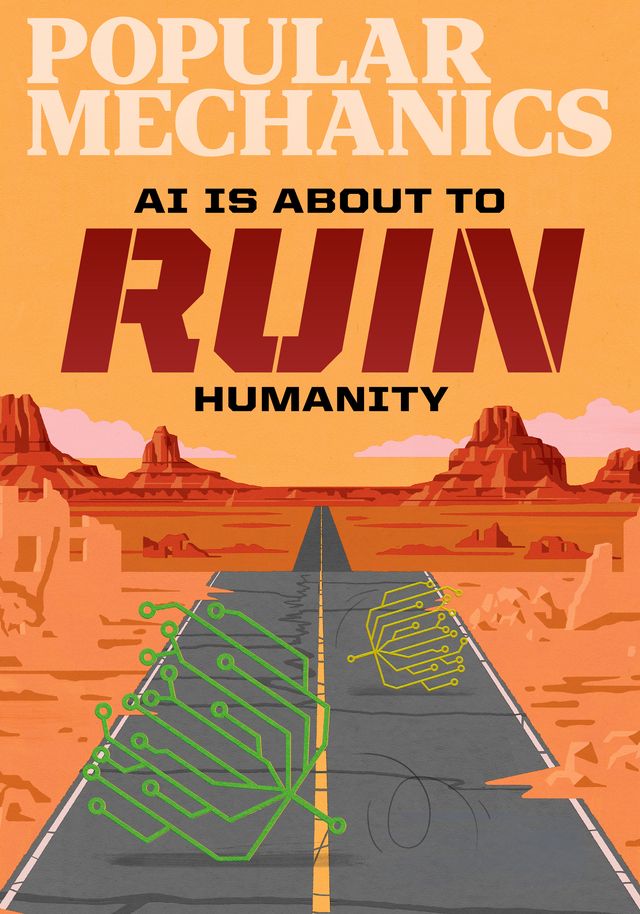
April/May 2023
This issue is optimized for mobile/tablet viewing. It's also available on Apple News+.
Featuring:
➡ AI Is on the Cusp of Taking Control—This Is How It May All Go Wrong
➡ There’s No Weapon Russia Fears More Than the HIMARS Rocket Launcher
➡The Nuclear-Submarine Arms Race Is Getting Intense, and the U.S. Just Took a Massive Leap Forward
➡ Iran Is Becoming a Drone Superpower—By Stealing American Technology
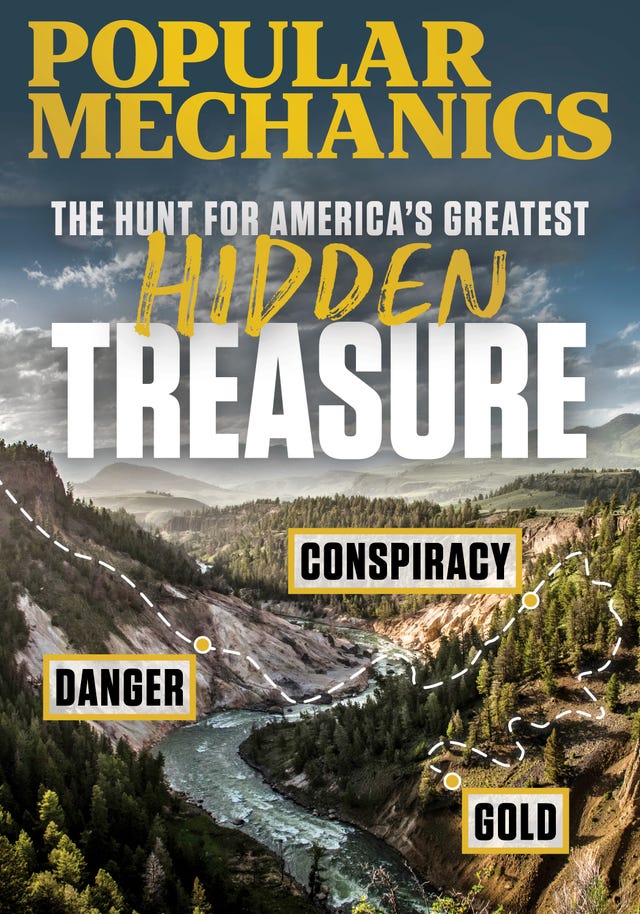
February/March 2023
This issue is optimized for mobile/tablet viewing. It's also available on Apple News+.
Featuring:
➡ The Greatest Treasure Hunt in American History Ended—and Then Things Got Weird
➡ These Are the High-Powered Weapons Ukraine Needs to Send Russia Running
➡ The Secret War to Take Out Iran’s Fleet of F-14 Jets
➡ Russia Is Trying to Intimidate the U.S. with Hypersonic Missiles and Big, Scary Nukes—And It's More Than a Threat

December 2022/January 2023
This issue is optimized for mobile/tablet viewing. It's also available on Apple News+.
Featuring:
➡ Is Death Real?
➡ China and Russia Are Dominating the Hypersonic Arms Race—And It’s Not Even Close
➡ When the South Fork Dam Broke, a Pennsylvania City Washed Away. Which Town Is Next?
➡ The Navy’s New $13 Billion Aircraft Carrier Is Already Obsolete. This Weapon Can Save It.

October/November 2022
This issue is optimized for mobile/tablet viewing. It's also available on Apple News+.
Featuring:
➡ Can America's M1 Abrams Still Compete With China's and Russia's Latest Battle Tanks?
➡ Inside the Final Minutes of the Concorde Disaster—and How It Doomed Supersonic Travel for Decades
➡ How the Massive Cargo Ship Felicity Ace Sank, Taking $400 Million Worth of Exotic Supercars With It
➡ I Turned My Old Gas-Guzzler Into a Zippy EV for $15,000
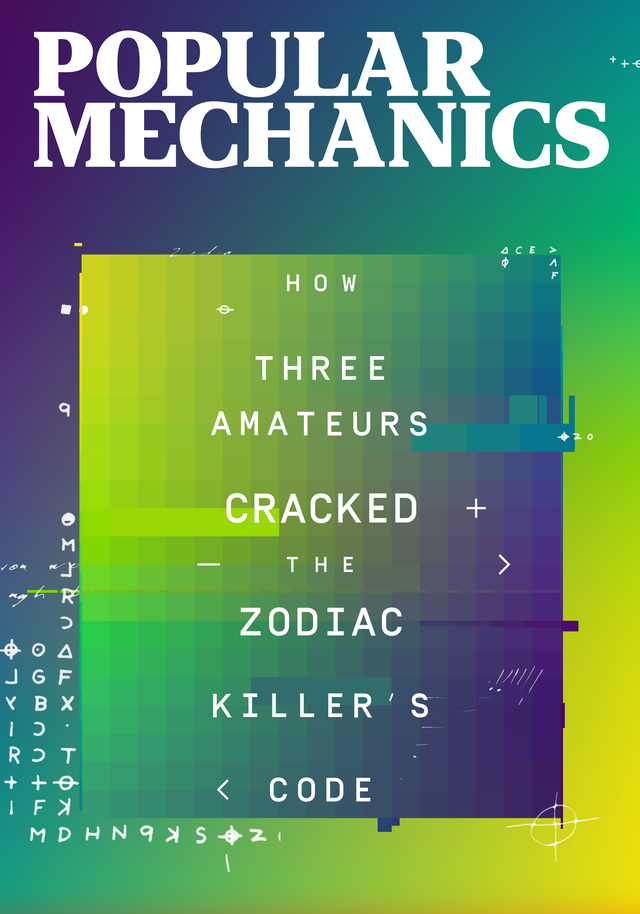
August/September 2022
This issue is optimized for mobile/tablet viewing. It's also available on Apple News+.
Featuring:
➡ Cosmic Secrets of the 17 Most Powerful Mega-Telescopes on Earth—and Beyond
➡ Can the Air Force's Secret, Hypersonic Jet Reclaim the Skies From Russia and China?
➡ For 50 Years, the Zodiac Killer's 340 Cipher Stumped the FBI—Then Three Amateurs Cracked the Code
➡ America's Most Fearsome Howitzer Has Entered the War in Ukraine

June/July 2022
This issue is optimized for mobile/tablet viewing. It's also available on Apple News+.
Featuring:
➡ Every Single Drone Fighting in the Skies Over Ukraine
➡ How to Buy a New Car in 2022 Without Getting Fleeced
➡ This Megastructure Could Keep Us Alive Forever
➡ The Race to Revolutionize EV Batteries
Darren lives in Portland, has a cat, and writes/edits about sci-fi and how our world works. You can find his previous stuff at Gizmodo and Paste if you look hard enough.
Stav Dimitropoulos is a Gold and Community Anthem Award–winning journalist, and writes about consciousness, science, and culture for Popular Mechanics, Nature, and the BBC. Her work often explores mind-stretching angles where science meets philosophy. Her debut nonfiction book, Slow, Lazy, Gluttons (Greystone Books, 2026) asks: What if the traits society shames — laziness, darkness, nostalgia, and more — are actually survival superpowers?

Emma Frederickson graduated from Pace University where she studied communication and media. Prior to her time as an editor, she was a freelance science reporter. She enjoys covering everything from shipwrecks to pimple popping, but her favorite topics include climate change, conspiracy theories, and weird biology. When she’s not writing, Emma can be found hopping between coffee shops on the hunt for the world’s best oat milk cappuccino.
此内容由惯性聚合(RSS阅读器)自动聚合整理,仅供阅读参考。 原文来自 — 版权归原作者所有。