


Portable power stations are handy for backup power during outages, off-grid electricity for an RV, or simply charging your laptop and phone while working remotely. They’re effectively large bundles of rechargeable lithium-ion batteries, which provide a quiet, exhaust-free alternative to noisy gas-powered portable generators.
Portable power stations come in a broad range of sizes from brands like Jackery and EcoFlow, including smaller models capable of charging a few devices and high-capacity backup units to keep your lighting and critical appliances on during a days-long blackout. Plus, most can be recharged using solar panels.
We evaluated eight power stations of varying size, focusing on each model’s maximum output, capacity, charging time, and portability. To test max output, we connected enough electronics and appliances to each power station to meet or slightly exceed their listed max output to see how well they could operate at maximum load. We then tested capacity, using an electricity usage monitor to record the total watt-hours each power station produced while running them under a consistent load.
Once they were drained, we charged each power station from 0 to 100 percent using their AC adapters, timing how long it took to get to 80 and 100 percent capacity. Finally, we evaluated each power station’s portability by attempting to carry it or roll it. Other factors that weighed into our decisions included the number and power output of each power station’s inputs and its charging options.
Our test team for this article includes David Dritsas, an editor who covers generators, lawn and garden, and more; Bradley Ford, an editor with over five years of experience testing and writing about generators, generator maintenance, power tools, and lawn and garden equipment; and Tony Carrick, a frequent Popular Mechanics contributor who covers landscaping, home improvement, gardening, and home security.

Now 25% Off
| Ports | Two USB, one DC, one AC |
| Max Watts | 2,600/Peak 3,900 |
| Capacity | 2073.6 Wh |
| Weight | 53 lb |
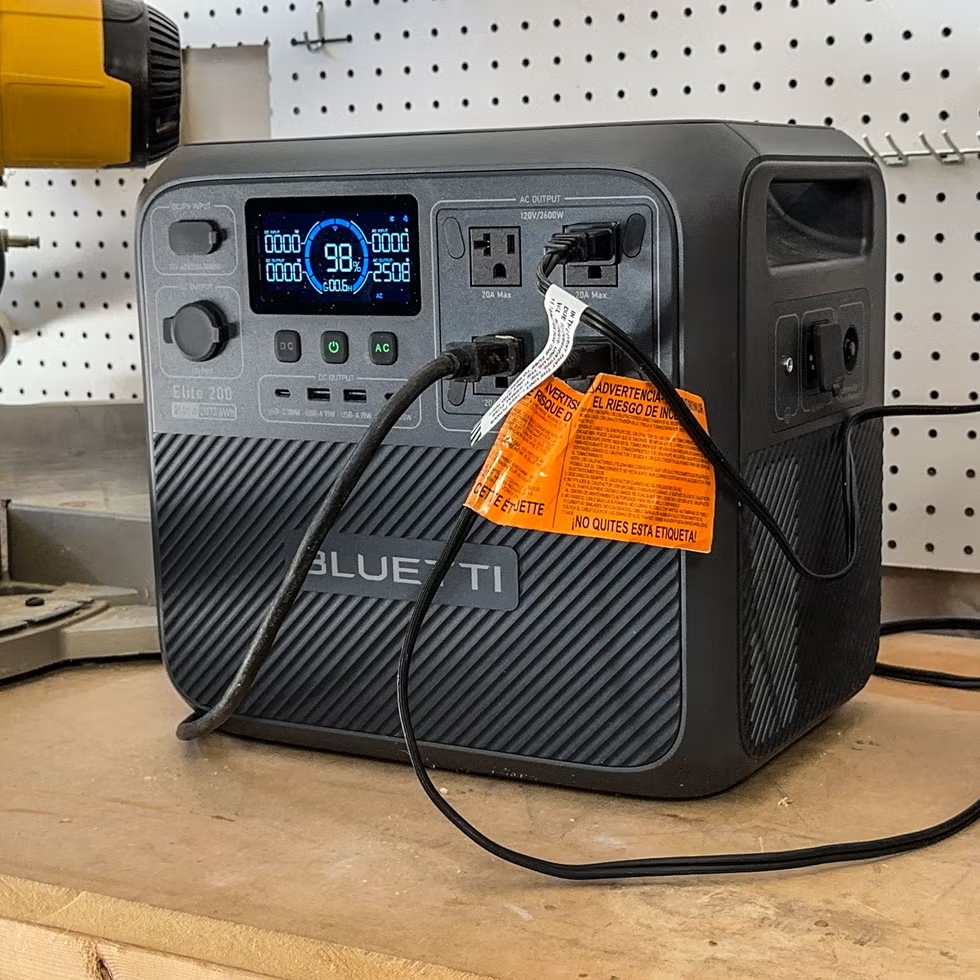
Bluetti manages to pack a lot of power into the Elite 200 V2. It has a max output of 2,600 watts with 3,900-watt startup power and a 2,073.6-watt-hour capacity, all while being relatively compact.
We hooked up a miter saw, blender, and space heater, all three of which it powered simultaneously. It easily handled the spike to 4,000 watts to start up the saw, above its listed 3,900-rated starting-watts power, before maintaining an even flow of around 2,500 watts.
The Elite 200 V2 also impressed with the quality of its battery. We recorded 92 percent of its listed 2,073.6-watt-hour capacity, well over the 85 percent average for most portable power stations. It has a quick recharge time for its capacity, going from 0 to 80 percent in 81 minutes and to full in just 107 minutes. And because it uses a LiFePO4 battery, it discharges and recharges for 6,000 cycles before it drops below 80 percent capacity.
The Elite 200 V2 gives you plenty of output and input options for its size, too. Four AC outlets allow you to load up multiple appliances. There are four USB ports for charging smaller devices, a car accessory outlet, and a DC output. Along with its power cord, there’s a port for charging from a car accessory port or with up to 1,000 watts of solar panels.
With a great power-to-weight ratio, the latest version of the Bluetti Elite 200 V2 is a great portable power station for powering a camper or providing backup power for the essentials.
Now 44% Off
| Ports | 3 x 120 V AC; 2 x USB-C; 1 x USB-A; 1 x 12 V DC |
| Max Watts | 1500 W (3,000 W surge) |
| Capacity | 1070 Wh |
| Weight | 23.8 lb |
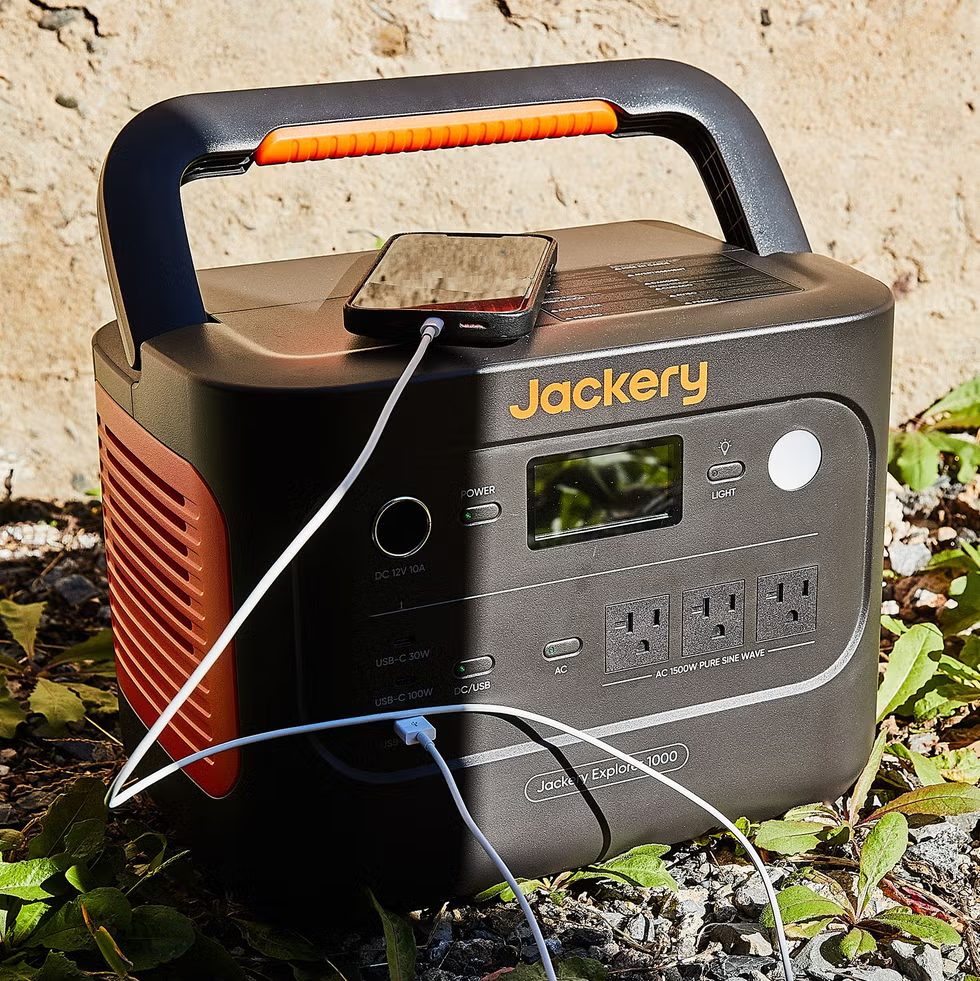
A new and improved version of Jackery’s extremely popular Explorer 1000, the Explorer 1000 V2 features a slightly larger storage capacity, up 70 watt-hours, and a much higher 1,500-watt output—a 50 percent jump from 1,000 watts of the original. This allows you to power devices with higher loads, like an electric grill or a large microwave. Jackery managed this while maintaining the Explorer 1000’s compact size and weight, so it’s still easy to carry with you on a camping trip.
The Explorer 1000 V2 features three standard 120-volt AC outlets, two USB-C ports (30- and 100-watt), one USB-A port (18-watt), and one 12-volt DC outlet. Paired with Jackery’s app, you can monitor the power station locally via Bluetooth or from anywhere when it’s connected via WiFi. The app allows for checking charge levels and estimated run time, as well as toggling any of the outputs on or off. Plugged into the wall, the power station charges in under two hours. It’s also possible to charge it from your vehicle in up to 12 hours.
Performance-wise, the 1000 V2 did well powering a 25-cubic-foot refrigerator for 18 hours, 22 minutes, which is better performance than we’ve gotten from other tested 1000-watt models. Under a constant load of 475 watts (that’s a little less than a small coffee maker), it ran for 1 hour and 57 minutes.
This power station offers a lot of bang for the buck. Sure, it isn’t going to power your house through a days-long outage, but it offers a lot of nice features for the price, making it one of the better values out there, especially if you pick it up on sale.
Now 7% Off
| Ports | 3 x 120 V AC; 2 x USB-A; 1 x USB-C (100 W); 1 x 12-Volt DC |
| Max Watts | 600 W (1,200 W in XBoost mode) |
| Capacity | 268 Wh |
| Weight | 10.4 lb |
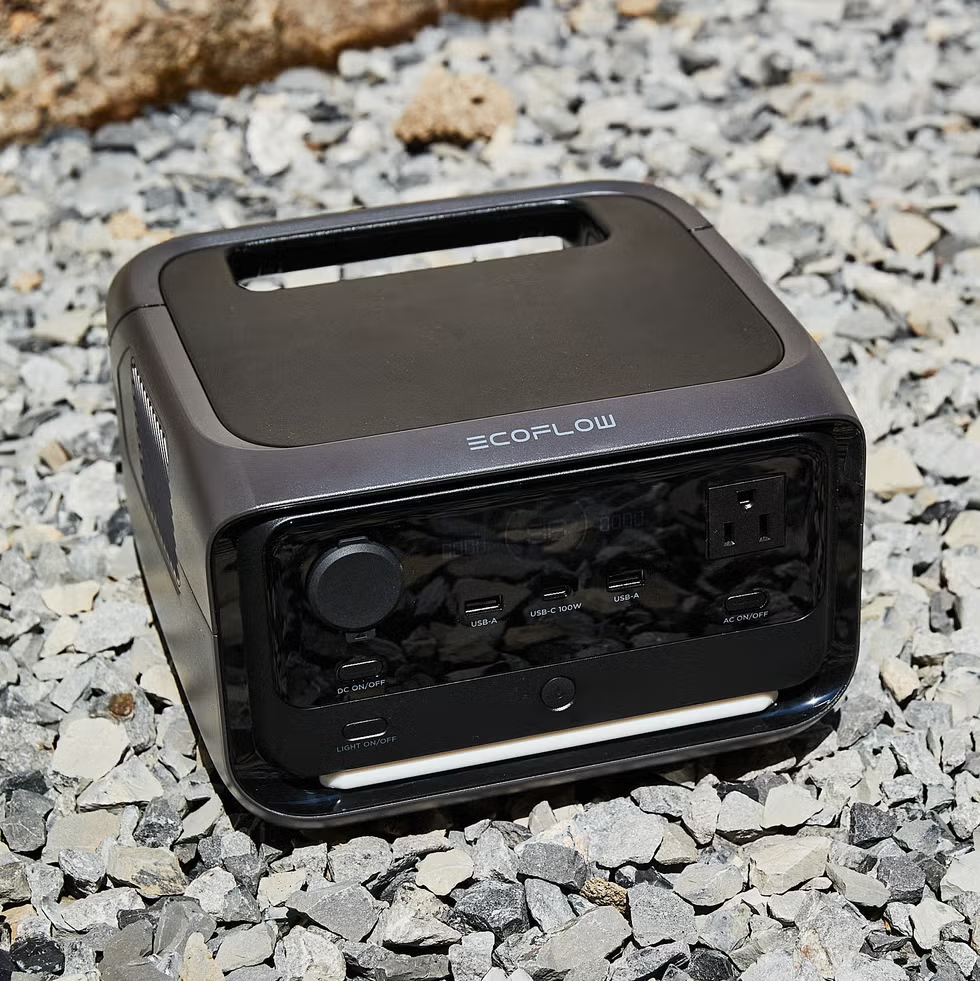
Very compact portable power stations often have to use smaller components that cannot output high amounts of power, relegating them to around 300 watts or so. EcoFlow’s River 3 Plus changes the equation, offering a power station that can output up to 600 watts of consistent power but weighs only 10 pounds and is around the size of a wide toaster.
Part of EcoFlow’s solution to the size problem is the use of a Gallium Nitride (GaN) semiconductor technology (which it calls X-GaN) in the inverter and charging circuits, which replaces silicon to deliver high efficiency. This allows for a smaller form factor and enables the River 3 to feature plenty of outlets, including two USB-A ports, one 100-watt USB-C port, a 12-volt car port, and three 120-volt AC outlets. It also works as a UPS.
During our tests, we employed the River 3 Plus as a home office backup, powering a laptop, monitor, and a low-powered fan for an entire workday, plus topped off a phone battery at one point. Later, we even ran a two-slot toaster on it with no problem, something you usually cannot do with a lower-powered compact power station. We were able to get around nearly 10 hours of use during those tests. For a more rigorous test on a different day, we were able to power a refrigerator for an impressive 3 hours and 45 minutes.
The capacity of the lithium-iron phosphate (LiFePO4) battery is not quite as large as the power output, rated at just 286 watt-hours, which is typical for power stations of this size, but it’s possible to increase that to 572 watt-hours or 858 watt-hours using expansion batteries that connect at the base of the station.
The River 3 Plus is perfect if what you’re looking for is a small backup with a UPS for a home office that can power the occasional TV or small appliance. It might work well on a short camping trip, too, where you need some extra power for your devices and need to inflate an air mattress, but also want to pack lightly.
Full EcoFlow River 3 Plus Review
| Ports | 4 x 120 V; 1 x 120 V 30A; 1 x 120/240 V 50A |
| Max Watts | 3,840 W (7,680 W surge) |
| Capacity | 2,764.8 Wh |
| Weight | 83.78 lb |
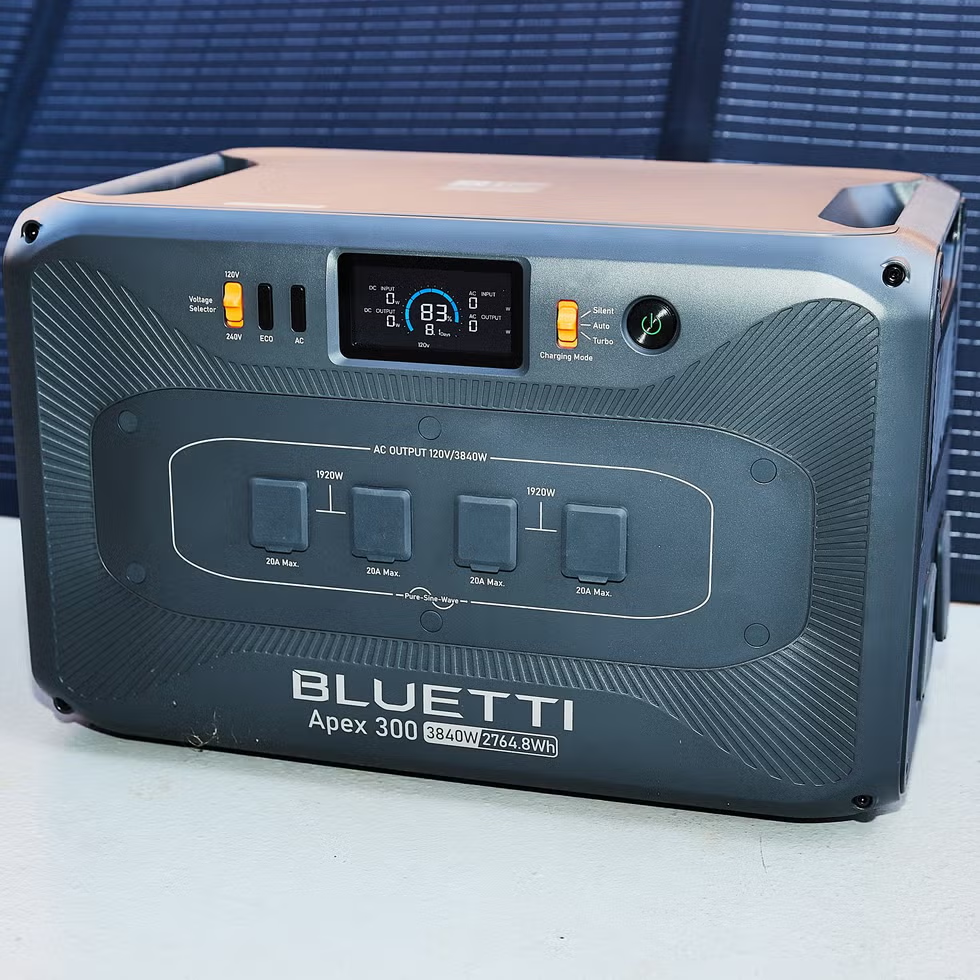
With the Bluetti Apex 300, the name of the game is flexibility. Alone, it delivers up to 3,840 watts of continuous power and handles up to an impressive 7,680 watts of surge power. Capacity is a solid 2,764.8 watt-hours for decent runtime, though it depends on the amount of power you intend to draw from it. If you happen to have 240-volt appliances or circuits, this model has you covered, too.
But everything on this power station is scalable. It’s possible to add up to six additional batteries for a very high capacity of 19,353.6 watt-hours, and connect up to two other Apex 300 units and run them in parallel. This expandability makes it a great entry-level home power station that expands into a larger backup system that delivers whole-home power.
The Apex 300 features four 120-volt outlets across the front, plus a 120-volt 30-amp outlet and a 120/240-volt 50-amp outlet on the side for powering devices individually, plugging into an RV, or delivering home power through a transfer switch.
One downside for me was the lack of direct DC outputs, e.g., USB-C ports. For that, you have to purchase an optional hub. There are also power inputs for a standard AC plug, a 30-amp connection, and two solar connections. The Apex 300 uses two inverters as opposed to one, giving you two banks of 120-volt 1,920-watt output (two outlets in each bank). We easily ran two high-powered appliances at the same time, including a space heater and a toaster, with no issues at all.
This station is serious about solar recharging, too. There are two ports for connecting solar panels up to 1,200 watts each. Having the option of 2,400 watts of solar input is uncommon in a station of this size and price point. Plus, you can reach even higher input by pairing with a Bluetti SolarX 4K voltage regulator, which is designed for connection to larger solar arrays.
Most of the control options are accessed with the Bluetti Mobile app, and it’s one of the best we’ve seen. It’s easy to finely tune settings in ways that other companies don’t offer, such as adjusting the recharging level from as little as one amp to 50 amps.
If you’ve been eyeing power stations but aren’t sure if you want one more for portable power or more for home backup power, this is the model for you. It delivers a great amount of power for portable use, but lays the groundwork for building a more dedicated system in the future.
Now 27% Off
| Ports | Four AC outlets, one 230-volt outlet, one RV outlet, four USB outlets |
| Max Watts | 4,000, 6,000 with X-Boost |
| Capacity | 8,096 Wh |
| Weight | 113 lb |
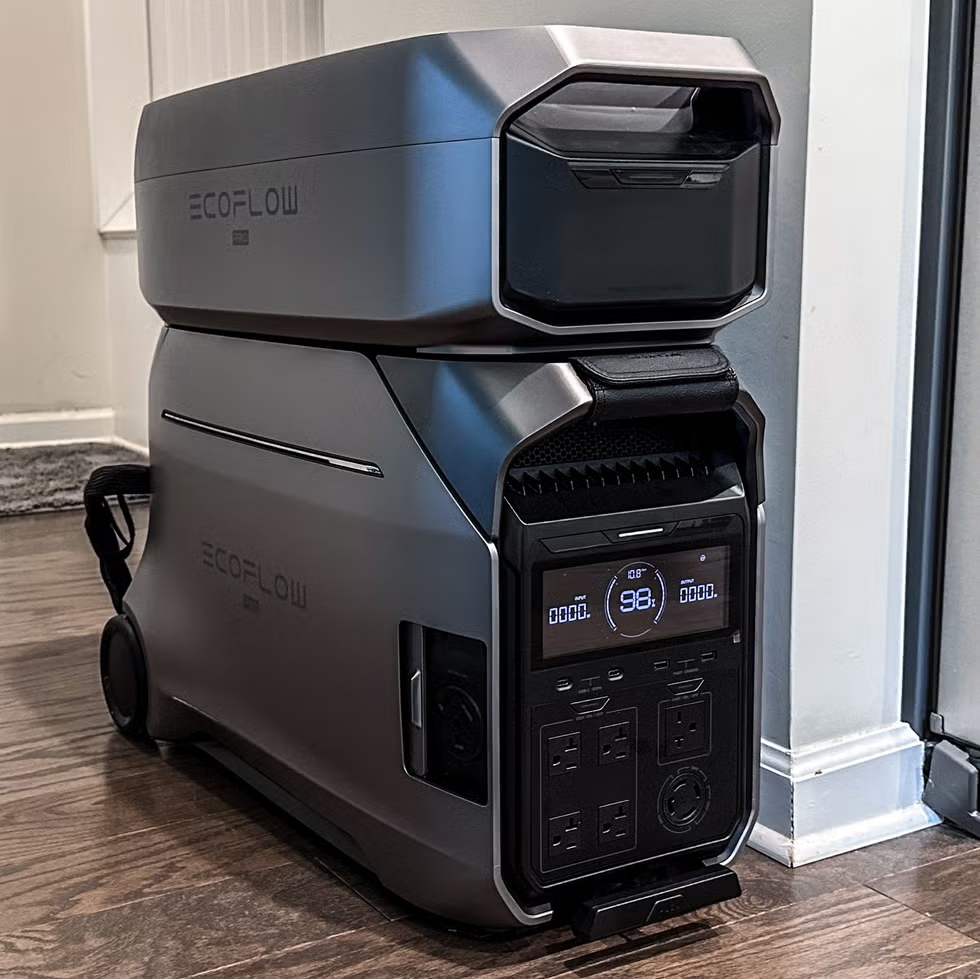
With its tremendous capacity, the EcoFlow Delta Pro 3 is truly capable of providing basic whole-home backup without gas or solar panels. Our test rig came with one expansion battery, raising its capacity to 8,096 watt-hours.
It was also the most efficient power station we tested, outputting 97 percent of its listed power capacity, so most of that energy goes into your appliances, rather than internal functions. We were able to run a space heater pulling a consistent 1,300 watts for nearly 6 hours.
Similar to other large portable power stations, the Pro Delta 3 has a highly expandable modular design, allowing you to add up to two batteries to increase its storage capacity. By adding battery packs and a second power station, it’s possible to create a system with a combined 48-kilowatt-hour capacity.
The Delta Pro 3 produces a max output of 4,000 watts, or up to 6,000 watts through its X-Boost feature, which automatically turns on when your wattage demand exceeds 4,000 watts. This is especially useful for large appliances that require a lot of power when you first turn them on or when under heavy load, such as window air conditioning units and power tools. We pushed it well above 5,000 watts with no noticeable lags by simultaneously operating an air fryer, toaster, and a space heater while making intermittent cuts with a miter saw.
The Delta Pro 3’s four AC plugs limit the number of appliances that can be plugged into it. We were forced to add a power strip to accommodate enough appliances to push its output limits. However, it does offer two different types of 220-volt outlets and a 30-amp RV outlet, along with four USB outlets for smaller devices. In addition to its power cable, this EcoFlow charges up with a car charger or via two solar ports for a total of 2,600 watts.
Referring to a large power station like this as “portable” is a bit of a stretch: The EcoFlow Delta Pro 3 weighs more than 113 pounds. Its two wheels and extendable handle allowed us to wheel it around a living room and kitchen like a piece of luggage, but it was difficult to move over a threshold between the garage and kitchen. The expansion pack sits on top of the power station, which saves space, but pushes the whole kit to a total weight of nearly 200 pounds.
| Ports | 4 x 120V AC, 4 x USB-C, 2 x USB-A 1x 12V, 1 x HPP 12V, 2 x 6mn ports |
| Max Watts | 2,000/3,600 Surge |
| Capacity | 1,505 Wh |
| Weight | 53 lb |
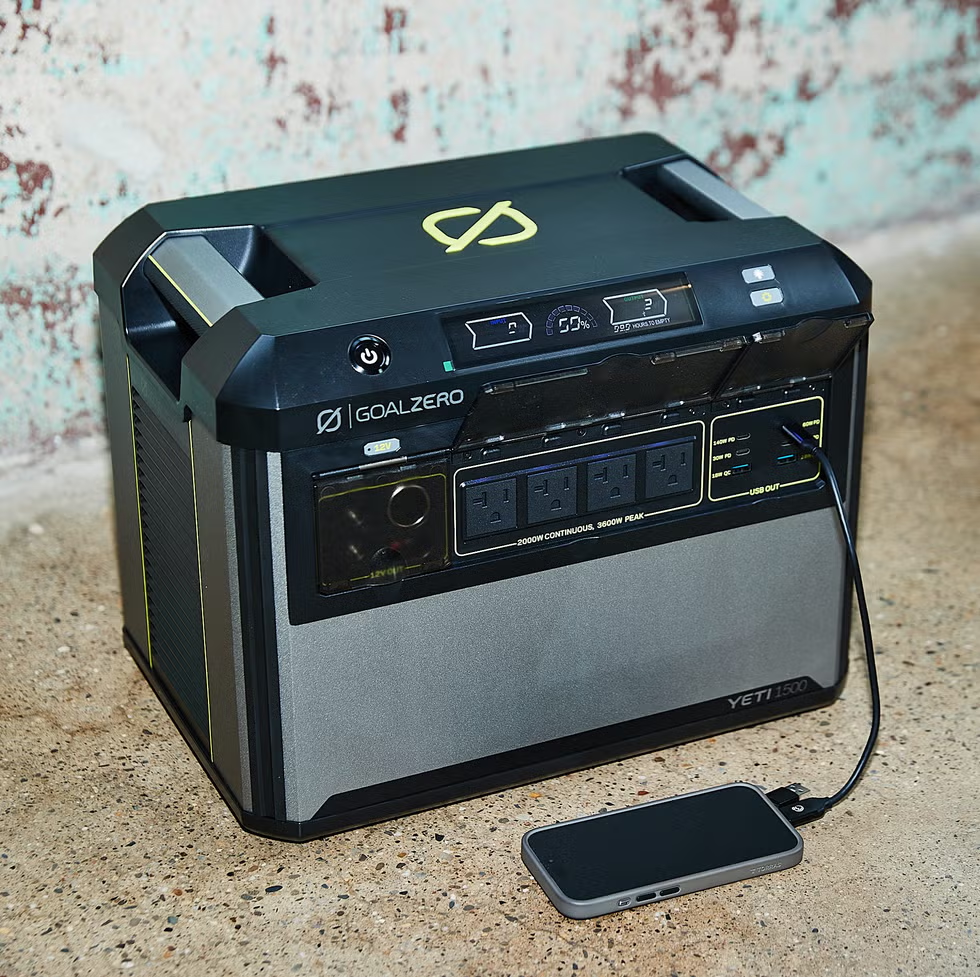
During our hands-on test, Goal Zero’s newest Yeti 1500 impressed us with its capable performance and sturdy construction. It’s the replacement for an older model and improves on its predecessor with improved weatherproofing, more outputs, and a better battery.
This 2,000-watt power station is clearly designed for outdoor use with an IPX4 water-resistance rating and new outlet shields that cover the ports and inputs when you’re not using them. That’s great for dusty conditions. Each section is nicely illuminated by an LED light and can be individually turned on/off using a manual button or the mobile app (and will shut off if not used after a duration of time). These additions make it perfect for camping or other outdoor uses. You can’t leave it out in the rain, but getting a bit of water on it won’t be a concern.
We loved the increased number of outputs on the Yeti 1500. There are now four 120-volt AC outlets and six USB ports: four USB-C (two are high-powered) and two USB-A ports, plus four 12-volt connections (though two of those are proprietary for Goal Zero accessories and not all that useful in our estimation). There are also inputs for AC power, 12-volt DC, and inputs for both low- and high-voltage solar power that can be used simultaneously. Theoretically, you could recharge this station with up to 900 watts of eco-friendly electrical current.
As part of our test, we simulated a blackout at home and managed to run a cable modem/Wi-Fi router, a lamp, a TV, and a tower fan, while simultaneously charging a phone and a laptop through the USB-C ports. Given the station’s output and capacity, there was enough power for over two days of use (conveniently shown on the main display), and there was plenty of room to spare for a few more devices.
The mobile app was easy to use and chock-full of great information on energy consumption. The only problem we had was maintaining a stable Bluetooth connection. It needed to be manually paired every time we went to use it, which was annoying. Wi-Fi is available, but that’s not so useful when you are off-grid.
We should warn you that the Yeti 1500 is heavy at 53 pounds. If you’re taking it on a trip, you’ll need a bit of strength to lug it around. That aside, the 2026 Yeti 1500 is a well-designed power station that’s ideal for off-grid camping, especially when there are dusty or wet conditions. We’d happily take it on our next camping trip.
Full Goal Zero Yeti 1500 Review
Now 39% Off
| Outputs | Four USB, 30 Amp RV, four AC |
| Max Watts | 3,600/Peak 4,500 |
| Capacity | 3,600 Wh |
| Weight | 99 lb |
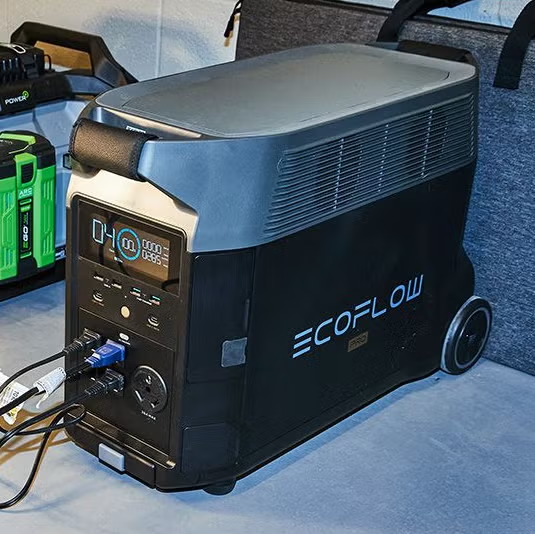
Though it’s no longer EcoFlow’s flagship backup power solution, the original Delta Pro is still a massive power station with a good amount of electrical output. The brand claims it powers nearly any appliance, and after testing, we’re inclined to agree. With an output of 3,600 watts, it can handle multiple appliances, and it’s possible to bump the output to 4,500 watts with its built-in X-Boost technology if you need more power.
In testing, we ran it with a continuous 470-watt load for 6 hours and 57 minutes, as indicated on the Delta Pro’s display. Of course, in a home backup during a power outage situation, we would run only the bare essentials to conserve power. To that end, we used it to power a full-size, 25-cubic-foot refrigerator, which it did for a remarkable 51 hours and 24 minutes.
Recharging the power station from empty using a standard 120-volt home outlet, it recharged to full capacity in 2 hours and 36 minutes. There’s also an included adapter for charging the system at EV charging stations, with solar panels (sold separately), with a car charger, or combinations of these to speed things up.
The Delta Pro’s display screen provides all the important information you need to manage your power consumption. We frequently checked the screen during testing to see the unit’s charge level, current load, and estimated run time at the current discharge rate.
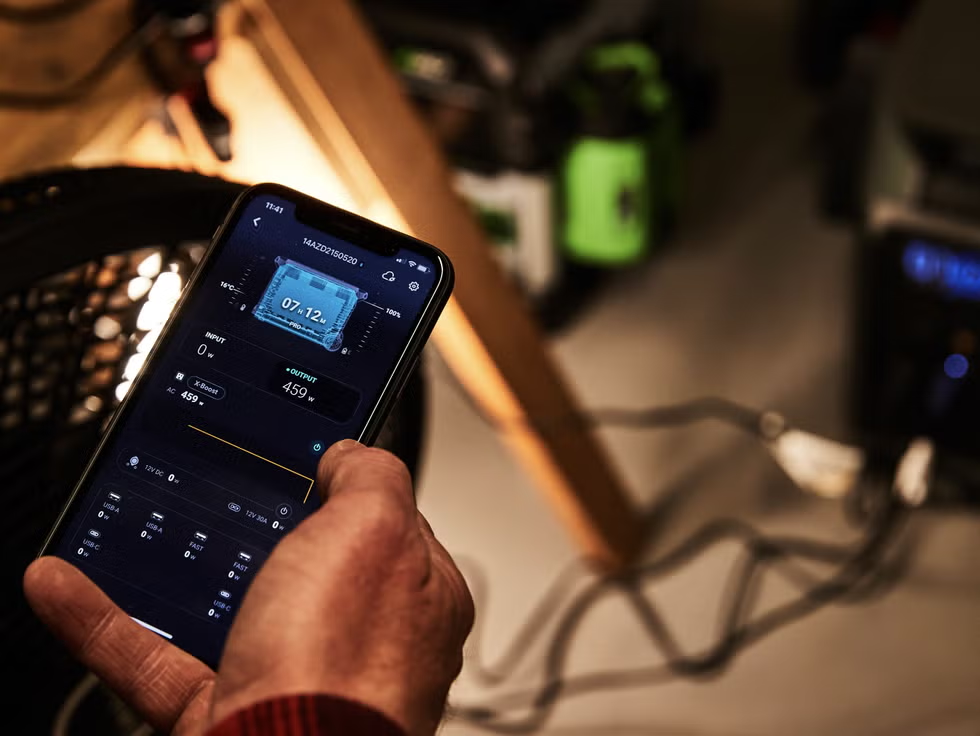
The EcoFlow app is the most polished of those tested, with all the data needed organized in an easy-to-read format.
All of this information is accessible through EcoFlow’s app, which was the most intuitive and easy-to-use of those tested. We connected the app both locally using Bluetooth and remotely via Wi-Fi to monitor the power station from anywhere. We could also toggle outlets on and off remotely, which is helpful if you’re trying to manage power station output to extend the battery life.
We’ve tested the brand’s Whole-Home Backup Kit, which includes two of the power stations and a dual-voltage hub used to connect to your home service panel, via a transfer switch. We used this setup to power critical circuits in a Northeast Pennsylvania home in late winter.
The Delta Pro Whole Home Kit ran just over 24 hours, powering kitchen outlets, a full-size refrigerator, a chest freezer, a cable modem and wireless network, and a hot water boiler. Plus, having charged these two Delta Pro power stations previously, we found that they were able to hold a full charge over a full 8 months.
Testing was performed under normal usage conditions—run time could easily be extended by employing standard power-conservation strategies like lowering the thermostat, powering the fridge and freezer for four hours on and four hours off, and only opening them when absolutely necessary.
EcoFlow’s Delta Pro Whole Home Kit is a legitimate home backup system that can operate inside your home, with none of the risks or potential hassles of running a generator, such as dangerous carbon monoxide gas from exhaust fumes, and dealing with fuel and oil.
Now 22% Off
| Ports | Two USB, one DC, one AC |
| Max Watts | 6,000 |
| Capacity | 3,840 Wh |
| Weight | 135.6 lb |
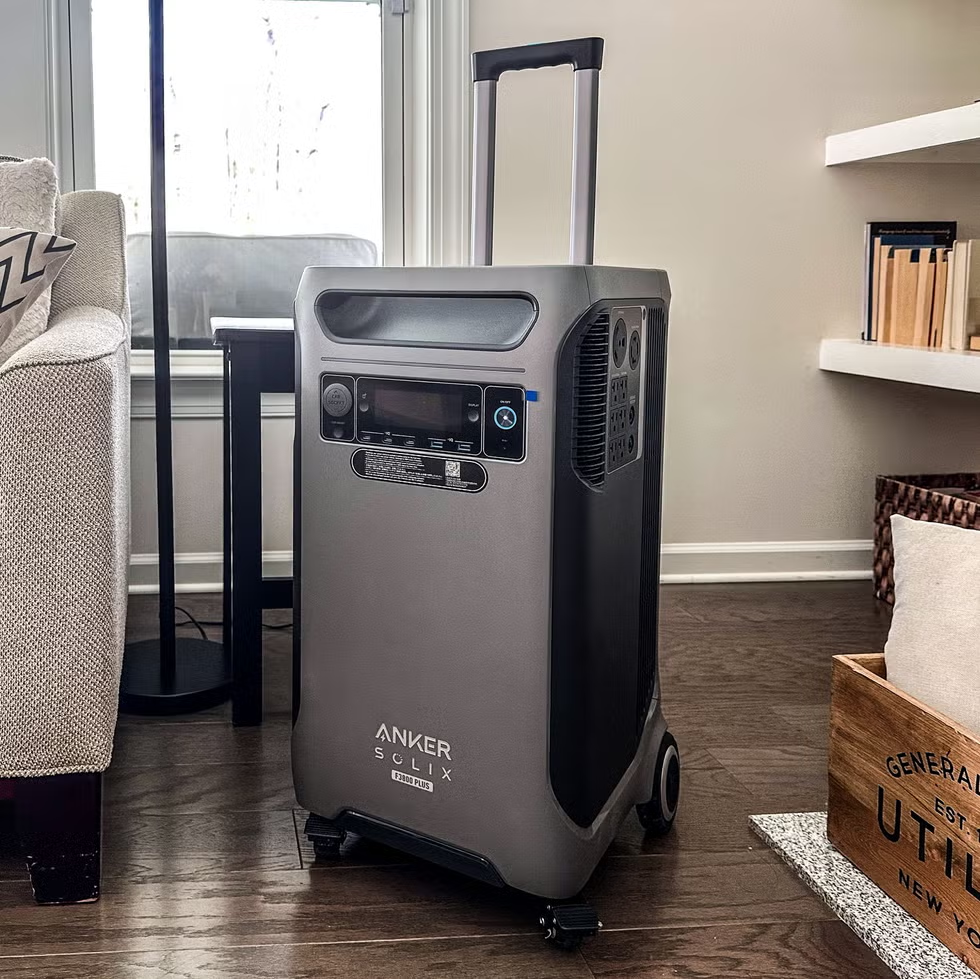
With a max wattage of 6,000 watts, the Anker F3800 Plus had no problem handling the combined load of a miter saw, table saw, blender, and space heater when we put it to the test, demonstrating its tremendous power output.
It has a capacity of 3,840 watt-hours (we recorded 3,230 actual watt-hours), enough to serve as a whole-home backup for the essentials for a day or two. We ran a space heater at a consistent 1,300 watts for about 2.5 hours and a fridge for a full day.
Large portable power stations with their 100-plus-pound weight are inherently difficult to move. And while the F3800 is one of the heavier models we’ve tested, weighing over 135 pounds, its upright suitcase-like design and four sturdy wheels made it easier to wheel around our homes than other large power stations with two wheels and a handle. And with a small footprint, we were able to store it out of the way in a busy kitchen by tucking it into a corner. (Another option is to lay it down into a horizontal position, which is useful for RVs.)
The Anker F3800 Plus is loaded with six AC ports (most power stations have just four). That allowed us to load it up with various appliances and power tools without having to use a power strip. There’s also an RV port for campers, and a 240-volt port for larger appliances such as an oven or dryer.
It took us just under two hours to charge it from 0 to 80 percent power using the included AC power cord and a standard 120-volt outlet. The F3800 Plus comes equipped with two solar inputs for a max of 165 volts, which equates to a max 3,200 watts of solar panels. This means that, with enough solar panels, you could feasibly recharge this beast with less than two hours of direct sunlight.
Full Anker F3800 Plus Power Station Review
A portable power station’s maximum output tells you the total watts it can produce, which determines what you can and can’t power with it. Look for a power station that can handle the combined wattage of the electronics you plan to plug into it.
Some power stations also have surge power that allows them to produce higher wattage for short bursts. This is designed specifically for appliances that draw more watts (known as starting watts) in the first few seconds that you first start them up, including power tools, refrigerators, blenders, and window air conditioners.
A portable power station’s capacity, listed in watt-hours (Wh), determines how much energy a power station can deliver over time. Generally, power stations with more watt-hours can run for longer, but exactly how long depends on the amount of watts the devices connected to the power station draw. You can roughly estimate how long a power station will last by dividing the total watt-hours by the watts drawn (Wh ÷ W = Hrs).
For example, if you have a power station with 2,048 watt-hour capacity, and are consistently drawing 400 watts of power: 2,048 ÷ 400 = 5.12 hours of runtime.
Keep in mind that the usable watt hours are not the same as the watt hours listed on the power station’s label. You’ll typically get about 85 percent of the listed watt-hours due to power lost in connections and the electricity that the power station itself uses to power its inverter and display. Given those losses, expect to get about 85 percent of a power station’s listed watt-hours in usable power. So, a fully charged 2,000-watt-hour power station will typically give you about 1,700 watt-hours of usable power.
These days, most portable power stations, including all those we recommend here, use LiFePO4 batteries, which are capable of holding far more cycles, which is the number of times a battery goes through a complete discharge and recharge, than older lithium-ion batteries, while also being less likely to combust. Their one drawback is that they have a lower energy density, which means it takes more LiFePO4 batteries than lithium-ion batteries to produce the same amount of power. Still, this is the battery type of choice for portable power stations, both large and small.
While all these power stations are portable, some are easier to transport than others. A power station’s portability is directly related to its power capacity and output.
Small power stations with around 300 watt-hours of capacity and a max output of 300 watts, such as the Anker Solix C300 DC portable power station, typically weigh under 10 pounds and are about the size of a lunch box.
Mid-size models like the Bluetti Elite 200 V2 portable power station, which have a max wattage of between 2,000 and 2,600 watts and a 2,000-watt-hour capacity, are about the size of the printer in your home office and weigh around 60 pounds, just small and light enough for one person to carry from one room to another.
Large portable models such as the EcoFlow Pro Delta 3, which can sustain a max output of up to 6,000 watts with a 4,000-watt-hour capacity, can weigh up to 135 pounds and are about the size of a suitcase. While these monsters are too large for one person to lift, they do sit on wheels that allow you to move them over flat surfaces, technically making them portable.
Portable power stations have an array of output ports, including USB-C, USB-A, car accessory, AC, and RV. Consider what types of appliances or electronics you’re planning to charge and the type of connections they use when choosing a portable power station.
Since the wattage of the output can vary, also consider the maximum charging output of each port to avoid disappointing recharge times. For example, a power station with a USB-C port that has a 15-watt max output will take a much longer time to charge a laptop than one with a 140-watt USB-C port.
If you’re looking for a large capacity power station that will backup critical circuits in your home or power an RV, you’ll need a station that features a single 30-amp connection that can connect to an RV input or transfer switch.
Portable power stations have control panels with LED displays and buttons that turn off and on inputs and display usage and remaining power. Most portable power stations are also compatible with Bluetooth and Wi-Fi, allowing you to monitor and control them remotely from a smartphone app.
Often, what makes a power station great is the kind of software it includes and what features it offers to help you best manage your power station. For example, some stations that you leave plugged into a wall—so that it stays charged and at the ready—will automatically only recharge your station during low-peak hours when rates may be lower from your electric utility. Features like this one can be incredibly helpful when trying to get the most from your station.
Most large power stations, including the EcoFlow Delta 3 Plus and Anker F3800 Plus, can serve as an UPS (uninterruptible power supply) for your home. To use these power stations as a UPS, plug them into the wall, then plug whatever devices you want backed up into the station’s AC output ports. When the power is on, those devices use energy from the grid. When there is a power outage, the power station instantly switches these devices to battery power. If you live in an area prone to power outages, thus can be useful to prevent data loss from a connected computer, keep medical devices running, or even the pump and filter on a fish tank.
Portable power stations heat up when operating for extended periods or when they’re providing power for multiple devices. Internal fans will kick on to keep the power station from overheating. While these fans are far quieter than the roar of a gas-powered generator, they do still create some noise. Smaller power stations are about as loud as a small fan, while larger ones produce about the same amount of noise as a refrigerator.

David is a Reviews Editor for Hearst’s Enthusiast Group, contributing to Popular Mechanics, Runner’s World, Bicycling, Best Products, and Biography. He has over 25 years of experience writing about and reviewing consumer electronics, kitchen appliances, DIY products, outdoor gear, and more. He also spent years covering the ever-changing world of online retail. To relax, he loves experimenting with new recipes, tweaking his smart home setup, and spending time outdoors on his bike or camping.

Tony Carrick is a full-time freelance writer who specializes in technology, home improvement, DIY, home security, and outdoor recreation. He’s tested and written about everything from home security systems to power tools to gas grills. His product guides, how-to articles, and feature stories can be found in such publications as Bob Vila, Angi, U.S. News and World Report, Field & Stream, Futurism, and Switchful. When Tony isn’t writing, he can be found working on his latest home improvement effort at his home in North Carolina.

Rachel is the Deputy Editor of Reviews for Hearst's Enthusiast and Wellness Group where she supports Popular Mechanics, Runner's World, and Best Products. Her background is in service journalism and earlier in her career she worked as a daily newspaper reporter and book editor. She spent more than a decade as a staff editor and writer at TripAdvisor and Penguin Random House and her byline has appeared in Time Out New York, the New York Daily News, and New York Magazine. Outside of work, Rachel can be found planning her next trip, visiting museums and galleries, and walking her wirehaired dachshund in Central Park.
此内容由惯性聚合(RSS阅读器)自动聚合整理,仅供阅读参考。 原文来自 — 版权归原作者所有。