








While one power station may have the same look, feel, output, and capacity as the next, how they deliver power—and how well—can be very different. Sometimes, deeper technical specs and advanced features make a huge difference in day-to-day performance, as well as what a power station can offer you that you didn’t realize you needed. During my hands-on testing of the Bluetti Apex 300, I thought a lot about the concept of future-proofing. In that regard, this power station really shines.
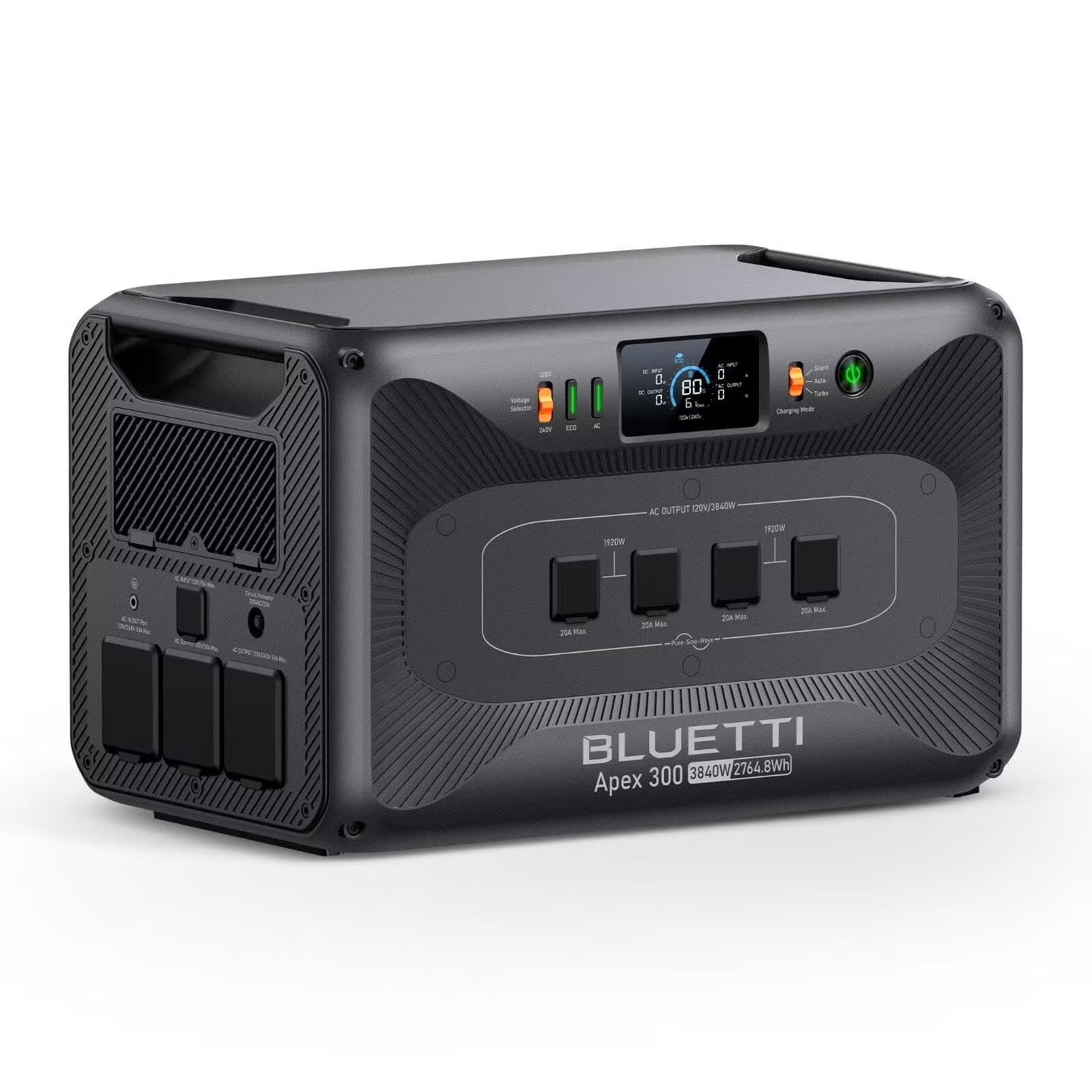
This model sits between two worlds: that of a portable station and a dedicated home backup power system. Alone, it delivers up to 3,840 watts and handles up to an impressive 7,680 watts of surge power. Capacity is a solid 2,764.8 watt-hours for decent runtime, though it depends on the amount of power you intend to draw from it. If you happen to have 240-volt appliances or circuits, this model has you covered, too.
But the Apex 300 is also highly expandable and customizable to your power needs, with the option to add up to six additional batteries for a very high capacity of 19,353.6 watt-hours. You can scale that up even higher, connecting up to two other Apex 300 units and running them in parallel, giving you up to 58,060.8 watt-hours of capacity if you added batteries to those, as well. This expandability makes it a great entry-level power station if you’re looking for something that gives you flexible home power backup.
Now 12% Off
I evaluated the Apex 300 as a stand-alone unit, powering a variety of devices, including computer gear, small appliances, and a space heater. I tested a few of the AC power charging options, including customized modes, as well as solar power using a Bluetti 350-watt solar panel. I also simulated a blackout to see how well it functioned as an uninterruptible power supply (UPS) and looked at how well it powered devices while recharging its own battery at the same time (known as passthrough). While I did not test its expansion capabilities with additional batteries or connection to a transfer switch or RV, I explain those features in this article and look forward to trying them out in the future.
Out of the box, the Apex 300 is very easy to use, though, despite it being billed as a portable model, it weighs almost 84 pounds. I found it quite heavy, so I wouldn’t want to lug it around a lot.
Like most power stations, you’ll need to download a mobile app to access the full range of controls and register using an email address to make firmware updates. But there are plenty of physical controls for selecting the charging mode, turning AC power on and off, selecting between 120-volt and 240-volt output, and activating an Eco mode that shuts down the station if it’s inactive for more than four hours.
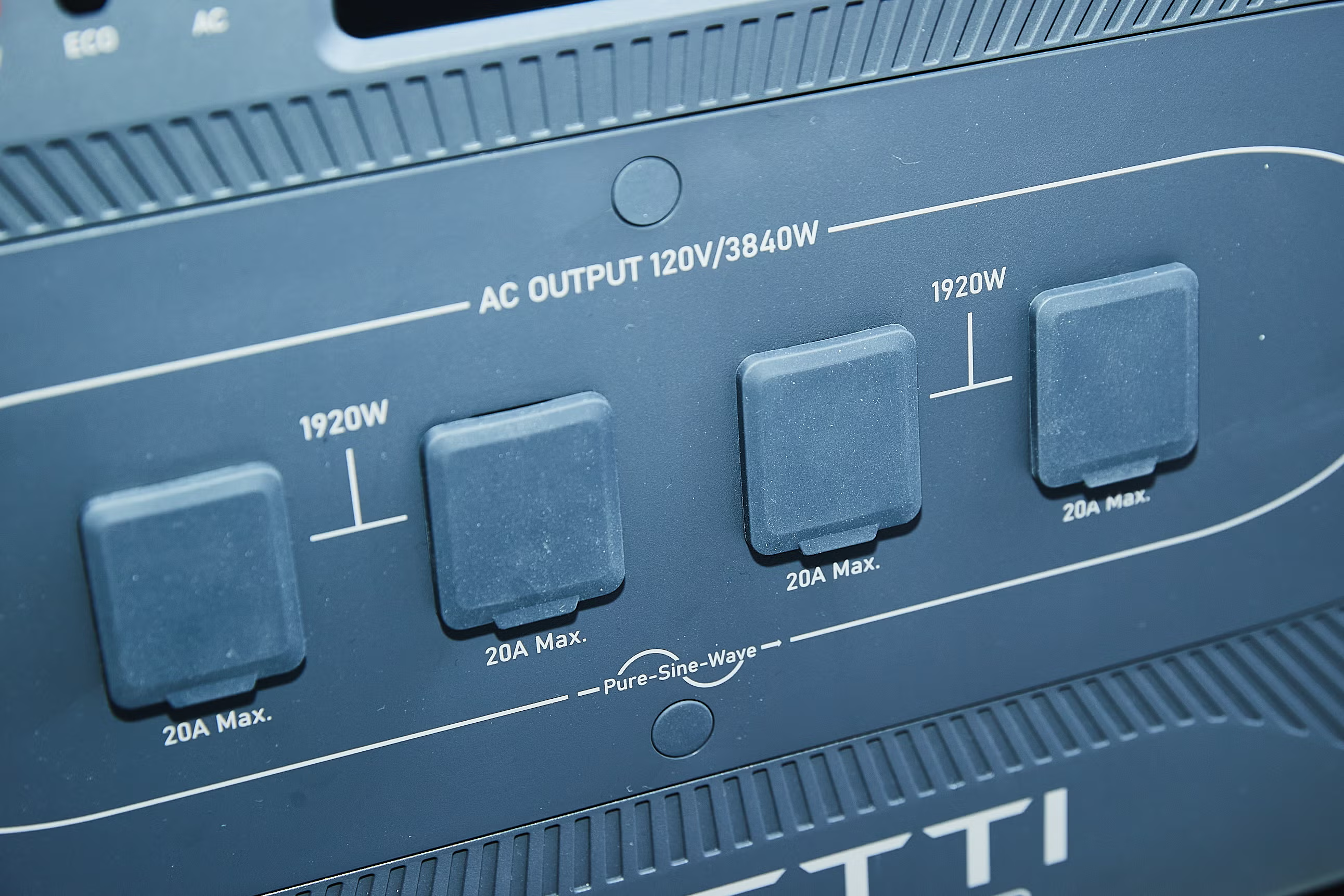
Power for AC devices is the focus of this station, with four 120-volt outlets across the front, plus a 120-volt 30-amp outlet and a 120/240-volt 50-amp outlet on the side, which means you can use it to power an RV or for home power backup with a transfer switch. There are also power inputs for a standard AC plug, a 30-amp connection, and two solar connections. The Apex 300 uses two inverters as opposed to one, giving you two banks of 120-volt 1,920-watt output (two outlets in each bank). I was able to easily run two high-powered appliances at the same time, including a space heater and a toaster, with no issues at all.
There’s also a built-in UPS that can switch over within 20 milliseconds in the event of a blackout. It can be even faster at zero milliseconds if you set the voltage to 240 and use the left two outlets of the station. I simulated a blackout while powering both a monitor and a computer running video, and I detected no perceptible change. It worked seamlessly.
One downside for me was the lack of direct DC outputs, e.g., USB-C ports. For that, you have to purchase an optional hub. That’s not a huge problem for home use, but for consistent portable use like camping, that could be an annoyance for some people.
I really appreciate the Apex 300’s variety of options and customizations for recharging. There are three preset modes: silent, standard, and turbo. Standard mode inputs up to 1,440 watts of power. That’s a lot—often this is the fast-charge input level for other brands’ power stations. High-input wattage can wear on batteries over time, so I preferred to set a custom amperage input of six amps (720 watts), which can easily charge it up in just a few hours. If you’re not pressed for time, there’s nothing wrong with low and slow.
Silent mode enables a lower input, too, at around 500 watts, but that will drop if the fans start to run at a higher speed. For example, during my tests, I used silent mode to charge the station overnight, which was at 39 percent. When I returned the next morning, it was only at 74 percent and still had several hours to go. This was perplexing (it shouldn’t take that long), so I ran a quick test by turning the station off for a few hours to let the battery cool and then restarted it in silent recharge mode. I discovered that after just 13 minutes, the input power dropped from 500 watts to 213 watts, and the estimated charging time went from 1.5 hours to 9.24 hours. The funny thing is, even when the fan is running fast, this station is incredibly quiet. I happily stuck to my custom mode.
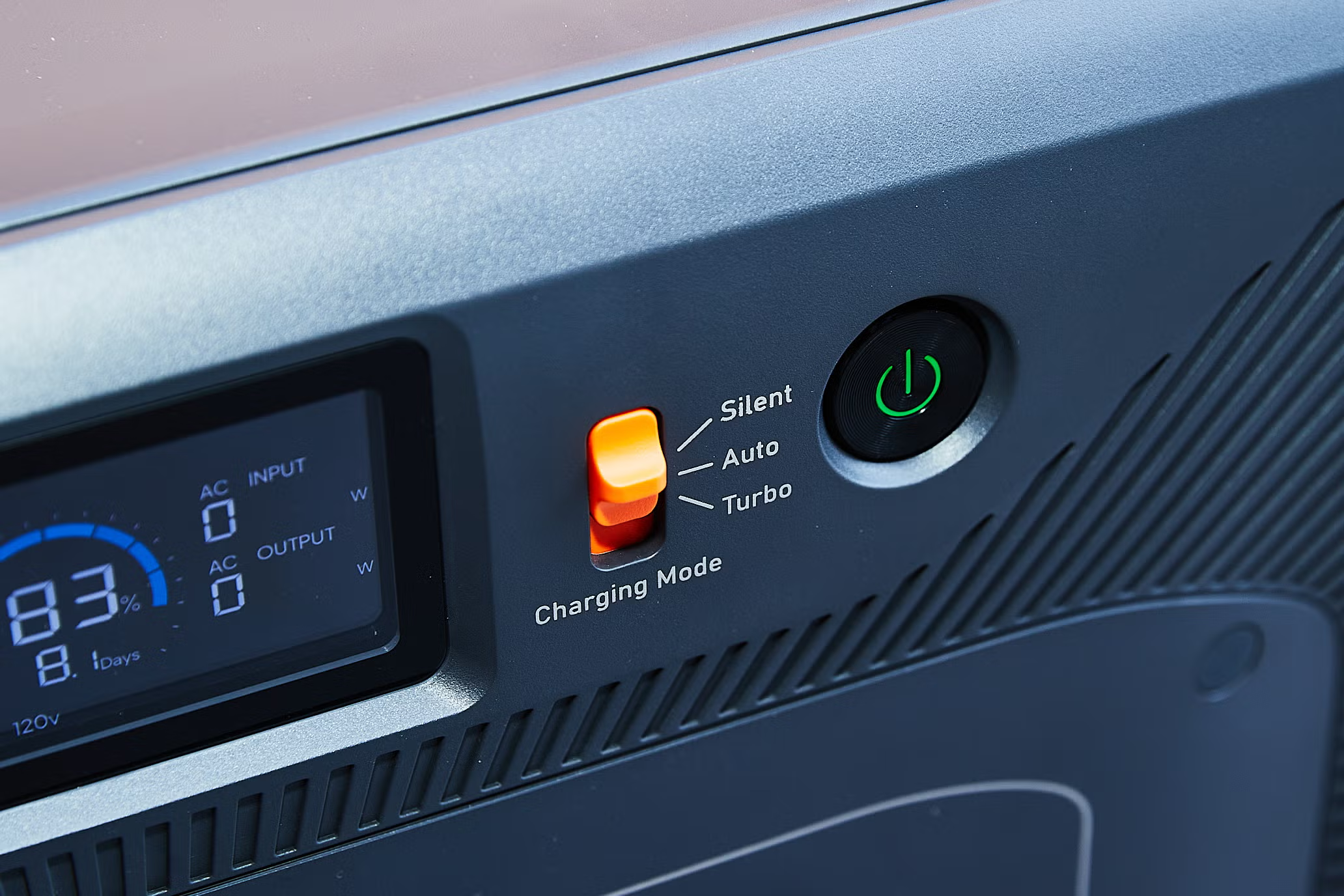
There are three basic modes for charging. Silent mode keeps the fans from running too loudly, so it’s variable and can decrease the charging time significantly. Luckily, you can customize your charging wattage to best suit your needs using the app.
Turbo mode can go even faster when using a 30-amp connection (like you would find in an RV park or campground) for up to 3,600 watts or using an electric vehicle (EV) charger connection at 3,840 watts. One thing I noticed with this power station is that the time-to-full-charge estimation was sometimes inaccurate. During one of my tests using AC power, it charged from 86 to 99 percent in 10 minutes, even though it first estimated that it would take 40 minutes. Sure, the result worked in my favor, but I learned that I shouldn’t take these numbers at face value.
This station is serious about solar recharging, too. There are two ports for connecting solar panels up to 1,200 watts each. Having the option of 2,400 watts of solar input is uncommon in a station of this size and price point. Plus, you can reach even higher input by pairing with a Bluetti SolarX 4K voltage regulator, which is designed for connection to larger solar arrays. I only tested it with a 350-watt panel, which worked well, but honestly, it would take over 24 hours of unobstructed full sun to fully charge it with that panel. Knowing I could adapt it to a much larger array in the future is a major bonus.
What I love most about the Apex 300 is the Bluetti Mobile app. Most power stations require an app to access a full range of controls, and this model is no exception. But its layout and customization are better than most. As I mentioned earlier, you can adjust the power level of recharging, but you can do it in the fullest sense, from as little as one amp to 50 amps.
The app offers some nice safety features, too, such as a child lock that deactivates the colorfully tempting manual buttons and a grid-adaptation mode that protects the station from voltage spikes or unexpected drops in power. There’s even an extreme weather alert that monitors public alerts and, if one is issued, the station activates the UPS and automatically ensures the battery is fully charged, so you’re ready to go if the power goes out. You’ll need a WiFi connection for the weather alert to work, but setting that up is simple.
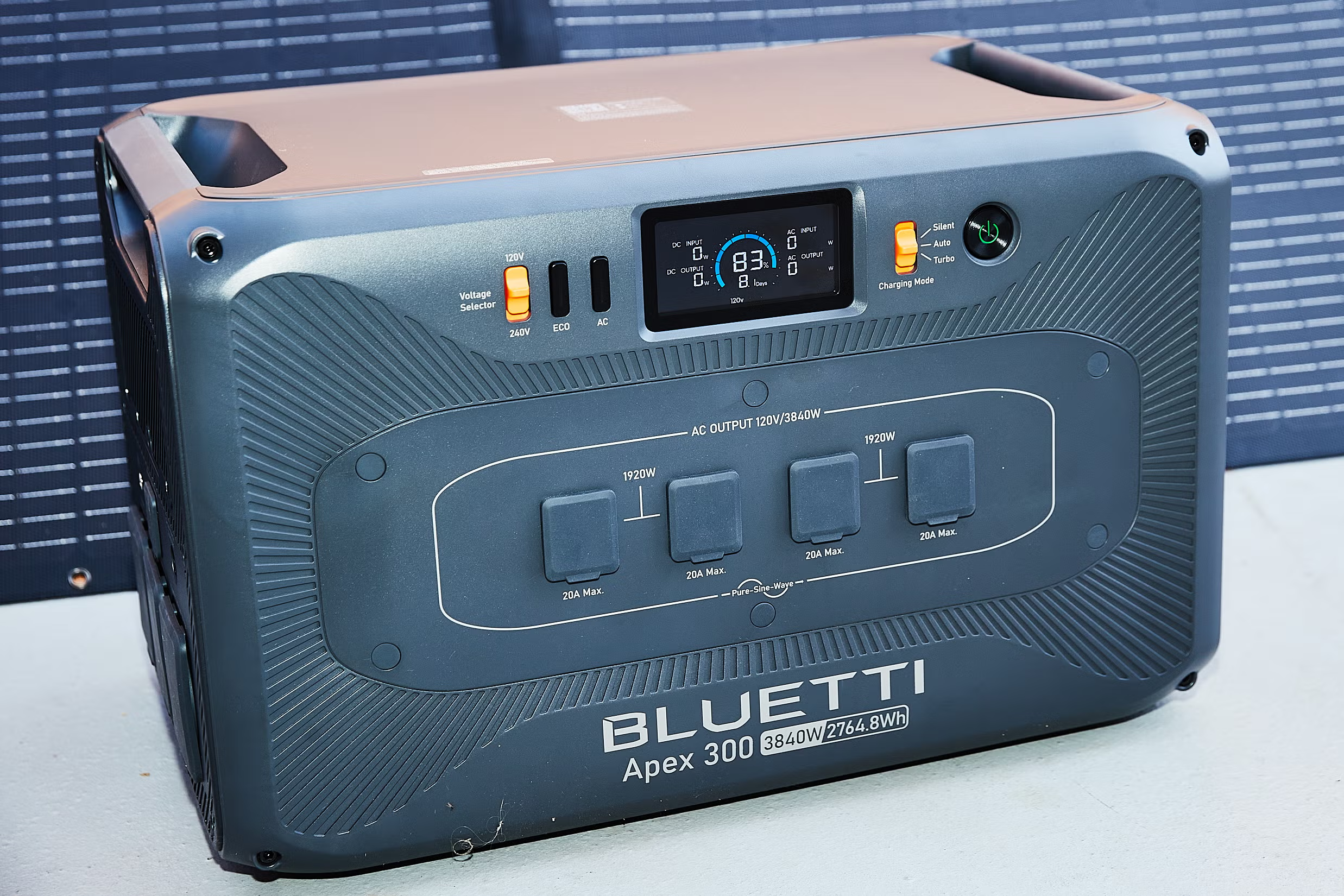
With the Bluetti Apex 300, the name of the game is flexibility. If you’ve been eyeing power stations but aren’t sure if you want one more for portable power or more for home backup power, this is the model for you. Not only does it offer a great amount of power for portable use, but the expandability makes it perfect for building a more dedicated system if and when you’re ready to pull the trigger. The price is right, too. With more output and advanced options than I’m used to seeing from other models in this cost range, this power station is a strong choice.
Small and Versatile
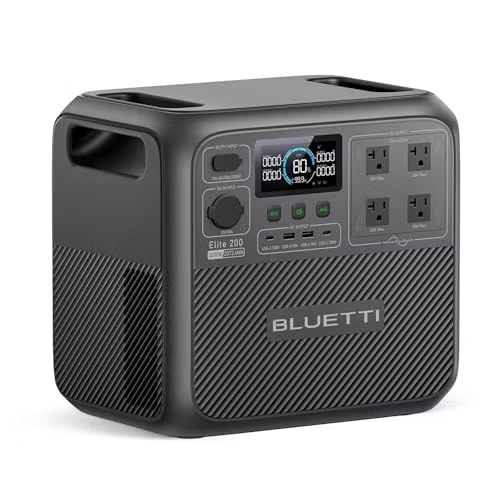
Now 16% Off
Very Durable
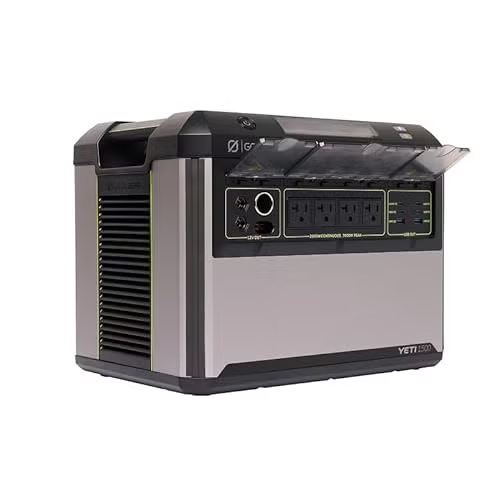
Good for Light Home Backup
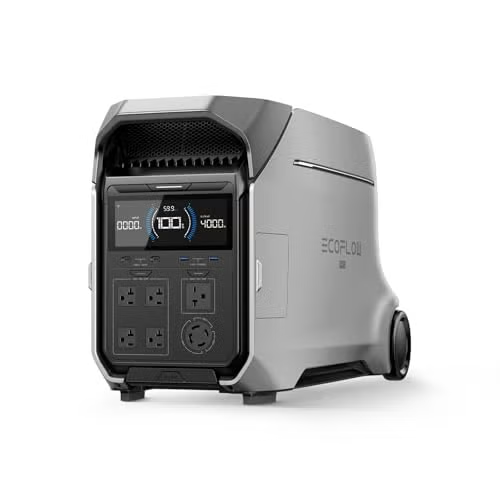
Now 38% Off

David is a Reviews Editor for Hearst’s Enthusiast Group, contributing to Popular Mechanics, Runner’s World, Bicycling, Best Products, and Biography. He has over 25 years of experience writing about and reviewing consumer electronics, kitchen appliances, DIY products, outdoor gear, and more. He also spent years covering the ever-changing world of online retail. To relax, he loves experimenting with new recipes, tweaking his smart home setup, and spending time outdoors on his bike or camping.

Brad Ford has spent most of his life using tools to fix, build, or make things. Growing up he worked on a farm, where he learned to weld, repair, and paint equipment. From the farm he went to work at a classic car dealer, repairing and servicing Rolls Royces, Bentleys, and Jaguars. Today, when he's not testing tools or writing for Popular Mechanics, he's busy keeping up with the projects at his old farmhouse in eastern Pennsylvania.
此内容由惯性聚合(RSS阅读器)自动聚合整理,仅供阅读参考。 原文来自 — 版权归原作者所有。