





We’ve reached a new era of fireside politics. A few years ago, there was no argument; standard fire pits should be wood-fired, and tabletop versions should use propane. They were two pretty distinct phenotypes, with very little crossover. Then something happened.
Last year, two notable brands pivoted, offering you a viable crossover option: gas fire pits. Ninja debuted its smokeless Fireside360, a hybrid space heater and fire pit, and SoloStove, a leader in the smokeless fire pit space, with the propane-powered Infinity Flame. The two releases represented a major shift in what we’d typically consider a fire pit.
Of course, this addressed a longstanding concern, as there are a few key drawbacks to a wood-burning fire pit. Safety is the big one. Those in a smaller, confined outdoor space are particularly at risk of rogue embers ruining the fun. And while that classic smoky scent is a non-negotiable for some, smelling like a bonfire for 3-5 business days is a dealbreaker for others. And don’t get me started on getting that smell out of my clothes.
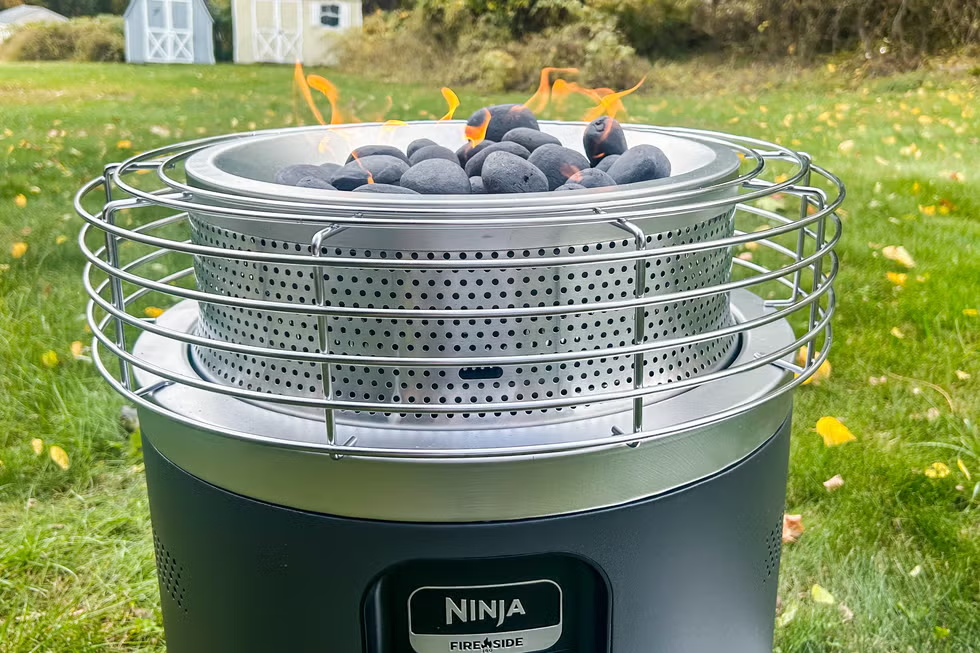
The other elephant in the room: the smokeless conundrum. You can never truly have a fully smokeless wood-burning fire pit, and while the top brands do a great job to keep it to a minimum, “smokeless” is a bit hyperbolic. Propane pits aren’t exactly fully smokeless either, but they’re generally far closer to hitting the mark.
Nonetheless, “pitting” the two major propane innovations against each other isn’t so cut and dry. While they share the same primary function, they offer distinctly different experiences. We were fortunate to test both the Fireside360 and the Infinity Flame, so we broke down everything you need to know.
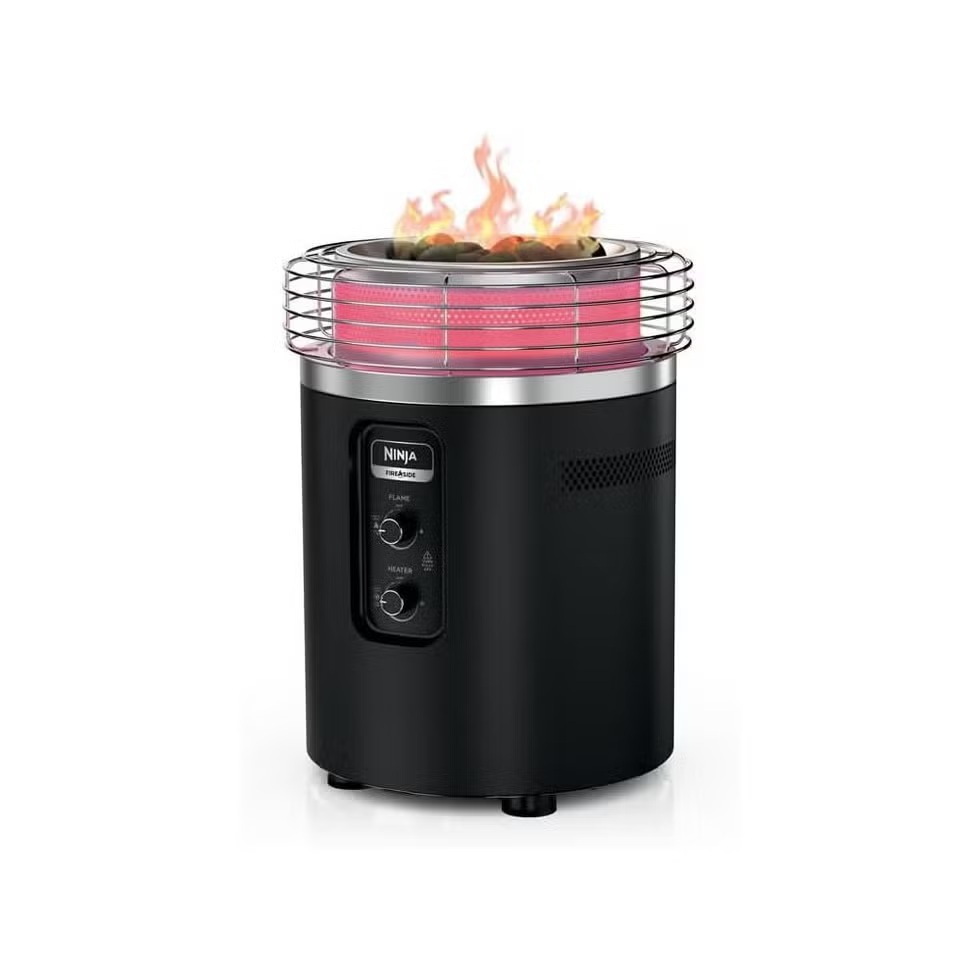
I tested the Ninja Fireside360 back in the fall, and I was impressed. The major selling point was that it could serve as a traditional fire pit, an outdoor space heater, or both. “Do-it-all” devices can sometimes serve as a deterrent, as there’s always the possibility of a jack-of-all-trades-master-of-none type situation, but Ninja typically has that dynamic down pat. Nonetheless, I still had some reservations at first.
Most of my initial fears were quickly assuaged. The device was essentially ready to go from the start. In fact, it doesn’t even feature an instruction manual; indicator stickers on the inside of the pit lead the way. You take the barrel-shaped unit out of the box, drop a few AAA batteries in the ignition, attach your propane tank, add ceramic rocks to the top, and you’re good to go.
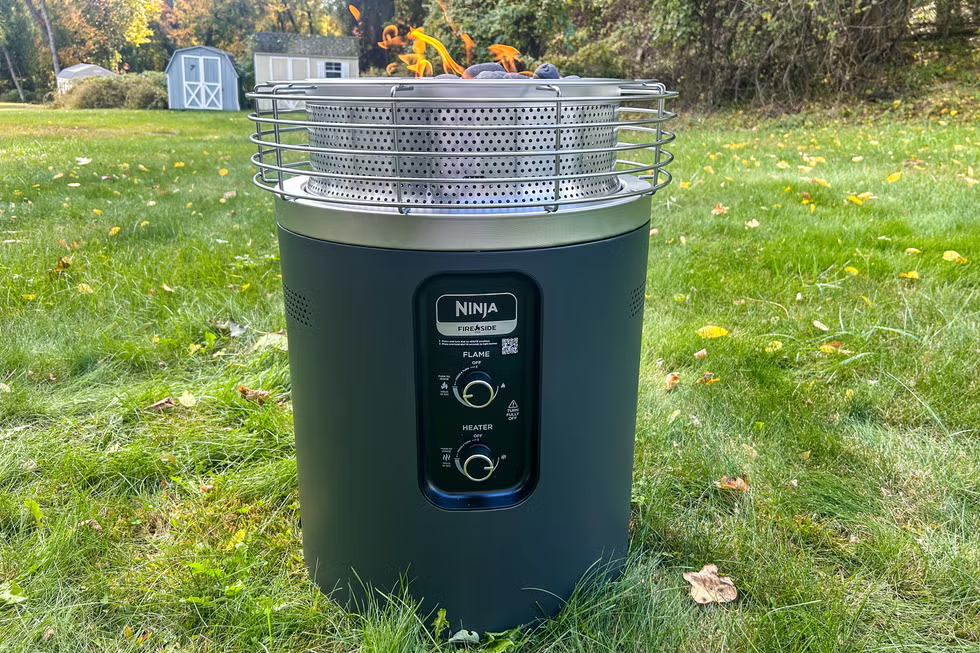
The device has three separate modes: flame-only, heat-only, and both. You can set and adjust the flame via the top dial, and the heat courtesy of the one underneath. The whole thing operates like your standard gas grill. Not to mention, this was also as close to a truly smokeless experience as I’ve encountered. And with 80,000 BTUs, it's powerful enough to operate in heat and fire-pit capacities simultaneously without compromise. Ninja’s true 360-degree coverage wasn’t a gimmick, either. Heat was dispersed evenly, and the Heat-only setting was far more powerful than I expected. Having only the inner flame lit also gave me a little extra peace of mind, which lends to its ability to act as a fairly inconspicuous outdoor space heater in tight spaces. It’s easy enough to move around, too, so it can seamlessly fill either role at a whim.
My only slight gripe with the Fireside is that it’s a little taller than a traditional bonfire. To operate as a space heater, it needs a little more length, and while I think Ninja hit the sweet spot at about 2 1/2 feet, it feels a little more functional than formal. It’s not a decorative piece by any stretch, but it’s also not meant to be. If you’re operating with limited space, it’s a perfect patio upgrade.
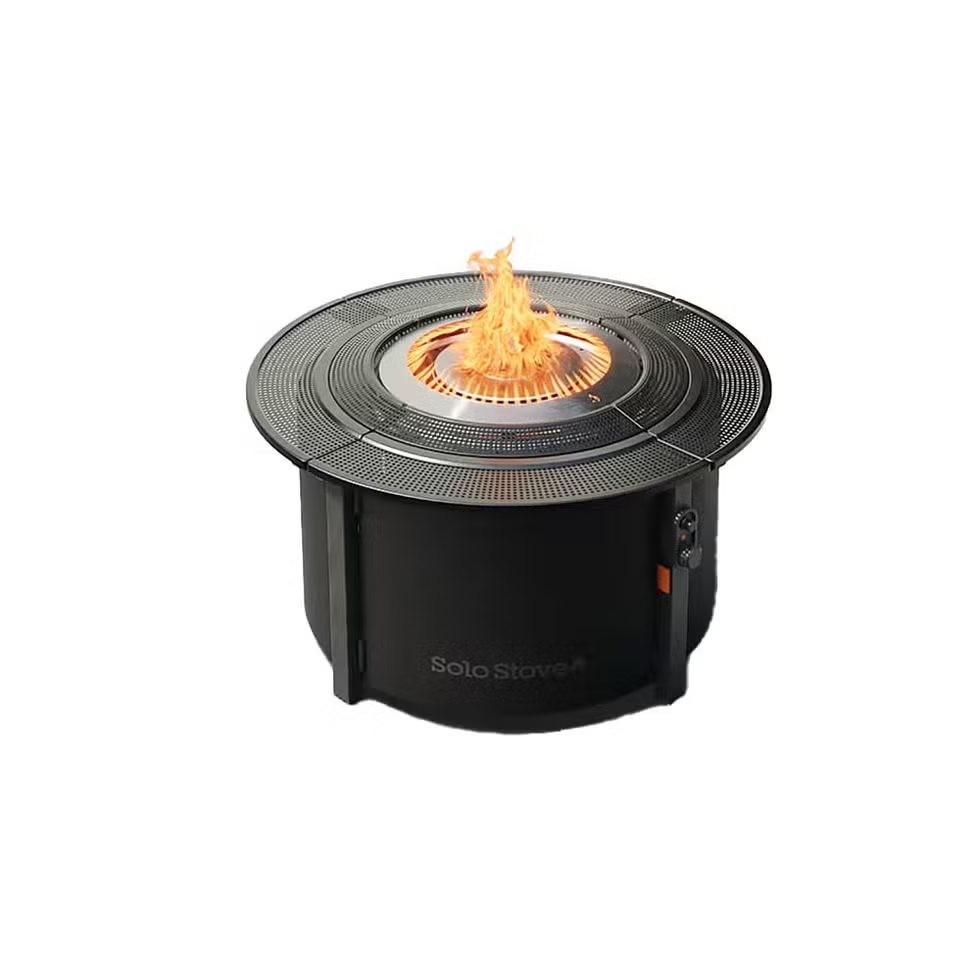
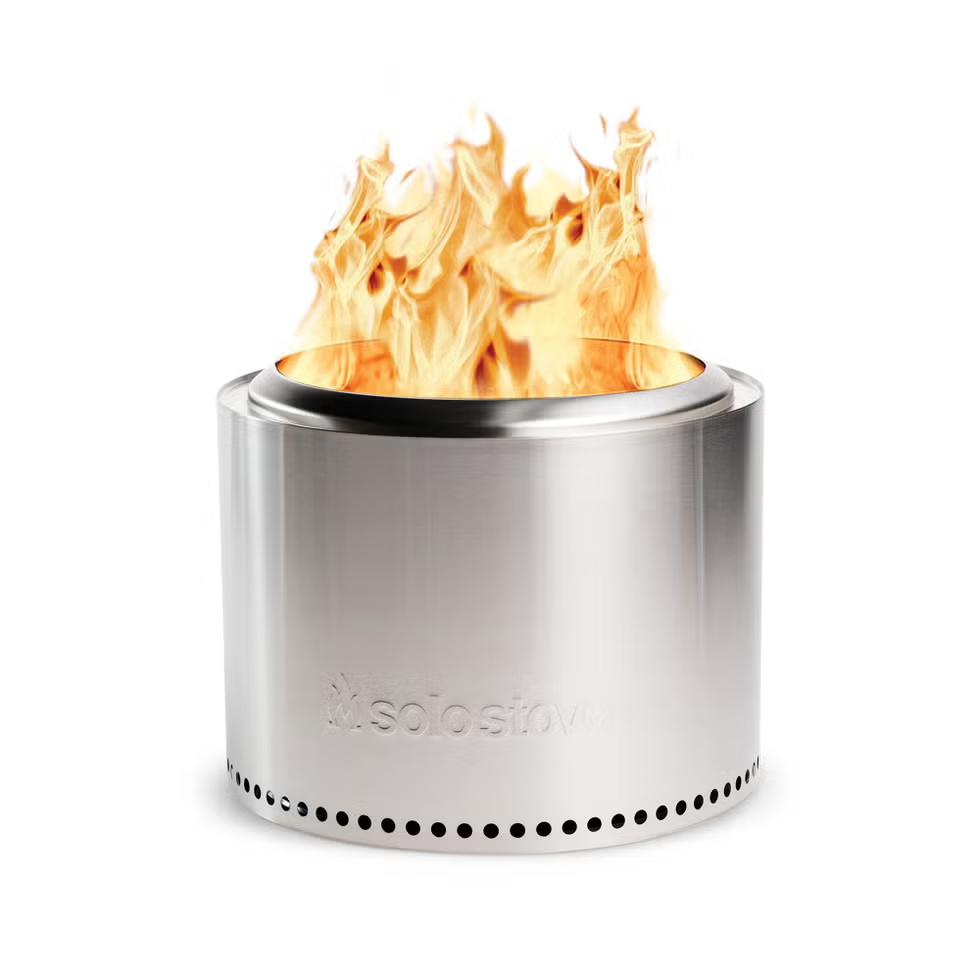
The Infinity Flame addresses the same concerns as the Fireside360, only without the hybrid designation. It’s more closely aligned to a traditional fire pit; in fact, it’s modeled to look almost identical to the traditional wood-burning Solo Stove pits.
Like the Ninja, the intention here is clear—eliminate ash, wood, and embers from the equation while delivering a similarly smokeless experience. The brand also used a phrase on the packaging that I thought fit: “worry-free enjoyment.” That’s the overarching theme, and it aptly applies to both units.
The Infinity Flame is a little lower to the ground, under 2 feet. It provides what I’d consider a more traditional fireside/bonfire experience. Setup wasn’t particularly difficult, but it did require a lot more preparation and installation than the Ninja, which, of course, was essentially none. It took me a little under two hours to put together, but the instructions were very detailed and straightforward. I’d consider this the major drawback, especially compared to the Fireside360, which was basically ready to go out of the box. It’s also substantially heavier (67 lbs fully built as compared to just 40 for the Fireside), so that played a role.
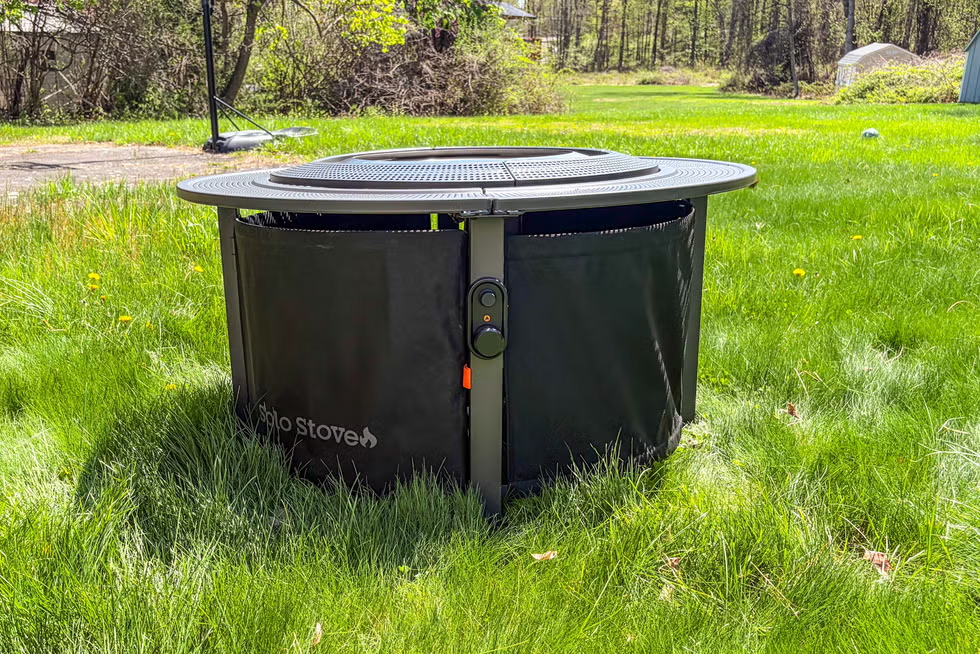
The Infinity Flame feels a little more durable. That’s not to say the Fireside360 was flimsy, but the Solo Stove is on the heftier side. The base comprises a rugged blend of 304 stainless steel, powder-coated steel, and a UV-resistant, waterproof fabric finish. Unlike some versions of the traditional Solo Stove, this comes with a tabletop. It’s not just for aesthetics, though; it’s built to disperse heat evenly. In some ways, this is akin to the Fireside360, but there’s no separate dial—or inner flame—to adjust heat on its own.
The gas-powered Solo Stove also uses souped-up ½-inch fire-tempered glass cubes. There’s an 8-lb bag of them, and the heat-resistant squares feature a sleek mirror-black pearl finish. Performance-wise, the Infinity Flame held up remarkably well. It’s technically a little less powerful at 72,000 BTUs, but that doesn’t make much difference without the space-heating component. As advertised, it ignited right away, and both the inner and outer flames were easy to control through the knob. Aesthetically, it was a clear step up from the Ninja. The Infinity Flame feels more like a classic bonfire, and it makes a great centerpiece for hosting. Its glossy, streamlined design gives it a cozy, s'mores-all-night sort of appeal.
Shop the Solo Stove Infinity Flame
There is a lot of crossover here, but it was clear throughout my testing that the two fire pits can offer vastly different experiences. The Fireside360 is probably the better buy value-wise; its versatility and two-birds-with-one-stone approach make it a great space-saving option with a clear utilitarian purpose. It’s also $100 cheaper. When testing the Solo Stove, though, I realized that what the Infinity Flame lacked in hybridization, it made up for in its sleek, yet rugged design and party-hosting prowess. It’s a little more expensive, but it offers a closer experience to your traditional woodfire bonfire. It’s also less portable and takes up more space, which actually plays to its advantage. The device warrants and, in a sense, deserves a designated space on a larger patio or in your backyard. Despite the overlaps, there are distinct, discernible differences, and they’re almost entirely contingent on your intended use. But all things considered, you really can’t go wrong.
Shop the Solo Stove Infinity Flame
Best Overall
Best Value
Now 24% Off
Best Portable
Now 17% Off

Tim Kohut is the Deals and Trends Editor for Popular Mechanics, Men’s Health, Best Products, and Runner's World. He has extensive product review and gear coverage expertise, particularly in tech, home, auto, and health. Tim was previously the Deputy Commerce Editor of The Drive and a Commerce Editor at BGR. He’s also overseen gear coverage and strategy at Popular Science, Bob Vila, Outdoor Life, and Field and Stream. He has a strong affinity for cats, Batman, and early 90’s Nicolas Cage films, in that order.
此内容由惯性聚合(RSS阅读器)自动聚合整理,仅供阅读参考。 原文来自 — 版权归原作者所有。