


How We Evaluated
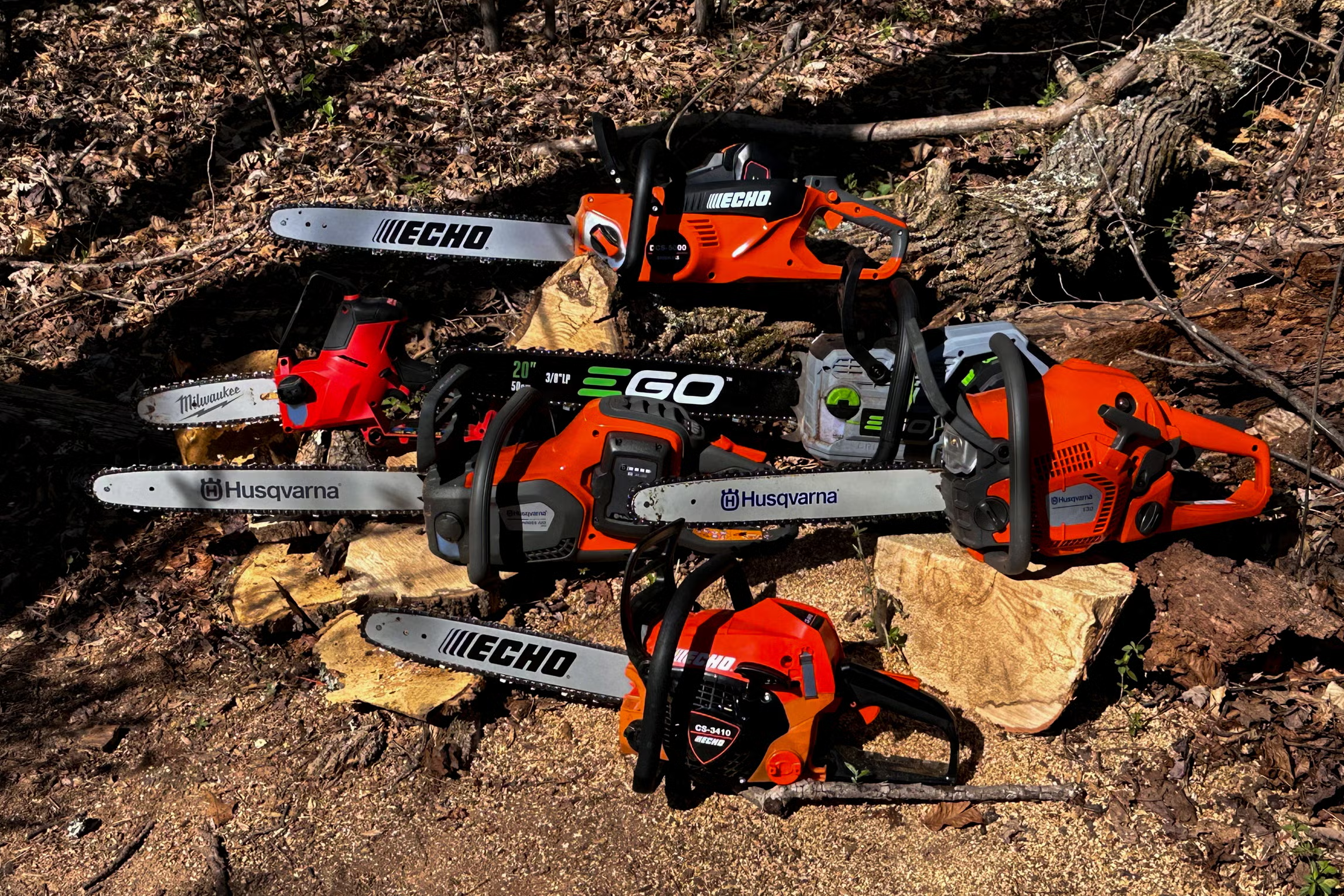
Having lived on a few wooded properties in the Mid-Atlantic region of the U.S., which is notorious for ice storms in the winter and hurricanes in the summer, contributor Tony Carrick has been using chainsaws for years for post storm clean-up and to take down damaged trees. He’s also tested them, both for Popular Mechanics, and publications like This Old House and Bob Vila, where he covers all things home improvement.
These recommendations are based on multiple rounds of testing, running a dozen chainsaws, including newcomers and longstanding recommendations. In addition, PM Gear Editor Brad Ford also contributed test notes and recommendations based on his chainsaw testing, which he runs year-round out of our workshop in Easton, Pennsylvania.
Both reviewers followed the same test regimen. We started by cutting cookies off an 8-inch thick fallen beech tree. After cutting a few warm-up cookies, we timed three separate cuts for each chainsaw, then averaged them to determine the chainsaw’s cutting speed. For electric chainsaws, we counted the number of cookies we could cut before draining the battery to measure run time.
In addition to speed and cutting time, we considered how easy each chainsaw was to operate based on its weight and vibration. While cutting the cookies, we measured each chainsaw’s noise level, taking decibel readings for each one while standing directly next to the chainsaw, and from 60 feet away.
Carrick also performed some real-world use-testing. He brought each saw into the woods, cutting branches and breaking down fallen trees to determine how easy each was to use, while cutting from different heights and angles, taking into account weight and balance.
Finally, we considered maintenance, assessing how easy each chainsaw was to maintain by adjusting the chain tension on each model.

Now 13% Off
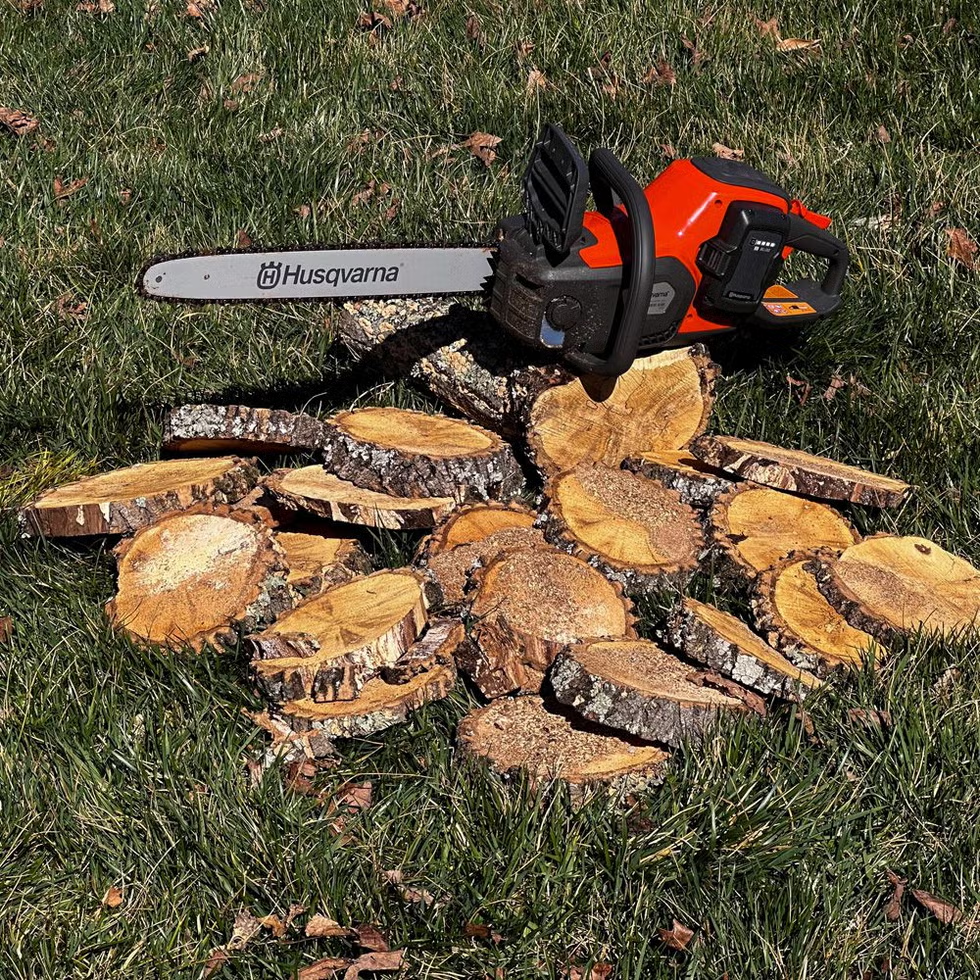
The Husqvarna Power Axe 350i boasts a quick cutting speed, has an impressive runtime, produces little noise, and it’s easy to operate. It’s the only chainsaw I tested that excelled at everything, making it the best all-around choice.
Though it wasn’t the fastest-cutting of the bunch, the Power Axe was certainly no slouch: It chewed through an 8-inch log in just over five seconds in “boost” mode, which increases cutting power at a compromise to runtime. With Boost mode off, it recorded a very respectable seven seconds. That isn’t the fastest cutting time of the chainsaws on our list, it’s very respectable.
Meanwhile, it reached top speed faster than any other electric chainsaw I tested. I was able to start my cut almost immediately after pulling the Power Axe’s trigger, where most chainsaws need a second or so to reach cutting speed. When you rev it up, you’ll notice it’s very quiet–just 67 decibels from 60 feet–making it also one of the quietest chainsaws.
The Power Axe also feels comfortable in-hand, which counts for a lot. At 14.5 pounds, it isn’t exactly weightless, but it’s far lighter than the Best Heavy Duty Ego Power+ below, something I appreciated while I held it above waist-level to make a horizontal cut on a 12-inch tree trunk. It’s also very well-balanced, allowing you to make more nuanced cuts, especially in uncomfortable positions.
It also nails the details: The control panel, which includes a power button, battery meter, and the “boost” button, is located conveniently just above the handle for easy access. The chain-tensioning system is the most well designed we’ve seen. Simply turn a knob on the side to release tension on the bar, then rotate a dial with your finger to tighten or loosen the chain. There are no nuts to loosen, covers to remove, or tension screws to loosen or tighten, so a process that takes minutes on other chainsaws takes seconds with the Power Axe.
The Power Axe 350i has a big battery, which you could describe as a double-edged… saw. It lasted almost twice as long as any of the saws I tested–nearly an hour in boost mode. That’s plenty of time to carve up a stack of firewood or break down a fallen tree. Unfortunately, it also takes twice as long to charge after you finish a job. That’s a minor blemish, though, on what I’d otherwise call a sterling performance.
| Type | Electric |
| Engine Size | 36V |
| Bar Length | 18 in. |
| Weight | 14.5 lb |
| Noise Level (60 feet) | 67 dB |
Advertisement - Continue Reading Below
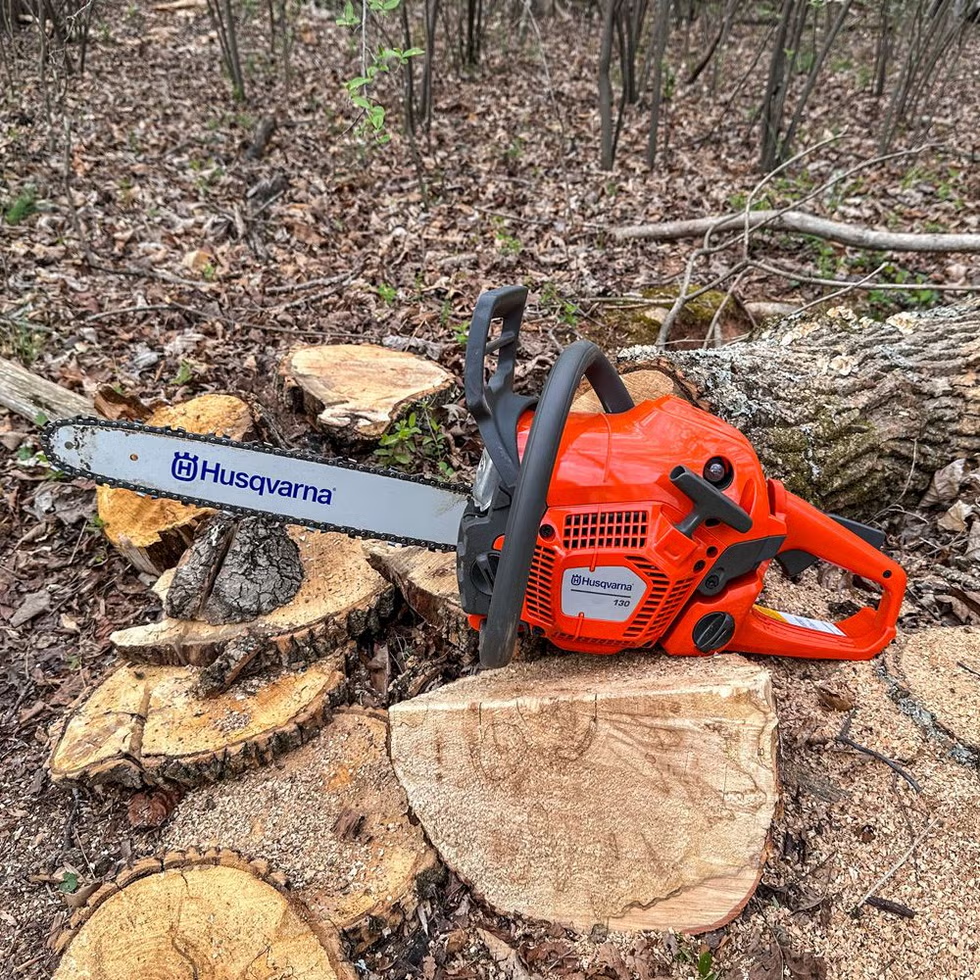
The Husqvarna 130 is lightweight, reasonably priced, and boasts tremendous cutting ability. By gas chainsaw standards, it’s easy to start, revving up from a cold engine after just a few pulls.
Unsurprisingly, it delivered the fastest cuts in our most recent tests. Once I got it warmed up, I was carving cookies off 8-inch logs in just over two seconds. It also handles quite smoothly, thanks to a very effective vibration dampening system. I usually find holding a gas chainsaw to be a hand-numbing, teeth-rattling experience, but the 130 felt nearly as smooth and stable in my hands as some of the electrics I tested. At 11 pounds dry, it also feels pretty light: You’d be surprised how big a difference two to three pounds can make on a long series of cuts.
In typical gas chainsaw fashion, the 130 gets loud. It produced an ear-splitting 109 dB at point blank range and 89 dB from 60 feet. It’s enough that you may wake the neighbors in most suburban neighborhoods.
While gas adds a little complexity for beginners, both in terms of fueling and seasonal maintenance, the Husqvarna’s powerful engine and lightweight design make it an easy starting point for new chainsaw owners, and a strong option across the board.
| Type | Gas |
| Engine Size | 38cc |
| Bar Length | 16 in. |
| Weight | 11 lb |
| Noise Level (60 feet) | 89 dB |
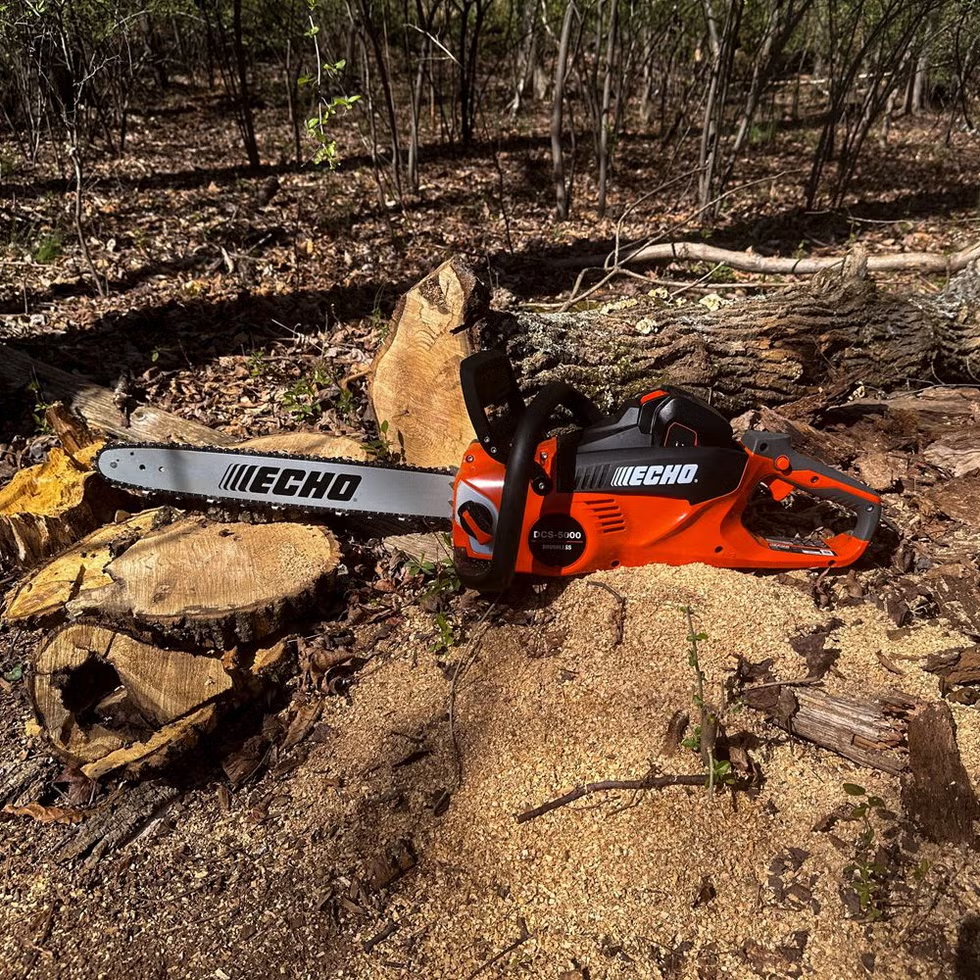
The Echo DCS-5000 lacks a lot of the bells and whistles you’ll find on pricier electric chainsaws, like tool-less chain tensioning and battery-saving settings, but it keeps up with the best where it counts – core cutting performance. I recorded some of my fastest cuts with it, slicing through an 8-inch beech tree log in under four seconds.
At just 12.7 pounds with a battery slotted in, the DCS-5000 is very light for a high-powered electric chainsaw. My arms appreciated the lighter build when I brought both this guy and the heavier Husqvarna Power Axe 350i into the woods for their extended cutting sessions.
All that said, the DCS-5000 is a budget-tier chainsaw, and it comes with some compromises. Like I mentioned, it doesn’t offer multiple power modes, so there’s no way to dial back its power to increase run time. It also lacks tool-less chain tensioning, which makes maintenance a bit of a chore.
Perhaps the most noticeable issue, though, is the noise. It puts out 107 decibels at 2 feet, and 76 decibels at 60 feet, which is almost as loud as a similar-length gas chainsaw. As long as you bring proper ear protection–which you should always wear, by the way!–the DCS-5000 delivers great power in an affordable, if basic, package.
| Type | Electric |
| Engine Size | 56V |
| Bar Length | 18 in. |
| Weight | 12.7 lb |
| Noise Level (60 feet) | 76 dB |
Advertisement - Continue Reading Below
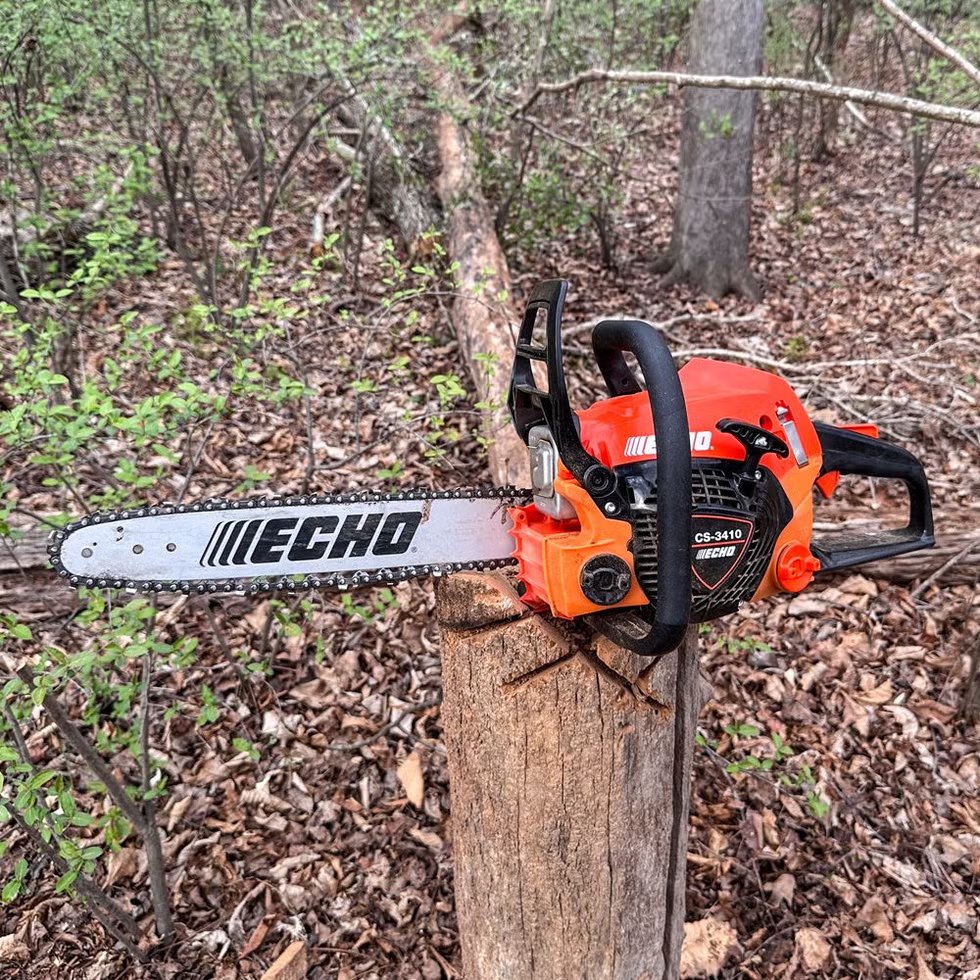
Echo’s 14-inch CS-3410 is one of the most affordable chainsaws that offers high-quality cutting performance. At 8 pounds, it’s far lighter than any of my other recommendations. That low weight, coupled with its compact 14-inch bar, makes it very easy to handle. (Especially compared to a 16- or 20-inch pro-grade saw.)
The CS-3410 is reliable, but a budget-tier option through and through. Its 34.4cc engine couldn’t match the cutting speeds of the other chainsaws, though it still chewed through an 8-inch log in a very respectable 6 seconds on average. What’s more, it did so smoothly, thanks to a three-point spring vibration-reduction system that cut the rattle out of the handle as I cut.
While the CS-3410 is by no means quiet, it’s not as loud as your typical chainsaw, producing 83 dB at 60 feet.
As with the other gas chainsaw we tested, adjusting chain tension was a chore with the Echo. I had to remove covers, disconnect a spark plug for safety, and loosen multiple bolts. Maintenance is a small price to pay for an affordable, well-built chainsaw, though, so consider the CS-3410 if spending as little as possible is your top priority.
| Type | Gas |
| Engine Size | 34.4cc |
| Bar Length | 14 in. |
| Weight | 8.2 lb |
| Noise Level (60 feet) | 83 dB |
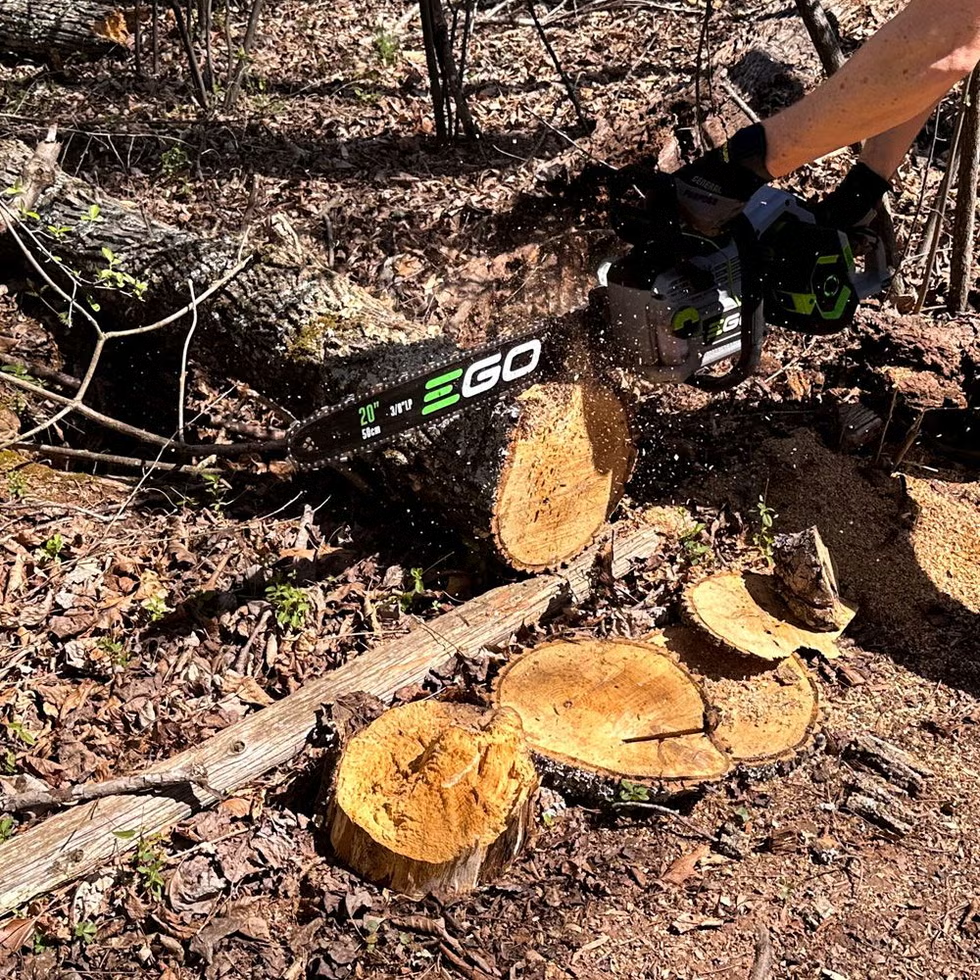
While gas is still generally the go-to option when you need a very long cutting bar–20 inches and above–a few electric models have recently shown that a high-powered electric chainsaw is not only possible, but effective. For example, the 20-inch Ego Power+ chainsaw made short work of our test log, slicing through it in under 4 seconds. It’s easily the fastest electric chainsaw we used in our latest round of testing. Better yet, it was able to hit that high mark with minimal vibration and average noise.
On the other hand, it weighs an arm-burning 19.3 pounds. That made lugging it into the woods more of a workout than a chore, and made cutting at awkward angles extra tricky. I like to feel firmly in control and capable of handling a chainsaw’s weight when sawing above chest height, and the Ego’s heft started to push me out of my comfort zone as I went for a higher limb on a dead beech tree.
Weight aside, though, the 20-inch Ego Power+ was actually very easy to use. It features an LED control panel that lets you toggle between boost, medium, and “eco” speeds, so you can balance between performance and run time, depending on the job. It even has an LED headlight with two brightness settings for night jobs.
I do wish it had a tool-less chain-tensioning system like the Husqvarna Power Axe, especially since you can get that with the smaller, 16-inch Power+.
A 20-inch chainsaw is not for everyone, but if you need to bring out the big saw and don’t mind the extra weight, the 20-inch Power+ offers undeniable cutting performance that can keep up with a large gas engine. That’s no small feat.
| Type | Electric |
| Engine Size | 56V |
| Bar Length | 20 in. |
| Weight | 19.3 lb (w/ battery) |
| Noise Level (60 feet) | 70 dB |
Advertisement - Continue Reading Below
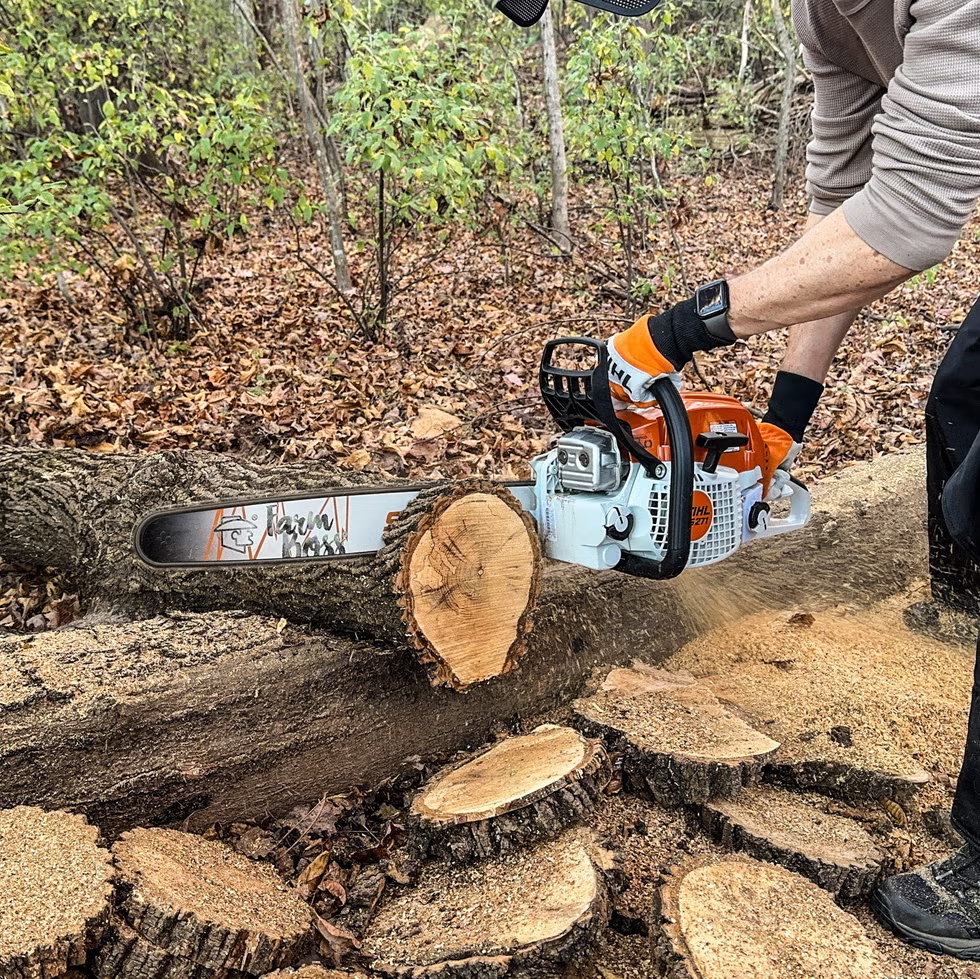
If you have acres of wooded property to manage, then you need a chainsaw capable of chewing through a heavy workload. If you have such an opening, the aptly named Stihl Farm Boss is up for the job.
With a powerful 50.22cc engine, it cuts faster and smoother than any gas chainsaw we’ve laid our hands on. It sliced through our 8-inch thick cookies without hesitation, easily carving each one in less than three seconds. After dicing up a good sized log, I upped the ante and used it to cut through a 10-inch thick fallen white ash tree in the woods behind my house. Even that dense hardwood proved to be little match for the Farm Boss, which took slices off it quickly – about one every five seconds.
And even after extended use, it made consistently good cuts with no need to stop and adjust chain tension or add bar oil. I didn’t deal with any chain binding or stalling engines. It has the rock solid build you’d expect from a pro-grade saw made by a legacy brand like Stihl.
You’d think that, with all that power, the MS 271 would be a bone rattler that would leave your arms numb after an hour or two of cutting, right? Well, it keeps calm in your hands, thanks to a very effective vibration dampening system that separates that large motor from the handle. It’s definitely loud, though, and weighs 15 pounds with a full tank. That’s fairly manageable for a chainsaw of this size, but I wouldn’t call it lightweight, either.
Starting up the MS 271, like most gas chainsaws, is a bit of a chore that requires working a choke through two positions and multiple starter pulls. I found that it’s a little easier to flood the engine when you start it up from cold than other chainsaws we tested. It took me a good seven or eight pulls to start it cold. That said, it’s no more difficult than other gas chainsaws we tested. It does have a fuel injection system, which saves you from having to squeeze a primer bulb when cold starting it.
This is a serious chainsaw, and it comes with a steep price tag. Still, the Ms 271 Farm Boss is a worthy investment for anyone who finds themselves in need of a workhorse chainsaw that can take down and break down large trees, and do serious clean-up work regularly.
| Type | Gas |
| Bar Length | 50.22cc |
| Engine Size | 20 in. |
| Weight | 15 lb |
| Noise Level (60 feet) | 95 dB |
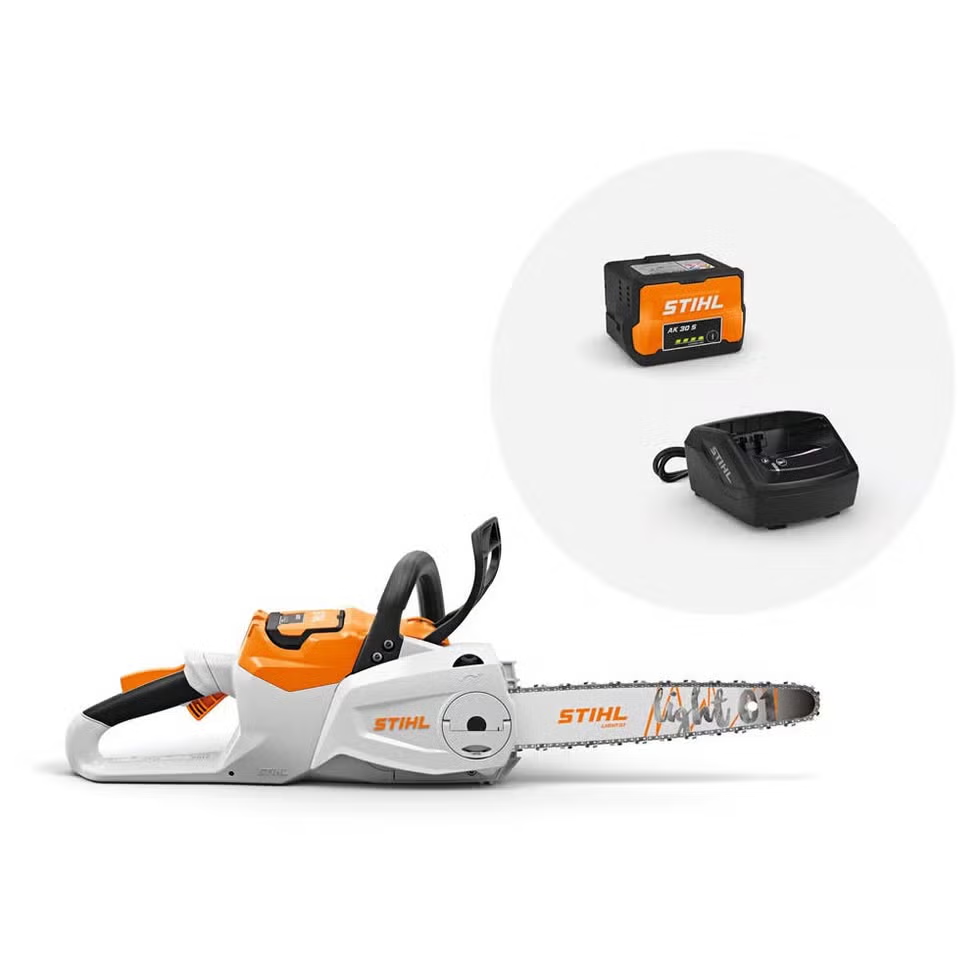
If you need a chainsaw for regular tree management – pruning, trimming branches, cutting down small trees – the 14-inch Stihl MSA 80 C-B is a very helpful, compact all-arounder. This chainsaw is very light, which makes it easy to handle. That’s helpful for beginners. Its shorter, more narrow bar could easily reach in between the crotches in trees, making it an effective pruner, especially if you’re trying to make cuts on a high branch.
Maintenance is also easy with the MSA 80. To adjust the chain, simply loosen the large knob, turn the adjuster to set the chain tension, and tighten the knob. There’s also a translucent reservoir that allows you to see the bar oil level at a glance.
Despite having a relatively small battery, the MSA 80 posted good run time results. We were able to cut 107 cookies, putting it on par with other top battery powered chainsaws we tested. We also experienced noticeably less vibration when cutting compared to the larger chainsaws we’ve tested.
With a $500 price tag, the MSA 80 is the most expensive 14-inch battery powered chainsaw we’ve tested. If you don’t mind paying a little extra, though, its performance and easy operation make it a great choice for homeowners who need to manage trees and cut firewood, whether you’re a beginner or just looking to make your life easier.
| Type | Electric |
| Bar Length | 36V |
| Engine Size | 14 in. |
| Weight | 10.1 lb (w/ battery) |
| Noise Level (60 feet) | N/A |
Advertisement - Continue Reading Below
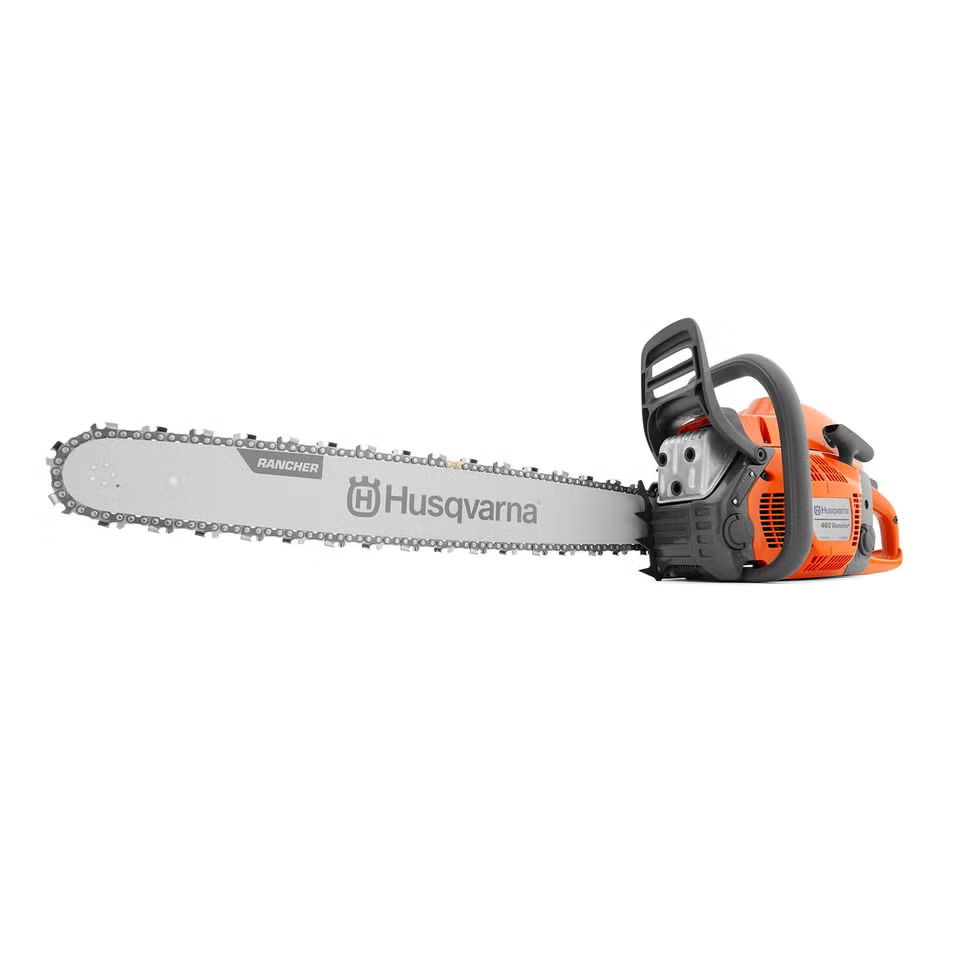
Sometimes you just need more saw. If you often have to cut bigger, and more trees—say if you’re cutting a season’s worth of firewood—then you’re going to need a bigger, more powerful chainsaw, like the Husqvarna 460 Rancher. The 460 Rancher comes with a longer 24-inch bar and larger, powerful 60.3 cc engine.
With the longer bar, the 460 Rancher made it much easier to make accurate cuts in larger trees. This was particularly true when making felling cuts. Being able to see the tip of 460’s bar on the other side of the tree helps you be sure you are cutting exactly where you want. For people who aren’t dropping trees every day this can make a big difference in your ability to land one in the right spot. I ran through four tanks of gas testing the 460 Racher and was able to get consistently straight, accurate cuts in larger logs from 22 to 26-inches.
The roughly 20% increase in displacement over most 20-inch saws makes a difference. The 460 Rancher’s cutting speed was instantly evident, even when the entire bar was buried in a log. With just its own weight, the saw easily pulls itself down into the wood, but moderate leverage against the bumper spikes yielded aggressive progress.
Initially, the separate ignition switch, choke, and priming bulb seemed to be needlessly complicated. But, after working through a couple trees the process became more natural and automatic. And to be fair, the 460 Rancher is similar to many other saws in this regard.
The 460 Rancher also has a decompression valve to facilitate starting. Pushing the valve in reduces the pressure in the cylinder, which makes it easier to pull the recoil starter. It works great, but with the saw in good tune and full of fresh fuel, using it was unnecessary.
One of our favorite features was the simplicity of the fuel and bar oil reservoir caps. You can just insert the cap, spin it in, and flip the lever on top to lock it. There was no fumbling, trying to find the correct indexed position, followed by trying engage the cap’s tabs by pressing in to twist it.
Husqvarna’s 460 Rancher has significantly more power than typical homeowner saws. It will help you tackle bigger trees with confidence, make accurate felling cuts. It’s a lot of saw for the money, and a great value, considering its performance, and compared to other, similarly sized saws.
| Type | Gas |
| Bar Length | 24 in. |
| Engine Size | 60.3 cc |
| Weight | 13.2 lbs |
| Noise Level (60 feet) | N/A |
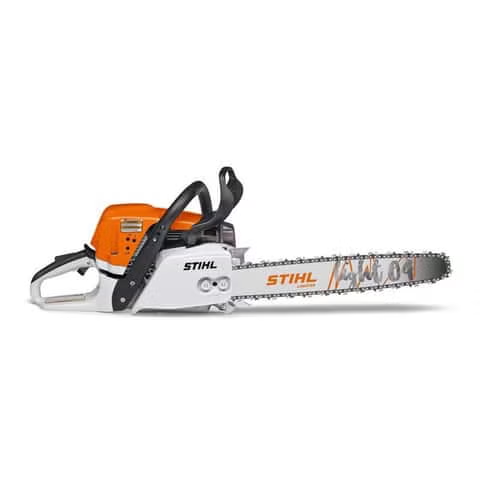
With a recent need to fell a tree 24 inches or so, in diameter, we decided it was time to test a couple bigger, gas saws like this Stihl MS391—their least expensive saw available with a 25-inch bar. It features a 64cc engine with 4.5 horsepower, which is significantly more than most 18-20-inch saws. It certainly makes felling large trees easier, with the tip visible on the other side of the tree to gauge exactly where you were cutting.
It’s not just that the bar is longer—the MS39’s bigger engine and increased horsepower is needed to keep the mass of the longer chain spinning, especially when it has more cutters digging into the wood in wider trees. Often when a saw is under-powered for the size cut or log you’re working with, the cutting goes slowly, even if the saw doesn’t get bogged down. In testing, with the full 25-inch bar buried in a log, the MS391 had plenty of umph, to power through.
Starting the MS391 was easy—and if you’ve ever started a Stihl saw the process should be familiar with one exception. To facilitate starting, the MS391 comes with a decompression valve. By pressing it, the cylinder compression is reduced, so the recoil starter is easier to pull. Once started, the valve automatically closes. It is easier to start, but in testing it easily enough without using it. Generally, it took two pulls to start, with one on full choke producing a single “pop”, then moving the control lever to the next, partial choke position, one more pull will start the saw. This is the same process as any other Stihl gas saw I’ve used.
Adjusting the chain as it broke in was easy and done the same way as on any other Stihl saw. I was able to quickly adjust the chain by loosening the two nuts on the side cover and turning the adjuster between the nuts. To do this, I used the scrench provided with the saw.
The MS391 is a bigger, more powerful saw that most homeowners need, but considering it is also available with an 18 or 20-inch bar, it can bring a significant power increase to working with smaller trees and logs too. So, it could be worth considering buying the MS391 with a second bar and chain to cover a wider variety of tree diameters.
| Type | Gas |
| Bar Length | 25 in. |
| Engine Size | 63.9 cc |
| Weight | 13.8 lbs |
| Noise Level (60 feet) | N/A |
Advertisement - Continue Reading Below
What to Consider

Gas vs. Electric
In recent years, the once-cavernous divide in power between electric and gas chainsaws has narrowed dramatically, to the point where you can expect similar performance from both options in all but the largest saws. As a result, most homeowners who need a chainsaw for only occasional branch or log breakdown should start by looking at electric saws.
Electric chainsaws offer similar cutting speeds, are far easier to start, run more quietly, and don’t produce exhaust. They also produce less vibration than their gas counterparts, making them easier to operate for those who may not use a chainsaw very often. They also don’t require any seasonal maintenance: You still need to sharpen the chain on occasion, but there’s no need to change the oil or add stabilizer to your fuel between seasons.
That said, there’s still a place for gas chainsaws. A large gas engine will still outmuscle the most powerful electric chainsaws in terms of raw cutting power, and a gas tank provides a much longer runtime than any battery. Many gas chainsaws are also lighter than electrics, which rely on heavy batteries for power. With the rising popularity of electric options, gas chainsaws are increasingly the less expensive choice.
Cutting Bar Length
The cutting bar is the long, flat piece of metal that guides the chain, setting the size and shape of your chainsaw.
With a longer bar, your chainsaw can cut through larger, thicker trees. As a rule of thumb, a chainsaw can safely cut through trees or logs with a diameter up to 2 inches smaller than the length of the cutting bar in a single pass. (Technically, it is possible to cut thicker limbs though a technique called “double cutting.” That’s an advanced technique, though, which requires a good deal of practice to execute safely.)
That means the size of the cutting bar more or less dictates how you should use the saw. Mini chainsaws with 4- to 8-inch cutting bars are designed to prune small branches with one hand. The longest – 24 inches – are made for loggers and professional arborists who need to cut down mature trees.
For most homeowners who need a single saw that can do anything, I recommend a mid-size chainsaw with a 14- or 16-inch cutting bar. It’s the most versatile length: With enough cutting power, you can cut or break down large branches, and chop large logs into firewood. A 20-inch model is a good choice for those with wooded properties that span an acre or more.
Power
Your chainsaw’s ripping power comes from its gas engine or electric motor, which turns the chain. With a more powerful engine, the chainsaw can generate more torque and speed, which allows it to cut through wood more quickly.
For electric chainsaws, cutting power corresponds to how many watts (voltage x amps) the motor puts out. Most chainsaw brands simply share the chainsaw’s voltage, which is determined by the battery and gives you a broad indicator of power. (In this context, a higher voltage pretty much always translates to more power.)
The most powerful electric chainsaws – think a 16- to 20-inch cutting bar – require a large motor and a 40- to 50-volt battery. Light-duty models often support the same 18- to 20-volt batteries that power many cordless tools, such as cordless drills and nail guns. You’ll need a large motor for larger tasks like cutting firewood or managing trees. For pruning and branchwork, a smaller one will do.
Gas engines are measured in cubic centimeters (cc). Most gas chainsaws with 14- to 16-inch bars have 38cc engines or so, which produce enough power to cut through a 12-inch log without creating so much kickback that a novice chainsaw user wouldn’t be able to handle it.
Weight
While operating a chainsaw, feeling confident and in control is key. They are dangerous machines, and it’s important that you are able to hold it up and make precise cutting movements. Before starting a chainsaw for the first time, pick it up and make sure that you can hold it at chest height for an extended period of time without straining.
Chainsaw weight and balance depends primarily on the size of the motor or engine, as well as the length of the cutting bar. The more powerful the chainsaw, the heavier it’s going to be.
Chainsaws regularly weigh from eight pounds for a small two-hander with a 14-inch cutting bar up to 20 pounds or more for a 20-inch model. In a perhaps surprising development, gas chainsaws often wind up weighing less than electric models, especially in large sizes. That, as I mentioned earlier, is because of the added heft of the batteries.
Safety
I’ll say it again: With their long cutting blades and propensity for dangerous kickback, chainsaws are among the most dangerous power tools you can operate. About 36,000 people end up in the emergency room each year with chainsaw related injuries, according to statistics from the Centers for Disease Control and Prevention.
With that in mind, it’s important to pay attention to look for dedicated safety features in your chainsaw. Any worthwhile model should have a trigger lock that requires you maintain pressure on a button to engage the chain, so it stops if your hand slips off the trigger. I also look for a chain break, which disengages the chain in the event the chainsaw kicks back.
More on the Difference Between Gas and Electric
Advertisement - Continue Reading Below
FAQ with Outdoor Power Tool Expert Tony Carrick

What safety equipment should I wear while using a chainsaw?
There’s plenty of anti-cut gear you can wear to minimize the possibility of catastrophic injury. Specially designed anti-cut chainsaw gloves will keep your hands dry, give you a good grip, and prevent cuts. Chainsaw chaps, which are cut-resistant clothing you wear over your legs, also provide protection.
Chainsaws are loud, with even electric models approaching 100 dB from point blank range, so it’s important to wear ear protection, either in the form of ear muffs or ear plugs, to prevent hearing damage. You should also wear eye protection–either a helmet with a visor or safety glasses–since chainsaws send wood chips flying.
How do I use a chainsaw safely?
Here are a few basic safety rules to keep in mind while operating a chainsaw:
Keep both hands wrapped around the handles of the chainsaw at all times while a chainsaw is running to ensure they don’t come into contact with the blade.Resist the temptation to fully extend your arms to keep the chainsaw away from your body. Doing so makes it difficult to keep your balance and hold the chainsaw steady. Instead, keep the chainsaw head (the motor) close to your body where you can best manage its weight.Take a wide stance with your left foot in front of the other to create a stable base from which to cut.Lower the chainsaw down to the spot you want to cut. Allow the weight of the saw to pull the blade down through the wood. Do not apply pressure: It could cause the chain to bind in the wood.Avoid engaging a cut in the upper half of the cutting bar’s lead edge, which is commonly known as the “kickback zone.” Making a cut this way may cause the blade to grip the wood and the chain’s rotation to throw the blade backwards toward your head.Once a cut is complete, release the trigger to stop the blade. Do not keep the blade running between cuts, especially if you have to move to a new location.
How do I maintain my chainsaw?
Electric chainsaws require very little maintenance. All you have to do is check and adjust the chain tension before each use, plus add chain lube every time you refill your chainsaw to keep the chain running smoothly in its guide. It’s also a good idea to store the battery inside during the off-season, especially when temperatures drop below freezing.
If you go with a gas chainsaw, though, you will need to do regular maintenance to keep it in the best possible running condition. In addition to adding chain lube and adjusting the chain tension, you should remove the air filter cover and clean out the air filter itself after every use to promote good air flow to the engine. Instead of keeping the battery inside, you’ll need to either drain the fuel tank or add fuel stabilizer if you don’t plan to use the chainsaw for more than two months.
With both electric and gas, you’ll also need to sharpen the chain blade every so often to ensure you get effective cuts every time.

Tony Carrick is a full-time freelance writer who specializes in technology, home improvement, DIY, home security, and outdoor recreation. He’s tested and written about everything from home security systems to power tools to gas grills. His product guides, how-to articles, and feature stories can be found in such publications as Bob Vila, Angi, U.S. News and World Report, Field & Stream, Futurism, and Switchful. When Tony isn’t writing, he can be found working on his latest home improvement effort at his home in North Carolina.

Brad Ford has spent most of his life using tools to fix, build, or make things. Growing up he worked on a farm, where he learned to weld, repair, and paint equipment. From the farm he went to work at a classic car dealer, repairing and servicing Rolls Royces, Bentleys, and Jaguars. Today, when he's not testing tools or writing for Popular Mechanics, he's busy keeping up with the projects at his old farmhouse in eastern Pennsylvania.
此内容由惯性聚合(RSS阅读器)自动聚合整理,仅供阅读参考。 原文来自 — 版权归原作者所有。