





Here’s what you’ll learn when you read this story:
One of the U.S. Air Force’s oddest missions was against perhaps its most formidable adversary ever: Mother Nature.
In 1935, lava from the Mauna Loa volcano threatened the nearby seaside town of Hilo, Hawaii. So U.S. bombers, commanded by none other than future Gen. George S. Patton, bombed the lava flow in an attempt to save the town.
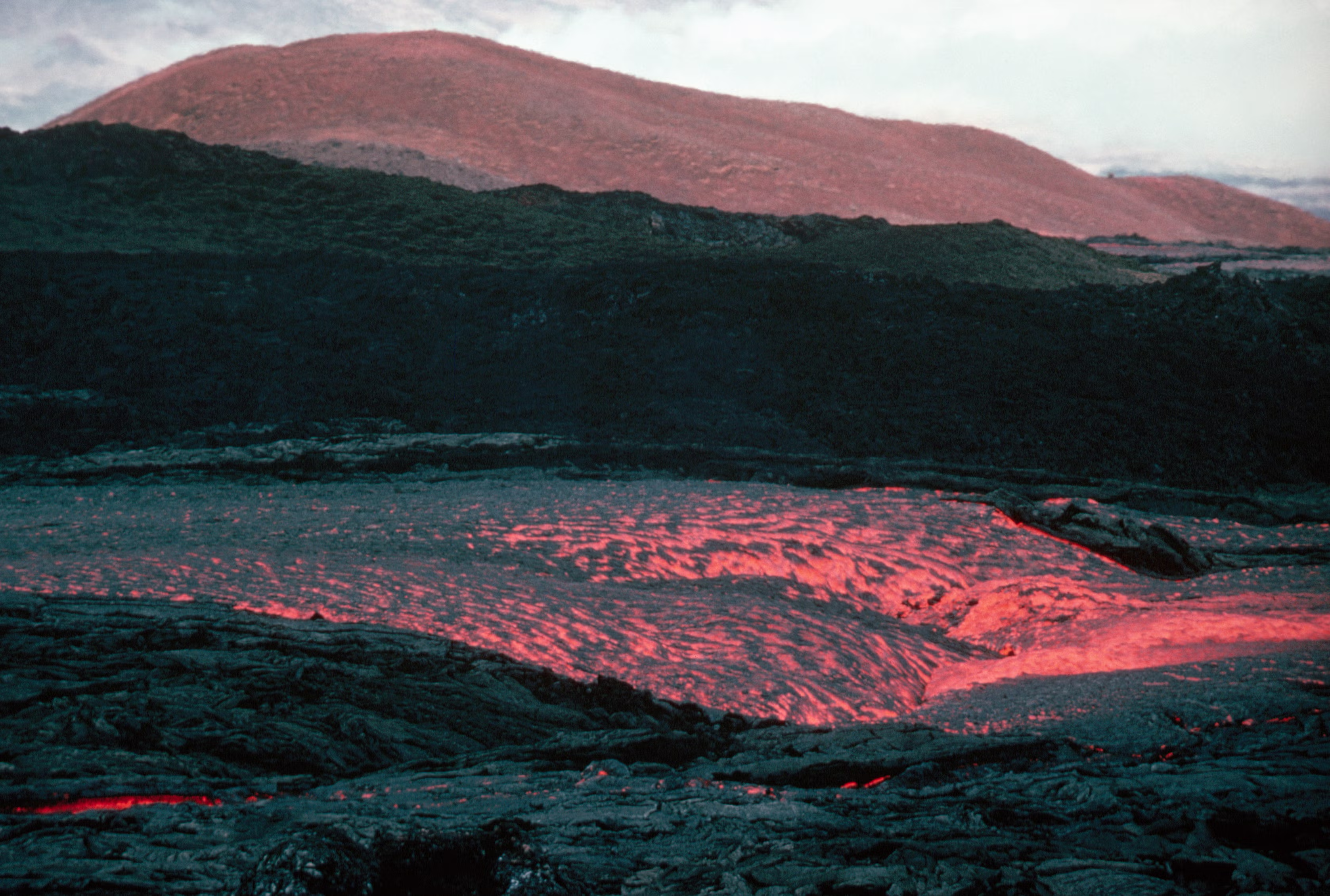
A channel of fast-flowing lava moves through a cooled section of a lava flow. Hawaii, 1984.
The Hawaiian islands are well known for volcanic activity; the islands themselves were formed by volcanic action over the course of millions of years. The “Big Island” of Hawaii is the home of Mauna Loa, one of the most active volcanoes in the world. It has erupted 34 times since 1843, often adding new territory to America’s 50th state. Indeed, Hawaii is probably the only state in the union that is continuously growing, thanks to volcanoes.
Mauna Loa’s lava flows are closely monitored, but typically harmless. One exception, however, was the 1935 eruption, which unexpectedly flowed north. The eruption started on November 21 and oozed at a rate of a mile a day toward the headwaters of the Wailuku River—the water supply for the town of Hilo. If the volcano cut the supply of fresh water to the town of approximately 20,000 people, the result could be catastrophic.
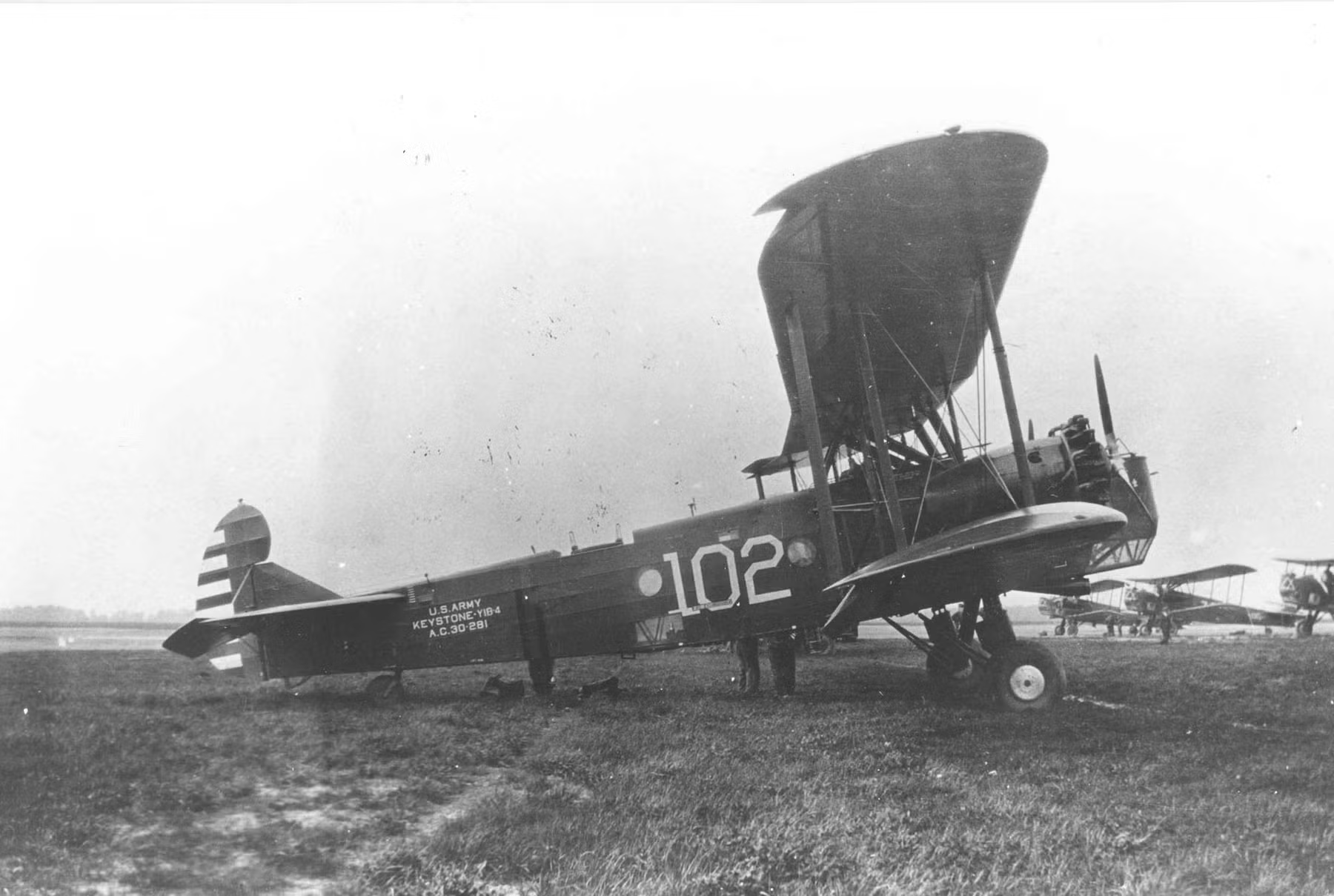
Keystone Y1B-4 bomber.
Thomas Jagger, the founder of the Hawaiian Volcano Observatory, appealed to the U.S. Army for help. Jagger wanted the Army Air Service, forerunner of the wartime Army Air Corps and later the U.S. Air Force, to bomb the lava tubes and channels that fed lava in the direction of the river. Nobody thought American bombers could destroy the lava, but they hoped the bombing would divert the flow to another, non-threatening direction.
The mission was assigned to Army Air Service planes based on the island of Oahu and planned by Patton. The commander of the First Provisional Tank Brigade in World War I would of course later go on to command the Third Army in Europe during World War II.
The Hush Kit describes the air strike:
On December 27, 1935, ten Keystone B-3 and B-4 bombers from Luke Field on Ford Island in the middle of Pearl Harbor flew the 200-odd miles to bomb the Humu‘ula lava flow. The bombers dropped 40 bombs, half were high explosive and the rest were WP smoke bombs to mark the impact points. Of the twenty high explosive bombs dropped, sixteen hit the target area and twelve hit the lava tunnel in question.
Jagger observed the air strike from a telescope at the base of Hawaii’s other volcano, Mauna Kea. “The experiment could not have been more successful; the results were exactly as anticipated,” he later told the New York Times. The lava slowed from covering more than 5,000 feet a day to 1,000 feet after the bombing, and the flow stopped entirely on January 2, 1936.
Not everyone shared Jagger’s optimism. Harold Stearns, a U.S. Geologic Survey who flew on the mission, believed the slowing and stopping of the flow was a coincidence. Jagger’s boss, the head of Hawaii National Park, told the Army the day after the attack, “Though we are as yet unable to determine what effect the airplane bombardment achieved … I feel very doubtful that it will succeed in diverting the flow.”
The U.S. Geologic Survey, writing about the incident in 2017, said, “Modern thinking mostly supports Stearns’ conclusion.”
In 2015, the 23rd Bomb Squadron, the unit that flew the mission against Mauna Loa's lava flow, returned to Hawaii to commemorate the 80th anniversary of the mission. A B-52 bomber assigned to the 23rd Expeditionary Bomb Squadron flew from its temporary base on the island of Guam to Hawaii, a 12-hour mission. The squadron insignia, this Air Force Global Strike Command article notes, still depicts bombs tumbling down onto a volcano.
The 1935 volcano air strike wasn’t the last time mankind trained its weapons of war on nature. Today, Russia and China occasionally send their air forces to bomb frozen rivers, typically to remove dangerously high levels of ice buildup or to allow nearby communities to reconnect with the outside world. And in July 2018, the Swedish Air Force bombed a wildfire on a military training ground, snuffing it out and preventing it from detonating unexploded munitions.
Best Portable Charger Deal

Now 20% Off
Best Vacuum Deal

Now 21% Off
Best TV Deal

Now 40% Off
Best Headphones Deal

Now 38% Off
Best Jump Starter Deal

Now 30% Off

Kyle Mizokami is a writer on defense and security issues and has been at Popular Mechanics since 2015. If it involves explosions or projectiles, he's generally in favor of it. Kyle’s articles have appeared at The Daily Beast, U.S. Naval Institute News, The Diplomat, Foreign Policy, Combat Aircraft Monthly, VICE News, and others. He lives in San Francisco.
此内容由惯性聚合(RSS阅读器)自动聚合整理,仅供阅读参考。 原文来自 — 版权归原作者所有。