









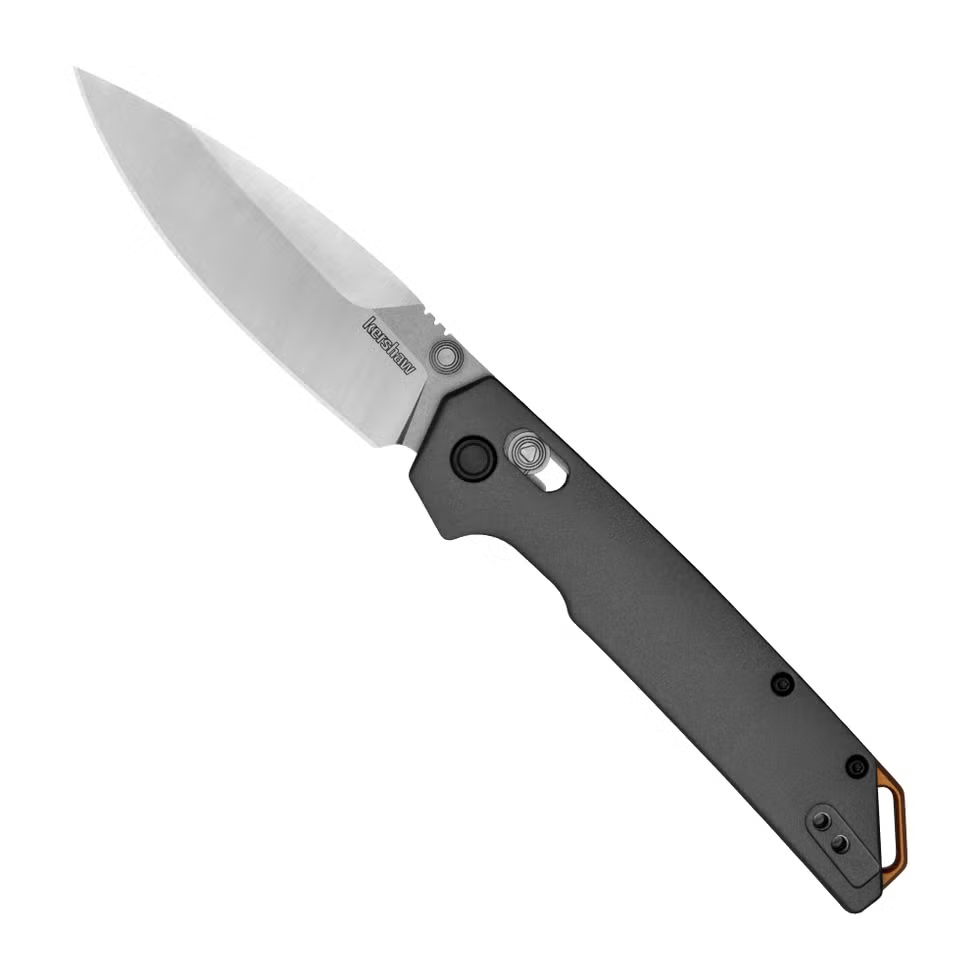
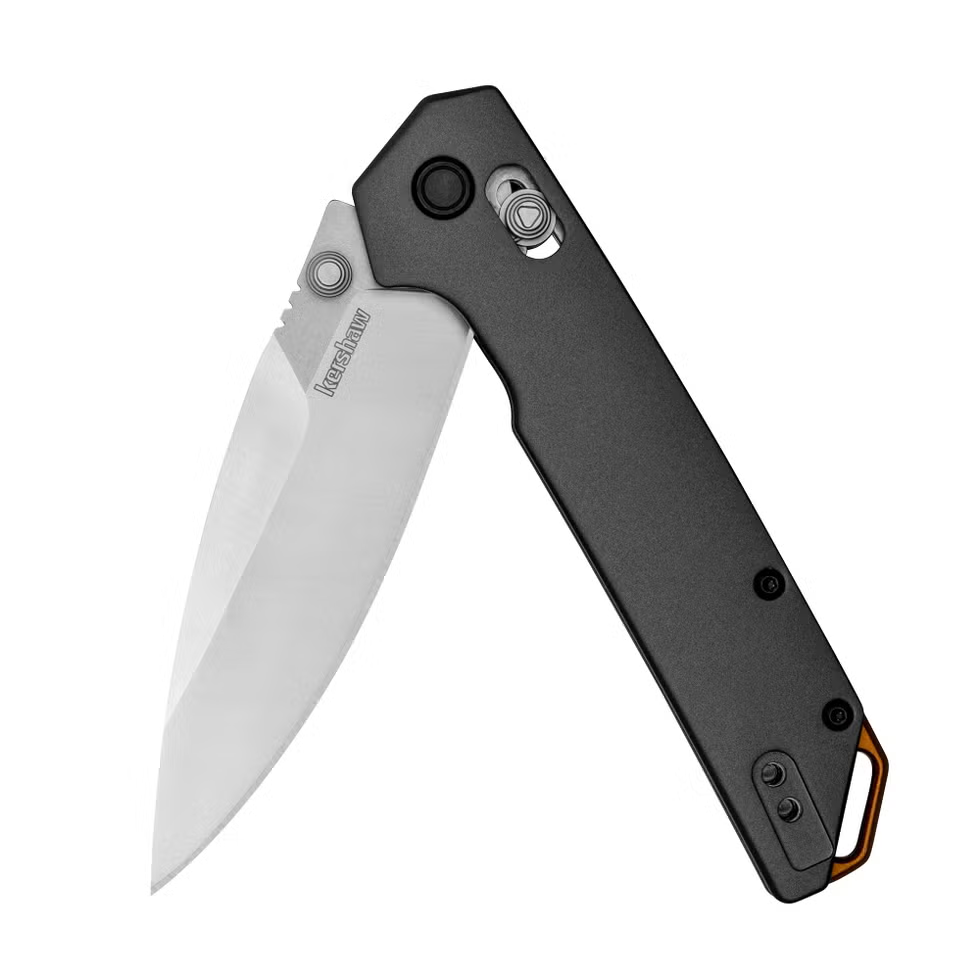
The Iridium is one of Kershaw’s most popular releases and for good reason. It’s priced modestly with a secure bar lock-out, easy open and closure one-handed, and just looks cool. It’s also the sweet spot for most people in terms of size, weight, and style. Not ultralight (just over 3 ounces), the 6061-T6’s aluminum handle and slim profile keep it barely noticeable in your pocket.
When testing, I found the 4.5-inch length was great for my medium-sized hands and shouldn’t be too big or small for any hands—or jobs. Kershaw offers low- and mid-priced production knives made in China but they follow up with high quality control in their Oregon facilities and consistently deliver designs that just work.
At the core of the Iridium series is a secure, Benchmade-style crossbar lock and while there are models that veer into Benchmade prices, many models including the original can be had for less than $100.
The Iridium is easy to use—opening with a smooth action, activated by the thumb stud opener. Though it’s not spring-assisted, the blade flicks open fast without resistance. Closing is similarly smooth—just pull down on the crossbar lock and close with a finger or hold upright and let the blade fall shut. I usually prefer the satisfying speed of a flipper, but the smooth action of the Iridium’s thumb stud opening rivals the Benchmade Bugout’s, and it quickly grew on me.
The D2 steel used in the original, which offers decent edge retention and durability, is common in lower-cost knives but can rust if you abuse it. A compromise option: Go with the black oxide-coated D2 blade which keeps all but the cutting edge sealed off from rust. The look on all these versions of the Iridium matches the modern design features, and the only drawback of how smooth and slick the knife looks, is that it’s not the best for operating in wet or muddy conditions where grip could become an issue.
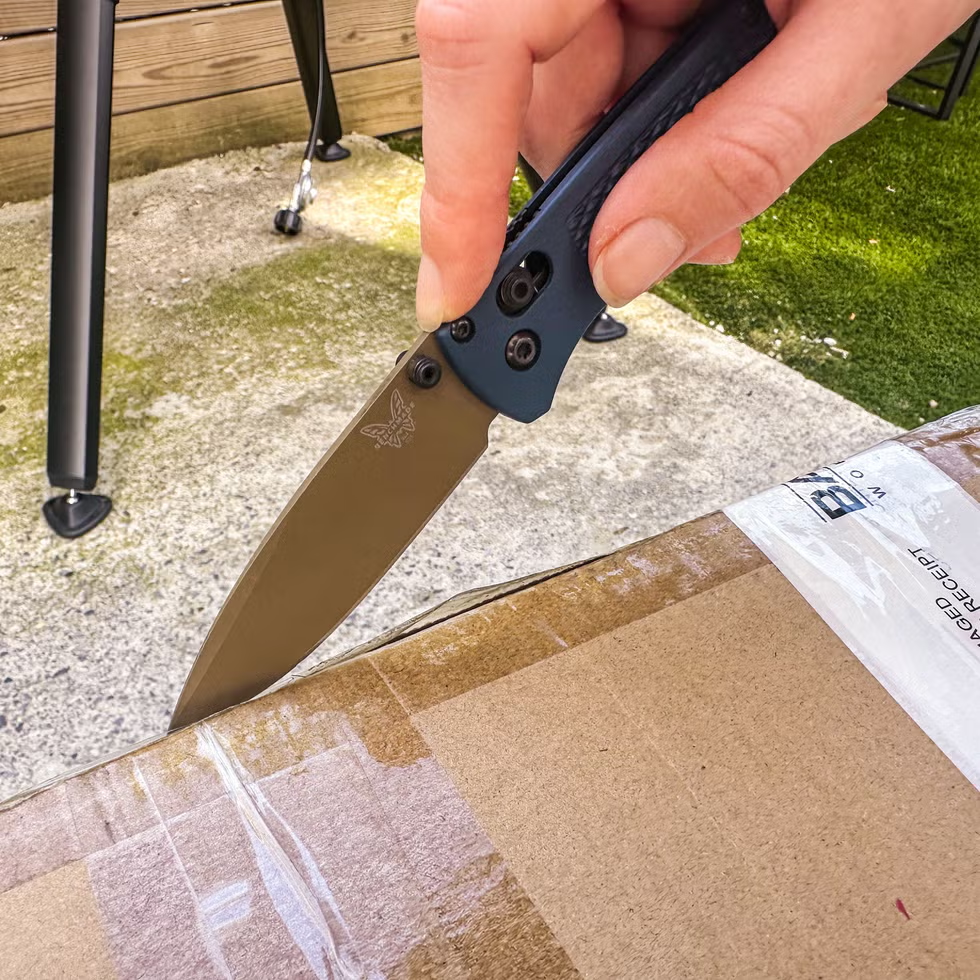
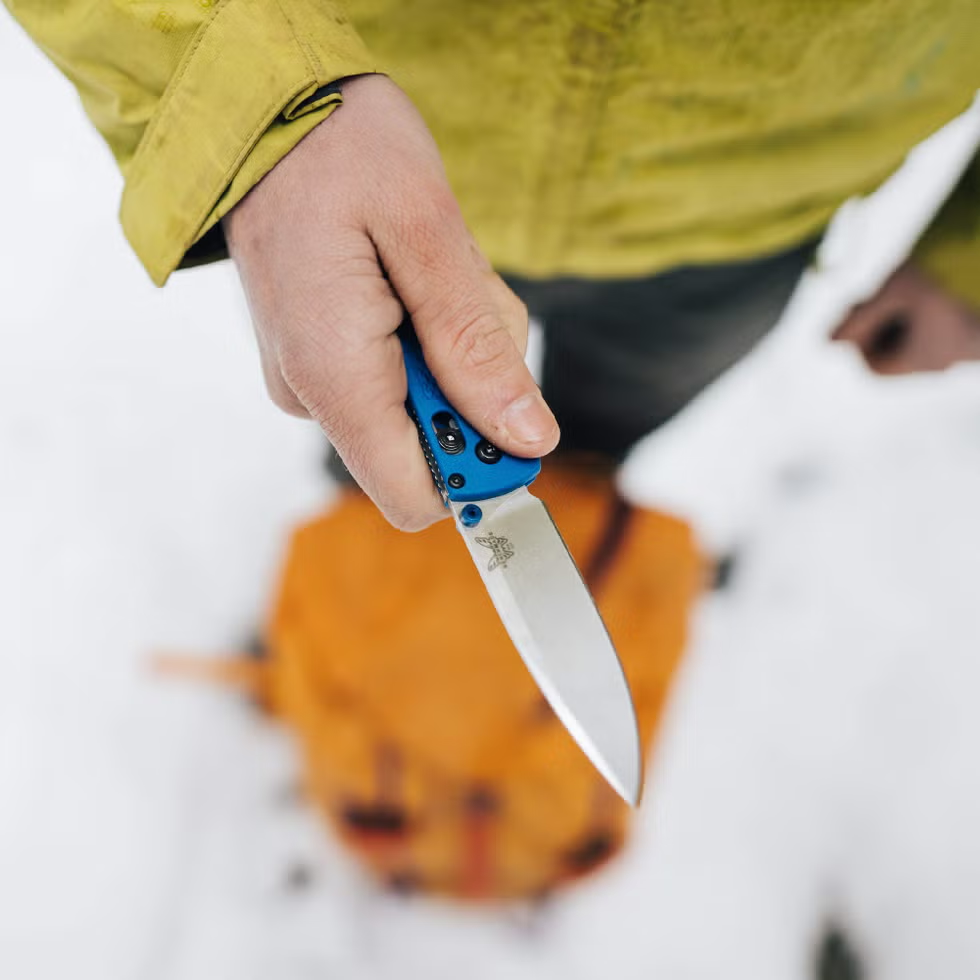
Benchmade is an American knife brand based in Oregon with a loyal following for its premium production pocket knives. Known for lightweight designs, modern materials, and innovation, the brand has produced many favorites—but my top pick is the Benchmade 535 Bugout.
To me, the Bugout captures what Benchmade does best: an ultralight folder that’s still strong, well-built, and made with high-quality steel (and the same holds true with the Benchmade 533 Mini Bugout). Some might argue the Benchmade Osborne 940 is the brand’s most iconic knife, but I reach for the Bugout every time—especially for hunting, camping, backpacking, or backcountry skiing, where weight matters.
The design is modern without feeling overly tactical. It’s streamlined with a simple profile and a practical drop-point blade. The textured Grivory scales—glass-reinforced plastic—keep weight incredibly low while maintaining rigidity.
At under two ounces and just 0.42 inches thick, the Bugout is barely noticeable in a pocket, making it ideal for long outdoor trips. For those who don’t like the Grivory feel, there are versions with aluminum or carbon-fiber scales and a range of steel options.
Operation is another highlight. Benchmade’s Axis Lock uses a spring-loaded crossbar that allows easy one-handed opening and closing from either hand while keeping fingers out of the blade path. The mechanism is simple, strong, and easy to maintain—I even built one myself at the Benchmade factory and found it intuitive without instructions.
In terms of cutting performance, my Bugouts arrived razor-sharp out of the box. I prefer the standard S30V steel because it balances edge retention with easier sharpening in the field, though higher-end options like S90V are available if you want longer-lasting sharpness. S30V is also tough and corrosion-resistant, which suits hard outdoor use.
Benchmade’s lifetime warranty and sharpening service add real long-term value. The Bugout isn’t cheap, but with its reliability, ultralight design, and customization options, it’s easy to recommend—especially for outdoor enthusiasts or anyone wanting a high-quality everyday carry knife.
Advertisement - Continue Reading Below
Now 11% Off
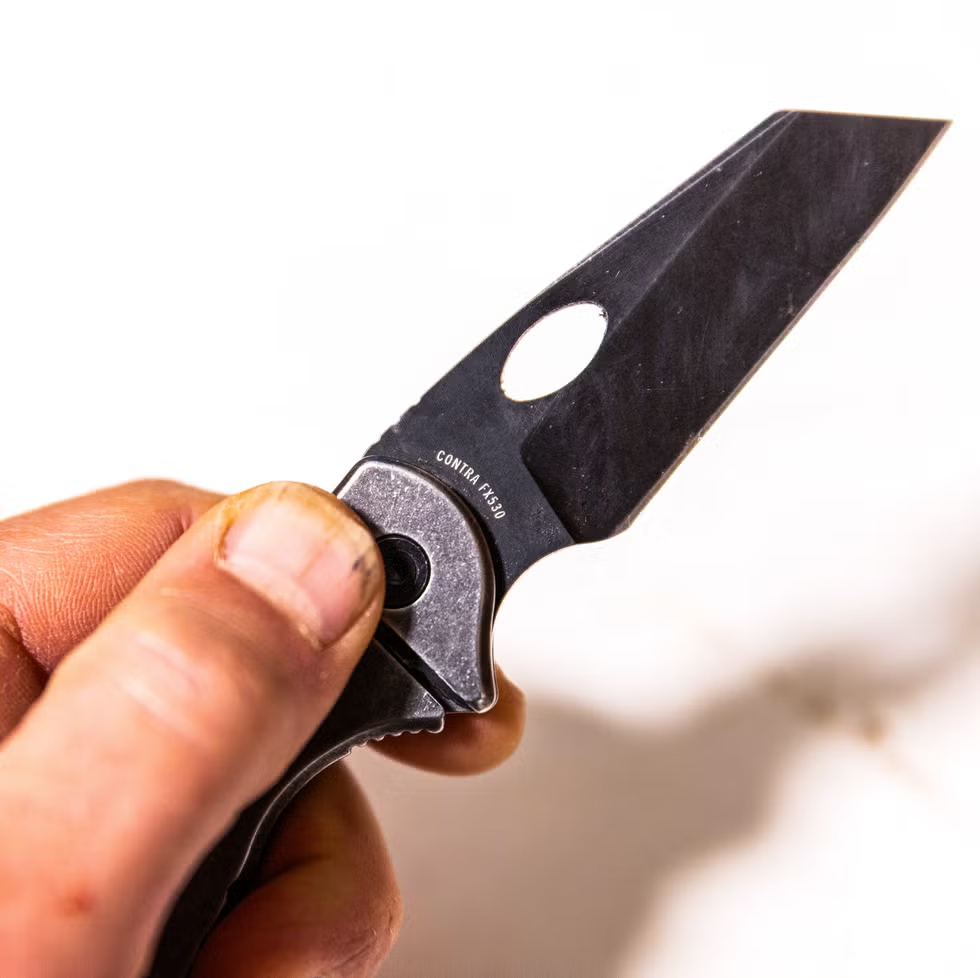
Coast is one of several Oregon-based knife manufacturers (the company also sells a wide range of flashlights and headlamps) to offer a range of budget-friendly folding pocket knives. My favorite from their lineup is the fairly small but robust Contra which has an all-metal build and a lifetime warranty despite the low cost. The wharncliffe blade, made from a softer 7CR17 steel, dulls faster than high-end steels but has the benefit of being easy to sharpen at home.
The wharncliffe blade gives you the utility of a box cutter blade but much more versatility as you retain a decent point for puncturing tasks, and I’ve come to prefer it for everyday carry over more traditional drop point shapes. Coast adds durability to its budget steel with a black oxide coating that I found doesn’t scratch easily. The knife is a full stainless-steel build with a good-looking stonewash finish on the handle which integrates the frame lock system.
The flipper opening is fast and satisfying for knife fidgeters but it’s usually safer to employ a two-handed closure. Given the overseas production and ultra-low sticker price, this pocket knife’s durability could be a potential concern, but I’ve used mine roughly near-daily for more than a year and haven’t broken or chipped the blade. It still looks like new.
| Weight | 3.1 oz. |
| Blade length | 2.4 in. |
| Closed length | 3.7 in. |
| Blade Steel | 7CR17 |
| Locking mechanism | Frame lock |
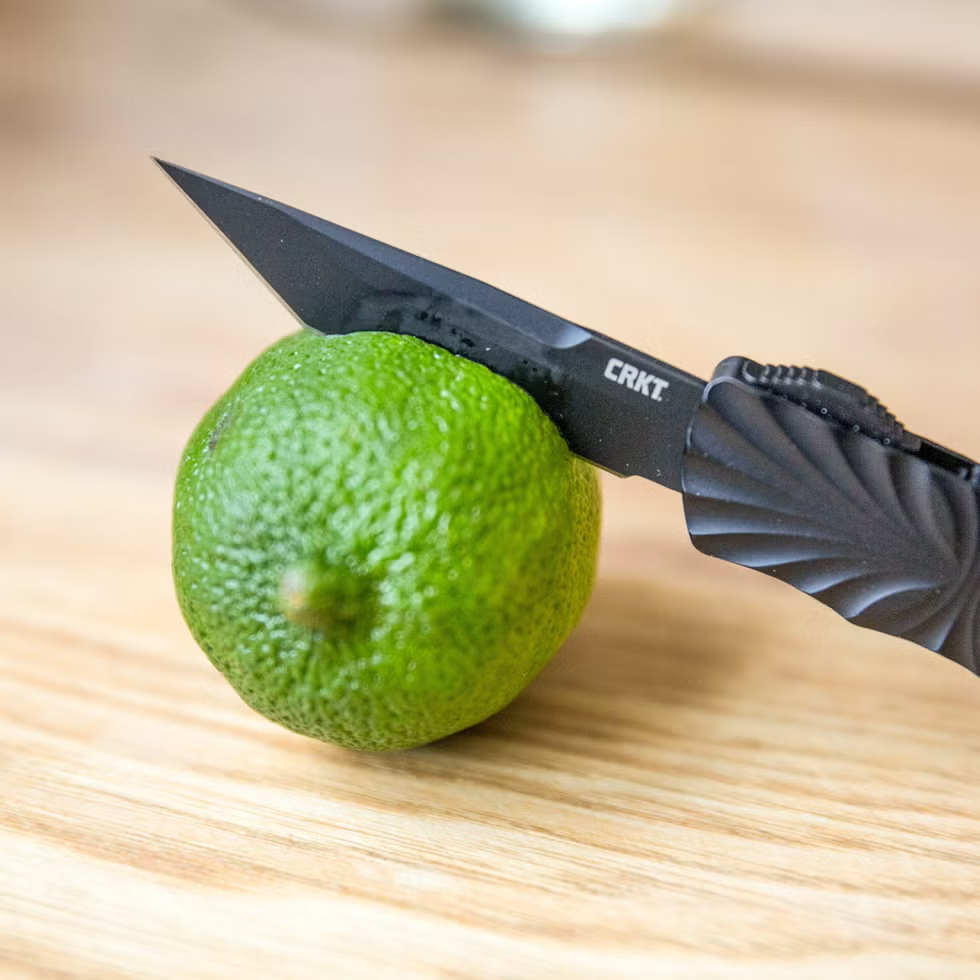
I’ve been looking for a good automatic pocket knife for years, and the CRKT Twist Tighe Automatic is the only one that I’ve found that doesn't feel like a novelty knife. It’s compact, lightweight, fun to use, and practical enough for everyday carry while still delivering the fun factor that draws many people to automatic knives in the first place.
Automatics, often called switchblades, are popular with knife enthusiasts because they’re inherently fidget-friendly. The Twist Tighe is an out-the-front (OTF) automatic, meaning the blade deploys straight out of the front of the handle. Besides being undeniably cool, I find the operation safer than many folding knives because it’s harder to accidentally place your fingers in the blade’s path when opening and closing.
The highlight is its smooth double-action mechanism. Sliding the spine button forward fires the blade; pulling it back retracts it. Many automatics I’ve tried are either stiff or inconsistent, but the Twist Tighe feels smooth and reliable even after repeated use. That ease of operation also makes it surprisingly approachable for people who aren’t experienced with knives.
The design comes from Canadian knife designer Brian Tighe, and the handle’s raised spiral grooves are a distinctive touch fans of his work will recognize. In the all-black configuration, the knife looks sleek and slightly dramatic without becoming impractical. My version features a tanto blade with a black titanium nitride finish, while other configurations of the Twist Tighe have double-edged blades and more colorful scale options.
Size and weight are also a big difference from other automatics. At just 1.6 ounces with a 2.65-inch blade and about a 4-inch closed length, it’s remarkably small for an OTF knife and easy to carry daily. However, people with large hands may find it a bit compact.
Overall, the Twist Tighe combines premium materials like CPM MagnaCut steel with one of the smoothest actions I’ve experienced. If you’re looking for a compact, high-quality OTF automatic for everyday carry, it’s an excellent choice.
Advertisement - Continue Reading Below
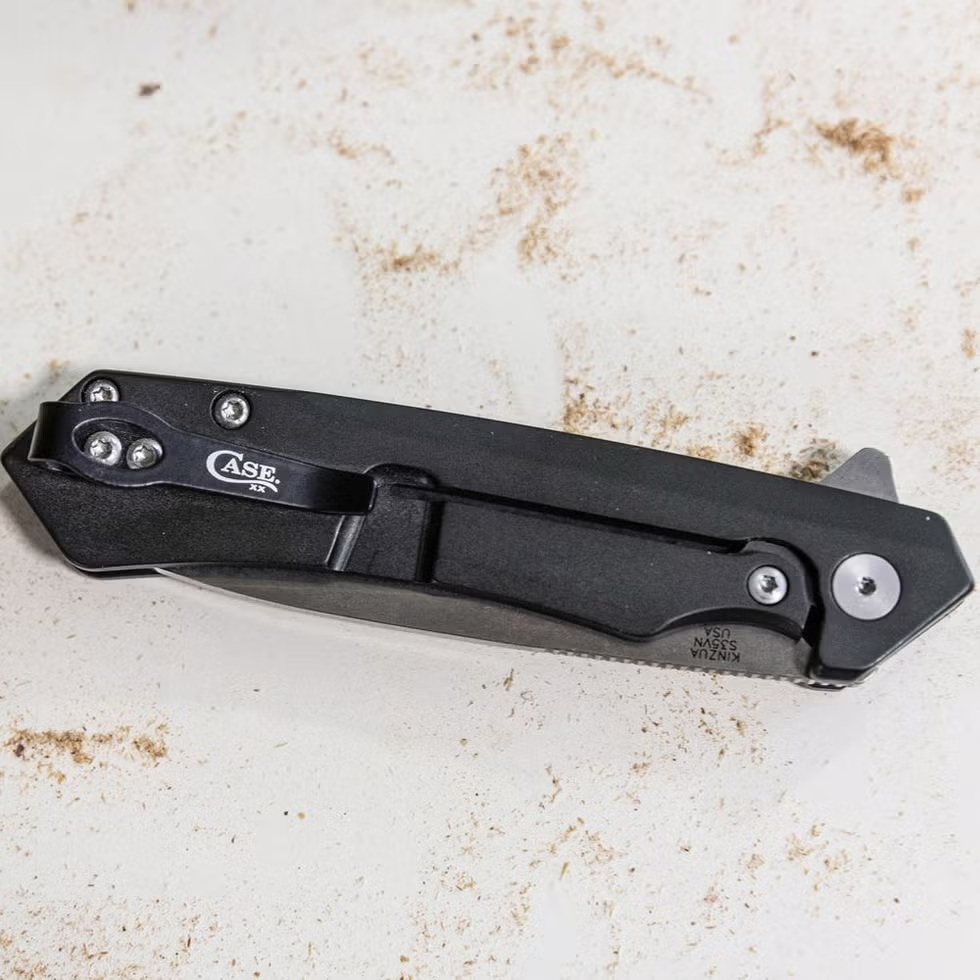
Case is one of the original American knife brands still standing and, unlike many of their competitors that have shipped production to China, most of Case’s knives are still designed and produced in Bradford, Pennsylvania.
Whether or not that matters to you, Case makes great knives and while they sell a lot of nostalgic designs unchanged for a century, the Kinzua is one of their modern EDC offerings that departs from the Case aesthetic with synthetic scales, sharp lines, and a tanto blade.
The satin-finished S35VN steel blade is a good compromise of hardness and edge durability while still being fairly easy to sharpen at home. It also has a lightly weathered look that should hide abuse well. One note is that, while extremely sturdy, the all-metal frame-lock design is pretty stiff to close out of the box.
Releasing the frame lock requires some force and closing requires a few moves. With a little practice I was able to comfortably operate it one-handed, but folks with smaller or weaker hands may not feel the same.
| Weight | 3.4 oz. |
| Blade length | 3.4 in. |
| Closed length | 4.75 in. |
| Blade Steel | S35VN |
| Locking mechanism | Frame lock |

The Benchmade 916 Triage rescue knife is a purpose-built tool that feels like an everyday carry folder but the features make it pro-grade emergency equipment that happens to fold into your pocket.
It has a 3.58-inch partially serrated, blunt-tipped blade made from N680 stainless steel, a choice that prioritizes corrosion resistance over edge retention. The blade deploys via Benchmade’s AXIS Lock mechanism, snapping open and locking in place with authority and easily operates one-handed.
What separates the Triage from typical folding rescue knives and multi-tools is the purpose-built features that don’t go overboard. There’s a hook-style safety cutter built into the handle for slicing seatbelts or clothing without exposing flesh to a blade, plus a carbide glass breaker at the pommel. The flathead screwdriver-style blade tip empowers you to use the thick, sturdy blade as a compact pry bar—usually a surefire broken tip on a standard drop-point blade.
The G10 scales sit atop a thick aluminum frame which gives the knife a sturdy, almost overbuilt feel. At 5.75 ounces and over eight inches open, it’s not discreet, but it’s still very compact and light for a rescue knife. The texturing on the scales and overall heft translates to durability and grip, especially with gloves or in wet conditions.
Benchmade backs it with a limited lifetime warranty and its LifeSharp service, meaning the company will repair or replace defects and even tune up the knife to keep it sharp and effective long-term. It’s one of the more robust support systems in the knife world and reinforces the idea that this is a tool meant to be used hard.
This is not a knife for everyone. If you want a more well-rounded EDC option, look elsewhere in this guide or consider one of the other Triage models with drop-point blades. But for first responders, firefighters, paramedics, or anyone who prioritizes preparedness, the Triage is the professional-grade choice.
| Weight | 5.75 oz |
| Blade length | 3.58 in |
| Closed length | 4.73 in |
| Blade steel | N680 |
| Locking mechanism | AXIS lock |
Advertisement - Continue Reading Below
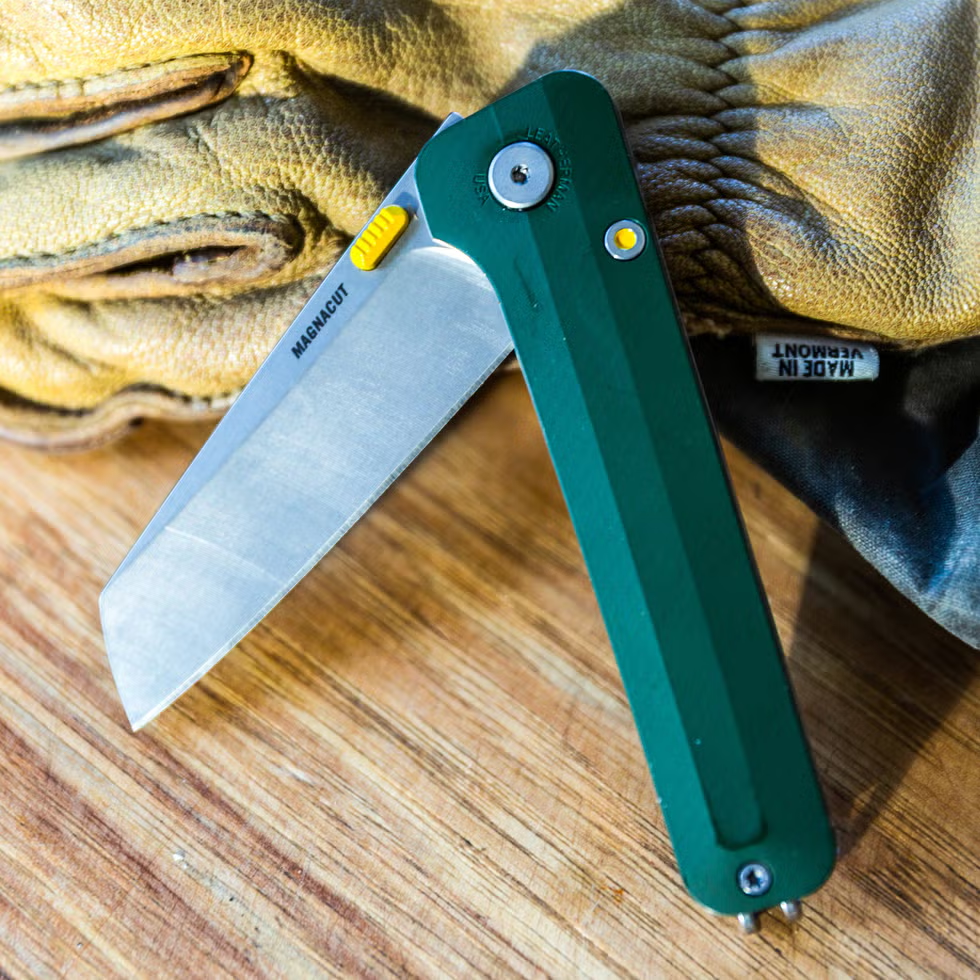
Leatherman is synonymous with multitools but made waves earlier this year with the release of a new lineup of fixed-blade and folding knives at premium price points. These aren’t the first knives the company has ever produced, but the launch of a lineup and creation of a separate production facility signals a serious push into the new-for-them category.
I love the smart designs and precision production behind Leatherman’s multitools and while I wasn’t wowed by all of their knives, the Glider is one of my favorite everyday carry options now.
The Magnacut sheepsfoot blade is hard, holds an edge forever, and has a slightly rounded belly that isn’t far from working like an extra-long utility knife blade. While I reach for other blade shapes for outdoor knife purposes, I love sheepsfoot and wharncliffe blades for everyday use as they’re perfect for opening boxes and slicing tasks but still give you enough of a point for puncturing as well.
Other knives like the alternatives below offer similar functionality, but the aesthetics and build are why I love the Glider. I prefer the heft and strength of an all-steel knife and that’s what you get here. Leatherman machines the handles from blocks of steel with smart internal cut-outs to save some weight.
The Glider also debuts a patent-pending Delta lock which has a slick button release that’s functionally similar to a crossbar lock but easier to operate.
What sets the Glider apart is the brand name, the aesthetic, and the minimalist design which uses only 12 distinct parts and is built like a tool almost entirely from American steel and manufactured in Oregon.
For an amazing little budget knife with an all-metal build and wharncliffe blade for way, way less, look at the Coast Contra reviewed in more detail above.
| Weight | 3.7 oz. |
| Blade length | 3 in. |
| Closed length | 4.3 in. |
| Blade Steel | Magnacut |
| Locking mechanism | Delta Lock (button) |

Now 27% Off
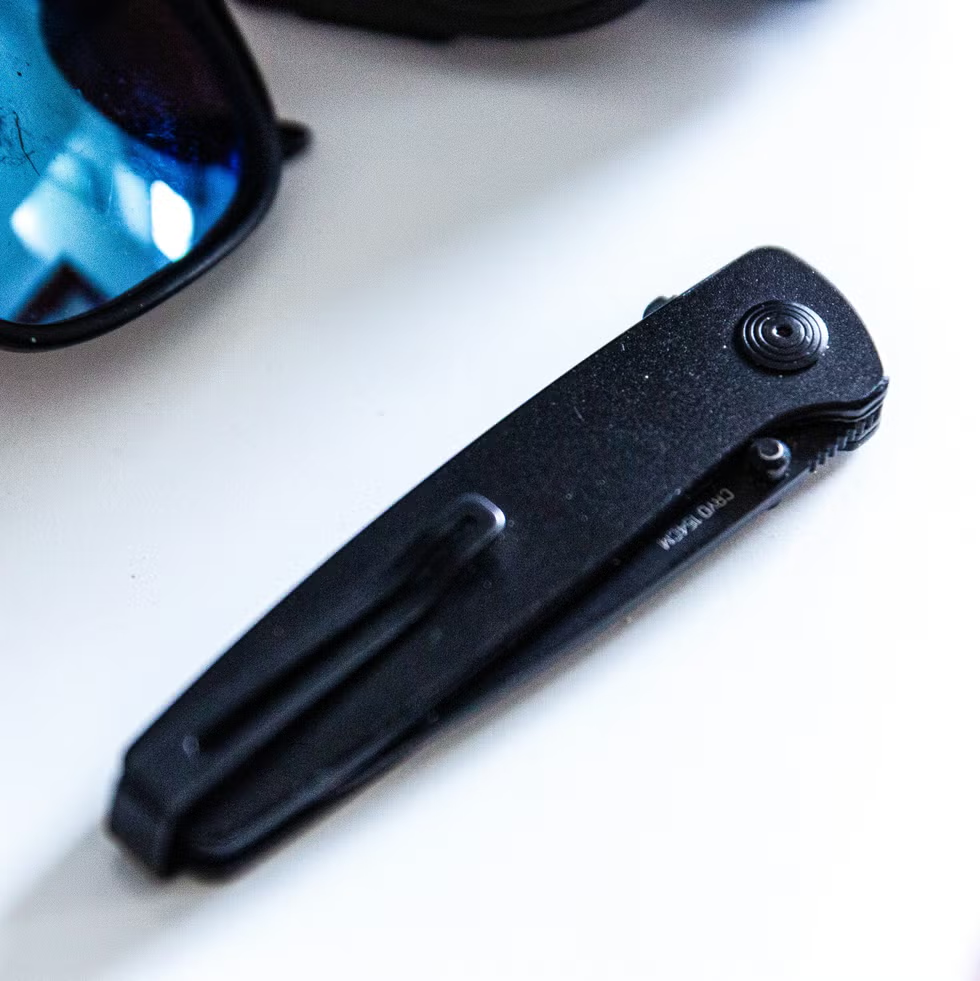
More than two years ago, the SOG Twitch II was our Best Overall pocket knife so we called in the latest generation, the SOG Twitch III, to test.
Spring-assisted knives are super-satisfying to deploy and the SOG Twitch III is blink-of-an-eye quick which is just plain fun, but also gives you confidence that the blade is fully deployed and locked in.
My favorite way to open this pocket knife is with the flipper tab on the back of the spine (there are also dual thumb studs) making it easy to open one-handed no matter what you’re doing with the help of the SOG Assisted Technology. The blade locks out with a classic lockback mechanism which releases via a redesigned slide on the spine to keep your fingers out of the way when closing. It is much easier than previous Twitch editions but still can be a little fiddly one-handed.
The price, at just under $70, makes it attainable for almost anyone who is searching for a good-looking EDC folder as well. SOG keeps the cost down with a solid mid-tier 154CM steel that provides a suitable balance of durability coupled with ease of sharpening at home. The black titanium nitride coating looks great paired with black aluminum scales, but there are also various options if you want a different style.
The Twitch III is a small, slick, and classy knife especially for the price, but the minimalism leads to one gripe: the smooth aluminum scales can be difficult to properly grip with gloves or wet hands. It’s also petite which is great for staying low-profile, but will feel tiny in larger hands.
| Weight | 2.6 oz. |
| Blade length | 3.1 in. |
| Closed length | 3.55 in. |
| Blade Steel | CPM 154 |
| Locking mechanism | Lockback |
Advertisement - Continue Reading Below
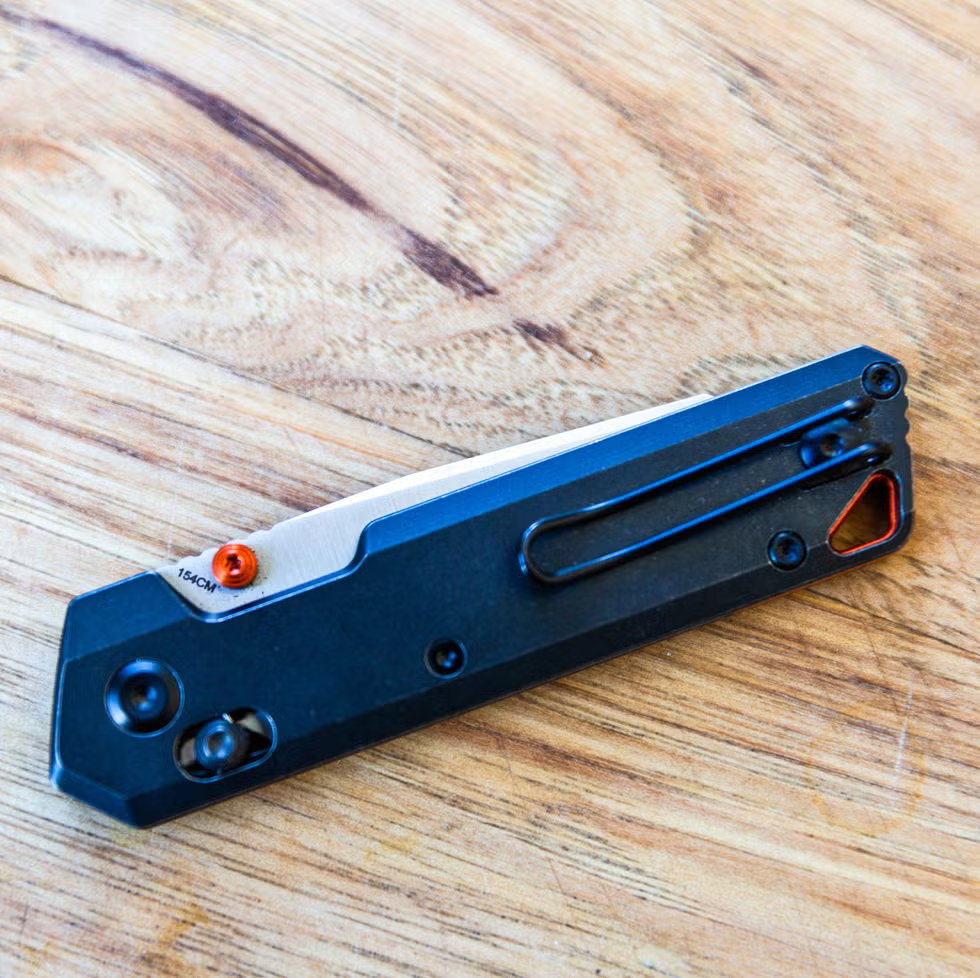
It takes a lot to stand out in the pocket knife world these days. There are more knife companies and knife designers than ever which makes it a beneficial time to shop for knives, yet it can feel like every new knife is just a slight riff on an existing folder.
Vosteed’s Parallel feels distinct the second you pick it up. That’s mostly due to how impossibly thin it is at 0.28 inches — about 9 credit cards. At 2.36 ounces, it’s also extremely light and sits barely noticeable in your pocket.
A knife this thin could be considered a flimsy novelty using lots of light plastics, but it has a surprisingly substantial feel with a 154CM blade and titanium handle that combine for real world usage. It’s ready to go rather than being a pocket knife you marvel at for its engineering.
I find the Reverse Tanto blade especially handy as well, combining a fine point with a relatively flat blade that’s suited for slicing and cutting. The crossbar lock is secure and familiar to knife enthusiasts while working equally well for lefties. The satin blade with black handle combo that I own is eye-catching, but Vosteed offers a dozen combinations of blade and handle finishes from blacked-out to colorful gradients.
| Weight | 3.1 oz. |
| Blade length | 2.9 in. |
| Closed length | 4.13 in. |
| Blade Steel | 154CM |
| Locking mechanism | Crossbar |
What to Consider
Advertisement - Continue Reading Below
Metal Makes a Difference

Choosing blade steel is where knife geeks can get into the weeds. There are tradeoffs, though, with any type of steel. Broadly speaking, if you go with a softer steel it means the blade may get dull more easily but it's also easier to sharpen. Harder types of steel hold an edge longer but might be trickier for novices to sharpen at home.
Steel characteristics also affect how prone a blade will be to rusting, however, most decent modern pocket knives use a steel that’s rust-resistant enough that it won't require lots of special care.Almost all knives’ product pages will list the type of steel used and if they don’t, it’s likely a budget knife. If you can’t find the steel online, check knife marketplace sites such as BladeHQ for the make and model.
Here are the highlights for some of the more common pocket knife steel types:
CPM Magnacut: A great all-around steel from Crucible that’s tougher to sharpen at home.
CPM S90V: A higher-end, rust-resistant steel that holds an edge but can be brittle.
D2: A common stainless steel for lower-cost pocket knives that’s easy to sharpen.
440A/C: Lower-cost stainless steels that aren’t as durable but resist rust and are easy to sharpen. 440C is slightly better than 440A.
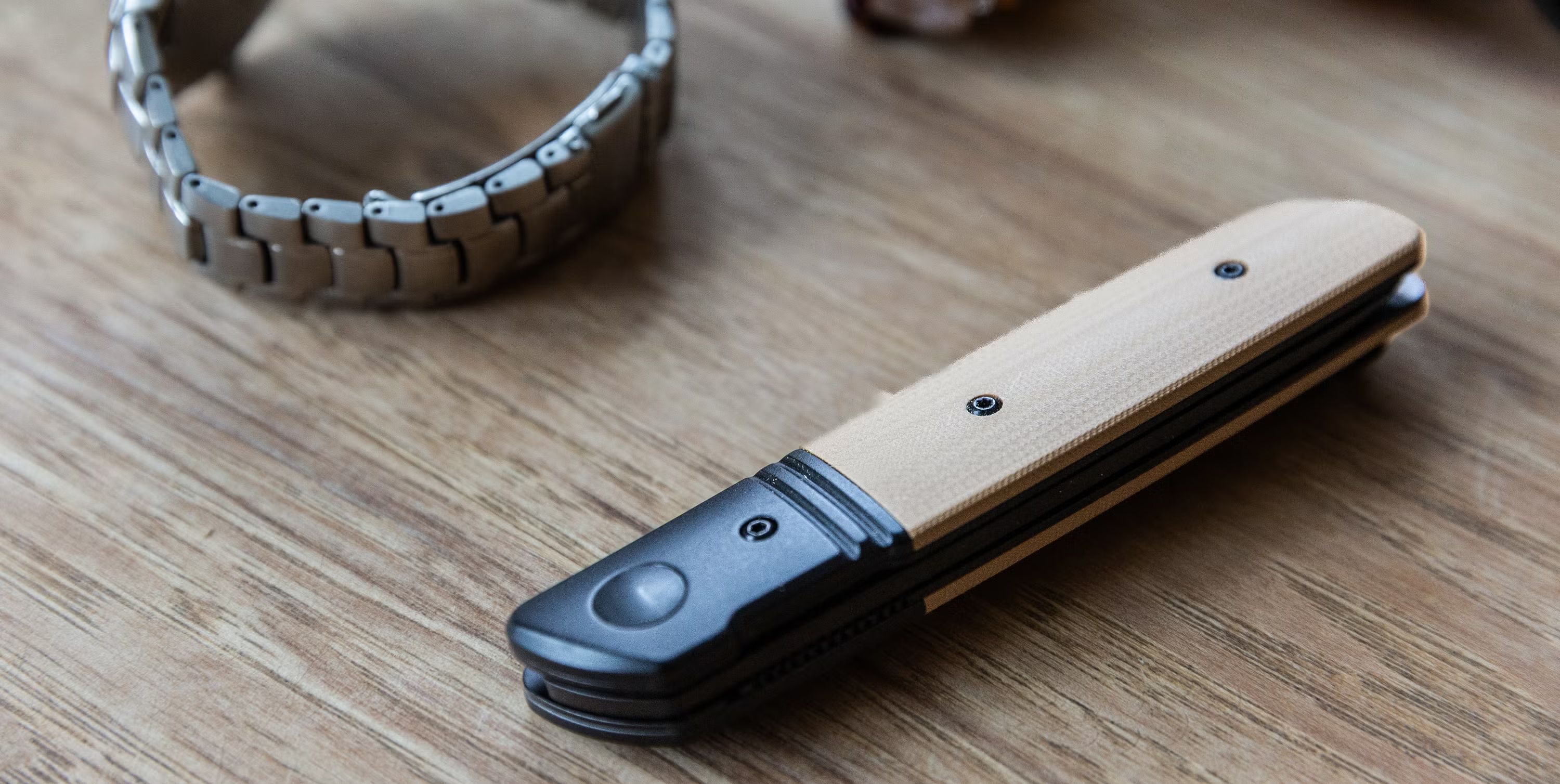
Handle material is also an important choice. Wood is less common these days and less durable than steel or lighter, more durable synthetic materials like G10 and carbon fiber. Still, you may prefer the feel and look of wood despite the drawbacks. Steel is strong and durable but adds weight which can be a positive or a negative depending on how you use the knife and what you prefer hanging on your pocket.
Find the Right Fit in Your Hand
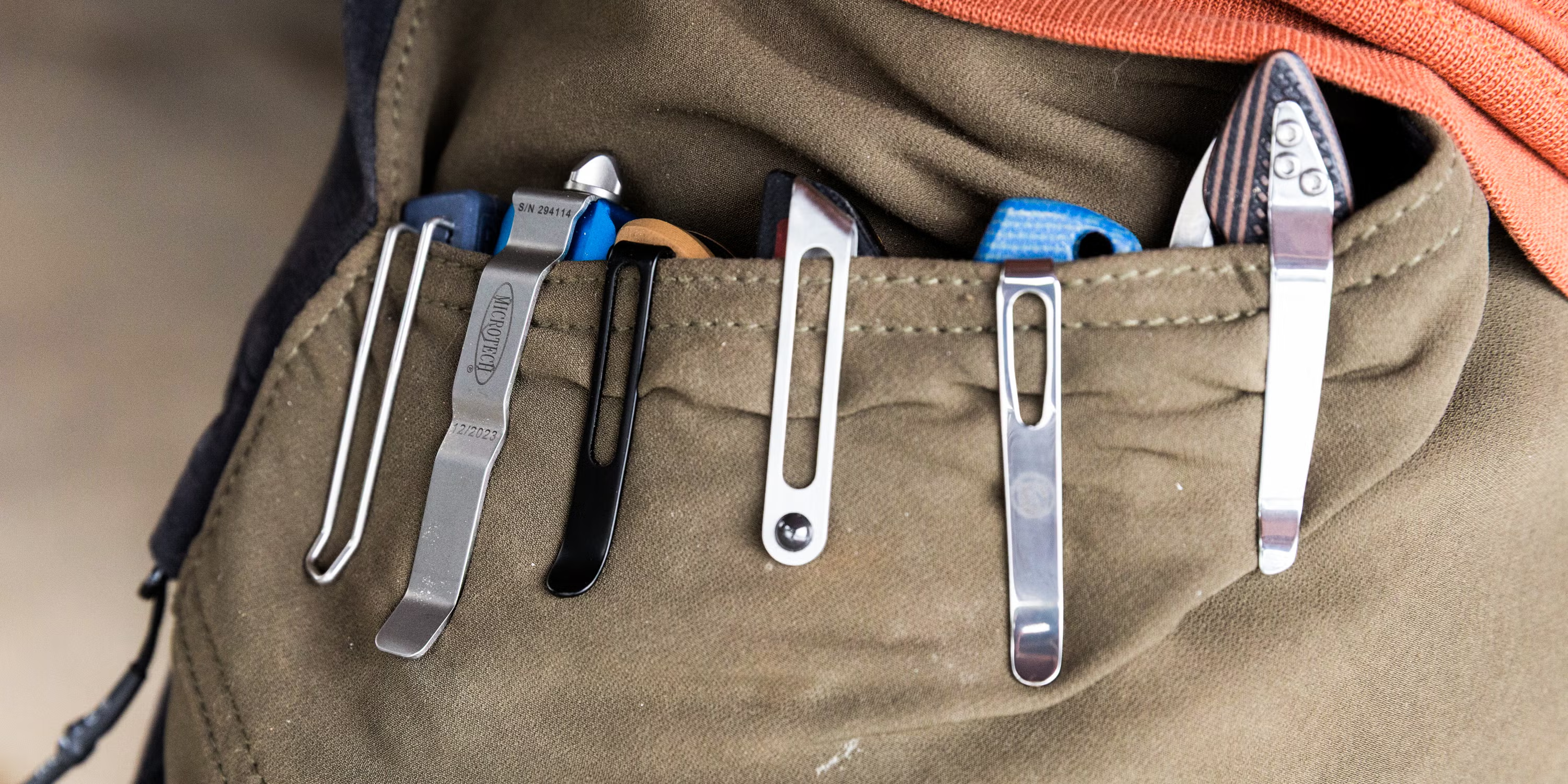
A knife’s dimensions and weight affect the fit in your hand and ease of use. In general, bigger hands won’t like tiny knives and vice versa, but how and where you carry a knife impact your preferences for size and weight. If you’re an office executive, you may not want an oversized, obvious blade for daily carry, while working on a farm or in the trades, you might prefer a bigger, burlier blade to stand up to prying tasks and day-to-day abuse.
Blade length: Most pocket knives are between 2.5 to 4 inches, but there are outliers much shorter and longer if you want them. Legal restrictions can dictate your choice in some areas and you can read more about how to navigate these at the bottom of this article. In general, a blade around 3 inches is manageable for most people.
Length: With most pocket knife designs, the overall (opened) length is a little more than double the blade length since handles are usually longer than blades. The closed length measurement is a standard way to confirm a particular knife will fit comfortably in your pocket when clipped on.
Weight: To some, weight is a big deal. Others care more about action and aesthetics. Whether you are counting grams or not, the weight is a useful comparison between knives to get a sense of the heft when dimensions are hard to picture without the knife in-hand. Most modern EDC knives weigh between 1.5 and 3.5 ounces. That might seem like a tight range, but you’ll notice the difference of even half an ounce. Knives more than 4 ounces are usually going to be all-steel and oversized and may be more knife than you want, though I personally like a heavier all-metal folder and some folks like featherlight options.
Thickness: If you want a knife that sits slim in your pocket, pay attention to the overall thickness of the knife. A folder with flat scales and a lower thickness measurement (usually a half-inch or less) will be less noticeable—to you and others.
Advertisement - Continue Reading Below
Easy Opening and Closing Counts
The action of a pocket knife can play an outsized role in your appreciation for it. I routinely test a lot of folding knives and find the knives I reach for most often are ones that are the most (subjectively) satisfying—and that I can easily operate one-handed when my off hand is busy doing something else. If you carry it long enough, you’ll get proficient with most any knife, but each of these common mechanisms has their strengths and weaknesses to consider.
Thumb stud: A stud mounted to the blade that you push open and pull closed with your thumb. Thumb studs don’t require much finesse to hit and open reliably, but not everyone likes the feel.
Nail nick/thumb hole: A slit or hole in the blade that, similar to a thumb stud, lets you push the blade open with your thumb or thumbnail. Like a thumb stud, opening becomes smooth with practice, but it can take some time to become proficient at it. Nail nicks in particular behave differently depending on the length of your thumbnail and aren’t ideal if you keep your nails very short.
Flipper: A tab on the spine of the blade that you pull with your forefinger to quickly spin the blade into the locked position. A smooth flipper is my personal favorite mechanism because it’s satisfying to become proficient with thanks to the relative speed and reliable complete opening to the locked position. The CRKT Bamboozled below is a great example.
Assisted: An internal spring turns a flipper or other opening mechanism into a faster, automatic-like opening.
Automatic: The press of a button deploys the knife instead of actuating it yourself. This includes out-the-front blades like the Microtech featured below may be restricted in certain places.
Look for a Secure Locking Mechanism
In the previous century, secure locking mechanisms weren’t common, but today they’re expected if not universal. Classic knives, such as Case’s beloved Stockman and Victorinox’s iconic Swiss Army Knife, use slip joints, which hold the blade open but don’t truly lock. Because of the increased safety of a locking blade, I recommend choosing a pocket knife with some kind of a locking mechanism. If you are comfortable with a slip joint or other non-locking blade and enjoy the style, by all means, buy one. Note that your choice of lock typically dictates how you close the knife, so this will have a major impact on how easy it is to operate.
Frame and liner locks: These mechanisms are grouped together because they operate similarly while using different parts of the handle to accomplish the same thing. One side of the liner or lock is bent inward and slips behind the blade when open to lock it in place. Closing one of these knives requires pushing the liner or frame out but can usually be done one-handed.
Lockback: The spine of the handle locks into the back of the blade for a very secure lock. The downside: Simultaneously releasing the back lock and closing the blade requires two hands.
Crossbar lock: Benchmade’s AXIS lock is one of the best-known examples of this lock which slides into a notch in the blade to securely lock out the knife. Lots of brands offer bar locks, but some cheaper knock-offs are not as tight or secure. This type of lock is fairly easy to close one-handed and most work the same for right- and left-handers.
Button lock: The name says it all. Pressing a button frees the blade for opening or closing. The biggest benefit is that you can usually close the knife one-handed without ever putting fingers in the closing path of the blade. Note: Lefties will need to get a left-hand specific model when available.
Advertisement - Continue Reading Below
Pay for the Appropriate Purpose
If cost is a major factor for you, it will quickly narrow the range of options. Knives can range in cost from just a few dollars to hundreds or even thousands for custom and limited-edition options from celebrated knifemakers. Most people, however, will be looking at what are called “production knives”—models that are mass-produced, usually in a factory instead of by hand from individual knifemakers. While these blades can still run up to $500 or so, the range is much tighter as the cost to produce is lower.
Knives for less than about $20 will usually feature softer, cheaper steels and inexpensive handles. These knives may have less quality control than pricier models, but you can still get a decent knife from an established manufacturer any day of the week for less than $50. For example, the cheapest knife I recommend costs about $25.
Choosing a pocket knife with harder carbon steel will usually push the price closer to $100 or more. Go past that $100 price point, and you’re paying for specific designs, brand names, and other personal preferences, but you’ll start to see diminishing returns as far as raw functionality.
Don’t Break the Law
In the United States, carrying most pocket knives won’t break any laws. But each state has its own rules that might restrict the specific pocket knives you can legally carry. Many states have prohibitions on certain automatic knives, on blade length, and even on whether or not you can carry certain knives concealed.
The American Knife and Tool Institute has a helpful state by state guide to knife laws you can consult. Traveling abroad brings an even wider range of regulations, as some countries such as Austria have almost no restrictions while Norway (despite a rich knifemaking heritage) has an outright ban on carrying knives in urban areas.
Advertisement - Continue Reading Below
FAQs with Expert Justin Park
Are there legalities with shipping pocket knives and with blade length?
Possibly. First, not all pocket knives are the same. The legal definition of pocket knives may vary across states and at the federal level which can impact shipment and receipt.
Most states also have some kind of restrictions on what knives you can carry on your person. Even in wild west Colorado where I live, it is illegal to carry a blade longer than 3.5 inches “concealed” which would include “in your pocket.” In New York state where I grew up, switchblades are illegal and you must be a U.S. citizen to even own a knife, but there are no concealed carry restrictions. Check your state laws here.
Outside of local laws, consider how a knife fits in your hand. A knife that feels tiny and awkward to someone with large hands might be perfect for someone else. If you’re not already a regular pocket knife carrier, stop into an outdoors store where you can handle a wide range of knives and see what feels good. Most people will feel comfortable with blades in the 2.5- to 3-inch range, though folks with larger hands may want something bigger.
How should I keep my pocket knife sharp?
I’ll start with a caution—that you may not want a surgically sharp pocket knife. Because I use my pocket knife so frequently and casually, I don’t like to be as cautious as you have to be with an ultra-sharp blade.
I experimented with carrying a replaceable blade knife for a few months and I ended up giving myself several minor but annoying slices. That said, any knife will eventually require sharpening. Most pocket knives have a fairly obtuse 20-degree or higher blade angle, which makes them less challenging to sharpen yourself.
Knife sharpening is a skill that’s not easy to master (learn how here), but there are tools available to help. While whetstone sharpening is soothing in a Zen and the Art of Motorcycle Maintenance sort of way, you probably already have a pull-through sharpenersomewhere (check kitchen drawers).
These sharpeners aren’t the perfect sharpening solution, but they’re relatively idiot-proof and good enough to perk up your blade. If all of this sounds like something you’ll never bother with, there are lots of mail-in sharpening services such as The Sharp Brothers, who will professionally sharpen your blades for a fee. Also, many manufacturers offer similar services. Benchmade, for example, has a LifeSharp program that gives you free sharpening for any Benchmade knife. Some manufacturers such as Kershaw also offer blade replacement (often for a fee) if you’ve broken or otherwise damaged your blade beyond repair.
How much should a good pocket knife cost?
This is both a surprisingly common and difficult-to-answer question. Obviously personal budget comes into play, but so do your preferences. Despite considering myself a pocket knife enthusiast, I carried a cheap pocket knife from Walmart for years that cost me literally $1. The company raised the price to $2 at some point. Those knives would rust at the hinge, but they did the trick and were great for putting in my checked luggage. I wouldn’t worry about losing it at my destination and wouldn’t cry if the TSA took it.
While I can’t recommend buying $2 knives in good conscience for most circumstances, quality options such as the Coast Contra recommended above can be had for under $20. If you’re new to knives, start out with something cheaper, definitely under $50, until you develop strong opinions about the pocket knife you prefer.

Justin Park is a working journalist with more than 20 years experience covering politics, environmental issues, hunting and outdoors, sports, and fitness for newspapers, magazines, and digital-first outlets. Since earning his M.S. in New Media from Syracuse University's Newhouse School in 2008, he's also applied his storytelling skills to video, producing, shooting, and editing for PBS, USA Today, Reebok, and more. He received the 2016 Associated Press Sports Editors' Investigative Award as part of a team covering the Rio Olympics for USA Today Sports.

Rachel is the Deputy Editor of Reviews for Hearst's Enthusiast and Wellness Group where she supports Popular Mechanics, Runner's World, and Best Products. Her background is in service journalism and earlier in her career she worked as a daily newspaper reporter and book editor. She spent more than a decade as a staff editor and writer at TripAdvisor and Penguin Random House and her byline has appeared in Time Out New York, the New York Daily News, and New York Magazine. Outside of work, Rachel can be found planning her next trip, visiting museums and galleries, and walking her wirehaired dachshund in Central Park.
此内容由惯性聚合(RSS阅读器)自动聚合整理,仅供阅读参考。 原文来自 — 版权归原作者所有。