







Here’s what you’ll learn when you read this story:
Every summer, vacationers flock to the tranquil stretches of beach, boating docks, and quaint rows of seaside houses that line Cape Cod. Hydrangeas bloom at the edges of manicured lawns. Children run barefoot on the sand with dripping ice cream cones. Beachgoers stroll near the surf, taking in pinkish dawns and purpling sunsets. It almost makes the threat of a storm seem unreal, but this picturesque Massachusetts peninsula hasn’t forgotten the ghosts of a horrifying double shipwreck that still haunt its waters.
On February 18, 1952, the Navy T2 tanker SS Pendleton was riding the waves of a worsening nor’easter off the coast of Cape Cod after having sailed north from New Orleans, Louisiana. Captain John J. Fitzgerald decided that the lack of visibility and rising waters had grown too dangerous for docking, so he turned the ship back toward the deep waters off Cape Cod, planning to ride out the storm and come into port on a calmer day. Then, at 5:50 a.m., an unearthly explosion sounded, and the ship lurched a final time before it was torn in half. Later that day, Captain Frederick Paetzel also found his tanker, the SS Fort Mercer—which was traveling from Louisiana to Portland, Maine—caught in roiling waters not far from the Pendleton. The Fort Mercer was being pounded by waves and 80-mile-an-hour winds as its fuel seeped into the ocean. Then came a sickening crack. Incredibly, the Fort Mercer, too, was splitting apart.
Several hours later, the Chatham Lifeboat Station received an alert from the Fort Mercer and immediately dispatched a motorized lifeboat. The Coast Guard Cutter Eastwind also raced to the Fort Mercer in hazardous conditions. Realizing that more help would be needed, the Coast Guard radioed another one of its ships, the Unikak, which had been scouring the seas for a lost fishing vessel. The cutters Yakutat and McCulloch were also called in.
Paetzel and his crew waited on a stern and bow that were gradually flooding with water. The German-born captain was an experienced sailor, but he’d never been on a ship whose hull had suddenly cracked open in the middle of a violent storm at sea. He had good reason to fear the worst: eight T2 tankers before the Fort Mercer had already been lost to sudden hull fractures—their mass-produced steel, welded by inexperienced wartime workers, turned dangerously brittle in cold water. The very first, the SS Schenectady, had cracked in two while sitting calmly at the dock in 1943. Now, as waves pounded the Fort Mercer and its fuel seeped into the ocean, the hull split completely in two, trapping Paetzel and his men on the bridge. The Yakutat eventually arrived, but initially, the waves towered too high for her to make the rescue. However, after the arrival of the Eastwind and Unimak, the Coast Guard crews were able to reach Paetzel and his men.
The station’s radar soon picked up two objects drifting apart: the remains of the Pendleton. This was something of a miracle, since the Pendleton’s crew had been unable to send a distress signal—the radio room was in the bow section, which had lost power when the ship split. On the stern, Chief Engineer Raymond Sybert took command of the 32 surviving crewmen, assigning them duties to keep the flooding at bay. They had a portable radio and could listen to reports of the Fort Mercer rescue, but they had no way to transmit, and no way to know if anyone was coming for them.
Petty Officer Bernard Webber was ordered to take a crew out to the Pendleton. Three men volunteered: Andrew Fitzgerald, Richard Livesey, and Ervin Maske. They set out in the CG-36500—a 36-foot wooden motorized lifeboat built to carry no more than 12 passengers and crew. Almost immediately, a wave smashed through the windshield and tore the compass from its mount. From that point on, Webber had only a searchlight to guide the way through blinding snow as monstrous seas tossed the small boat. The diesel engine lost power and had to be restarted multiple times. Waves shattered the windshield, and Webber struggled to steer.
When Webber’s crew finally reached the Pendleton’s stern, they faced an impossible math problem: 32 survivors were waiting, and the boat was rated for a fraction of that number. But there was no time to count. The Pendleton crewmen, spotting the rescue boat, threw a ladder over the rail and started climbing down. Some dropped into the freezing ocean and had to be pulled to safety. While being rocked by massive waves in what’s known as the “graveyard of the North Atlantic,” Webber somehow managed to fit all 32 survivors on board, alongside his own crew. Struggling in heavy seas and overloaded, the lifeboat never should have survived its rescue mission. But it remained afloat.
Then, moments after the last crewman made his way safely down into the rescue craft, the broken Pendleton began to capsize. “After I got the last guy off, all of a sudden that ship came down at us, just like this,” Webber said in a Coast Guard interview, “and it dawned on me, ‘that ship is gonna capsize and take us all,’ then the Pendleton rose up, rolled hard to port and disappeared.”
Just how Webber pulled the rescue off—especially with zero visibility—remains unknown. The Coast Guard later tried to replicate his feat by attempting to load a similar boat with that many passengers, but failed. All four crew members from that motorboat were awarded the Gold Lifesaving medal and are remembered as the “Gold Medal Crew.” Webber lived until 2009, and it seems the mystery of how he did it died with him. The 2014 book The Finest Hours, which was later made into a successful film, honors his fearless legacy.
Best Portable Charger Deal
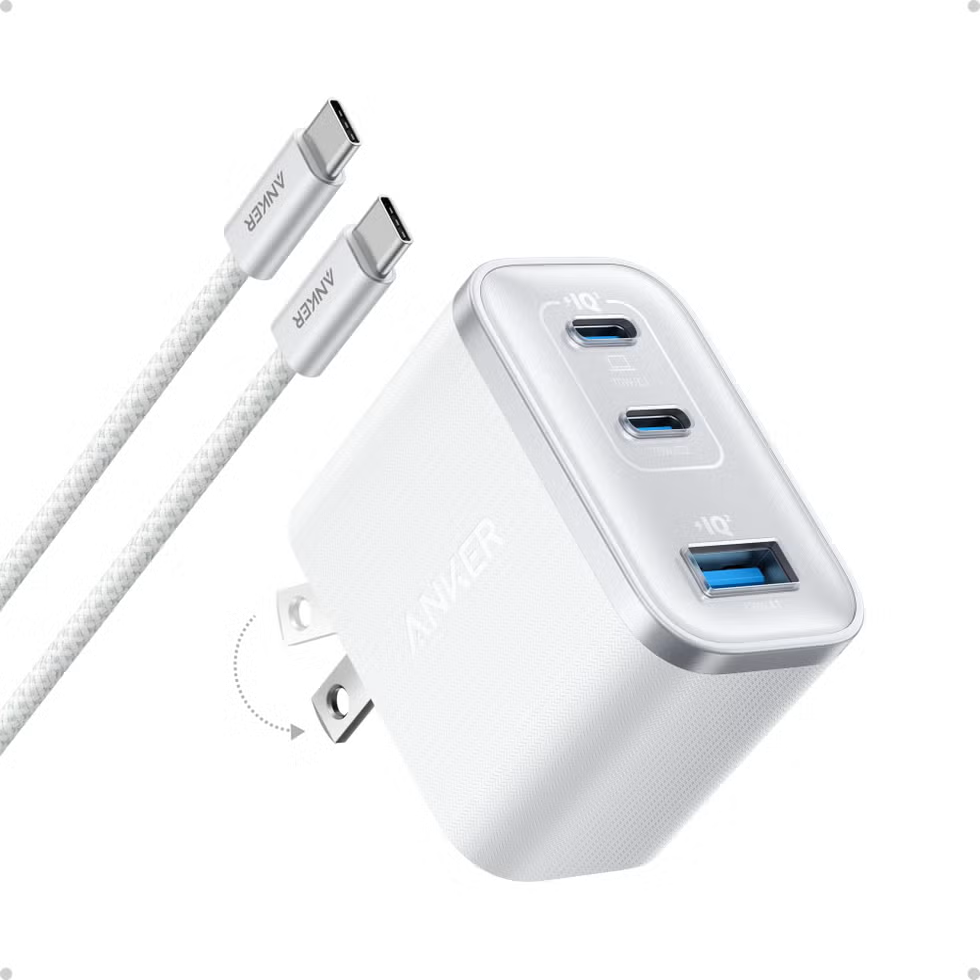
Now 20% Off
Best Vacuum Deal
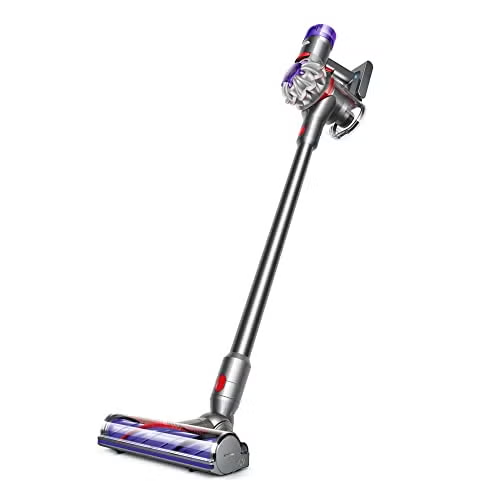
Now 20% Off
Best TV Deal

Now 43% Off
Best Headphones Deal
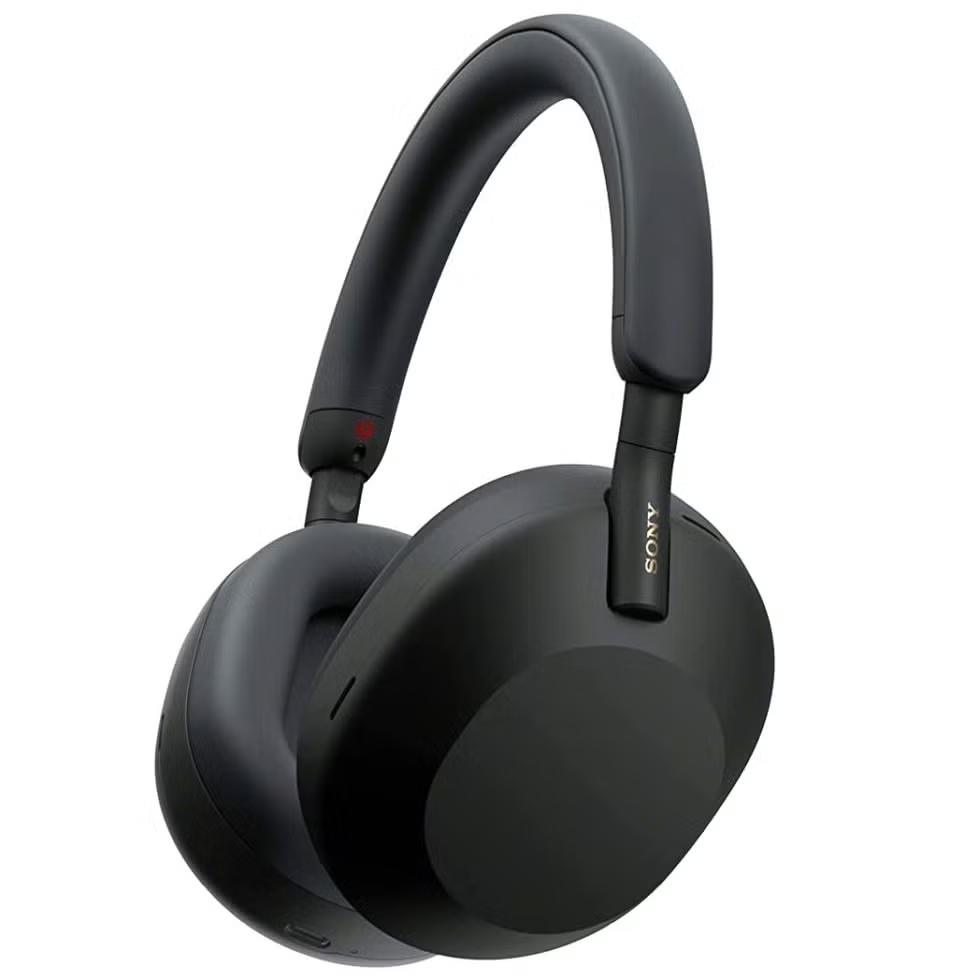
Now 38% Off
Best Jump Starter Deal
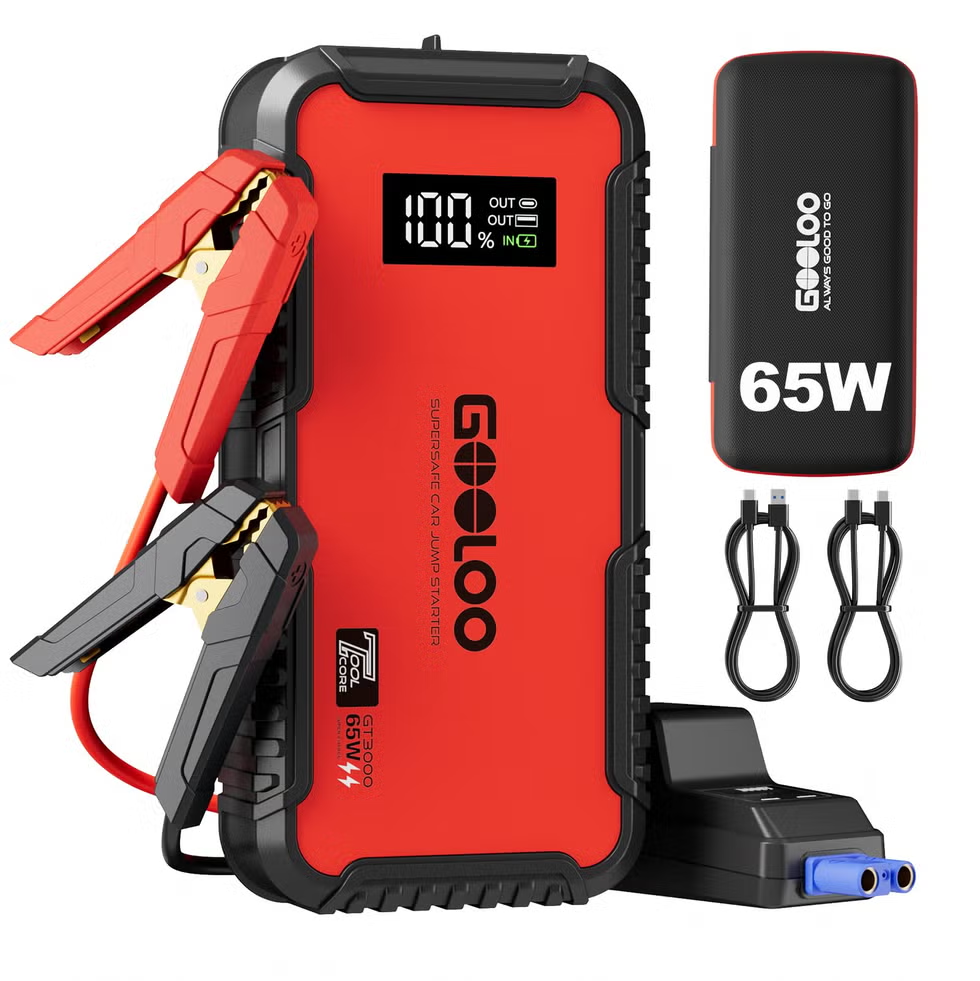
Now 30% Off
此内容由惯性聚合(RSS阅读器)自动聚合整理,仅供阅读参考。 原文来自 — 版权归原作者所有。