


Now 17% Off
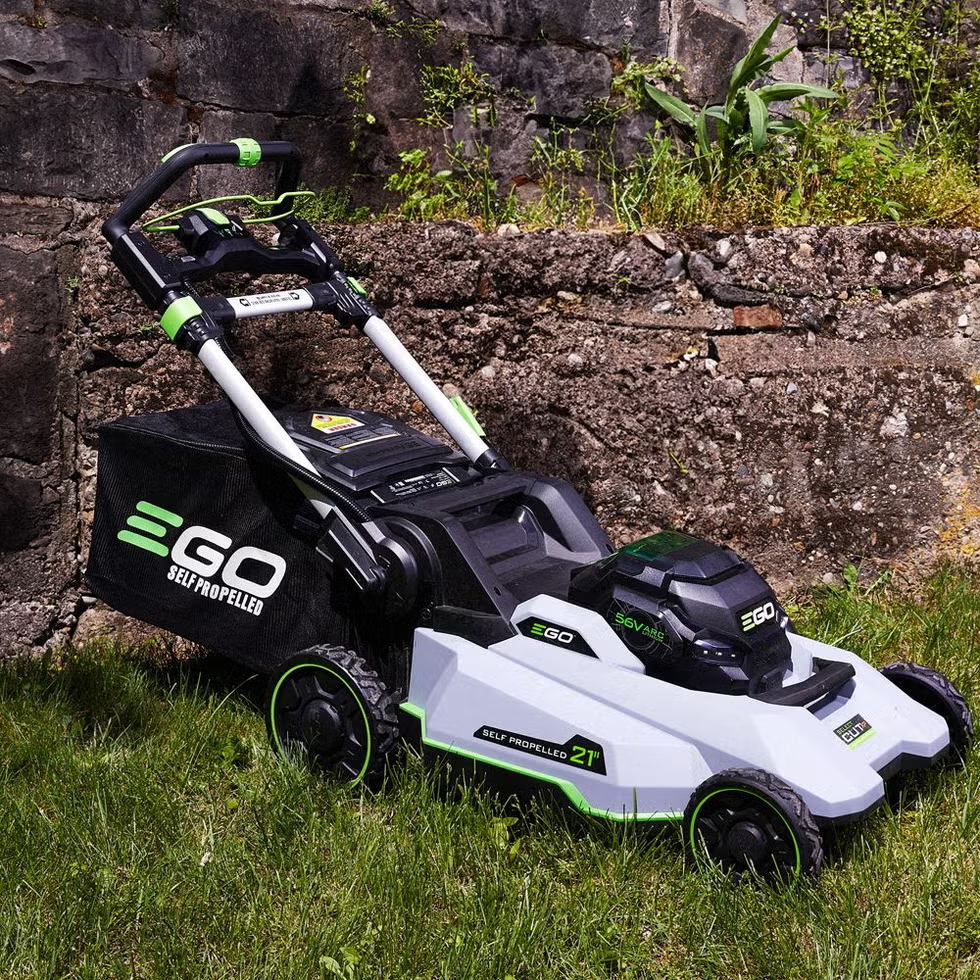
Several features made the Ego worthy of our top recommendation, no small achievement in our mower tests. Its outstanding cut quality makes healthy grass look like velvet after a trim. Even in mulching mode, we did not find clumps of accumulated clippings after the mower was finished (it’s important to specify here that these tests were performed on dry grass).
We attribute that cut quality to the X-shaped blade (a design developed decades ago on Honda’s gas-engine mowers) and to the smooth and unobstructed deck surface surrounding the blade.
It’s also an excellent bagger, gathering pounds more grass per square foot of test area than most mowers. You have to be aware of that when operating this mower. Its bag will fill more quickly than you might think.
Although we spend most of our time testing mowers in mulch mode, we recognize that bagging is particularly important for people with heavy foot traffic in parts of the yard who want to prevent grass clippings from being dragged into the house, garage, or onto patios. If that’s you, the Ego is probably a good fit.
Like many battery mowers today, the Ego is equipped with an all-plastic deck that will never rust and a tilt-forward handle that also adjusts telescopically to suit the user’s height. To make it even easier to use, it has single-lever deck height adjustment with a large T-shaped handle. This mower also has one of the better speed-control mechanisms we’ve seen—a simple dial that you rotate forward and back.
We tested this mower with a 7.5Ah battery, but you could fit the smaller included battery for a little extra juice, or if you're feeling ambitious, purchase the company’s 10Ah pack for even longer runtime. Our gripe with Ego's batteries is that they are hard to lift out of the mower, owing to their design with no handles. This is rather inconvenient, considering you need to remove the battery to charge it.
We found the Ego’s dial-adjusted speed control (the company calls it Touch Drive) to be simple and intuitive. Move the dial forward with your left or right thumb to increase speed. Move it back to decrease. The slowest speed is leisurely (.9 mph), and the top speed requires a comfortably fast walk.
The Ego is powerful, fun to operate, and cuts so well—it’s difficult to find anything to complain about. We suppose its big batteries could use a handle, but at least they are well-shaped and have a lot of rubber-coated surface, to promote a good grip.
| Voltage | 56 V |
| Weight | 61.7 lb with one 7.5-Ah battery |
| Cut Area Per Charge | 14,690 sq ft |
| Deck Width | 21 in. |
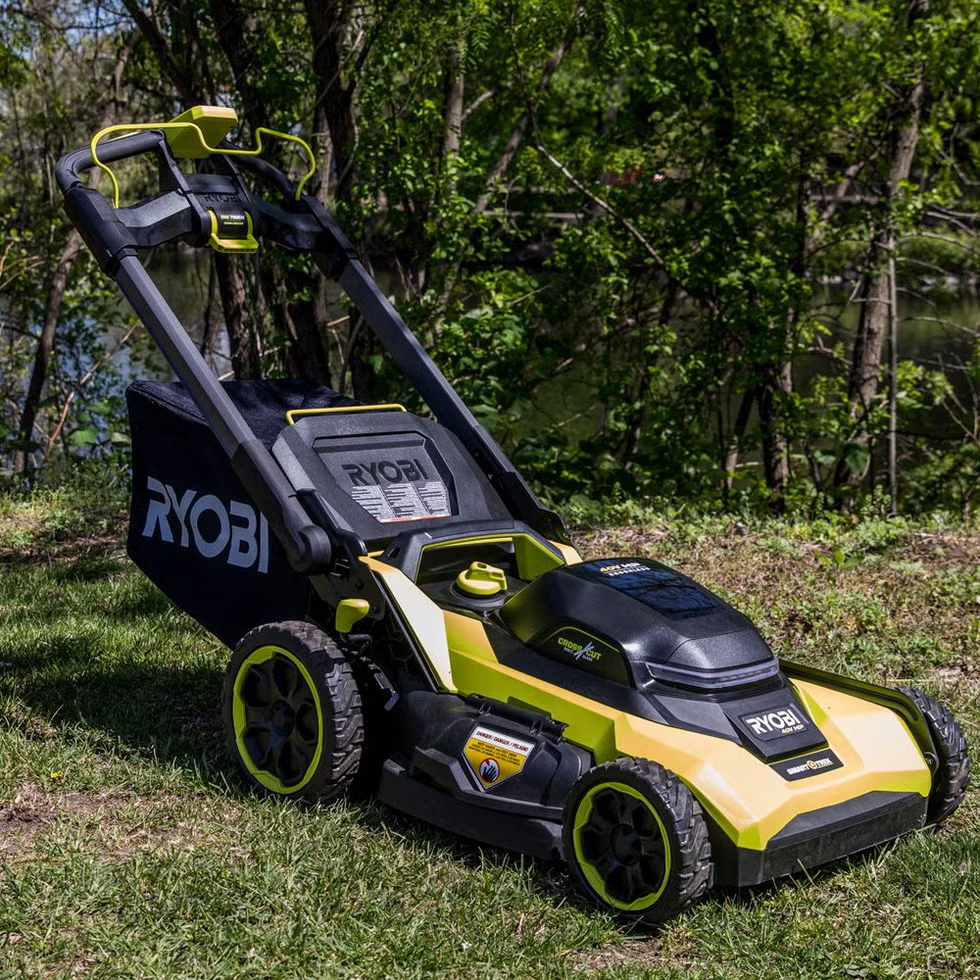
When we compared features to price, Ryobi’s 40V HP 21-inch is a versatile choice for the money you spend. It’s well built, offers good cut quality, and is simple to use.
Of all the self-propelled mowers we tested recently, this seemed to roll smoothest over the lawn, and with even weight distribution from front to back, it didn’t jostle around as we mowed our lawns. It also gave us some nice, straight lines as we worked across our test area. Overall, it made for a very pleasant mowing experience.
We also appreciated the simplicity of switching between mowing modes. There’s no mulching plug to fool around with, so you can easily switch between bagging and mulching modes by turning a switch at the back of the mower body that moves a gate. That’s one less mower part to keep track of. The mower deck also has a provision for installing a side discharge chute, completing the bag, mulch, and discharge trifecta.
In our tests for mowing performance, we found the Ryobi to be an adequate bagger, while the mulching mode was good, dispersing clippings evenly. This is aided in part by a cross-cut blade configuration that uses two crossed blades housed in the mowing deck. We also really liked the automatic boost feature that increases power to adapt to tougher mowing conditions. This worked pretty well, but if you spot a patch of thick grass, you can manually engage it in advance with a turbo button.
User controls are located centrally on the handle. There are seven drive speed settings to choose from, along with a standard battery gauge and a blade life indicator that alerts you when the blade needs to be replaced. Another bonus is that this Ryobi mower comes with two 6-amp-hour batteries that provide up to 75 minutes of mowing, depending on conditions. Given the high cost of a battery if you buy it on its own (about $220), this brings even more value to the table.
| Voltage | 40 V |
| Weight | 79.2 lb with two 6-Ah batteries |
| Cut Area Per Charge | Up to 3/4 of an acre |
| Deck Width | 21 in. |
Advertisement - Continue Reading Below
Now 30% Off
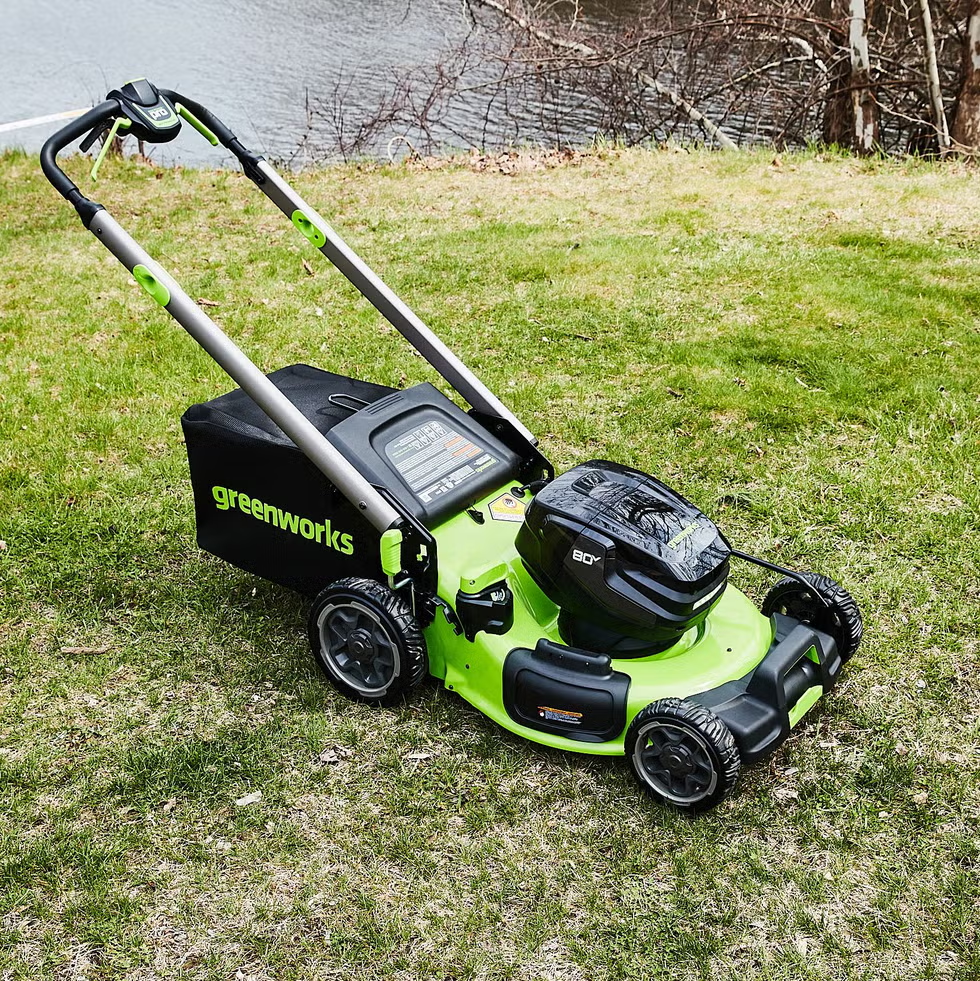
Greenworks added a lot of great features to its newest 80-volt self-propelled lawn mower, including a steel cutting deck, single-lever height adjustment, a built-in, lever-operated mulch-mode door, and a powerful 80-volt motor. It also has nice storage options, including a fold-forward handle and a hand grip on the top-front of the deck that makes it easy to stand it upright or lift onto a truck bed or large hatchback.
The model we reviewed came with two 4-amp-hour batteries, which delivered more than enough runtime to mow a property of around ½ of an acre (we just wish it had shipped with a dual charger). The intuitive controls made it simple to operate, including a well-placed sliding throttle for the self-propelled drive that’s quick and easy to adjust with your thumb. And while we rarely needed to use it, there’s a Turbo button that speeds up the blades if you need more power to get through a dense patch of grass.
The typical cutting options—bagging, mulching, and side discharge—all work well, but mulch mode is the standout. The X-formation dual-blades finely cut the blades of grass, and with some minor exceptions, we didn’t find much clumping left behind while we cut in that mode. And the built-in door that closes when switching to this mode with a lever is a godsend—no more mulch plug to go missing!
One thing to note: The steel deck makes this mower heavier than most cordless mowers, which is noticeable when you need to disengage the self-propulsion to make a tight turn or trim a small area. Even so, if you’ve been hesitant to give up your gas-powered walk-behind mower but have been thinking about going electric, this model from Greenworks will tick all the boxes. It’s quiet, durable, and powerful enough to get the job done.
| Voltage | 80 V |
| Weigth | 71 lb (including batteries) |
| Cut Area Per Charge | Up to 3/4 acre |
| Deck Width | 22 in. |
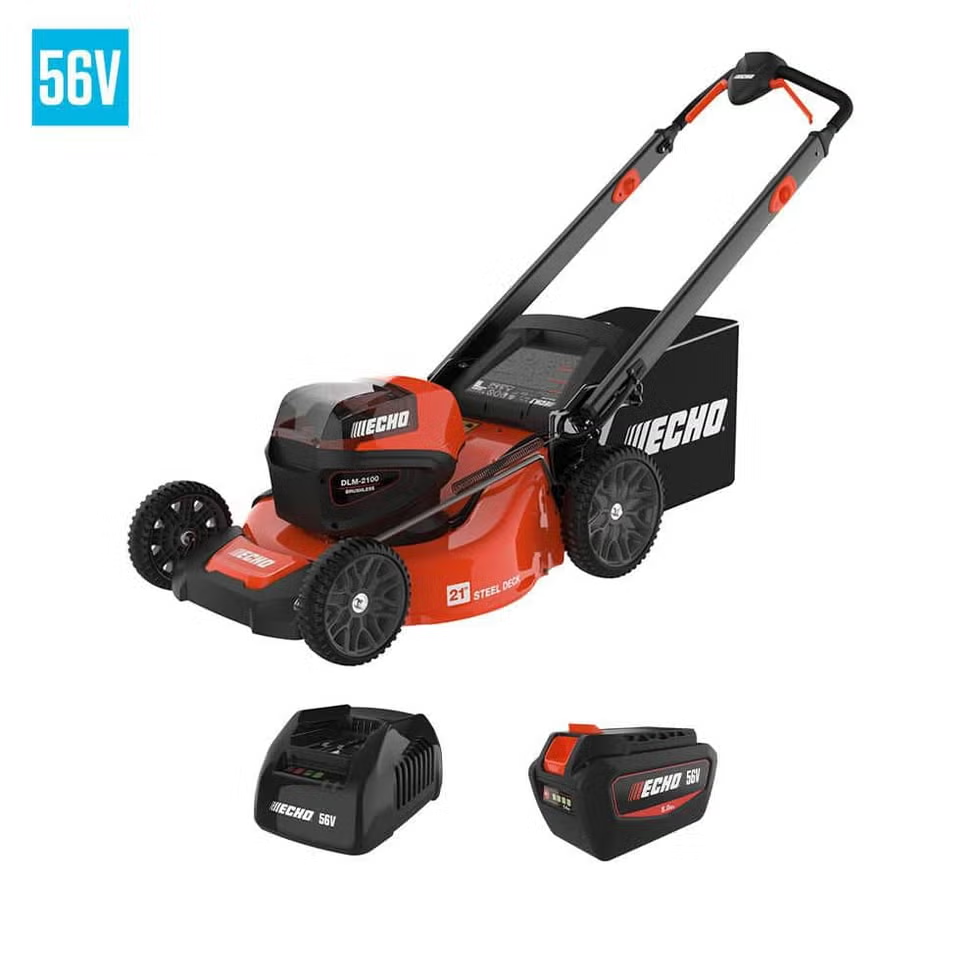
Some yards don’t need the added expense of self-propel or large capacity batteries, but that doesn’t mean you need to cut down on quality. And that’s what we found in this model (DLM-2100) from Echo. This push mower impressively tackled tall, thick grass—in some places up to 6 inches—and even some patches of weeds without getting bogged down. Plus, it’s easy to operate, with single-lever height adjustment, quick push-button start, and a bag that’s easy to remove and replace.
The model we reviewed came with a 5-amp-hour battery, which provided enough power to mow both the front and back yards of a small (less than quarter-acre) property in 45 minutes without running out of power. But it features a two-battery bay, so if you wanted to buy an extra battery for an extra property, you could.
It’s built with a sturdy steel cutting deck, which is great for durability, but this can make the mower a bit heavier to maneuver and turn. Remember, there’s no self-propel drive to help you move the mower forward—it’s all under your own power.
Overall, we found this Echo mower to be ideal for a smaller yard. It will get the job done neatly, efficiently, and quietly. Plus, its battery can work in Echo’s ecosystem of eFORCE 56-volt power tools, which includes leaf blowers, chainsaws, and string trimmers.
| Power | 56 V |
| Weight | 60.63 lb |
| Cutting Area per Charge | 1/2 acre |
| Cutting Width | 21 in. |
Advertisement - Continue Reading Below
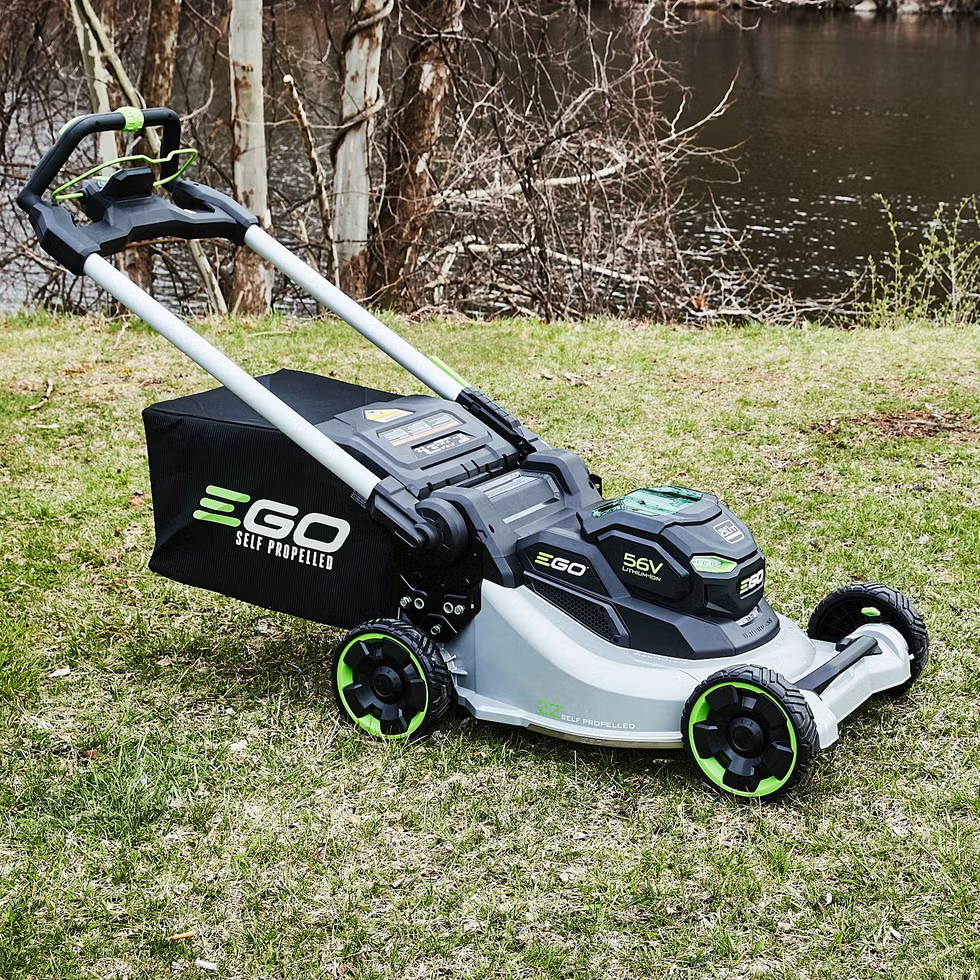
Now 14% Off
In our tests of this model (LM2200) from Ego Power+, a standout feature was the Touch Drive self-propel system. To move the mower forward, you simply rest your palms against the large pads embedded in the control handle, as opposed to squeezing a bar from below, as many self-propelled electric mowers do. This resulted in a more comfortable mowing experience for our reviewer, and he found the thumb dial throttle easy to adjust on the fly, between 1 and 3 mph.
This model is also a bit different from Ego’s lineup in that it’s built with a 22-inch aluminum cutting deck, as opposed to composite materials that are more commonly used in its mowers. While this made it a bit heavier, we found the sturdiness worth the extra pounds and didn’t make it any harder to maneuver while cutting.
It’s also plenty powerful. In fact, the Ego LM2200 has more motor torque, at 11 foot-pounds, than most gas push mowers. This helped deliver a clean cut that didn’t result in much clumping, even after mowing grass that was slightly damp. Plus, when we cut in bagging mode, the suction and lift of the dual blades aided in filling the bag at a steady pace, and it held more clippings than we expected.
If you’ve been wanting to go electric but have been nervous to pull the trigger, you can’t go wrong with this mower from Ego. It’s got all the power you need to cut as well as a gas-powered mower, if not better, and with just over an hour of runtime from a 10-amp-hour battery, it should suffice for a medium-sized property.
| Voltage | 56 V |
| Weight | 91.3 lb (including one 10-Ah battery) |
| Cut Area Per Charge | Up to 1 acre |
| Cutting Width | 22 in. |
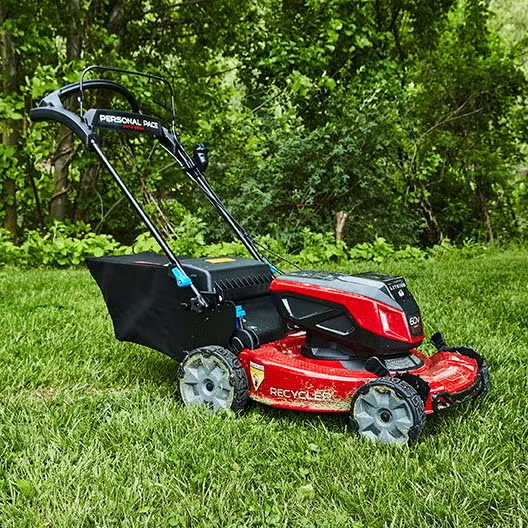
Toro mowers have garnered more recommendations from us than any other brand for two reasons: build quality and cut quality. And those were amply demonstrated in our testing of the Recycler. It turned in the best ratio of cut area per amp-hour of battery by far in the self-propelled category—a whopping 2,254 square feet of mowed surface per amp-hour of battery capacity.
To put that in perspective, the Best Overall Ego came in at 1,469 square feet per amp-hour, and the Best Value Ryobi was 1,274 square feet per amp hour. So not only is the Toro a highly efficient mower, it accomplishes this while turning in incredible cutting, mulching, and bagging performance.
We attribute this outstanding mower performance to three features, all upgrades to the previous version of this machine. First, the air vent at the front of the mower deck seems to improve mulching and bagging performance. Toro calls it Vortex technology, a design to increase airflow in the same way as a hood scoop functions on a car. The company says it helps the grass stand straighter under the mower and keeps clippings suspended longer for more thorough mulching, but it also improves airflow into the bag. We can’t verify that, but we can say our results indicate the design is successful.
Next, the company’s redesigned “Atomic” blade configuration appears to assist the airflow and clipping movement. Finally, the three-phase, 60-volt motor is exceptionally efficient, resulting in a large cut area for a single battery.
Toro has, wisely, not altered some of the previous features that make this mower work: rear-wheel drive, a one-piece deck that’s all steel (no plastic nose), rear-wheel-drive, 11-inch wheels to help it roll over roots and crevices, and the same fold-forward handle that was an industry breakthrough when it was introduced years ago.
| Voltage | 60 V |
| Weight | 83 lb with 8Ah battery and bag |
| Cut Area Per Charge | 1/3 acre, 53 min claimed |
| Deck Width | 22 in. |
Advertisement - Continue Reading Below
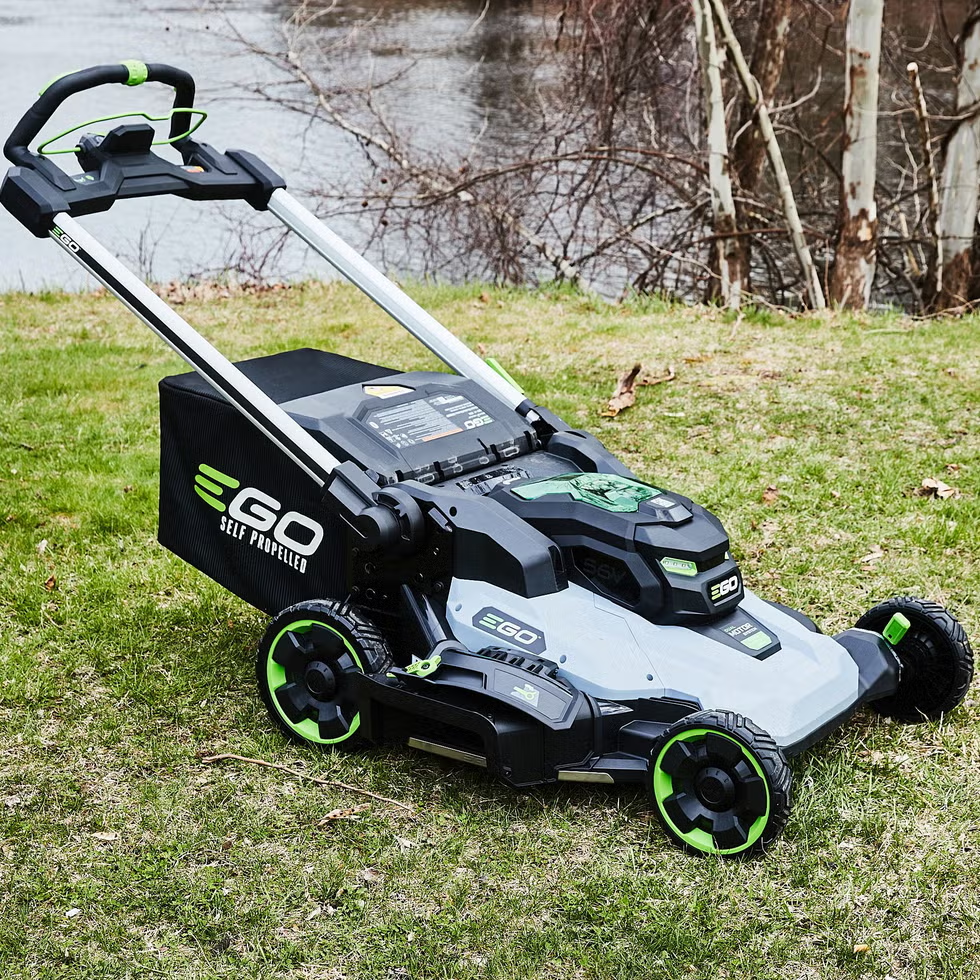
This is Ego’s newest and largest walk-behind mower yet. The mower offers the typical mulching, bagging, and side discharge options, but sitting beneath the wide plastic-composite deck are two 15.2-inch mower blades—oriented similar to what you’d find under a riding lawn mower, just smaller.
Because it was early in the season and the grass had not grown tall yet, we opted to mow in mulching mode, and it delivered a clean cut without a clump of grass left behind. We did test out the bagging function, too, finding that the bag that comes with this mower is spacious and took longer to fill than expected.
But can a mower this large save you time? With the Ego’s cutting path being nearly 30 percent larger, the short answer is yes. We experimented by making 10 passes with a standard 21-inch walk-behind mower, and then re-mowed that same area with the Ego; it only needed seven passes with the wider machine.
How this translates to your own property depends on factors like how much hilly terrain you have or obstacles you might have to navigate around. Our experiment showed a savings of about 30 percent of mowing time/effort. That’s a bonus in our book.
Of course, with a mower this size, there are a few things to keep in mind. It’s heavier than most walk-behind mowers, at over 100 pounds, even without the batteries. That made it cumbersome to turn. We also found that adjusting the self-propel speed (which can range between approximately 1 and 3 mph) was difficult to do on the fly. The knob is small, located at the center of the handle, and fairly sensitive.
Listing at $1,799, this Ego is expensive, to be sure, but less than a riding or zero-turn mower. And the time you save may well be worth the extra cost, helping you to complete the job of cutting a larger lawn, faster.
| Voltage | 56 V |
| Cutting Area Per Charge | Approximately up to one acre |
| Deck Width | 30 in. |
| Weight | 116.5 lbs (including the two batteries) |
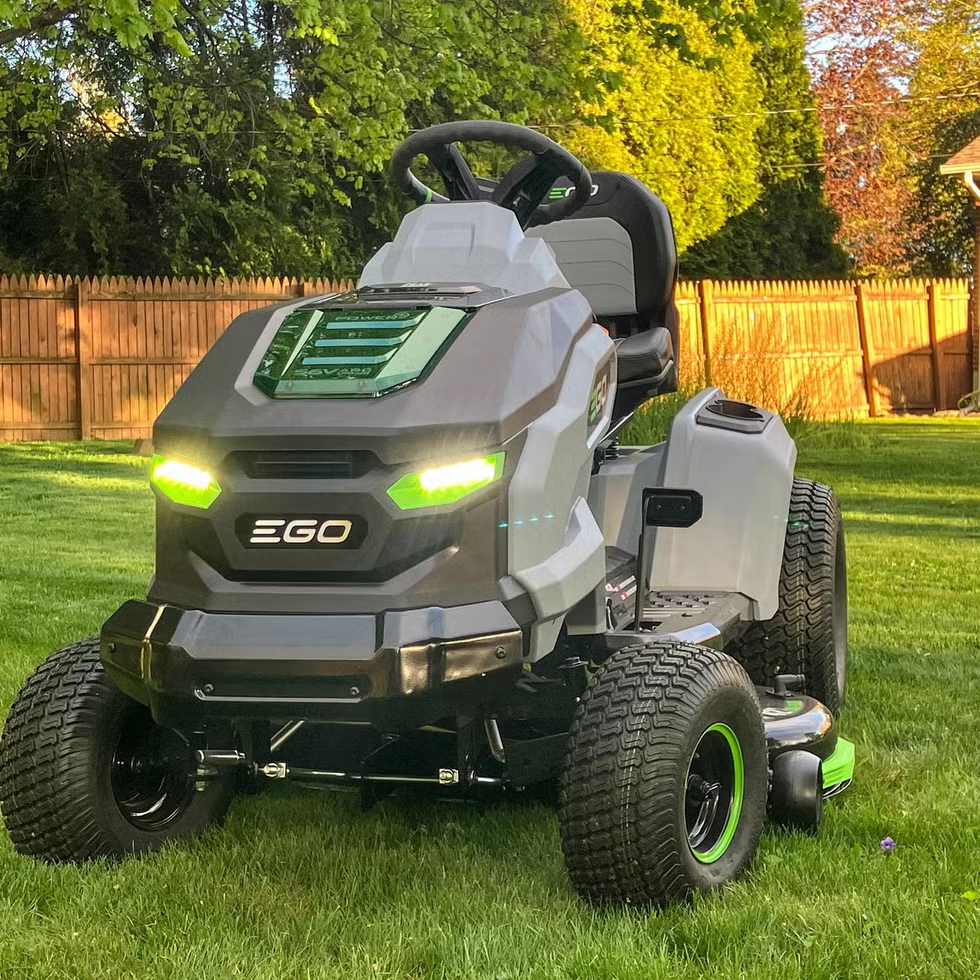
PM Deputy Reviews Editor Colin Aylesworth tested out Ego’s 56-volt T6 electric lawn tractor on his roughly half-acre property. He noted its superb cut quality, quiet operation, and variable speeds.
“Regardless of which drive speed setting I’m in, this tractor is easy to creep along at low speeds,” he notes, “which is handy when I’m backing it into my shed.”
Though Ego claims this tractor can mow up to 1.5 acres of grass on a set of six fully charged 6.0-Ah batteries, Aylesworth ran the mower at middle settings for both blade speed and ground speed and found it drained nearly 70 percent of the batteries’ combined capacity. Keep in mind that manufacturer battery runtime claims are typically based on testing under specific conditions and with the mower in certain settings. This means battery runtime in real-world conditions varies.
The mower comes with a charger that can juice the batteries individually or all at once when they are installed in the mower. In practice, this is simple and similar to recharging an electric vehicle.
You can set its 42-inch wide cutting deck to one of 12 heights, from 1.5 to 4.5 inches. And the blades are powered by dual brushless cutting motors, which means there are no belts to worry about breaking.
Advertisement - Continue Reading Below
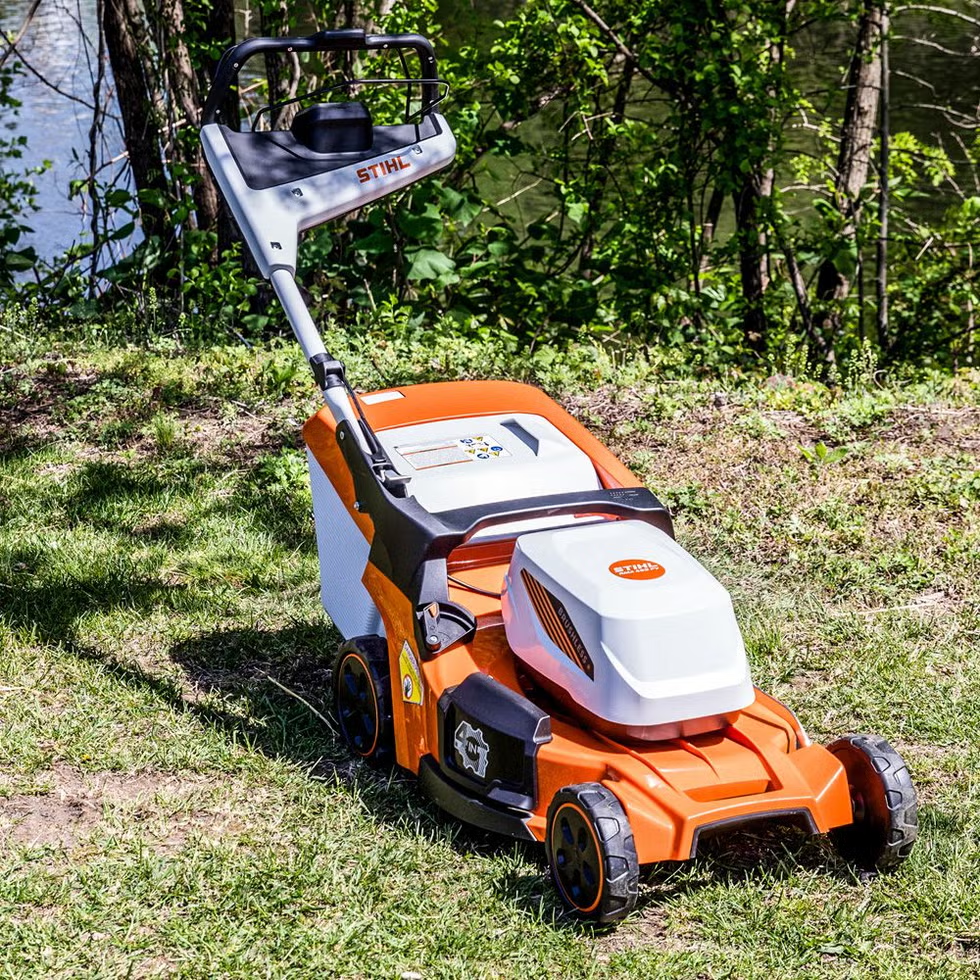
“Stihl’s RMA 453 PV Self-Propelled 21-inch Mower is a grass-bagging phenom, collecting two to three times the clippings for the same area cut as other mowers tested,” says test reviewer Bradley Ford. This mower has a unique, hard-bodied bag design that you don’t often see on mowers, and a capacity gauge that lets you know when the bag is full. The handle is a mono-arm design that makes bag removal fast and convenient.
Other useful features that Ford noted were the easy-to-use, one-handed, single-point height adjustment (from ¾-inch to almost 4 inches) and three power modes: eco, standard, and boost. The latter is a smart feature that automatically adjusts the blade rpm when resistance is met from heavy grass. Ground speed, power modes, and battery charge levels are all monitored and adjusted from an easy-to-read control panel on the handlebar.
The 36-volt motor can run on one or two 7.8-Ah batteries, and the mower has a run time of up to 75 minutes if both batteries are employed. This will depend on mowing conditions and the speeds you are using the most, but Eco mode will give you the longest run time. Check back for our full expert evaluation of how well this mower performs in our cutting tests.
| Voltage | 36v |
| Weight | 71.9 lb with two 7.8-Ah batteries |
| Cut Area Per Charge | Up to 1/2 acre |
| Deck Width | 21 in. |

Colin Aylesworth attended Binghamton University and is a Deputy Editor with the Gear team at Popular Mechanics and Runner’s World, where he has been since 2022. Prior to joining Hearst Magazines, he worked for 11 years at U.S. News and World Report on the autos team.
His personal pursuits fit in well with the work he does for PM and RW. Aylesworth was on his college’s club rowing team and has maintained a routine running habit through most of his adult life as a means of getting exercise and spending time outdoors. Running creates a hearty appetite, which brings us to Popular Mechanics. That publication's expertise in the area of grilling is relatable to Aylesworth, who is an adherent to charcoal grilling. In fact, he’s been primarily using the same Weber charcoal kettle he bought on Craigslist in 2012.
Aylesworth also has experience in the lawn mower industry. Not only has he been mowing his and neighbor’s lawns during adolescence, one of his more recent endeavors is a side gig of repairing and restoring gas lawn mowers given up by their previous owners. Since joining PM, he has gotten more involved with the publication’s mower testing efforts and especially enjoys testing out new electric and zero turn mowers.

David is a Reviews Editor for Hearst’s Enthusiast Group, contributing to Popular Mechanics, Runner’s World, Bicycling, Best Products, and Biography. He has over 25 years of experience writing about and reviewing consumer electronics, kitchen appliances, DIY products, outdoor gear, and more. He also spent years covering the ever-changing world of online retail. To relax, he loves experimenting with new recipes, tweaking his smart home setup, and spending time outdoors on his bike or camping.

Brad Ford has spent most of his life using tools to fix, build, or make things. Growing up he worked on a farm, where he learned to weld, repair, and paint equipment. From the farm he went to work at a classic car dealer, repairing and servicing Rolls Royces, Bentleys, and Jaguars. Today, when he's not testing tools or writing for Popular Mechanics, he's busy keeping up with the projects at his old farmhouse in eastern Pennsylvania.
此内容由惯性聚合(RSS阅读器)自动聚合整理,仅供阅读参考。 原文来自 — 版权归原作者所有。