





According to the National Fire Protection Agency’s Smoke Alarms in US Home Fires report, between 2018 and 2022, 43 percent of home fire deaths were in properties with no smoke alarms, and 16 percent occurred in properties where the smoke alarms failed to operate. The risk of death was significantly higher in homes without smoke alarms than in homes that had them.
I have a total of five smoke and carbon monoxide detectors on the main floor of my home. Why so many? Certain smoke detectors detect certain types of smoke, and when you throw carbon monoxide detectors into the mix, the number of smoke detectors that you need to keep your home safe adds up.
There are two main types of smoke detectors—photoelectric and ionization—and, while both are effective, they’re each designed to be more sensitive to a certain type of fire. I spoke with Lisa Shoulders, life safety program director at Resideo, a company that manufacturers smoke and carbon monoxide detectors, to learn more about the differences between these two types and how to place these devices in your home so that it’s as fire safe as possible.
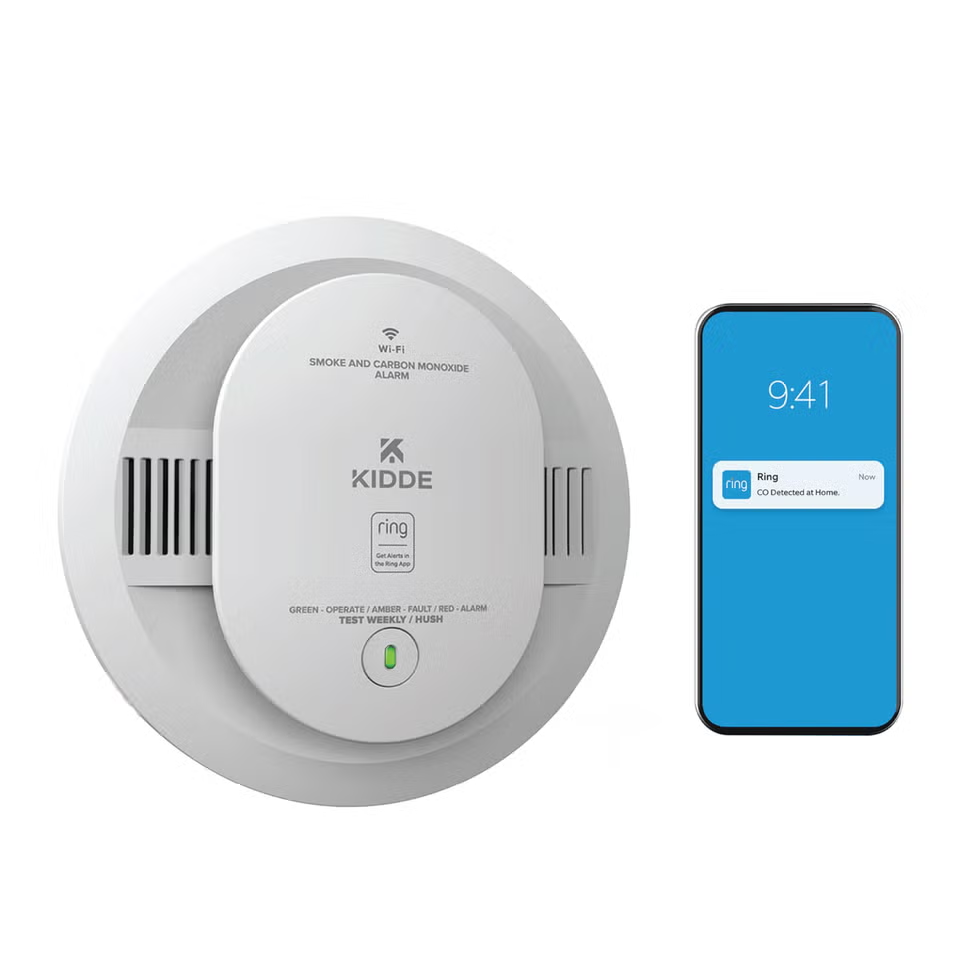
A photoelectric alarm (like the Kidde Ring Smart Smoke and Carbon Monoxide Detector, our choice for favorite smart system) is triggered when smoke disrupts a beam of light that spans a space inside your smoke detector. The smoke disperses light so that it bounces in all directions and eventually hits a sensor that triggers the alarm. This type of detector is more sensitive to smouldering fires, which are the early signs of larger, flaming fires. Smoldering fires are flameless to start, but create lots of smoke before eventually igniting and emitting larger particles.
Shoulders says that photoelectric smoke detectors are generally more effective for detecting large particles. Photoelectric smoke alarms typically cost more than ionization smoke alarms, but they are also more likely to sound early, giving you more time to escape from the home.
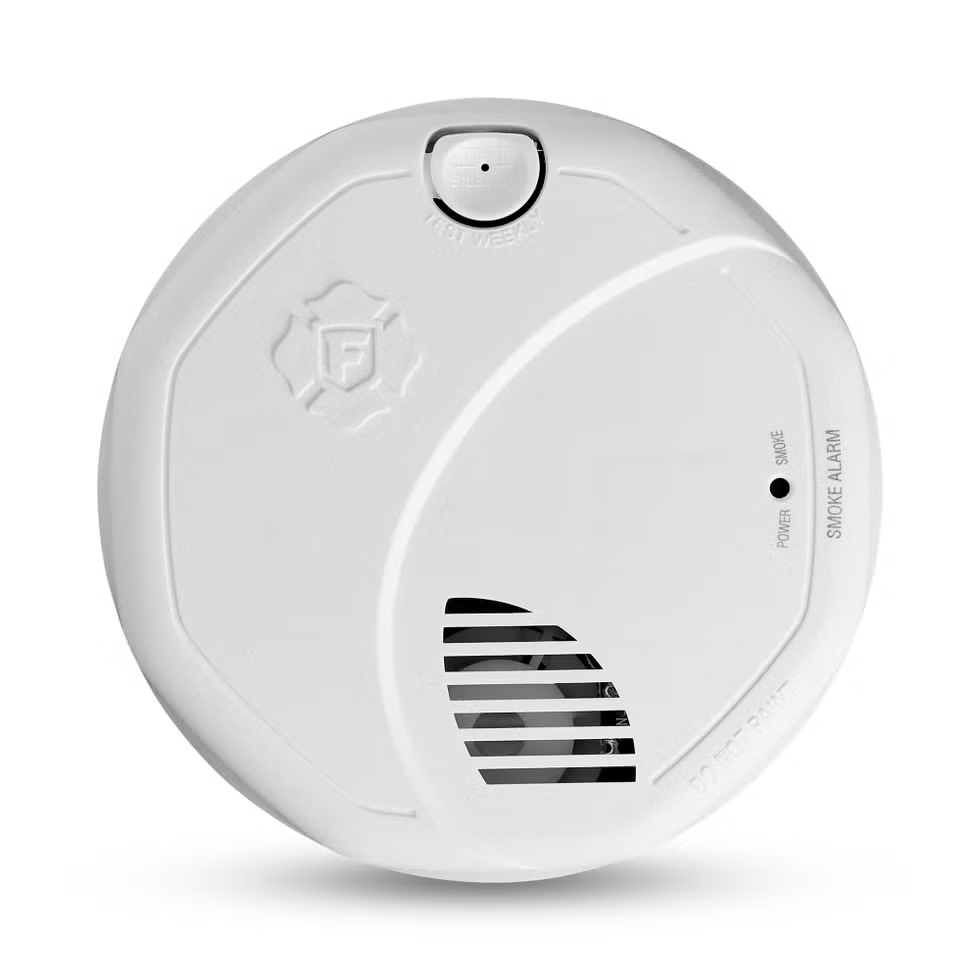
An ionization smoke detector (such as the First Alert Hardwired Smoke Alarm, our pick for best value smoke detector) contains a small amount of radioactive material inside an ionization chamber. This material flows between electrically charged plates to create a small electric current. When smoke enters the alarm, it disrupts the current, causing the alarm to go off.
Ionization technology, as Shoulders explains, is more capable for detecting smaller particles than photoelectric technology. These tiny particles are typically released in large quantities by flaming fires—the fast-burning, high-flame fires most people picture when they think about a fire.
While an ionization smoke alarm is often a less expensive option, it’s more likely to produce a nuisance alarm in response to smoke from cooking, steam, or humidity.
Shoulders cautions that it would be misleading to suggest one type is clearly “better” than the other when it comes to photoelectric versus ionization, saying that fire safety is more complex than that. “Put simply,” she says, “the ‘best’ smoke and CO alarm is one that’s UL certified and can be properly maintained in the home.”
Underwriters Laboratories (UL) Solutions publishes safety standards for a variety of products, including smoke detectors. They build their standards based on their own research and the most current standard is the UL 217 10th edition. Intertek ETL (Electrical Testing Laboratories) doesn’t create its own standards but rather tests products against the UL standards, so a smoke detector that’s ETL certified meets the mark, as well.
Unfortunately, some smoke alarms on the market aren’t UL or ETL certified, so it’s important to check before purchasing. If you have smoke and carbon monoxide detectors in your home already, you can remove them from the mounting plate and check for a UL or ETL logo on the back.
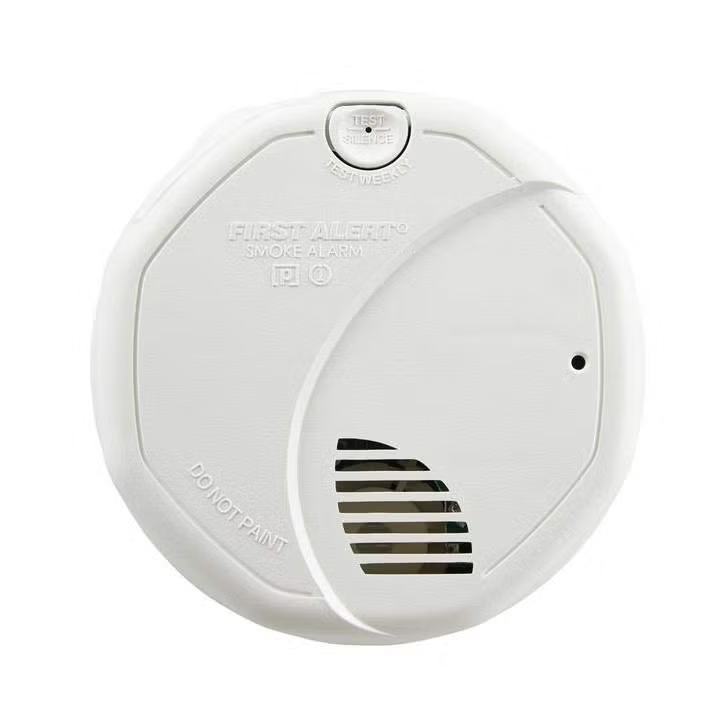
It’s also worth noting that a number of the best smoke detectors we’ve tested, including our Best Overall choice, the First Alert Battery-Powered Dual-Sensor Smoke Alarm, are what’s called “dual sensor,” which means they are designed with both photoelectric and ionization technology included.
A final consideration is that in some states, ionization smoke alarms are being phased out in favor of photoelectric smoke alarms. You can check your state’s requirements on First Alert’s database of Fire Safety Laws and Legislation By State or by visiting your local government’s website.
The NFPA offers recommendations for where smoke alarms should be installed:
In addition to smoke and carbon monoxide detectors, there are other fire safety devices that can further protect from fires, fire damage, and injury:

Stephanie Mickelson is a freelance writer focused on reviews and home improvement. She writes about a wide range of topics including the best appliances for your home, how to maintain your HVAC system, and organization tips and tricks. She also writes for USA Today Homefront, US News & World Report, Forbes Home, Angi, Apartment Therapy, and more.

Amber is a Reviews Editor with bylines on Popular Mechanics, Runner’s World, Bicycling, and Best Products sites. Specializing in kitchen gadgets, small appliances, lifestyle, and consumer tech, she brings hands-on testing and a detail-oriented approach to every review. In her free time you can likely find her trading trinkets at an EDM festival, searching for hidden gems at thrift stores, or cuddling with her two cats.
此内容由惯性聚合(RSS阅读器)自动聚合整理,仅供阅读参考。 原文来自 — 版权归原作者所有。