


Here’s what you’ll learn when you read this story:
Experts long believed that the world’s oldest game of chance was invented in Egypt about 5,200 years ago. A new discovery upends that theory, showing that Native Americans, specifically in modern-day Wyoming, Colorado, and New Mexico, were using dice to play games with the mathematics of probability over 12,000 years ago.
A new study published in the journal American Antiquity by Colorado State University researcher and Ph.D student, Robert Madden, reveals that people living at the end of the Ice Age in North America produced the oldest-known examples of dice in the world. The dice offer an unprecedented look at human interactions with randomness centuries before Europe’s first mathematical models of probability were inspired by questions about dice games.
“These findings don’t claim that Ice Age hunter-gatherers were doing formal probability theory,” Madden said in a statement. “But they were intentionally creating, observing, and relying on random outcomes in repeatable, rule-based ways that leveraged probabilistic regularities, such as the law of large numbers. That matters for how we understand the global history of probabilistic thinking.”
The ancient dice aren’t modern six-sided cubes we’re familiar with, but instead prehistoric pieces of bone, typically with two sides. Reminiscent of flipping a coin, the world’s first dice were made of flat or slightly rounded bone—commonly in oval or rectangular shapes—and these “binary lots” were small enough to hold in a hand so they could be tossed onto a playing surface. Human-made markings on the surfaces, either inscribed or colored, give each pair of dice a unique style.
“They’re simple, elegant tools,” Madden said. “But they’re also unmistakably purposeful. These are not casual byproducts of bone working. They were made to generate random outcomes.”
Madden said dice games were commonly played by women—he estimated use of the dice as 70 percent female—in one-on-one contests. He theorized that playing against another person made the game fair, with every player having an equal opportunity under the same conditions. “It was used as a form of exchange,” Madden said in a podcast about the complex games, “particularly between groups of people who did not come into frequent contact with each other, so they didn’t really know each other.”
Madden discovered the artifacts by going through 293 sets of Native American dice originally documented in 1907. Using the 100-year-old research discoveries as a guide, Madden poured over published archaeological records to relook at old data, including previously-classified “gaming pieces.” Madden’s research put the pieces in a fresh context that allowed him to identify another 600 dice from across North America.
The bulk of the discovery spans a 12-state region and 57 archaeological sites, many with vastly different styles, showing just how prevalent dice games were over the centuries. “Games of chance and gambling created neutral, rule-governed spaces for ancient Native Americans,” Madden said. “They allowed people from different groups to interact, exchange goods and information, form alliances, and manage uncertainty.”
The study crafted an objective criterion for defining examples of early dice. “The results suggest that dice, games of chance, and gambling have been a persistent feature of Native American culture for the last 12,000 years,” Madden wrote in the study.
“Ancient Native Americans possessed a basic working knowledge of chance, randomness, and probability,” Madden wrote, “and consequently were early movers in humanity’s emerging understanding and practical application of these concepts.”
The Best AirPods

Now 8% Off
Best Portable Power Station
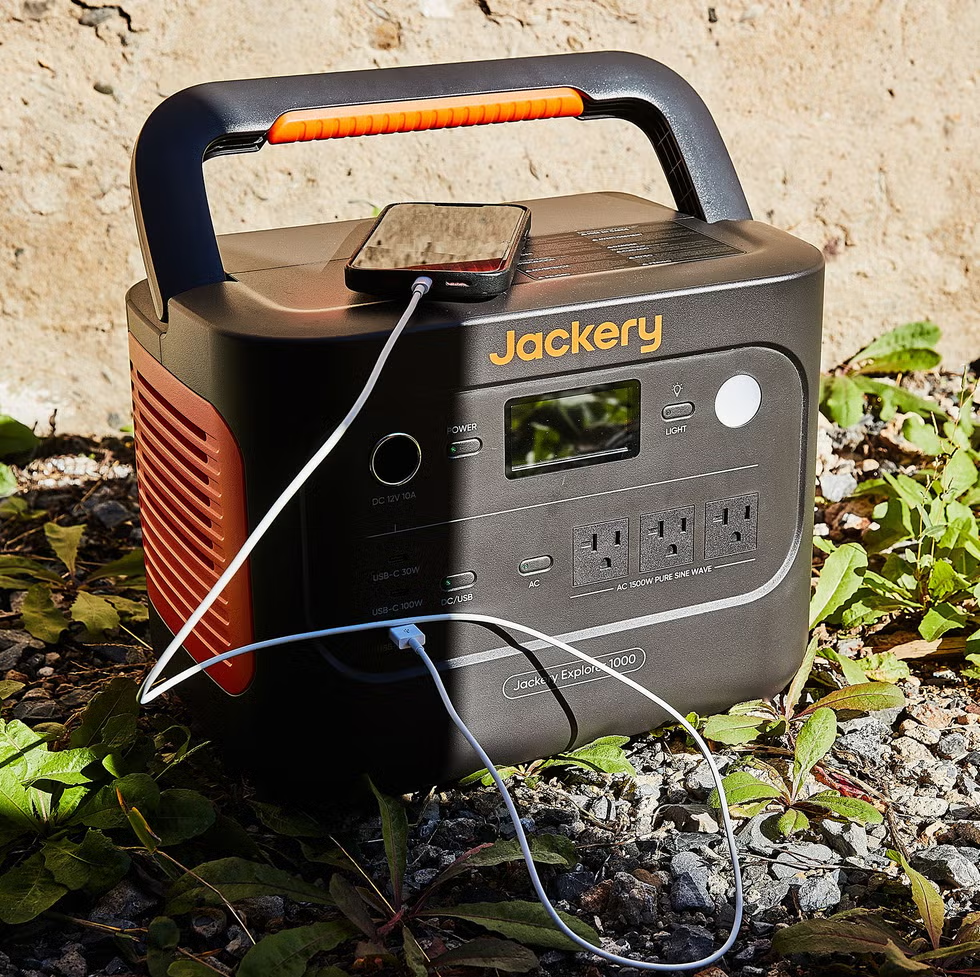
Now 44% Off
Compact Power Bank

Best Overall Portable Jump Starter

Now 18% Off
Best Value Drone
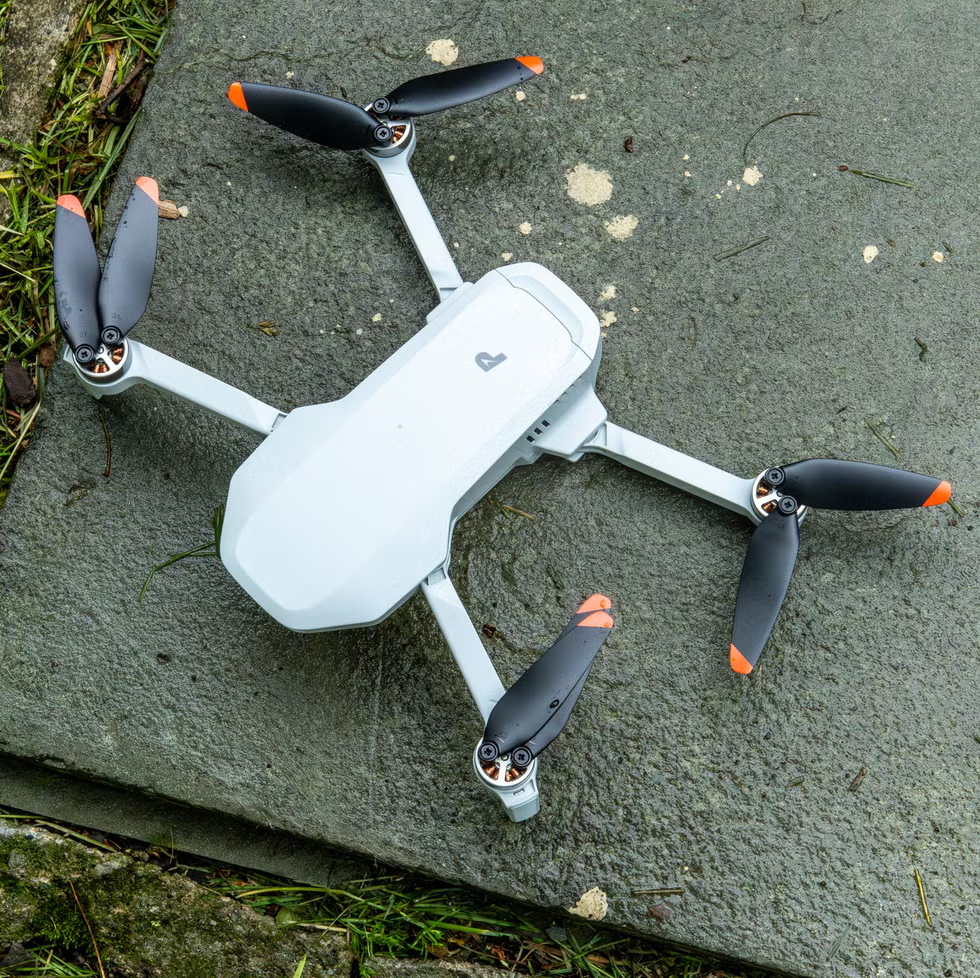
Best Overall Robot Vacuum

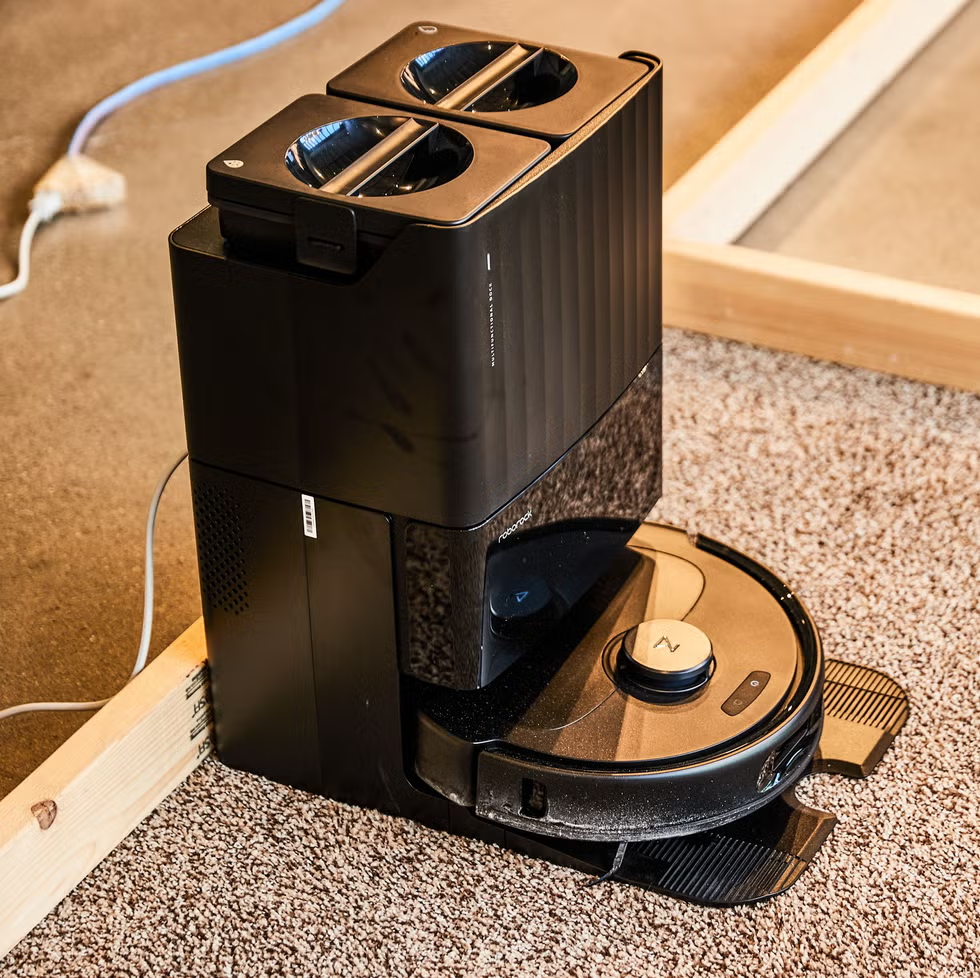
Now 31% Off
Best Overall Photo Scanner
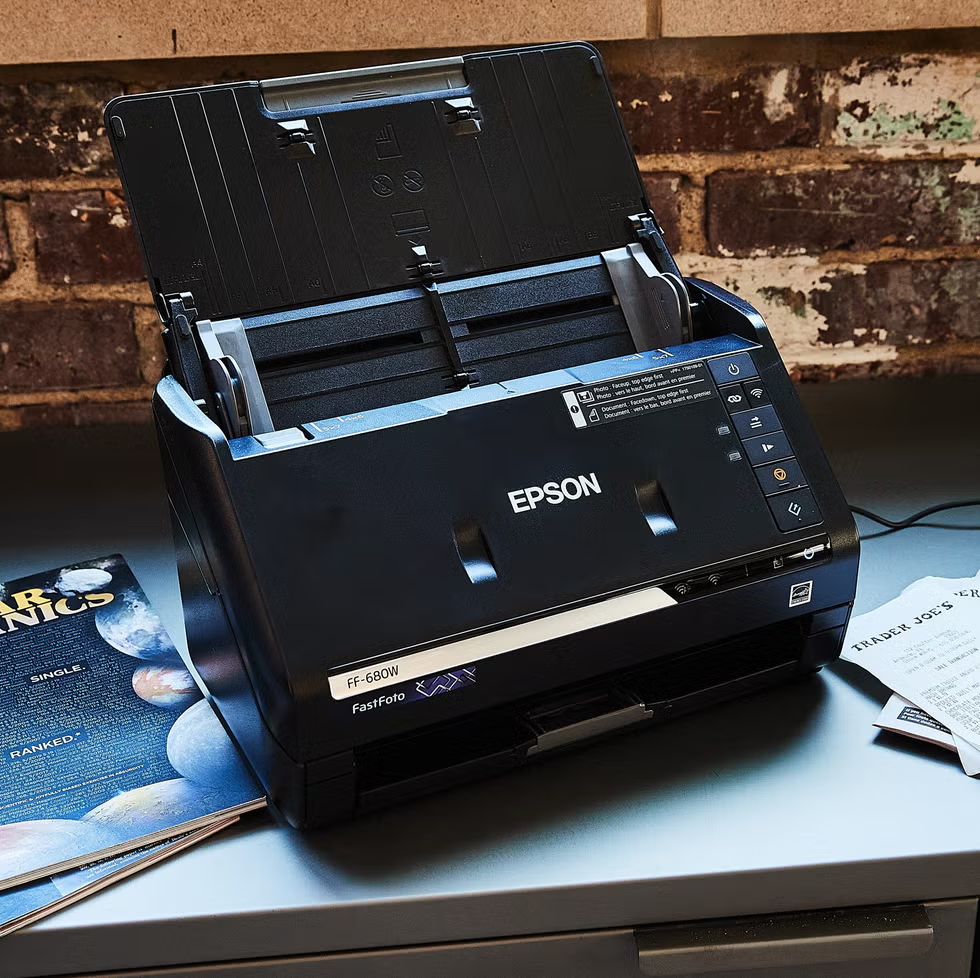
Now 11% Off
Best Vacuum for Pet Hair
Now 34% Off

Tim Newcomb is a journalist based in the Pacific Northwest. He covers stadiums, sneakers, gear, infrastructure, and more for a variety of publications, including Popular Mechanics. His favorite interviews have included sit-downs with Roger Federer in Switzerland, Kobe Bryant in Los Angeles, and Tinker Hatfield in Portland.
此内容由惯性聚合(RSS阅读器)自动聚合整理,仅供阅读参考。 原文来自 — 版权归原作者所有。