



- DESCRIPTION
- TABLE OF CONTENTS
- METHODOLOGY
- DOWNLOAD PDF
Aliphatic Hydrocarbon Solvents and Thinners Market by Type (Varnish Makers' & Painters' Naphtha, Mineral Spirits, Hexane), Application (Paints & Coatings, Cleaning & Degreasing, Adhesives, Rubbers & Polymers, Aerosols), Region - Global Forecast to 2032

USD 6.81 BN
MARKET SIZE, 2032

CAGR 4.4%
(2026-2032)

200
REPORT PAGES

227
MARKET TABLES
OVERVIEW
Source: Secondary Research, Interviews with Experts, MarketsandMarkets Analysis
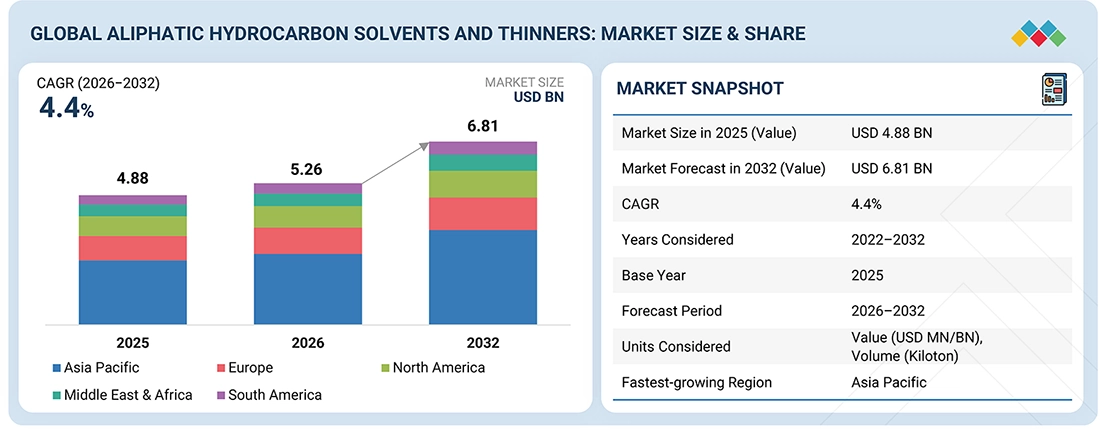
The aliphatic hydrocarbon solvents and thinners market is projected to grow from USD 5.26 billion in 2026 to USD 76.81 billion by 2032, at a CAGR of 14.4% during the forecast period. The paints and coatings industry is expanding while construction and infrastructure projects are increasing, and automotive and industrial applications require more products. The market growth is supported by the rising demand for these solvents, which businesses use in their cleaning and degreasing processes, as well as their adhesive production, printing ink manufacturing and rubber processing activities. Manufacturers are developing new refining techniques and creating superior product formulations to achieve better product quality and improved application performance. The growth of the aliphatic hydrocarbon solvents and thinners market results from two main factors, which include rising demand from developing nations and ongoing industrial and urban development processes.
KEY TAKEAWAYS
-
By Region
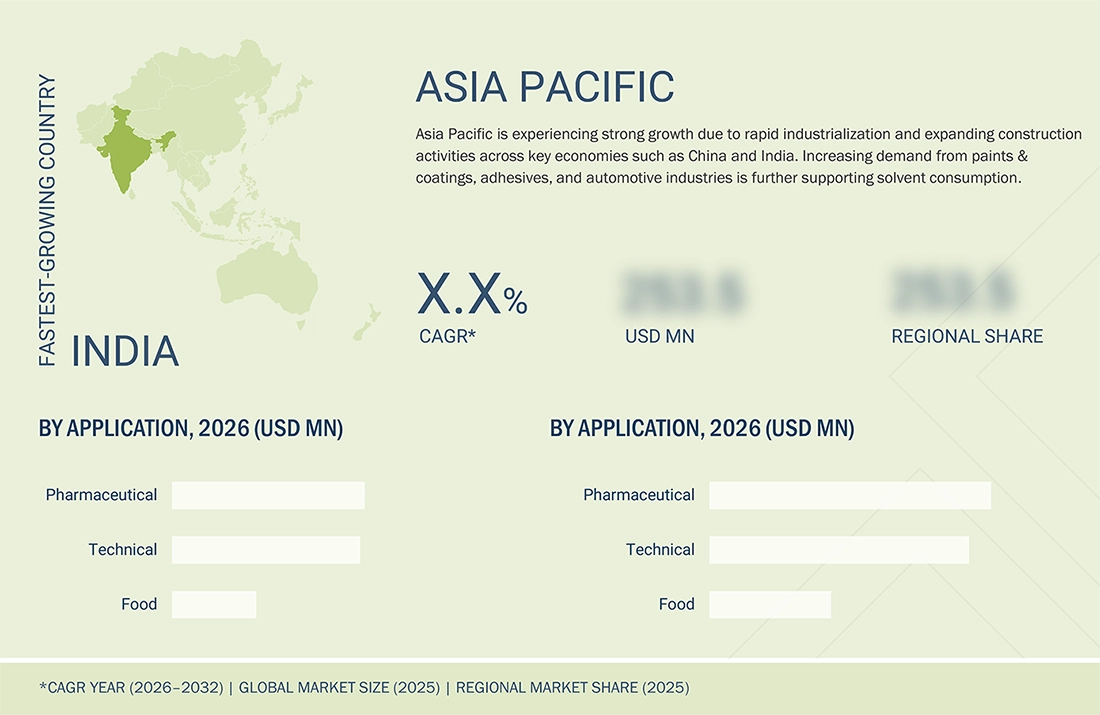
The Asia Pacific region is estimated to register the highest CAGR of 5.0% during the forecast period.
-
By Type
By type, the hexane segment is projected to grow at the highest CAGR of 4.8% during the forecast period.
-
By Application
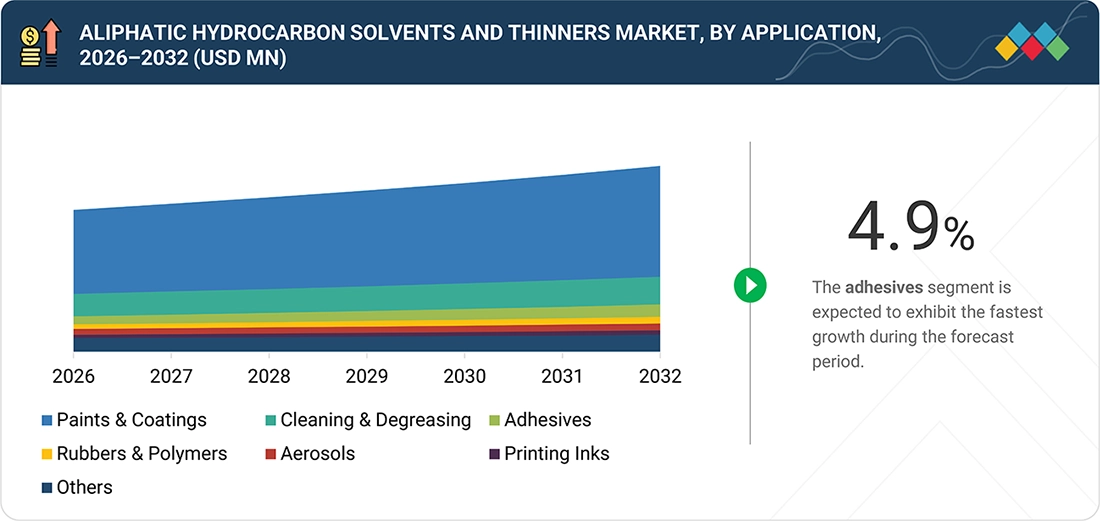
By application, the adhesives segment is projected to register the highest CAGR of 4.9% during the forecast period.
-
Competitive Landscape - Key Players
ExxonMobil Corporation, Shell plc, Phillips 66, SK Geocentric Co., Ltd., and Calumet, Inc. were identified as some of the leading players in the aliphatic hydrocarbon solvents and thinners market, given their strong market share and product footprint.
-
Competitive Landscape - Startups
MODU Valves A/S and Neway Valve, among others, have become leading startups or SMEs by identifying niche gaps early and delivering solutions that precisely match unmet customer needs. Their agility, faster decision-making, and ability to innovate continuously allow them to outperform larger, less flexible competitors.
The market experiences powerful expansion because the paint and coatings sector needs more products, while construction work, infrastructure projects and industrial and automotive markets show rising demand. The market growth receives additional support from the increasing application of aliphatic solvents, which customers use for cleaning and degreasing and for making adhesives, printing inks and rubber processing. The need for effective hydrocarbon solutions drives companies to develop high-performance solvent products, which results in production capacity expansion across major regions, including Asia-Pacific, North America and Europe.
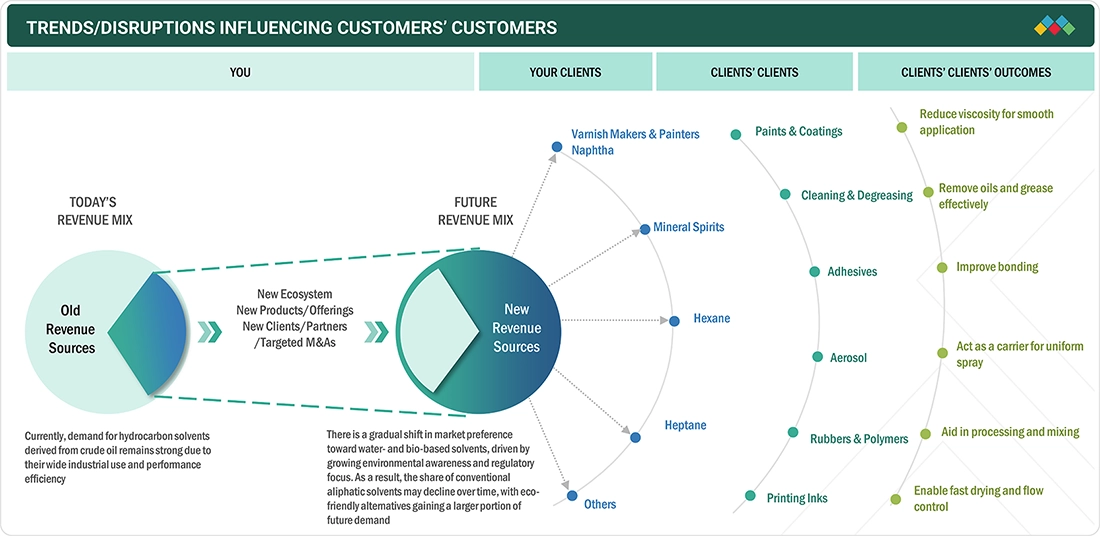
TRENDS & DISRUPTIONS IMPACTING CUSTOMERS' CUSTOMERS
The global aliphatic hydrocarbon solvents and thinners market is expanding as industries increasingly focus on efficient formulations and optimized resource utilization across operations. End-use sectors such as paints & coatings, adhesives, and industrial cleaning are adopting solvent solutions that offer consistent performance with controlled evaporation and improved application efficiency. These solvents enable better formulation stability and surface finishing while supporting operational efficiency in manufacturing processes. Growing industrial activity, along with the need for reliable and high-performance solvent systems, is encouraging the adoption of advanced aliphatic formulations, thereby supporting steady market growth across regions.
Source: Secondary Research, Interviews with Experts, MarketsandMarkets Analysis
MARKET DYNAMICS

Drivers
Impact
Level
-
Growing demand from paints and coatings industry

-
Expansion of construction and infrastructure activities


RESTRAINTS
Impact
Level
-
Rising preference for water-based and bio-based alternatives


OPPORTUNITIES
Impact
Level
-
Expansion in specialty and high-purity applications


CHALLENGES
Impact
Level
-
Volatility in crude oil and petroleum feedstock prices

Source: Secondary Research, Interviews with Experts, MarketsandMarkets Analysis
The rising needs of the paints and coatings sector serve as the primary force that drives the aliphatic hydrocarbon solvents and thinners market. The solvents function as diluents and carriers, which help achieve better coating consistency and application performance and provide smooth surface finishes. The decorative and industrial coatings usage across residential, commercial, and industrial sectors drives up solvent requirements. The necessity for effective drying abilities and consistent film development in coatings leads to their application in multiple formulations. The coating industry continues to grow, which results in increased demand for aliphatic solvents throughout various end-use sectors.
The aliphatic hydrocarbon solvents and thinners market faces restraints as people are increasingly choosing water-based and bio-based alternatives. Industries are increasingly shifting toward environmentally friendly formulations that reduce emissions and improve workplace safety. Water-based systems are gaining traction because they have a lower environmental impact and their handling is easier, especially in paints and coatings applications. Bio-based solvents, which come from renewable sources, are now being used as sustainable alternatives to traditional solvents. The slow adoption of new technologies restricts traditional hydrocarbon solvent usage in specific applications.
The aliphatic hydrocarbon solvents and thinners market will experience substantial growth through its application in specialty and high-purity markets, which are currently developing. The chemical compounds are now being used by the pharmaceutical, electronics and precision cleaning industries, which require their chemical properties to maintain high levels of purity and stable operational capabilities. Manufacturers are creating new advanced solvent grades because customers demand specific product characteristics that contain only a few impurities. The demand for customized solvent solutions is increasing because of the expansion of high-performance coatings and specialized industrial processes. The market will discover new growth opportunities through the industry shift towards value-added applications.
The aliphatic hydrocarbon solvents and thinners market faces major difficulties because of crude oil and petroleum feedstock price fluctuations. The production costs and pricing structures of these petroleum-based solvents face direct effects from crude oil price changes. Unpredictable price movements create dual effects because they impact profit margins while generating uncertainty for both manufacturers and end users. Supply chain disruptions, along with geopolitical factors, create additional challenges that affect feedstock supply and price stability. Market participants face their main difficulty because they need to control price changes while keeping their prices competitive.
ALIPHATIC HYDROCARBON SOLVENTS & THINNERS MARKET: COMMERCIAL USE CASES ACROSS INDUSTRIES
| COMPANY | USE CASE DESCRIPTION | BENEFITS |
|---|---|---|
|
|
The company produces multiple aliphatic hydrocarbon solvent products, which serve different applications in paints and coatings, adhesives and industrial cleaning, while maintaining its dedication to delivering products with reliable quality and performance. | The company provides high-purity solvents that maintain stable chemical composition to support efficient industrial applications and create better surface finishes and dependable operational results. |
|
|
The company supplies hydrocarbon solvents, which serve as solutions for coating, ink and cleaning needs through its two product lines of low-aromatic solvents and performance-grade formulations. | The system provides better formulation efficiency through its ability to control evaporation while delivering safer operations with reduced odors and improved handling capabilities. |
|
|
The company produces specialized hydrocarbon solvents, which include hexane, heptane and mineral spirits, to serve rubber processing, coating and extraction needs. | The product offers standard quality together with effective solvent capabilities and dependable operation for both industrial uses and specialized industrial applications. |
|
|
The company creates petrochemical solvents, which find application in coatings and adhesives and industrial processes to support manufacturers who need high-volume production. | The product delivers a reliable supply together with strong solvency capability and compatibility with different formulations, which leads to better production efficiency. |
|
|
The company offers a portfolio of hydrocarbon solvents and mineral spirits tailored for coatings, cleaning, and specialty industrial applications. | This ensures high-performance solvents with controlled volatility, supporting effective cleaning, dilution, and formulation consistency. |

Logos and trademarks shown above are the property of their respective owners. Their use here is for informational and illustrative purposes only.
MARKET ECOSYSTEM
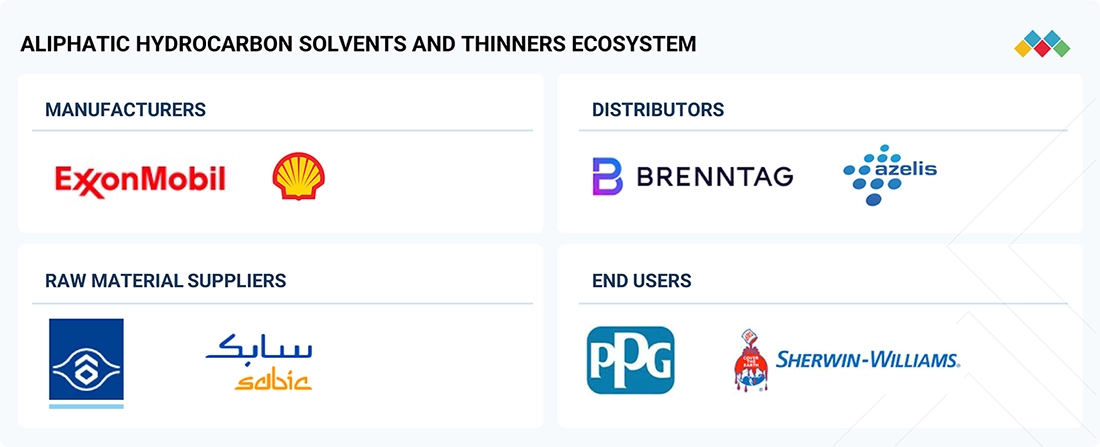
The aliphatic hydrocarbon solvents and thinners market ecosystem consists of raw material suppliers (e.g., SABIC, Formosa Petrochemical Corporation), producers (e.g., ExxonMobil Corporation, Shell plc), distributors (e.g., Brenntag, Azelis Group), and end users (e.g., PPG Industries, The Sherwin-Williams Company). Aliphatic hydrocarbon solvents and thinners are used in applications such as paints & coatings and adhesives.
Logos and trademarks shown above are the property of their respective owners. Their use here is for informational and illustrative purposes only.
MARKET SEGMENTS
Source: Secondary Research, Interviews with Experts, MarketsandMarkets Analysis
The market for aliphatic hydrocarbon solvents and thinners divides into different types, which include mineral spirits and varnish makers and painters' naphtha, hexane, heptane and other products that meet various industrial demands. The market for mineral spirits maintains a substantial presence because people commonly use them as a base for paints and coatings and cleaning products, which require their balanced solvency and moderate evaporation characteristics. The industry employs these solvents because they provide essential properties, which include controlled drying and stable product performance. The VM&P naphtha product line features higher volatility and faster evaporation rates, which make it ideal for quick-drying applications and specialized uses. The choice of solvent type depends mainly on the specific needs of the end user, which include drying duration, solvent power and formulation compatibility. The growing requirement for solvents that deliver performance benefits and match specific application needs drives product differentiation in this market segment.
The market operates mainly through various applications such as paint & coating, Cleaning & Degreasing, and Adhesives because these applications use aliphatic solvents as thinners and carriers. The solvents serve an essential function because they enhance the quality of coatings through improved consistency, application characteristics and surface finishing procedures. Solvents find their main use in three important processes, which include cleaning and degreasing, adhesive production and printing ink manufacturing. Industrial activities and manufacturing processes that depend on effective solvent systems drive the demand for these products. The rubber processing and aerosol sectors maintain constant demand for their products. The wide range of applications demonstrates how essential aliphatic solvents are for different industries, which leads to steady market expansion
REGION
Asia Pacific to be the fastest-growing region in the aliphatic hydrocarbon solvents and thinners market during the forecast period
The aliphatic solvent market will experience its fastest growth in the Asia Pacific region because of industrialization growth, manufacturing expansion and high demand from China, India, Japan, and South Korea. The paints and coatings industry experiences growth because construction activities and infrastructure development projects increase solvent usage throughout the area. The automotive production increase, together with industrial output growth, drives higher demand for coatings and adhesives and cleaning products. The market expansion receives support from growing adhesives, rubber processing, and paints & coatings. The region's production capabilities increase because of strong petrochemical capacity expansions and feedstock availability. Aliphatic hydrocarbon solvents and thinners experience rising demand throughout Asia Pacific because of growing urban areas and industrial development.
ALIPHATIC HYDROCARBON SOLVENTS & THINNERS MARKET: COMPANY EVALUATION MATRIX
ExxonMobil Corporation (Star) maintains its dominant position in the aliphatic hydrocarbon solvents and thinners market through its worldwide operations, advanced refining technology and extensive collection of high-performance hydrocarbon solvents that serve multiple industry sectors. TotalEnergies (Emerging Player) is gaining traction with its expanding product portfolio and growing presence in supplying aliphatic solvents across industrial applications. ExxonMobil sustains its market leadership through its operational size and business integration, while TotalEnergies Group advances its market presence with strong demand for its aliphatic hydrocarbon solvents and thinners products.
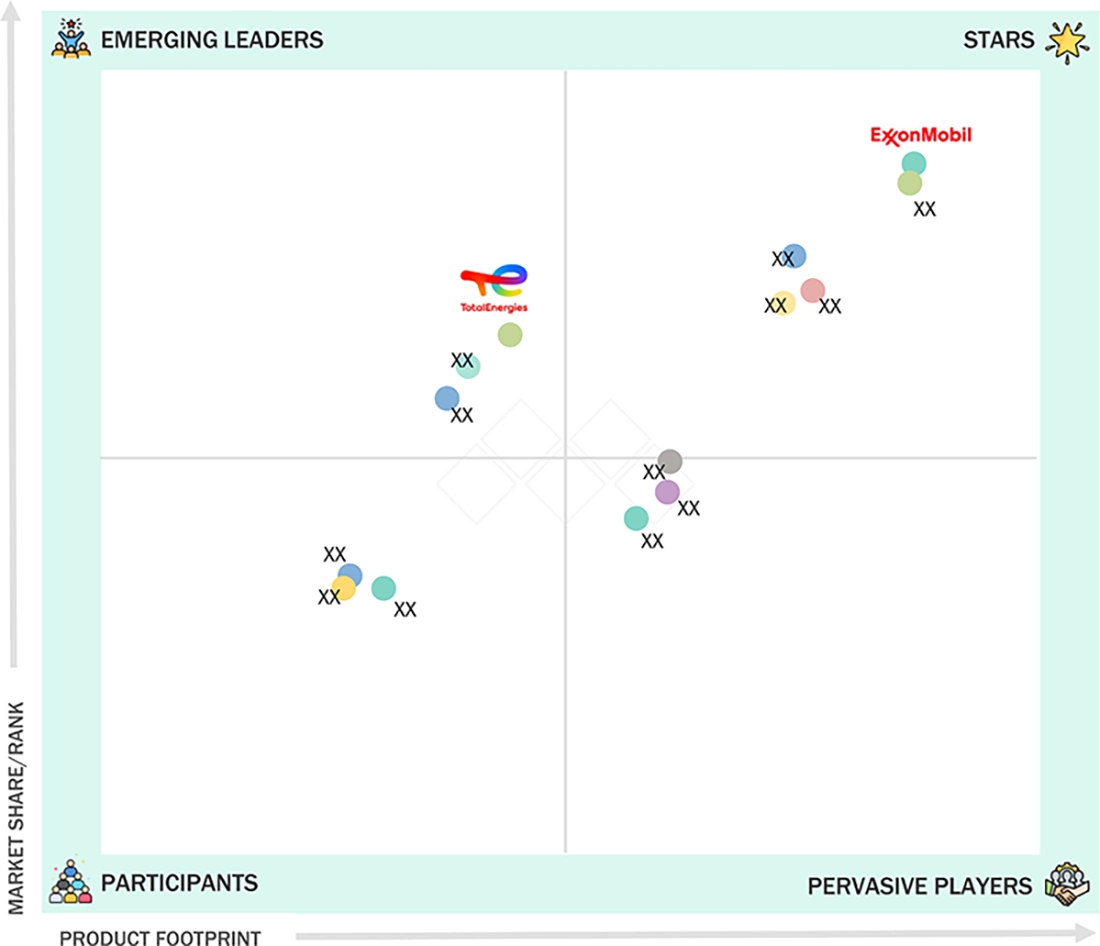
Source: Secondary Research, Interviews with Experts, MarketsandMarkets Analysis
KEY MARKET PLAYERS
- ExxonMobil Corporation (US)
- Shell plc (UK)
- Phillips 66 (US)
- SK Geocentric Co., Ltd. (US)
- Calumet, Inc. (US)
- KP Group (India)
- Gotham Industries (Canada)
- Gulf Chemicals & Industrial Oils (GCIR) (Saudi Arabia)
- Recochem Corporation (Canada)
- Haltermann Carless Group GmbH (Germany)
- WM Barr (US)
- Mehta Petro Refineries Ltd (MPRL) (US)
- LyondellBasell Industries Holdings B.V. (US)
- Ganga Rasayanie Pvt. Ltd. (GRPL) (India)
- Gadiv Petrochemical Industries Ltd. (Israel)
- TotalEnergies (France)
- Sasol (South Africa)
- Gandhar Oil Refinery (India)
- BASF (Germany)
- Pon Pure Chemicals Group (US)
- Crystal Clean, Inc. (US)
- RB Products, Inc. (US)
- Safra Company Limited (Saudi Arabia)
- Tianjin Galaxy Valve Co., Ltd. (China)
MARKET SCOPE
| REPORT METRIC | DETAILS |
|---|---|
| Market Size in 2025 (Value) | USD 4.88 BN |
| Market Forecast in 2032 (Value) | USD 6.81 BN |
| CAGR (2026–2032) | 4.4% |
| Years Considered | 2022–2032 |
| Base Year | 2025 |
| Forecast Period | 2025–2032 |
| Units Considered | Value (USD MN/BN), Volume (Kiloton) |
| Report Coverage | Revenue forecast, competitive landscape, growth factors, and trends |
| Segments Covered |
|
| Regions Covered | North America, Europe, Asia Pacific, Middle East & Africa, South America |
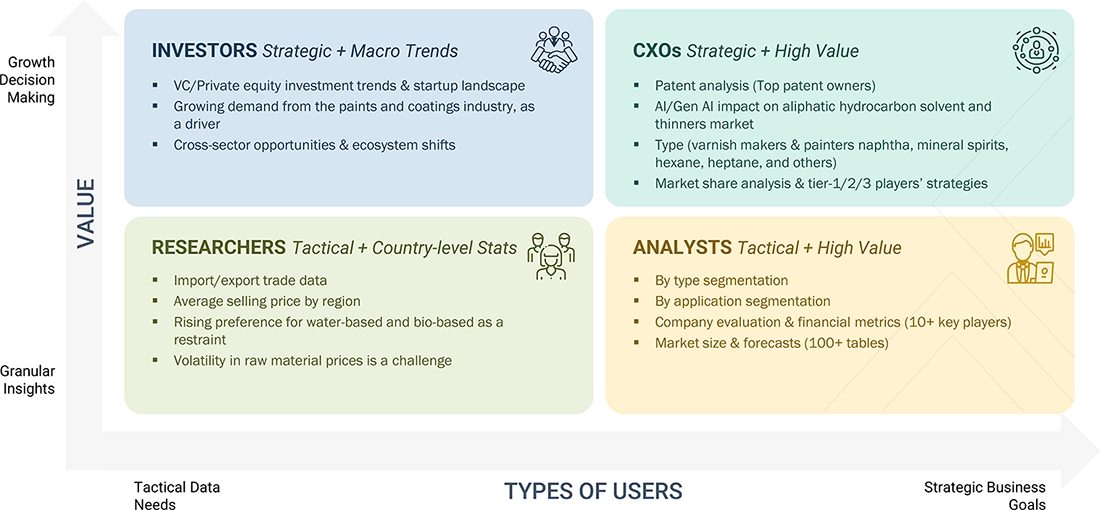
WHAT IS IN IT FOR YOU: ALIPHATIC HYDROCARBON SOLVENTS & THINNERS MARKET REPORT CONTENT GUIDE
DELIVERED CUSTOMIZATIONS
We have successfully delivered the following deep-dive customizations:
| CLIENT REQUEST | CUSTOMIZATION DELIVERED | VALUE ADDS |
|---|---|---|
| Demand for region-specific market insights | The demand trends for Asia Pacific, North America, and Europe regions were analyzed in detail while showing how growth occurred through paints and coatings, construction work and industrial manufacturing activities. The research results showed which demand drivers were most important for the study, which included urbanization, automotive production and industrial expansion | Helps clients identify high-growth regions, optimize market entry strategies, and align production capacities with regional demand trends |
| Request for competitor benchmarking | The study evaluated major aliphatic solvent manufacturers by comparing their product offerings, and their refining capacities and their distribution systems. The study assessed their market presence in three important fields, which included coatings and adhesives, and cleaning solutions. | Enables better competitive positioning, identification of market leaders, and understanding of differentiation strategies for business expansion |
| Application-specific insights | The study provided essential information about major applications, which included paints and coatings, cleaning and degreasing, adhesives and printing inks, by examining the solvent performance characteristics together with the market demand patterns. | Supports targeted product development, application-specific marketing strategies, and alignment with end-user requirements |
| Custom material & product specification support | The research assessed various aliphatic solvent types, including mineral spirits and VM&P naphtha, through three evaluation criteria, which included evaporation rate testing, solvency power assessment and application compatibility assessment. | Improves product performance, enhances formulation efficiency, and ensures optimal solvent selection for specific industrial uses |
| Technical feasibility & supply chain insights | This provided guidance on sourcing, refining processes, and supply chain considerations, including feedstock availability and distribution channels. | Enhances operational efficiency, reduces procurement risks, and ensures consistent product availability across markets |
RECENT DEVELOPMENTS
- December 2025 : ExxonMobil Corporation, Saudi Aramco, and Saudi Aramco Mobil Refinery Company have signed a Venture Framework Agreement to assess upgrading the SAMREF refinery in Yanbu and potentially expanding it into an integrated petrochemical complex. The partners would evaluate investments to modernize and diversify production, focusing on high-quality distillates, high-performance chemicals, improved energy efficiency, and strategies to reduce operational emissions.
- January 2025 : Shell plc’s investment in expanding its petrochemical complex in China through its joint venture with CNOOC is expected to strengthen its downstream capabilities and enhance its presence in the Asia Pacific region. The expansion of production capacity will support growing regional demand for petrochemical-based products, including solvents and related applications.
- December 2022 : ExxonMobil Corporation commenced operations at its commercial-scale chemical recycling facility in the US, enabling the conversion of plastic waste into valuable hydrocarbon feedstock. This development supported the company’s circular economy initiatives and strengthened its long-term feedstock integration, indirectly benefiting its broader petrochemical and solvent portfolio.
Table of Contents
 Exclusive indicates content/data unique to MarketsandMarkets and not available with any competitors.
TITLE
PAGE NO
1
INTRODUCTION
15
2
EXECUTIVE SUMMARY
3
PREMIUM INSIGHTS
4
MARKET OVERVIEW
4.1
INTRODUCTION
4.2
MARKET DYNAMICS
4.2.1
DRIVERS
4.2.2
RESTRAINTS
4.2.3
OPPORTUNITIES
4.2.4
CHALLENGES
4.3
UNMET NEEDS AND WHITE SPACES
4.4
INTERCONNECTED MARKETS AND CROSS-SECTOR OPPORTUNITIES
4.5
STRATEGIC MOVES BY TIER-1/2/3 PLAYERS
5
INDUSTRY TRENDS
5.1
PORTER’S FIVE FORCES ANALYSIS
5.1.1
BARGAINING POWER OF SUPPLIERS
5.1.2
THREAT OF NEW ENTRANTS
5.1.3
THREAT OF SUBSTITUTES
5.1.4
BARGAINING POWER OF BUYERS
5.1.5
INTENSITY OF RIVALRY
5.2
MACROECONOMIC OUTLOOK
5.2.1
INTRODUCTION
5.2.2
GDP TRENDS & FORECAST
5.2.3
TRENDS IN GLOBAL ALIPHATIC HYDROCARBON SOLVENTS & THINNERS INDUSTRY
5.3
VALUE CHAIN ANALYSIS
5.4
ECOSYSTEM ANALYSIS
5.5
PRICING ANALYSIS
5.5.1
AVERAGE SELLING PRICE TREND, BY REGION (2022–2025)
5.5.2
AVERAGE SELLING PRICE OF ALIPHATIC HYDROCARBON SOLVENTS & THINNERS, BY KEY PLAYER (2025)
5.6
TRADE ANALYSIS, 2021–2024
5.6.1
IMPORT SCENARIO
5.6.2
EXPORT SCENARIO
5.7
KEY CONFERENCES & EVENTS IN 2026–2027
5.8
TRENDS/DISRUPTIONS IMPACTING CUSTOMER BUSINESS
5.9
INVESTMENT AND FUNDING SCENARIO
5.10
CASE STUDY ANALYSIS
5.11
IMPACT OF 2025 US TARIFF - ALIPHATIC HYDROCARBON SOLVENTS & THINNERS MARKET
5.11.1
INTRODUCTION
5.11.2
KEY TARIFF RATES
5.11.3
PRICE IMPACT ANALYSIS
5.11.4
IMPACT ON COUNTRIES/REGIONS
5.11.4.1
US
5.11.4.2
EUROPE
5.11.4.3
ASIA PACIFIC
5.11.5
IMPACT ON APPLICATIONS
6
TECHNOLOGICAL ADVANCEMENTS, AI-DRIVEN IMPACT, PATENTS, INNOVATIONS, AND FUTURE APPLICATIONS
6.1
KEY TECHNOLOGIES
6.2
COMPLEMENTARY TECHNOLOGIES
6.3
TECHNOLOGY/PRODUCT ROADMAP
6.4
PATENT ANALYSIS
6.5
FUTURE APPLICATIONS
6.6
IMPACT OF AI/GEN AI ON ALIPHATIC HYDROCARBON SOLVENTS & THINNERS MARKET
7
REGULATORY LANDSCAPE AND SUSTAINABILITY INITIATIVES
7.1
REGIONAL REGULATIONS AND COMPLIANCE
7.1.1
REGULATORY BODIES, GOVERNMENT AGENCIES, AND OTHER ORGANIZATIONS
7.1.2
INDUSTRY STANDARDS
7.2
SUSTAINABILITY INITIATIVES
7.3
IMPACT OF REGULATORY POLICIES ON SUSTAINABILITY INITIATIVES
8
CUSTOMER LANDSCAPE & BUYER BEHAVIOR
8.1
INTRODUCTION
8.2
DECISION-MAKING PROCESS
8.3
KEY STAKEHOLDERS INVOLVED IN BUYING PROCESS AND THEIR EVALUATION CRITERIA
8.3.1
KEY STAKEHOLDERS IN BUYING PROCESS
8.3.2
BUYING CRITERIA
8.4
ADOPTION BARRIERS AND INTERNAL CHALLENGES
8.5
UNMET NEEDS OF VARIOUS END-USE INDUSTRIES
8.6
MARKET PROFITABILITY
9
GLOBAL ALIPHATIC HYDROCARBON SOLVENTS & THINNERS MARKET, BY TYPE
9.1
INTRODUCTION
9.2
VARNISH MAKERS’ & PAINTERS’ NAPHTHA
9.3
MINERAL SPIRITS
9.4
HEXANE
9.5
HEPTANE
9.6
OTHERS
10
GLOBAL ALIPHATIC HYDROCARBON SOLVENTS & THINNERS MARKET, BY APPLICATION
10.1
INTRODUCTION
10.2
PAINTS & COATINGS
10.3
CLEANING & DEGREASING
10.4
ADHESIVES
10.5
AEROSOLS
10.6
RUBBERS & POLYMERS
10.7
PRINTING INKS
10.8
OTHER APPLICATIONS
11
GLOBAL ALIPHATIC HYDROCARBON SOLVENTS & THINNERS MARKET, BY REGION
11.1
INTRODUCTION
11.2
NORTH AMERICA
11.2.1
US
11.2.2
CANADA
11.2.3
MEXICO
11.3
EUROPE
11.3.1
UK
11.3.2
FRANCE
11.3.3
GERMANY
11.3.4
ITALY
11.3.5
TURKEY
11.3.6
REST OF EUROPE
11.4
ASIA PACIFIC
11.4.1
CHINA
11.4.2
INDIA
11.4.3
SOUTH KOREA
11.4.4
JAPAN
11.4.5
THAILAND
11.4.6
INDONESIA
11.4.7
REST OF ASIA PACIFIC
11.5
MIDDLE EAST & AFRICA
11.5.1
GCC COUNTRIES
11.5.1.1
SAUDI ARABIA
11.5.1.2
UAE
11.5.1.3
REST OF GCC COUNTRIES
11.5.2
SOUTH AFRICA
11.5.3
REST OF MIDDLE EAST & AFRICA
11.6
SOUTH AMERICA
11.6.1
BRAZIL
11.6.2
ARGENTINA
11.6.3
REST OF SOUTH AMERICA
12
COMPETITIVE LANDSCAPE
12.1
OVERVIEW
12.2
KEY PLAYER COMPETITIVE STRATEGIES/RIGHT TO WIN (JANUARY 2020–FEBRUARY 2026)
12.3
REVENUE ANALYSIS (2021–2025)
12.4
MARKET SHARE ANALYSIS (2025)
12.5
BRAND COMPARISON
12.6
COMPANY EVALUATION MATRIX: KEY PLAYERS,
12.6.1
STARS
12.6.2
EMERGING LEADERS
12.6.3
PERVASIVE PLAYERS
12.6.4
PARTICIPANTS
12.6.5
COMPANY FOOTPRINT: KEY PLAYERS,
12.6.5.1
COMPANY FOOTPRINT
12.6.5.2
REGION FOOTPRINT
12.6.5.3
TYPE FOOTPRINT
12.6.5.4
APPLICATION FOOTPRINT
12.7
COMPANY EVALUATION MATRIX: STARTUPS/SMES,
12.7.1
PROGRESSIVE COMPANIES
12.7.2
RESPONSIVE COMPANIES
12.7.3
DYNAMIC COMPANIES
12.7.4
STARTING BLOCKS
12.7.5
COMPETITIVE BENCHMARKING: STARTUPS/SMES,
12.7.5.1
DETAILED LIST OF KEY STARTUPS/SMES
12.7.5.2
COMPETITIVE BENCHMARKING OF KEY STARTUPS/SMES
12.8
COMPANY VALUATION AND FINANCIAL METRICS
12.9
COMPETITIVE SCENARIO
12.9.1
PRODUCT LAUNCHES
12.9.2
DEALS
12.9.3
EXPANSIONS
13
COMPANY PROFILES
13.1
KEY PLAYERS
13.1.1
EXXON MOBIL CORPORATION
13.1.1.1
BUSINESS OVERVIEW
13.1.1.2
PRODUCTS/SOLUTIONS/SERVICES OFFERED
13.1.1.3
RECENT DEVELOPMENTS
13.1.1.4
MNM VIEW
13.1.1.4.1
KEY STRENGTHS/RIGHT TO WIN
13.1.1.4.2
STRATEGIC CHOICES
13.1.1.4.3
WEAKNESSES AND COMPETITIVE THREATS
13.1.2
SK GEOCENTRIC CO., LTD.
13.1.3
KP GROUP
13.1.4
SHELL
13.1.5
CALUMET, INC.
13.1.6
GOTHAM INDUSTRIES
13.1.7
RECOCHEM CORPORATION
13.1.8
HALTERMANN CARLESS GROUP GMBH
13.1.9
BARR BRANDS
13.1.10
BASF
13.1.11
MEHTA PETRO REFINERIES LTD
13.1.12
LYONDELLBASELL INDUSTRIES HOLDINGS B.V.
13.1.13
GANGA RASAYANIE P. LTD.
13.1.14
GADIV
13.1.15
TOTALENERGIES
13.2
OTHER PLAYERS
13.2.1
CRYSTAL CLEAN, INC
13.2.2
PON PURE CHEMICALS GROUP
13.2.3
RB PRODUCTS, INC.
13.2.4
SAFRA COMPANY LIMITED.
13.2.5
PHILLIPS 66 COMPANY
13.2.6
KANDLA ENERGY AND CHEMICALS LIMITED
13.2.7
CHEVRON PHILLIPS CHEMICAL COMPANY LLC
13.2.8
BRENNTAG NORTH AMERICA LLC
13.2.9
MG ORGANICS PVT. LTD.
13.2.10
SASOL
13.2.11
GANDHAR OIL REFINERY (INDIA) LIMITED
14
RESEARCH METHODOLOGY
14.1
RESEARCH DATA
14.1.1
SECONDARY DATA
14.1.1.1
KEY DATA FROM SECONDARY SOURCES
14.1.1.2
LIST OF KEY SECONDARY SOURCES
14.1.2
PRIMARY DATA
14.1.2.1
KEY DATA FROM PRIMARY SOURCES
14.1.2.2
KEY PRIMARY PARTICIPANTS
14.1.2.3
BREAKDOWN OF PRIMARY INTERVIEWS
14.1.2.4
KEY INDUSTRY INSIGHTS
14.2
MARKET SIZE ESTIMATION
14.2.1
BOTTOM-UP APPROACH
14.2.2
TOP-DOWN APPROACH
14.2.3
MARKET SIZE CALCULATION FOR BASE YEAR
14.3
MARKET FORECAST APPROACH
14.3.1
SUPPLY SIDE
14.3.2
DEMAND SIDE
14.4
DATA TRIANGULATION
14.5
FACTOR ANALYSIS
14.6
RESEARCH ASSUMPTIONS AND LIMITATIONS
14.7
RISK ASSESSMENT
15
APPENDIX
15.1
DISCUSSION GUIDE
15.2
KNOWLEDGESTORE: MARKETSANDMARKETS’ SUBSCRIPTION PORTAL
15.3
CUSTOMIZATION OPTIONS
15.4
RELATED REPORTS
15.5
AUTHOR DETAILS
Methodology
The research methodology used to estimate the size of the aliphatic hydrocarbon solvents and thinners market consisted of four major activities. Extensive secondary research was conducted to obtain detailed information on the market, peer markets, and parent markets. These findings, assumptions, and metrics were verified through primary interviews with experts from both the demand and supply sides of the aliphatic hydrocarbon solvents and thinners value chain. Both top-down and bottom-up approaches were used to estimate the total market size. The market sizes for various segments and subsegments were finalized using complete market segmentation and data triangulation.
Secondary Research
The research methodology for estimating and forecasting the aliphatic hydrocarbon solvents and thinners market begins with gathering data on key vendors' revenues through secondary research. The secondary research process involves consulting a range of secondary sources, including Hoover's, Bloomberg Businessweek, Factiva, the World Bank, and industry-specific journals. These secondary sources encompass annual reports, press releases, investor presentations, white papers, certified publications, articles from recognized authors, regulatory notifications, trade directories, and databases. Also, vendor offerings are considered to inform market segmentation.
Primary Research
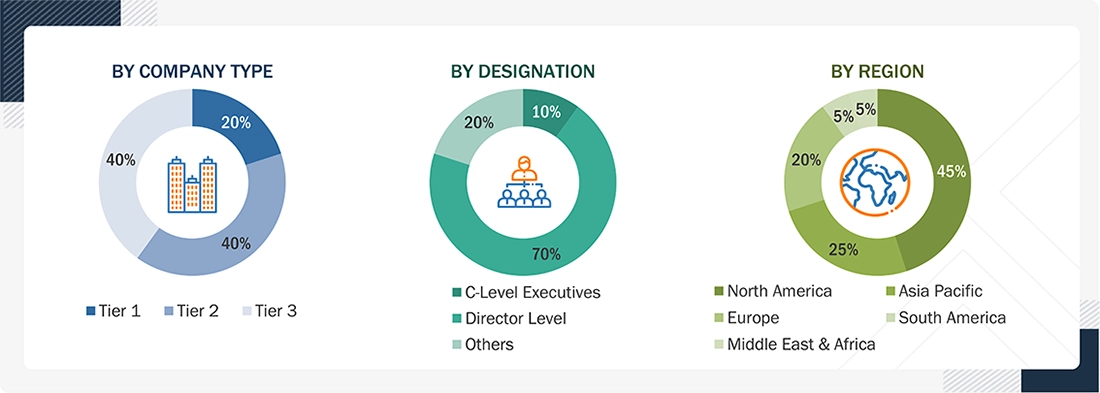
The aliphatic hydrocarbon solvents and thinners market comprises several stakeholders throughout the supply chain, including raw material suppliers, processors, end-product manufacturers, and regulatory organizations. The development of various industries, including type and application, characterizes the demand side of this market. Technological advancements and a wide range of diverse applications characterize the supply side. Various primary sources from both the supply and demand sides of the market were interviewed to obtain qualitative and quantitative information. The following is the breakdown of the primary respondents:
To know about the assumptions considered for the study, download the pdf brochure
Market Size Estimation
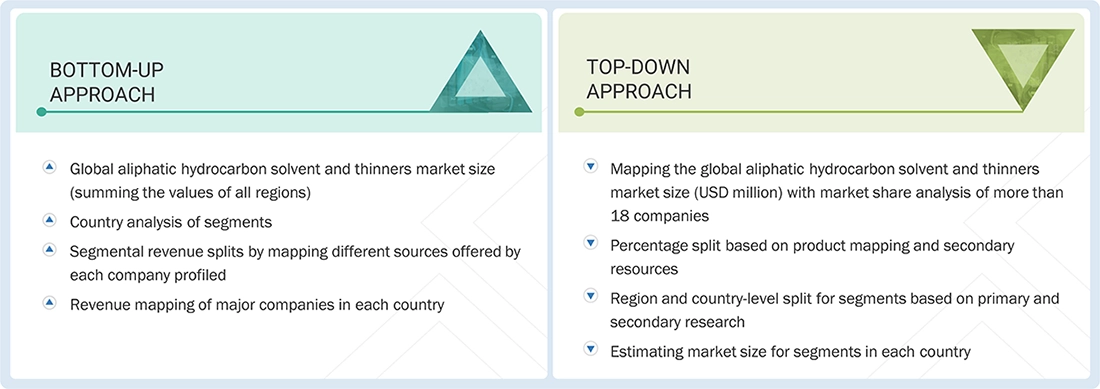
The top-down and bottom-up approaches have been used to estimate and validate the total size of the aliphatic hydrocarbon solvents and thinners market. These approaches have also been widely used to calculate the sizes of various dependent market subsegments. The research methodology used to estimate the market size included the following.
The following segments provide details about the overall market size estimation process employed in this study:
- Extensive primary and secondary research was done to identify the key players.
- The value chain and market size in terms of value of the aliphatic hydrocarbon solvents and thinners market were determined through primary and secondary research.
- All percentage shares, splits, and breakdowns were collected through secondary sources and verified through primary sources.
- All possible parameters that affect the market were covered in this research study and are viewed in extensive detail, verified through primary research, and analyzed to obtain the final quantitative and qualitative data.
- The study of reports, reviews, and newsletters of top market players, along with extensive interviews for opinions from key leaders, such as CEOs, directors, and marketing executives, is included in this research.
Data Triangulation
After estimating the overall market size using the above estimation process, the market was split into various segments and subsegments. Data triangulation and market segmentation techniques, along with the market engineering process, were employed to obtain precise market analysis data for each segment and its subsegments.
Market Definition
Aliphatic hydrocarbon solvents and thinners are petroleum-derived solvents composed primarily of straight-chain or branched alkanes. They are widely used in industrial and commercial applications due to their high solvency, low reactivity, and controlled evaporation. These solvents are commonly utilized in paints & coatings, adhesives, cleaning, and degreasing applications to adjust viscosity and improve application performance. Their ability to dissolve oils, greases, and other nonpolar substances makes them essential in various formulation and processing activities.
Key Stakeholders
- Aliphatic hydrocarbon solvents and thinners manufacturers
- Research institutions, standards organizations, and regulatory agencies such as ASTM, BIS, EDQM, and other national authorities
- Traders, distributors, suppliers, and end users of aliphatic hydrocarbon solvents and thinners
- Contract manufacturing organizations (CMOs)
- NGOs, governments, investment banks, venture capitalists, and private equity firms
Report Objectives
- To define, describe, and forecast the size of the aliphatic hydrocarbon solvents and thinners market, in terms of value, based on type, application, and region
- To provide detailed information regarding the key factors, such as drivers, restraints, opportunities, and industry-specific challenges, influencing the growth of the aliphatic hydrocarbon solvents and thinners market
- To strategically analyze micromarkets with respect to individual growth trends, prospects, and their contribution to the total market
- To analyze opportunities in the market for stakeholders and provide a competitive landscape of the market leaders
- To project the size of the market and its submarkets, in terms of value and volume, with respect to five regions (along with their respective key countries), namely, North America, Asia Pacific, Europe, South America, and the Middle East & Africa
- To provide ecosystem analysis, case study analysis, value chain, patent analysis, technology analysis, pricing analysis, Porter's five forces analysis, key stakeholders and buying criteria, investment and funding scenario, trade analysis, impact of AI/Gen AI and 2025 US tariff, key conferences and events, regulatory bodies, government agencies, and regulations about the market under study
- To strategically profile the key players and comprehensively analyze their core competencies
- To analyze competitive developments such as mergers & acquisitions, product launches, and research & development in the Aliphatic hydrocarbon solvents and thinners market
- To provide the macroeconomic outlook for all regions considered under the study
Available customizations:
Based on the given market data, MarketsandMarkets offers customizations tailored to client-specific needs.
The following customization options are available for the report:
-
Additional country-level analysis of the aliphatic hydrocarbon solvents and thinners market
Profiling of additional market players (up to five)
Product Analysis
- Product matrix, which provides a detailed comparison of each company's product portfolio
⚡ Growth Signals
Personalize This Research
- Triangulate with your Own Data
- Get Data as per your Format and Definition
- Gain a Deeper Dive on a Specific Application, Geography, Customer or Competitor
- Any level of Personalization
Let Us Help You
- What are the Known and Unknown Adjacencies Impacting the Aliphatic Hydrocarbon Solvents and Thinners Market
- What will your New Revenue Sources be?
- Who will be your Top Customer; what will make them switch?
- Defend your Market Share or Win Competitors
- Get a Scorecard for Target Partners


Still Researching the
Aliphatic Hydrocarbon Solvents and Thinners Ecosystem?
See the competitors, opportunities, and growth signals shaping it - instantly.
Generate 15+ consulting-grade strategic insights tailored to your growth question.
