






- DESCRIPTION
- TABLE OF CONTENTS
- METHODOLOGY
- Download FREE Sample
Managed Detection and Response (MDR) Market by Security Type (Network, Endpoint, Cloud), Deployment Mode (On-Premises and Cloud), Organization Size (SMEs and Large Enterprises), Vertical, and Region - Global Forecast to 2031

USD 19.01 BN
MARKET SIZE, 2031

CAGR 24.8%
(2026-2031)

400
REPORT PAGES

500
MARKET TABLES
OVERVIEW
Source: Secondary Research, Interviews with Experts, MarketsandMarkets Analysis
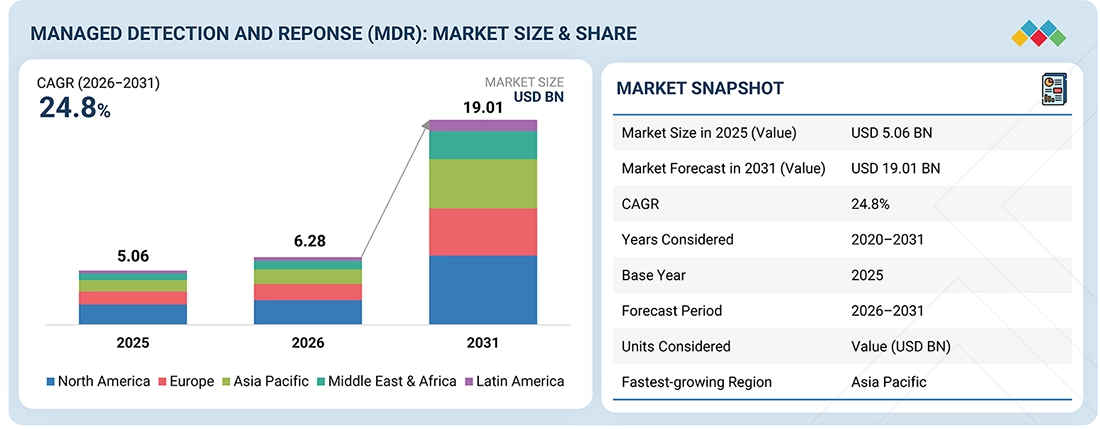
The managed detection and response (MDR) market is projected to reach USD 19.01 billion by 2031 from USD 6.28 billion in 2026, at a CAGR of 24.8% from 2026 to 2031. The growing threat of business email compromise, ransomware, and crypto-jacking attacks is driving the demand for MDR services. On the other hand, the lack of skilled security professionals and the growing volume of alerts generated by various security tools and systems are making it difficult for in-house teams to efficiently handle the growing threat of cyber attacks. MDR services are helping organizations to overcome the above-mentioned challenges by providing 24x7 threat hunting and response services through the effective usage of sophisticated tools. This is helping organizations to enhance the overall efficiency of threat management and response.
KEY TAKEAWAYS
-
BY REGION
North America accounted for the highest share of 36.7% of the MDR market in 2026.
-
BY SECURITY TYPE
By security type, the cloud security segment is expected to dominate the market in 2026.
-
BY DEPLOYMENT MODE
By deployment mode, the cloud segment is expected to register the highest CAGR of 25.2% during the forecast period.
-
BY ORGANIZATION SIZE
By organization size, the SMEs segment is projected to register the highest CAGR during the forecast period.
-
BY VERTICAL
By vertical, the retail segment will grow at the highest CAGR of 26.3% during the forecast period.
-
COMPETITIVE LANDSCAPE - KEY PLAYERS
CrowdStrike, Rapid7, and Expel are dominant players in the MDR market, offering advanced threat detection and response capabilities through AI-driven analytics, cloud-native platforms, and integrated XDR solutions. Their services enable continuous monitoring, proactive threat hunting, and rapid incident response, helping enterprises strengthen security operations across endpoint, cloud, and network environments.
-
COMPETITIVE LANDSCAPE - STARTUPS/SMEs
The emerging players in the MDR market include Cysiv, Deepwatch, Critical Start, and others. These players focus on delivering flexible, cloud-native MDR services with a strong emphasis on SOC-as-a-Service, real-time threat visibility, and automated response capabilities, catering to organizations seeking scalable, cost-effective, and outcome-driven cybersecurity operations.
MDR solutions are helping organizations effectively manage and tackle the rising threat of cyberattacks by reducing the noise and false positives using contextual analysis and threat intelligence. This is allowing security teams to focus on the most critical and impactful threats and incidents. In addition, the scalable SOC and response capabilities of MDR solutions are helping organizations improve their overall response and security posture in the face of a continuously changing and complex IT environment.
TRENDS & DISRUPTIONS IMPACTING CUSTOMERS' CUSTOMERS
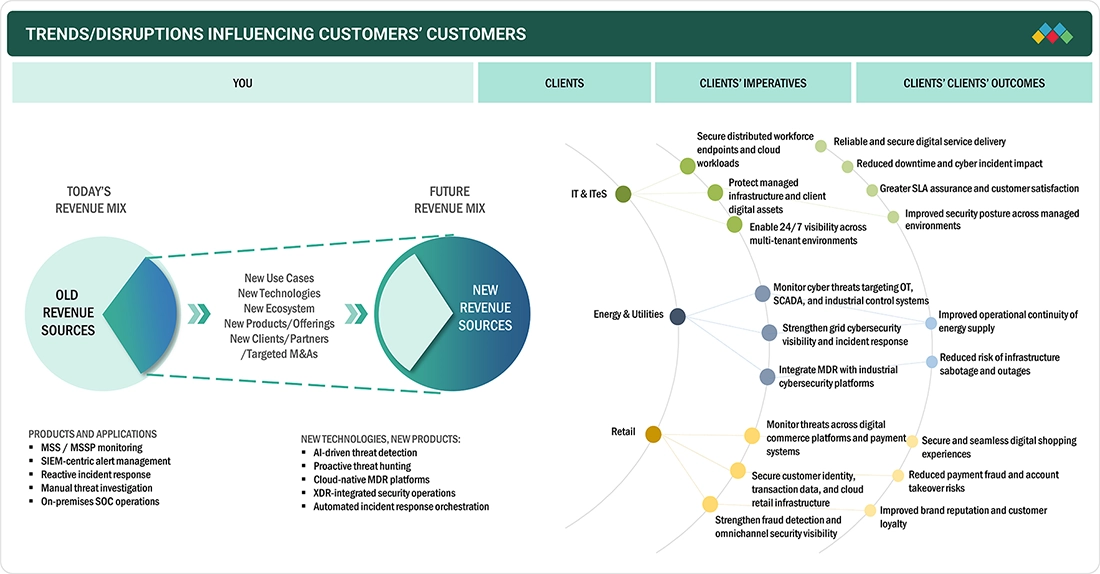
The MDR market is moving beyond traditional MSSP-driven monitoring and reactive incident response with AI-driven, cloud-native, and XDR-integrated security operations. Revenue growth is being driven by proactive threat hunting, automated response orchestration, and platform-driven delivery. In various sectors such as IT/ITES, energy, and retail, organizations are focused on continuous visibility, protection of distributed environments, and real-time detection of emerging threats. This is enabling better operational resilience, cyber risk reduction, and customer trust within digital environments.
Source: Secondary Research, Interviews with Experts, MarketsandMarkets Analysis
MARKET DYNAMICS

Drivers
Impact
Level
-
Rise in incidents of business email compromise, ransomware, and crypto-jacking threats

-
Rising need for compliance with regulations to drive adoption of MDR services


RESTRAINTS
Impact
Level
-
Lack of trust in third-party applications

-
False positives hinder effectiveness of MDR services


OPPORTUNITIES
Impact
Level
-
Rise in AI/ML-driven MDR services

-
MDR adoption across critical infrastructure and mid-market segments


CHALLENGES
Impact
Level
-
Shortage of skilled cybersecurity analysts and threat hunters

-
Tool integration complexity across hybrid security environments

Source: Secondary Research, Interviews with Experts, MarketsandMarkets Analysis
The rise in business email compromise, ransomware, and crypto-jacking attacks has created a strong demand for MDR services to provide continuous monitoring and response to attacks. According to the CrowdStrike Global Threat Report, in February 2025, adversaries are increasingly using identity-based attacks and social engineering to reduce breakout times. According to the Rapid7 Threat Intelligence Report, in October 2024, ransomware actors were using automation and double extortion techniques, creating a demand for MDR services.
Data privacy, control, and dependency on third-party services are major concerns for the adoption of MDR services by organizations that work with sensitive information. According to the Palo Alto Networks Unit 42 Cloud Threat Report, in July 2024, third-party integration issues were a major attack vector for organizations. According to the Secureworks Threat Intelligence Brief, in January 2025, organizations were not ready to outsource critical detection services due to a lack of visibility, thereby affecting the adoption of MDR services in sectors like BFSI and government.
AI and ML technologies are transforming MDR by enabling faster detection, automatic triage, and predictive threat hunting. According to Sentinel One Purple AI launch insights, in April 2024, AI-driven SOC operations used automated investigations to minimize the time taken. According to CrowdStrike Falcon Platform Update, in November 2024, generative AI was used to ensure the accuracy of threat analysis in real time, creating possibilities for intelligent MDR in complex environments.
The global talent gap in skilled analysts and threat hunters is a challenge for MDR service delivery. Organizations were unable to overcome this challenge in October 2024, when a talent gap was identified in security operations, according to the (ISC)² Cybersecurity Workforce Study. Alert fatigue and a lack of expertise were affecting SOC efficiency in March 2025, resulting in a high demand for MDR solutions, and MDR service providers focused on automation and skill development, according to the Arctic Wolf Security Operations Report.
MANAGED DETECTION AND RESPONSE (MDR) MARKET: COMMERCIAL USE CASES ACROSS INDUSTRIES
| COMPANY | USE CASE DESCRIPTION | BENEFITS |
|---|---|---|
|
|
A US-based insurance and annuity firm adopted eSentire’s MDR services to address visibility and configuration challenges across its multi-cloud environment and enable centralized threat monitoring. | Achieved unified security visibility, strengthened protection against misconfigurations and cyber threats, reduced operational complexity, and improved resilience of cloud-based financial services |
|
|
A Canadian financial services organization deployed Arctic Wolf’s MDR service to proactively detect and respond to business email compromise (BEC) risks and other real-time cyber threats. | Enabled faster threat detection and response, reduced risk of financial losses and data breaches, and enhanced continuous security monitoring across critical financial systems |
|
|
Iodine Software implemented Alert Logic MDR Professional to gain continuous monitoring and expert incident response support amid increasing data security and compliance pressures in healthcare environments. | Improved incident validation and prioritization, ensured rapid response to high-severity threats, strengthened data protection posture, and supported regulatory compliance requirements |
|
|
GKN Wheels & Structures deployed Secureworks Taegis Managed XDR to improve threat visibility and response capabilities after facing ransomware concerns and limited real-time security insights across operations. | Achieved enhanced 24/7 threat detection visibility, accelerated incident triage and investigation, and improved organizational preparedness against emerging cyberattack scenarios |
|
|
A global investment firm adopted MDR services from eSentire to overcome alert fatigue, limited SOC coverage, and challenges associated with remote workforce security and cloud migration. | Reduced security workload for internal teams, gained continuous global threat monitoring support, improved breach detection capability, and strengthened overall cybersecurity posture |




Logos and trademarks shown above are the property of their respective owners. Their use here is for informational and illustrative purposes only.
MARKET ECOSYSTEM
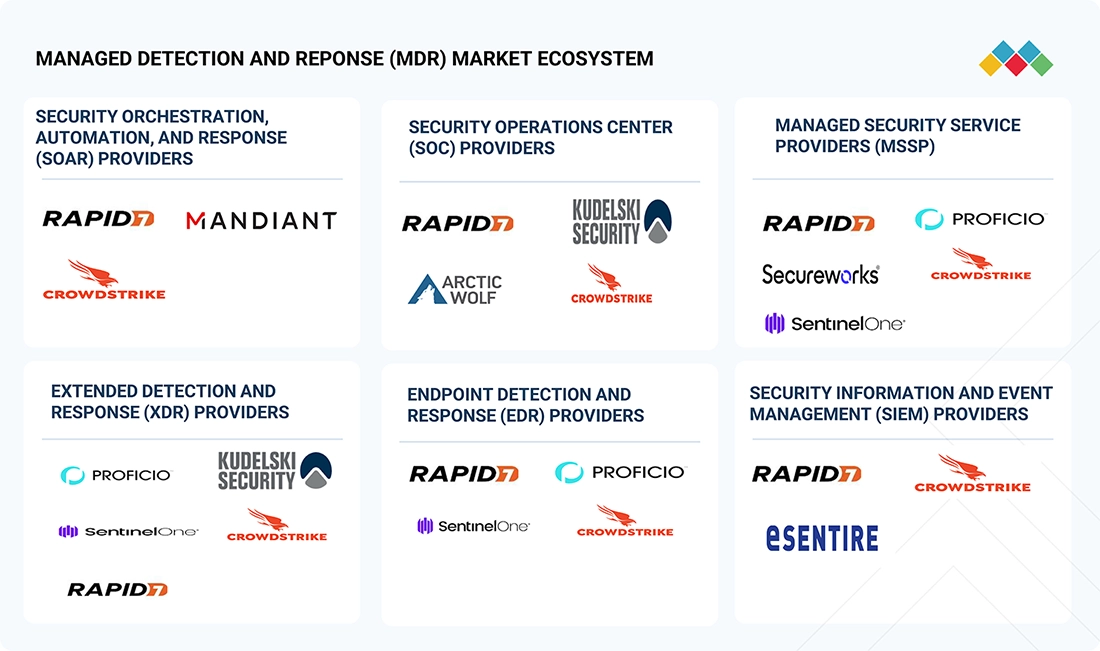
The MDR market ecosystem has a number of diverse vendors that offer a range of technology solutions in the areas of SOAR, SOC services, MSSPs, XDR, EDR, and SIEM tools. Vendors such as CrowdStrike, Rapid7, SentinelOne, Arctic Wolf, and Secureworks assume a number of different roles in the MDR market ecosystem, thereby facilitating integrated threat detection and response capabilities. The integrated nature of the technology solutions facilitates the development of a platform-based MDR strategy that enhances the overall cybersecurity posture of the enterprise.
Logos and trademarks shown above are the property of their respective owners. Their use here is for informational and illustrative purposes only.
MARKET SEGMENTS
Source: Secondary Research, Interviews with Experts, MarketsandMarkets Analysis
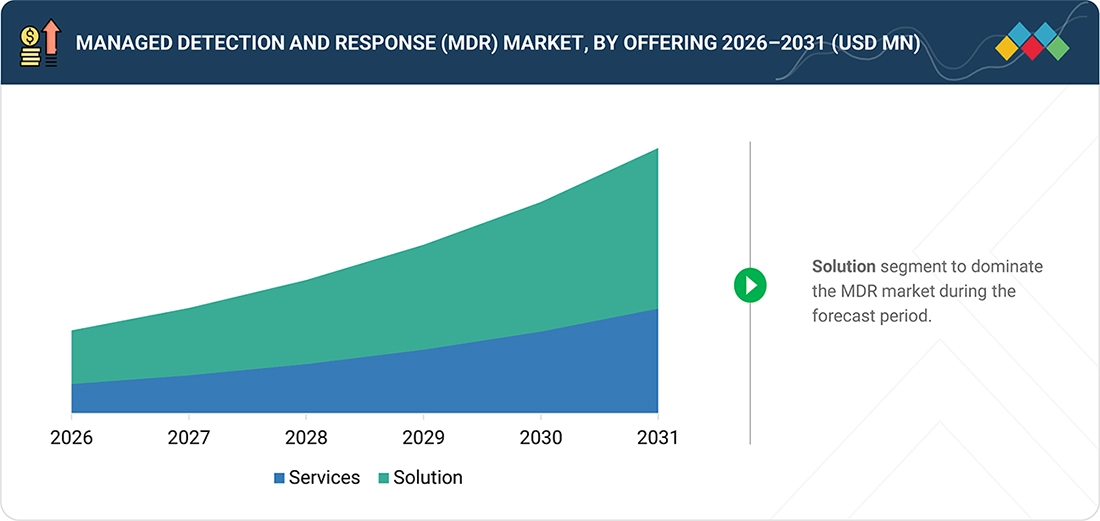
Endpoint security holds the highest market share in the MDR market as endpoints are the primary targets for attackers to gain access into an organization, especially in today's remote work environment and BYOD trends. According to the CrowdStrike Global Threat Report, in February 2025, most intrusions were carried out using endpoint-based attack techniques such as credential theft and malware execution. According to insights provided by the Singularity Platform by SentinelOne, in June 2024, artificial intelligence-based endpoint security solutions enabled better real-time detection and response.
On-premises MDR is particularly significant in organizations where data control, regulatory compliance, and low-latency response to threats are required. According to the Palo Alto Networks Unit 42 Incident Response Report, in August 2024, regulated industries continue to use on-premises infrastructure to ensure data sovereignty. According to the Secureworks State of the Threat Report, in January 2025, enterprises with legacy environments chose on-premises MDR to integrate with their security infrastructure for control over the environment.
Large enterprises are at the forefront of MDR adoption, primarily because of their complex IT infrastructure and high data volumes. In addition, these organizations are more susceptible to sophisticated cyber attacks. Based on IBM X-Force Threat Intelligence Index, in March 2025, large enterprises remained at the forefront of attacks by advanced persistent threats and ransomware attacks. In September 2024, based on the Rapid7 2024 Attack Surface Intelligence Report, organizations are adopting MDR solutions to address their attack surface and global infrastructure through their expanded digital footprint.
The BFSI segment is the largest segment for MDR adoption because of the nature of its data, regulations, and increasing financial cybercrimes. According to the Verizon Data Breach Investigations Report, in May 2024, financial organizations were targeted for a large number of credential theft and phishing incidents. In April 2025, attackers were targeting financial services for data exfiltration and fraud, according to the Mandiant M-Trends Report. These incidents are prompting BFSI organizations to opt for MDR solutions.
REGION
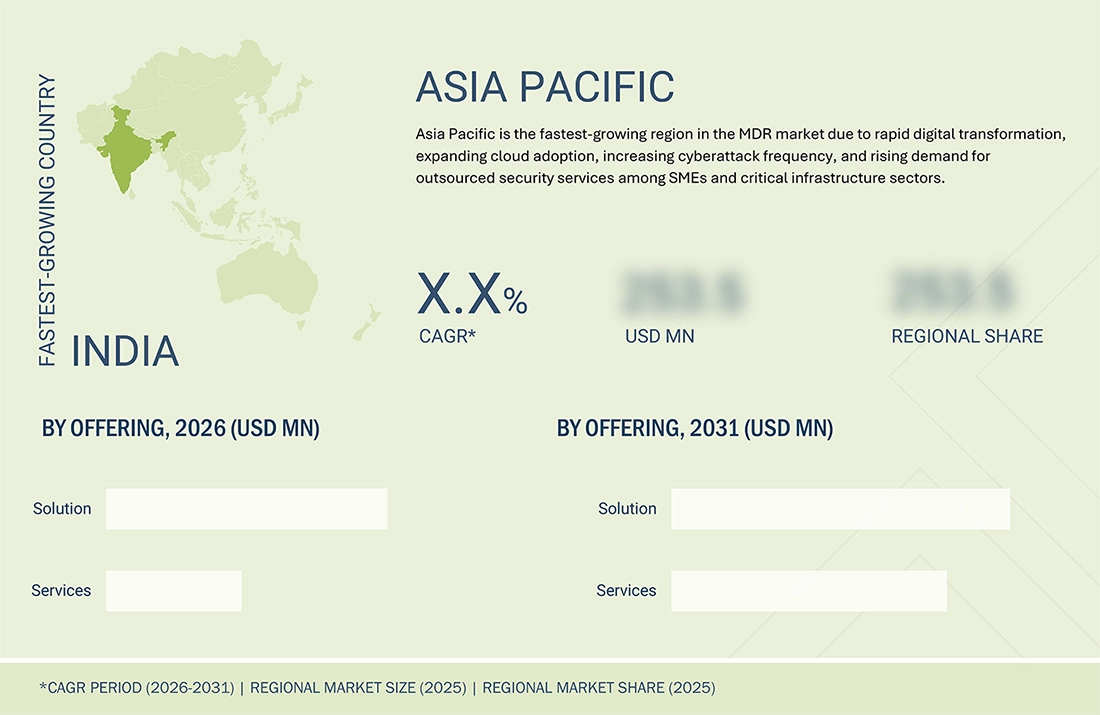
Asia Pacific to be fastest-growing region in global MDR market during forecast period
The Asia Pacific market for MDR services is growing at the fastest rate due to rapid digital transformation, growing demand for cloud computing, and increasing security threats in emerging markets. According to the IBM X-Force Threat Intelligence Index, in March 2025, there was a notable increase in ransomware and phishing attacks in the Asia Pacific region. According to the Palo Alto Networks Unit 42 Threat Report, in July 2024, the Asia Pacific region witnessed a rise in attacks exploiting cloud and identity vulnerabilities, thus creating a need for MDR services to strengthen threat detection and response.
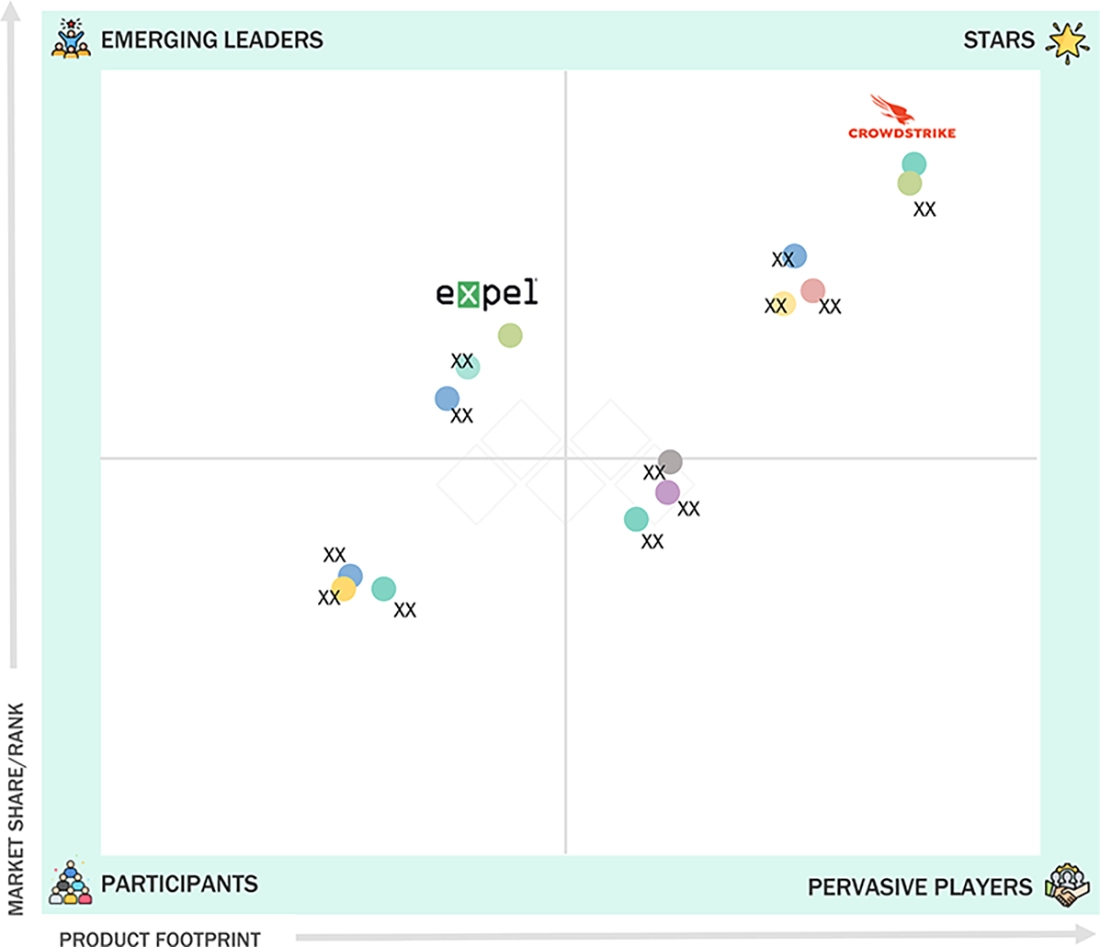
MANAGED DETECTION AND RESPONSE (MDR) MARKET: COMPANY EVALUATION MATRIX
In the MDR market, CrowdStrike (Key Player) holds the highest market position in providing AI-powered Falcon solutions for integrated threat detection, threat intelligence, and response. Expel (Emerging Player) is expanding its presence in the MDR market by providing transparent and service-based MDR solutions for automation, cloud, and customer-centric security operations for detecting and responding to threats in the modern enterprise environment.
Source: Secondary Research, Interviews with Experts, MarketsandMarkets Analysis
KEY MARKET PLAYERS
- CrowdStrike (US)
- Rapid7 (US)
- Palo Alto Networks (US)
- ESET (Slovakia)
- Bitdefender (US)
- Red Canary (US)
- Arctic Wolf (US)
- Kudelski Security (Switzerland)
- SentinelOne (US)
- Proficio (US)
- Expel (US)
- Secureworks (US)
- Alert Logic (US)
- Deepwatch (US)
MARKET SCOPE
| REPORT METRIC | DETAILS |
|---|---|
| Market Size in 2025 (Value) | USD 5.06 Billion |
| Market Forecast in 2036 (Value) | USD 6.28 Billion |
| Market Forecast in 2031 (Value) | USD 19.01 Billion |
| Growth Rate | CAGR of 24.8% from 2026-2031 |
| Years Considered | 2020-2031 |
| Base Year | 2025 |
| Forecast Period | 2026-2031 |
| Units Considered | Value (USD Billion) |
| Report Coverage | Revenue forecast, company ranking, competitive landscape, growth factors, and trends |
| Segments Covered |
|
| Regions Covered | North America, Europe, Asia Pacific, Middle East & Africa, Latin America |
WHAT IS IN IT FOR YOU: MANAGED DETECTION AND RESPONSE (MDR) MARKET REPORT CONTENT GUIDE
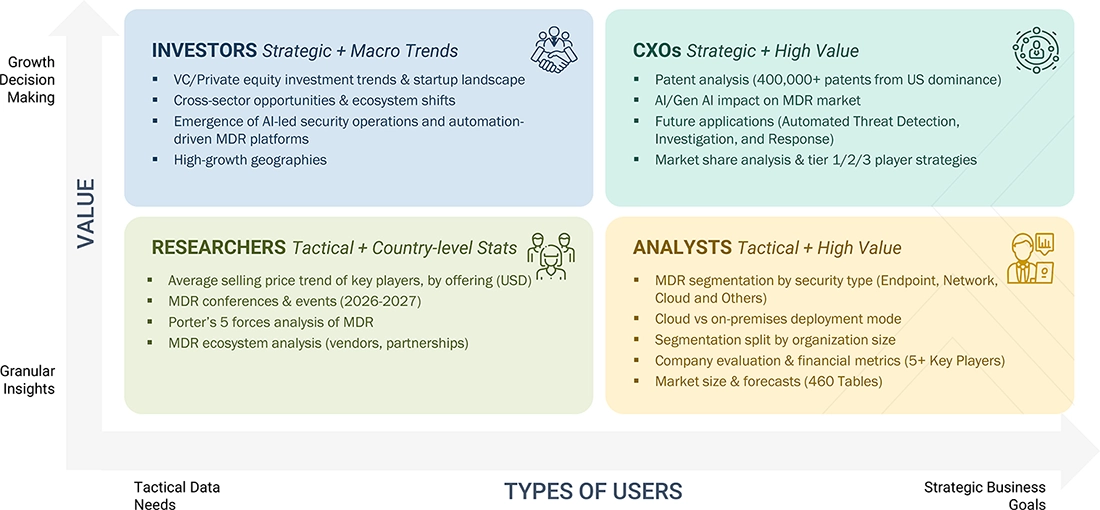
DELIVERED CUSTOMIZATIONS
We have successfully delivered the following deep-dive customizations:
| CLIENT REQUEST | CUSTOMIZATION DELIVERED | VALUE ADDS |
|---|---|---|
| Leading Solution Provider (US) | Product Analysis: MDR Matrix providing an in-depth comparison of leading vendors’ offerings, including 24/7 threat detection, proactive threat hunting, incident investigation, automated response orchestration, XDR integration, threat intelligence, and SOC-as-a-Service capabilities; These platforms deliver unified visibility across endpoint, network, cloud, and identity environments, along with analytics, reporting, and flexible deployment models across cloud, hybrid, and on-premises infrastructures. | Stronger understanding of competitive positioning in the MDR market, service depth across detection and response workflows, automation maturity, AI-driven analytics capabilities, and platform integration strengths – supporting strategic investments, vendor selection, and long-term cyber resilience strategies |
| Leading Service Provider (EU) | Company Information: Detailed profiling and evaluation of additional MDR vendors and service providers (up to 5), covering managed threat detection, incident response capabilities, SOC delivery models, threat intelligence integration, automation maturity, global SOC presence, compliance support, and strategic partnerships across industries | Comprehensive perspective of the evolving MDR landscape, highlighting increasing adoption of AI-driven security operations, convergence of XDR and SOC platforms, growing reliance on outsourced detection and response services, and vendor differentiation through automation, proactive threat hunting, and continuous security operations capabilities |
RECENT DEVELOPMENTS
- March 2026 : CrowdStrike introduced its Agentic MDR solution under the Falcon platform, leveraging AI-powered agents to automate threat investigation and response workflows, enabling machine-speed detection and response while improving SOC efficiency and accuracy in handling large-scale cyber threats
- December 2025 : CrowdStrike partnered with Kroll to enhance global MDR services, migrating over 500,000 endpoints to the Falcon Complete platform to deliver AI-driven detection, investigation, and response capabilities, improving cyber resilience and reducing response times across enterprise environments.
- April 2025 : Rapid7 launched MDR for Enterprise, a fully managed and customizable MDR service designed for complex, distributed environments, integrating endpoint, network, cloud, and identity telemetry with tailored detection engineering and 24/7 SOC support.
- September 2024 : Rapid7 expanded its MDR capabilities with MDR for the Extended Ecosystem, enabling integration of third-party security tools such as endpoint, cloud, and identity platforms to provide broader visibility and improved threat detection across complex IT environments.
Table of Contents
 Exclusive indicates content/data unique to MarketsandMarkets and not available with any competitors.
TITLE
PAGE NO
1
INTRODUCTION
15
2
EXECUTIVE SUMMARY
3
PREMIUM INSIGHTS
4
MARKET OVERVIEW
(IDENTIFY GROWTH OPPORTUNITIES AND STRATEGIC GAPS IN THE MDR MARKET)
4.1
INTRODUCTION
4.2
MARKET DYNAMICS
4.2.1
DRIVERS
4.2.2
RESTRAINTS
4.2.3
OPPORTUNITIES
4.2.4
CHALLENGES
4.3
UNMET NEEDS AND WHITE SPACES
4.4
INTERCONNECTED MARKETS AND CROSS-SECTOR OPPORTUNITIES
4.5
STRATEGIC MOVES BY TIER 1/2/3 PLAYERS
5
INDUSTRY TRENDS
(NAVIGATE INDUSTRY SHIFTS WITH STRATEGIC INSIGHTS FROM COMPETITIVE FORCES AND EVOLVING MDR TRENDS.)
5.1
PORTER’S FIVE FORCES ANALYSIS
5.2
MACROECONOMIC OUTLOOK
5.2.1
INTRODUCTION
5.2.2
GDP TRENDS AND FORECAST
5.2.3
TRENDS IN GLOBAL ICT INDUSTRY MARKET
5.2.4
TRENDS IN CYBERSECURITY MARKET
5.3
VALUE CHAIN ANALYSIS
5.4
ECOSYSTEM ANALYSIS
5.5
PRICING ANALYSIS
5.5.1
AVERAGE SELLING PRICE TREND OF KEY PLAYERS, BY OFFERING (2026)
5.5.2
INDICATIVE PRICING ANALYSIS OF MANAGED DETECTION AND RESPONSE SOLUTIONS, BY VENDOR (2026)
5.6
KEY CONFERENCES & EVENTS, 2026–2027
5.7
TRENDS/DISRUPTIONS IMPACTING CUSTOMER BUSINESS
5.8
INVESTMENT & FUNDING SCENARIO
5.9
CASE STUDY ANALYSIS
5.9.1
CASE STUDY
5.9.2
CASE STUDY
5.9.3
CASE STUDY
5.10
IMPACT OF 2025 US TARIFF: MANAGED DETECTION AND RESPONSE MARKET
5.10.1
INTRODUCTION
5.10.2
KEY TARIFF RATES
5.10.3
PRICE IMPACT ANALYSIS
5.10.4
IMPACT ON COUNTRIES/REGION
5.10.4.1
US
5.10.4.2
EUROPE
5.10.4.3
ASIA PACIFIC
5.10.5
IMPACT ON END-USE INDUSTRIES
6
TECHNOLOGICAL ADVANCEMENTS, AI-DRIVEN IMPACT, PATENTS, INNOVATIONS, AND FUTURE APPLICATIONS
(HARNESS INNOVATIONS TO REVOLUTIONIZE MDR AMID EVOLVING THREAT LANDSCAPES.)
6.1
KEY TECHNOLOGIES/EMERGING TECHNOLOGIES
6.2
COMPLEMENTARY TECHNOLOGIES
6.3
ADJACENT TECHNOLOGIES
6.4
TECHNOLOGY ROADMAP
6.5
PATENT ANALYSIS
6.6
FUTURE APPLICATIONS
6.7
IMPACT OF AI/GEN AI ON MANAGED DETECTION AND RESPONSE MARKET
6.7.1
TOP USE CASES AND MARKET POTENTIAL
6.7.2
BEST PRACTICES FOLLOWED BY PROVIDERS IN MDR MARKET
6.7.3
CASE STUDIES RELATED TO AI IMPLEMENTATION IN MDR MARKET
6.7.4
INTERCONNECTED ECOSYSTEM AND IMPACT ON MARKET PLAYERS
6.7.5
CLIENTS’ READINESS TO ADOPT GENERATIVE AI IN MDR MARKET
7
REGULATORY LANDSCAPE
(NAVIGATE COMPLEX GLOBAL REGULATIONS WITH A COMPREHENSIVE GUIDE TO REGIONAL COMPLIANCE AND INDUSTRY STANDARDS.)
7.1
REGIONAL REGULATIONS AND COMPLIANCE
7.1.1
REGULATORY BODIES, GOVERNMENT AGENCIES, AND OTHER ORGANIZATIONS
7.1.2
INDUSTRY STANDARDS
8
CUSTOMER LANDSCAPE & BUYING BEHAVIOR
(UNCOVER HOW STAKEHOLDER DYNAMICS SHAPE PURCHASING DECISIONS AND REVEAL CRITICAL UNMET INDUSTRY NEEDS)
8.1
DECISION-MAKING PROCESS
8.2
KEY STAKEHOLDERS INVOLVED IN BUYING PROCESS AND THEIR EVALUATION CRITERIA
8.2.1
KEY STAKEHOLDERS IN BUYING PROCESS
8.2.2
BUYING CRITERIA
8.3
ADOPTION BARRIERS AND INTERNAL CHALLENGES
8.4
UNMET NEEDS OF VARIOUS END-USE INDUSTRIES
8.5
MARKET PROFITABILITY
9
MANAGED DETECTION AND RESPONSE MARKET, BY SERVICE TYPE (MARKET SIZE & FORECAST TO 2031 – IN VALUE, USD MILLION)
(SERVICE TYPE-WISE DEMAND POTENTIAL AND GROWTH PATHWAYS SHAPING MDR ADOPTION ACROSS INDUSTRIES)
9.1
INTRODUCTION
9.1.1
SERVICE TYPE: MANAGED DETECTION AND RESPONSE MARKET DRIVERS
9.2
PROTECTIVE MONITORING
9.3
PRIORITIZATION OF THREATS & ALERTS
9.4
THREAT HUNTING
9.5
MANAGED INVESTIGATION SERVICES
9.6
GUIDED RESPONSE
9.7
MANAGED REMEDIATION
10
MANAGED DETECTION AND RESPONSE MARKET, BY SECURITY TYPE (MARKET SIZE & FORECAST TO 2031 – IN VALUE, USD MILLION)
(SECURITY TYPE-WISE DEMAND POTENTIAL AND GROWTH PATHWAYS SHAPING MDR ADOPTION IN DIVERSE INDUSTRIES)
10.1
INTRODUCTION
10.1.1
SECURITY TYPE: MANAGED DETECTION AND RESPONSE MARKET DRIVERS
10.2
ENDPOINT SECURITY
10.3
NETWORK SECURITY
10.4
CLOUD SECURITY
10.5
OTHER SECURITY TYPES
11
MANAGED DETECTION AND RESPONSE MARKET, BY DEPLOYMENT MODE (MARKET SIZE & FORECAST TO 2031 – IN VALUE, USD MILLION)
(DEPLOYMENT MODE-WISE DEMAND POTENTIAL AND GROWTH PATHWAYS SHAPING MDR ADOPTION IN DIVERSE INDUSTRIES)
11.1
INTRODUCTION
11.1.1
DEPLOYMENT MODE: MANAGED DETECTION AND RESPONSE MARKET DRIVERS
11.2
ON-PREMISES
11.3
CLOUD
12
MANAGED DETECTION AND RESPONSE MARKET, BY ORGANIZATION SIZE (MARKET SIZE & FORECAST TO 2031 – IN VALUE, USD MILLION)
(ORGANIZATION SIZE-WISE DEMAND POTENTIAL AND GROWTH PATHWAYS SHAPING MDR ADOPTION IN DIVERSE INDUSTRIES)
12.1
INTRODUCTION
12.1.1
ORGANIZATION SIZE: MANAGED DETECTION AND RESPONSE MARKET DRIVERS
12.2
LARGE ENTERPRISES
12.3
SMES
13
MANAGED DETECTION AND RESPONSE MARKET, BY VERTICAL (MARKET SIZE & FORECAST TO 2031 – IN VALUE, USD MILLION)
(VERTICAL-SPECIFIC ADOPTION DRIVERS, DEMAND, DYNAMICS, AND MARKET POTENTIAL ACROSS EACH END-USE INDUSTRY)
13.1
INTRODUCTION
13.1.1
VERTICAL: MANAGED DETECTION AND RESPONSE MARKET DRIVERS
13.2
BANKING, FINANCIAL SERVICES, AND INSURANCE (BFSI)
13.3
IT & ITES
13.4
GOVERNMENT
13.5
ENERGY & UTILITIES
13.6
MANUFACTURING
13.7
HEALTHCARE
13.8
RETAIL & ECOMMERCE
13.9
OTHER VERTICALS
14
MANAGED DETECTION AND RESPONSE MARKET, BY REGION (MARKET SIZE & FORECAST TO 2031 – IN VALUE, USD MILLION)
14.1
INTRODUCTION
14.2
NORTH AMERICA
14.2.1
NORTH AMERICA: MARKET DRIVERS
14.2.2
US
14.2.3
CANADA
14.3
EUROPE
14.3.1
EUROPE: MARKET DRIVERS
14.3.2
UK
14.3.3
GERMANY
14.3.4
FRANCE
14.3.5
REST OF EUROPE
14.4
ASIA PACIFIC
14.4.1
ASIA PACIFIC: MARKET DRIVERS
14.4.2
CHINA
14.4.3
JAPAN
14.4.4
AUSTRALIA & NEW ZEALAND
14.4.5
INDIA
14.4.6
REST OF ASIA PACIFIC
14.5
MIDDLE EAST & AFRICA
14.5.1
MIDDLE EAST & AFRICA: MARKET DRIVERS
14.5.2
GCC COUNTRIES
14.5.2.1
KSA
14.5.2.2
UAE
14.5.2.3
REST OF GCC
14.5.3
SOUTH AFRICA
14.5.4
REST OF MIDDLE EAST & AFRICA
14.6
LATIN AMERICA
14.6.1
LATIN AMERICA: MARKET DRIVERS
14.6.2
MEXICO
14.6.3
BRAZIL
14.6.4
REST OF LATIN AMERICA
15
COMPETITIVE LANDSCAPE
(STRATEGIC ASSESSMENT OF LEADING PLAYERS, MARKET SHARE, REVENUE ANALYSIS, COMPANY POSITIONING, AND COMPETITIVE BENCHMARKING INFLUENCING MARKET POTENTIAL)
15.1
OVERVIEW
15.2
KEY PLAYERS’ STRATEGIES/RIGHT TO WIN, 2024-2026
15.3
REVENUE ANALYSIS,
15.4
MARKET SHARE ANALYSIS,
15.5
BRAND COMPARISON,
15.6
COMPANY EVALUATION MATRIX: KEY PLAYERS,
15.6.1
STARS
15.6.2
EMERGING LEADERS
15.6.3
PERVASIVE PLAYERS
15.6.4
PARTICIPANTS
15.6.5
COMPANY FOOTPRINT: KEY PLAYERS,
15.6.5.1
COMPANY FOOTPRINT
15.6.5.2
REGION FOOTPRINT
15.6.5.3
OFFERING FOOTPRINT
15.6.5.4
ORGANIZATION SIZE FOOTPRINT
15.6.5.5
VERTICAL FOOTPRINT
15.7
COMPANY EVALUATION MATRIX: STARTUPS/SMES,
15.7.1
PROGRESSIVE COMPANIES
15.7.2
RESPONSIVE COMPANIES
15.7.3
DYNAMIC COMPANIES
15.7.4
STARTING BLOCKS
15.7.5
COMPETITIVE BENCHMARKING: STARTUPS/SMES,
15.7.5.1
DETAILED LIST OF KEY STARTUPS/SMES
15.7.5.2
COMPETITIVE BENCHMARKING OF KEY STARTUPS/SMES
15.8
COMPANY VALUATION AND FINANCIAL METRICS,
15.9
COMPETITIVE SCENARIO
15.9.1
PRODUCT LAUNCHES
15.9.2
DEALS
15.9.3
EXPANSIONS
16
COMPANY PROFILES
(IN-DEPTH REVIEW OF COMPANIES, PRODUCTS, SERVICES, RECENT INITIATIVES, AND POSITIONING STRATEGIES IN THE MDR MARKET LANDSCAPE)
16.1
KEY PLAYERS
16.1.1
CROWDSTRIKE
16.1.2
RAPID7
16.1.3
PALO ALTO NETWORKS
16.1.4
ESET
16.1.5
BITDEFENDER
16.1.6
RED CANARY
16.1.7
ARCTIC WOLF
16.1.8
KUDELSKI SECURITY
16.1.9
SENTINELONE
16.1.10
PROFICIO
16.1.11
EXPEL
16.1.12
DEEPWATCH
16.2
OTHER KEY PLAYERS
16.2.1
BINARY DEFENSE
16.2.2
SOPHOS
16.2.3
ESENTIRE
16.2.4
DEEPWATCH
16.2.5
NETSURION
16.2.6
GOSECURE
16.2.7
LMNTRIX
16.2.8
UNDERDEFENSE
16.2.9
ACKCENT
16.2.10
CRITICAL START
16.2.11
CRITICAL INSIGHT
17
RESEARCH METHODOLOGY
17.1
RESEARCH DATA
17.1.1
SECONDARY DATA
17.1.1.1
KEY DATA FROM SECONDARY SOURCES
17.1.1.2
LIST OF KEY SECONDARY SOURCES
17.1.2
PRIMARY DATA
17.1.2.1
KEY DATA FROM PRIMARY SOURCES
17.1.2.2
KEY PRIMARY PARTICIPANTS
17.1.2.3
BREAKDOWN OF PRIMARY INTERVIEWS
17.1.2.4
KEY INDUSTRY INSIGHTS
17.2
MARKET SIZE ESTIMATION
17.2.1
BOTTOM-UP APPROACH
17.2.2
TOP-DOWN APPROACH
17.2.3
MARKET SIZE CALCULATION FOR BASE YEAR
17.3
MARKET FORECAST APPROACH
17.3.1
SUPPLY SIDE
17.3.2
DEMAND SIDE
17.4
DATA TRIANGULATION
17.5
FACTOR ANALYSIS
17.6
RESEARCH ASSUMPTIONS AND LIMITATIONS
17.7
RISK ASSESSMENT
18
APPENDIX
18.1
DISCUSSION GUIDE
18.2
KNOWLEDGE STORE: MARKETSANDMARKETS’ SUBSCRIPTION PORTAL
18.3
AVAILABLE CUSTOMIZATIONS
18.4
RELATED REPORTS
18.5
AUTHOR DETAILS
Methodology
Secondary research was conducted to collect information useful for this technical, market-oriented, and commercial study of the MDR market. The next step involved validating these findings, assumptions, and sizing with industry experts across the value chain using primary research. Different approaches, including top-down and bottom-up methods, were employed to estimate the total market size. After that, the market breakup and data triangulation procedures were used to estimate the market size of the segments and subsegments of the MDR market.
Secondary Research
During the secondary research process, various secondary sources were consulted to identify and collect information relevant to the study. The secondary sources included annual reports, press releases, investor presentations of MDR vendors, forums, certified publications, and whitepapers. The secondary research was mainly used to obtain key information about the industry’s supply chain, the total pool of key players, market classification and segmentation according to industry trends to the bottom-most level, regional markets, and key developments from both market- and technology-oriented perspectives, all of which were further validated by primary sources.
Primary Research
In the primary research process, various primary sources from both the supply and demand sides were interviewed to obtain qualitative and quantitative information for this report. The primary sources from the supply side included various industry experts, including chief executive officers (CEOs), vice presidents (VPs), marketing directors, technology and innovation directors, and related key executives from various key companies and organizations operating in the MDR market.
In the market engineering process, top-down and bottom-up approaches were extensively used, along with several data triangulation methods, to perform market estimation and forecasting for the overall market segments and subsegments listed in this report. Extensive qualitative and quantitative analysis was performed on the complete market engineering process to list key information/insights throughout the report.
After the complete market engineering process (including calculations for market statistics, market breakups, market size estimations, market forecasts, and data triangulation), extensive primary research was conducted to gather information and verify & validate the critical numbers arrived at. The primary research was also conducted to identify the segmentation types, industry trends, competitive landscape of MDR market players, and key market dynamics, such as drivers, restraints, opportunities, challenges, industry trends, and key strategies.
Following is the breakup of the primary study:
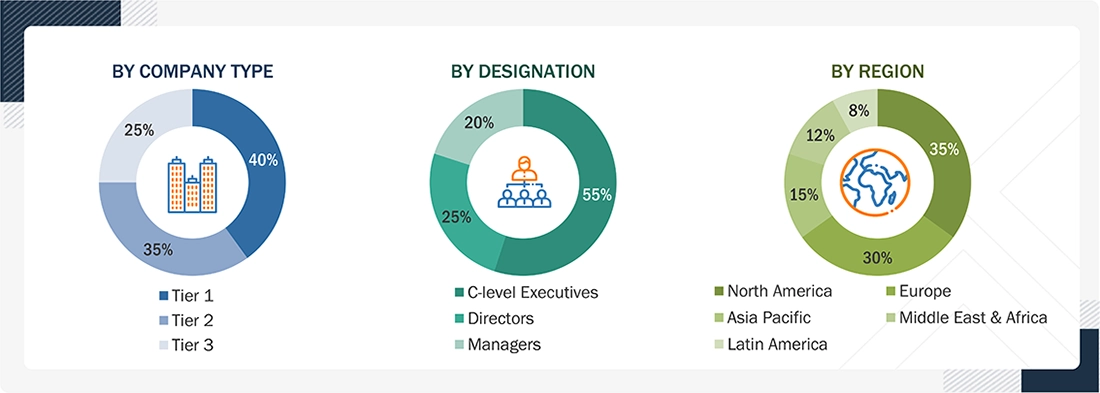
Note: Tier 1 companies receive revenues higher than USD 10 billion; Tier 2 companies' revenues range between USD 1 and 10 billion; and Tier 3 companies' revenues range between USD 500 million and USD 1 billion. Other designations include sales, marketing, and product managers.
To know about the assumptions considered for the study, download the pdf brochure
Market Size Estimation
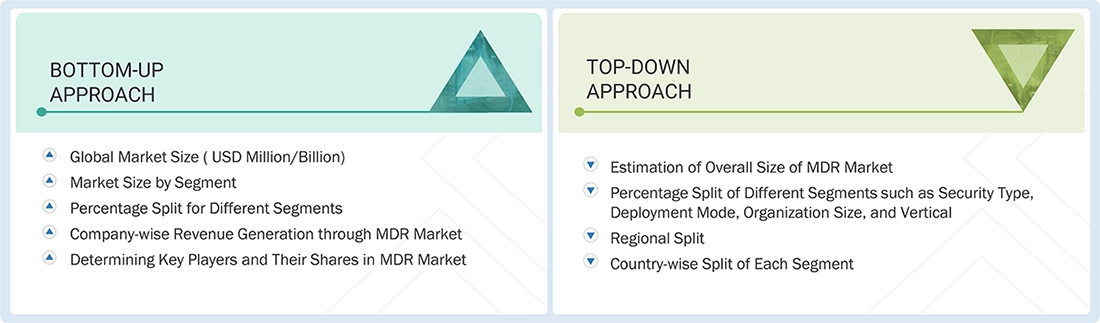
Top-down and bottom-up approaches were employed to estimate and validate the size of the MDR market, as well as the size of various dependent sub-segments within the overall MDR market. The research methodology used to estimate the market size includes the following details: critical players in the market were identified through secondary research, and their market shares in the respective regions were determined through primary and secondary research. This entire procedure involved studying the annual and financial reports of the top market players, and extensive interviews were conducted with key industry leaders, including CEOs, VPs, directors, and marketing executives, to gather valuable insights.
All percentage splits and breakdowns were determined using secondary sources and verified through primary sources. All possible parameters that affect the market covered in this research study were accounted for, viewed in extensive detail, verified through primary research, and analyzed to get the final quantitative and qualitative data. This data was consolidated and added to detailed inputs and analysis from MarketsandMarkets.
Managed Detection and Response (MDR) Market : Top-Down and Bottom-Up Approach
Data Triangulation
The market was split into several segments and subsegments after arriving at the overall market size using the market size estimation processes explained above. The data triangulation and market breakup procedures were employed, wherever applicable, to complete the overall market engineering process and arrive at the exact statistics of each market segment and subsegment. The data was triangulated by studying various factors and trends from both the demand and supply sides.
Market Definition
MarketsandMarkets defined MDR as “a cybersecurity service that provides continuous monitoring, threat detection, investigation, and response across an organization’s IT environment through a combination of advanced technologies and expert-led security operations. MDR providers leverage tools such as endpoint detection and response (EDR), extended detection and response (XDR), threat intelligence, and AI-driven analytics to identify and mitigate cyber threats in real time. These services enable organizations to proactively detect attacks, reduce dwell time, and strengthen overall security posture without relying solely on in-house security teams.”
Key Stakeholders
- Cybersecurity software vendors
- MDR vendors
- MSSP providers
- Cybersecurity service providers
- Government agencies
- Independent Software Vendors (ISVs)
- Consulting firms
- System integrators
- Value-Added Resellers (VARs)
- IT security agencies
- SOC vendors
Report Objectives
- To describe and forecast the MDR market by security type, deployment mode, organization size, vertical, and region from 2026 to 2031, and analyze the various macroeconomic and microeconomic factors that affect market growth
- To forecast the market size of five major regions: North America, Europe, Asia Pacific, the Middle East & Africa, and Latin America
- To analyze the subsegments of the market concerning individual growth trends, prospects, and contributions to the overall market.
- To provide detailed information related to the primary factors (drivers, restraints, opportunities, and challenges) influencing the growth of the MDR market.
- To analyze opportunities in the market for stakeholders by identifying high-growth segments of the MDR market.
- To profile the key players of the MDR market and comprehensively analyze their market size and core competencies.
- Track and analyze competitive developments, such as new product launches, mergers & acquisitions, partnerships, agreements, and collaborations in the global MDR market.
Available customizations:
With the given market data, MarketsandMarkets offers customizations based on company-specific needs. The following customization options are available for the report:
Regional Analysis
- Further breakup of the Asia Pacific market into countries contributing to the rest of the regional market size.
- Further breakup of the North American market into countries contributing to the rest of the regional market size.
- Further breakup of the Latin American market into countries contributing to the rest of the regional market size
- Further breakup of the Middle East & African market into countries contributing to the rest of the regional market size
- Further breakup of the European market into countries contributes to the rest of the regional market size
Company Information
- Detailed analysis and profiling of additional market players (up to 5)
⚡ Growth Signals
Personalize This Research
- Triangulate with your Own Data
- Get Data as per your Format and Definition
- Gain a Deeper Dive on a Specific Application, Geography, Customer or Competitor
- Any level of Personalization
Let Us Help You
- What are the Known and Unknown Adjacencies Impacting the Managed Detection and Response (MDR) Market
- What will your New Revenue Sources be?
- Who will be your Top Customer; what will make them switch?
- Defend your Market Share or Win Competitors
- Get a Scorecard for Target Partners

Leading IT Company in US
The research and discussions with the MarketsandMarkets team were insightful and influential towards driving our team's strategic direction. After engaging with the analyst team, we were able to have focused use cases, a targeted market segment, and strategic partners to consider as part of our GTM. The insights shared by MarketsandMarkets captured some useful information that we could leverage to develop our point of view for the next steps. The market reports were a great start for the project, but the analyst hours made a rough diamond turn into a polished gem of a project

Still Researching the
Managed Detection and Response (MDR) Ecosystem?
See the competitors, opportunity evaluation, and growth signals shaping it - Instantly!
Generate 15+ consulting-grade strategic intelligence outputs - from competitor analysis to board-ready strategy decks, tailored to your Managed Detection and Response (MDR) growth question.
