


惯性聚合 高效追踪和阅读你感兴趣的博客、新闻、科技资讯
阅读原文 在惯性聚合中打开

推荐订阅源

人人都是产品经理
人人都是产品经理
MyScale Blog
MyScale Blog
Y
Y Combinator Blog
罗磊的独立博客
奇客Solidot–传递最新科技情报
奇客Solidot–传递最新科技情报
P
Proofpoint News Feed
Google DeepMind News
V
Vulnerabilities – Threatpost
T
The Blog of Author Tim Ferriss
云风的 BLOG
云风的 BLOG
Recorded Future
Recorded Future
N
News and Events Feed by Topic
B
Blog RSS Feed
阮一峰的网络日志
阮一峰的网络日志
博客园_首页
C
CXSECURITY Database RSS Feed - CXSecurity.com
博客园 - 【当耐特】
N
Netflix TechBlog - Medium
博客园 - 叶小钗
B
Blog
Vercel News
Vercel News
T
Tenable Blog
T
The Exploit Database - CXSecurity.com
Spread Privacy
Spread Privacy
T
Threat Research - Cisco Blogs
Cyber Security Advisories - MS-ISAC
Last Week in AI
Last Week in AI
F
Fortinet All Blogs
cs.CL updates on arXiv.org
Microsoft Security Blog
S
Securelist
Microsoft Azure Blog
钛媒体:引领未来商业与生活新知
钛媒体:引领未来商业与生活新知
P
Palo Alto Networks Blog
让小产品的独立变现更简单 - ezindie.com
D
DataBreaches.Net
Cyberwarzone
Cyberwarzone
Engineering at Meta
Engineering at Meta
Martin Fowler
Martin Fowler
G
GRAHAM CLULEY
Project Zero
Project Zero
Cisco Talos Blog
Cisco Talos Blog
A
Arctic Wolf
C
CERT Recently Published Vulnerability Notes
L
LangChain Blog
cs.AI updates on arXiv.org
C
Check Point Blog
A
About on SuperTechFans
W
WeLiveSecurity
The GitHub Blog
The GitHub Blog

Latest from Tom's Hardware in Cpus

Intel Xeon 6+ ‘Clearwater Forest’ puts 18A in the data center with up to 288 cores, 576 MB of L3 cache — new Xeon 6990E+ is 30% faster per thread than 192-core AMD Epyc 9965, says Intel Intel Xeon 7 ‘Diamond Rapids’ CPUs officially launching in 2027 on Intel 18A-P — next-gen P-core Xeon features PCIe 6.0, 50% higher core counts, and twice the memory bandwidth AMD brings back Ryzen 7 5800X3D, launches Ryzen 7 7700X3D to combat rising component prices — eight-core X3D CPUs arrive under $350 for AM4 or AM5, DDR4 or DDR5 AMD confirms AM5 support through 2029 — Zen 4 and 5 platform will likely see two more generations, at least Nvidia's long-awaited N1/N1X SoC specs leak ahead of Computex launch — N1 to feature up to 20 Arm-based cores, standard N1 equipped with 12- and 10-core configs AMD Ryzen 7 5800X and Nvidia RTX 5060 combo is only $439 — deal includes a free CPU cooler, totaling out to $150… Intel’s new Bartlett Lake flagship loses fight to a four-year-old CPU — Core 9 273PQE has 50% more P-cores… $100 CPU Shootout: Comparing the Ryzen 5 5500, Core i3-14100F, and Core i3-12100F to find the top DDR4 CPU Analyst says Nvidia poised to capture two-thirds of the x86 server CPU market from Intel and AMD with expected $20 billion in revenue — 'Nvidia is already on track' to deliver 4 million Vera CPUs in FY2027 AMD Ryzen AI Max 400 ‘Gorgon Halo’ packs up to 192GB of unified memory — refreshed APU uses Zen 5 and… Ryzen 7 5800X3D AM4 10th Anniversary Edition surfaces online for $310 — return of iconic gaming CPU for budget… Intel CEO Lip-Bu Tan stamps out chip bugs with aggressive new quality standards, says major validation errors can result in termination — 'B0, you keep your job. Anything above that, you are fired' AMD rumored to ready budget-friendly Ryzen 7 7700X3D for suffering gamers — chipmaker lowers clocks and price with… The Core Ultra 7 270K was too good, so Intel scrapped the flagship Core Ultra 9 290K Plus — benchmarks of the 290K prototype find slim 2% faster performance in gaming and applications Intel Core Ultra 5 250K Plus vs AMD Ryzen 5 7600X3D faceoff — Battle for the fastest mid-range gaming CPU AMD reaches 46% of server x86 CPU revenue — Intel still controls 70% of the consumer PC market share AMD expands its Ryzen 9000 PRO lineup with six new SKUs, now featuring 3D V-Cache for the first time — new workstation CPUs have up to 170W TDPs, available with OEMs later this year China's next-gen CPUs and GPUs prepare to challenge last-gen Intel and AMD in 2027 — Loongson 3B6600 and… Arm's $2 billion in AGI CPU sales are still not enough to penetrate 5% of overall market share, analyst reveals — at least $90 million worth of CPUs to be shipped before FY2027 AMD Ryzen 9 9950X3D2 vs Ryzen 9 9950X3D faceoff — How far does dual cache take you? Intel Core Ultra 5 225 review: Arrow Lake’s forgotten CPU needs a price cut AMD to broaden and specialize EPYC CPUs, already working on Zen 7 architecture — increased customization to better… AMD posts record first-quarter results, driven by skyrocketing data center CPU demand — company expects consumer and gaming revenue to decline in Q2 over rising memory and component costs Intel's P-core Core 9 273PQE 'Bartlett Lake' CPU beats 14900K by up to 9% in gaming tests — embedded-only chip is unofficially Intel's fastest gaming CPU (at 720p) New server-focused SPEC CPU 2026 benchmarking suite has results for a Raspberry Pi 5 — updated tools feature more tests and can run a wide range of systems AMD Ryzen AI 5 435G APU breaks cover in early benchmarks — six-core Zen 5 chip goes head-to-head with the Ryzen 5 8600G for budget PC builders AMD Ryzen AI Max+ PRO 495 APU could arrive with 192GB of unified memory — leaked PassMark benchmarks suggest… AMD Ryzen 9 PRO 9965X3D spotted on Passmark — company's first PRO chip with 3D V-Cache also bumps the lineup… Tech teardown specialist delids a Xeon with a blowtorch and hunting knife — wood chopping block makes a worthy… More details emerge about how Intel now earns more revenue from each wafer by looking to the edges — analyst reports say reduced yield variability across each wafer leads to more sellable CPUs AMD Ryzen 9950X3D tops Amazon best sellers as it falls to all-time low price of $573.99 — 32-core X3D chip is now… Russian-Chinese Irtysh 32-core CPU runs The Witcher 3 at 30+ FPS — heavyweight chip still imposes CPU bottleneck… AMD Ryzen 5 7600X3D review: An unbeatable value gaming CPU Intel reportedly says it boosted yields by selling what would normally be 'scrap' or 'low-expectation' CPUs — customers more willing to accept lesser chips due to overwhelming CPU demand Intel's upcoming Xeon 7 'Diamond Rapids' server CPUs reportedly delayed to 2027 — Next-gen Coral Rapids lineup lands 2028 but can be accelerated, according to new leak Intel Core Ultra 7 270K Plus vs AMD Ryzen 7 7800X3D — Can Intel finally beat X3D? Intel VP claims up to 30% of CPU performance is untapped by modern games — software optimization is critical to… CPU requirements for AI workloads are multiplying, driving intensifying shortages and price hikes — Intel already shifting production from consumer chips to Xeon as inference workloads drive server CPU ratios back toward parity with GPUs Intel stock jumps 28%, setting a record, after it posts strong Q1 with rising forecasts — Intel says yields are improving faster than expected with new nodes First Intel Wildcat Lake laptop spotted in the wild, geared to compete with MacBook Neo — features an aluminum… Where to buy AMD Intel teases wider range of overclockable CPUs for future platforms — VP Robert Hallock says budget builders 'deserve the same level of features' as more well-heeled enthusiasts AMD Ryzen 9 9950X3D2 review: More cache, more cash Intel Core Ultra 250K Plus vs AMD Ryzen 5 9600X faceoff — battle for the best $200 CPU AMD to resurrect Ryzen 7 5800X3D AM4 with 10th anniversary edition, leaker claims — return of legendary CPU a sign… Amazon returns buyer gets scammed out of a Ryzen 9 9950X3D — 'CPU' came with just a 3D-printed base… AMD Ryzen 9 9950X3D2 appears on Amazon with $1,000 pre-order price — AMD confirms recommended pricing is still set… AMD's market cap hits all-time high, Intel hits 25-year high on Agentic AI's insatiable demand for CPUs US appeals court restarts $3 billion patent infringement lawsuit against Intel — VLSI case from 2017 returns after… Legendary Qualcomm, Apple, and Nuvia alumni form new CPU startup — Nuvacore promises to Intel New tech can see a CPU's transistors in action — terahertz radiation can potentially steal data as a chip is… Intel's Nova Lake CPUs gear up to seize AMD’s 3D V-Cache gaming throne — early leak points to up to 52 cores, blazing DDR5-8000 support, and massive 175W TDP Why we spent 50+ hours retesting Intel’s Core Ultra 270K Plus and 250K Plus Intel Core Ultra 7 270K Plus vs Ryzen 7 9700X faceoff — a new midrange CPU champ emerges Fueled by Musk's TeraFab tie-in, Intel's market cap hits highest level in 25 years — tops $300 billion… Geekbench 6.7 adds Intel BOT detection to spoof out 'unrealistic' CPU scores — Benchmark runs with BOT enabled will be marked as invalid Intel and Google announce multi-year chip deal — Google will deploy Intel Xeon with custom IPUs for next-gen AI,… Intel developing two-lever retention mechanism for LGA 1954 socket, according to new leak — Premium Nova Lake-S motherboards will feature 2L-ILM sockets AMD reveals $899 price tag for Ryzen 9 9950X3D2 — first dual-cache X3D CPU is $200 more expensive than the Ryzen 9… Intel's OEM-only Bartlett Lake CPU modded to run on consumer Z790 motherboard beats AMD's Ryzen 9 9900X3D in Cinebench multi-core test — Core 9 273QPE has 12 cores, 24 threads, and hits 5.4GHz AMD's upcoming Ryzen 9 9950X3D2 listed around $1,000 at several retailers across Canada and the UK — New flagship dual-cache CPU might demand a hefty premium Intel's upcoming Wildcat Lake low-budget CPUs leak out again — OEM confirms specs for Core 7 350, Core 5 320, & Core 3 305 in first retail product datasheet Hobbyist builds a homebrew Intel 8086 ISA accelerator card — maker’s project improves integer multiplication… Intel's upcoming 42-core Nova Lake SKU allegedly upgraded to 44 cores — New config frees up 6P+12E tiles that could trickle down as locked bLLC variants Modder uses Claude AI to rewrite BIOS so they can boot unsupported 12 P-core Bartlett Lake CPU in Windows on a Z790… Intel's potent 18-core Core Ultra 5 250KF Plus CPU lands at retail for under $200 Level up your gaming setup with this Core Ultra 5 250K Plus bundle for $299 — save $60 with ASRock's… Report claims Arm chips will power 90% of AI servers based on custom processors in 2029 — x86 and RISC-V on the… Arm to sell its new AGI CPU in China — 'we would expect the demand for this product to be just as strong in… Geekbench investigates up to 30% jump with Intel's iBOT — performance gain attributed to newly-vectorized… Modder gets Intel's OEM-only 'Bartlett Lake' CPU to post on a regular Asus Z790 motherboard — BIOS was edited by Claude AI to make Core Ultra 9 273QPE boot AMD Zen 6 'Venice' ES chips break cover with up to 192 cores, 32 per CCD, in early stress test — Kenya,… Intel Arrow Lake Refresh CPU prices shot up to 17% above MSRP just 48 hours after launch — dynamic pricing trumps… AMD Ryzen 9 7900X 12-core CPU hits all-time low of $199 — Zen 4 chip brings unbeatable value at $16.58 per core Intel confirms rumored Core Ultra 9 290K Plus has been scrapped — potential Core Ultra 9 285KS Special Edition also off the table as Arrow Lake refresh rolls out AMD makes the flagship Ryzen 9 9950X3D2 official — first dual-cache X3D CPU arrives in April, with 208MB cache, 200W TDP, promising modest performance gains Where to buy Intel's Core Ultra 5 250K Plus and Core Ultra 7 270K Plus — grab these impressive Arrow Lake Refresh CPUs from these retailers, starting from $219 Intel's upcoming 'Wildcat Lake' low-power series breaks cover in Geekbench listing — 'Core 3 304' is twice as fast in single-core performance versus last-gen Geekbench 6 warns about inconsistent benchmarking performance from new Core Ultra 200S Plus chips — says Intel's IPC boosting Binary Optimization Tool modifies scores in 'unclear' fashion PC makers face shortages of Intel and AMD CPUs that stretch up to six months — lead time for orders jumps from… Intel officially releases Xeon 600 chips, announces new vPro Panther Lake CPUs — ‘all-new’ vPro… Intel Core Ultra 5 250K Plus review: The new best $200 CPU AMD's Enterprise CPU and GPU roadmap: Venice, Verano, Zen 6, Helios, and CDNA The legendary AMD Ryzen 7 9800X3D just hit its lowest-ever price on Amazon — grab our favorite gaming CPU with a $60 saving for undeniably brilliant performance Intel Core Ultra 7 270K Plus review: Back from the brink Intel's long-rumored Core Ultra 3 205 CPU finally appears for sale at French retailer — priced at $182, early listing confirms previously-known specs for the chip Intel released its first Pentium chip on this day 33 years ago, came packing 3.1 million transistors — fifth-gen… Testing CPU scaling in Crimson Desert — X3D wins, but not by much, and Raptor Lake shines Nvidia will only produce one 88-core Vera CPU model — Jensen says the company will make billions of dollars from a… AMD claims it had no knowledge of fake Ryzen 5 7430U CPUs in Chuwi laptops — Chinese vendor announces recall of products and refunds, PCB manufacturer could be culprit AMD reportedly strikes back with Zen 5 refresh to counter Intel's latest Arrow Lake Refresh CPUs — 65W Ryzen supercharged with 400 MHz base clock uplift and almost double the TDP Intel's new Core Ultra 200HX Plus mobile CPUs include 290HX, 270HX Plus flagships — 8% faster gaming claims fall short of 15% boost promised by desktop Arrow Lake Refresh Intel Xeon 6 selected as host CPU for Nvidia DGX Rubin NVL8 systems — Intel wins a contract as Nvidia enters data center processor market with Vera CPUs First credible leak of an AMD Zen 6 processor pops up on Geekbench — ten-core CPU seems to have 32MB of L3 cache AMD's former pound-for-pound gaming champ hits its historic low again — Ryzen 7 9800X3D offers unmatched… Shopper scores $1,000 in PC hardware for just $86 in a shocking pricing glitch — Newegg shrugs off massive loss… 11-month old Russian outfit claims it has developed 16-core and 32-core chips, flaunts Cyrillic-badged processors — chips appear to be sanctions-swerving rebadged Chinese Loongson processors How to use Precision Boost Overdrive and Curve Optimizer to improve Ryzen CPU performance Intel announces Arrow Lake Refresh CPUs, claims 15% higher gaming performance and multi-threaded boost — Core Ultra 7 270K and Core Ultra 5 250K come with more cores, faster memory, and a price cut
Intel’s Binary Optimization Tool tested and explained — how the iBOT translation delivers up to 18% faster…
Jake Roach · 2026-03-26 · via Latest from Tom's Hardware in Cpus
Intel Binary Optimization Tool
(Image credit: Intel)

Intel has something interesting going on with its new Binary Optimization Tool. Otherwise known as iBOT, it’s a translation layer along the lines of Microsoft Prism or Apple Rosetta. However, instead of translating instructions from one ISA (instruction set architecture) to another, it’s optimizing x86 applications to run more efficiently on Intel CPUs. As Intel puts it, it translates “other x86” to “Intel x86.”

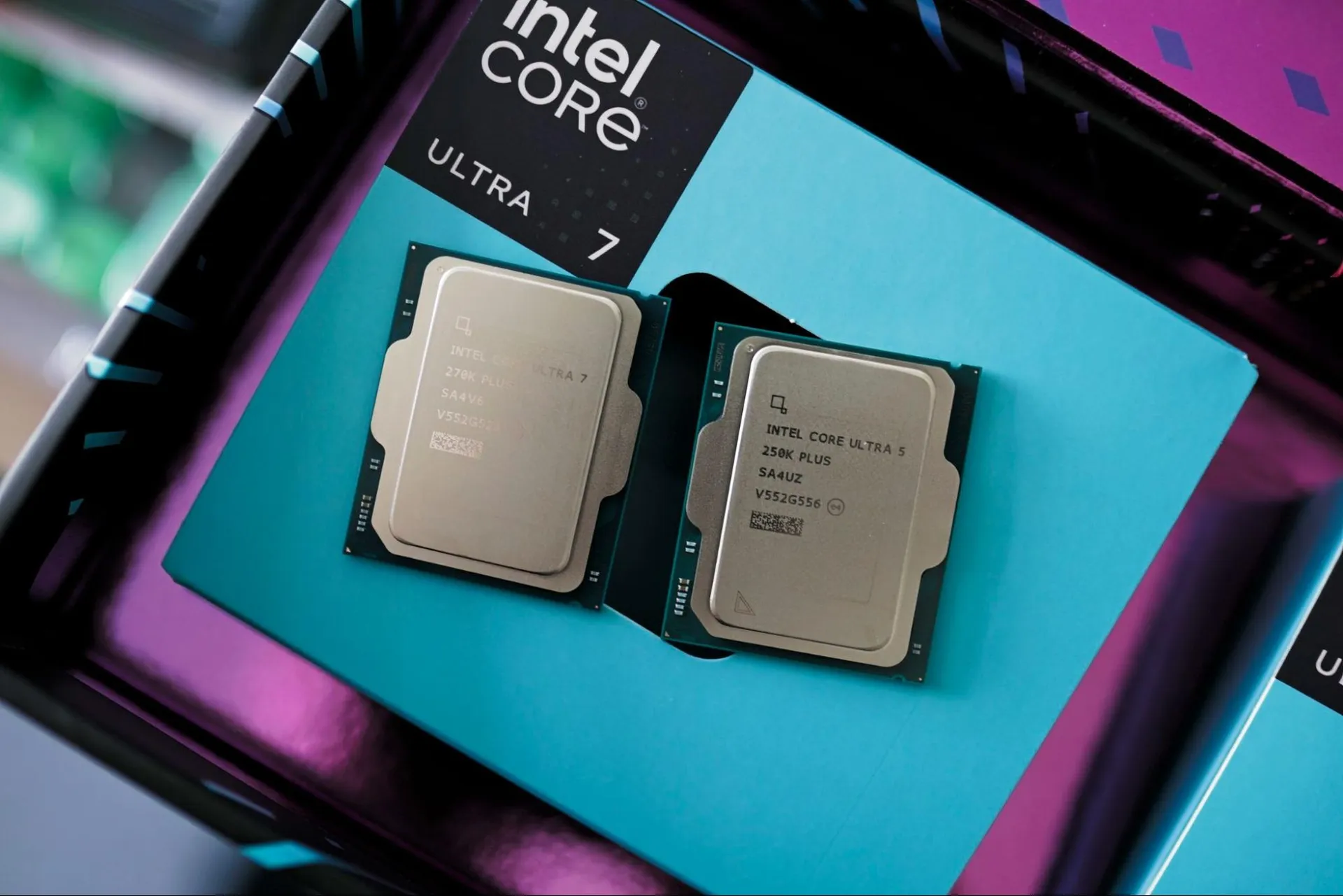
It’s one of the marquee features on Intel’s new Core Ultra 200S Plus chips, the Core Ultra 7 270K Plus and Core Ultra 5 250K Plus. Although both show performance improvements strictly through silicon, at least part of their gaming boost comes courtesy of iBOT. It’s only enabled in 12 games right now, but Intel says iBOT is part of its long-term roadmap and that it’ll be a feature in Intel chips on desktop and mobile going forward. I wanted to see just how much of a boost iBOT represented, so I tested the feature in 10 of the 12 games it’s currently supported in, and I sat down with Intel’s Robert Hallock to better understand how the feature works and what it can offer.

Strictly looking at performance, iBOT represents about an 8% boost in average frame rates across both the Core Ultra 7 270K Plus and Core Ultra 5 250K Plus. That’s a boost we’ve seen before with Intel’s Application Optimization, or APO, in the past. The difference here is that the leads are much more consistent, and they peak as high as 18% in Shadow of the Tomb Raider with the 270K Plus.

Data is only part of the story here, however. We’re dealing with a small pool of samples, after all, and the benefits of a feature like iBOT won’t be clear until we have a supported games list in the dozens, at least. The other part of the story is how iBOT works. It’s unique, unlike anything we’ve seen from Intel or AMD in the past, and it could hold promise if Intel sticks with it. It won’t universally improve CPU performance, but it’s a lever available through software that Intel can pull to effectively increase IPC.

That’s what we’re going to showcase here: both the performance of iBOT, and an overview of how it works, so it’s clear why the feature is so interesting. Hopefully, we’ll also dispel some of the misconceptions about iBOT. Intel has a history of promising performance improvements through software that have never really turned into much, so it makes sense that iBOT has been handled with skepticism up to this point.

Before getting into the details about how iBOT works and its potential applications, let’s get on with the benchmarks.

We tested iBOT in 10 of the 12 games it’s currently supported in, as well as looked at it in Geekbench 6 (more on that in a bit). Intel says we should see an 8% uplift on average, and sure enough, I saw just about that big of a jump across both the Core Ultra 7 270K Plus and Core Ultra 5 250K Plus when looking at a geomean of my results. Some games scale much higher, while in others, I didn’t see any difference at all.

Get Tom's Hardware's best news and in-depth reviews, straight to your inbox.

The test bench we used is identical to the one we use in our CPU reviews. That means the RTX 5090 FE is at the helm to remove any potential GPU bottlenecks. We’re evaluating CPU performance here. To that end, we also tested at 1080p with a mixture of Ultra and High settings and without any upscaling or frame generation assistance. I also exclusively tested iBOT. The feature is built on top of APO — more on that later — and I left APO on across both runs. It should, as long as you have your drivers installed, work without any manual intervention.

Image 1 of 4

Intel Binary Optimization Tool benchmarks
(Image credit: Tom's Hardware)

On average, the Core Ultra 5 250K Plus saw an 8.3% improvement with iBOT across the test suite, while the Core Ultra 7 270K Plus saw a 7.5% improvement; we can call it roughly 8% when bringing together both chips. The individual results are what’s interesting here, and specifically how they change between the 270K Plus and 250K Plus.

For the 250K Plus, most games saw between a 7% and 10% jump, with the best performer being Remnant 2 with a 10.9% improvement. Weighing the average down is Cyberpunk 2077, which improved by a meager 1.8% with iBOT on. Taking Cyberpunk out of the mix, the average jumps up to over 9%. I suspect Cyberpunk 2077 was included as part of Intel’s initial games list not because it sees big performance gains with iBOT, but rather because it’s ubiquitous among the PC benchmarking community.

Regardless, the results are consistent here. That 8% uplift isn’t the result of one or two rogue games where iBOT really shines; the feature is showing improvements across the full suite of games.

Things are more variable with the Core Ultra 7 270K Plus, for better and worse. On the plus side, I saw massive improvements in Shadow of the Tomb Raider and Hogwarts Legacy, with the former jumping by 18% with iBOT enabled and the latter climbing by over 12%. On the other hand, Final Fantasy XIV saw just a 5% improvement while the 250K Plus showed a 9% jump. In Hitman 3, the 270K Plus saw almost no benefit with iBOT enabled, while the 250K Plus showed an improvement of close to 6%. Similarly, in Wonderlands, the 270K Plus saw just a 0.5% boost from iBOT.

Otherwise, the results are consistent between the two CPUs — Cyberpunk 2077, Far Cry 6, Assassin’s Creed Mirage, Remnant 2, and Borderlands 3 all showed similar improvements across both chips with iBOT enabled.

Image 1 of 8

Intel Binary Optimization Tool benchmarks
(Image credit: Tom's Hardware)

Outside of average frame rates and 1% lows, I also charted clocks, temps, power, and efficiency, as I normally would in a CPU review. There’s not much to talk about here, though. With iBOT on, I recorded slightly higher power and temperatures, and better efficiency, but the margins are thin. We’re looking at an extra watt or two, at most, which is likely a consequence of some threads not idling due to inefficiencies.

I’m more interested in the differences between the Core Ultra 5 250K Plus and Core Ultra 7 270K Plus. As time goes on, Intel says it’ll be able to optimize older applications for newer architectures just as easily as optimizing newer applications for older architectures. It’s hard to believe there will be one universal profile for all of them. We’re already seeing some large discrepancies between two CPUs that are fairly similar. I have to imagine that will become exaggerated after iBOT has a few new microarchitectures under its belt.

It’s not clear now how Intel will handle those differences. Maybe if one or two chips see enough of a boost, the profile will be available to everyone, even if it doesn’t amount to an increase on some chips. Maybe, down the line, we’ll see individual profiles for different chips. It’s hard to say now, but it stands to reason that some CPUs and some architectures will benefit more in certain applications and not others.

iBOT is new, and because of that, it’s easy to misunderstand what the feature is doing. First, we need to start with Dynamic Tuning Technology (DTT) and Application Optimization (APO) because iBOT follows in that lineage, but in a very different way. For DTT, it’s system-level optimization, particularly concerning power. It adjusts power needs based on system conditions like thermal headroom (or lack thereof). APO is an application-level optimization layer. It’s concerned with combating overthreading, where an app spawns a thread it doesn’t actually need, and scheduling the right workloads on the right threads. iBOT is a binary-level optimization, which is different from an application-level optimization.

Intel Binary Optimization Tool

(Image credit: Intel)

After a developer finishes writing their source code, it’s sent through a compiler to translate the source into binary. The compiler targets a certain ISA, so a binary for x86 won’t work on an ARM platform or vice versa. Once the compilation is done, developers can then start optimizing their code. They test performance, go back to source, recompile, and continue in that loop until they have a binary that’s optimized for their target platform.

In the case of x86, that’s a broad platform. There are hundreds of x86 CPUs in different configurations, so optimizing for one particular platform might come at the detriment of another. Developers also might be accustomed to a particular toolchain that leaves some performance on the table for more recent CPU architectures. iBOT aims to reduce those inefficiencies without rewriting the source code. It wants to create a binary optimized for Intel’s specific architecture without going back to the developer, optimizing, and recompiling a new binary. That requires two things.

Intel Binary Optimization Tool

(Image credit: Intel)

The first is a way to see what’s happening while code is executing on the CPU on a very low level. That’s Hardware-based Profile Guided Optimization, or HWPGO. Inside Arrow Lake Refresh CPUs, and Intel CPUs moving forward, there are hardware performance counters that can catch things like cache misses, branch mispredictions, spinlocks, and hardware interrupts. Intel says it has a proprietary toolchain for monitoring these metrics, which it, understandably, doesn’t want to divulge in greater detail.

The second is a translation layer. If certain instructions are causing inefficiencies, Intel needs to rework those instructions to avoid the inefficiency it caused. You could fix those issues by going back to source code, but Intel would then have to court the developer, convince them to spend time and money optimizing for its specific architecture, and then release a new binary that’s optimized for one specific architecture and not another. That’s going to be a hard sell, especially considering AMD's continued rise in market share. So, Intel needs to optimize on the backend, using a production binary and translating the instructions in real-time at runtime. That’s what iBOT is doing. Then, Intel bundles up those optimizations as a profile, ships it out, and you’re on your way.

Intel Binary Optimization Tool

(Image credit: Intel)

We can take a cache miss as an example. The core needs some data in cache that’s not there, and the core needs to stall for some number of cycles while that data is fetched, effectively lowering IPC. “Did the cache miss happen because that data wasn’t tagged with priority, and it just got evicted? OK, that is a place where binary optimization could certainly help,” Intel’s Robert Hallock says. “We could just tag it and say, ‘hey, stay local, don’t evict me.’ Pretty powerful capability.”

There are some performance benefits in a small number of games, but iBOT has far greater potential once you understand how it works. It is a lever, through software, to improve IPC. Every time there’s a cache miss, a branch misprediction, a spinlock, or anything else that goes awry when executing instructions, IPC goes down slightly. Every time iBOT is able to get the correct data, choose the right branch, and avoid “busy waiting” where a thread is active but not doing anything, IPC goes up. These are marginal differences on a micro level, but add them up, and you could come up with a decent improvement in performance overall.

Intel is applying iBOT to games, but it can work with any application. As a proof of concept, it has a profile for Geekbench. Geekbench is a benchmark, pure and simple. It runs some real-world workloads, but it’s trying to get a comprehensive view of performance in a test pass of about five minutes. It’s not a comprehensive view of real-world performance. For Intel, however, Geekbench is low-hanging fruit to showcase what iBOT could do in applications.

Image 1 of 2

Intel Binary Optimization Tool Geekbench
(Image credit: Tom's Hardware)

With iBOT, there’s about a 3% jump in multithreaded performance and about a 5% jump in single-threaded performance. Again, this doesn’t translate to any application right now, but it shows that iBOT has legs outside of games. That’s particularly true in lightly-threaded workloads. With the margins of single-threaded applications, a 5% jump is substantial.

“All we’re saying is like, look what we can do with non-gaming stuff using this standard set of modules,” Hallock told me. “I want to be super clear that if I had binary optimization working on an actual Clang compiler, that might be a different performance result than the number you see in Geekbench because it’s a different workload… but we hope that we can at least paint the picture that there is a lot of opportunity out here for stuff that is beyond gaming.”

The initial results from iBOT are solid. We’re not seeing lineup-breaking performance differences, and it’s only supported in an established list of games that are popular among the benchmarking community. If you’re upgrading your CPU and want to play the recently-released Crimson Desert, iBOT does nothing for you, and it may never if Intel can’t find optimizations using its toolchain.

Still, I’m approaching iBOT with skeptical optimism because it seems to have a lot of potential, especially when it comes to optimizing older architectures for newer applications or vice versa. It’s bridging the gap between software and hardware in an interesting way that has a lot of positive implications. The main question is if Intel will stick with it, and if there are really enough optimizations to find as time goes on.

Google Preferred Source

Follow Tom's Hardware on Google News, or add us as a preferred source, to get our latest news, analysis, & reviews in your feeds.

Jake Roach is the Senior CPU Analyst at Tom’s Hardware, writing reviews, news, and features about the latest consumer and workstation processors.