












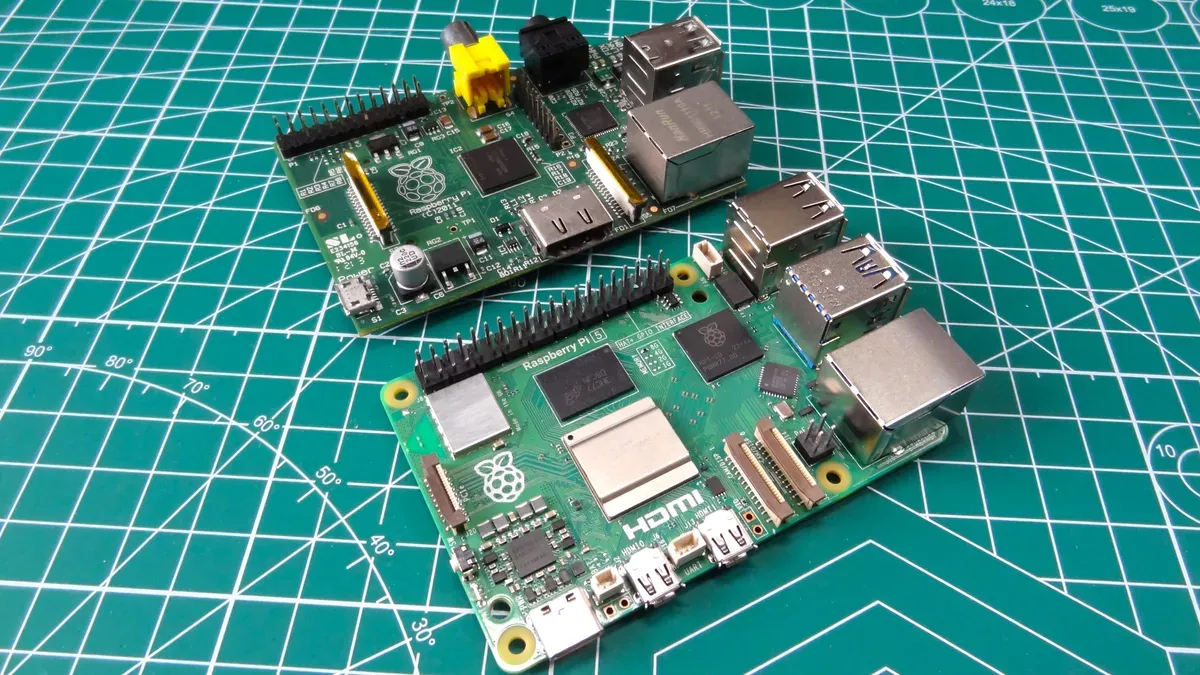
After nearly a decade, the Standard Performance Evaluation Corporation, or SPEC, is releasing a new version of its widely-published SPEC CPU benchmark. SPEC CPU 2026, as you probably expect, modernizes the workloads included in the suite and adds even more benchmarks, more than doubling the codebase of SPEC CPU 2017. Critically, however, the suite was also designed with portability in mind, and can run on everything from a Raspberry Pi and a Windows-on-ARM laptop up to the fleets of servers the benchmark is designed for.
Go deeper with TH Premium: CPU
For enthusiasts, the two SPEC benchmarks that are thrown around a lot are SPECviewperf for graphics performance and SPEC Workstation, the latter of which we run in our CPU reviews. SPEC CPU is focused on the CPU, but it’s a suite targeted toward servers more than the best CPUs for gaming.
The updated suite includes 52 tests, nine more than what was included in SPEC CPU 2017, with more than twice as many lines of code. That’s a big part of what SPEC does. The suite uses real applications, but those applications are modified in various ways to fit the benchmark suite. One of the main focuses, according to SPEC’s technical paper, is ensuring deterministic results from each application, which means removing sources of non-determinism. As an example, the technical paper describes replacing the std::sort function in C++ with std::stable_sort.
“The fundamental goal is to ensure that the benchmark executes an identical amount of user-space work across any compliant system, and produces an identical result on every run within a given tolerance. To achieve this level of rigor, each candidate benchmark undergoes a series of modifications,” the technical paper reads.
In addition to removing non-determinism, SPEC modifies applications to be portable, ensuring everything is written in C, C++, or Fortran, and it focuses on user-space execution. According to the paper, SPEC’s target was at least 95% of execution time happening within the user-space code of the benchmark, minimizing the influence of the operating system.
SPEC spent a little over three years (Feb. 2020 to Mar. 2023) gathering candidates for the new suite. It came out with 70 candidate applications, 38 of which made it through SPEC’s CPU committee. Again, determinism made a difference when choosing the applications that made it through, as the committee tried to avoid “minor architectural or compiler differences [that] can lead to ‘short-cuts’ to the solution.” There are a few specific applications that made it deep in evaluation but ultimately weren’t included, the technical paper clarifies.
Key among them were modern AI workloads like llama.cpp and whisper.cpp. The technical paper says “restricting them to portable C++ codepaths (with intrinsics removed) caused a fundamental divergence from their real-world behavior,” ultimately disqualifying them. SPEC also avoided the AV1 and Opus codecs to avoid any claims of bias given SPEC committee members — the committee is comprised of representatives from Intel, AMD, IBM, Arm, Nvidia, Dell, HPE, Ampere, and others.
SPEC CPU 2026 benchmark list
Here’s a high-level overview of how SPEC CPU works. The full test suite looks at four metrics: integer speed, integer throughput, floating point speed, and floating point throughput. The two speed metrics combined give you SPECspeed, while the two throughput metrics give you SPECrate. SPECspeed is probably most familiar to Tom’s Hardware readers. It’s looking at a single application running on a single system, and providing that application with all available resources. SPECrate, on the other hand, is focused more on servers, measuring total throughput when multiple copies of the same application are running simultaneously.
Each suite has its own list of benchmarks, but some applications are reused across different suites — for instance, GCC and LLVM compilation tests are available in both SPECrate and SPECspeed Integer suites. When choosing where to place benchmarks, SPEC segments applications with over 10% floating point instructions into the FP category. Some applications fell into a self-described “gray zone” between 1% and 10% floating point instructions, and SPEC categorized them on a case-by-case basis based on the applications “primary computational purpose and its established reputation within its user community.”
Swipe to scroll horizontally
Test Name | Language | Description |
706.stockfish_r | C++ | Chess engine |
707.ntest_r | C++ | Othello engine |
708.sqlite_r | C | SQLite compiler and database |
710.omnetpp_r | C++, C | Network and queuing modeling |
714.cpython_r | C | Python interpreter |
721.gcc_r | C++, C | Code compilation with GCC |
723.llvm_r | C++, C | Code compilation with LLVM |
727.cppcheck_r | C++ | C/C++ static code analysis |
729.abc_r | C++, C | Sequential logitech synthesis and formal verification for EDA |
734.vpr_r | C++, C | Versatile Place and Route in CAD for FPGA research |
735.gem5_r | C++, C | Simulation model for computer architectures |
750.sealcrypto_r | C++, C | Security test with Microsoft SEAL open-source homomorphic encryption library |
753.ns3_r | C++ | Network event simulator |
777.zstd_r | C | Data compression/decompression |
Swipe to scroll horizontally
Test Name | Language | Description |
801.xz_s | C++, C | Data compression |
807.ntest_s | C++ | Othello engine |
817.flac_s | C++, C | Audio encoding with lossless FLAC codec |
821.gcc_s | C++, C | Code compilation with GCC |
823.llvm_s | C++, C | Code compilation with LLVM |
827.cppcheck_s | C++ | C/C++ static code analysis |
829.abc_s | C++, C | Sequential logitech synthesis and formal verification for EDA |
834.vpr_s | C++, C | Versatile Place and Route in CAD for FPGA research |
835.gem5_s | C++, C | Simulation model for computer architectures |
838.diamond_s | C++, C | Sequence aligner for protein and translated DNA searches |
846.minizine_s | C++, C | Constraint programming |
853.ns3_s | C++ | Network event simulator |
854.graphn500_s | C | Graph analysis |
Swipe to scroll horizontally
Test Name | Language | Description |
709.cactus_r | C++, C | Astrophysics |
722.palm_r | Fortran | Atmospheric science |
731.astcenc_r | C++ | Adaptive Scalable Texture Compression (ASTC) test |
736.ocio_r | C++ | OpenColorIO color management tool |
737.gmsh_r | C++, C | Finite element mesh generation |
748.flightdm_r | C++ | Flight dynamics modeling |
749.fotonik3d_r | Fortran | Computational electromagnetics |
765.roms_r | Fortran | Regional ocean modeling |
766.femflow_r | C++ | Fluid dynamics |
767.nest_r | C++ | Neuroscience simulator to spike neural networks |
772.marian_r | C++ | Neural machine translation framework |
782.lbm_r | C | Computational fluid dynamics with Lattice Boltzmann method |
Swipe to scroll horizontally
Test Name | Language | Description |
800.pot3d_s | Fortran | Solar physics |
803.sph_exa_s | C++ | Smoothed Particle Hydrodynamics |
809.cactus_s | C++, C | Astrophysics |
811.tealeaf_s | C | High-energy physics |
816.nab_s | C | Molecular modeling |
820.cloverleaf_s | Fortran | Hydrodynamics |
822.palm_s | Fortran | Atmospheric science |
849.fotonik3d_s | Fortran | Computational electromagnetics |
857.namd_s | C++ | NAMD molecular dynamics simulator |
865.roms_s | Fortran | Regional ocean modeling |
867.nest_s | C++ | Neuroscience simulator to spike neural networks |
872.marian_s | C++ | Neural machine translation framework |
881.neutron_s | C | Physics simulator for nuclear reactors |
Initial SPEC CPU 2026 results
SPEC has dozens of initial results for SPEC CPU 2026, contributed from a variety of brands including AMD, Intel, Dell, Lenovo, Supermicro, HPE, and even some SPEC contributors. Understandably, most results are for servers, and we can’t cover all of them here. However, you can browse the full results directly from SPEC if you’re interested, and we’ll highlight a few interesting systems.
Before getting to the results, SPEC uses its own score to rate each system, with either base or peak (or both) numbers for each suite. The final score is a geomean of the ratios for each test, which SPEC calculates by dividing the time it takes to complete a workload on a reference system by the time it takes to complete the workload on the tested system.
Swipe to scroll horizontally
System | Copies | # of CPUs | Results (Base) | Results (Peak) |
Raspberry Pi 5 Model B Rev 1.1 | 4 | 1 | 3.72 | 3.93 |
Nvidia DGX Spark ( | 1 | 1 | 9.7 | N/A |
Nvidia DGX Spark (GB10) | 20 | 1 | 75 | N/A |
MINISFORUM EliteMini AI370 (AMD Ryzen AI 9 HX 370) | 1 | 1 | 3.72 | 3.93 |
ThinkSystem HR330A (Ampere eMAG 8180) | 32 | 1 | 22.4 | 23.1 |
ProLiant DL145 Gen11 (AMD EPYC 8534P) | 64 | 1 | 173 | 173 |
PowerEdge XR8720t (Intel Xeon 6776P-B) | 144 | 1 | 285 | 293 |
PowerEdge R7625 (AMD EPYC 9754) | 256 | 2 | 662 | 662 |
ProLiant Compute DL580 Gen12 (Intel Xeon 6788P) | 688 | 4 | 1,180 | 1,180 |
Starting with a sampling of floating point throughput results, there are a handful of consumer devices in the mix with the server crowd, including a Raspberry Pi, Nvidia DGX Spark, and even a mini PC from Minisforum. The highest performer here is from HPE with the ProLiant Compute DL580 Gen12, which packs four Intel Xeon 6788P CPUs, giving the system a total of 688 threads to play with.
Swipe to scroll horizontally
System | Threads | # of CPUs | Results (Base) | Results (Peak) |
Hyper A+ Server AS -1116CS-TN (AMD EPYC 9375F) | 32 | 1 | 9.19 | 9.19 |
ThinkSystem HR330A (Ampere eMAG 8180) | 32 | 1 | 1 | 1.04 |
PowerEdge R770 (Intel Xeon 6732P) | 64 | 2 | 8.73 | 9.22 |
ThinkSystem SR665 V3 (AMD EPYC 9575F) | 128 | 2 | 16.9 | 16.9 |
PowerEdge R7625 (AMD EPYC 9654) | 192 | 2 | 13.2 | 13.2 |
ProLiant DL385 Gen11 (AMD EPYC 9754) | 256 | 2 | 13 | 13 |
Hyper A+ Server AS -2126HS-TN (AMD EPYC 9965) | 384 | 2 | 17.7 | 17.7 |
PowerEdge M7725 (AMD EPYC 9755) | 256 | 2 | 18.6 | 18.6 |
Onto the speed results for the floating point suite, you can see the consumer systems disappear here. The lowest result here came from the Ampere eMAG 8180, while the highest came from Dell’s PowerEdge M7725 packing two 96-core AMD EPYC 9755 chips. Speed results look at a single system running a single application, so we’ve replaced the “copies” column with “threads.”
Swipe to scroll horizontally
System | Copies | # of CPUs | Results (Base) | Results (Peak) |
Raspberry Pi 5 Model B Rev 1.1 | 4 | 1 | 4.8 | 4.89 |
MINISFORUM EliteMini AI370 (AMD Ryzen AI 9 HX 370) | 1 | 1 | 5 | N/A |
Nvidia DGX Spark (GB10) | 1 | 1 | 5.97 | N/A |
Nvidia DGX Spark (GB10) | 20 | 1 | 66.6 | N/A |
MacBook Pro 16 (M5 Pro) | 18 | 1 | 82.7 | N/A |
PowerEdge R570 (Intel Xeon 6787P) | 172 | 1 | 329 | 346 |
Cisco UCS X215c M8 (AMD EPYC 9575F) | 256 | 2 | 630 | 630 |
ThinkSystem SD535 V3 (AMD EPYC 9965) | 384 | 1 | 626 | 626 |
PowerEdge M7725 (AMD EPYC 9965) | 768 | 2 | 1,270 | 1,270 |
Moving to integer results, the swath of consumer systems shows back up, alongside a MacBook Pro 16 with the M5 Pro, which performs surprisingly well given the hardware under the hood. At the top of the pile is Dell’s PowerEdge M7725 with dual AMD EPYC 9965 CPUs, giving the system a total of 768 threads. It’s worth highlighting that most results use a vendor-specific compiler rather than an open-source compiler, so you can see differing results with similar hardware. SPEC CPU 2026 ships as source code, and you need to disclose your compiler when reporting results.
Swipe to scroll horizontally
System | Threads | # of CPUs | Results (Base) | Results (Peak) |
MacBook Pro 16 (M5 Pro) | 18 | 1 | 3.9 | N/A |
Hyper A+ Server AS -1116CS-TN (AMD EPYC 9375F) | 64 | 1 | 5.14 | 5.14 |
PowerEdge R770 (Intel Xeon 6732P) | 128 | 2 | 5.87 | 5.92 |
ThinkSystem SR665 V3 (3.30 GHz,AMD EPYC 9575F) | 256 | 2 | 7.74 | 7.74 |
ProLiant Compute DL580 Gen12 (Intel Xeon 6788P) | 344 | 4 | 6.45 | 6.45 |
PowerEdge R770AP (Intel Xeon 6980P) | 512 | 2 | 7.6 | N/A |
Hyper A+ Server AS -2126HS-TN (AMD EPYC 9755) | 512 | 2 | 8.26 | 8.26 |
Finally, here’s a sample of the integer results measuring the speed of a single system. Throughput isn’t the focus here, so you see some systems go down when packing in more chips (and therefore more threads), like the ProLiant Compute DL580 from HPE. At the top of the pile is a server from Supermicro, the Hyper A+ Server AS -2126HS-TN, packing dual AMD EPYC 9755 CPUs for a total of 512 threads.
Following the release of SPEC CPU 2026, there will be a cooling period before companies can publish more results. We’ll see more results on June 4, 2026. On August 11, SPEC will require SPEC CPU 2017 results to also have results with 2026, and on November 3, SPEC will phase out CPU 2017 entirely.
Until November 3, users with a SPEC CPU 2017 license can upgrade to the new suite for $2,000. A new license is $3,000. Non-profit organizations can pick up the suite at a discount for $750, while certain academic institutions can get a license for free.

Follow Tom's Hardware on Google News, or add us as a preferred source, to get our latest news, analysis, & reviews in your feeds.