
惯性聚合 高效追踪和阅读你感兴趣的博客、新闻、科技资讯
阅读原文 在惯性聚合中打开

推荐订阅源

Threat Intelligence Blog | Flashpoint
T
Troy Hunt's Blog
Scott Helme
Scott Helme
T
Threat Research - Cisco Blogs
T
Tenable Blog
L
LINUX DO - 热门话题
V
Visual Studio Blog
I
Intezer
Blog — PlanetScale
Blog — PlanetScale
Cisco Talos Blog
Cisco Talos Blog
A
Arctic Wolf
C
Cyber Attacks, Cyber Crime and Cyber Security
F
Fortinet All Blogs
aimingoo的专栏
aimingoo的专栏
Know Your Adversary
Know Your Adversary
CTFtime.org: upcoming CTF events
N
Netflix TechBlog - Medium
SecWiki News
SecWiki News
I
InfoQ
Microsoft Security Blog
Project Zero
Project Zero
W
WeLiveSecurity
Microsoft Azure Blog
A
About on SuperTechFans
Recorded Future
Recorded Future
Cyber Security Advisories - MS-ISAC
Vercel News
Vercel News
S
Securelist
Spread Privacy
Spread Privacy
L
LangChain Blog
云风的 BLOG
云风的 BLOG
G
Google Developers Blog
MongoDB | Blog
MongoDB | Blog
Google DeepMind News
Recent Commits to openclaw:main
D
Darknet – Hacking Tools, Hacker News & Cyber Security
C
CERT Recently Published Vulnerability Notes
罗磊的独立博客
K
KPMG report finds enterprise disconnect between AI and its ROI | CIO
The Last Watchdog
The Last Watchdog
Attack and Defense Labs
博客园 - 司徒正美
Help Net Security
Help Net Security
L
Lohrmann on Cybersecurity
人人都是产品经理
人人都是产品经理
Forbes - Security
Forbes - Security
Hacker News - Newest:
Hacker News - Newest: "LLM"
PCI Perspectives
PCI Perspectives
博客园 - 【当耐特】
T
Tor Project blog

Latest Entertainment News, Movies, Celebrity News & Updates | The HinduBusinessLine

Mumbai film festival to showcase 346 films from 46 countries; in tribute to David Attenborough, 2 of his movies will also be screened US Justice Department clears Paramount's acquisition of Warner Brothers At India’s supper clubs, the real menu item is community TN CM Vijay visits Mookambika Temple in Karnataka, offers prayers Score goals, save more: Supplyco launches FIFA World Cup-themed discounts Indian-American co-founder’s drone boat powers historic US rescue mission in Hormuz Blenders Pride's sensory dining push expands across multiple cities CCI investigates Mrs India Inc over restrictive beauty pageant contracts JioStar plans full shift to AI-generated shows after Mahabharat success Manipuri film ‘Boong’ emerges big winner at New York Indian Film Festival, takes home 3 awards Veteran playback singer Suman Kalyanpur passes away at 89 Eateries, theatres, airlines pad up for IPL final Karan Dayanidhi Maran launches micro-drama platform KadhaiShorts President Murmu confers Padma awards on Dharmendra, N Rajam and others PM Modi and Swedish PM exchange Tagore-themed gifts during Sweden visit Netherlands returns 11th-century Chola copper plates to India in historic handover JioStar files legal action against Zee over Bollywood film broadcast rights From Hanle to Nubra, Ladakh prepares for cosmic showcase Kannada actor Dileep Raj dies at 47 after heart attack JD Vance memoir reveals how he fell deeply in love with Usha Netflix spent $135 billion on films, TV shows in past 10 years David Attenborough turns 100 amid global tributes and BBC celebrations Sentinels of Simari: One year after Sindoor, villagers try to reclaim narrative of normalcy Extinct bluebuck may return as scientists advance gene-editing project Direct rail service to Kashmir promises faster travel, economic boost 77 per cent of Indians confident about summer travel, shows Skyscanner Smarter Summer report The Hormuz digital chokepoint: How does Iran war threaten subsea cables? Legendary Indian photographer Raghu Rai passes away at 83 Cretaceous “Kraken” octopus discovered as apex predator of ancient seas Sachin Tendulkar turns 53, celebrates birthday with family and fans Assembly polls: Trinamool, BJP replace candidates in Malda and Murshidabad amid voter deletion row Fake disease that fooled Internet and how AI helped legitimise it PM Modi’s jhalmuri video crosses 100 million views, sparks search surge 500 years ago, this day — a pivotal moment in Indian history SC refuses to interfere with Bombay HC verdict lifting stay on fraud classification proceedings against Anil Ambani SC asks UP to consider plea flagging risk of tetrapack liquor in educational campuses TIME100 2026: Ranbir Kapoor, Sundar Pichai among world’s most influential West Asia conflict, security concerns weigh on Asia’s largest tulip garden footfall Actor Shriyam Bhagnani joins investor panel of Kal Ke Krorepati Bling meets brink: Iran war casts shadow over luxury watch industry Meet the man with 138 degrees: Dashrath Singh, an ex-serviceman, earns latest qualification from IGNOU IPL 2026: Ad volume witness marginal dip in first 13 matches Steven Spielberg’s Jaws returns to theatres in 4K restoration on April 17 Anant Ambani backs temple restoration, unveils elephant welfare plan at Guruvayur Netflix debuts new 'Playground' gaming app for kids Digital addiction concern grows as CDSW launches to promote safe tech use in India Ad volumes jump 10% in IPL’s 19th season: Report AI is rewiring Bollywood, the world's most prolific film industry Artemis II mission: Crew clicks dazzling Earth images 90,000 miles away How benne dosa boom reshaping India’s QSR market? How Iranian hackers pose threat to US critical infrastructure India's ‘Mounjaro brides’: Weight-loss injections become part of pre-wedding prep How AI-Generated misinformation is distorting conflict coverage Raja Ravi Varma painting sets ₹167 crore record at Saffronart auction India’s villages go digital - Rs 3 lakh crore rural funds processed virtually Dhurandhar: The Revenge makes ₹1,365 crore in 11 days of worldwide release IPL 2026 ad rates go up by 25-30%, led by Smart TV slots Culture Ministry and YouTube partner to train folk artists, boost digital reach Western Railway explores film shooting on scenic Bilimora-Waghai narrow-gauge line Presumption that women officers had no long career in the Armed Forces led to unequal playing field for them: SC judgment Dhurandhar: The Revenge grosses ₹761 crore worldwide in opening weekend Chuck Norris dies at 86: martial arts legend and ‘Walker, Texas Ranger’ star passes away India’s whisky boom: Why Pernod Ricard is betting big on premiumisation Work from home, avoid air travel to deal with higher energy prices, IEA says All eyes on Dhurandhar 2, with strong advance bookings Rapidly developing Naidupeta emerges as a key industrial node in southern AP Kashmir sees early signs of tourism revival as tulip, almond gardens draw crowds In-flight menus tweaked: Dosas out, upma in as CAFS flight kitchen cuts LPG usage Fuel Crisis: Sri Lanka announces 4-day week for public sector Music Academy Madras announces annual music and dance awards for 2026 Sportstar Aces Awards celebrate women’s cricket and honour athletes shaping Indian sports Oil, petrol, diesel: How crude becomes fuel. Explained Coming soon, AI-powered Kamba Ramayanam T20 WC final: Varanasi weavers craft cricket-themed Banarasi sarees for Team India Beyond the canvas: The women shaping Delhi’s Art market AI, West Asia conflict fuelling market turbulence, uncertainty: Raghuram Rajan Bank holidays in March 2026: Full state-wise list of closures Arjun Tendulkar’s pre-wedding celebrations turn star-studded affair Cricket fever fuels travel demand as tourists flock to cities playing host to match The Next Wave of Indian-Origin Leaders in Big Tech We don’t share user data, WhatsApp tells Supreme Court Mamaearth bets on Bollywood’s ‘Badman’ Gulshan Grover to push natural lip balm Calvin Christ from Mastercard wins the New Delhi regional round of The Hindu businessline Cerebration Corporate Quiz 2026 Calvin Christ wins Hindu businessline Cerebration Corporate Quiz 2026 as participation doubles to 6,000 CaratLane takes Indian jewellery at New York Fashion Week for first time AI art valuation tools transform pricing transparency but human expertise remains key Abundantia Entertainment inks partnership with invideo to launch AI-driven film production studio Invideo, Google Cloud partner to integrate AI into long-form filmmaking Why Sigmund Freud is making a comeback in the age of authoritarianism, AI Gore Verbinski’s new film mixes comedy and sci-fi to warn about AI apocalypse Elephant trunk whiskers give unique sense of touch, study reveals 2,000-year-old Tamil-Brahmi inscriptions found in Egypt reveal ancient Tamil traders ComicCon returns to Chennai for a weekend celebrating fandom 'Dhurandhar' tops Netflix global chart, ranks No. 1 in Pakistan ‘Largest ice cream social party’ in the world: Arun Icecreams sets Guinness Record Uttar Pradesh partners BVG India to develop eco-tourism destination near Dudhwa Wonderla Chennai earns ₹12 crore in first month with strong visitor turnout Amazon AI Studio to accelerate movie and TV production while preserving human creativity We will not allow you to share a single word of people’s personal data, SC tells WhatsApp, Meta A capex focus and a change in fiscal anchor
Why 40% of people are avoiding news, according to a psychologist
By The Conversation · 2026-05-26 · via Latest Entertainment News, Movies, Celebrity News & Updates | The HinduBusinessLine
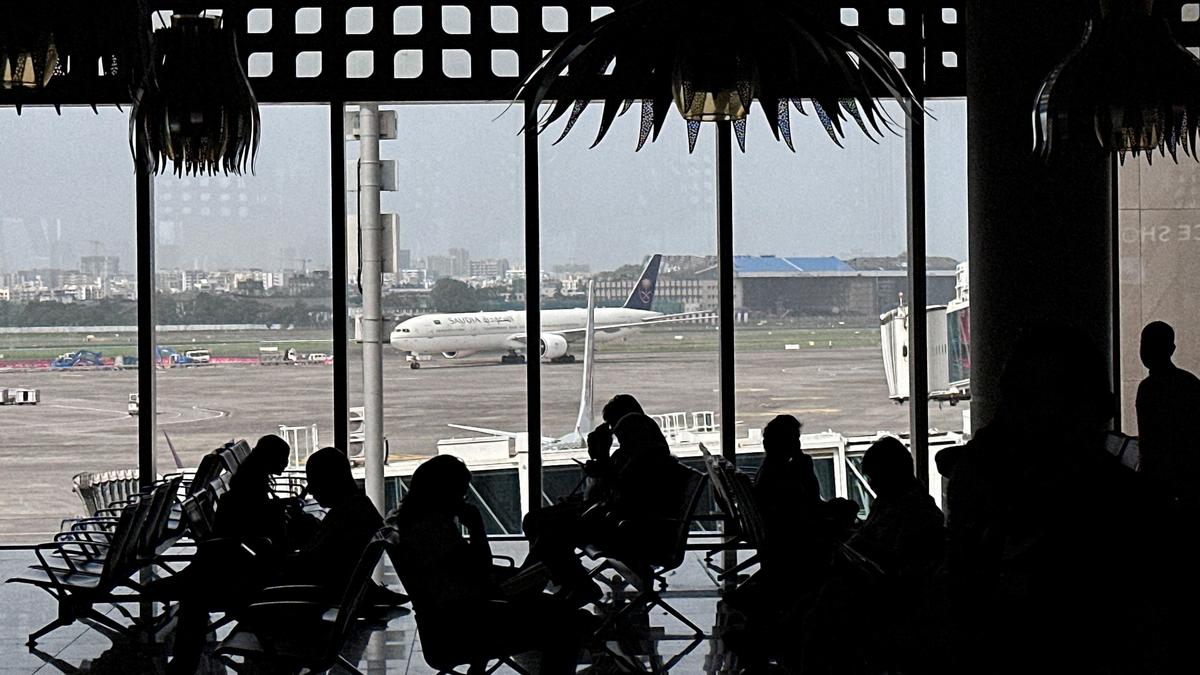
Globally, 40% report they at least sometimes or often avoid the news, the highest figure ever recorded. People shared consistent reasons for this: the news put them in a bad mood, they felt overwhelmed and powerless to act

Globally, 40% report they at least sometimes or often avoid the news, the highest figure ever recorded. People shared consistent reasons for this: the news put them in a bad mood, they felt overwhelmed and powerless to act | Photo Credit: FRANCIS MASCARENHAS

During several recent conversations, people have told me that they’ve stopped checking their phones in the morning. Not because nothing was happening, but because everything was. They described the feeling as standing under a waterfall of perpetual bad news.

This experience is far from an isolated one. According to Reuters Institute’s 2025 Digital News Report, 69 per cent of Canadians at least occasionally avoid the news now.

Globally, 40 per cent report they at least sometimes or often do the same, the highest figure ever recorded. People shared consistent reasons for this: the news put them in a bad mood, they felt overwhelmed and powerless to act.

As a researcher in developmental psychology, focusing on social development and psychological well-being, I argue that news fatigue is not laziness, weakness or a generational decline in civic interest. It’s the predictable response of a human brain meeting an environment it was never designed to navigate.

Wired for bad news

Long before smartphones or even the printing press, our cognitive architecture was shaped by a single problem: stay alive long enough to reproduce. Our ancestors whose attention drifted past the rustle in the grass left fewer descendants than those who froze, looked and listened.

The brain that paid attention to threats was the brain that survived.

This is the foundation of what psychologists call the negativity bias, one of the most replicated findings in cognitive science. Across decades of research, the human mind has been shown to weigh negative information more heavily than positive, attend to it faster and remember it longer.

A predator nearby mattered more than a beautiful sunset. The cost of missing a real threat was death, while the cost of overreacting was a few minutes of wasted vigilance. The asymmetry made this bias adaptive.

Here is the problem: the human brain has not changed since then. We are the same species as we were thousands of years ago. What’s changed is the size of the world it’s asked to scan for threats.

Scanning the whole world

For most of human history, the threats our nervous system processed were local. A neighbouring tribe. A drought. The illness of a child we personally knew. Information about distant places would barely arrive, and if it did, it was mainly irrelevant.

In 2026, the same neurological system is being asked to absorb a war in one region, a financial shock in another, a climate disaster in a third and a violent crime in a fourth, all before lunchtime.

A study published in the scientific journal Nature Human Behaviour examined more than 105,000 real news headlines viewed nearly six million times. Each additional negative word increased click-through rates, while positive words had the opposite effect.

Recent studies suggest people around the world demonstrate measurably stronger physiological responses to negative news than to positive news. The body is reacting before the mind has decided whether the threat is relevant.

Some researchers have introduced a clinical framework for what happens in this instance called Problematic News Consumption (PNC) — a pattern of news engagement that results in preoccupation, dysregulation and disruption to daily functioning. In their 2022 study, the researchers found that 17 per cent of American adults qualified as having severe levels of PNC. Among that group, 61 per cent reported feeling unwell quite a bit or very much, compared with six per cent of those who didn’t.

For minority populations, news fatigue may be even more consequential.

Repeatedly witnessing harm directed at our own groups, even when we’re not the immediate target, can have a significant psychological impact on people from the same group affiliation. For racialised communities, such as immigrants, the cognitive load could be even heavier, and the option to simply stop watching is much harder to exercise when the news is about their country of origin.

Looking away is not the fix

What’s the solution to news fatigue? Well, it’s not avoidance. A democracy depends on informed citizens.

Many adults already cite the spread of misleading information as a major source of stress. Withdrawing from accurate, trustworthy information only deepens the problem. We’re wired to pay more attention to bad news, and that kind of content will find its way to us one way or another.

The fix is to manage the consumption and the sources.

Several approaches can help manage news fatigue and protect mental health. Containing news consumption to defined windows of time reduces the sense of being overwhelmed. Choosing depth over volume also matters: one carefully reported long-form article will inform you better than bursts of random, unreliable and emotionally loaded posts on Instagram.

There is also value in distinguishing between information and action — research on perceived control and stress consistently shows that the gap between awareness and agency is one of the strongest predictors of psychological distress. Identifying what you can actually do about what you read in the news, however small, regulates that response.

Finally, be wary of “rage bait” — intentionally provocative messages or content designed to boost engagement on social media platforms by eliciting negative reactions. Recognising that certain content creators want to provoke rather than reflect reality creates useful cognitive distance.

The news will not become less “heavy.” But our relationship with it can become more deliberate. Our brains were not built for this scale of input. They were, however, built to learn to adapt.

(By Ali Jasemi, Wilfrid Laurier University)

Published on May 26, 2026