
惯性聚合 高效追踪和阅读你感兴趣的博客、新闻、科技资讯
阅读原文 在惯性聚合中打开

推荐订阅源

cs.AI updates on arXiv.org
V
Visual Studio Blog
The GitHub Blog
The GitHub Blog
Apple Machine Learning Research
J
Java Code Geeks
T
Tailwind CSS Blog
大猫的无限游戏
大猫的无限游戏
Jina AI
Jina AI
OSCHINA 社区最新新闻
OSCHINA 社区最新新闻
Hugging Face - Blog
Hugging Face - Blog
WordPress大学
WordPress大学
宝玉的分享
宝玉的分享
freeCodeCamp Programming Tutorials: Python, JavaScript, Git & More
罗磊的独立博客
人人都是产品经理
人人都是产品经理
H
Heimdal Security Blog
Last Week in AI
Last Week in AI
博客园 - 【当耐特】
Cyberwarzone
Cyberwarzone
Google DeepMind News
雷峰网
雷峰网
Hacker News: Ask HN
Hacker News: Ask HN
Webroot Blog
Webroot Blog
Microsoft Azure Blog
MyScale Blog
MyScale Blog
A
About on SuperTechFans
V2EX - 技术
V2EX - 技术
小众软件
小众软件
博客园 - Franky
博客园 - 司徒正美
P
Privacy International News Feed
爱范儿
爱范儿
U
Unit 42
博客园 - 叶小钗
The Hacker News
The Hacker News
C
Check Point Blog
奇客Solidot–传递最新科技情报
奇客Solidot–传递最新科技情报
Simon Willison's Weblog
N
News and Events Feed by Topic
D
Docker
T
Threatpost
MongoDB | Blog
MongoDB | Blog
让小产品的独立变现更简单 - ezindie.com
H
Help Net Security
L
LINUX DO - 最新话题
Security Latest
Security Latest
T
The Exploit Database - CXSecurity.com
S
SegmentFault 最新的问题
A
Arctic Wolf
Spread Privacy
Spread Privacy

Latest from Live Science in News

Artemis II heat shield aced its blistering reentry, ghostly underwater photo reveals Scientists invent artificial neurons that 'talk' to real brain cells, paving way to better brain implants 'What are the odds': Superbright comet and exploding fireball meteor form near-perfect X over European castle Meet AGI CPU — a specialist processor that engineers believe will power the next wave of AI Egyptian mummy has part of the 'Iliad' in its abdomen, archaeologists discover Artemis moon landing could face long delay while NASA waits for next-generation spacesuits Gene therapy improves hearing in 90% of patients with inherited deafness in largest trial of its kind Oil spills from Iran war may contaminate water and food supply and threaten protected wildlife refuge NASA's Curiosity rover finds a surprising number of giant 'dragon scales' littered across Mars Watch an AI-powered table tennis robot beat elite players NASA shuts off another Voyager 1 instrument as humanity Florida is facing its most intense drought in 15 years. Here's how it got so bad and how long it will last. Neanderthal toddlers grew faster than modern humans, probably because of the harsh environment they evolved in 'Nations need to prepare now': Key Atlantic ocean current is much closer to collapse than scientists thought New blood test aims to spot liver scarring before it paves the way to cancer A giant 'shadow' has been creeping across Mars for 50 years — and scientists aren't sure why Bruce the parrot is missing his upper beak —‬ but that hasn't stopped him from becoming an undefeated… Scientists identify main cause of extreme nausea and vomiting in pregnancy Naked mole rats wage bloody wars of succession to choose a new queen — but one colony did something scientists… Lyrid meteor shower 2026: See spring's first rain of 'shooting stars' peak in moonless skies $3 million prize goes to duo whose research led to first sickle cell CRISPR therapy 700-year-old mummy from Bolivia contains earliest confirmed evidence of strep throat bacteria in the Americas New pain-relief opioid could be much less addictive than morphine, rodent study finds Experimental drug doubles one-year survival in pancreatic cancer Science news this week: Physicists witness faster-than-light darkness pinpricks, humans are still evolving, and some… Archaeologists discover perfectly circular ancient Egyptian temple that may have been used for sacred water rituals 2 supermassive black holes may collide 100 years from now ‪—‬ and Earth would feel it Anglo-Saxon burial holds an older sister cradling her little brother after they both died 1,400 years ago, possibly of… Colorado River may have pooled and spilled over to form the Grand Canyon, solving a long-standing mystery ‪—‬… 'We all screamed when it happened': Bright-green fireball meteor caught exploding over famous Viking raid site… Northern lights may be visible from several US states Friday and Saturday as giant hole opens up in sun Hackers used AI to steal hundreds of millions of Mexican government and private citizen records in one of the largest… The first black hole ever discovered is spewing 'dancing jets' at half the speed of light Stephen Hawking's black hole information paradox could be solved — if the universe has 7 dimensions 'Something's missing': Most thorough-ever study of the cosmos proves we still can't explain how the… 'Human evolution didn't slow down; we were just missing the signal': Large DNA study reveals natural selection led to more redheads and less male-pattern baldness New study confirms lobsters feel pain, driving scientists to call for a ban on boiling them alive This humanoid robot does all your housework for you ‪—‬ and its makers say it Ancient process that created rare earth elements discovered — and it could help us locate desperately needed deposits Strange mammal ancestor laid huge, leathery eggs —‬ and it was key to surviving the world 73 moon landings? NASA Triassic croc relative from Ghost Ranch, New Mexico finally identified after nearly 80 years in museum basement There were Physicists witness pinpricks of darkness moving faster than the speed of light ‪—‬ without breaking the laws of relativity Stone Age tombs in Scotland reveal 'webs of descent' among male relatives 'Oslo patient' likely cured of HIV after getting stem cell transplant from his brother, who is genetically… Antiseptic-tolerant germs spread through the air in hospitals, early study hints Homo erectus' tools include stunning geodes and fossils, possibly as a way to connect with the cosmos, study finds 'Really, really weird': Physicists entangle two moving atoms for the first time, validating 'spooky'… www.livescience.com Sperm quality is at its peak in the summer, study finds Scientists are trying to build a vaccine that works against almost any respiratory pathogen  — here's… Ancient Egyptian stone monument depicting a Roman emperor as a pharaoh discovered in Luxor AI for breakup texts? How 'sycophantic' chatbots are messing with our ability to handle difficult social… Science news this week: Artemis II splashes down, the world's fattest parrot bounces back, and the Shroud of Turin… 10 Artemis II photos that define humanity's return to the moon 'I'm at a loss for words': Artemis II mission comes home to joy and cheers after historic 10-day mission There are 'reasons to be confident' about faulty Artemis II heat shield ahead of 25,000 mph reentry, space… The moon is green and brown? Why scientists are already excited about Artemis II's historic lunar photos 'More questions than answers': Experts baffled by Alaskan mammal-eating orcas spotted near Seattle Changing 'just one DNA letter' in female mice triggers growth of male genitalia 'Welcome home, Integrity': Artemis II crew return to Earth after 'bullseye landing' caps historic… AI war games almost always escalate to nuclear strikes, simulation shows Ancient Korean society practiced human sacrifice and high inbreeding, researchers find There's an issue with the Artemis II heat shield, but NASA isn't worried. Here's why. Chimpanzees in Uganda are locked in a deadly 'civil war' after their group split apart — and scientists… James Webb telescope spots 'stingray' galaxy system that could solve the mystery of 'little red… 'RIP, Comet MAPS': Watch the superbright sungrazer become a 'headless wonder' after being ripped… Scientists create new type of encryption that protects video files against quantum computing attacks Western states face above-normal wildfire threats this summer. New maps reveal which areas are most at risk. Keratin may act as a 'brake' for skin inflammation, pointing to potential treatments 'No one knows what they are': Researchers discover new type of cell that's seen only during pregnancy 16th-century silver coin discovered near Strait of Magellan marks the spot of a doomed Spanish colony How to see Comet PanSTARRS as it brightens in the night sky this week Diagnostic dilemma: Woman's 'biologically implausible' infection led her to sneeze 'worms' out… DNA reveals ancestry of man buried in Stone Age monument in Spain, but his religion remains a mystery 'So much magic': Artemis II shares first images from the far side of the moon, including new… AI 'mirages' mean tools used to analyze medical scans could fabricate their findings World's fattest parrot — on the verge of extinction 30 years ago — has record-breaking breeding season Physicists moved volatile antimatter by truck for the first time ever — paving the way for groundbreaking new… The Artemis II astronauts have just flown farther from Earth than any humans in history Artemis II moon flyby begins: How to watch and what to know AI-written code can beat humans at biomedical analysis, some studies find. What does that mean for the field? We went to Finland to hear about the new 'sand battery' that will turn stored renewable energy back into power… The hungriest black holes in the universe are running out of food, survey of 8,000 cosmic monsters reveals Antarctica hides huge caches of gold, silver, copper and iron. As the ice melts, countries may race to harvest them. Diabetes rates are lower in high-altitude environments ‪‪—‬ and scientists may have discovered why Shroud of Turin, claimed to be Jesus' burial cloth, contaminated with carrot and red coral DNA Science news this week: Artemis II lifts off, diabetes cured in mice, and smog in China shapes Arctic storms Fossil site in China reveals bevy of complex creatures lived prior to the Cambrian explosion, including a… Cheap, decades-old transplant drug delays full onset of type 1 diabetes www.livescience.com Homo habilis is the earliest named human. But is it even human? Scientists mapped all the nerves of the clitoris for the first time Rare 'sungrazer' comet MAPS will shine superbright on Saturday ‪—‬ if it survives a dangerous… IBM quantum processor achieves highest fidelity calculations for the longest period of time on record A new tweak to Einstein's relativity could transform our understanding of the Big Bang Artemis II officially leaves Earth In photos: Artemis II Ancient children's teeth reveal a syphilis-like disease was spreading in Vietnam 4,000 years ago
New data center will be partially powered by human brain cells for the first time
Carly Page · 2026-04-28 · via Latest from Live Science in News
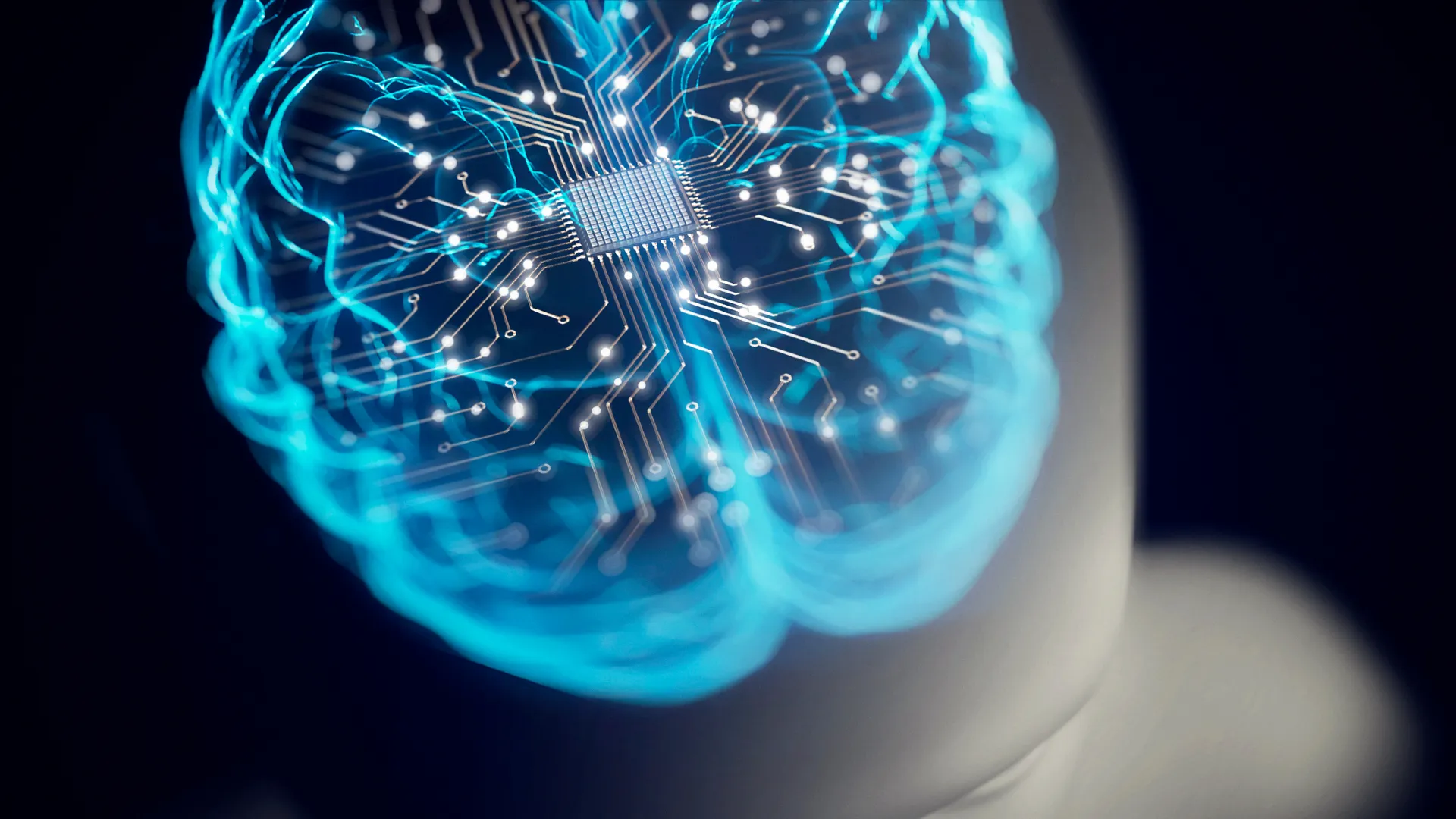
A blue glowing brain inside a drawn head against a black background.
(Image credit: Yuichiro Chino via Getty Images)

An Australian startup is building what could become one of the world's first "biological data centers" — augmenting silicon computing chips with those seeded with living human neurons.

Cortical Labs, the company behind the effort, has opened its first facility in Melbourne, Australia, and is planning a larger site in Singapore. Instead of racks filled entirely with traditional servers, these sites will house the company's CL1 systems, which combine lab-grown neurons with standard electronic components. The aim is not to replace silicon outright but to explore whether living neural systems can complement existing hardware in specific computing tasks.

Researchers have spent years trying to harness biological learning. In earlier work published in the journal Neuron, Cortical Labs researchers grew neurons on a chip and then taught them to play a simplified version of Pong by connecting them to a simulated environment. This feat relied on a closed feedback loop: When the neurons produced useful behavior, the inputs became more predictable; when they didn't, the signals grew more chaotic. Over time, the neurons settled into more stable patterns.

That same principle underpins more recent demonstrations, including experiments where similar systems interacted with simplified versions of the game Doom. These setups remain highly constrained, but they show that living neural networks can be nudged toward goal-directed behavior when embedded in a feedback-driven system.

Living computer chips

The CL1 system is a hybrid device, with each unit containing roughly 200,000 human neurons derived from stem cells and grown directly onto a silicon chip. Those neurons are arranged across a microelectrode array, which acts as the interface between biology and electronics. The electrodes can stimulate the cells with electrical signals and record the resulting activity in real time.

Surrounding this is a life-support system that keeps the cells alive, provides nutrients, regulates temperature, and maintains a stable environment. A software layer then translates between the biological signals and digital inputs and outputs, effectively turning patterns of neural activity into something a computer can use.

Get the world’s most fascinating discoveries delivered straight to your inbox.

In computing terms, the neurons act less like a processor executing instructions and more like a dynamic system that transforms inputs into complex patterns. This is sometimes described as "reservoir computing," in which a system with rich internal behavior processes signals that can be interpreted by external software.

The interest in this approach is closely tied to the rapid growth of artificial intelligence (AI). Enormous amounts of computing power are required to train and run modern AI systems, and the data centers that support them consume significant amounts of electricity and water. As demand increases, so do concerns about energy use and the long-term limits of conventional chip design.

Biological systems offer a different model. The human brain operates on roughly 20 watts of power, yet it can perform tasks such as pattern recognition, learning and decision-making with remarkable efficiency. Researchers working in biological computing argue that neuron-based systems could, in principle, handle certain workloads with far lower energy requirements than silicon-based systems.

The advantage is not raw speed or precision. Silicon remains vastly superior for deterministic calculations and large-scale processing. Rather, the appeal lies in adaptability. Neurons naturally reorganize in response to input, which could make them useful for tasks that involve learning from sparse or noisy data. For example, these systems tend to excel at tasks like pattern recognition, sensory processing, and decision-making under uncertainty.

Cortical Labs positions its technology within this emerging space. Company representatives say its systems require relatively low power and could eventually provide a more efficient way to process certain kinds of information. Those claims remain speculative, however, and current systems are limited in both scale and capability.

Early infrastructure, limited capability

The facilities described as data centers are still small by industry standards. Cortical Labs has not disclosed unit counts for its Melbourne site, but its CL1 systems are bench-scale devices, meaning deployments today likely run to tens of units rather than thousands. By comparison, hyperscale data centers operated by Amazon, Microsoft, and Google pack tens of thousands of servers into buildings that can exceed a million square feet.

Cortical’s planned Singapore facility is expected to scale further but remains under construction.

Capabilities are similarly constrained. Demonstrating that neurons can learn simple game-like tasks is an important proof of concept, but it is far removed from real-world applications. There is no evidence yet that biological systems can compete with GPUs or CPUs in the kinds of workloads that dominate modern computing, such as large-scale AI training or high-frequency data processing.

“Despite huge progress in neuroscience over the last century, the fundamental principles of information processing and storage in the brain are far from understood,” said computer scientist, mathematician and hardware engineer Steve Fuber. “At this early stage in the development of such systems much is unknown … We are still some way from identifying an optimal approach that is as general-purpose in this domain as is the general-purpose programmable processor in the conventional computing domain.

At the same time, the effort reflects a broader shift in how computing is being explored. As traditional approaches encounter physical and economic limits, researchers are seeking alternatives that would have seemed impractical only a few years ago. Biological systems are one of the more unconventional options, including the CL1 system and DNA-infused chips.

Living cells are inherently more complex than transistors. They require controlled conditions, consistent nutrient supply, and continuous monitoring, the scientists said. Their behavior can vary among samples, and their lifespans are limited. Scaling living cells into something reliable enough for infrastructure use is a major engineering hurdle.

There are also open questions about reproducibility and control. Silicon chips behave predictably under defined conditions, while biological systems do not. Ensuring consistent performance on a larger scale will be essential for the technology to move beyond experimental use.

Ethical considerations are also beginning to surface. Current neuron cultures are far from anything resembling consciousness, but researchers in the field have already called for clear guidelines as systems become more complex. The question is not immediate, but it is difficult to ignore as the technology evolves.

Related stories

For now, Cortical Labs' project is best understood as an early attempt to move biological computing from the lab into something that resembles real infrastructure. The underlying science is credible at small scales, and the motivation to explore alternatives to silicon is growing as AI systems expand.

What remains uncertain is whether those two threads can be brought together in a meaningful way. The current systems are limited, fragile and far from commercially competitive. Even so, they point to a different way of thinking about computation.

Instead of relying solely on faster and more efficient silicon, some researchers are beginning to explore whether living systems, with all their complexity and unpredictability, could eventually play a role in how machines process information.

​​Carly Page is a technology journalist and copywriter with more than a decade of experience covering cybersecurity, emerging tech, and digital policy. She previously served as the senior cybersecurity reporter at TechCrunch.

Now a freelancer, she writes news, analysis, interviews, and long-form features for publications including Forbes, IT Pro, LeadDev, Resilience Media, The Register, TechCrunch, TechFinitive, TechRadar, TES, The Telegraph, TIME, Uswitch, WIRED, and others. Carly also produces copywriting and editorial work for technology companies and events.