



惯性聚合 高效追踪和阅读你感兴趣的博客、新闻、科技资讯
阅读原文 在惯性聚合中打开

推荐订阅源

CTFtime.org: upcoming CTF events
Security Latest
Security Latest
C
CXSECURITY Database RSS Feed - CXSecurity.com
AI
AI
Exploit-DB.com RSS Feed
cs.CV updates on arXiv.org
P
Palo Alto Networks Blog
Spread Privacy
Spread Privacy
Project Zero
Project Zero
Google Online Security Blog
The Cloudflare Blog
L
LangChain Blog
T
Tenable Blog
GbyAI
GbyAI
C
Cybersecurity and Infrastructure Security Agency CISA
大猫的无限游戏
大猫的无限游戏
Last Week in AI
Last Week in AI
量子位
Cloudbric
Cloudbric
钛媒体:引领未来商业与生活新知
钛媒体:引领未来商业与生活新知
美团技术团队
S
Secure Thoughts
P
Privacy & Cybersecurity Law Blog
S
Securelist
S
Schneier on Security
F
Full Disclosure
Engineering at Meta
Engineering at Meta
A
Arctic Wolf
Microsoft Security Blog
Apple Machine Learning Research
freeCodeCamp Programming Tutorials: Python, JavaScript, Git & More
爱范儿
爱范儿
Cyber Security Advisories - MS-ISAC
P
Privacy International News Feed
宝玉的分享
宝玉的分享
A
About on SuperTechFans
博客园 - 【当耐特】
cs.AI updates on arXiv.org
Hugging Face - Blog
Hugging Face - Blog
Webroot Blog
Webroot Blog
Google DeepMind News
H
Heimdal Security Blog
Y
Y Combinator Blog
月光博客
月光博客
H
Hacker News: Front Page
MongoDB | Blog
MongoDB | Blog
C
Check Point Blog
TaoSecurity Blog
TaoSecurity Blog
腾讯CDC
N
Netflix TechBlog - Medium

Latest from Live Science in News

Artemis II heat shield aced its blistering reentry, ghostly underwater photo reveals Scientists invent artificial neurons that 'talk' to real brain cells, paving way to better brain implants 'What are the odds': Superbright comet and exploding fireball meteor form near-perfect X over European castle Meet AGI CPU — a specialist processor that engineers believe will power the next wave of AI Egyptian mummy has part of the 'Iliad' in its abdomen, archaeologists discover Artemis moon landing could face long delay while NASA waits for next-generation spacesuits Gene therapy improves hearing in 90% of patients with inherited deafness in largest trial of its kind Oil spills from Iran war may contaminate water and food supply and threaten protected wildlife refuge NASA's Curiosity rover finds a surprising number of giant 'dragon scales' littered across Mars Watch an AI-powered table tennis robot beat elite players NASA shuts off another Voyager 1 instrument as humanity Florida is facing its most intense drought in 15 years. Here's how it got so bad and how long it will last. Neanderthal toddlers grew faster than modern humans, probably because of the harsh environment they evolved in 'Nations need to prepare now': Key Atlantic ocean current is much closer to collapse than scientists thought New blood test aims to spot liver scarring before it paves the way to cancer A giant 'shadow' has been creeping across Mars for 50 years — and scientists aren't sure why Bruce the parrot is missing his upper beak —‬ but that hasn't stopped him from becoming an undefeated… Scientists identify main cause of extreme nausea and vomiting in pregnancy Naked mole rats wage bloody wars of succession to choose a new queen — but one colony did something scientists… Lyrid meteor shower 2026: See spring's first rain of 'shooting stars' peak in moonless skies $3 million prize goes to duo whose research led to first sickle cell CRISPR therapy 700-year-old mummy from Bolivia contains earliest confirmed evidence of strep throat bacteria in the Americas New pain-relief opioid could be much less addictive than morphine, rodent study finds Experimental drug doubles one-year survival in pancreatic cancer Science news this week: Physicists witness faster-than-light darkness pinpricks, humans are still evolving, and some… Archaeologists discover perfectly circular ancient Egyptian temple that may have been used for sacred water rituals 2 supermassive black holes may collide 100 years from now ‪—‬ and Earth would feel it Anglo-Saxon burial holds an older sister cradling her little brother after they both died 1,400 years ago, possibly of… Colorado River may have pooled and spilled over to form the Grand Canyon, solving a long-standing mystery ‪—‬… 'We all screamed when it happened': Bright-green fireball meteor caught exploding over famous Viking raid site… Northern lights may be visible from several US states Friday and Saturday as giant hole opens up in sun Hackers used AI to steal hundreds of millions of Mexican government and private citizen records in one of the largest… The first black hole ever discovered is spewing 'dancing jets' at half the speed of light Stephen Hawking's black hole information paradox could be solved — if the universe has 7 dimensions 'Something's missing': Most thorough-ever study of the cosmos proves we still can't explain how the… 'Human evolution didn't slow down; we were just missing the signal': Large DNA study reveals natural selection led to more redheads and less male-pattern baldness New study confirms lobsters feel pain, driving scientists to call for a ban on boiling them alive This humanoid robot does all your housework for you ‪—‬ and its makers say it Ancient process that created rare earth elements discovered — and it could help us locate desperately needed deposits Strange mammal ancestor laid huge, leathery eggs —‬ and it was key to surviving the world 73 moon landings? NASA Triassic croc relative from Ghost Ranch, New Mexico finally identified after nearly 80 years in museum basement There were Physicists witness pinpricks of darkness moving faster than the speed of light ‪—‬ without breaking the laws of relativity Stone Age tombs in Scotland reveal 'webs of descent' among male relatives 'Oslo patient' likely cured of HIV after getting stem cell transplant from his brother, who is genetically… Antiseptic-tolerant germs spread through the air in hospitals, early study hints Homo erectus' tools include stunning geodes and fossils, possibly as a way to connect with the cosmos, study finds 'Really, really weird': Physicists entangle two moving atoms for the first time, validating 'spooky'… www.livescience.com Sperm quality is at its peak in the summer, study finds Scientists are trying to build a vaccine that works against almost any respiratory pathogen  — here's… Ancient Egyptian stone monument depicting a Roman emperor as a pharaoh discovered in Luxor AI for breakup texts? How 'sycophantic' chatbots are messing with our ability to handle difficult social… Science news this week: Artemis II splashes down, the world's fattest parrot bounces back, and the Shroud of Turin… 10 Artemis II photos that define humanity's return to the moon 'I'm at a loss for words': Artemis II mission comes home to joy and cheers after historic 10-day mission There are 'reasons to be confident' about faulty Artemis II heat shield ahead of 25,000 mph reentry, space… The moon is green and brown? Why scientists are already excited about Artemis II's historic lunar photos 'More questions than answers': Experts baffled by Alaskan mammal-eating orcas spotted near Seattle Changing 'just one DNA letter' in female mice triggers growth of male genitalia 'Welcome home, Integrity': Artemis II crew return to Earth after 'bullseye landing' caps historic… AI war games almost always escalate to nuclear strikes, simulation shows Ancient Korean society practiced human sacrifice and high inbreeding, researchers find There's an issue with the Artemis II heat shield, but NASA isn't worried. Here's why. Chimpanzees in Uganda are locked in a deadly 'civil war' after their group split apart — and scientists… James Webb telescope spots 'stingray' galaxy system that could solve the mystery of 'little red… 'RIP, Comet MAPS': Watch the superbright sungrazer become a 'headless wonder' after being ripped… Scientists create new type of encryption that protects video files against quantum computing attacks Western states face above-normal wildfire threats this summer. New maps reveal which areas are most at risk. Keratin may act as a 'brake' for skin inflammation, pointing to potential treatments 'No one knows what they are': Researchers discover new type of cell that's seen only during pregnancy 16th-century silver coin discovered near Strait of Magellan marks the spot of a doomed Spanish colony How to see Comet PanSTARRS as it brightens in the night sky this week Diagnostic dilemma: Woman's 'biologically implausible' infection led her to sneeze 'worms' out… DNA reveals ancestry of man buried in Stone Age monument in Spain, but his religion remains a mystery 'So much magic': Artemis II shares first images from the far side of the moon, including new… AI 'mirages' mean tools used to analyze medical scans could fabricate their findings World's fattest parrot — on the verge of extinction 30 years ago — has record-breaking breeding season Physicists moved volatile antimatter by truck for the first time ever — paving the way for groundbreaking new… The Artemis II astronauts have just flown farther from Earth than any humans in history Artemis II moon flyby begins: How to watch and what to know AI-written code can beat humans at biomedical analysis, some studies find. What does that mean for the field? We went to Finland to hear about the new 'sand battery' that will turn stored renewable energy back into power… The hungriest black holes in the universe are running out of food, survey of 8,000 cosmic monsters reveals Antarctica hides huge caches of gold, silver, copper and iron. As the ice melts, countries may race to harvest them. Diabetes rates are lower in high-altitude environments ‪‪—‬ and scientists may have discovered why Shroud of Turin, claimed to be Jesus' burial cloth, contaminated with carrot and red coral DNA Science news this week: Artemis II lifts off, diabetes cured in mice, and smog in China shapes Arctic storms Fossil site in China reveals bevy of complex creatures lived prior to the Cambrian explosion, including a… Cheap, decades-old transplant drug delays full onset of type 1 diabetes www.livescience.com Homo habilis is the earliest named human. But is it even human? Scientists mapped all the nerves of the clitoris for the first time Rare 'sungrazer' comet MAPS will shine superbright on Saturday ‪—‬ if it survives a dangerous… IBM quantum processor achieves highest fidelity calculations for the longest period of time on record A new tweak to Einstein's relativity could transform our understanding of the Big Bang Artemis II officially leaves Earth In photos: Artemis II Ancient children's teeth reveal a syphilis-like disease was spreading in Vietnam 4,000 years ago
Hantavirus cruise LIVE: Cruise passengers monitored in several US states as CDC sets lowest emergency response
ben.turner@f · 2026-05-07 · via Latest from Live Science in News

A cluster of hantavirus cases struck the Dutch-flagged cruise ship MV Hondius as it traveled across the southern Atlantic, stopping at a number of destinations along the way.

Public health authorities' investigations are ongoing. Gaps in knowledge are expected during an unfolding investigation, and as those gaps are filled, we will update you here.

  • As of May 7, five confirmed and three suspected cases of hantavirus infection have been associated with a cruise aboard the Dutch-flagged MV Hondius, which departed Argentina on its current voyage on April 1. Three people have died.
  • Hantavirus infections in humans are relatively uncommon, but when they do occur, they can be deadly. Most hantavirus infections in humans stem from exposure to infected rodents or the animals' urine, poop or saliva.
  • One hantavirus — the Andes virus — is known to be able to spread between people and has been implicated in this outbreak. Authorities suspect some human-to-human spread has taken place.
  • Several dozen people disembarked the ship on St. Helena on April 24 and are now being contacted for contact tracing.
  • This outbreak poses little risk to the general public, the WHO and U.S. CDC emphasize.

Disclaimer

This blog is for informational purposes only and is not meant to offer medical advice. We endeavor to keep the information in this live feed timely and accurate, so parts of this page may be updated or corrected as new details emerge.

Refresh

Dutch flight attendant tests negative for hantavirus infection

“As you know, the incubation period is long and although she is negative for now, she might turn positive in the future,” Tedros Adhanom Ghebreyesus, the WHO's director-general, told Inside Medicine via a text message.

Ben Turner

Other cruise passengers in the U.S.

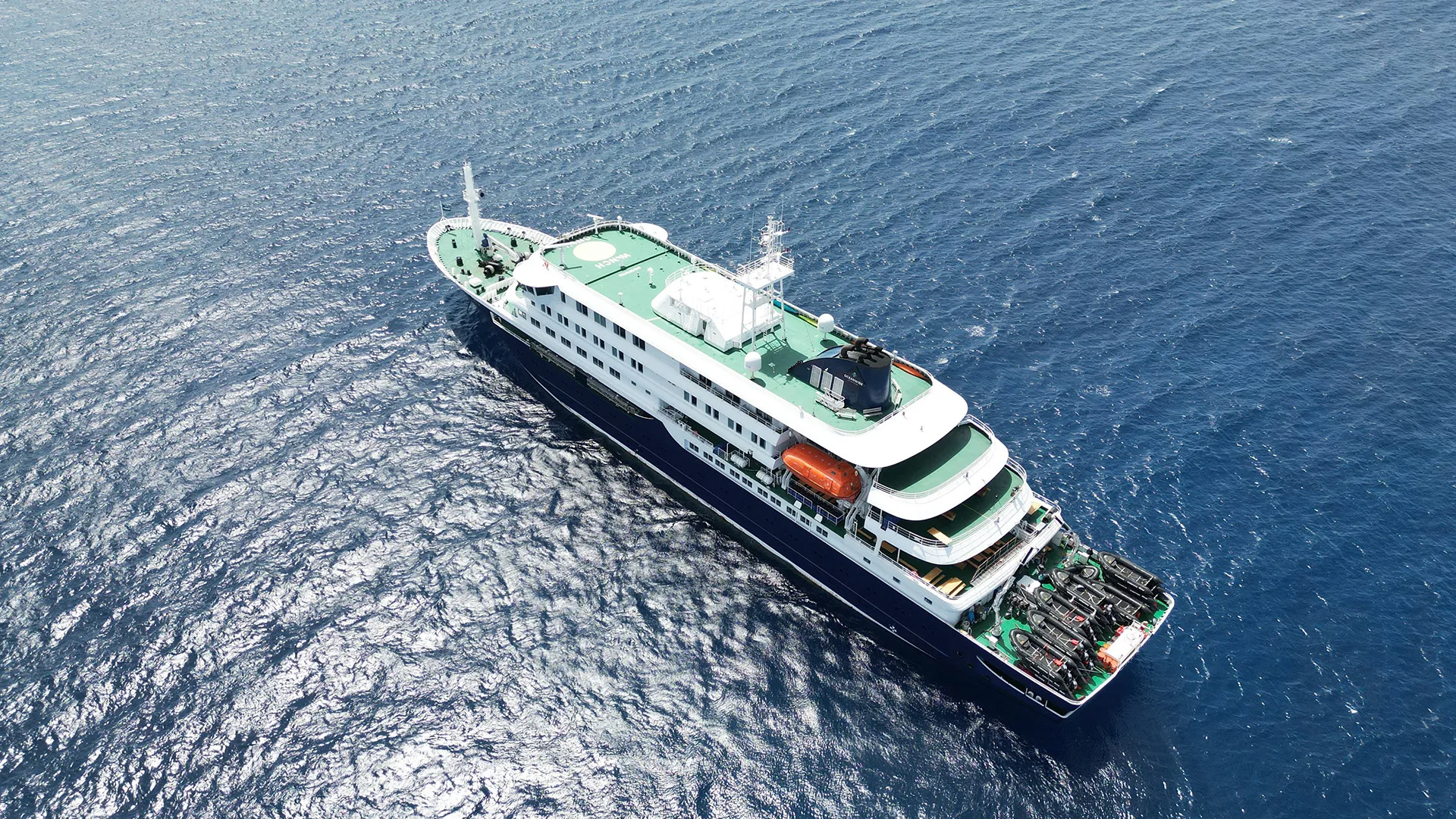
An aerial view of a white and black cruise ship taken from the front left, with the name of the ship seen below as it sits in the ocean with a coastline behind it.

An aerial view of the cruise ship MV Hondius stationary off the port of Praia, the capital of Cape Verde, on May 5, 2026.

(Image credit: Getty Images)

In addition to the person in Arizona who recently returned from a cruise on the MV Hondius, several people in Georgia and California are facing the same situation.

On May 7, the Georgia Department of Public Health told Live Science via email that it is "monitoring two Georgia residents who returned home after disembarking from the MV Hondius, the cruise ship at the center of a hantavirus outbreak. The individuals are currently in good health and show no signs of infection. They are following current recommendations from CDC."

Also on May 7, the California Department of Public Health told Live Science via email that the department is coordinating with local health officials to monitor returning travelers, as needed.

"There is no information that the California residents are ill or infected. In order to protect patient privacy, CDPH cannot disclose the travelers' residences or other information. At this time, the risk to public health in California is low," the statement concluded.

Seventeen Americans remain on the MV Hondius, The New York Times reported.

Arizona Department of Health Services gives a hantavirus update

The person is currently asymptomatic, and based on the information available, it doesn't seem likely that they had much if any close contact with the infected individuals on the ship, officials said. The local health department will determine if the person requires testing, and likely, that wouldn't happen unless they develop symptoms, said Kenneth Komatsu, a state epidemiologist with Arizona Department of Health Services. That's in part because an asymptomatic person could very well come back negative on a test, he noted.

If the individual were to eventually develop symptoms, testing, contact tracing and quarantining would follow, along with monitoring of household contacts, Komatsu and other spokespeople suggested.

I asked whether the U.S. Centers for Disease Control and Prevention (CDC) had provided guidance on how the department should handle the situation.

"As CDC is currently working at a fast pace to put out some recommendations and guidance, most jurisdictions that have any individuals potentially exposed, they've been in contact with CDC sometimes two, three times a day to answer our questions," said Dr. Joel Terriquez, the medical director of the bureaus of Infectious Diseases Services and Immunization Services with the Arizona Department of Health Services.

"Guidance is currently being developed and an official recommendation will be coming out soon," he added. Komatsu also confirmed that public-facing CDC guidance was forthcoming. When asked which CDC department was heading up the effort, he pointed to the Division of Global Migration Health within the National Center for Emerging and Zoonotic Infectious Diseases.

The health department emphasized that the risk to Arizonans remains low. "We just want to make sure that the message is clear," Terriquez said. "This situation is very low risk to the general public."

As always: Vet your sources

With that in mind, be wary of bad actors, particularly on social media, who take advantage of uncertainty to sow doubt or stir up conspiracies. I understand the impulse to seek out more information, to pose questions when something is unclear or underexplained — but that is distinct from spreading misinformation and disinformation.

In short, if a given social media user's main goal is to gain views and monetization, rather than to provide clarity and well-sourced expertise, their input is unlikely to serve you.

Trump admin axed Andes virus research

In the long run, the goal of CREID's many projects was to better understand germs capable of jumping from animals to people in order to respond quickly and effectively to future outbreaks. While the Andes virus pilot program likely wouldn't have stopped this cruise ship outbreak, its loss could very well undermine scientists' broader efforts to understand hantaviruses and the threat they might pose in the future.

Airline crewmember being tested for hantavirus

The infected person — the woman whose husband was the first to die on board — had felt ill when she disembarked on the island of St. Helena. Her condition worsened during a flight from St. Helena to Johannesburg, South Africa. She then attempted to board a flight from Johannesburg to Amsterdam, but "due to the passenger's health condition at the time, the crew decided not to allow the passenger to board the flight," KLM has said.

The woman subsequently died and her case was later confirmed to be a hantavirus infection.

During her brief time on the Amsterdam-bound plane, the sick passenger interacted with the flight attendant who is now at Amsterdam UMC with mild symptoms of illness. Doctors are expecting to receive the attendant's test results later today, which will reveal if she has a hantavirus infection, CNN reported.

(For background, sustained close contact is typically required for Andes virus infections to transmit between people, so it's unclear whether this brief encounter would be particularly risky.)

headshot of nicoletta lanese

Catching a killer — how to trace a rare and deadly virus

This image reveals some of the histopathologic details seen in a lymph node specimen that had been extracted from a patient suspected of a hantavirus illness.

(Image credit: CDC)

Andes virus outbreaks are rare, with only a handful documented since the 1990s. This makes investigations into clusters of cases like those associated with the MV Hondius tricky. However, one outbreak that hit southern Argentina's village of Epuyen in 2018 may prove to be informative.

The Epuyen outbreak infected 34 people and led to 11 deaths due to hantavirus pulmonary syndrome, in which a hantavirus attacks the lungs.

According to a 2020 study published in The New England Journal of Medicine, the Epuyen cases stemmed from three separate superspreader events. The first occurred when the first infected person, or index patient, attended a birthday party with around 100 others.

The 68-year-old man, who was feverish and feeling poorly at the time, attended for about 90 minutes and passed the infection to several people who had been sitting near him. Additional cases followed as several of these individuals or their close contacts attended other events while sick.

In many cases, infected people passed on the virus on the first day they began feeling feverish, the study authors determined. That hints that the infection might be at its most contagious when those early symptoms emerge — meaning the close confines of a ship could be an ideal location for the virus to spread in that time window.
Ben Turner

Clarity on cruise itinerary

An aerial photo of a white cruise ship in the middle of a blue ocean.

(Image credit: Getty Images)

Various social media posts and videos have been casting suspicion on when the MV Hondius actually departed Ushuaia, Argentina. The WHO's website notes April 1 as the departure date, while the Africa CDC website states March 20. So I reached out to the cruise operator, Oceanwide Expeditions, about the discrepancy.

A spokesperson shared that, from March 20 to March 30, the ship traveled from Ushuaia to Antarctica and back. Then, from April 1 to April 24, it traveled from Ushuaia to the island of St. Helena. Then, between April 24 and May 4, it traveled from St. Helena to Cape Verde.

When asked if any potential hantavirus cases were associated with that first leg of the trip, the spokesperson directed me to the WHO's official statements. The earliest known symptomatic case was on April 6 and involved a man who had boarded the ship April 1.

Both the man and his wife — the second passenger to get sick — had traveled in Argentina, Chile and Uruguay prior to boarding, and officials currently suspect that that's when they got exposed. Both individuals have since died.

Viral videos of distressed passengers

Additionally, once the medical status of everyone on board is assessed, the WHO will also coordinate with each person's home country to safely repatriate them.

Deceased passenger remains on board

The body of the third person to die in the outbreak — a woman who passed away on board May 2 after developing pneumonia — is still being stored on the MV Hondius. WHO officials are in contact with the cruise operators about safe storage and eventual transport of the remains.

Genetic sequencing underway

As of yet, there's "no indication" that there's anything particularly unusual about the hantaviruses themselves, but it is notable that the outbreak is taking place on a cruise ship, said Anaïs Legand, the WHO's technical officer of viral hemorrhagic fevers. A ship is a unique environment where people from many places are in close quarters.

The WHO recommends that contacts be monitored for six weeks, as the incubation period ‪—‬ the time between when someone is exposed to the virus and when symptoms begin —‬ of hantavirus infections can be that long. Known cases that are symptomatic are being isolated and cared for in hospitals.

headshot of nicoletta lanese

Where did the infection come from?

The Andes virus is transmitted to humans mainly through contact with the long-tailed pygmy rice rat (Oligoryzomys longicaudatus). People may pick up the virus through exposure to the rat's urine, feces or saliva. For instance, they may accidentally touch the rat's feces and then touch their face, or breathe in viral particles that get released into the air when rodent droppings get disturbed in the environment.

Ben Turner

"Viruses don't care about politics"

World Health Organization (WHO) Director-General Tedros Adhanom Ghebreyesus at the WHO headquarters in Geneva.

(Image credit: FABRICE COFFRINI/POOL/AFP via Getty Images)

Both Argentina and the U.S. recently withdrew from the World Health Organization (WHO). In the face of this outbreak, "I think they will reconsider their positions," said Tedros Adhanom Ghebreyesus, the WHO's director-general. "Viruses don't care about our politics, they don't care about our borders, and they don't care about all the excuses that we may have."

When asked whether U.S. health authorities are participating in the ongoing investigation, several WHO representatives confirmed that the U.S. Centers for Disease Control and Prevention is providing helpful technical support and expertise and communicating with WHO leaders daily.
headshot of nicoletta lanese

World Health Organization says risk to the public is "low"

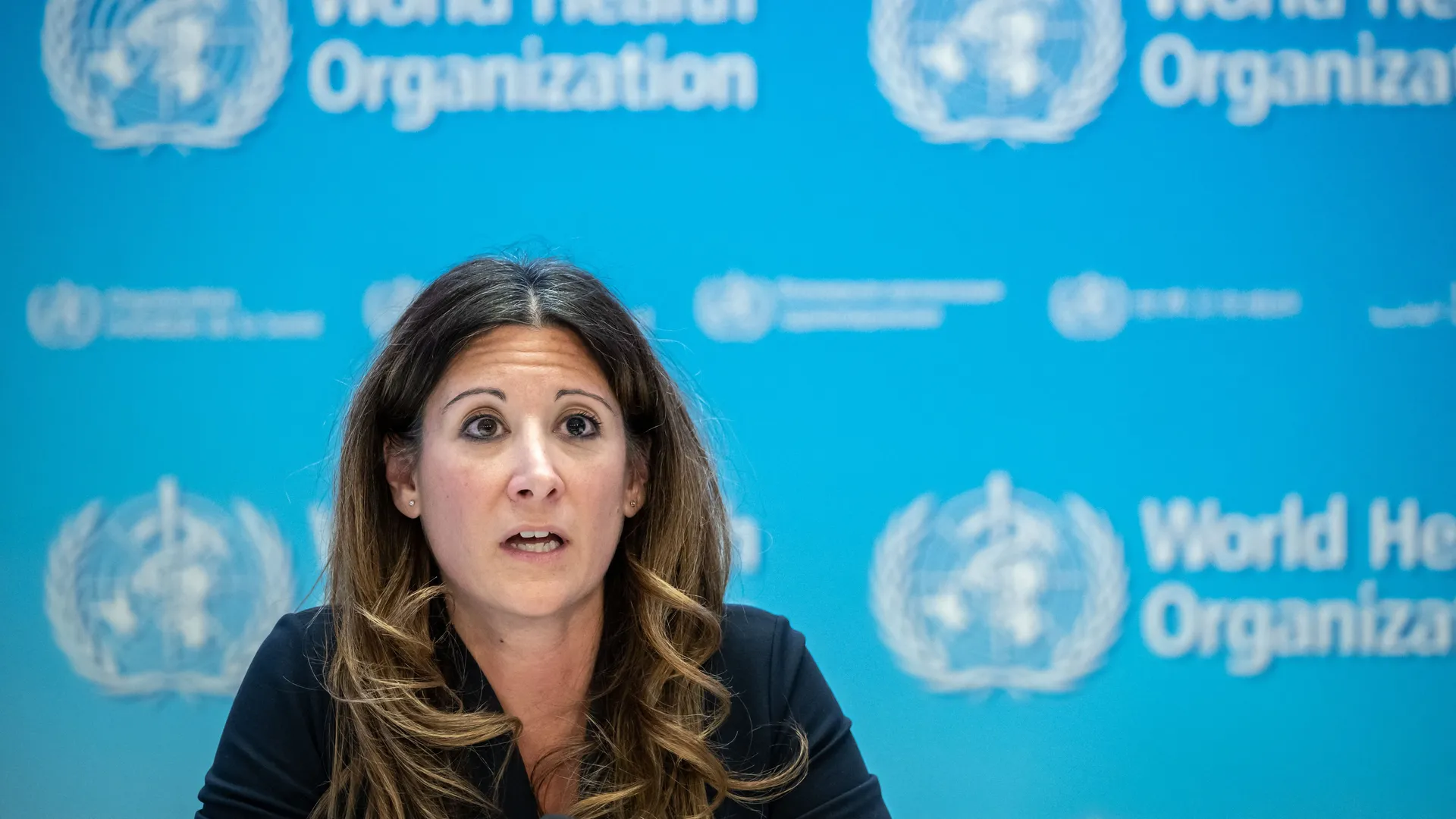
Maria Van Kerkhove looks on during a press conference at the World Health Organization's headquarters in Geneva

Maria Van Kerkhove at a WHO news conference.

(Image credit: Fabrice Coffrini/AFP via Getty Images)

The World Health Organization (WHO) just held a news conference to discuss the hantavirus cases.

The WHO has been working with collaborating centers to identify the type of virus behind the outbreak, as well as investigate suspected and confirmed cases and perform contact tracing. The agency has also been quick to quash fears that the outbreak could spark a global pandemic.

"This is not SARS-CoV-2 [the virus that causes COVID-19]. This is not the start of a COVID pandemic. This is an outbreak that we see on a ship," Maria Van Kerkhove, the WHO's interim director of epidemic and pandemic preparedness and prevention, said at the news conference.

"This is not the same situation we were in six years ago," she continued. "It [the Andes virus] doesn't spread the same way like coronaviruses do. It's very different. It's that close, intimate contact that we've seen, and most hantaviruses don't transmit between people at all."

"The Andes virus, which has been identified here ‪—‬ we've seen some human-to-human transmission," she added. "I want to reiterate [that] the actions that are being taken on board are precautionary to prevent any onward spread, and so there's a lot that is being done right now to be able to try to minimize the risk even further."
What is hantavirus, and how risky is this outbreak?

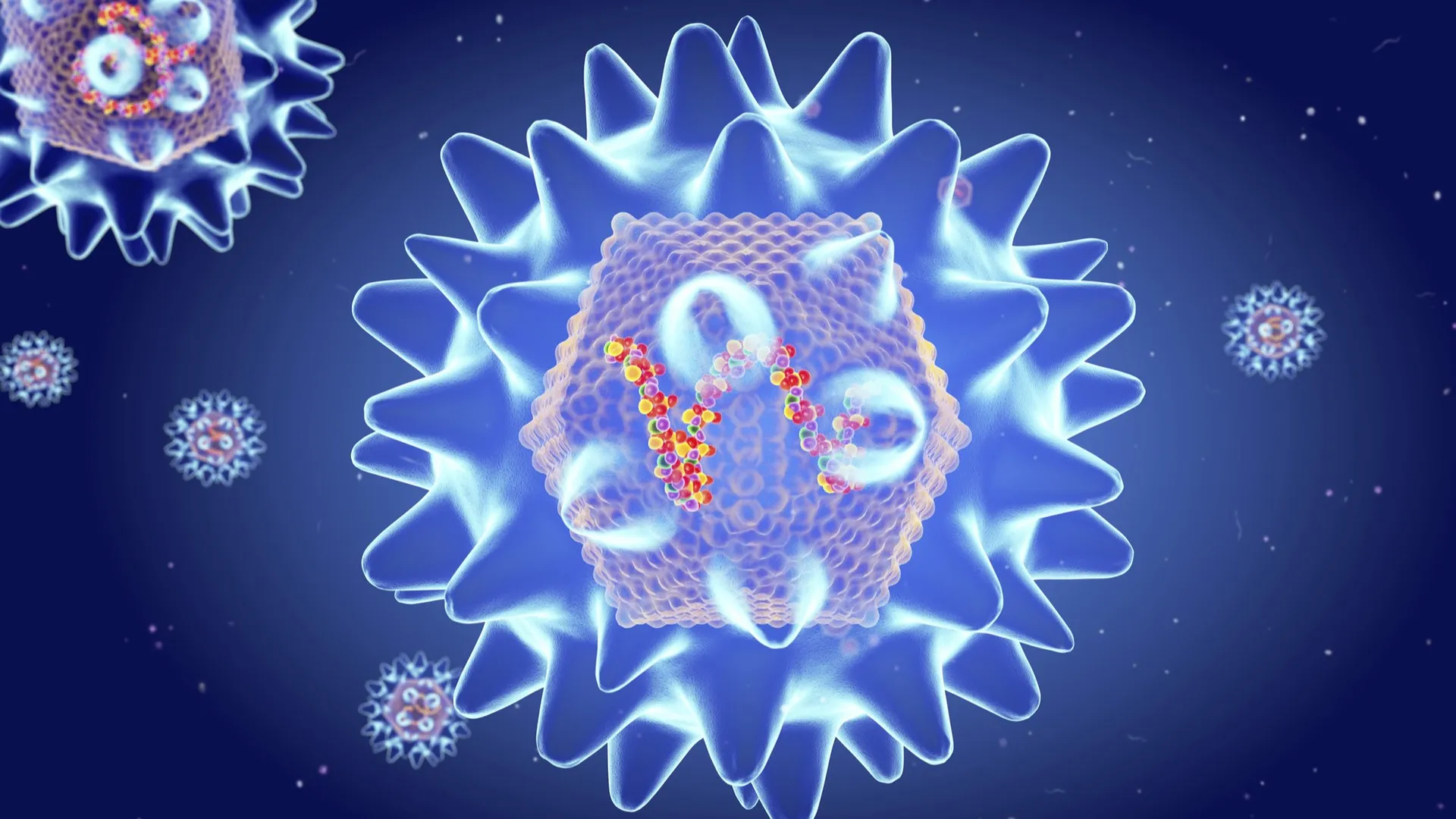
An illustration of a blue translucent spiky sphere of a hantavirus molecule, with a 3D strand of DNA at the center. All in front of a blue background.

(Image credit: ROGER HARRIS/SCIENCE PHOTO LIBRARY via Getty Images)

Hantaviruses are a family of viruses carried by rodents. Hantavirus infections in humans are relatively uncommon, but when they do occur, they can be dangerous, with fatality rates ranging between 1% and 50% depending on the type of hantavirus. No specific treatment exists to cure infections, but prompt medical care can improve patients' chances of survival.

While most hantaviruses cannot pass between people, one specific type, known as the Andes virus, can. The Andes virus is the type of hantavirus that laboratory tests point to being behind this cluster. Health authorities are now working to analyze the virus's DNA to compare its sequence to that of Andes viruses involved in past outbreaks.

The World Health Organization and the U.S. Centers for Disease Control and Prevention have said the risk posed to the public from this cluster remains low, although they continue to monitor the situation.

For more on the Andes virus, you can read health editor Nicoletta's story here. And for more background information on hantaviruses, broadly, you can read this story.

Ben Turner