


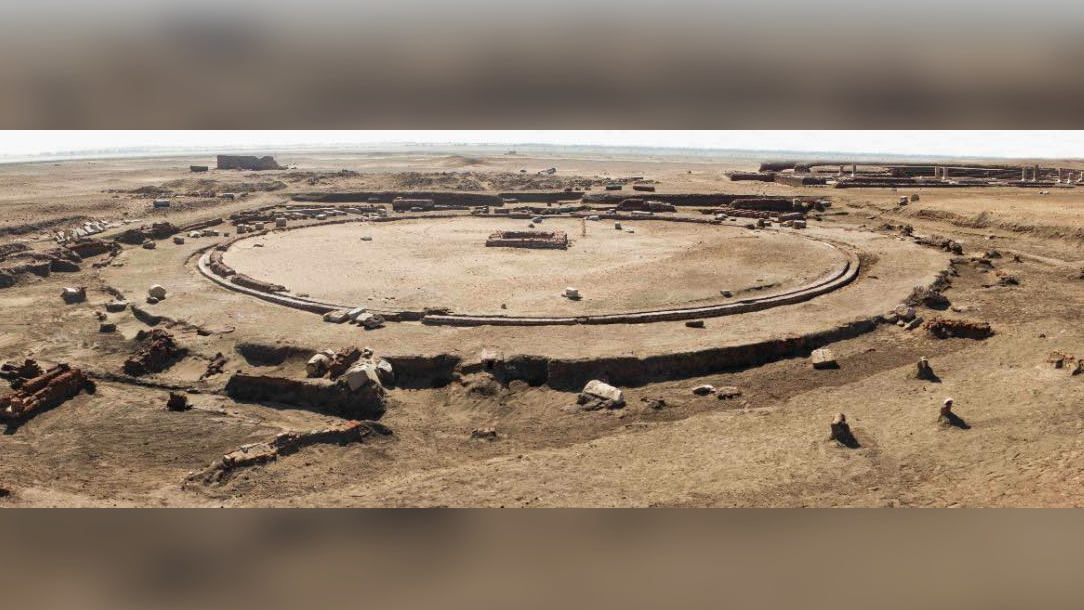
 The temple to Pelusius was fully excavated over the past several years in North Sinai, Egypt.
(Image credit: Courtesy of the Egyptian Ministry of Tourism and Antiquities)
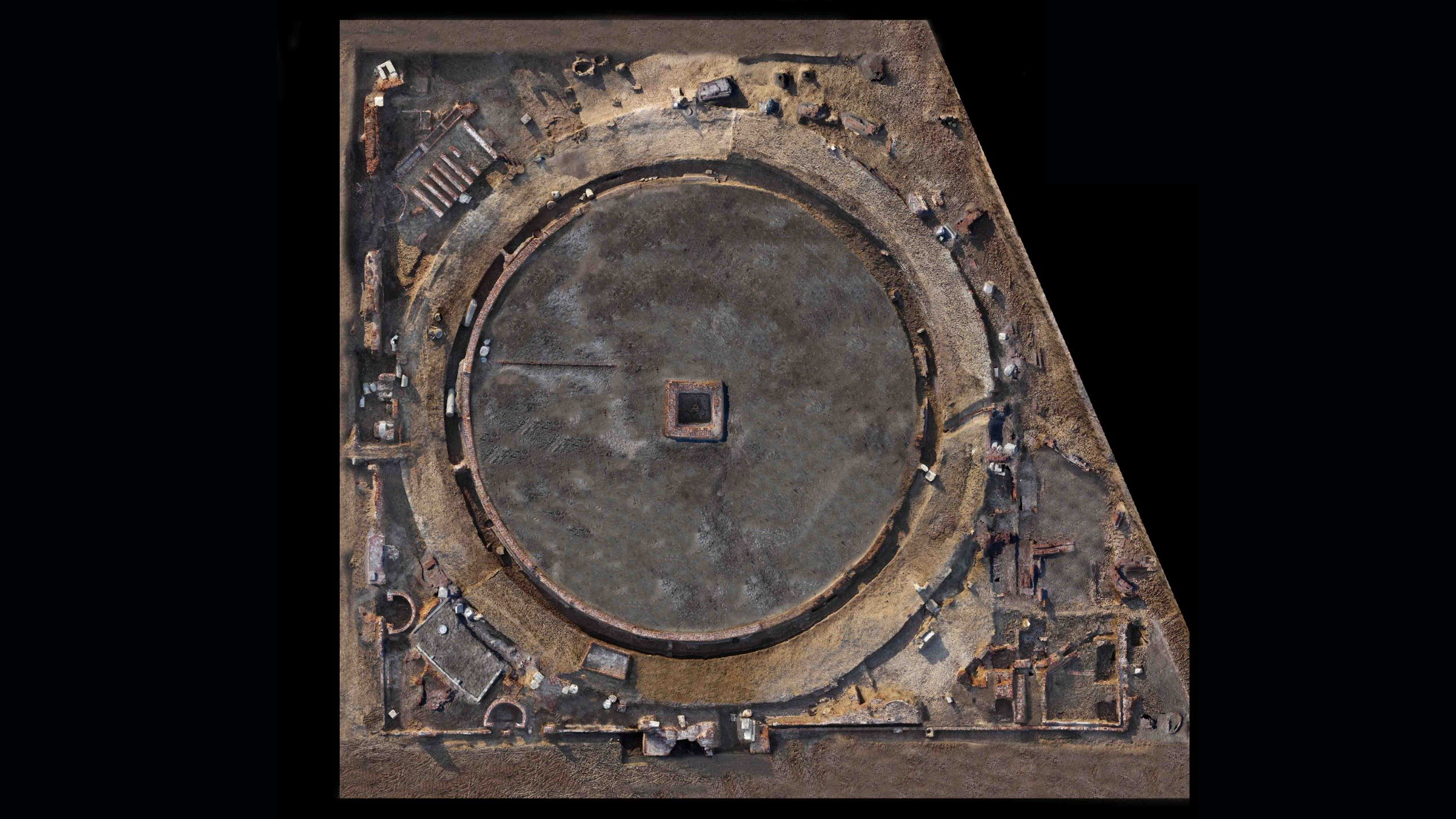
The temple to Pelusius was fully excavated over the past several years in North Sinai, Egypt.
(Image credit: Courtesy of the Egyptian Ministry of Tourism and Antiquities)
Archaeologists have discovered a rare circular structure dedicated to a local Egyptian deity called Pelusius, according to the Egyptian Ministry of Tourism and Antiquities. The 2,200-year-old religious building includes complex water infrastructure and was once connected to the Nile, which suggests the sanctuary was used for sacred water rituals.
The temple was found by archaeologists working at the site of Tell el-Farama in the ancient city of Pelusium, on the eastern edge of the Nile Delta in the North Sinai governorate, representatives from the Egyptian Ministry of Tourism and Antiquities said in an April 9 translated statement. Given its strategic location near the mouth of the Nile, the bustling port city of Pelusium was used as a fortress in pharaonic times and later as a customs station during the rise of the Roman Empire. In 2022, archaeologists discovered a temple to Zeus crafted from pink granite at the site.
The sanctuary complex centered around a circular basin approximately 115 feet (35 meters) in diameter with a square pedestal in the middle. It likely once held a colossal statue of the god Pelusius, whose name comes from the ancient Greek word for "mud" or "silt." Water channels and reservoirs surrounded the basin. Within the basin, which was connected to a branch of the Nile, archaeologists found water and Nile silt, suggesting a symbolic association with Pelusius.
RELATED STORIES
Based on the stratigraphic layers at the site, experts think the temple to Pelusius was built in the second century B.C. and was used continuously through the sixth century A.D.
The temple's unique architectural design, which blended ancient Egyptian traditions with both Greek and Roman styles, embodied the cultural exchange between Egypt and the wider world, Hisham El-Leithy, acting secretary-general of Egypt's Supreme Council of Antiquities, said in the statement. El-Leithy described the discovery as "highly significant" because it shows that Pelusium was once a prominent city in an increasingly cosmopolitan ancient world.
Get the world’s most fascinating discoveries delivered straight to your inbox.
Kristina Killgrove is a staff writer at Live Science with a focus on archaeology and paleoanthropology news. Her articles have also appeared in venues such as Forbes, Smithsonian, and Mental Floss. Kristina holds a Ph.D. in biological anthropology and an M.A. in classical archaeology from the University of North Carolina, as well as a B.A. in Latin from the University of Virginia, and she was formerly a university professor and researcher. She has received awards from the Society for American Archaeology and the American Anthropological Association for her science writing.
You must confirm your public display name before commenting
Please logout and then login again, you will then be prompted to enter your display name.
此内容由惯性聚合(RSS阅读器)自动聚合整理,仅供阅读参考。 原文来自 — 版权归原作者所有。