
惯性聚合 高效追踪和阅读你感兴趣的博客、新闻、科技资讯
阅读原文 在惯性聚合中打开

推荐订阅源

S
SegmentFault 最新的问题
博客园 - 三生石上(FineUI控件)
WordPress大学
WordPress大学
博客园 - 【当耐特】
月光博客
月光博客
Vercel News
Vercel News
D
Docker
I
InfoQ
Apple Machine Learning Research
博客园 - 叶小钗
MongoDB | Blog
MongoDB | Blog
GbyAI
GbyAI
有赞技术团队
有赞技术团队
雷峰网
雷峰网
博客园 - 聂微东
小众软件
小众软件
Y
Y Combinator Blog
腾讯CDC
L
LangChain Blog
The GitHub Blog
The GitHub Blog
宝玉的分享
宝玉的分享
Stack Overflow Blog
Stack Overflow Blog
大猫的无限游戏
大猫的无限游戏
T
The Blog of Author Tim Ferriss

Latest from Live Science in News

'Kraken' octopus that lived at the time of the dinosaurs was a 62-foot-long apex predator of the ocean Artemis II heat shield aced its blistering reentry, ghostly underwater photo reveals Scientists invent artificial neurons that 'talk' to real brain cells, paving way to better brain implants 'What are the odds': Superbright comet and exploding fireball meteor form near-perfect X over European castle Meet AGI CPU — a specialist processor that engineers believe will power the next wave of AI Artemis moon landing could face long delay while NASA waits for next-generation spacesuits Gene therapy improves hearing in 90% of patients with inherited deafness in largest trial of its kind Oil spills from Iran war may contaminate water and food supply and threaten protected wildlife refuge NASA's Curiosity rover finds a surprising number of giant 'dragon scales' littered across Mars Watch an AI-powered table tennis robot beat elite players NASA shuts off another Voyager 1 instrument as humanity Florida is facing its most intense drought in 15 years. Here's how it got so bad and how long it will last. Neanderthal toddlers grew faster than modern humans, probably because of the harsh environment they evolved in 'Nations need to prepare now': Key Atlantic ocean current is much closer to collapse than scientists thought New blood test aims to spot liver scarring before it paves the way to cancer A giant 'shadow' has been creeping across Mars for 50 years — and scientists aren't sure why Bruce the parrot is missing his upper beak —‬ but that hasn't stopped him from becoming an undefeated… Scientists identify main cause of extreme nausea and vomiting in pregnancy Naked mole rats wage bloody wars of succession to choose a new queen — but one colony did something scientists… Lyrid meteor shower 2026: See spring's first rain of 'shooting stars' peak in moonless skies $3 million prize goes to duo whose research led to first sickle cell CRISPR therapy 700-year-old mummy from Bolivia contains earliest confirmed evidence of strep throat bacteria in the Americas New pain-relief opioid could be much less addictive than morphine, rodent study finds Experimental drug doubles one-year survival in pancreatic cancer Science news this week: Physicists witness faster-than-light darkness pinpricks, humans are still evolving, and some… Archaeologists discover perfectly circular ancient Egyptian temple that may have been used for sacred water rituals 2 supermassive black holes may collide 100 years from now ‪—‬ and Earth would feel it Anglo-Saxon burial holds an older sister cradling her little brother after they both died 1,400 years ago, possibly of… Colorado River may have pooled and spilled over to form the Grand Canyon, solving a long-standing mystery ‪—‬… 'We all screamed when it happened': Bright-green fireball meteor caught exploding over famous Viking raid site…
Egyptian mummy has part of the 'Iliad' in its abdomen, ar...
Owen Jarus · 2026-04-23 · via Latest from Live Science in News
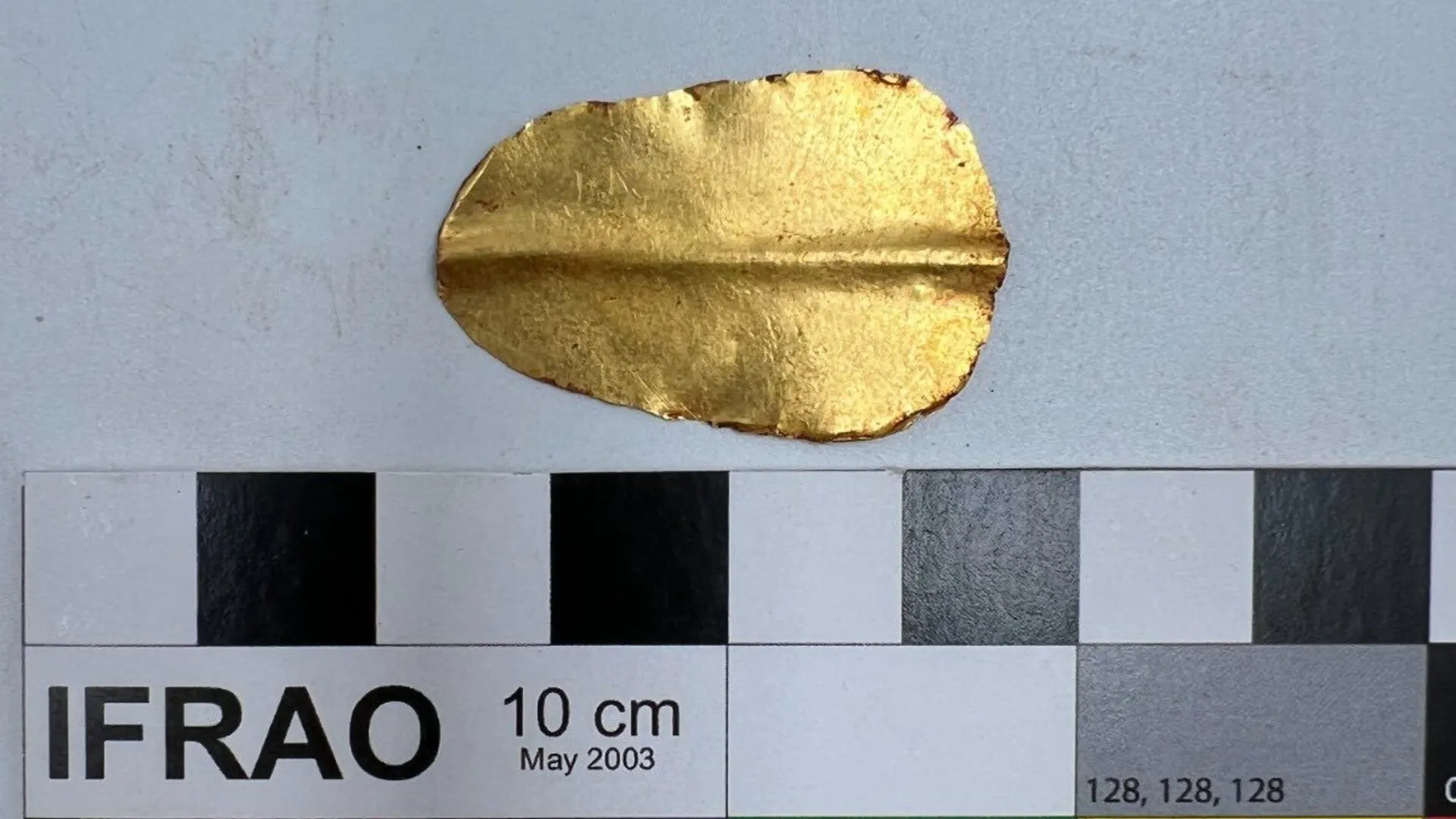
A close up of a gold tongue against a white background with a ruler next to it.
One of the gold tongues found inside a mummy at the archaeological site of Oxyrhynchus in Egypt. (Image credit: Courtesy of the Egyptian Ministry of Tourism and Antiquities)

Archaeologists in Egypt have discovered a Roman-era mummy with a copy of Homer's epic poem the "Iliad" inside its abdomen ‪—‬ a unique find that archaeologists are calling "exceptional."

Written on papyrus in Greek, the text records part of Book 2 of the "Iliad," which details the legendary Trojan War. The text found in the mummy lists the ships used against the city of Troy, according to a statement from the University of Barcelona. It would have been placed within the abdomen during the embalming ritual.

The site of Oxyrhynchus has been excavated off and on for well over a century. In the late 19th and early 20th centuries, archaeologists found around 500,000 fragments of papyri at the site.

The newly discovered "papyrus was placed on the abdomen to protect [the] deceased in the afterlife," Esther Pons Mellado, co-director of the archaeological mission in Oxyrhynchus, told Live Science in an email.

Pons Mellado and Maite Mascort, who is also a co-director of the mission, explained that during the time the Romans controlled Egypt, it was common for papyri to be put inside mummies, in the chest or abdomen. However, it's unclear why ancient Egyptians thought papyri would help protect the deceased, Pons and Mascort said.
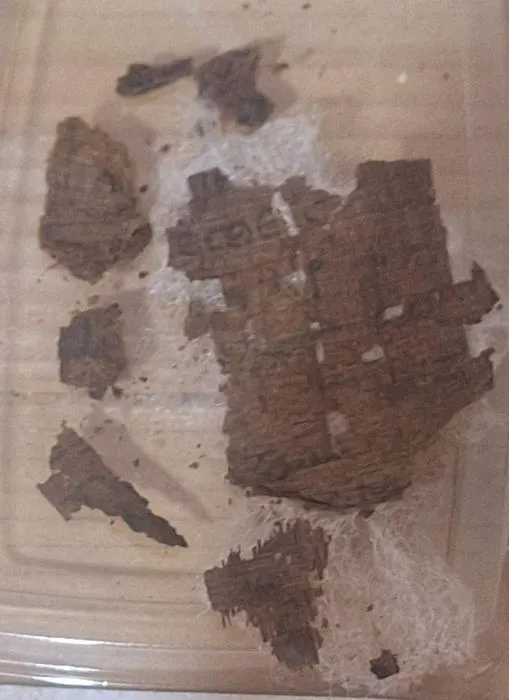
A close up of various brown fragments with writing on them.

Archaeologists found a papyrus inside a mummy that has Greek text from the "Iliad" on it. (Image credit: Professor Ignasi-Xavier Adiego)

Remarkably, this is the first time a copy of Homer's "Iliad" has been found inside a mummy.

Get the world’s most fascinating discoveries delivered straight to your inbox.

"The discovery is exceptional: it is the first time in the history of archaeology that a Greek literary text has been found deliberately incorporated into the mummification process," the University of Barcelona statement noted.

Although other Greek literary texts have been unearthed at Oxyrhynchus, "the real novelty" of the newfound literary papyrus is its "funerary context," Ignasi-Xavier Adiego, a linguistics professor at the University of Barcelona who analyzed the papyrus, said in the statement. He explained that papyri found inside mummies are often magical texts.
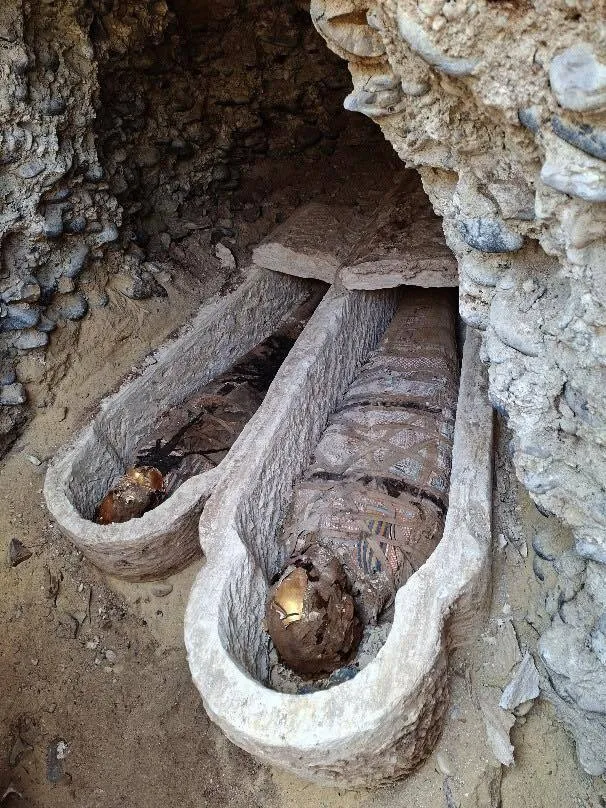
Two mummies lie in their coffins inside a cylindrical tunnel in the wall. Their heads are toward the camera

Two gilded mummies found in the cemetery in Egypt. (Image credit: Courtesy of the Egyptian Ministry of Tourism and Antiquities)

So far, archaeologists don't know much about the mummy with the "Iliad" papyrus. "We know that [it] was a male mummified individual but it's still under investigation," Pons and Mascort wrote in the email. They noted that the person was an adult.

The "papyrus is very important and relevant, but of course the study is not finished yet," Mascort and Pons wrote.

Gold and copper tongues
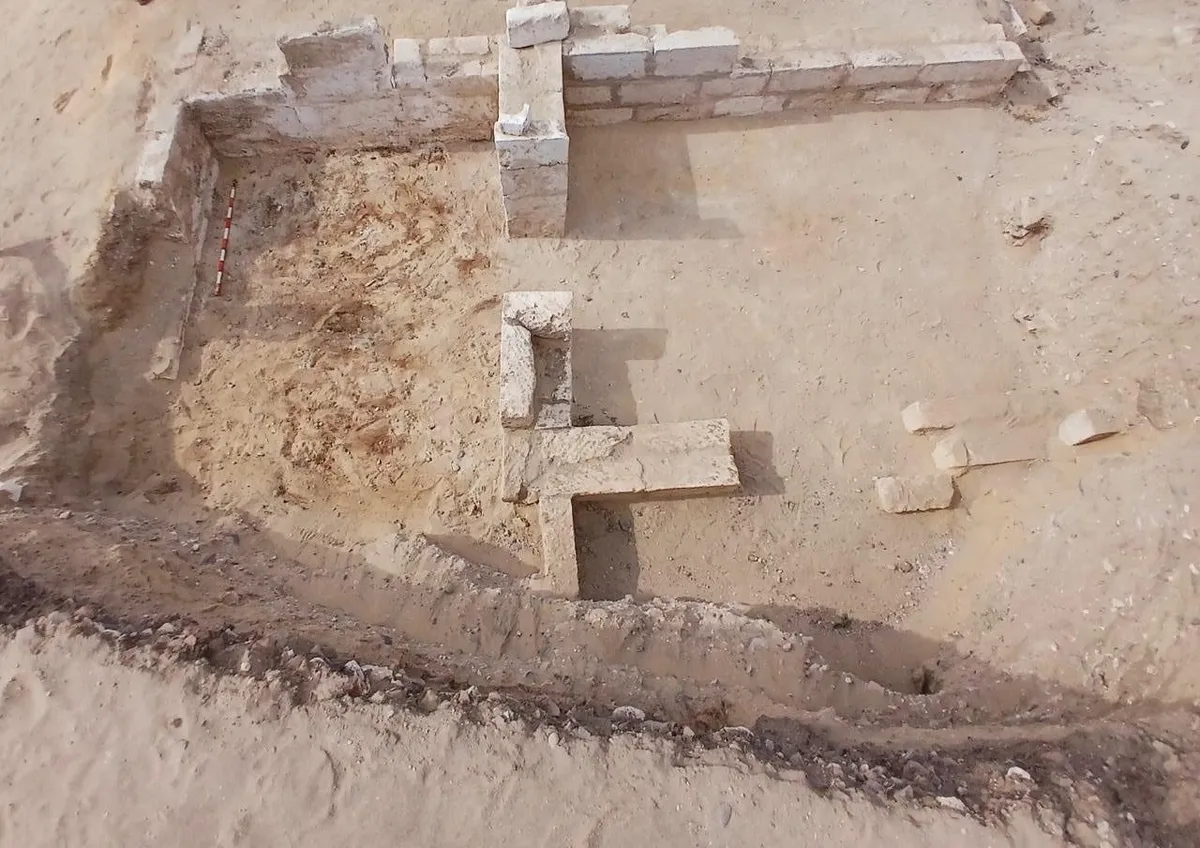
A bird-eye's view of a cemetery with a stone wall in the desert

A view of the cemetery that has the mummy with the "Iliad" papyrus inside its abdomen. (Image credit: Courtesy of the Egyptian Ministry of Tourism and Antiquities)

The "Iliad" mummy was found during a November-December 2025 excavation of a cemetery at Oxyrhynchus. The team's previous excavations at the cemetery revealed more than a dozen mummies with gold tongues, which ancient Egyptians thought would help the mummies communicate in the afterlife.

Related Stories

The team found three additional gold tongues and one copper tongue during the November-December 2025 excavation, a translated statement from Egypt's Ministry of Tourism and Antiquities said. For the ancient Egyptians, gold symbolized the flesh of the gods and it was thought that having a tongue made of gold would help you communicate with them. It's not clear why copper was used for one of the tongues.

It's also unknown if the mummy with the "Iliad" text had a gold or copper tongue; study of the mummy is ongoing.

Owen Jarus is a regular contributor to Live Science who writes about archaeology and humans' past. He has also written for The Independent (UK), The Canadian Press (CP) and The Associated Press (AP), among others. Owen has a bachelor of arts degree from the University of Toronto and a journalism degree from Ryerson University. 

You must confirm your public display name before commenting

Please logout and then login again, you will then be prompted to enter your display name.