
惯性聚合 高效追踪和阅读你感兴趣的博客、新闻、科技资讯
阅读原文 在惯性聚合中打开

推荐订阅源

云风的 BLOG
云风的 BLOG
M
MIT News - Artificial intelligence
博客园 - Franky
J
Java Code Geeks
V
Visual Studio Blog
G
Google Developers Blog
罗磊的独立博客
MongoDB | Blog
MongoDB | Blog
奇客Solidot–传递最新科技情报
奇客Solidot–传递最新科技情报
Recent Announcements
Last Week in AI
Last Week in AI
Cyber Security Advisories - MS-ISAC
Stack Overflow Blog
Stack Overflow Blog
博客园 - 司徒正美
The GitHub Blog
The GitHub Blog
腾讯CDC
阮一峰的网络日志
阮一峰的网络日志
V
V2EX
博客园 - 【当耐特】
IT之家
IT之家
I
InfoQ
U
Unit 42
C
Check Point Blog
Martin Fowler
Martin Fowler

Latest from Live Science in News

Artemis II heat shield aced its blistering reentry, ghostly underwater photo reveals Scientists invent artificial neurons that 'talk' to real brain cells, paving way to better brain implants 'What are the odds': Superbright comet and exploding fireball meteor form near-perfect X over European castle Meet AGI CPU — a specialist processor that engineers believe will power the next wave of AI Egyptian mummy has part of the 'Iliad' in its abdomen, archaeologists discover Artemis moon landing could face long delay while NASA waits for next-generation spacesuits Gene therapy improves hearing in 90% of patients with inherited deafness in largest trial of its kind Oil spills from Iran war may contaminate water and food supply and threaten protected wildlife refuge NASA's Curiosity rover finds a surprising number of giant 'dragon scales' littered across Mars Watch an AI-powered table tennis robot beat elite players NASA shuts off another Voyager 1 instrument as humanity Florida is facing its most intense drought in 15 years. Here's how it got so bad and how long it will last. Neanderthal toddlers grew faster than modern humans, probably because of the harsh environment they evolved in 'Nations need to prepare now': Key Atlantic ocean current is much closer to collapse than scientists thought New blood test aims to spot liver scarring before it paves the way to cancer A giant 'shadow' has been creeping across Mars for 50 years — and scientists aren't sure why Bruce the parrot is missing his upper beak —‬ but that hasn't stopped him from becoming an undefeated… Scientists identify main cause of extreme nausea and vomiting in pregnancy Naked mole rats wage bloody wars of succession to choose a new queen — but one colony did something scientists… Lyrid meteor shower 2026: See spring's first rain of 'shooting stars' peak in moonless skies $3 million prize goes to duo whose research led to first sickle cell CRISPR therapy 700-year-old mummy from Bolivia contains earliest confirmed evidence of strep throat bacteria in the Americas New pain-relief opioid could be much less addictive than morphine, rodent study finds Experimental drug doubles one-year survival in pancreatic cancer Science news this week: Physicists witness faster-than-light darkness pinpricks, humans are still evolving, and some… Archaeologists discover perfectly circular ancient Egyptian temple that may have been used for sacred water rituals 2 supermassive black holes may collide 100 years from now ‪—‬ and Earth would feel it Anglo-Saxon burial holds an older sister cradling her little brother after they both died 1,400 years ago, possibly of… Colorado River may have pooled and spilled over to form the Grand Canyon, solving a long-standing mystery ‪—‬… 'We all screamed when it happened': Bright-green fireball meteor caught exploding over famous Viking raid site…
'Insect apocalypse' is already fueling malnutrition in so...
Joanna Thomp · 2026-05-12 · via Latest from Live Science in News

Insects are disappearing, and they are leaving global food security gaps in their wake. Over the past three decades, bugs have been declining at an alarming rate across the globe — up to 1% per year, by some estimates. The drop has been so intense that some scientists have dubbed it an "insect apocalypse."

Because many insects pollinate crops, lower insect abundance has hurt everything from ecosystem health to crop yields. But historically, such consequences have been tough for scientists to measure directly. Now, in a new paper published May 6 in the journal Nature, researchers have quantified the impact of insect pollinator declines on human health for the first time.

The finding was stark: Insect pollinators were responsible for an estimated 44% of the villagers' farming income and over 20% of their intake of some essential nutrients, including vitamin A, vitamin E and folate. As fewer and less-diverse pollinators visited the crops, people's income and dietary health declined.

"Over half of the children in our study were too short for their age, which is largely driven by poor diets that depend upon insect pollinated vegetables, legumes and fruits," study co-author Naomi Saville, a researcher at the University College London Institute for Global Health and a study co-author, said in a statement.
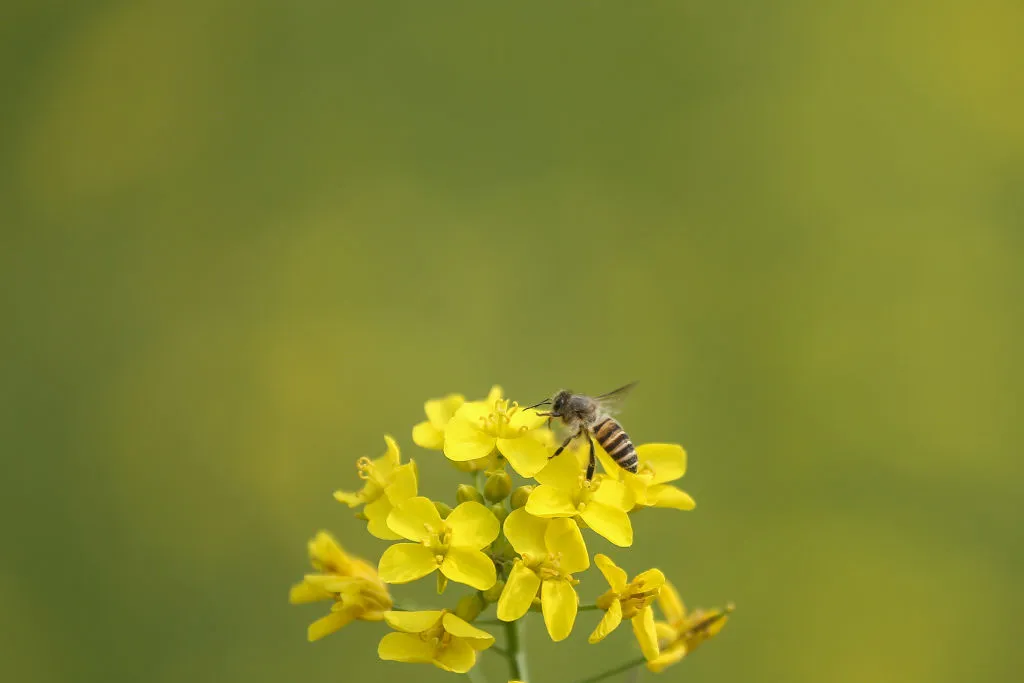
A close up of a yellow and black striped bee on a blossom of small yellow flowers.

Insects like bees play a pivotal role in boosting crop yields, so their global decline is bad news for food security.

(Image credit: NurPhoto via Getty Images)

When Saville's team extrapolated their data into a future with even fewer pollinators, the impacts were more pronounced. If no agricultural practices changed, they predicted a 7% loss of vitamin A and folate intake for the villagers by 2030. Deficiencies in these nutrients can lead to vision loss and birth defects.

Although the researchers only studied farming communities in Nepal, the new results offer a glimpse into the hidden burden of pollinator loss worldwide. Roughly 2 billion people rely primarily on smallholder farming like the villages in the study. About three-quarters of global crops need insect pollination to thrive, and a few crops ‪—‬ like coffee, almonds and chocolate ‪—‬ are totally reliant on pollinating insects to survive. If current trends continue, it could jeopardize many farmers' ability to grow food on a meaningful scale, the study authors said.

Get the world’s most fascinating discoveries delivered straight to your inbox.

But the new study also found ways to counteract this downward spiral. According to the team's models, simple interventions ‪— like planting native wildflowers near farms, keeping wild bees and reducing pesticide usage ‪— can help boost pollinator numbers. Such measures could increase farming income above current levels by up to 30% and boost vitamin A and folate intake by 5% and 9%, respectively.

"Biodiversity is not a luxury," study co-author Thomas Timberlake, an ecologist at the University of York in England, said in a statement. "It is fundamental to our health, nutrition and livelihoods."

Why Trust Live Science

Timberlake, T. P., Sapkota, S., Saville, N. M., Cirtwill, A. R., Baral, S. C., Bhusal, D. R., Devkota, K., Giri, S., Harris-Fry, H. A., Joshi, D., Kortsch, S., Myers, S. S., Roslin, T., Smith, M. R., & Memmott, J. (2026). Pollinators support the nutrition and income of vulnerable communities. Nature. https://doi.org/10.1038/s41586-026-10421-x