

惯性聚合 高效追踪和阅读你感兴趣的博客、新闻、科技资讯
阅读原文 在惯性聚合中打开

推荐订阅源

MongoDB | Blog
MongoDB | Blog
B
Blog
Y
Y Combinator Blog
大猫的无限游戏
大猫的无限游戏
aimingoo的专栏
aimingoo的专栏
B
Blog RSS Feed
博客园 - Franky
V
V2EX
IT之家
IT之家
WordPress大学
WordPress大学
博客园 - 三生石上(FineUI控件)
J
Java Code Geeks
F
Fortinet All Blogs
I
InfoQ
云风的 BLOG
云风的 BLOG
腾讯CDC
OSCHINA 社区最新新闻
OSCHINA 社区最新新闻
月光博客
月光博客
让小产品的独立变现更简单 - ezindie.com
N
Netflix TechBlog - Medium
宝玉的分享
宝玉的分享
钛媒体:引领未来商业与生活新知
钛媒体:引领未来商业与生活新知
P
Proofpoint News Feed
Microsoft Security Blog

Latest from Live Science in News

'Kraken' octopus that lived at the time of the dinosaurs was a 62-foot-long apex predator of the ocean Artemis II heat shield aced its blistering reentry, ghostly underwater photo reveals Scientists invent artificial neurons that 'talk' to real brain cells, paving way to better brain implants 'What are the odds': Superbright comet and exploding fireball meteor form near-perfect X over European castle Meet AGI CPU — a specialist processor that engineers believe will power the next wave of AI Egyptian mummy has part of the 'Iliad' in its abdomen, archaeologists discover Artemis moon landing could face long delay while NASA waits for next-generation spacesuits Gene therapy improves hearing in 90% of patients with inherited deafness in largest trial of its kind NASA's Curiosity rover finds a surprising number of giant 'dragon scales' littered across Mars Watch an AI-powered table tennis robot beat elite players NASA shuts off another Voyager 1 instrument as humanity Florida is facing its most intense drought in 15 years. Here's how it got so bad and how long it will last. Neanderthal toddlers grew faster than modern humans, probably because of the harsh environment they evolved in 'Nations need to prepare now': Key Atlantic ocean current is much closer to collapse than scientists thought New blood test aims to spot liver scarring before it paves the way to cancer A giant 'shadow' has been creeping across Mars for 50 years — and scientists aren't sure why Bruce the parrot is missing his upper beak —‬ but that hasn't stopped him from becoming an undefeated… Scientists identify main cause of extreme nausea and vomiting in pregnancy Naked mole rats wage bloody wars of succession to choose a new queen — but one colony did something scientists… Lyrid meteor shower 2026: See spring's first rain of 'shooting stars' peak in moonless skies $3 million prize goes to duo whose research led to first sickle cell CRISPR therapy 700-year-old mummy from Bolivia contains earliest confirmed evidence of strep throat bacteria in the Americas New pain-relief opioid could be much less addictive than morphine, rodent study finds Experimental drug doubles one-year survival in pancreatic cancer Science news this week: Physicists witness faster-than-light darkness pinpricks, humans are still evolving, and some… Archaeologists discover perfectly circular ancient Egyptian temple that may have been used for sacred water rituals 2 supermassive black holes may collide 100 years from now ‪—‬ and Earth would feel it Anglo-Saxon burial holds an older sister cradling her little brother after they both died 1,400 years ago, possibly of… Colorado River may have pooled and spilled over to form the Grand Canyon, solving a long-standing mystery ‪—‬… 'We all screamed when it happened': Bright-green fireball meteor caught exploding over famous Viking raid site…
Oil spills from Iran war may contaminate water and food s...
sascha.pare@ · 2026-04-22 · via Latest from Live Science in News
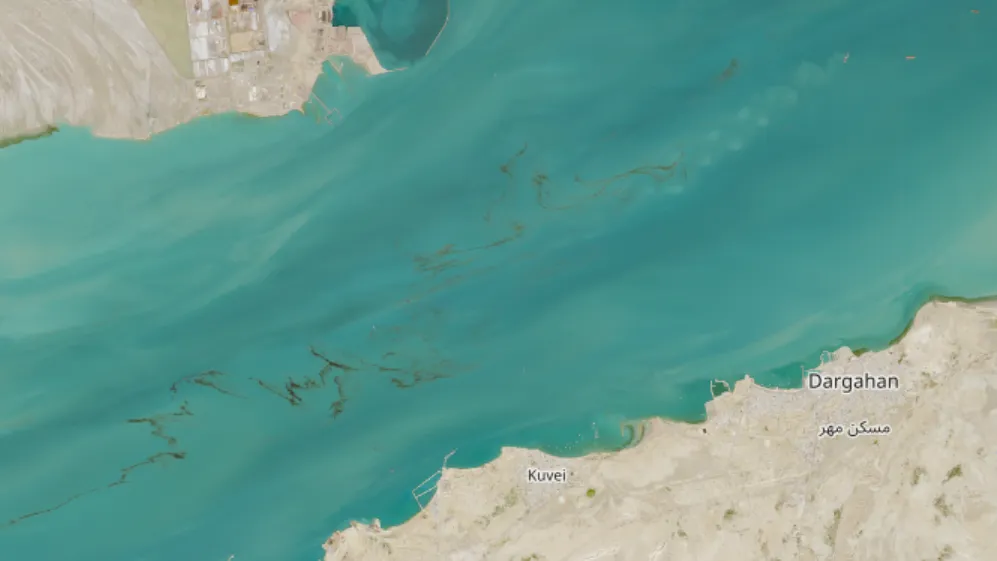
Satellite image of an oil spill near Iran's Qeshm Island.
Oil spills are visible from space in the Persian Gulf due to Iranian and U.S.-Israeli air strikes in the region. (Image credit: Copernicus Sentinel-2/ESA)

Oil spills in the Persian Gulf are visible from space after Iranian and U.S.-Israeli air strikes hit oil facilities and tankers across the region, satellite images reveal.

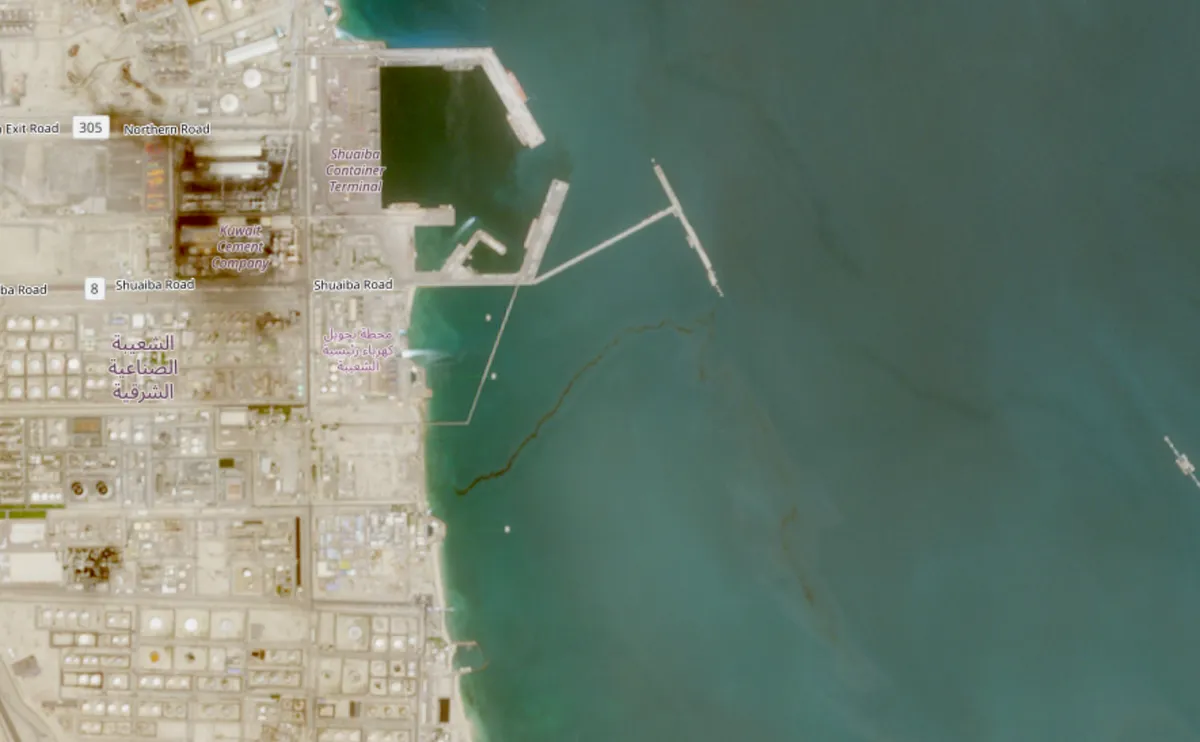
One image, taken April 10, shows oil leaking into the waters off Iran's Lavan Island and heading toward Shidvar Island, a protected wildlife refuge known as "Iran's Maldives." Another snap from April 6 captures an oil trail leaving Kuwait's Port of Shuaiba, located about 30 miles (50 kilometers) south of Kuwait City, after Iran said it targeted energy and petrochemical facilities in the Gulf countries April 5. And on March 18, April 2 and April 7, huge oil spills were visible in the Strait of Hormuz off Iran's Qeshm Island, which houses key military and civilian infrastructure.
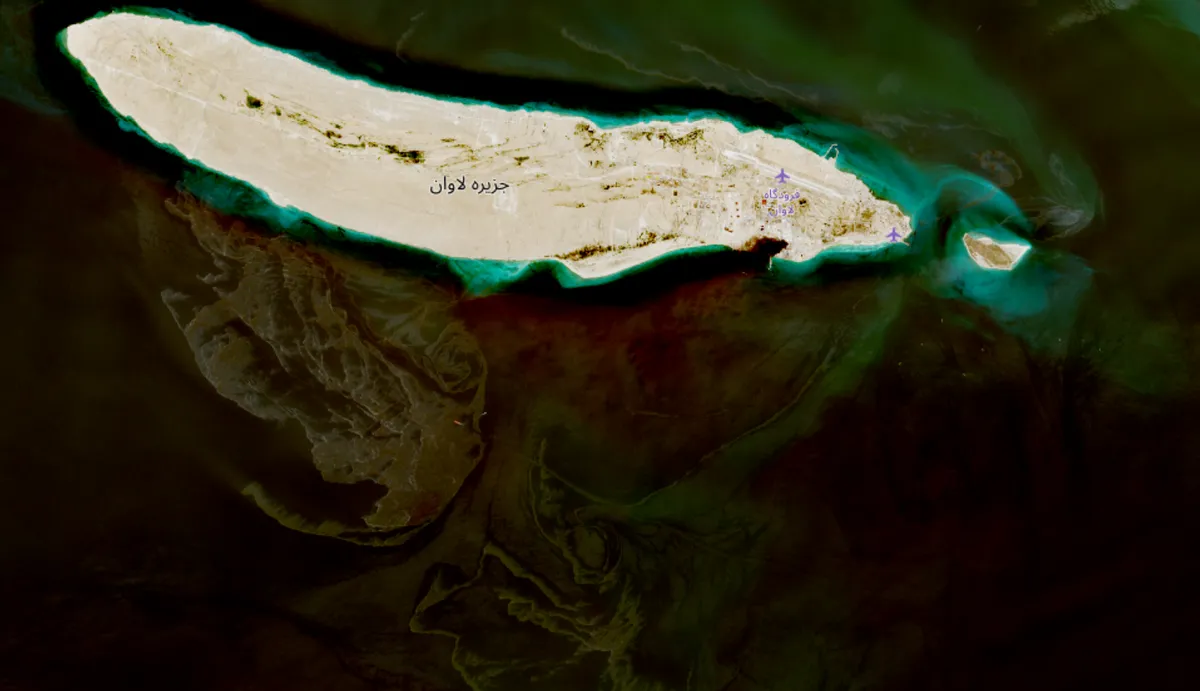
Satellite image of an oil spill off Iran's Lavan Island on April 10.

A satellite image taken April 10 shows oil floating off Iran's Lavan Island (left) and toward Shidvar Island (right), which is a protected wildlife refuge. (Image credit: Copernicus Sentinel-2/ESA)

The oil spill off Lavan Island, in particular, is a "major environmental emergency" due to its proximity to Shidvar Island, Wim Zwijnenburg, a project leader in humanitarian disarmament at the Dutch peace organization PAX, told CNN. Shidvar Island is an uninhabited coral island that hosts seabird colonies and turtle nesting grounds. At least five locations on Lavan Island have been hit by U.S.-Israeli forces, Zwijnenburg said, including an oil refinery.

Pools of oil off Qeshm Island measured more than 5 miles (8 km) long, threatening the entire marine ecosystem, from microorganisms to dolphins and whales. It also includes fish, which thousands of people living along the coast of Iran rely on for income and food, CNN reported.
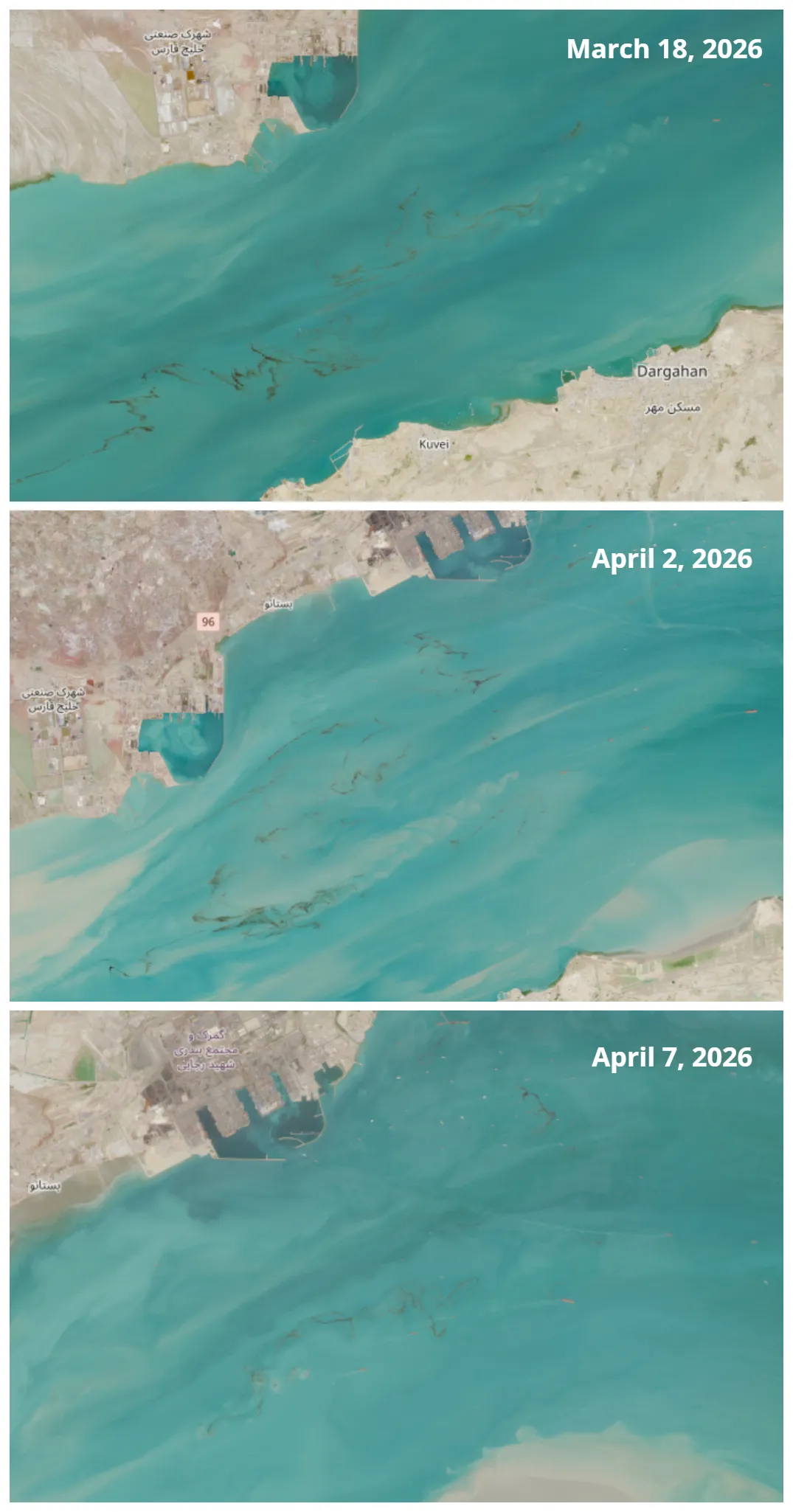
Three satellite images show oil spills in the Strait of Hormuz March 18, April 2 and April 7, 2026.

Satellites captured images of oil spills near Iran's Qeshm Island on March 18, April 2 and April 7, 2026. (Image credit: Copernicus Sentinel-2/ESA)

Oil spills devastate marine life by coating animals in harmful sludge, destroying the water repellency of birds' feathers and the insulating effects of mammals' fur, which can cause hypothermia. It also induces poisoning, leading to mass die-offs. The 1991 Gulf War oil spill, which was caused by Iraqi forces intentionally dumping 6 to 8 million barrels of crude oil into the Persian Gulf, harmed or killed an estimated 114,000 animals, including birds, turtles, bottlenose dolphins and whales.

The Persian Gulf is home to dugongs (Dugong dugong), green sea turtles (Chelonia mydas), hawksbill sea turtles (Eretmochelys imbricata) and Arabian Sea humpback whales (Megaptera novaeangliae).
Get the world’s most fascinating discoveries delivered straight to your inbox.

Satellite image of an oil spill off the coast of Kuwait on April 6, 2026.

On April 6, an oil spill off the coast of Kuwait was visible from space. (Image credit: Copernicus Sentinel-2/ESA)

RELATED STORIES

It's unclear exactly how much damage these oil spills will do, and there may be more on the horizon, especially if the warring parties continue to target ships carrying oil. Dozens of oil tankers filled with a total of around 5 trillion gallons (20 billion liters) of crude oil are currently trapped in the Persian Gulf, waiting to exit through the Strait of Hormuz.

Due to the conflict, it's unlikely that the existing oil spills will be cleaned up in time to prevent the worst impacts, Nina Noelle, a spokesperson for Greenpeace Germany, told CNN.

Sascha is a U.K.-based staff writer at Live Science. She holds a bachelor’s degree in biology from the University of Southampton in England and a master’s degree in science communication from Imperial College London. Her work has appeared in The Guardian and the health website Zoe. Besides writing, she enjoys playing tennis, bread-making and browsing second-hand shops for hidden gems.

You must confirm your public display name before commenting

Please logout and then login again, you will then be prompted to enter your display name.