


惯性聚合 高效追踪和阅读你感兴趣的博客、新闻、科技资讯
阅读原文 在惯性聚合中打开

推荐订阅源

J
Java Code Geeks
H
Hackread – Cybersecurity News, Data Breaches, AI and More
Blog — PlanetScale
Blog — PlanetScale
G
Google Developers Blog
Microsoft Security Blog
freeCodeCamp Programming Tutorials: Python, JavaScript, Git & More
腾讯CDC
让小产品的独立变现更简单 - ezindie.com
Jina AI
Jina AI
雷峰网
雷峰网
T
Tailwind CSS Blog
爱范儿
爱范儿
OSCHINA 社区最新新闻
OSCHINA 社区最新新闻
酷 壳 – CoolShell
酷 壳 – CoolShell
大猫的无限游戏
大猫的无限游戏
月光博客
月光博客
博客园 - 司徒正美
I
InfoQ
Engineering at Meta
Engineering at Meta
Vercel News
Vercel News
小众软件
小众软件
U
Unit 42
Google DeepMind News
D
DataBreaches.Net

Latest from Live Science in News

Artemis II heat shield aced its blistering reentry, ghostly underwater photo reveals Scientists invent artificial neurons that 'talk' to real brain cells, paving way to better brain implants 'What are the odds': Superbright comet and exploding fireball meteor form near-perfect X over European castle Meet AGI CPU — a specialist processor that engineers believe will power the next wave of AI Egyptian mummy has part of the 'Iliad' in its abdomen, archaeologists discover Artemis moon landing could face long delay while NASA waits for next-generation spacesuits Gene therapy improves hearing in 90% of patients with inherited deafness in largest trial of its kind Oil spills from Iran war may contaminate water and food supply and threaten protected wildlife refuge NASA's Curiosity rover finds a surprising number of giant 'dragon scales' littered across Mars Watch an AI-powered table tennis robot beat elite players NASA shuts off another Voyager 1 instrument as humanity Florida is facing its most intense drought in 15 years. Here's how it got so bad and how long it will last. Neanderthal toddlers grew faster than modern humans, probably because of the harsh environment they evolved in 'Nations need to prepare now': Key Atlantic ocean current is much closer to collapse than scientists thought New blood test aims to spot liver scarring before it paves the way to cancer A giant 'shadow' has been creeping across Mars for 50 years — and scientists aren't sure why Bruce the parrot is missing his upper beak —‬ but that hasn't stopped him from becoming an undefeated… Scientists identify main cause of extreme nausea and vomiting in pregnancy Naked mole rats wage bloody wars of succession to choose a new queen — but one colony did something scientists… Lyrid meteor shower 2026: See spring's first rain of 'shooting stars' peak in moonless skies $3 million prize goes to duo whose research led to first sickle cell CRISPR therapy 700-year-old mummy from Bolivia contains earliest confirmed evidence of strep throat bacteria in the Americas New pain-relief opioid could be much less addictive than morphine, rodent study finds Experimental drug doubles one-year survival in pancreatic cancer Science news this week: Physicists witness faster-than-light darkness pinpricks, humans are still evolving, and some… Archaeologists discover perfectly circular ancient Egyptian temple that may have been used for sacred water rituals 2 supermassive black holes may collide 100 years from now ‪—‬ and Earth would feel it Anglo-Saxon burial holds an older sister cradling her little brother after they both died 1,400 years ago, possibly of… Colorado River may have pooled and spilled over to form the Grand Canyon, solving a long-standing mystery ‪—‬… 'We all screamed when it happened': Bright-green fireball meteor caught exploding over famous Viking raid site…
'A landmark moment for the field': FDA approves first-eve...
Nicoletta La · 2026-04-24 · via Latest from Live Science in News
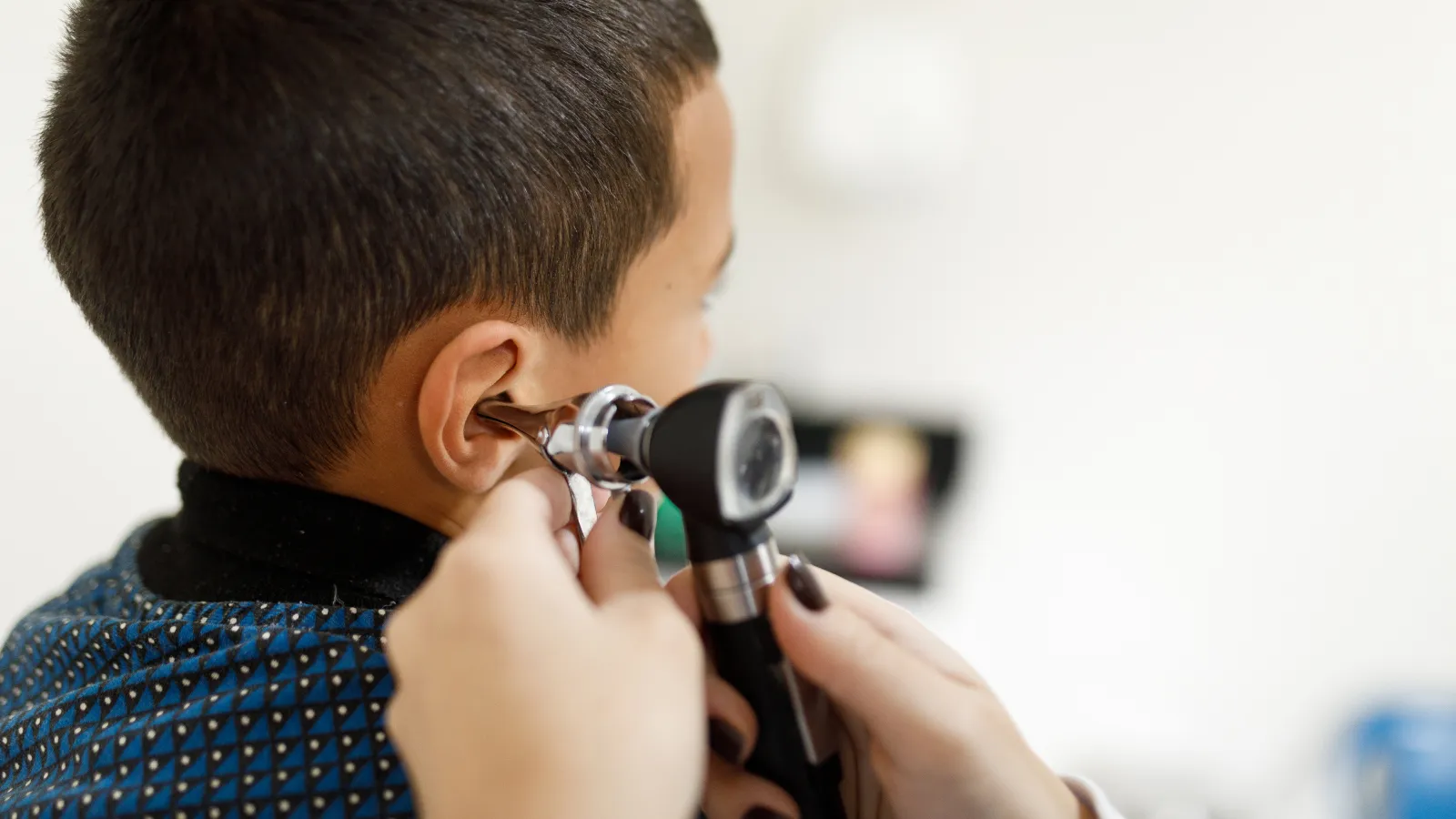
Doctor checking little boy's ears with an otoscope
The company Regeneron announced that its gene therapy for deafness has been cleared by the U.S. Food and Drug Administration. (Image credit: Capuski/Getty Images)

The U.S. Food and Drug Administration (FDA) has approved the first-ever gene therapy for inherited deafness.

The therapy, called Otarmeni, is approved to treat a form of hearing loss caused by mutations in the OTOF gene, which codes for a protein called otoferlin. Cells in the inner ear need otoferlin to translate vibrations into signals that can be interpreted by the brain. When people carry two defective copies of the OTOF gene — one from each parent — this line of communication between the inner ear and brain is cut, resulting in severe-to-profound hearing loss.

Some participants improved to the point that they could hear whispers, while all the participants who responded to the therapy reached a level of hearing that does not typically require cochlear implantation — meaning the use of a device to bypass the inner ear and restore some hearing. Many people with this form of hearing loss get cochlear implants, but the implants don't perfectly replicate natural hearing and require maintenance over time.

Based on the trial results, Otarmeni was approved for both children and adults with OTOF-related hearing loss, the therapy's maker Regeneron announced Thursday (April 23). The company has said that the treatment itself will be free to patients in the U.S., not including out-of-pocket administration costs that might be dictated by a patient's doctor and insurance.

"The FDA approval of this gene therapy is a landmark moment for the field and, most importantly, for patients," said Zheng-Yi Chen, an associate scientist at the Eaton-Peabody Laboratories at Mass Eye and Ear and an associate professor at Harvard Medical School. Chen has been involved in a trial of a similar gene therapy for OTOF-related deafness in China.

Chen said the data from the trial "convincingly demonstrate both safety and efficacy." The approval process was very fast, he added, taking less than three years from when the first patient was dosed in 2023. (Otarmeni was approved through a special FDA "fast track" process, in part because there were no existing treatments for OTOF-related hearing loss that address its underlying cause.)

Get the world’s most fascinating discoveries delivered straight to your inbox.

The speed "underscores both the robust clinical results and the urgent, unmet medical need for children with OTOF-mediated congenital hearing loss," Chen told Live Science. "We are incredibly encouraged by this milestone, which will serve as a catalyst to accelerate the development of future genetic therapies for hearing loss."

RELATED STORIES

OTOF-related hearing loss affects about 50 newborns per year in the U.S. The new therapy is approved for those with two defective copies of the OTOF gene and no history of using a cochlear implant in the ear intended for treatment. Installing these implants damages the inner ear, so a gene therapy is unlikely to work; but those who have only one cochlear implant can get the gene therapy in the opposite ear.

Patients seeking the therapy must also have intact outer hair cells, which are special cells in the ear that act as amplifiers, increasing the movement of the eardrum in response to sound.

An international trial testing Otarmeni is still ongoing and is recruiting children under 18 in the U.S., United Kingdom, Spain, Germany and Japan.

"I've witnessed firsthand my trial participant responding to their mother’s voice, dancing to music and interacting with the world, and these moments are now possible for more children born with this specific form of hearing loss," Dr. A. Eliot Shearer, an otolaryngologist at Boston Children’s Hospital, associate professor at Harvard Medical School and trial runner, said in the Regeneron statement.

Disclaimer

This article is for informational purposes only and is not meant to offer medical advice.

Nicoletta Lanese is the health channel editor at Live Science and was previously a news editor and staff writer at the site. She is a recipient of the 2026 AHCJ International Health Study Fellowship, with a project focused on antibiotic stewardship practices in Japan and the U.S. They hold a graduate certificate in science communication from UC Santa Cruz and degrees in neuroscience and dance from the University of Florida. Beyond Live Science, Lanese's work has appeared in The Scientist, Science News, the Mercury News, Mongabay and Stanford Medicine Magazine, among other outlets. Based in NYC, she also remains involved in dance and performs in local choreographers' work.

You must confirm your public display name before commenting

Please logout and then login again, you will then be prompted to enter your display name.