


惯性聚合 高效追踪和阅读你感兴趣的博客、新闻、科技资讯
阅读原文 在惯性聚合中打开

推荐订阅源

博客园 - 叶小钗
Last Week in AI
Last Week in AI
OSCHINA 社区最新新闻
OSCHINA 社区最新新闻
雷峰网
雷峰网
GbyAI
GbyAI
Hugging Face - Blog
Hugging Face - Blog
N
Netflix TechBlog - Medium
博客园 - 聂微东
Y
Y Combinator Blog
罗磊的独立博客
博客园_首页
小众软件
小众软件
有赞技术团队
有赞技术团队
爱范儿
爱范儿
F
Fortinet All Blogs
C
Check Point Blog
Google DeepMind News
云风的 BLOG
云风的 BLOG
Apple Machine Learning Research
M
MIT News - Artificial intelligence
月光博客
月光博客
钛媒体:引领未来商业与生活新知
钛媒体:引领未来商业与生活新知
博客园 - 司徒正美
aimingoo的专栏
aimingoo的专栏

Latest from Live Science in News

'Kraken' octopus that lived at the time of the dinosaurs was a 62-foot-long apex predator of the ocean Artemis II heat shield aced its blistering reentry, ghostly underwater photo reveals Scientists invent artificial neurons that 'talk' to real brain cells, paving way to better brain implants 'What are the odds': Superbright comet and exploding fireball meteor form near-perfect X over European castle Meet AGI CPU — a specialist processor that engineers believe will power the next wave of AI Egyptian mummy has part of the 'Iliad' in its abdomen, archaeologists discover Artemis moon landing could face long delay while NASA waits for next-generation spacesuits Gene therapy improves hearing in 90% of patients with inherited deafness in largest trial of its kind Oil spills from Iran war may contaminate water and food supply and threaten protected wildlife refuge NASA's Curiosity rover finds a surprising number of giant 'dragon scales' littered across Mars Watch an AI-powered table tennis robot beat elite players NASA shuts off another Voyager 1 instrument as humanity Florida is facing its most intense drought in 15 years. Here's how it got so bad and how long it will last. Neanderthal toddlers grew faster than modern humans, probably because of the harsh environment they evolved in 'Nations need to prepare now': Key Atlantic ocean current is much closer to collapse than scientists thought New blood test aims to spot liver scarring before it paves the way to cancer A giant 'shadow' has been creeping across Mars for 50 years — and scientists aren't sure why Bruce the parrot is missing his upper beak —‬ but that hasn't stopped him from becoming an undefeated… Scientists identify main cause of extreme nausea and vomiting in pregnancy Naked mole rats wage bloody wars of succession to choose a new queen — but one colony did something scientists… $3 million prize goes to duo whose research led to first sickle cell CRISPR therapy 700-year-old mummy from Bolivia contains earliest confirmed evidence of strep throat bacteria in the Americas New pain-relief opioid could be much less addictive than morphine, rodent study finds Experimental drug doubles one-year survival in pancreatic cancer Science news this week: Physicists witness faster-than-light darkness pinpricks, humans are still evolving, and some… Archaeologists discover perfectly circular ancient Egyptian temple that may have been used for sacred water rituals 2 supermassive black holes may collide 100 years from now ‪—‬ and Earth would feel it Anglo-Saxon burial holds an older sister cradling her little brother after they both died 1,400 years ago, possibly of… Colorado River may have pooled and spilled over to form the Grand Canyon, solving a long-standing mystery ‪—‬… 'We all screamed when it happened': Bright-green fireball meteor caught exploding over famous Viking raid site…
Lyrid meteor shower 2026: See spring's first rain of 'sho...
Jamie Carter · 2026-04-19 · via Latest from Live Science in News
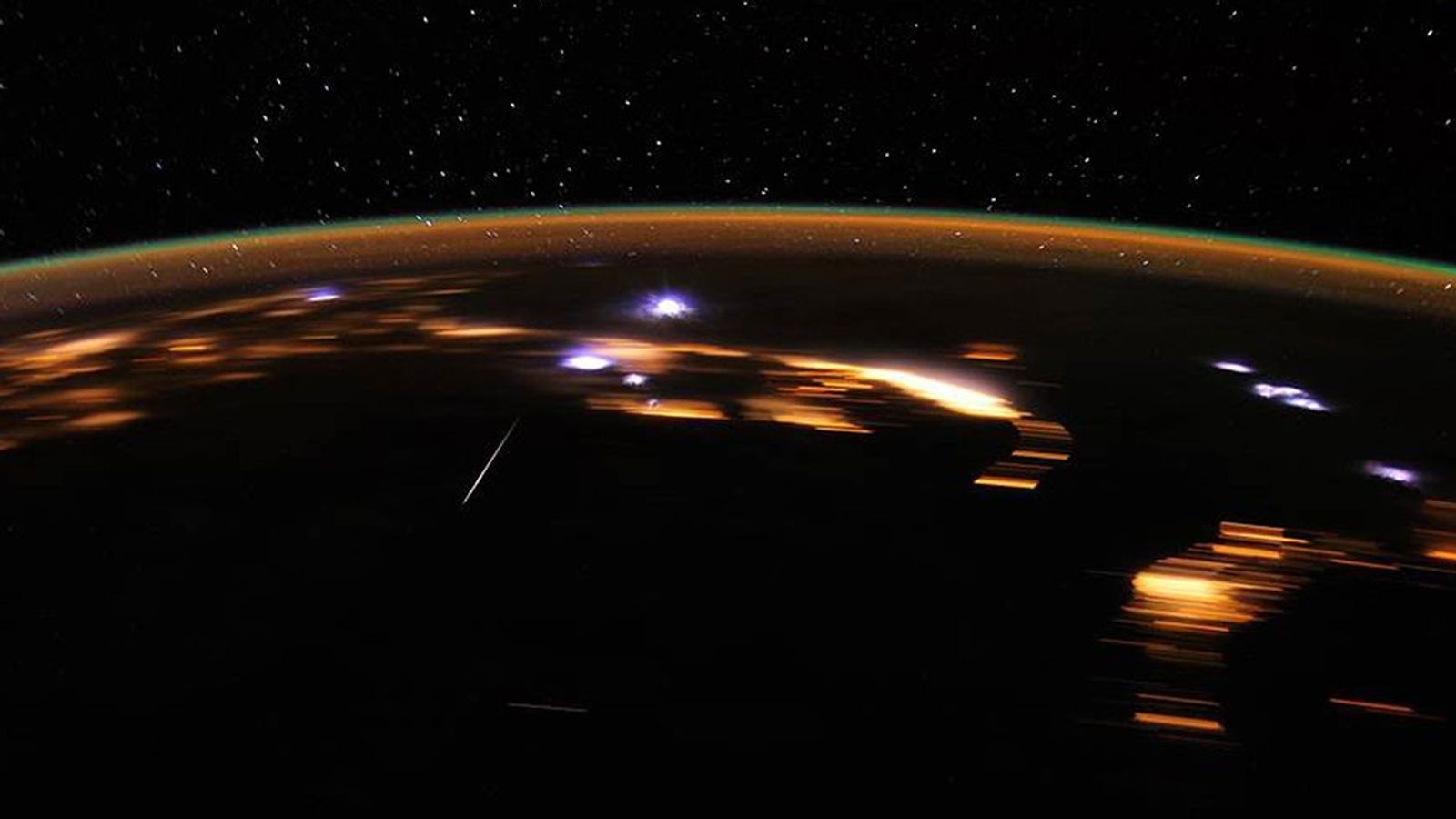
A view of the Earth from space, its dark surface showing glowing city lights with sparse purple glowing areas where meteors hit the atmosphere. "Shooting stars" from the Lyrid meteor shower as seen from the International Space Station. (Image credit: NASA/JSC/D. Pettit)

The night sky is set to deliver one of spring's most anticipated celestial events as the Lyrid meteor shower returns this week.

One of the oldest recorded meteor showers, the Lyrids peak Wednesday (April 22), offering stargazers a rare treat: a chance to witness "shooting stars" — and possibly bright "fireballs" — in dark, moonless skies.

The Lyrids officially run from April 14 through April 30, but their activity will peak in intensity during daylight on April 22 in North America and Europe, according to the American Meteor Society, when around 10 to 20 meteors per hour are expected. That creates two opportunities to catch the Lyrids: the predawn and post-sunset hours of April 22. The most favorable conditions are expected in the early morning hours, particularly around 5 a.m., when the radiant point — located in the constellation Lyra — rises higher in the sky.

Astronomical timing is working in favor of skywatchers this month. The new moon occurs on April 17, so it will still be a crescent by the time the Lyrids peak on April 22. That means the moon will be out of the sky before sunrise that day. Although it will be in the sky after dark later that day, the moon will set in the western sky as Lyra rises in the east, so it won't interfere.

While the Lyrid meteor shower's rate of "shooting stars" doesn't compare to more intense meteor showers like August's Perseids and December's Geminids, the Lyrids are known for their fast and bright "fireball" meteors that leave a persistent train, as well as for occasional bursts of activity ‪—‬ as many as 100 Lyrid meteors were reported per hour in 1803, 1922, 1945 and 1982, according to NASA. However, such outbursts are almost impossible to predict.

The Lyrids are the result of dust and debris left in the inner solar system by Comet C/1861 G1 (Thatcher), which orbits the sun every 415.5 years. When Earth passes through the comet's debris field each year, it causes meteors to burn up in our planet's atmosphere, giving the impression of "shooting stars" moving across the night sky. Comet Thatcher was last in the inner solar system in 1861, according to NASA. It isn’t due to return until around 2276.

For the best chance of seeing Lyrid meteors, check the weather forecast and a light pollution map for a location away from city lights. Allow your eyes to adjust to the darkness, and remain patient, as meteors can appear unpredictably in any part of the sky.

Get the world’s most fascinating discoveries delivered straight to your inbox.

Meteor showers are best seen with the naked eye, but you’ll need some special gear if you want to photograph them.

Jamie Carter is a Cardiff, U.K.-based freelance science journalist and a regular contributor to Live Science. He is the author of A Stargazing Program For Beginners and co-author of The Eclipse Effect, and leads international stargazing and eclipse-chasing tours. His work appears regularly in Space.com, Forbes, New Scientist, BBC Sky at Night, Sky & Telescope, and other major science and astronomy publications. He is also the editor of WhenIsTheNextEclipse.com.

You must confirm your public display name before commenting

Please logout and then login again, you will then be prompted to enter your display name.