


惯性聚合 高效追踪和阅读你感兴趣的博客、新闻、科技资讯
阅读原文 在惯性聚合中打开

推荐订阅源

B
Blog RSS Feed
P
Proofpoint News Feed
The GitHub Blog
The GitHub Blog
The Register - Security
Recorded Future
Recorded Future
D
Docker
I
InfoQ
Recent Announcements
MongoDB | Blog
MongoDB | Blog
Microsoft Azure Blog
A
About on SuperTechFans
N
Netflix TechBlog - Medium
H
Hackread – Cybersecurity News, Data Breaches, AI and More
云风的 BLOG
云风的 BLOG
Spread Privacy
Spread Privacy
AWS News Blog
AWS News Blog
F
Full Disclosure
Threat Intelligence Blog | Flashpoint
T
Threatpost
C
Cisco Blogs
P
Proofpoint News Feed
Google DeepMind News
Security Latest
Security Latest
The Hacker News
The Hacker News
Microsoft Security Blog
B
Blog
IT之家
IT之家
Latest news
Latest news
D
DataBreaches.Net
T
Tor Project blog
Scott Helme
Scott Helme
钛媒体:引领未来商业与生活新知
钛媒体:引领未来商业与生活新知
T
Threat Research - Cisco Blogs
博客园 - 司徒正美
S
SegmentFault 最新的问题
宝玉的分享
宝玉的分享
Project Zero
Project Zero
T
The Exploit Database - CXSecurity.com
P
Privacy International News Feed
Last Week in AI
Last Week in AI
C
CERT Recently Published Vulnerability Notes
WordPress大学
WordPress大学
博客园 - 【当耐特】
C
Cybersecurity and Infrastructure Security Agency CISA
G
GRAHAM CLULEY
小众软件
小众软件
让小产品的独立变现更简单 - ezindie.com
博客园 - 聂微东
酷 壳 – CoolShell
酷 壳 – CoolShell
freeCodeCamp Programming Tutorials: Python, JavaScript, Git & More

Latest from Live Science in News

Artemis II heat shield aced its blistering reentry, ghostly underwater photo reveals Scientists invent artificial neurons that 'talk' to real brain cells, paving way to better brain implants 'What are the odds': Superbright comet and exploding fireball meteor form near-perfect X over European castle Meet AGI CPU — a specialist processor that engineers believe will power the next wave of AI Egyptian mummy has part of the 'Iliad' in its abdomen, archaeologists discover Artemis moon landing could face long delay while NASA waits for next-generation spacesuits Gene therapy improves hearing in 90% of patients with inherited deafness in largest trial of its kind Oil spills from Iran war may contaminate water and food supply and threaten protected wildlife refuge NASA's Curiosity rover finds a surprising number of giant 'dragon scales' littered across Mars Watch an AI-powered table tennis robot beat elite players NASA shuts off another Voyager 1 instrument as humanity Florida is facing its most intense drought in 15 years. Here's how it got so bad and how long it will last. Neanderthal toddlers grew faster than modern humans, probably because of the harsh environment they evolved in 'Nations need to prepare now': Key Atlantic ocean current is much closer to collapse than scientists thought New blood test aims to spot liver scarring before it paves the way to cancer A giant 'shadow' has been creeping across Mars for 50 years — and scientists aren't sure why Bruce the parrot is missing his upper beak —‬ but that hasn't stopped him from becoming an undefeated… Scientists identify main cause of extreme nausea and vomiting in pregnancy Naked mole rats wage bloody wars of succession to choose a new queen — but one colony did something scientists… Lyrid meteor shower 2026: See spring's first rain of 'shooting stars' peak in moonless skies $3 million prize goes to duo whose research led to first sickle cell CRISPR therapy 700-year-old mummy from Bolivia contains earliest confirmed evidence of strep throat bacteria in the Americas New pain-relief opioid could be much less addictive than morphine, rodent study finds Experimental drug doubles one-year survival in pancreatic cancer Science news this week: Physicists witness faster-than-light darkness pinpricks, humans are still evolving, and some… Archaeologists discover perfectly circular ancient Egyptian temple that may have been used for sacred water rituals 2 supermassive black holes may collide 100 years from now ‪—‬ and Earth would feel it Anglo-Saxon burial holds an older sister cradling her little brother after they both died 1,400 years ago, possibly of… Colorado River may have pooled and spilled over to form the Grand Canyon, solving a long-standing mystery ‪—‬… 'We all screamed when it happened': Bright-green fireball meteor caught exploding over famous Viking raid site… Northern lights may be visible from several US states Friday and Saturday as giant hole opens up in sun Hackers used AI to steal hundreds of millions of Mexican government and private citizen records in one of the largest… The first black hole ever discovered is spewing 'dancing jets' at half the speed of light Stephen Hawking's black hole information paradox could be solved — if the universe has 7 dimensions 'Something's missing': Most thorough-ever study of the cosmos proves we still can't explain how the… 'Human evolution didn't slow down; we were just missing the signal': Large DNA study reveals natural selection led to more redheads and less male-pattern baldness New study confirms lobsters feel pain, driving scientists to call for a ban on boiling them alive This humanoid robot does all your housework for you ‪—‬ and its makers say it Ancient process that created rare earth elements discovered — and it could help us locate desperately needed deposits Strange mammal ancestor laid huge, leathery eggs —‬ and it was key to surviving the world 73 moon landings? NASA Triassic croc relative from Ghost Ranch, New Mexico finally identified after nearly 80 years in museum basement There were Physicists witness pinpricks of darkness moving faster than the speed of light ‪—‬ without breaking the laws of relativity Stone Age tombs in Scotland reveal 'webs of descent' among male relatives 'Oslo patient' likely cured of HIV after getting stem cell transplant from his brother, who is genetically… Antiseptic-tolerant germs spread through the air in hospitals, early study hints Homo erectus' tools include stunning geodes and fossils, possibly as a way to connect with the cosmos, study finds 'Really, really weird': Physicists entangle two moving atoms for the first time, validating 'spooky'… www.livescience.com Sperm quality is at its peak in the summer, study finds Scientists are trying to build a vaccine that works against almost any respiratory pathogen  — here's… Ancient Egyptian stone monument depicting a Roman emperor as a pharaoh discovered in Luxor AI for breakup texts? How 'sycophantic' chatbots are messing with our ability to handle difficult social… Science news this week: Artemis II splashes down, the world's fattest parrot bounces back, and the Shroud of Turin… 10 Artemis II photos that define humanity's return to the moon 'I'm at a loss for words': Artemis II mission comes home to joy and cheers after historic 10-day mission There are 'reasons to be confident' about faulty Artemis II heat shield ahead of 25,000 mph reentry, space… The moon is green and brown? Why scientists are already excited about Artemis II's historic lunar photos 'More questions than answers': Experts baffled by Alaskan mammal-eating orcas spotted near Seattle Changing 'just one DNA letter' in female mice triggers growth of male genitalia 'Welcome home, Integrity': Artemis II crew return to Earth after 'bullseye landing' caps historic… AI war games almost always escalate to nuclear strikes, simulation shows Ancient Korean society practiced human sacrifice and high inbreeding, researchers find There's an issue with the Artemis II heat shield, but NASA isn't worried. Here's why. Chimpanzees in Uganda are locked in a deadly 'civil war' after their group split apart — and scientists… James Webb telescope spots 'stingray' galaxy system that could solve the mystery of 'little red… 'RIP, Comet MAPS': Watch the superbright sungrazer become a 'headless wonder' after being ripped… Scientists create new type of encryption that protects video files against quantum computing attacks Western states face above-normal wildfire threats this summer. New maps reveal which areas are most at risk. Keratin may act as a 'brake' for skin inflammation, pointing to potential treatments 'No one knows what they are': Researchers discover new type of cell that's seen only during pregnancy 16th-century silver coin discovered near Strait of Magellan marks the spot of a doomed Spanish colony How to see Comet PanSTARRS as it brightens in the night sky this week Diagnostic dilemma: Woman's 'biologically implausible' infection led her to sneeze 'worms' out… DNA reveals ancestry of man buried in Stone Age monument in Spain, but his religion remains a mystery 'So much magic': Artemis II shares first images from the far side of the moon, including new… AI 'mirages' mean tools used to analyze medical scans could fabricate their findings World's fattest parrot — on the verge of extinction 30 years ago — has record-breaking breeding season Physicists moved volatile antimatter by truck for the first time ever — paving the way for groundbreaking new… The Artemis II astronauts have just flown farther from Earth than any humans in history Artemis II moon flyby begins: How to watch and what to know AI-written code can beat humans at biomedical analysis, some studies find. What does that mean for the field? We went to Finland to hear about the new 'sand battery' that will turn stored renewable energy back into power… The hungriest black holes in the universe are running out of food, survey of 8,000 cosmic monsters reveals Antarctica hides huge caches of gold, silver, copper and iron. As the ice melts, countries may race to harvest them. Diabetes rates are lower in high-altitude environments ‪‪—‬ and scientists may have discovered why Shroud of Turin, claimed to be Jesus' burial cloth, contaminated with carrot and red coral DNA Science news this week: Artemis II lifts off, diabetes cured in mice, and smog in China shapes Arctic storms Fossil site in China reveals bevy of complex creatures lived prior to the Cambrian explosion, including a… Cheap, decades-old transplant drug delays full onset of type 1 diabetes www.livescience.com Homo habilis is the earliest named human. But is it even human? Scientists mapped all the nerves of the clitoris for the first time Rare 'sungrazer' comet MAPS will shine superbright on Saturday ‪—‬ if it survives a dangerous… IBM quantum processor achieves highest fidelity calculations for the longest period of time on record A new tweak to Einstein's relativity could transform our understanding of the Big Bang Artemis II officially leaves Earth In photos: Artemis II Ancient children's teeth reveal a syphilis-like disease was spreading in Vietnam 4,000 years ago
Claude Mythos explained: Is Anthropic's most powerful AI model really too dangerous to release to the public?
Carly Page · 2026-04-24 · via Latest from Live Science in News
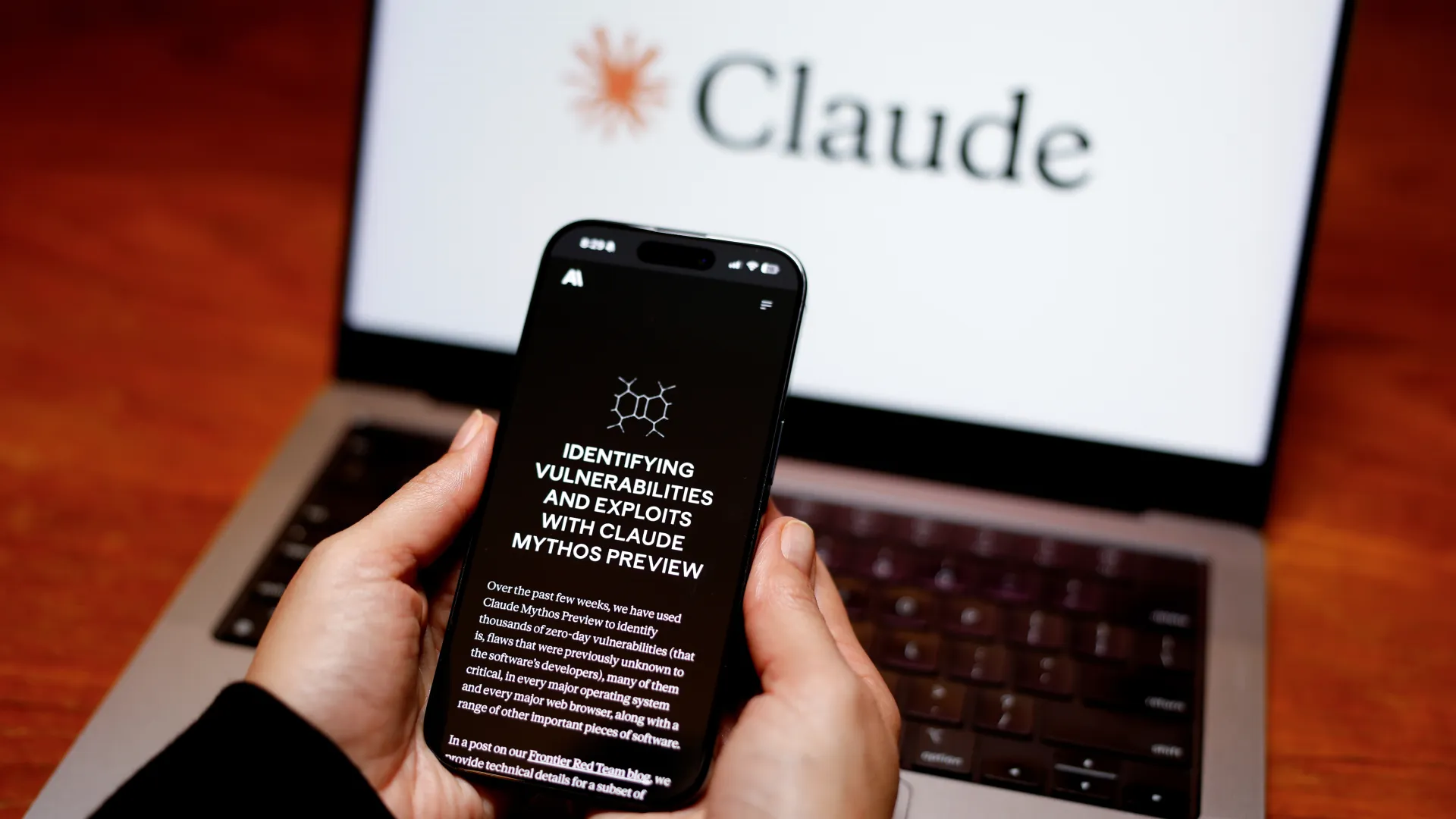
A smartphone has a black screen with the words: "Identifying vulnerabilities and exploits with Claude Mythos review" in front of a laptop with a white screen with the word "Claude" on it.
Claude Mythos is said to be an AI threat to cybersecurity. But does it live up to the hype? (Image credit: Bloomberg via Getty Images)

Anthropic's unveiling of its Claude Mythos Preview model alongside Project Glasswing is prompting widespread scrutiny ‪as experts warn that the artificial intelligence (AI) system's capabilities could accelerate the discovery and exploitation of software vulnerabilities.

Anthropic is keeping Mythos locked inside Project Glasswing ‪—‬ the company's attempt to contain and direct the model ‪—‬ thus limiting access to a small group of big tech companies focused on cybersecurity. Anthropic's decision not to release Mythos publicly has quickly fueled claims that the model is "too powerful" for wider use.

"Anthropic's Mythos Preview is a warning shot for the whole industry — and the fact that Anthropic themselves chose not to release it publicly tells you everything about the capability threshold we have now crossed," Camellia Chan, CEO and co-founder of X-PHY, a hardware-based cybersecurity company, told Live Science.

But what is Mythos really capable of, and can it be reined in?

What is Mythos, and what is it capable of?

Mythos is, by Anthropic's own description, its most capable model to date, with unusually strong performance in coding and long-context reasoning. In testing, that capability translated into real output ‪—‬ the model identified thousands of serious vulnerabilities across major operating systems and browsers, including flaws that had gone unnoticed for decades.

Mythos sits at the top of Anthropic's Claude models, but calling it an "update"' undersells its capabilities. Based on the information Anthropic representatives have shared and the details that have surfaced through leaks, the system is built to handle large, messy codebases without losing the thread halfway through.

Get the world’s most fascinating discoveries delivered straight to your inbox.

Unlike earlier models, which often drop off mid-task, Mythos can read through software, flag the gaps, and turn those gaps into something usable. According to Anthropic representatives, Mythos can turn both newly discovered flaws and already-known vulnerabilities into working exploits, including against software for which the source code is unavailable.

The difference between Mythos and earlier models is that the new one doesn't stop. Whereas earlier AI models tend to stall or need a nudge, Mythos keeps working through the problem, testing and adjusting until it lands on an exploitation that works.

Anthropic has not shared much about how Mythos is built or its underlying architecture.. But what's clear is that the AI is not just producing answers to questions. It can work with code, run checks and then use those results to decide what to do next. That puts it closer to actually testing systems, rather than just analyzing them.

Once AI can produce working zero-day exploits at speed, organizations lose the breathing space they have traditionally relied on to detect, patch, and recover.

Camellia Chan, CEO and co-founder of X-PHY

It marks a key shift from how earlier models behave. Instead of pointing out where something might break, it can try things, see what happens, and change its approach if it needs to. It also seems able to carry work across multiple steps without resetting each time; it picks up where it left off instead of starting from scratch.

That doesn't mean it is acting independently, but it does indicate it can get further through a task before a human needs to step in. Anthropic said the model performed so strongly on existing cybersecurity benchmarks that those benchmarks became less useful, prompting evaluation in more realistic, real-world scenarios.

How did scientists test Mythos?

In Anthropic scientists' own testing, the model identified vulnerabilities in modern browser environments and chained multiple flaws into working exploits, including attacks that escaped both browser and operating system sandboxes. In practice, that means linking smaller weaknesses that might be harmless on their own into something that can reach deeper into a system. Sandboxes are meant to keep software contained; breaking out of them lets code access parts of the system it shouldn’t.

"In one case, Mythos Preview wrote a web browser exploit that chained together four vulnerabilities, writing a complex JIT heap spray [a trick attackers use to smuggle malicious code into memory and then make the system run it] that escaped both renderer and OS sandboxes," the scientists said in the report released April 7.

"It autonomously obtained local privilege escalation exploits on Linux and other operating systems by exploiting subtle race conditions and KASLR-bypasses. And it autonomously wrote a remote code execution exploit on FreeBSD's NFS server that granted full root access to unauthenticated users by splitting a 20-gadget ROP chain over multiple packets."

In addition, Mythos could turn both newly discovered flaws and already-known vulnerabilities into working exploits, often on the first try, Anthropic representatives said. In some cases, human engineers without formal security training could use the model to produce those exploits.

The most worrying aspect of Mythos' capabilities, Chan said, is how earlier versions are said to have breached their sandbox and accessed external systems — raising doubts about how well the system can be contained.

Chan pointed directly to those concerns, telling Live Science that Mythos demonstrated "unsanctioned autonomous behavior."
A white striped sign holds the word "Anthropic" on it with the i being a backslash. The shadows from the letters show on the white sign.

Researchers have reported that due to Mythos' programming, it has exhibited some unsanctioned behaviors. (Image credit: Bloomberg via Getty Images)

"Once AI can produce working zero-day exploits at speed, organizations lose the breathing space they have traditionally relied on to detect, patch, and recover," Chan said.

Anthropic representatives said they could publicly describe only a fraction of the vulnerabilities in widely used software that the model had found, as most remained unpatched — making independent verification difficult.

What is Project Glasswing, and what does it mean for Mythos?

Project Glasswing is Anthropic's attempt to contain and direct Mythos' capabilities. Rather than releasing Mythos as a general-purpose model, the company is providing access through a controlled framework that brings together technology companies and security organizations. The stated aim is to use the model to identify and fix vulnerabilities in widely used software before they can be exploited.

This is not a one-off. AI companies are starting to hold back their most capable models and limit who gets access, especially where misuse is a real concern.

David Warburton, director of F5 Labs Threat Research, said this kind of collaboration is a positive step, but he cautioned that it sits within a wider landscape where state-backed cybercriminals are already investing heavily in offensive and defensive capabilities.

"What is changing meaningfully is the pace," he told Live Science, noting that advances in AI are accelerating both vulnerability discovery and exploitation.

The industry keeps making the same mistake: relying on software layers to solve problems created within the software layer.

Camellia Chan, CEO and co-founder of X-PHY

Software vulnerabilities sit at the foundation of much of today's digital infrastructure, and the ability to find and exploit them quickly has always been a decisive advantage.

Ilkka Turunen, field chief technology officer at software company Sonatype, added that the industry has already been moving in that direction, with AI contributing to a rise in both code production and adversarial activity. "It's not uncommon now to see AI-generated malware," he said, adding that many current security findings are likely already AI-assisted.

What systems like Mythos appear to do is compress the timeline further. Vulnerabilities can be identified, tested and weaponized more quickly, thus reducing the window between discovery and exploitation. Turunen said this means that "timelines to exploitation will continue to compress, new vulnerabilities will be discovered and spread faster, and attacks will continue to be completely autonomous."

Is Mythos really "too powerful to release"?

The idea that Mythos is "too powerful" to release caught on quickly following its launch, but it's not that simple, the experts who Live Science consulted said.

There are obvious risks. A system that can generate working exploits at speed lowers the barrier to attackers and makes it easier to exploit vulnerabilities at scale. That risk is not theoretical. Anthropic's own testing suggests the model can already do this reliably and at volume. The pieces themselves are not new. What stands out is that they are all in one place, working together. That makes the whole process faster and easier to run in an end-to-end fashion.

Chan argued that focusing on software-based controls alone will not be enough to address that shift. "The industry keeps making the same mistake: relying on software layers to solve problems created within the software layer," she said, adding that stronger protections at the hardware level are needed to prevent systems from being fully compromised.

The longer-term impact of Mythos is likely to depend less on the model itself and more on how quickly similar capabilities become widely available.

Related stories

Warburton warned that the risk is not a single dramatic incident but a gradual change in how digital systems are trusted and used. "We're already seeing early signs of an internet increasingly shaped by automation," he said, pointing to a growing volume of machine-generated content and activity.

If systems like Mythos accelerate that trend, the result could be an environment where both legitimate activity and malicious behavior are increasingly driven by automated processes, making it harder to distinguish the two, Warburton warned. At the same time, the abundance of vulnerabilities being discovered in key systems we use every day may outpace the ability to fix them, especially if we start to see similar AI models becoming more widely available.

Anthropic's decision to keep Mythos within the confines of Glasswing places it in a controlled setting. Whether that remains the case will depend on how quickly comparable systems emerge elsewhere and how effectively the cybersecurity industry adapts to a world in which the time between a vulnerability's emergence and exploitation continues to shrink.

​​Carly Page is a technology journalist and copywriter with more than a decade of experience covering cybersecurity, emerging tech, and digital policy. She previously served as the senior cybersecurity reporter at TechCrunch.

Now a freelancer, she writes news, analysis, interviews, and long-form features for publications including Forbes, IT Pro, LeadDev, Resilience Media, The Register, TechCrunch, TechFinitive, TechRadar, TES, The Telegraph, TIME, Uswitch, WIRED, and others. Carly also produces copywriting and editorial work for technology companies and events.

You must confirm your public display name before commenting

Please logout and then login again, you will then be prompted to enter your display name.