
惯性聚合 高效追踪和阅读你感兴趣的博客、新闻、科技资讯
阅读原文 在惯性聚合中打开

推荐订阅源

U
Unit 42
Vercel News
Vercel News
博客园 - 叶小钗
大猫的无限游戏
大猫的无限游戏
MyScale Blog
MyScale Blog
P
Proofpoint News Feed
量子位
Engineering at Meta
Engineering at Meta
B
Blog RSS Feed
博客园 - 【当耐特】
Recent Announcements
Google DeepMind News
D
DataBreaches.Net
Stack Overflow Blog
Stack Overflow Blog
博客园 - 聂微东
小众软件
小众软件
Hugging Face - Blog
Hugging Face - Blog
人人都是产品经理
人人都是产品经理
IT之家
IT之家
T
The Blog of Author Tim Ferriss
Last Week in AI
Last Week in AI
OSCHINA 社区最新新闻
OSCHINA 社区最新新闻
Jina AI
Jina AI
博客园 - 三生石上(FineUI控件)

Latest from Live Science in News

Artemis II heat shield aced its blistering reentry, ghostly underwater photo reveals Scientists invent artificial neurons that 'talk' to real brain cells, paving way to better brain implants 'What are the odds': Superbright comet and exploding fireball meteor form near-perfect X over European castle Meet AGI CPU — a specialist processor that engineers believe will power the next wave of AI Egyptian mummy has part of the 'Iliad' in its abdomen, archaeologists discover Artemis moon landing could face long delay while NASA waits for next-generation spacesuits Gene therapy improves hearing in 90% of patients with inherited deafness in largest trial of its kind Oil spills from Iran war may contaminate water and food supply and threaten protected wildlife refuge NASA's Curiosity rover finds a surprising number of giant 'dragon scales' littered across Mars Watch an AI-powered table tennis robot beat elite players NASA shuts off another Voyager 1 instrument as humanity Florida is facing its most intense drought in 15 years. Here's how it got so bad and how long it will last. Neanderthal toddlers grew faster than modern humans, probably because of the harsh environment they evolved in 'Nations need to prepare now': Key Atlantic ocean current is much closer to collapse than scientists thought New blood test aims to spot liver scarring before it paves the way to cancer A giant 'shadow' has been creeping across Mars for 50 years — and scientists aren't sure why Bruce the parrot is missing his upper beak —‬ but that hasn't stopped him from becoming an undefeated… Scientists identify main cause of extreme nausea and vomiting in pregnancy Naked mole rats wage bloody wars of succession to choose a new queen — but one colony did something scientists… Lyrid meteor shower 2026: See spring's first rain of 'shooting stars' peak in moonless skies $3 million prize goes to duo whose research led to first sickle cell CRISPR therapy 700-year-old mummy from Bolivia contains earliest confirmed evidence of strep throat bacteria in the Americas New pain-relief opioid could be much less addictive than morphine, rodent study finds Experimental drug doubles one-year survival in pancreatic cancer Science news this week: Physicists witness faster-than-light darkness pinpricks, humans are still evolving, and some… Archaeologists discover perfectly circular ancient Egyptian temple that may have been used for sacred water rituals 2 supermassive black holes may collide 100 years from now ‪—‬ and Earth would feel it Anglo-Saxon burial holds an older sister cradling her little brother after they both died 1,400 years ago, possibly of… Colorado River may have pooled and spilled over to form the Grand Canyon, solving a long-standing mystery ‪—‬… 'We all screamed when it happened': Bright-green fireball meteor caught exploding over famous Viking raid site…
Icy object beyond Pluto has an atmosphere that shouldn't ...
Patrick Pest · 2026-05-06 · via Latest from Live Science in News

Astronomers have detected an atmosphere that shouldn't exist on an icy object beyond the orbit of Pluto — sparking calls for follow-up observations.

Japanese astronomers found evidence for a thin atmosphere surrounding the body, which is located within the Kuiper Belt in the cold outer reaches of the solar system, according to a new study published May 4 in the journal Nature Astronomy.

The new observations challenge assumptions about which objects can sustain atmospheres in our solar system. However, these initial findings must be verified by outside researchers, with some experts keen to make follow-up observations with the James Webb Space Telescope (JWST) to confirm the atmosphere exists.

"This is an amazing development, but it sorely needs independent verification," Alan Stern, a planetary scientist and principal investigator for NASA's New Horizons mission to explore Pluto and the Kuiper Belt, who was not involved in the new study, told the Associated Press. "The implications are profound if verified."

Oddball ice ball

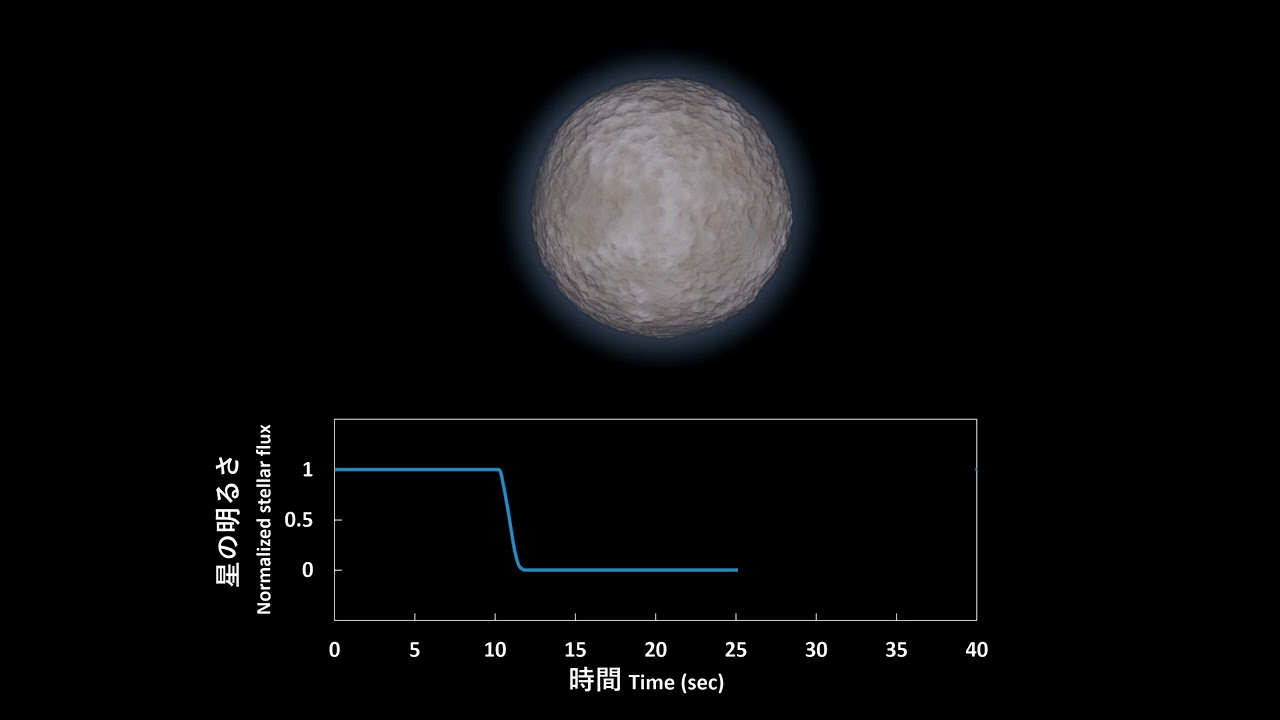
Researchers observed (612533) 2002 XV93 as it passed directly in front of a distant star in January 2024. The observations were made by a team of professional and amateur astronomers from three sites in Japan. Their data hinted at attenuation — or gradual loss of starlight caused by an atmosphere, according to the study.

"The observation data showed a smooth change of the star's brightness near the edge of the shadow, lasting about 1.5 seconds," study first author Ko Arimatsu, an associate professor and senior lecturer at the National Astronomical Observatory of Japan, told CNN. "This kind of smooth brightness change is naturally explained if the starlight was bent by a very thin atmosphere around the object."

Get the world’s most fascinating discoveries delivered straight to your inbox.

Conceptual video for Arimatsu et al. (2026) - YouTube Conceptual video for Arimatsu et al. (2026) - YouTube
Watch On

The team's observations suggested that the atmosphere is extremely thin, around 5 million to 10 million times thinner than Earth's atmosphere — too thin to support life. The potential atmosphere is also not permanent, with calculations suggesting that it will last less than 1,000 years unless it's restocked with gas.

The discovery raises questions about how an atmosphere could have formed around this small, cold world. Previous JWST observations revealed that the object's surface doesn't appear to have any frozen gas that could have sublimated to produce an atmosphere. The researchers speculated that the atmosphere could be sustained by cryovolcanoes (ice volcanoes), with some unknown event forcing gases to the object's surface.

Another possibility is that the object was hit by another icy body, such as a comet, which then produced gases to form an atmosphere. Future observations, particularly by JWST — an infrared telescope designed to probe atmospheres around alien worlds — could help solve the mystery, according to Arimatsu.

"That is why future monitoring is so important," Arimatsu told the Associated Press. "If the atmosphere fades over the next several years, that would support an impact origin. If it persists, or varies seasonally, that would point more toward ongoing internal gas supply."

Article Sources

Arimatsu, K., Yoshida, F., Hayamizu, T., Takita, S., Hosoi, K., Ootsubo, T., & Watanabe, J. (2026). Detection of an atmosphere on a trans-Neptunian object beyond Pluto. Nature Astronomy. https://doi.org/10.1038/s41550-026-02846-1


See how well you know our planetary neighborhood with our solar system quiz!