

惯性聚合 高效追踪和阅读你感兴趣的博客、新闻、科技资讯
阅读原文 在惯性聚合中打开

推荐订阅源

C
Cisco Blogs
爱范儿
爱范儿
有赞技术团队
有赞技术团队
博客园 - 【当耐特】
Jina AI
Jina AI
Project Zero
Project Zero
宝玉的分享
宝玉的分享
Martin Fowler
Martin Fowler
WordPress大学
WordPress大学
Simon Willison's Weblog
钛媒体:引领未来商业与生活新知
钛媒体:引领未来商业与生活新知
T
Tenable Blog
F
Fortinet All Blogs
大猫的无限游戏
大猫的无限游戏
Last Week in AI
Last Week in AI
月光博客
月光博客
雷峰网
雷峰网
G
Google Developers Blog
V
V2EX
T
Tor Project blog
罗磊的独立博客
Schneier on Security
Know Your Adversary
Know Your Adversary
W
WeLiveSecurity
freeCodeCamp Programming Tutorials: Python, JavaScript, Git & More
P
Privacy International News Feed
S
Securelist
奇客Solidot–传递最新科技情报
奇客Solidot–传递最新科技情报
P
Proofpoint News Feed
Blog — PlanetScale
Blog — PlanetScale
Threat Intelligence Blog | Flashpoint
小众软件
小众软件
Scott Helme
Scott Helme
I
Intezer
T
Threat Research - Cisco Blogs
The GitHub Blog
The GitHub Blog
N
Netflix TechBlog - Medium
C
CERT Recently Published Vulnerability Notes
Security Archives - TechRepublic
酷 壳 – CoolShell
酷 壳 – CoolShell
L
LINUX DO - 最新话题
N
News | PayPal Newsroom
L
Lohrmann on Cybersecurity
T
Troy Hunt's Blog
Google DeepMind News
P
Proofpoint News Feed
人人都是产品经理
人人都是产品经理
Latest news
Latest news
AWS News Blog
AWS News Blog
Apple Machine Learning Research

Latest from Live Science in Space-exploration

www.livescience.com Secretive Chinese probe snaps first photo of Earth Superintelligent AI in space could explain the Fermi Paradox NASA just launched a bold mission to rescue a falling space telescope before it crashes to Earth Scientists propose launching a giant China China www.livescience.com Earth-based telescope shares image of Artemis II capsule near the moon — one of the farthest photos of humans ever taken Artemis II crew captures rare double auroras on the dark side of Earth as they zoom toward the moon — Space photo… NASA's experimental X-59 jet breaks sound barrier for 1st time in step toward 'quiet supersonic'… This 'crawling' robot rolled around the moon and took a historic photo Artemis III crew revealed: NASA announces astronauts for 'one of history's most complex missions' NASA astronauts briefly shelter in 'safe haven' procedure following worsening leaks on International Space… 'In an unrecoverable state': NASA confirms MAVEN spacecraft is officially dead after loss of signal behind… China launches new Long March 12B rocket, reportedly without any safety warning Astronauts could use lightning-like plasma jets to kill germs on the moon and Mars, demo hints 'Very rough day': Blue Origin's New Glenn rocket explodes in gigantic fireball, days after being selected… NASA administrator hails 'Golden Age' of lunar exploration as Moon Base plans unveiled 'The sun would all but disappear, and the moon would always look full': A radio astronomer shares her… China launches 'human artificial embryos' to space in bid to see whether reproduction is possible off-world 'I heard gasps' and 'oh my God': Artemis II astronauts reveal inside story of their mind-bending… 'There are 4 people in those pixels': Earth-based telescope snapped Artemis II crew orbiting the moon SpaceX prepares to launch next-generation Starship, the tallest and most powerful rocket ever built 'I was not looking for this': Scientist accidentally finds shortcut to Mars that could slash travel time in… NASA just released 12,000 more Artemis II photos ‪—‬ here are a dozen of our favorites A SpaceX rocket is going to hit the moon, scientist says Can NASA and SpaceX really build a moon base in the next 10 years? NASA rover uncovers rock with 7 new organic molecules on Mars — the www.livescience.com Artemis II heat shield aced its blistering reentry, ghostly underwater photo reveals Artemis moon landing could face long delay while NASA waits for next-generation spacesuits NASA shuts off another Voyager 1 instrument as humanity Can the US be trusted with the moon? A law scholar raises concerns after Artemis II Artemis II quiz: Is your knowledge of NASA 73 moon landings? NASA www.livescience.com 10 Artemis II photos that define humanity's return to the moon 'I'm at a loss for words': Artemis II mission comes home to joy and cheers after historic 10-day mission There are 'reasons to be confident' about faulty Artemis II heat shield ahead of 25,000 mph reentry, space… There's an issue with the Artemis II heat shield, but NASA isn't worried. Here's why. The Artemis II astronauts have just flown farther from Earth than any humans in history Artemis II moon flyby begins: How to watch and what to know I've witnessed nearly 100 rocket launches. Artemis II was like nothing I've ever experienced. www.livescience.com Artemis II officially leaves Earth In photos: Artemis II Chinese satellite with robotic Artemis II blasts off: Humans are on their way back to the moon Astronauts can face 'nearly lethal doses' of solar radiation — so why launch Artemis II during the sun's peak of activity? Space scientist Patricia Reiff explains. How to watch NASA www.livescience.com Artemis II timeline: 12 key steps that will take NASA astronauts to the moon and back www.livescience.com www.livescience.com 6 major records the Artemis II astronauts will smash as NASA returns to the moon Mystery medical episode that left NASA astronaut unable to speak highlights major space risk Astronauts will 'absolutely be test subjects': NASA's moon plans pose big questions — and big risks Chinese moon lander reveals giant NASA announces Live Science Today: NASA announces $20 billion moonbase as unprecedented wildfires spread Artemis II: News, features, and facts about the NASA moon mission Russian rocket en route to ISS suffers major antenna glitch, triggering remote-control astronaut 'backup plan' NASA's Artemis II rocket rolls to launch pad in final bid to meet April deadline Artemis II: NASA is preparing for a return to the moon, but why is it going back? 1,300-pound spacecraft will crash to Earth today following intense solar activity, NASA warns NASA fixes Artemis II rocket for April launch to take astronauts around moon NASA announces sweeping overhaul of Artemis return to moon, targeting two 2028 landings and a 2027 in-orbit docking… Fresh look at Apollo moon rocks solves decades-old mystery about the moon's magnetic field Chinese astronauts describe moment a crack was discovered on Shenzhou-20 spacecraft NASA set to roll Artemis rocket back for urgent repairs after yet another delay Artemis II update: NASA targets March 6 for launch of historic moon mission following successful 'wet dress… Bungled Boeing Starliner mission was the highest order of mishap that put stranded astronauts at risk, report says NASA starts countdown clock for second Artemis II wet dress rehearsal after rocky first attempt Supercomputers simulated the orbits of 1 million satellites between Earth and the moon — and less than 10%… Hydrogen leak derails Artemis II wet rehearsal, pushing launch date back by weeks Artemis II simulated launch window opens tonight as NASA delays mission due to 'rare Arctic outbreak' 50-year-old NASA jet crashes in flames on Texas runway — taking it out of the Artemis II mission NASA is preparing for simulated launch of Artemis II mega moon rocket — and it could happen as early as Saturday Artemis 2 update: NASA to wheel historic, 11 million-pound rocket to the launch pad this weekend NASA's powerful new Roman Space Telescope is complete — and will soon begin mission to find 100,000 alien… NASA astronauts back on Earth after unprecedented medical emergency on ISS Artemis 2 mission update: Rollout imminent as NASA prepares first crewed Artemis mission to the moon NASA announces unprecedented return of sick ISS astronaut and crew Orbiting satellites could start crashing into one another in less than 3 days, theoretical new 'CRASH Clock'… Should humans colonize other planets?
'The brain consistently moved upward and backward': Astronauts' brains physically shift in their heads…
2026-02-15 · via Latest from Live Science in Space-exploration
Refection of MRI brain scan on monitor display.
An image of a brain scanned during an MRI. (Image credit: Andrew Brookes/Getty Images)

Going to space is harsh on the human body, and as a new study from our research team finds, the brain shifts upward and backward and deforms inside the skull after spaceflight.

The extent of these changes was greater for those who spent longer in space. As NASA plans longer space missions, and space travel expands beyond professional astronauts, these findings will become more relevant.

Why it matters

On Earth, gravity constantly pulls fluids in your body and your brain toward the center of the Earth. In space, that force disappears. Body fluids shift toward the head, which gives astronauts a puffy face. Under normal gravity, the brain, cerebrospinal fluid and surrounding tissues reach a stable balance. In microgravity, that balance changes.

Without gravity pulling downward, the brain floats in the skull and experiences various forces from the surrounding soft tissues and the skull itself. Earlier studies showed that the brain appears higher in the skull after spaceflight. But most of those studies focused on average or whole brain measures, which can hide important effects within different areas of the brain.

Our goal was to look more closely.

What Happens To The Human Body In Space - YouTube What Happens To The Human Body In Space - YouTube
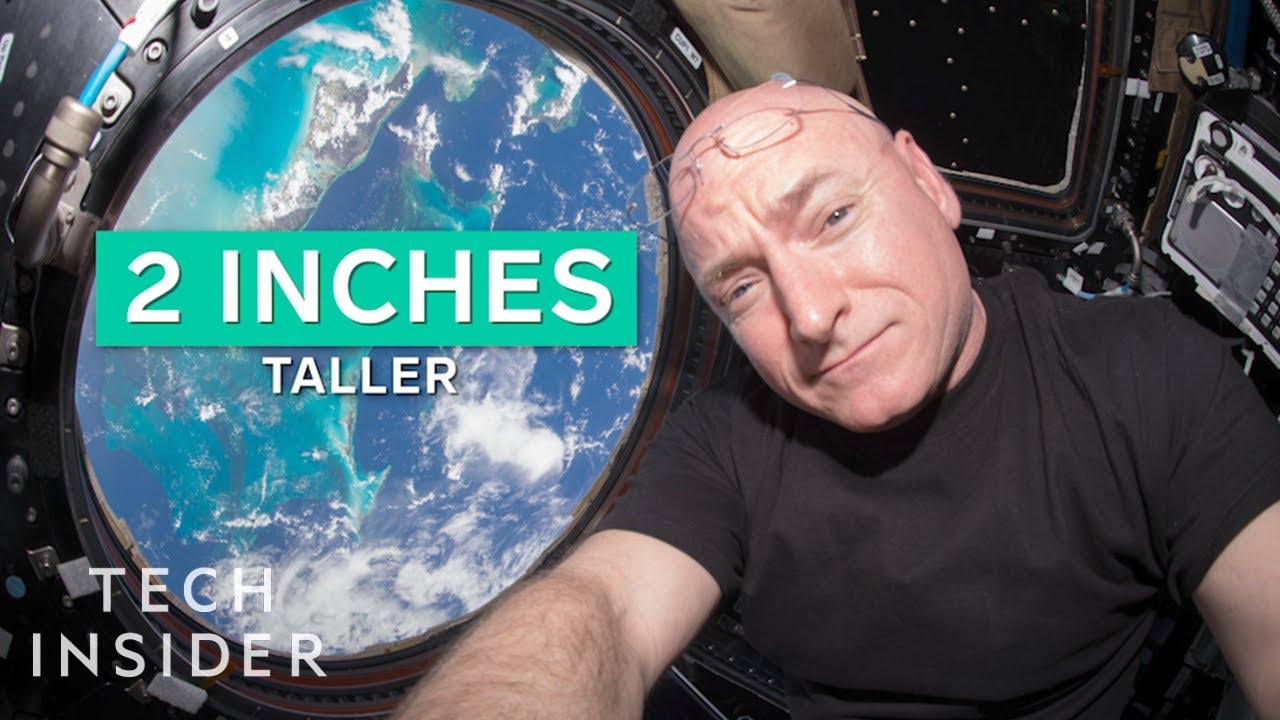
Watch On

How we do our work

We analyzed brain MRI scans from 26 astronauts who spent different lengths of time in space, from a few weeks to over a year. To focus on the brain's movement, we aligned each person's skull across scans taken before and after spaceflight.

That comparison allowed us to measure how the brain shifted relative to the skull itself. Instead of treating the brain as a single object, we divided it into more than 100 regions and tracked how each one had shifted. This approach enabled us to see patterns that were missed when looking at the whole brain, on average.

Get the world’s most fascinating discoveries delivered straight to your inbox.

We found that the brain consistently moved upward and backward when comparing postflight to preflight. The longer someone stayed in space, the larger the shift. One of the more striking findings came from examining individual brain regions.

In astronauts who spent about a year aboard the International Space Station, some areas near the top of the brain moved upward by more than 2 millimeters, while the rest of the brain barely moved. That distance may sound small, but inside the tightly packed space of the skull, it is meaningful.

Areas involved in movement and sensation showed the largest shifts. Structures on the two sides of the brain moved toward the midline, which means they moved in the opposite direction for each brain hemisphere. These opposing patterns cancel each other out in whole brain averages, which explains why earlier studies missed them.

Most of the shifts and deformations gradually returned to normal by six months after return to Earth. The backward shift showed less recovery, likely because gravity pulls downward rather than forward, so some effects of spaceflight on brain position may last longer than others.

What's next

NASA's Artemis program will mark a new era of space exploration. Understanding how the brain responds will help scientists assess long-term risks and develop countermeasures.

Our findings don't mean that people should not travel to space. While we found that larger location shifts of a sensory-processing brain region correlated with postflight balance changes, the crew members did not experience overt symptoms — such as headaches or brain fog — related to brain position shifts.

Our findings do not reveal immediate health risks. Knowing how the brain moves in spaceflight and subsequently recovers allows researchers to understand the effects of microgravity on human physiology. It can help space agencies to design safer missions.

This edited article is republished from The Conversation under a Creative Commons license. Read the original article.

Rachael Seidler is a Professor in the Department of Applied Physiology and Kinesiology at the University of Florida. Her research focuses on the neural control of movement in health and disease, with a specific focus on motor learning. She uses a range of neuroimaging and neuromodulation techniques coupled with precise measures of movement and cognitive function to determine the neurocognitive underpinnings of motor control. Dr. Seidler has expertise working with a variety of populations including healthy young and older adults, patients with Parkinson’s disease, and NASA astronauts in both basic science and intervention experiments. Her work has been supported by the NIH, the NSF, NASA, the National Space Biomedical Research Institute (NSBRI), and a variety of private foundations.

You must confirm your public display name before commenting

Please logout and then login again, you will then be prompted to enter your display name.