




惯性聚合 高效追踪和阅读你感兴趣的博客、新闻、科技资讯
阅读原文 在惯性聚合中打开

推荐订阅源

V
V2EX
奇客Solidot–传递最新科技情报
奇客Solidot–传递最新科技情报
WordPress大学
WordPress大学
罗磊的独立博客
小众软件
小众软件
I
InfoQ
Y
Y Combinator Blog
宝玉的分享
宝玉的分享
钛媒体:引领未来商业与生活新知
钛媒体:引领未来商业与生活新知
Hugging Face - Blog
Hugging Face - Blog
MyScale Blog
MyScale Blog
博客园 - 聂微东
Microsoft Security Blog
H
Help Net Security
酷 壳 – CoolShell
酷 壳 – CoolShell
博客园_首页
S
SegmentFault 最新的问题
博客园 - 三生石上(FineUI控件)
P
Proofpoint News Feed
博客园 - 司徒正美
Cyber Security Advisories - MS-ISAC
Microsoft Azure Blog
Jina AI
Jina AI
N
Netflix TechBlog - Medium

Latest from Live Science in Space-exploration

www.livescience.com Are you worried about the US deploying weapons in space? Mercury may have shrunk much more than we thought, new study hints Are there nuclear weapons hidden in space? Why a 60-year ban on space nukes has been impossible to enforce Blue Origin rocket explosion was roughly as powerful as Chernobyl blast, sent sound waves 1,000 miles across the US NASA Scientists finally know why astronauts struggle to poop in space — and reveal a hidden risk of long-haul spaceflight $30 million mission to save NASA NASA grants Voyager 2 probe another year of power with risky SpaceX www.livescience.com Chinese rocket hit by rare midair lightning strike moments after launch as onlookers gasp in horror (video) Humanity NASA www.livescience.com Secretive Chinese probe snaps first photo of Earth Superintelligent AI in space could explain the Fermi Paradox NASA just launched a bold mission to rescue a falling space telescope before it crashes to Earth Scientists propose launching a giant China China www.livescience.com Earth-based telescope shares image of Artemis II capsule near the moon — one of the farthest photos of humans ever taken Artemis II crew captures rare double auroras on the dark side of Earth as they zoom toward the moon — Space photo… NASA's experimental X-59 jet breaks sound barrier for 1st time in step toward 'quiet supersonic'… This 'crawling' robot rolled around the moon and took a historic photo Artemis III crew revealed: NASA announces astronauts for 'one of history's most complex missions' NASA astronauts briefly shelter in 'safe haven' procedure following worsening leaks on International Space… 'In an unrecoverable state': NASA confirms MAVEN spacecraft is officially dead after loss of signal behind… China launches new Long March 12B rocket, reportedly without any safety warning
Artemis 2 update: NASA to wheel historic, 11 million-poun...
ben.turner@futurenet.com (Ben Turner) · 2026-01-17 · via Latest from Live Science in Space-exploration

NASA's first mission to take humans to the moon in half a century is creeping ever closer.

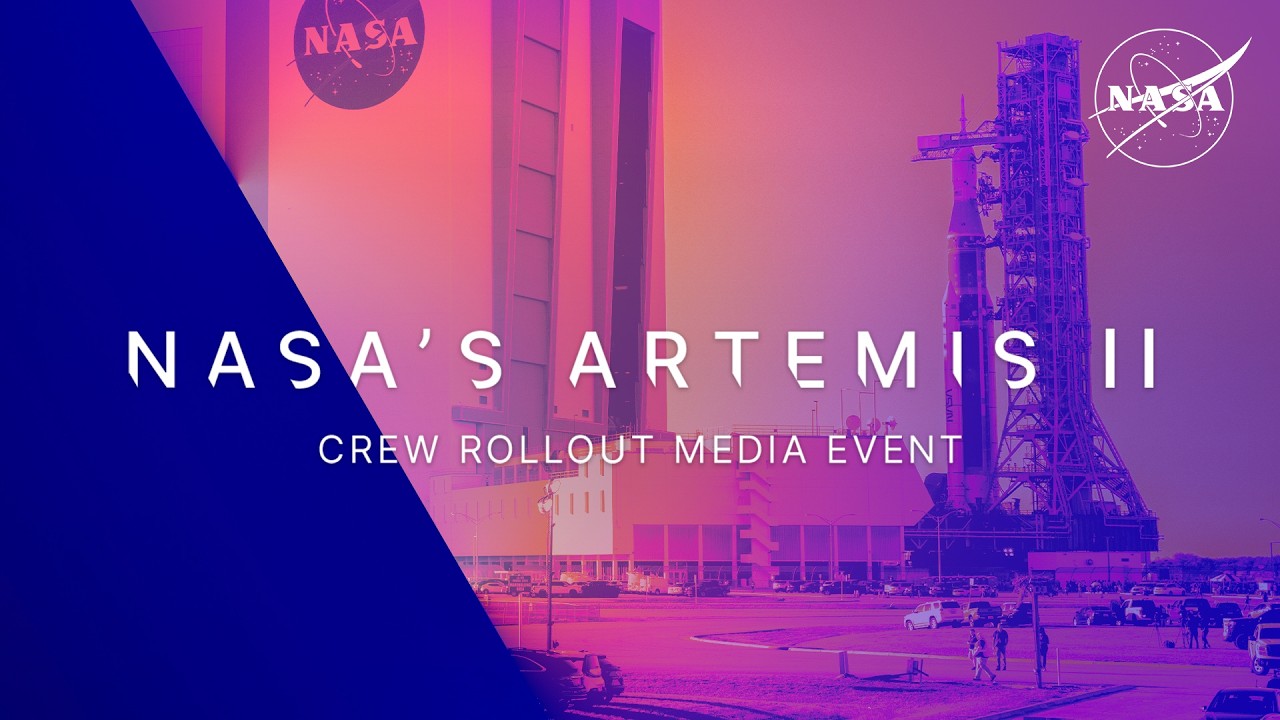
The space agency has announced that the rollout of its Artemis 2 Space Launch System rocket and Orion Module will begin Saturday (Jan. 17) no earlier than 7 a.m. ET, ahead of a launch as early as Feb. 6.

Embarking from the Vehicle Assembly Building to Launch Pad 39B at NASA's Kennedy Space Center in Florida, the 11 million-pound (5 million kilograms) stack will be transported at a speed of about 1 mph (1.6 km/h along a 4-mile (6.4 kilometers) route — a journey that will take up to 12 hours and be streamed live on NASA's Youtube channel.

NASA's Artemis II Crew Rollout Media Event - YouTube NASA's Artemis II Crew Rollout Media Event - YouTube
Watch On

"We are moving closer to Artemis II, with rollout just around the corner," Lori Glaze, the acting associate administrator for NASA's Exploration Systems Development Mission Directorate, said in a statement released Jan. 9. "We have important steps remaining on our path to launch and crew safety will remain our top priority at every turn, as we near humanity's return to the Moon."

A historic mission to the moon

Artemis 2 is the first crewed spaceflight in the Artemis Program, which aims to send humans back to the moon for the first time since 1972. Four astronauts will take a 10-day flight around the moon and back to Earth, testing systems ahead of the Artemis 3 mission, which aims to deliver astronauts to the lunar surface by 2028.

NASA's SLS (Space Launch System) rocket is seen inside High Bay 3 of the Vehicle Assembly Building

The fully-stacked SLS awaits a visit from the Artemis 2 astronauts inside NASA's Vehicle Assembly Building

(Image credit: NASA/Joel Kowsky)

The Space Launch System is the most powerful rocket ever built. Standing 212 feet (65 meters) tall, its core stage is capable of generating 8.8 million pounds (3.9 million kg) of thrust to launch the Orion capsule mounted atop it into space.

The more than 700,000 gallons (2.6 million liters) of cryogenic propellant set to provide the rocket's thrust will be tested by NASA during a wet dress rehearsal at the end of January. The prelaunch test will also include things like a launch countdown, practice removing the rocket propellant, and safety procedures. If all goes to plan, NASA will then conduct a flight-readiness review before committing to a launch date.

Get the world’s most fascinating discoveries delivered straight to your inbox.

If the rocket does launch in February, it will do so 15 months later than it was initially scheduled. NASA says the delay is due to the Orion capsule needing additional prep time before it can safely carry a human crew.

Despite these delays, NASA remains confident that the Artemis mission will launch in time to beat China in the race to send a crewed mission to the moon. China has recently landed rovers on the moon and Mars and completed construction of its Tiangong space station in 2022. The country is also leading construction efforts of an International Lunar Research Station, which is slated for completion by 2030.