


Over the past 20 years, Spotify’s look and feel has evolved with the way people use our platform, while ensuring we preserve an intuitive, personal, and familiar experience for anyone who presses play. Every change, big or small, has been shaped by how users, artists, podcasters, and authors discover, share, and connect on Spotify.
For the Record caught up with Spotify’s Nicole Burrow, VP of Product Design, and Lauren Solomon, Senior Director of Global Brand, to explore the elements that have defined Spotify’s brand and visual identity on and off platform, and the things that make it feel unmistakably Spotify today.
Lauren: It’s funny, because something as iconic and identifiable as the name “Spotify” didn’t actually start from this big, strategic decision. According to stories from those who were in the room where it happened, it was misheard in a brainstorm. Our co-founders Daniel [Ek] and Martin [Lorentzon] were throwing around ideas, and one of them landed as “Spotify”—but it was essentially an accident.
Nicole: What I love about that is the meaning came later—and it was our users who conveyed that meaning. The lore has become that it’s a blend of “spot” and “identify,” which, when you think about it, is exactly what our platform helps users do. You hear something, you recognize it, you make it yours. But that wasn’t engineered from the start. It grew into its meaning, the same way our platform grows to respond to our users.
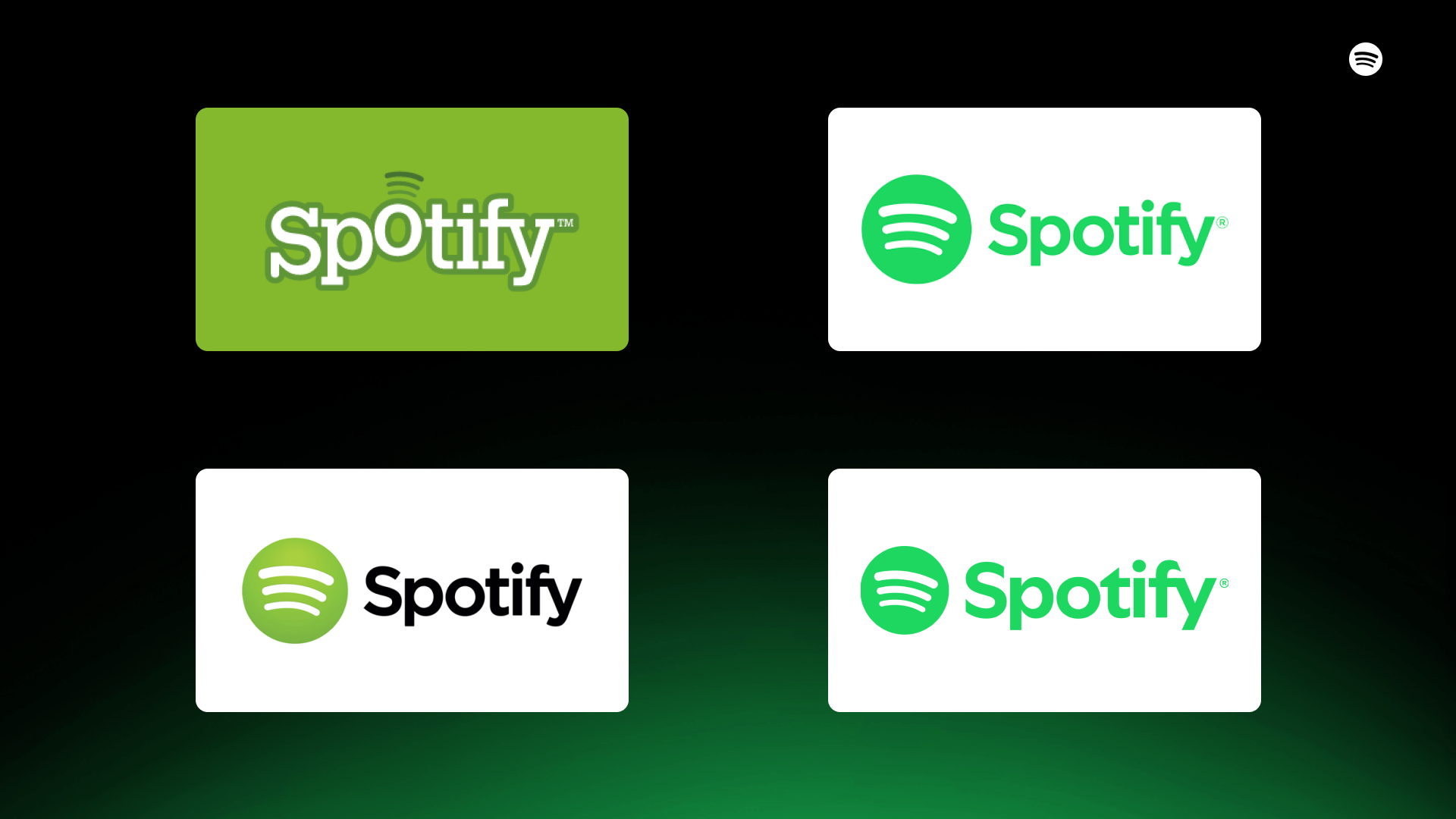
Lauren: The green was the opposite. That was a very intentional choice. At the time, everything in tech felt so safe. A lot of blues, a lot of neutrals, a lot of… meh. Choosing this really bold, bright green was about standing apart immediately. It had energy. It felt alive. It matched the spirit of disruption and innovation that came with the founding of Spotify.
Nicole: The exact shade of green has evolved, but the idea hasn’t. It still needs to feel vibrant, a little unexpected, and very much its own thing. That’s kind of the thread across both the name and the color—we weren’t about following an existing formula. In the same way we weren’t following a formula in the creation of the company. We were about creating something that felt different from day one.
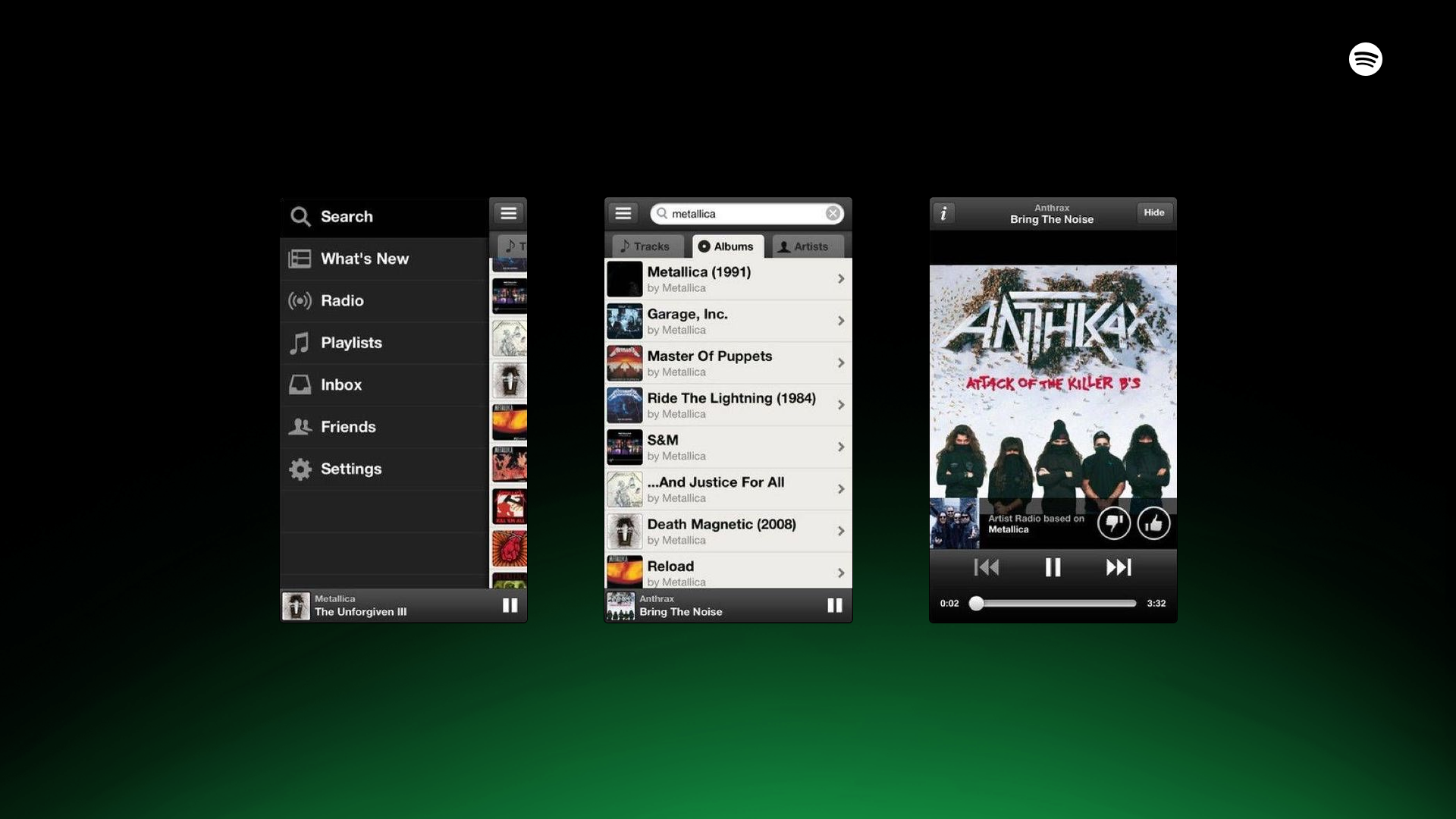
Nicole: Alongside the Spotify green, we were also an early dark mode app, long before dark mode became as popular and pervasive as it is now.
Lauren: There’s our unique typeface, Spotify Mix, designed to be truly distinct to us. It’s dynamic, so it can be used across a range of expressions, and be responsive to where it sits.
There are also so many things you don’t instantly see, but you feel. We understand that what you listen to is deeply personal, and that many use Spotify as a home for their creativity. Our brand reflects that. We have brand elements that remain consistent but also allow room and flexibility to shift with culture, content, creators, and our community.
Nicole: And our personality comes through in how our app “talks” to you—playful and culture-obsessed. We “talk” the way fans talk, because we’re fans ourselves. That’s one of the ways we underline how well Spotify knows you.
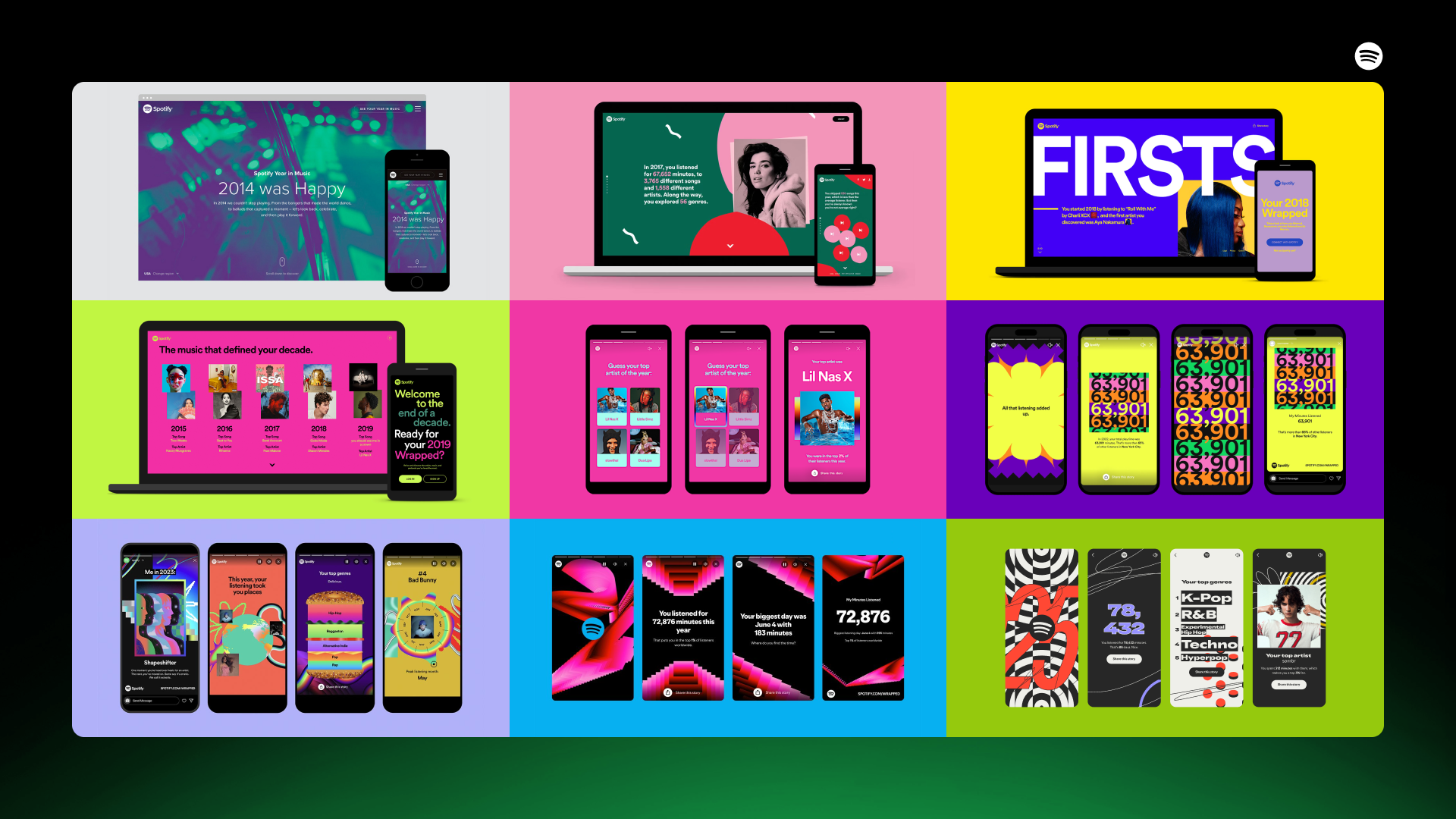
Then, of course, there’s Spotify Wrapped—which set a standard in the industry. It inspired many copycats, but Wrapped helped define the format and created a truly shared moment for fans around the world.
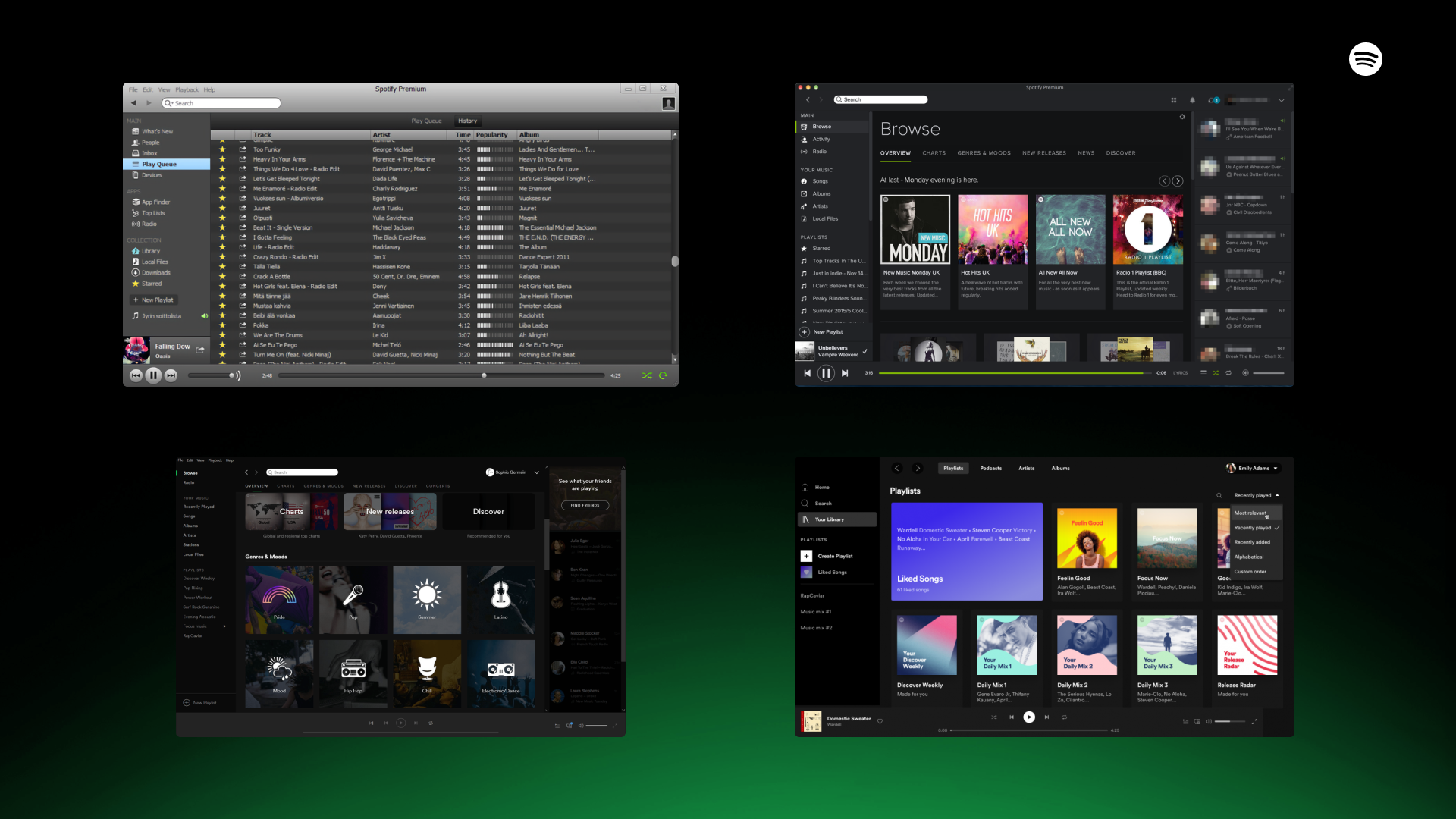
Nicole: We were the first app to prioritize playlists. Early versions were built around playlists as the main user experience. Today, playlists continue to be one of our strengths and one of the key ways fans can express who they are and what they love. Playlists are where much of our innovation happens.
When you look at our recent innovations like Prompted Playlist and mixed playlists, they build on what’s been true since our earliest days—playlists are at the heart of the Spotify experience and one of the main ways listeners express who they are. What’s changed is that playlists are no longer static. There has been a real shift from playlists you make or follow to playlists that actively respond to you. It’s a more dynamic, adaptive experience, and it’s a big part of how we continue to push personalized listening forward.
Nicole: A good example is users listening more often in group settings with friends—turning listening into something shared. We’ve made sure listening together is just as easy through features like Request to Jam and Wrapped Party.
And we’re already revolutionizing how people can listen to audiobooks. We’ve introduced industry-leading features like Recaps and Page Match, which were born from the idea of giving listeners the flexibility to enjoy stories in the way that works for them in any given moment. That idea of personalized listening is really at the heart of everything we do.
Lauren: The Spotify brand people know today was built from celebrating the behavior of our users. We pioneered helping people understand their listening through data storytelling, making it a true reflection of the community on our platform.
We know our users are really creative and feel that their listening is a deep reflection of who they are, so we’ve created experiences and tools that give them new ways to express themselves, like the playlist cover art tool and mixing tools.
Nicole: We believe in the “one experience” approach. One that feels coherent while adapting to context. Every major shift starts with how fans want to listen. We give users more control, more context, and more meaningful engagement with what they hear. Over the years, we’ve continuously evolved our UX and interface to respond to what a user is listening to, shaping the experience to feel relevant in each moment. This has meant designing with flexibility at the core.
Lauren: We’re fans ourselves, so that’s where our heads naturally go: music, creators, content, culture. That’s the stuff that moves people, and it’s what we draw from. This is what makes our work feel expressive, honest, and timely. It doesn’t look like everyone else because it didn’t come from the same place as everyone else.
Wrapped is a great example of this. Every year the design is created specifically for that moment. It’s something people look forward to.
Nicole: Easter eggs have a long-standing tradition at Spotify. When Stranger Things Season 4, Volume 1 was released, we transformed the Now Playing view into an upside-down experience, which sparked a shared, viral moment among fans. We’ve also created Easter eggs to celebrate Spotify’s most-streamed artists of the year: Taylor Swift in 2024, and Bad Bunny in 2025. Keep an eye out for new Easter eggs—more are on the way!
Another small detail that not everyone has noticed yet is the “Eat This Playlist” game featured in some playlists. This was an internal hack project that has garnered a lot of love from users over the years. If you haven’t seen it before, just open a playlist, tap the three dots menu, then select “Eat This Playlist” at the bottom to play!
Lauren: At key moments, we adapt our logo bug and let it become an expression of culture. A great example of this is the past two years on Wrapped. Before launch, we released a set of logos adapted to reference some of the top artists, tracks, and albums of the year, teasing what’s to come.
Nicole: We lean away from chasing trends while making sure we’re always culturally fluent—meaning our voice evolves naturally as culture moves. Our playful, bold, opinionated heart never changes, but our language reflects the way our listeners speak and express themselves. That has changed plenty over the last 20 years, and will continue to evolve with them over the next 20.
To explore more from the anniversary celebration, visit our Spotify 20 hub.
此内容由惯性聚合(RSS阅读器)自动聚合整理,仅供阅读参考。 原文来自 — 版权归原作者所有。