


On paper, Ari Aster’s 2018 debut Hereditary is a gore-gone-wild take on what happens when you can’t outrun your genetics. For those who took a chance on this first time director’s idea of ‘hereditary’ horror, the story turned out to be a much greater, much more layered tale about motherhood and psychology than maybe bargained for.
Slowly but surely, the story weaves together a twisted mosaic of events viewers might not have been able to quantify, with a final sequence just as loud, dark, and layered as that first shot of Peter’s bedroom. In this article, we’ll give you a complete breakdown of the plot, dive deeper into the cult’s plan, as well as deliver a Hereditary ending explained map.
Hereditary Ending Explained
Across reviews, analyses, and Letterboxd one-liners, one question remains: "What does the ending of Hereditary mean?”. Even Ari Aster himself knows there’s no single answer, but there are a few key pieces that make it clear Aster’s goals, both cinematically and thematically, are to serve the one true power in this twisted tale: Paimon.
Paimon, the cult’s highest leader and one of the eight Kings of Hell, is first displaced in Charlie’s body. While he intends to take host in Peter and fulfill his ritual, Annie keeps Peter away from her mother, making it that much harder for the circle to be complete.
With nowhere else to go, Paimon lives out his cultish duties inside of Charlie. By the end of the film, Charlie’s dead. Paimon has finally found a way to exile her from her body, leaving the Graham family to try and make sense of her untimely death.
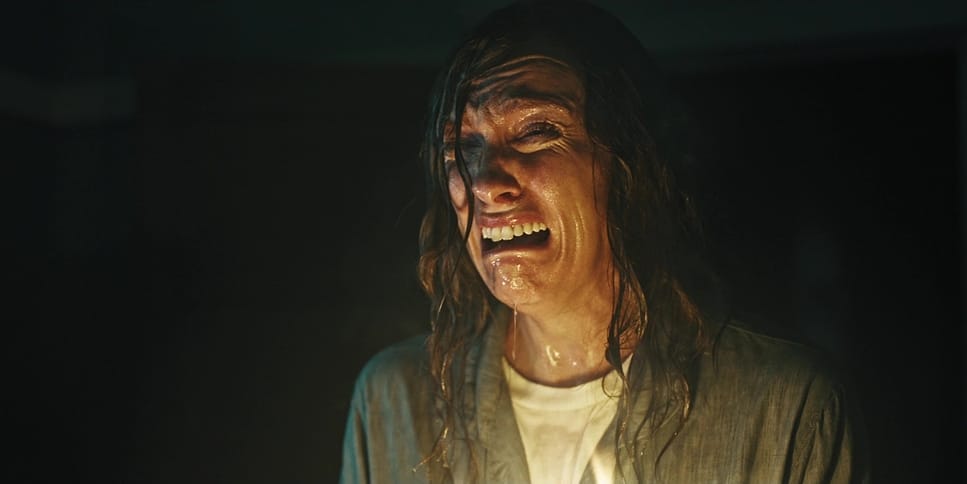
In the last 30 minutes, the final piece of Paimon’s plan unfolds. After attempting to lure her distraught husband Steve into burning Ellen’s picture book (containing revealing images of her cult past), Annie’s body becomes possessed. She decapitates herself in a rage, Steve’s body still going up in flames in the background.
Here the camera pans to Peter, who’s watching his mother’s body fall apart. Scared and overcome by the thought that he’s lost another loved one, he jumps out of his bedroom window and falls to his (bodily) death.
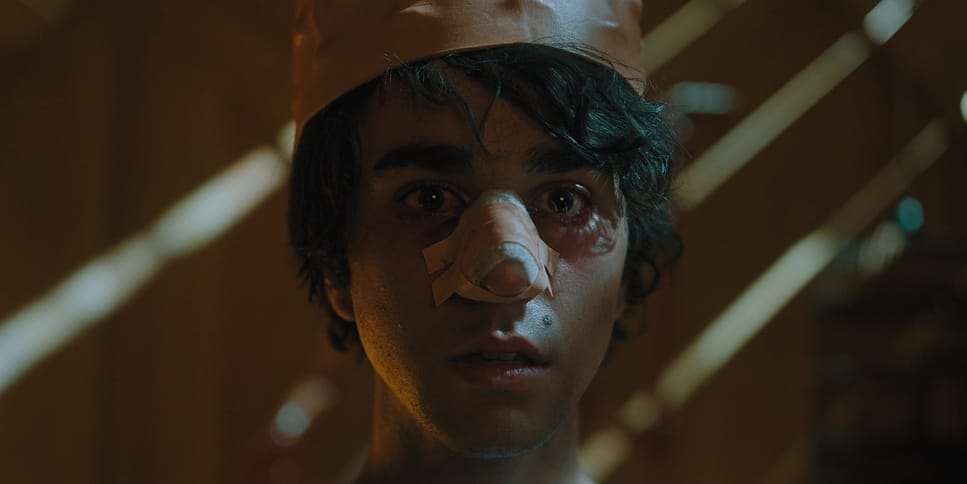
His body is quickly taken by Paimon, lifted up from the ground and forced into the cult’s ultimate sacrificial location: Charlie’s treehouse. Next thing he knows, he’s awakened by a circle of headless relatives, all kneeling before him covered in their own blood.
He’s crowned by Joan, Annie’s once spiritual guide who is revealed to have been a close friend of their Grandmother Ellen’s, and a key player in carrying out Paimon’s wishes.
All bow and claim Peter as Paimon’s chosen vessel. Sparkling yet eerie music swells the scene as the light between Peter’s eyes falls, and the camera pans away to reveal him standing before a circle of kneeling, familiar bodies.
What and why is the Paimon demon exactly? This demon god from hell is our best link to having the Hereditary ending explained in full. Watch the complete character timeline from CZsworld below, before we jump further into the film.

Hailing from the 17th century grimoire Lesser Key of Solomon, Paimon is a well-established occult demon who’s regularly seen riding a camel, or surrounded by attendants playing instruments.
Although he is a king in both classic occult imagery and the film, he isn’t so much a cult leader but a leader of hell and its subjects (often called attendants or servants). His role in the underworld focused more on skill and knowledge sharing, such as the arts and history.
In the film, this role is dramatized to fit Aster’s key objective: a male must be overtaken by Paimon’s spirit to complete his ritual. In reality, there was no ritual, and nothing in Goetic lore suggests that the subject of possession (if it occurred) must be male.
Hereditary’s grandmother cult goes way farther than Annie’s role in it. Even so, her livelihood, and ultimately, her physical form, is shaped by its influence. Even before she is born, her role in Ellen’s cult is decided, and every move she makes in between is unbeknownst to her, a direct reflection of her hereditary duties.
So, when she finally begins to crumble under the pressure of back to back deaths and a major change in her own behavior, it all starts to begrudgingly make sense. As viewers we get to see her possession in real time, with her face finally striking a demonic, singular chord.
No smile, no reaction to her husband burning alive before her. Her eyes grow dark, her mouth neutrally open, her soul gone. While this isn’t explicitly stated, it’s implied that Steve had to die for the family’s true male vessel to take his place.
Without Steve, it’s easier for Paimon to possess Peter. Once Annie’s body is finally taken by Paimon, he gets to work. He forces Annie to kill herself by severing her own head from her body. Now, there is no one left to stand between Paimon and Peter, the cult’s wishes and Annie’s aim to protect her family.
This is arguably the most powerful scene both from an acting standpoint and thematically. From here on, there’s nothing left of the family to cling to. They’re all vessels now, in a way, and it’s shown to the audience that there never really was a family to invest in, but cogs in a machine who didn’t know what they were part of.
Now let's have FoundFlix expand on the Hereditary ending a bit more:

Hereditary ending explained
While we don’t see much of Ellen Leigh throughout the film, her presence is felt. It isn’t a coincidence that the first time we really see her, she’s lying dead in a casket with no words.
Before that, we get a small glimpse of her inside Annie’s workshop, already laying the foundation for her master plan even in Annie’s imagination.
Behind the scenes of each Graham family scene, a plan is in action. Only truly revealed in the final scene, Ellen’s master plan to use her family as a line of spiritual and physical vessels for King Paimon is the quiet foundation for the film as a whole.
Ellen was a high priestess for the cult even before she had a family, choosing to dedicate her life, and the lives of her children/grandchildren to carry out Paimon’s wishes.
What viewers might not have caught is that using Charlie as the first vessel for Paimon’s spirit was less of a consequence of Annie’s choice to hide Peter from her mother, but a few calculated strings being pulled by Ellen to make sure Charlie is Paimon’s first body.
Why? It’s understood that Paimon wanted to “practice” hosting himself in a female body before using his powers to complete his ritual as planned, or take on a male host.
Even if Annie believes she was the one who kept her mother away from her son, Ellen’s plan says otherwise. Through small actions and implied manipulative behaviors, audiences understand that Ellen was, even in passing, calling the shots.
The subtlety of these actions only work because Aster masterfully plans out where each small reveal is placed throughout the film, allowing viewers to make those small leaps until the timeline of events clicks.
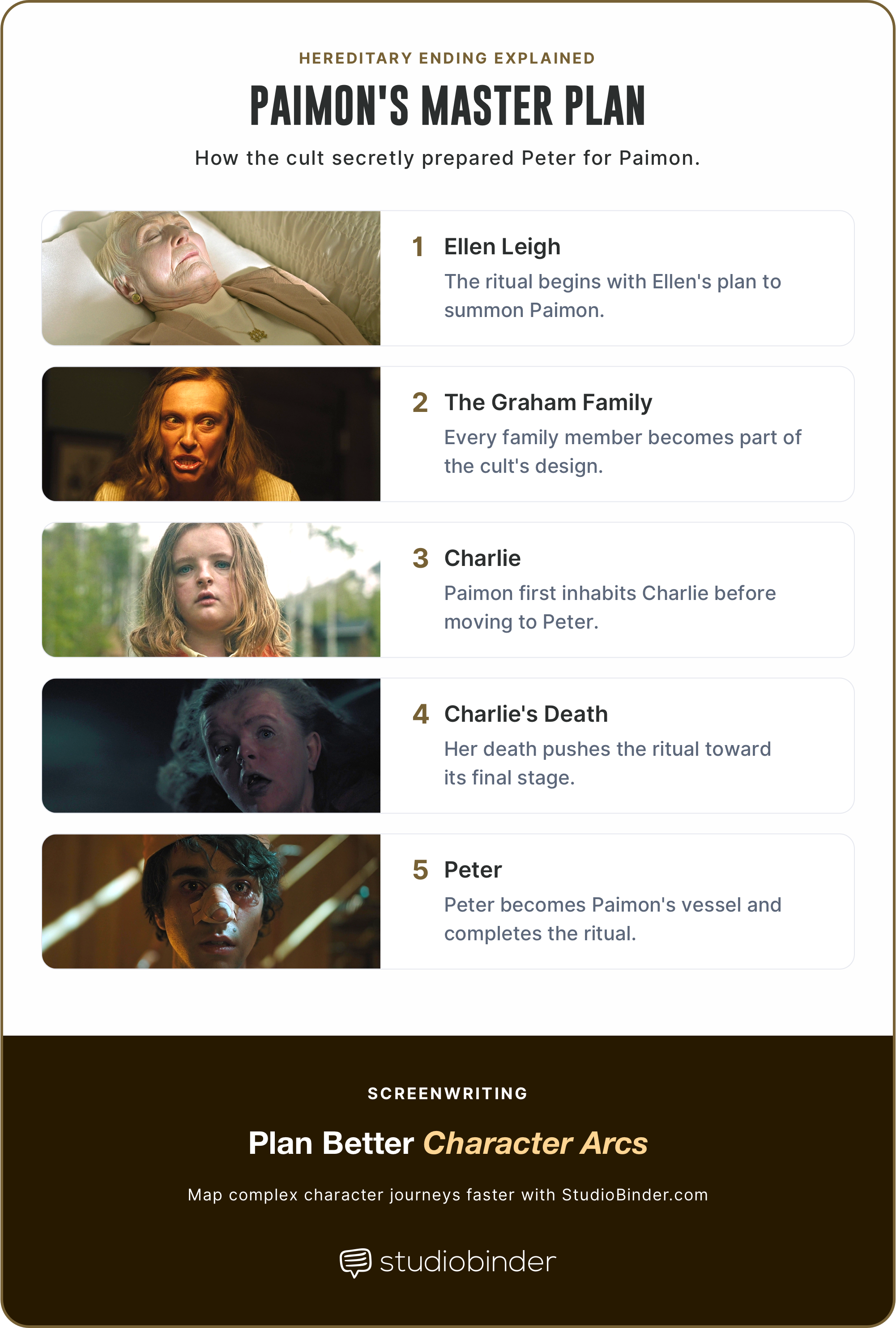
The role Peter’s born to play is host. He doesn’t know it until he’s banging his head against a classroom desk, unsure of why he’s been ‘possessed’ to do so, but his bloodline has been making decisions for him before he ever opened his eyes.
Because Peter is the youngest male in Annie’s bloodline, he is Paimon’s chosen one. Hereditary intently focuses away from Peter in its first half, purposely pulling viewers’ attention away from him and towards Charlie, a visual red herring.
We’re invested in Charlie’s odd behaviors so much that we don’t even see what’s happening with Peter. However, in direct contrast to the rest of the film’s pacing, the opening shot happens in Peter’s room. Or more precisely, Annie’s version of his bedroom inside her miniatures installation.
Then quickly, we’re back to Charlie. Through Visual storytelling , she dominates. Shots of her in school getting reprimanded for doodling, her walking through the woods looking for birds to decapitate. Less Peter, more distraction.
Annie even mentions her mother’s sole focus on Charlie early on in the film. Aster cuts between these small references so smoothly that it’s almost impossible to focus on Peter. This is why the final scene is so hard to grapple with.
It’s been Peter all along in Ellen Leigh’s plan, Charlie acting as the innocent bystander. These key character distinctions really help to have the Hereditary ending explained.
In both 17th century Grimoire and Aster’s cinematic world, women are considered the weaker vessel. Why? They’re imperfect in nature, or so Paimon believes as she chooses Charlie as his first host. She’s young, vulnerable to his influence, subjective to sin.
This theme goes as far back as Eve’s original sin, as Eve was the one to take the first bite of the forbidden fruit, resulting in a millennium of disappointing acts. In Paimon’s eyes, Charlie has to be the first vessel, and so she’s killed in a very calculated decapitation by a nearby, passing pole. It’s not Peter’s doing, and it’s no mistake that Charlie has an allergic reaction to a piece of chocolate cake just before.
In small instances, such as her obsession with animal mutilation and detachment, Paimon shows himself (and subsequently, his priorities: dominance, violence, and duty), steering her to act in an overtly devilish way without a clear understanding why.
Until it’s revealed that Paimon’s been forcing her to play puppet, her behaviors remain odd. She’s a social pariah, a basket case. Interestingly enough, in most Grimoire tales, Paimon shows obedience towards women. Aster convolutes this reality to better serve his theme, even if pieces of true folklore shine through.
MidnightMovieClub goes even further into the intricacies of Paimon and the cult's plans:

Hereditary ending explained
If after a few watches you still feel you need the Hereditary movie explained, take a look at these key symbols broken down.

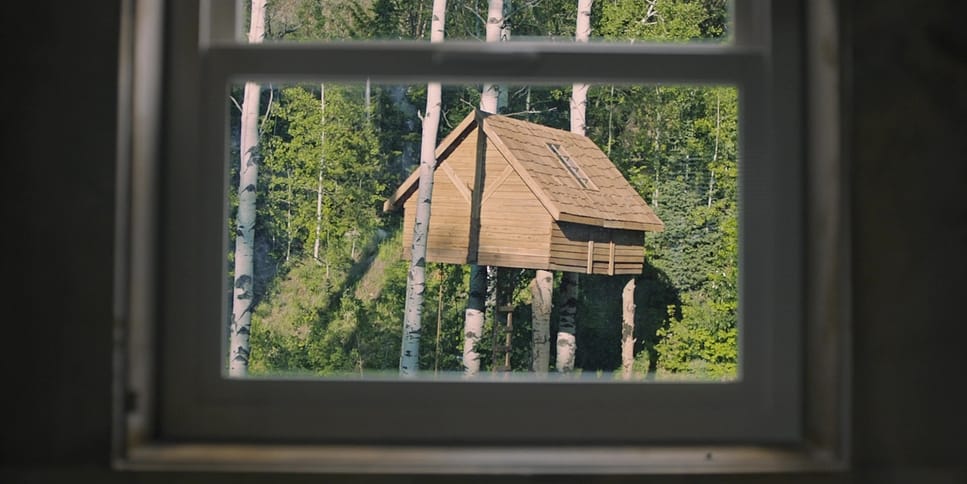
The treehouse is where it all comes to a head for the Graham family. Even when it’s Charlie’s place of solitude, Aster establishes an air of eeriness around it. It’s rarely touched, explored, and mentioned again until that final ritual where Peter realizes his life as he knows it is over.
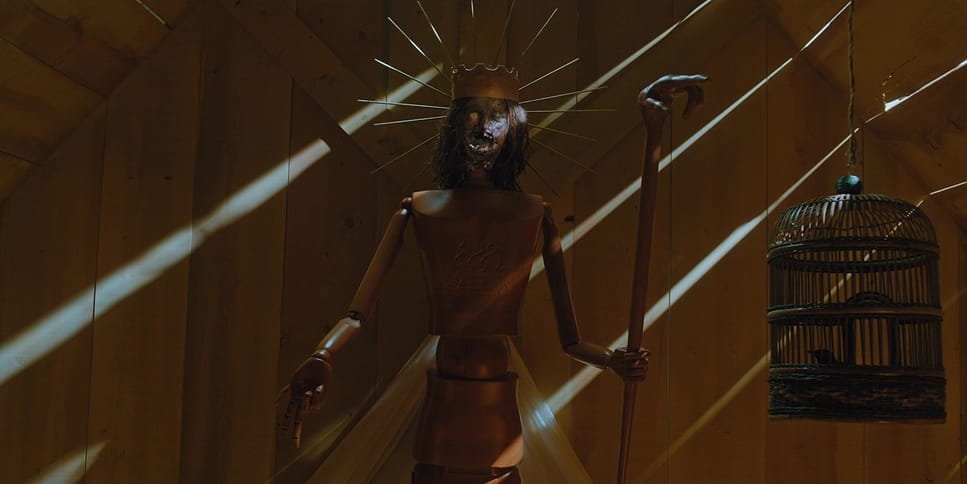
Shown in the final scene are a ring of headless bodies bowing down to Peter as he takes his rightful place in Paimon’s throne. Decapitation, specifically that of the Graham or familial line, is a key symbol of the cult.
Charlie’s severed pigeon and headless Annie tie together central symbolism for the film even if in different acts: the head must be subjected from the body for Paimon’s ritual to be complete. No head, no way to fight back.
When Peter’s completing the ritual in the treehouse, he’s crowned. According to occult texts, Paimon appears “with a crown most glorious upon his head” as his soul ritual comes to a close. The crown, once upon his head, signifies the hereditary end of the Graham’s line of hosting, or in this case, suffering.
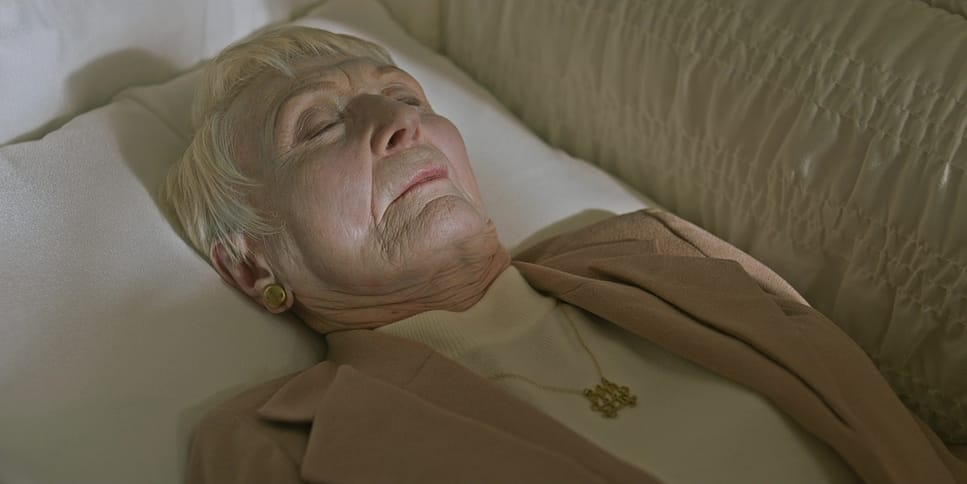
The Tet symbol (a circle with a cross) is a symbol we see very often in the film, shown in varied spaces to create a lingering tie between Ellen and her family, even in death. In Lesser Key of Solomon, specifically the first section Ars Goetia where Paimon appears, the symbol is depicted as one of his mail sigils.
In the film, it’s shown in pedant form around Ellen’s neck, in her scrapbook, on walls. It makes its titular appearance upon the pole that ultimately severs Charlie’s head from her body, another microscopic way Aster shows us what’s really going on.
Ellen and the cult had predecided that this would be the place Charlie would die. And so, the pole is covered with the Tet, marking their influence over the Graham bloodline.
While it may feel like a reach that audiences connected to the power of the Tet symbol, a 2019 Pew Research study found 49% of Americans believe in supernatural forces — providing cultural context for films about occult possession and their popularity.
Hereditary ending explained
The sordid beauty of Hereditary’s take on horror is that it’s not supernatural. It’s genetic. None of the cursed actions each family member must take is in their control. And that’s the scariest fate of all.
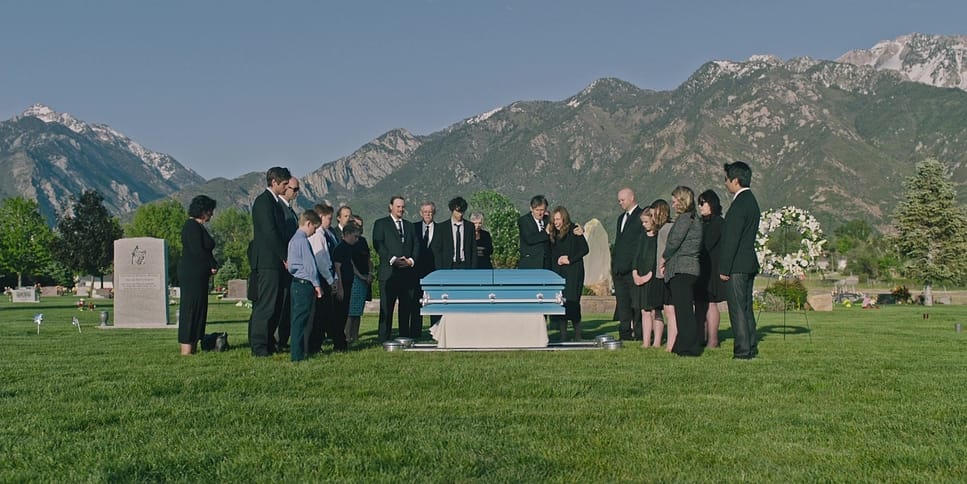
Sometimes, trauma is a matter of blood. And for the Graham family, these destined traumas come about in equally violent ways: erratic behavioral changes, derealization, and ultimately, death.
It could be said that Aster uses these violent acts to symbolize inherited mental illness. They appear in the same way any mental illness can, randomly, without warning, with grave psychological implications. And if things go left untreated, physical trauma.
Think of the two side by side. When Peter’s arm begins to move without his control at school, and his body demands him to slam his face into his desk, he’s forced to watch from the sidelines. The same happens with mental illness (especially genetically predetermined ones).
When the dust settles and Peter returns home in blood, the real loss of control sets in. Steve cries in the car thinking about all he’s lost to his wife’s familial trauma. He realizes he’s asked for this by marriage, and he isn’t sure he wants it anymore.
The realization that each member of the family never had any control over their unique, bodily destiny hits harder than any death or gore.
As far as grief goes, this is another key theme in Hereditary. Although Annie doesn’t seem to be initially affected by her mother’s death, she breaks down in a group therapy session speaking about it. Much like the death that will become her, she can’t escape her grief.
Aster weaves two simultaneous stories as each Graham falls prey to Paimon’s wishes: you can’t fight grief any more than you can fight destiny. Both keep their grip firmly around your life, and for this family, the complications of both are deadly.
While it may feel like you’re going into this movie for a dark, visually-intriguing horror flick, it’s much more than that. As the movie's 72% audience score and 90% critic score show, what you invest in Aster’s striking debut, you get back tenfold.
Hereditary ending explained
In conversation with NPR in 2018, Ari Aster stated that “The film is a horror film, it's unabashedly one, but as I was pitching it, I was describing it as a family tragedy that curdles into a nightmare.”

As a viewer, it’s clear to see that what Aster sought out to do, he did. You can feel in each brush with death that the Graham family is consumed by their grief more than they are by the horror they experience.
Consider the initial shock of the film: Charlie’s death. What might have been a grander, more devastating scene in a film of another genre, is an isolated event that pales in comparison to the darker, more sinister acts that follow.
But, even as Peter breaks down and Annie dies, the feeling of long, lingering grief sits with viewers. It can’t be tied back to one or the other. The Graham family is riddled with pain that never takes a back seat.
So yes, the film may contain scenes you won’t over stop thinking about. But the real staying power is its depiction of shared grief. And this is what Aster was trying to play at all along, even if it took viewers a few times to get it.
The final scene of the film feels like the end of this grief, something most families dealing with shared trauma just don’t get. Peter may inhabit the soul of Paimon, but as the single “living” member of the Graham family, he’ll carry the weight of their grief indefinitely.
In our non-mystical world, grief doesn't end. It isn’t burned to the stake by a circle of its creators. It lives within the spirits of those who survive it. This is why none of them do. And as cold and chilling as that sounds, it's essentially the Hereditary ending explained.
Like so many others, you may have walked out of the theatre trying to find ways to get Hereditary’s Paimon explained. Paimon, according to occult 17th century texts such as Lesser King of Solomon, is one of the 8 Kings of Hell. He’s commonly shown riding a camel and surrounded by servants playing instruments.
In the film, he’s ejected into multiple bodies, his final form being Peter.
Annie doesn’t actually piece together that her mother (and consequentially, her bloodline) is associated with a cult until she finds her mothers scrapbook with photos of her wearing the Tet symbol and participating in meetings.
Because she isn’t aware of the cult, she subconsciously reinforces its wishes in small ways, like trying to manifest Charlie’s spirit via seance, the same ritual the cult uses to summon Paimon.
Charlie’s death was planned in advance by the cult. They predetermined the location (the pole). Because you can see layered Tet markings all across the pole, audiences understand that her death was no accident. She dies so Peter could become Paimon’s main vessel.
Neither. The ending of Hereditary, though marked by supernatural acts, actually happens. Peter is not hallucinating the ritual, his body is literally used by the cult to host Paimon’s spirit.
In Goetic demonology, tet is a summoning seal. It ties the body of the vessel to Paimon’s spirit, a recurring motif throughout the film. It’s depicted in various forms, all tracing back the family’s lineage to the cult.
With the Hereditary ending explained, let's dive deeper into the filmmaking process. Interested in seeing how other filmmakers use their unique style to build dread on screen? Check out this comprehensive guide to horror cinematography, where we break down key fear-building techniques from the classic POV shot to experimental framing.
此内容由惯性聚合(RSS阅读器)自动聚合整理,仅供阅读参考。 原文来自 — 版权归原作者所有。