








When it comes to blending the boundaries between monster and man, no one does it better than Academy Award-winning director, Guillermo del Toro. Whether he’s directing a superhero film or a gothic romance, he brings his unique visual flair to any story he’s at the helm for.
What do you think his best film is? Do you agree with our list? Keep reading to see where your favorite monster story lands on our list of the best Guillermo del Toro movies of all time.

A script light on character development ultimately dooms Blade II. Fortunately, Guillermo del Toro, with an eye for both horror and action, manages to stage epic set pieces while still providing ample doses of sympathy for the Reapers. It just goes to show that no matter who you have at the helm of your film, you can never make a good movie out of a bad script. Del Toro does what he can, and it can be pretty fun at times, but this sequel just doesn’t come together.
Blade II is fun in a trashy, B movie kind of way. But with no thematic depth, it’s just one fight scene after another.

It’s hard to fault del Toro for the relative mediocrity of Mimic. Del Toro butted heads with Miramax boss Bob Weinstein, who worked tirelessly to get del Toro fired from the film. He would even go on to describe the process as being a “horrible, horrible, horrible experience.” When you take control out of the director’s hands, more times than not, it just ends up with an inferior film that everyone else tried to work so hard on.
Mimic could have been a genuinely creepy horror movie. While it has some moments of inspiration, del Toro needed more creative control for it to feel like a fully fleshed-out monster movie.
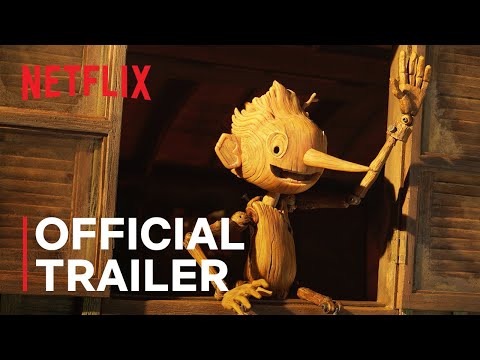
It was always going to be hard for Pinocchio to stand out– a straight-to-streaming movie that was one of three Pinocchio films that came out in a two-year span. And yet if we were to choose which of the three Pinocchio’s did stick out like the titular character’s nose, it would be del Toro’s. The stop motion animation is nothing short of gorgeous, and the take on the fable is heartfelt. The script at times can feel a bit saccharine, but it’s hardly an Achilles heel for what is clearly a labor of love.
For some reason, the early 2020’s saw a sort of Pinocchio fever. Guillermo del Toro’s film is the best of the bunch.

Del Toro wanted Crimson Peak to have a throwback feeling in a crowded arena of found footage and B-movie horror films. The visuals and production design are phenomenal in this film. The themes are intriguing, but you can’t help but compare it to The Shape of Water in terms of romance. Crimson Peak is an interesting concept, but among all the beauty, the story falls to the wayside when looking at the entire Guillermo del Toro filmography.
Crimson Peak is a gorgeous film to look at. The characters and plot may not have a whole lot there, but for fans of old-school Gothic romances, you have to admire del Toro for doing something completely different.

There’s a point in Pacific Rim where a Jaeger pulls out a giant sword while it and a Kaiju are fighting in space and cuts the Kaiju in half. This is a film that knows exactly what it is and just goes all in 100%. It’s a fun adventure ride, and you can either be into or not. For me, I’m very into it. It has flaws for sure, but when you just want to shut off your brain and watching giant monster battles, this is where it’s at.
If you’re going to make a big, dumb action movie, it should be more like Pacific Rim. The visuals and fight sequences are entertaining as heck even when other areas fall short.

Many fantasy and sci-fi films have an audience surrogate character who’s there to offset the overall weirdness of the movie. For Hellboy, that’s John Myers, and it works to the movie’s detriment. A little exposition is necessary, but Myers’ presence feels too at odds with the rest of the craziness of the rest of the movie. It’s a film that juggles tones to various degrees of success, and while it’s pretty fun, mostly due to Ron Perlman’s excellent take on the character, it feels like a lesser movie in the overall superhero pantheon as well as this list of the best Guillermo del Toro films.
Hellboy is a worthwhile addition to comic book movie canon. It has fun visuals and Ron Perlman absolutely owning the title character, which both go a long way.

Although it was nominated for four Academy Awards, including Best Picture, it still feels like del Toro’s Nightmare Alley is underrated. The film, an adaptation of a 1947 B-movie of the same name, is dark and difficult, a slow burn that del Toro fans may not be accustomed to. But the film boasts some of the director’s best atmosphere-building, as well as strong performances from Bradley Cooper and Cate Blanchett.
Nightmare Alley may not be the first movie people think of when they think of Guillermo del Toro, but it’s certainly a worthy entry in his catalog.

Sequels tend to get a bad name, but when it comes to the superhero genre, in many cases, the sequel surpasses the original. With Hellboy II, you can see why that is the case. It no longer needs the audience surrogate, and it can fully embrace the weirdness of the character while doing some very entertaining world building. With Hellboy fully going into a fantastical world while finding his place amongst humans, it’s just an overall more intriguing film that really deserved a follow-up.
Hellboy II: The Golden Army should have had a bigger audience. It’s a great watch and necessary viewing for anyone who wants to see a different kind of comic book movie.

One interesting aspect of these “Best Of” lists is seeing how many directors’ feature film debuts set the stage for what they would explore throughout their filmography. Cronos is one such beast because it showcases how del Toro would balance horror and comedy, for the best and worst. Cronos is a smaller-scale vampire film with an intriguing premise, and it’s fascinating to see how much del Toro could do with a small budget.
Cronos is a creepy horror movie and one that’s still highly recommended to all horror enthusiasts out there. It’s also interesting to watch to just see how far del Toro has come.
Before we dive into the top 3 Guillermo del Toro films of all time, let’s look at some of his television projects. Yes, he’s not just a master of horror on the big screen. He brings his unique monster stories to adults and kids alike on the small screen, too.
The Strain (2014-2017): Dr. Ephraim Goodweather’s CDC team discovers a viral strain displaying similarities to vampirism. As the virus spreads, it’s up to his team to wage a war for the soul of humanity.

Trollhunters: Tales of Arcadia (2016-2018): James Lake, Jr. discovers a magical amulet as well as a realm filled with trolls. It’s up to him and his friends to protect their world from dangerous monsters who come out of this realm.
![Trollhunters | Official Trailer [HD] | Netflix After School](https://i.ytimg.com/vi/J2oNgZlbSKI/hqdefault.jpg)
3Below: Tales of Arcadia (2018-2019): Two royal aliens accidentally crash land on Earth. They adapt to humanity’s ways while trying to fix their spaceship so that they can return home.
![3Below: Tales of Arcadia | Official Trailer [HD] | Netflix](https://i.ytimg.com/vi/jfVmNGUA-eo/hqdefault.jpg)
Now that you have some awesome Guillermo del Toro TV shows to binge watch, let’s get back into the top three movies in the Guillermo del Toro filmography.

Horror movies have always been an interesting way of dealing with political realities. The Devil’s Backbone critically examines the Spanish Civil War where the orphanage functions as a microcosm of the politics occurring throughout the country of that time. Even the ghosts are pitiable in a unique way without del Toro ever resorting to the melodramatic. It’s effectively scary and poignant and remains an underrated horror classic.
The Devil’s Backbone showcases all of del Toro’s bag of tricks. He’s a master of horror, and he blends those sensibilities here with ample political substance.

The concept for The Shape of Water came to del Toro when he wanted to remake Creature From the Black Lagoon but with more sympathy for the creature. Studio execs rejected an outright remake, but del Toro saw his vision come to fruition in the form of The Shape of Water. It’s a lovely story thanks to how much earnestness del Toro puts into the central romance, but it also has his trademark visuals in ample supply. You can study virtually any aspect of this film and find something brilliant to dissect.
The Shape of Water is a love story for the ages that’s so much more than just a Splash clone. It’s a gorgeous film, and del Toro’s love for making monsters complex is on full display here.

Pan’s Labyrinth is the film Guillermo del Toro was destined to make. While it deals with dark themes, such as how either death or imagination are the only ways to escape from the horrors of reality, it never loses its sense of hope and wonder. The story is poignant, continuing del Toro’s exploration of the ramifications of the Spanish Civil War, but it also features stunning practical effects. Pan’s Labyrinth stands for everything del Toro stands as a filmmaker and is a stunning triumph in every way.
Pan’s Labyrinth is one of those movies that sticks with you forever. The imagery and the story intertwine to leave an indelible mark on you, and once you see it, you’ll want to watch all Guillermo del Toro movies and TV shows to learn everything he’s about as a filmmaker.
One of the most noticeable things out of all Guillermo del Toro films is the way in which he employs colors. With stunning contrasts and vivid associative colors, del Toro’s films always pop, and you always find yourself entranced by what’s on the screen. Let’s look at how all of these films utilize color in StudioBinder’s blog focusing on what colors he predominantly uses.
此内容由惯性聚合(RSS阅读器)自动聚合整理,仅供阅读参考。 原文来自 — 版权归原作者所有。