





Fight Club never really left. David Fincher directed it. Brad Pitt played Tyler Durden. Edward Norton played the unnamed narrator slowly losing his grip on reality. Chuck Palahniuk wrote the novel. Jim Uhls adapted it into the screenplay. Together they made a film that punched you in the face, hugged you, and then punched you again.
The fight club quotes from this movie became something rare. Lines that escaped the screen and lived in the real world. You hear them in arguments. You see them tattooed on skin. You find them in college essays and corporate parody. That does not happen to most films.
Below are the best fight club quotes ranked and numbered. Scene context for every line. No thin aggregator lists. Just the words, the moments, and the reason they have stuck around for 25 years.
These are the best fight club quotes from the 1999 David Fincher film. Tyler Durden. The Narrator. Every character who said something the world could not stop repeating. Ranked from most to least iconic — all 45 in one place.
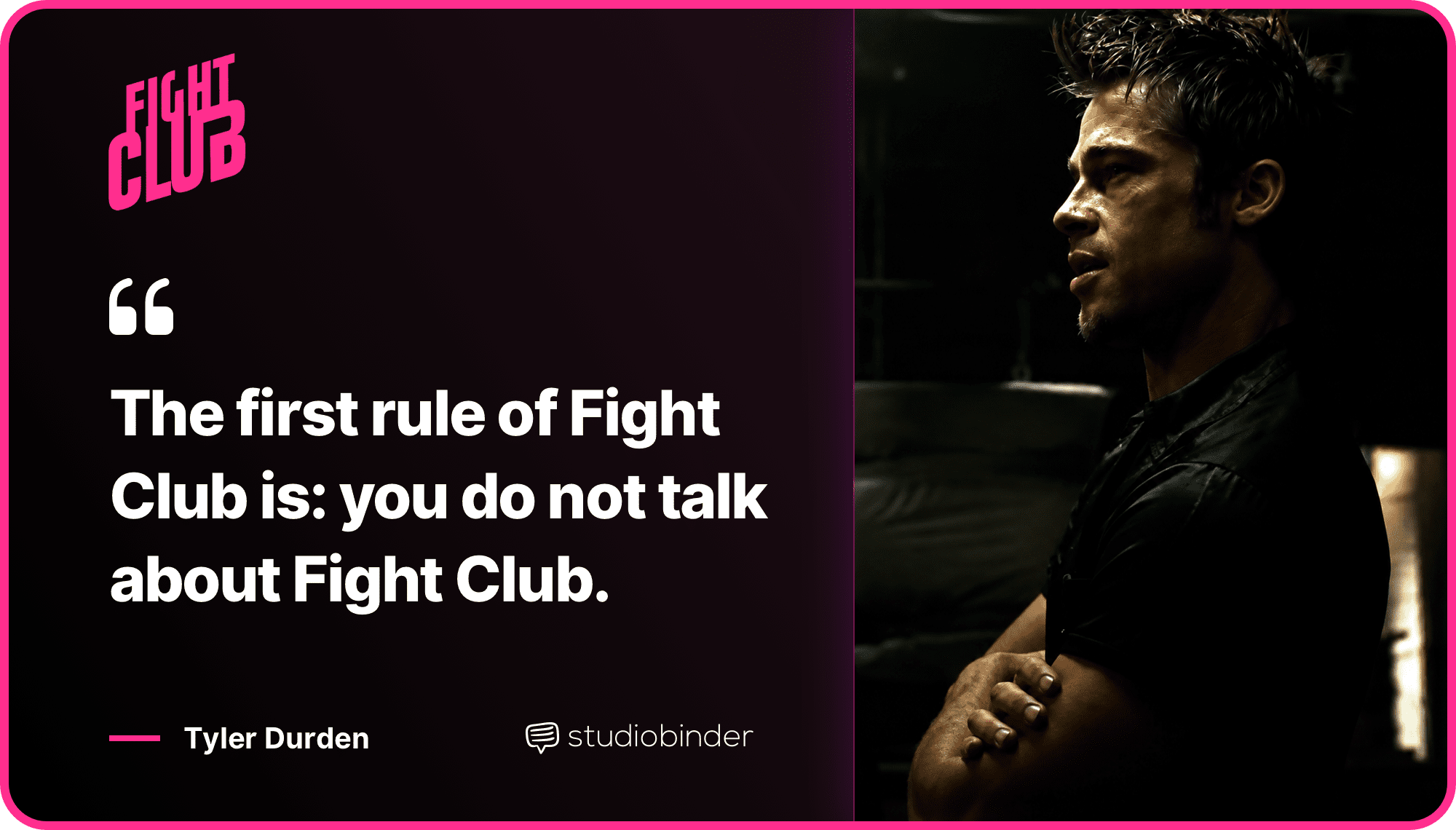
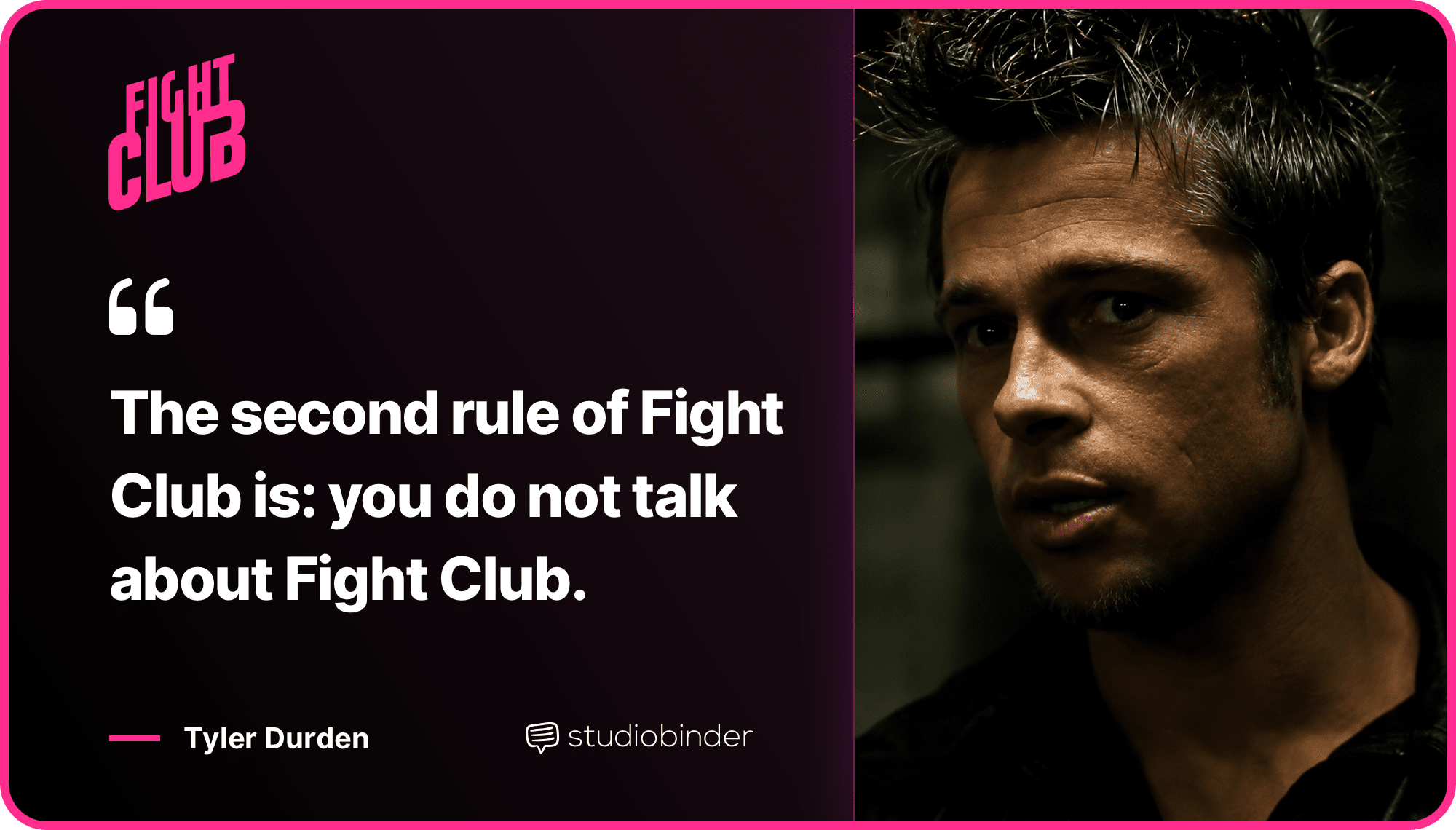
Tyler delivers the rules at the first official meeting in Lou's Tavern basement. These two lines became the most quoted fight club famous lines in pop culture history. The first rule is so famous it became a template people apply to every secret worth keeping.
Watch that famous Tyler Durden line from the video below:
Paired immediately with the first rule. The irony? Both rules are broken the moment the film became a global phenomenon. Everyone talks about Fight Club.
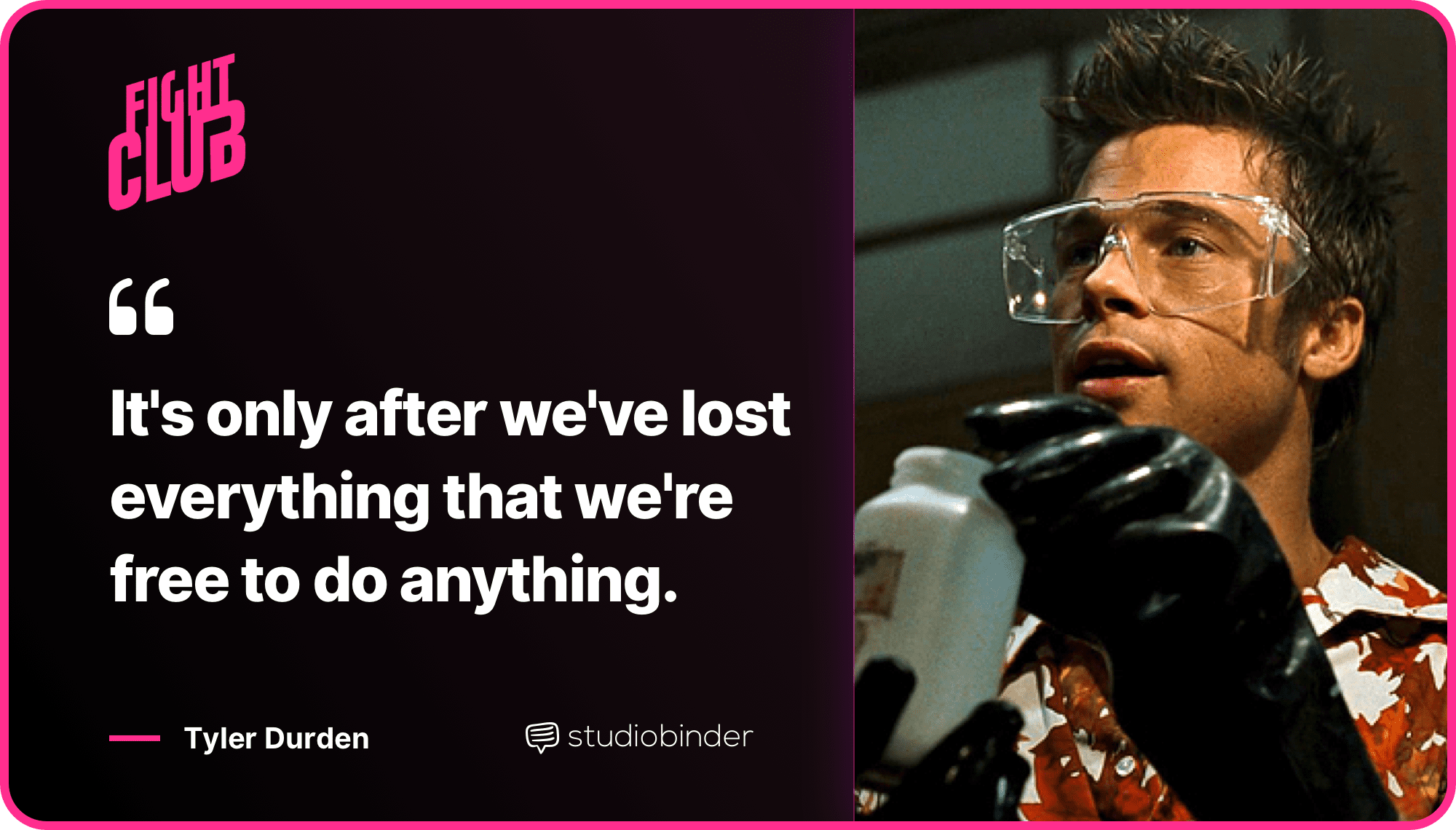
Tyler says this during the chemical burn scene while lye eats the narrator's hand. Total loss equals total liberation. No possessions, no identity, no fear.
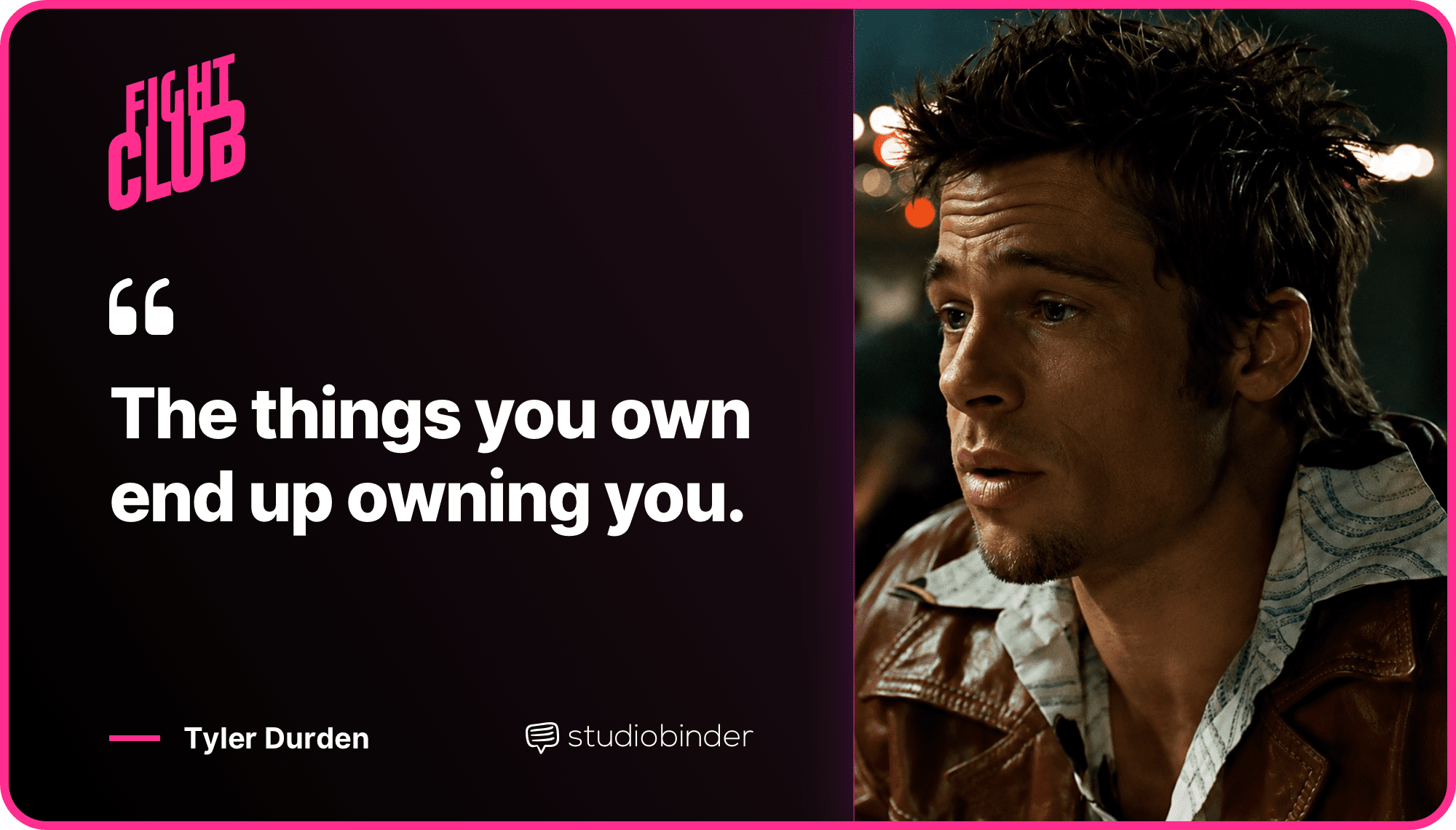
Delivered inside the Paper Street house. Tyler is breaking the narrator's grip on his IKEA identity. Every object is a chain. Every purchase is a cage.
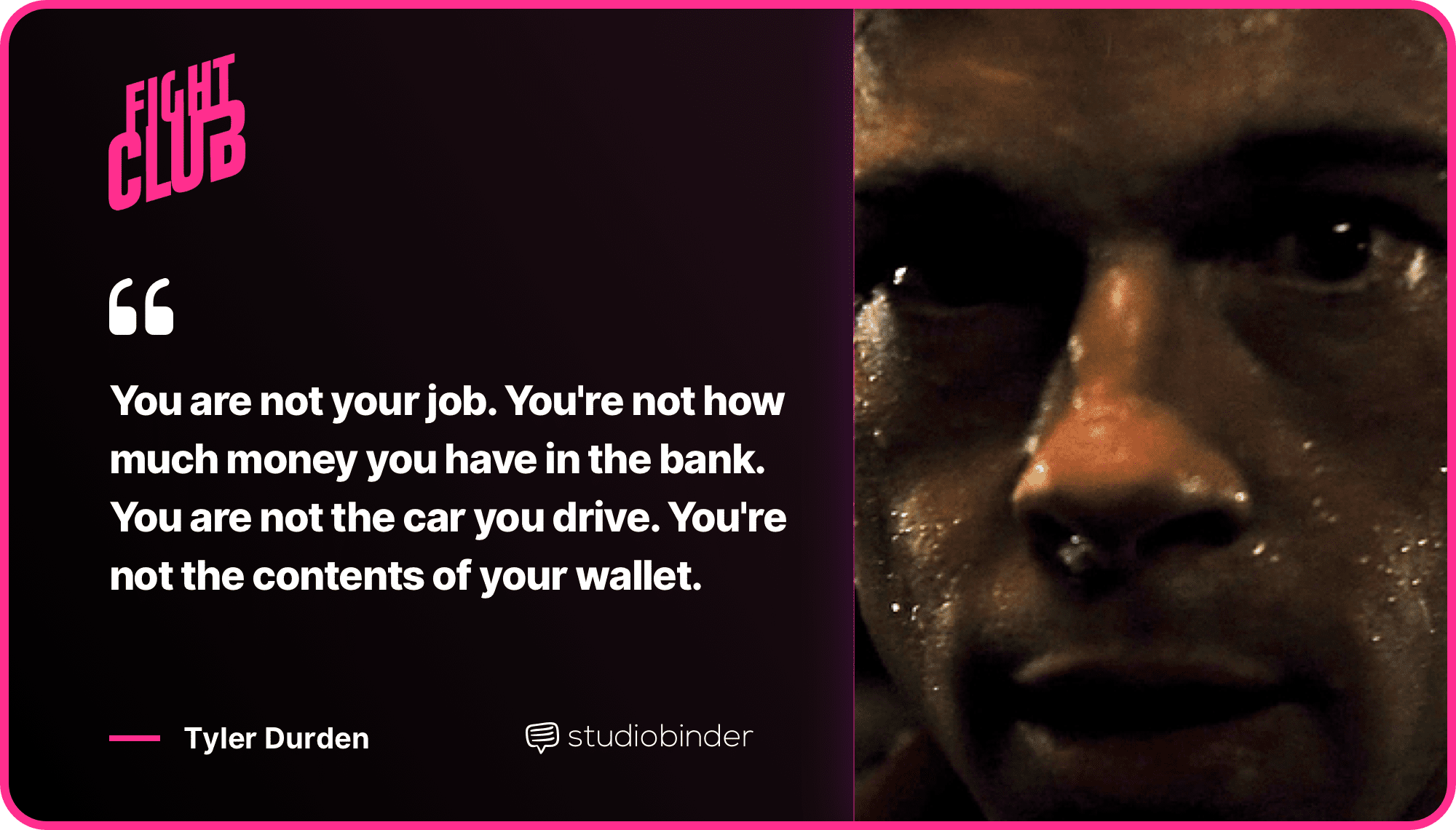
Tyler lectures the narrator at the kitchen table. He strips away every corporate identity marker one by one. What is left underneath? That is the film's real question.
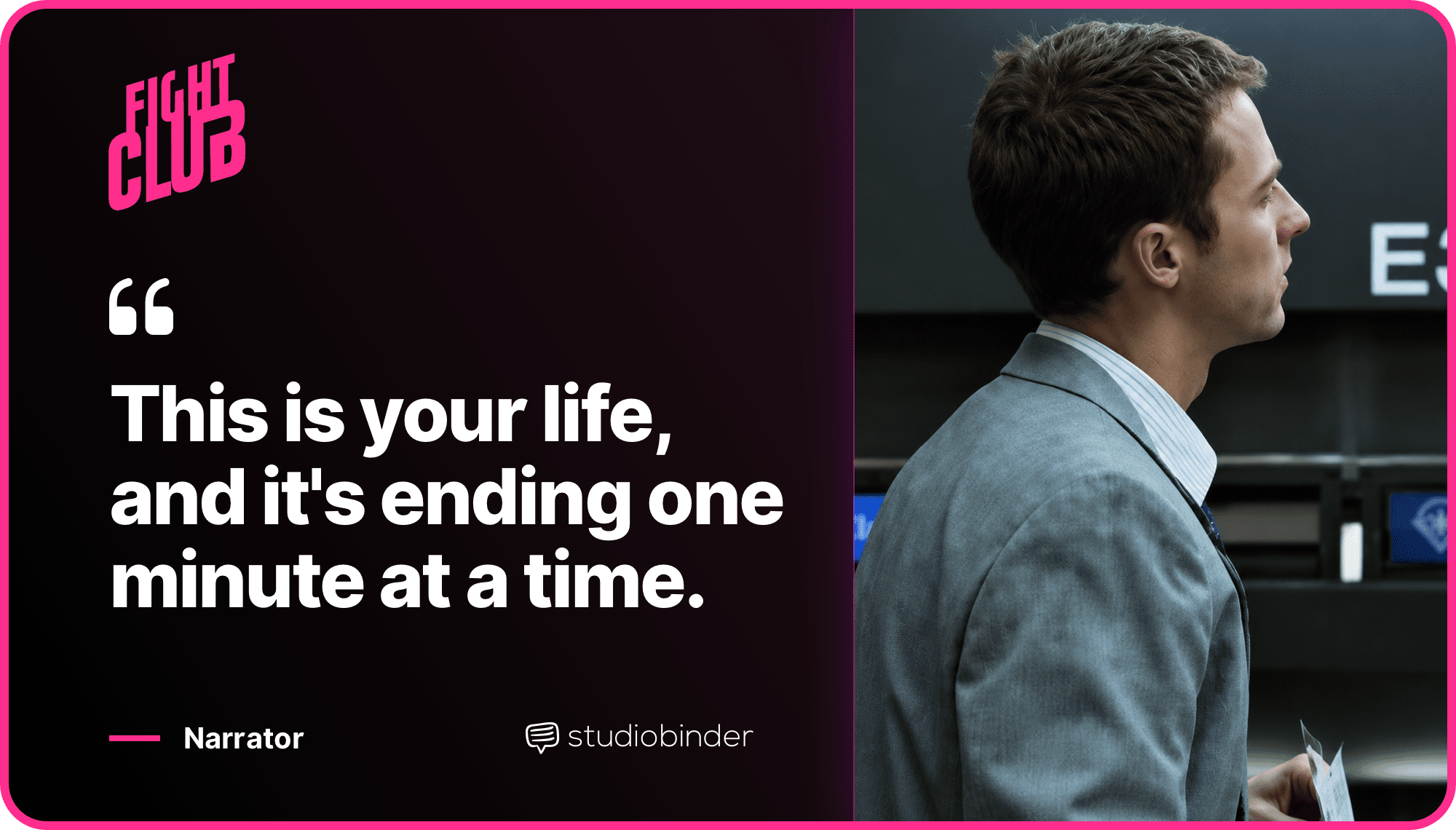
Opening voiceover, spoken while the narrator stares at nothing in a pointless office. Time passing. Nothing to show for it. The clock does not care.
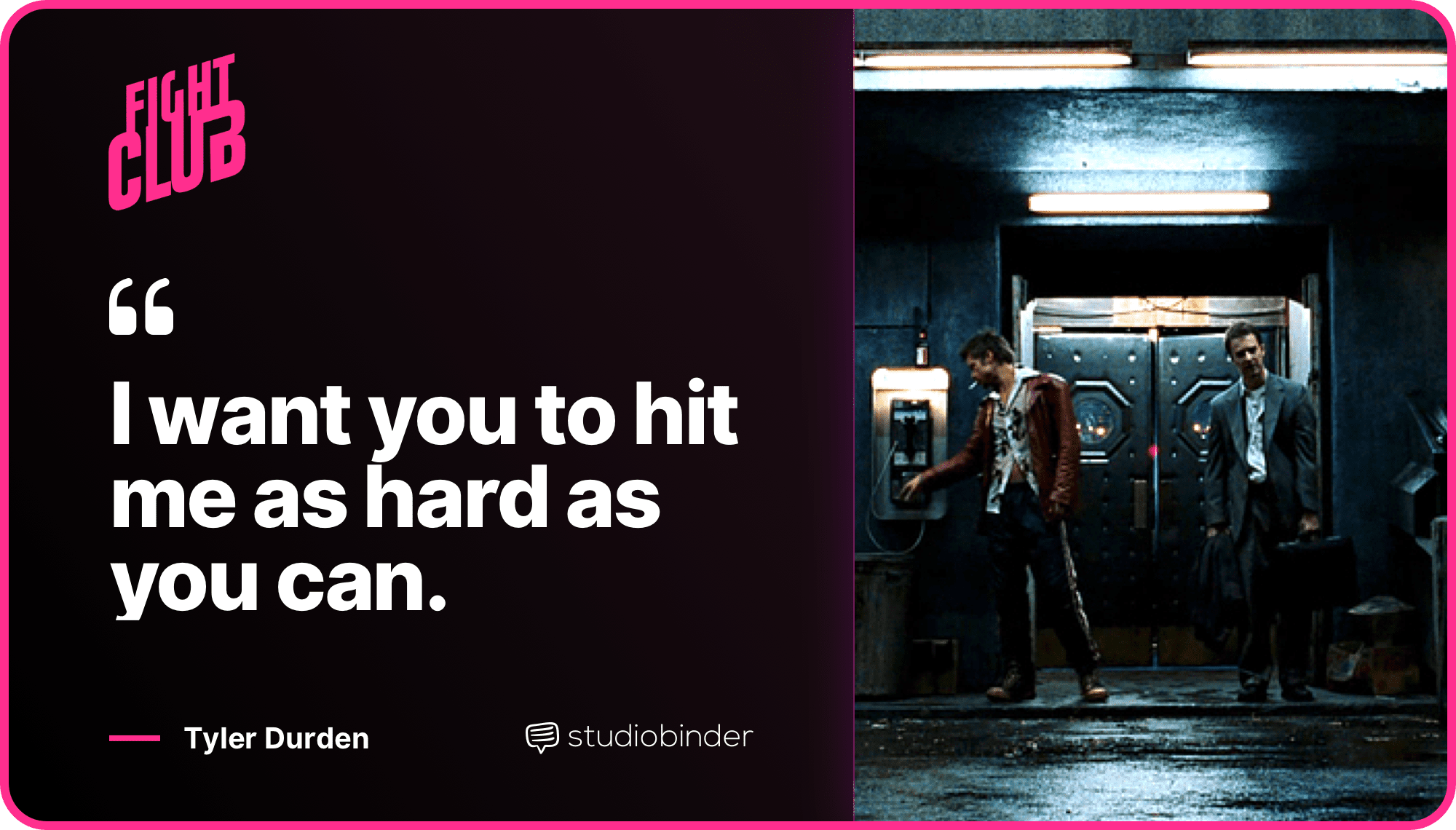
Tyler says this in an empty parking lot on their first night together. It is not a request. It is an invitation to become someone real and the exact moment Fight Club is born.
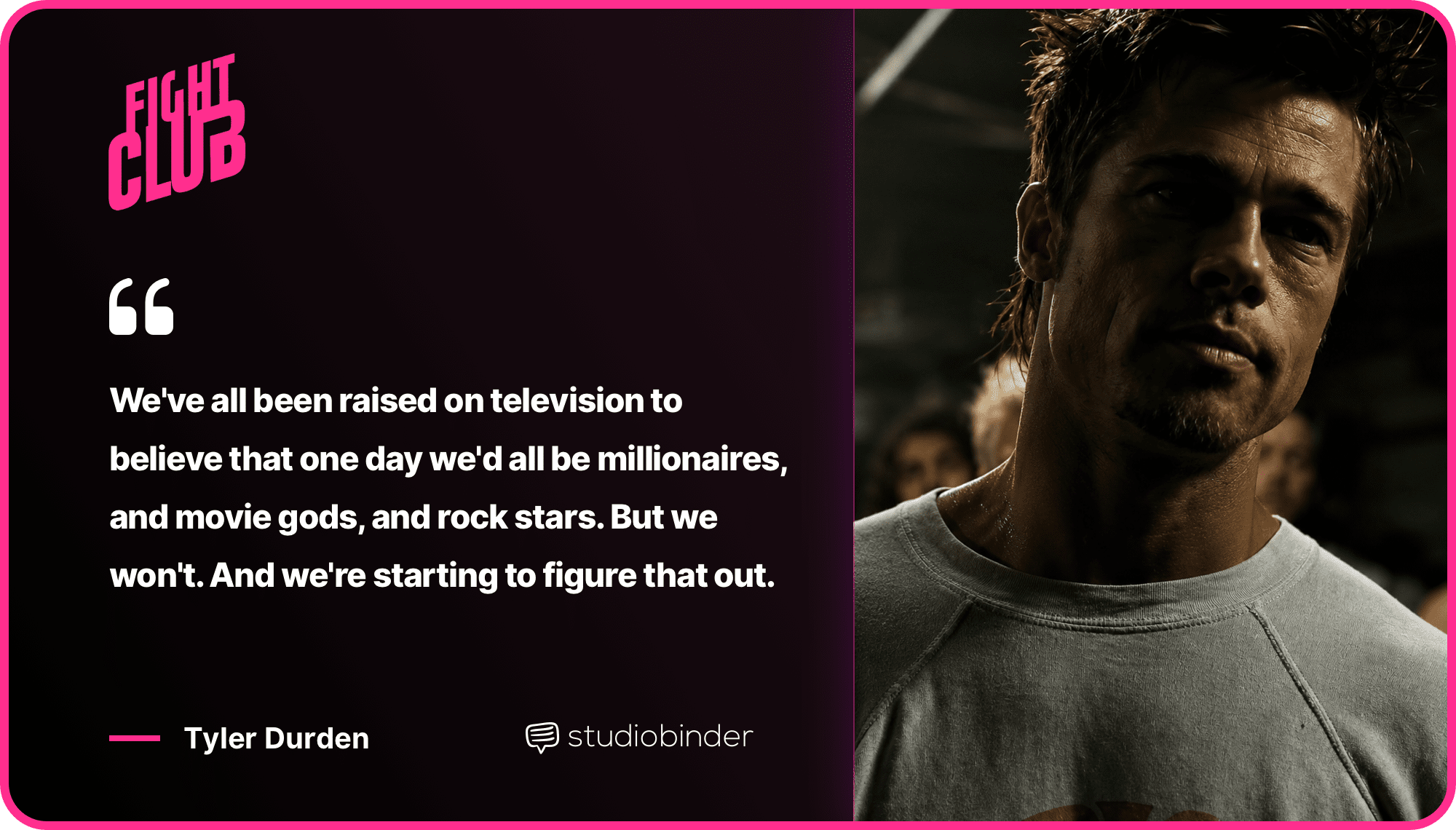
Tyler's basement speech to the men of Fight Club. This is the line that cuts deepest for anyone raised on MTV promises and handed a cubicle instead.
Tyler delivers this to Project Mayhem recruits. He is dismantling their self-image piece by piece to build soldiers who fear nothing, including death.
Tyler pitches his worldview to the narrator during their first drink. The line cuts off deliberately. He leaves the answer hanging in the air where it does more damage than any finished sentence.
The narrator describes the strange peace of rock bottom after his apartment explodes and he has nothing left. Emptiness as relief. Destruction as rebirth.
The narrator's early voiceover critiquing his own IKEA-catalog existence. He diagnoses the disease before he knows the cure. Fight club quotes like this hit harder because the narrator is talking about himself.
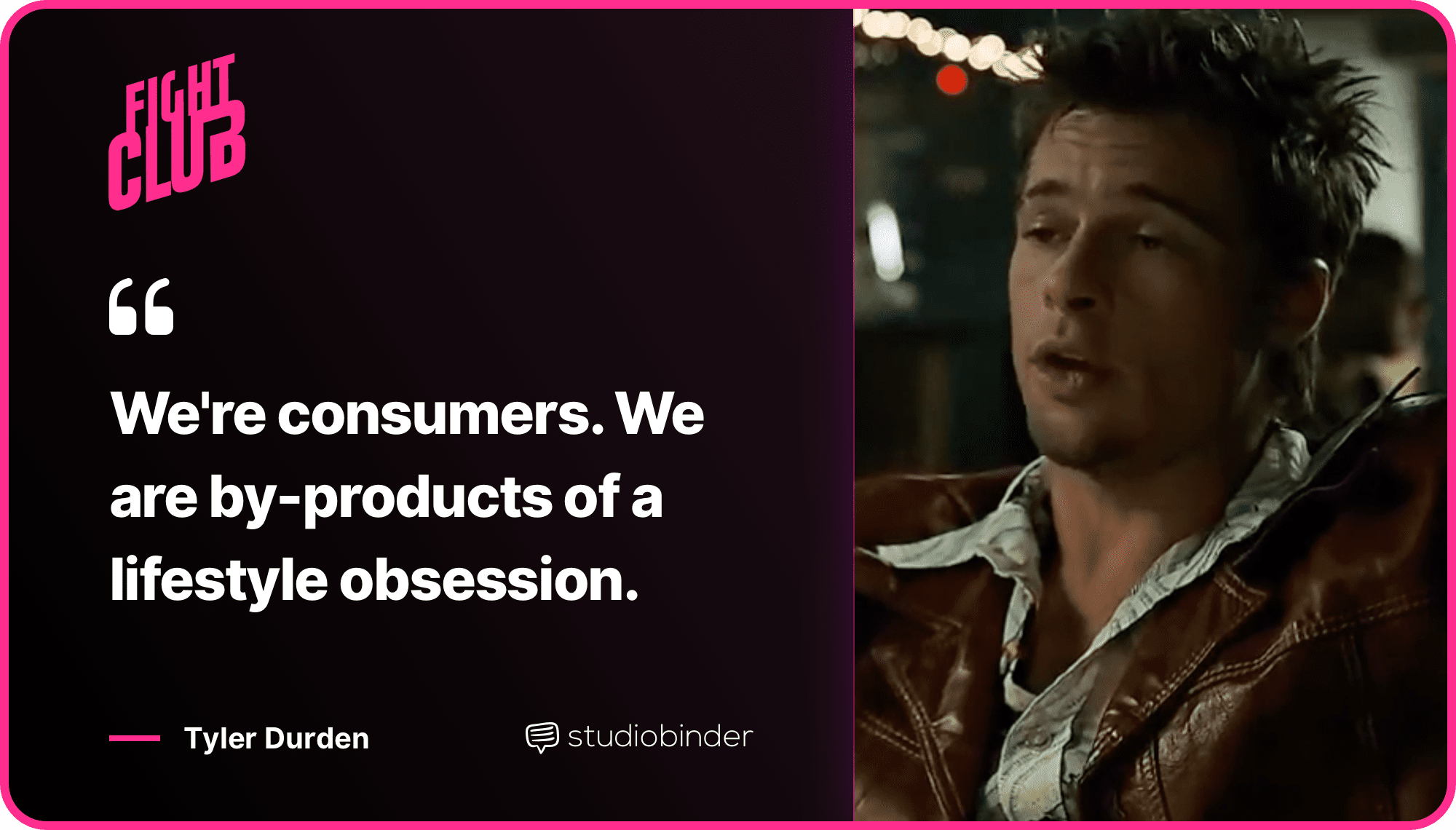
Tyler says this in a deserted parking lot trying to convince the narrator to hit him. Not a post-fight reflection — it is the opening gambit that sparks Fight Club itself. One of the most quoted tyler durden quotes online for 25 years.
No fight club movie quotes list does the film justice without seeing them land in context. Watch this before continuing.
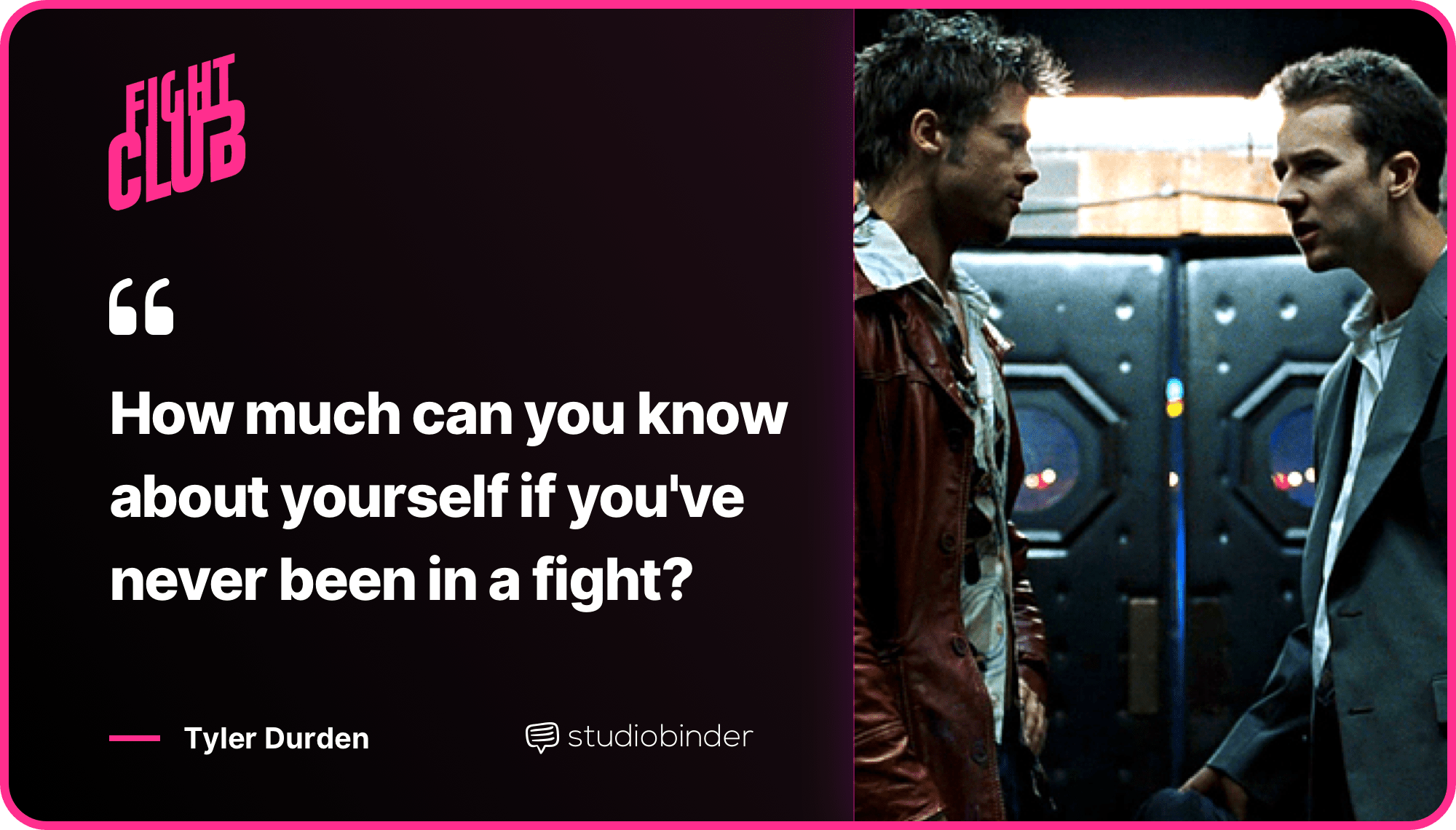
This line captures one of Tyler Durden's most controversial beliefs: that growth comes through discomfort. Whether audiences agree with it or not, the quote remains one of the clearest expressions of Fight Club's challenge to comfort and routine.
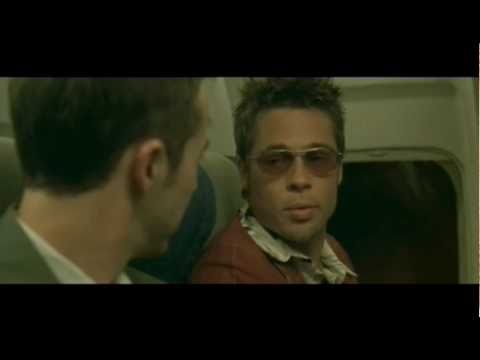
The opening voiceover. The narrator cannot sleep. His world loses its edge. Nothing feels real anymore. This is one of the most famous fight club famous lines in the film and plays under the very first image you see.
Spoken in the basement of Lou's Tavern just before Fight Club transforms into Project Mayhem. Tyler watches ordinary men and sees extraordinary potential being wasted behind desks and in traffic.
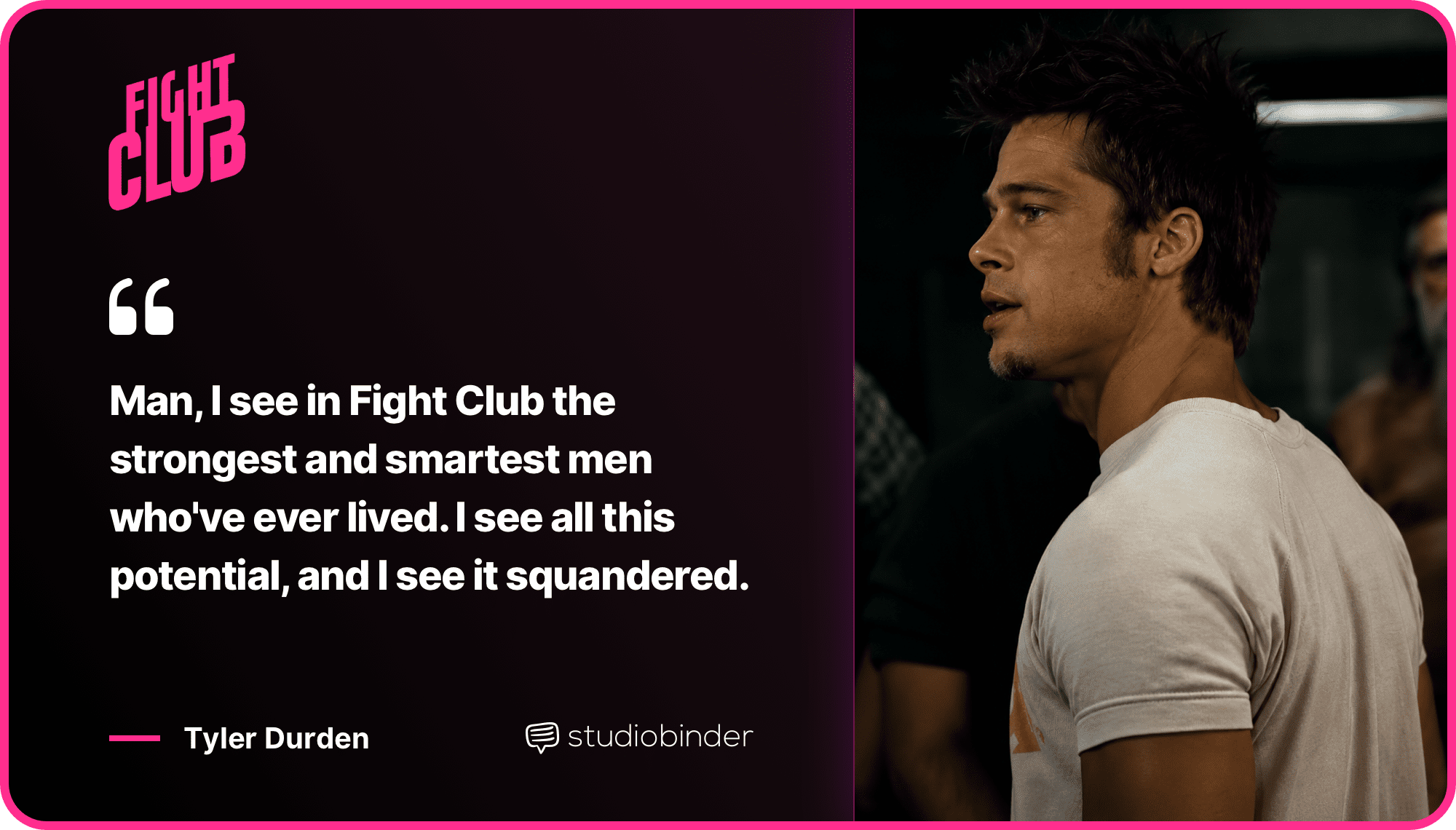
Tyler's extended basement monologue to men searching for meaning. This is the film's entire thesis in one speech — a generation born after the last great struggle, with nothing left to fight except themselves.
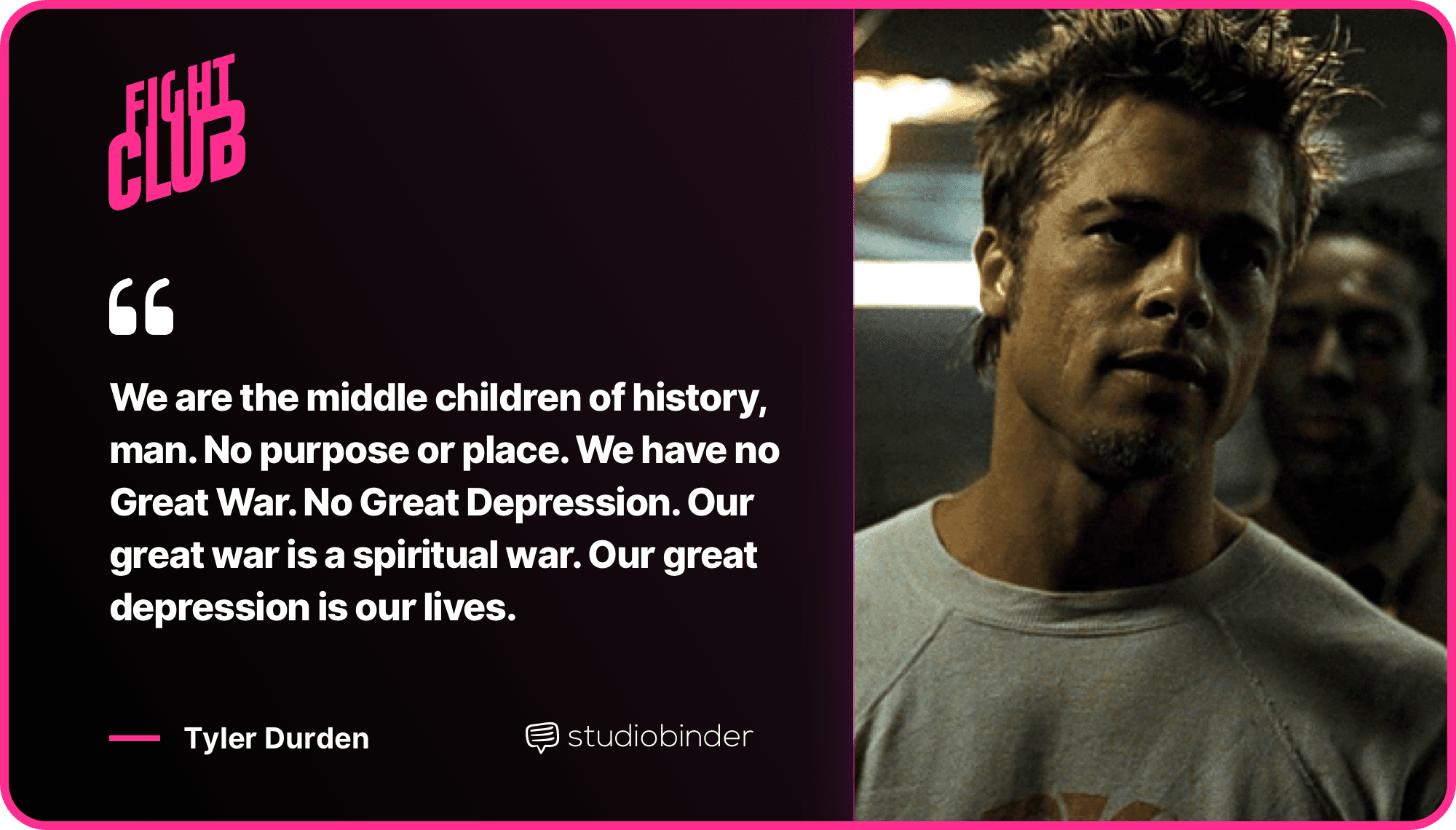
Tyler cuts from the working class to the office class without pausing. This line captures the rage underneath every button-down shirt in every open-plan office in America.
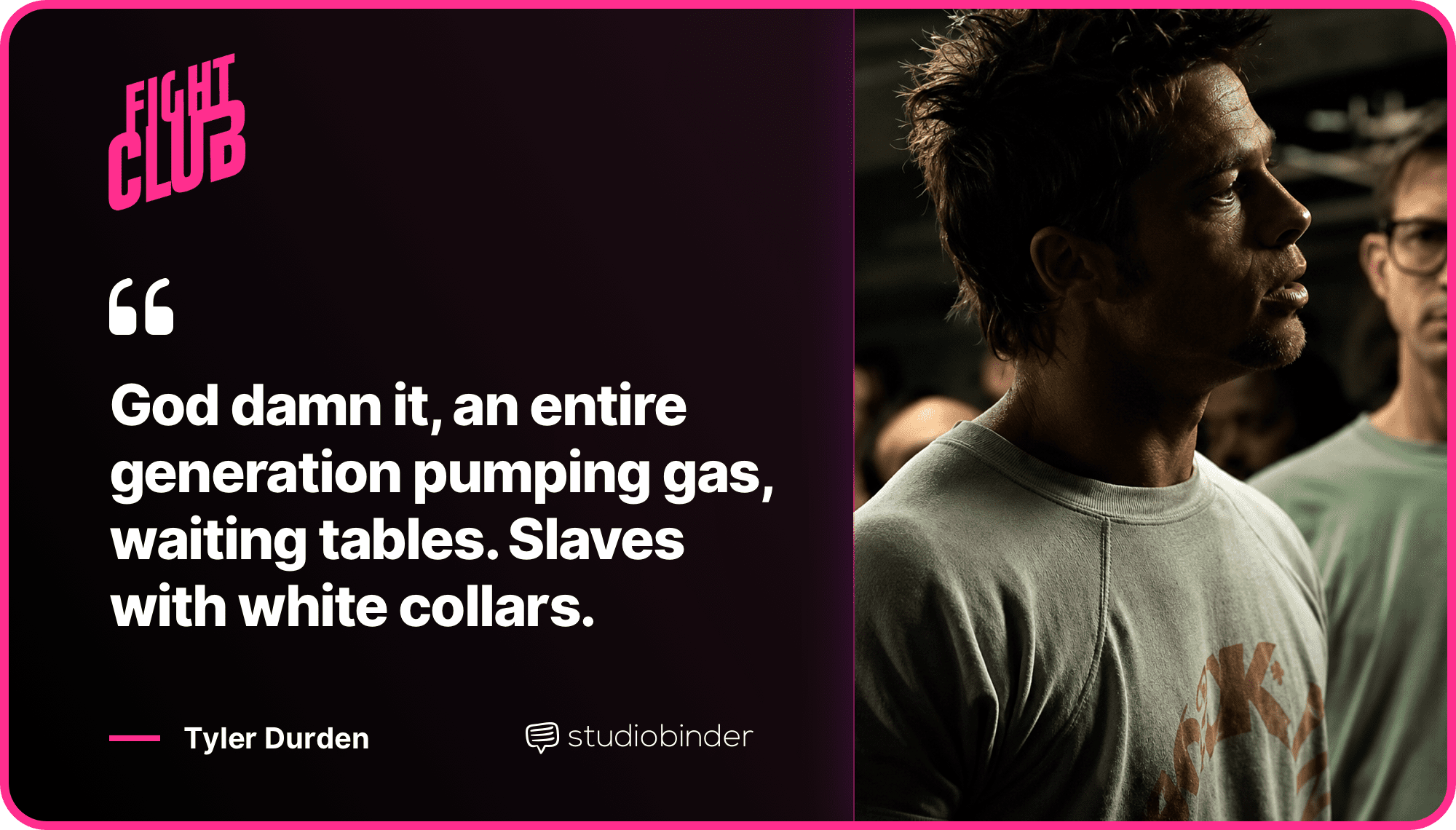
Still in Lou's Tavern, Tyler walks through a crowd standing shoulder to shoulder. Every word is aimed at the consumer identity they spent their whole lives constructing.
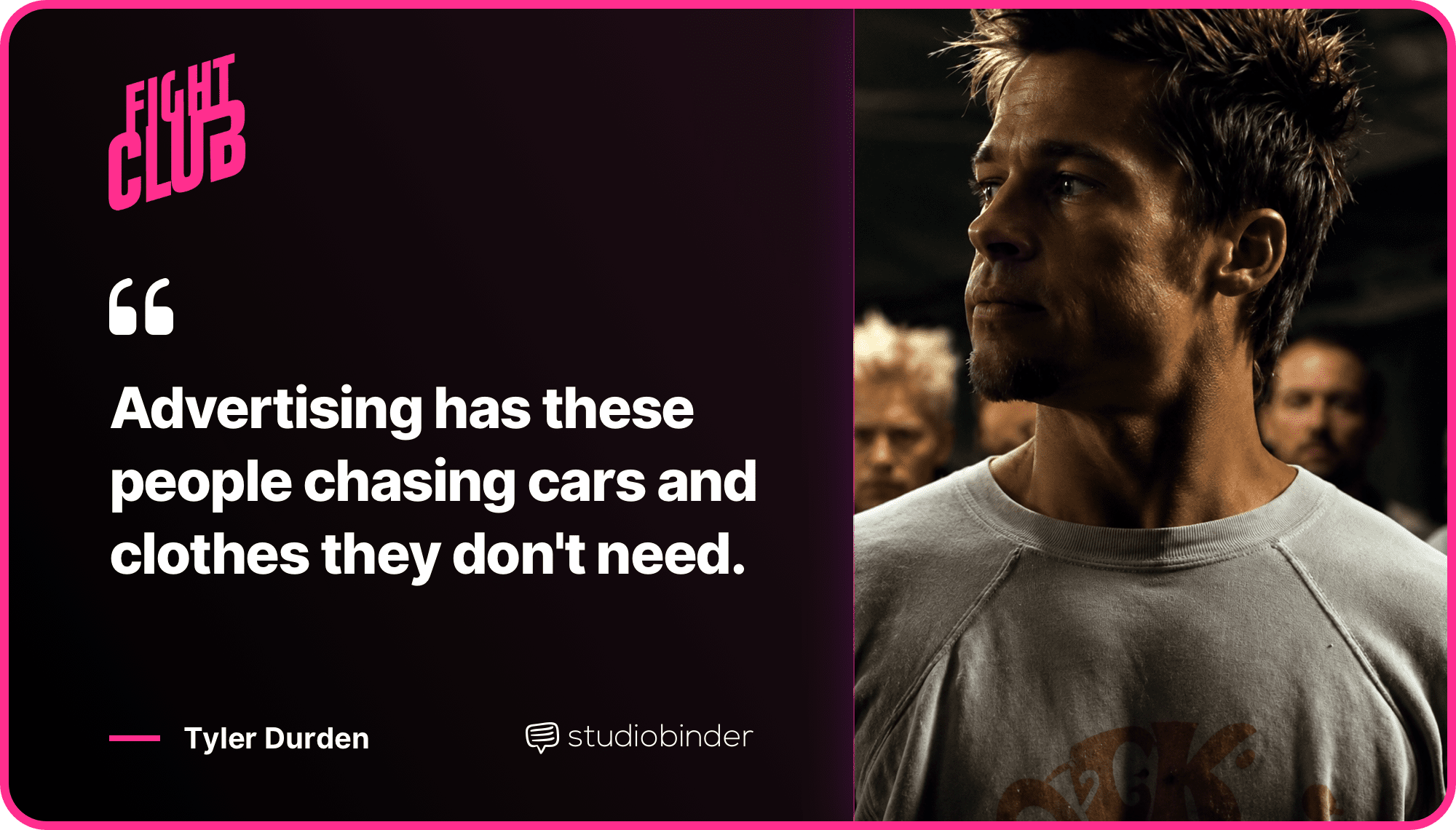
Delivered in the packed, dark basement of Lou's Tavern. Tyler is pointing directly at the men who traded their instincts for cubicles and their names for employee numbers.
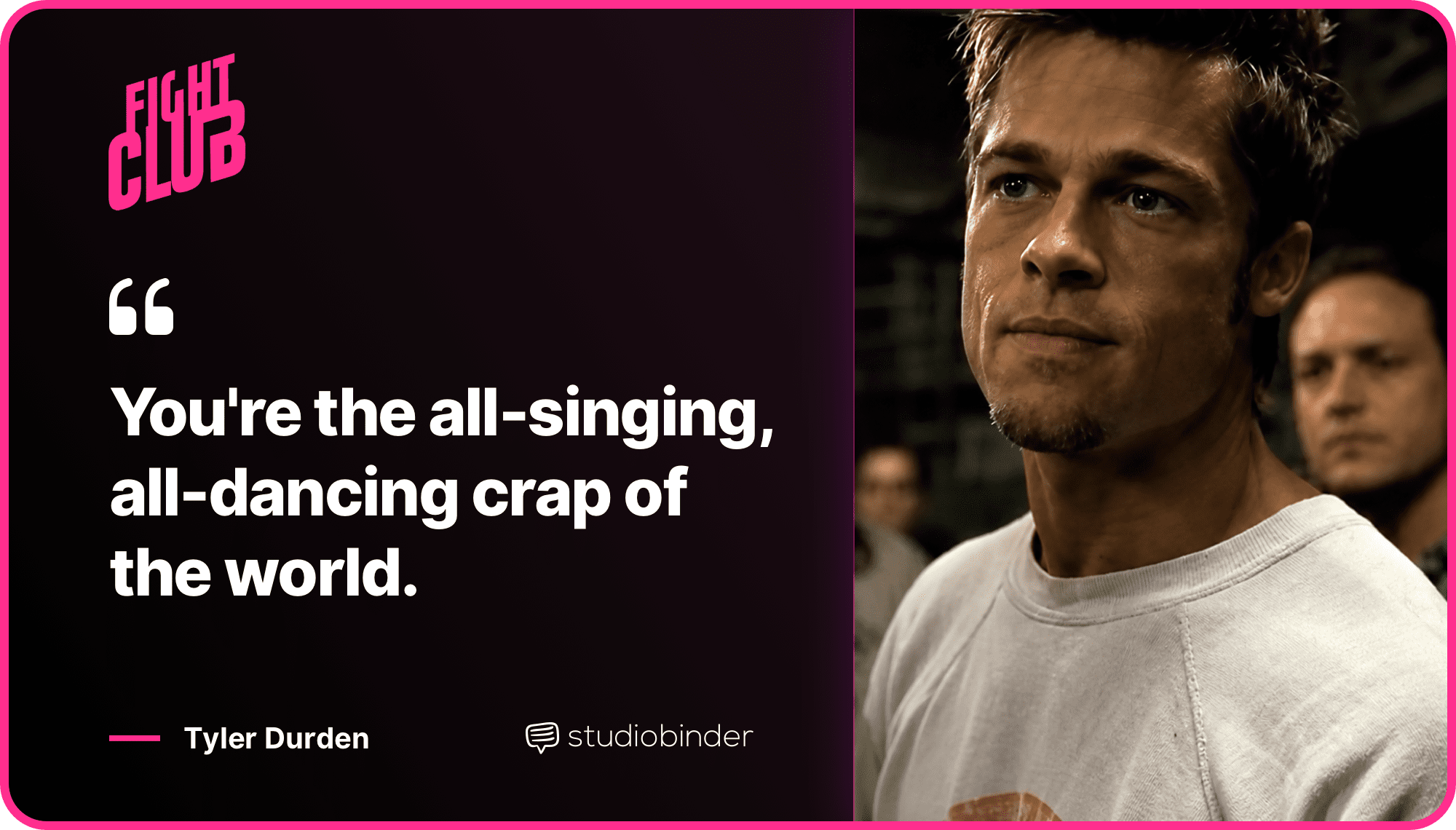
Tyler says this at a downtown bar with the narrator. He is not pitching chaos. He is pitching freedom from the constant pressure to optimize yourself into someone else's idea of worthwhile.
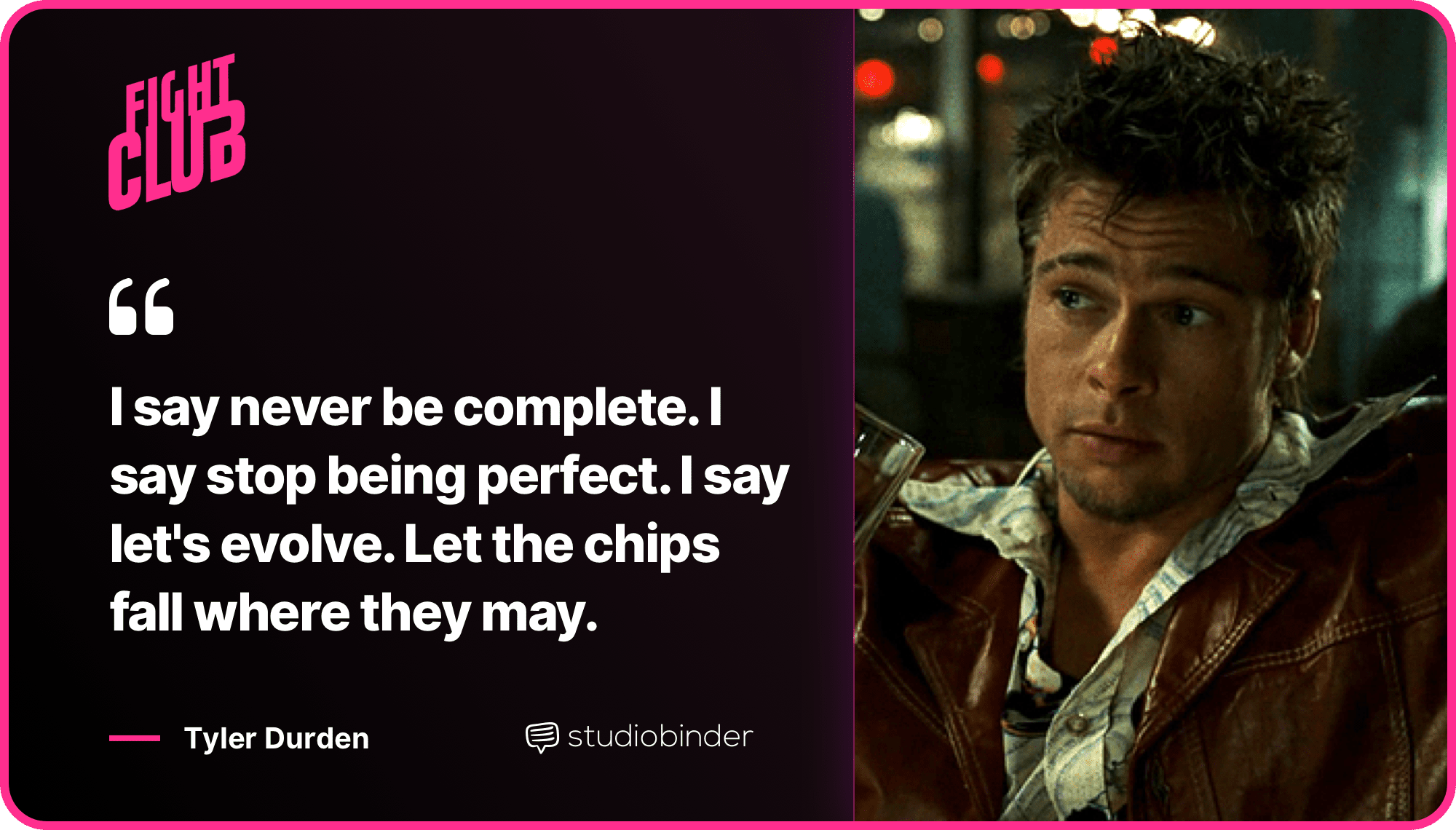
Tyler shouts this over the narrator's screams during the chemical burn scene. He uses radical theological rejection to force total surrender. If God abandoned us, we answer to nothing.
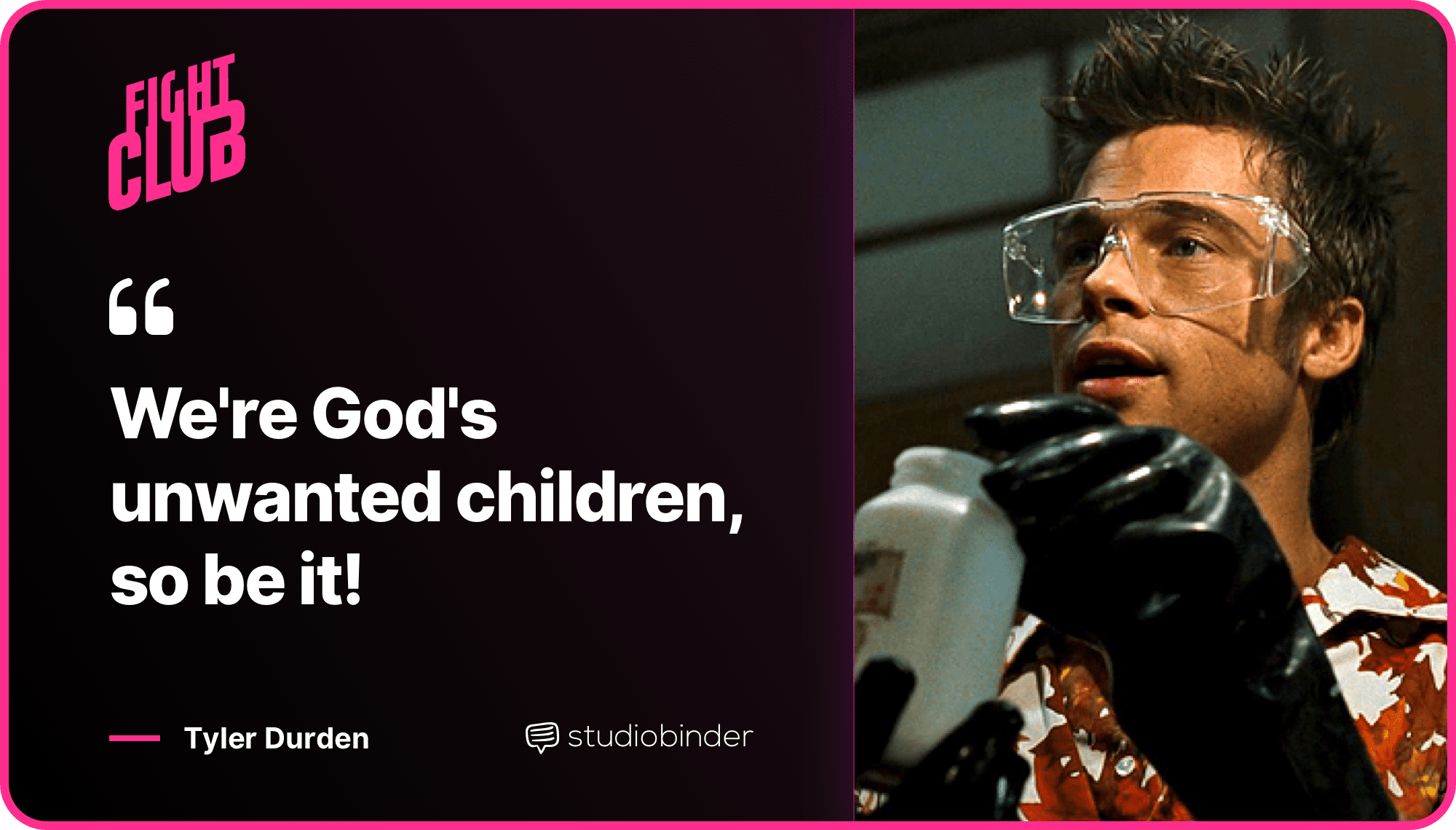
Tyler delivers this during the chemical burn scene. He turns spiritual abandonment into dark fuel. If God hates you, you owe God nothing.
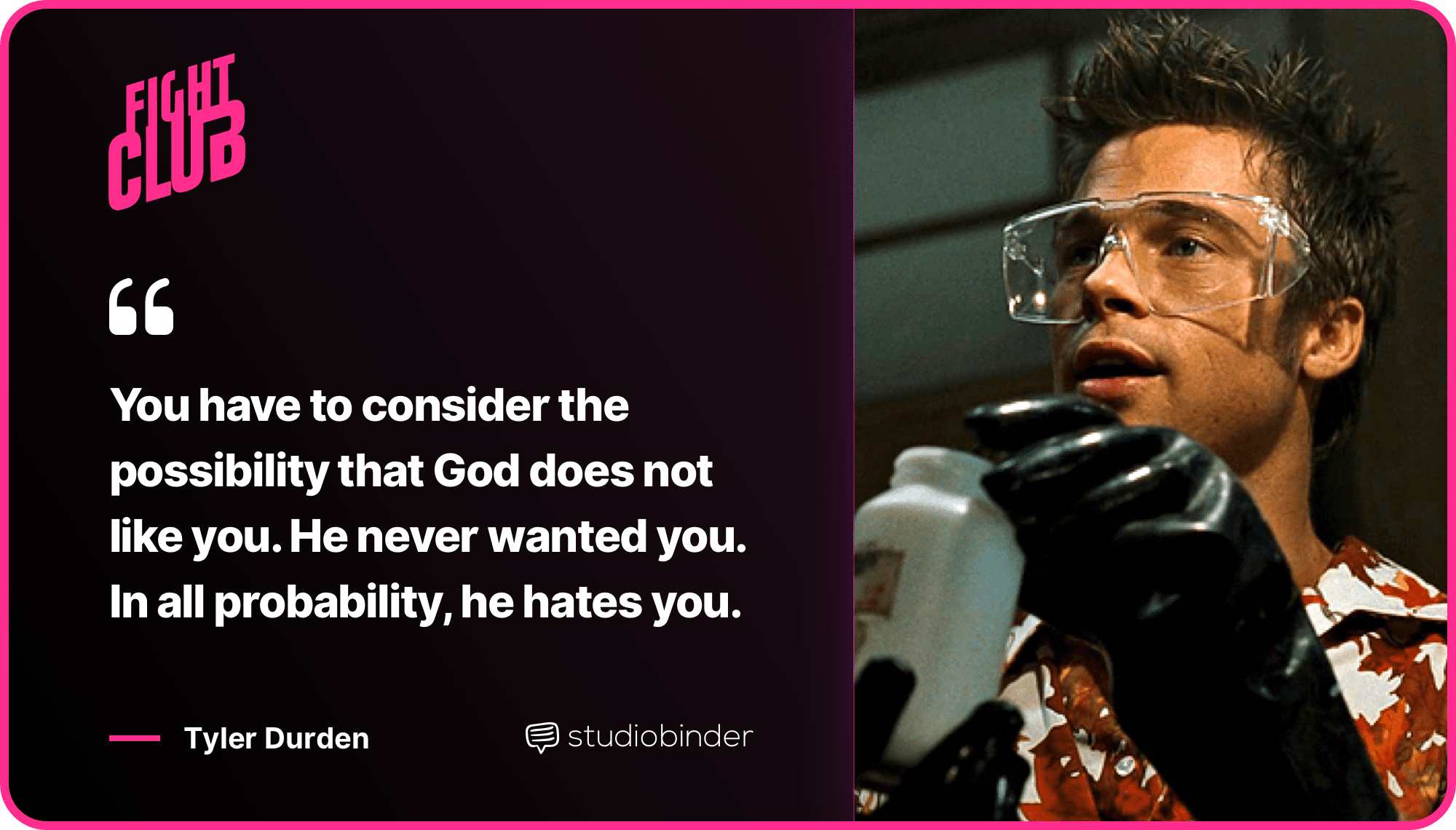
Tyler addresses Project Mayhem. He is reminding them — and the audience — that the working class holds the entire infrastructure of modern life together. This is not a threat. It is a fact.
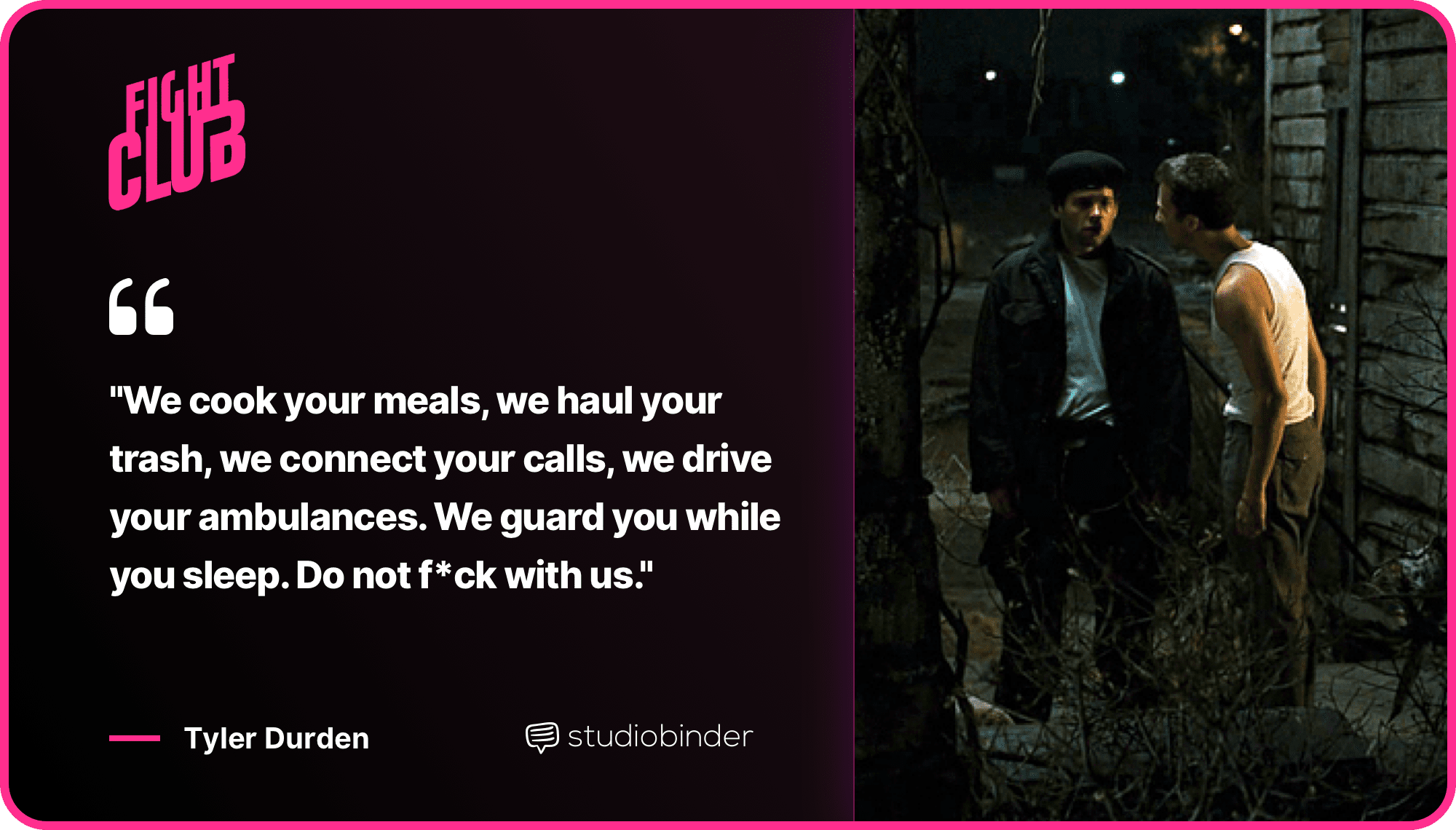
Tyler Durden's most memorable lines are not random one-liners. Together, they form a complete worldview built on rejecting consumerism, embracing discomfort, and redefining identity.
The quotes below reveal the philosophy that drives nearly every major decision in Fight Club.
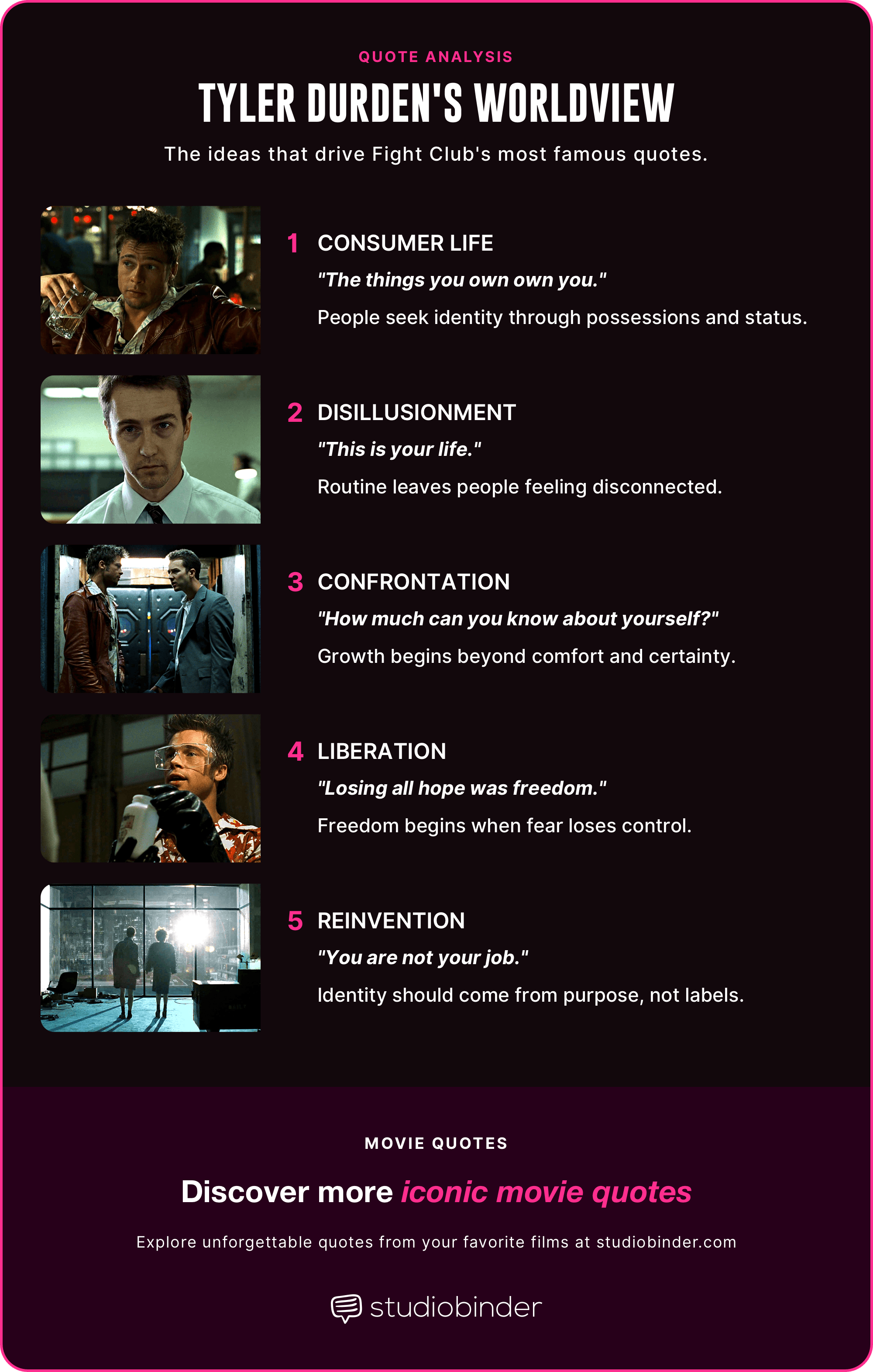
Tyler releases the steering wheel of a speeding car on a rainy highway. He uses near-death terror to force the narrator to stop trying to control everything. Let go or crash. The only two choices Tyler ever offers.
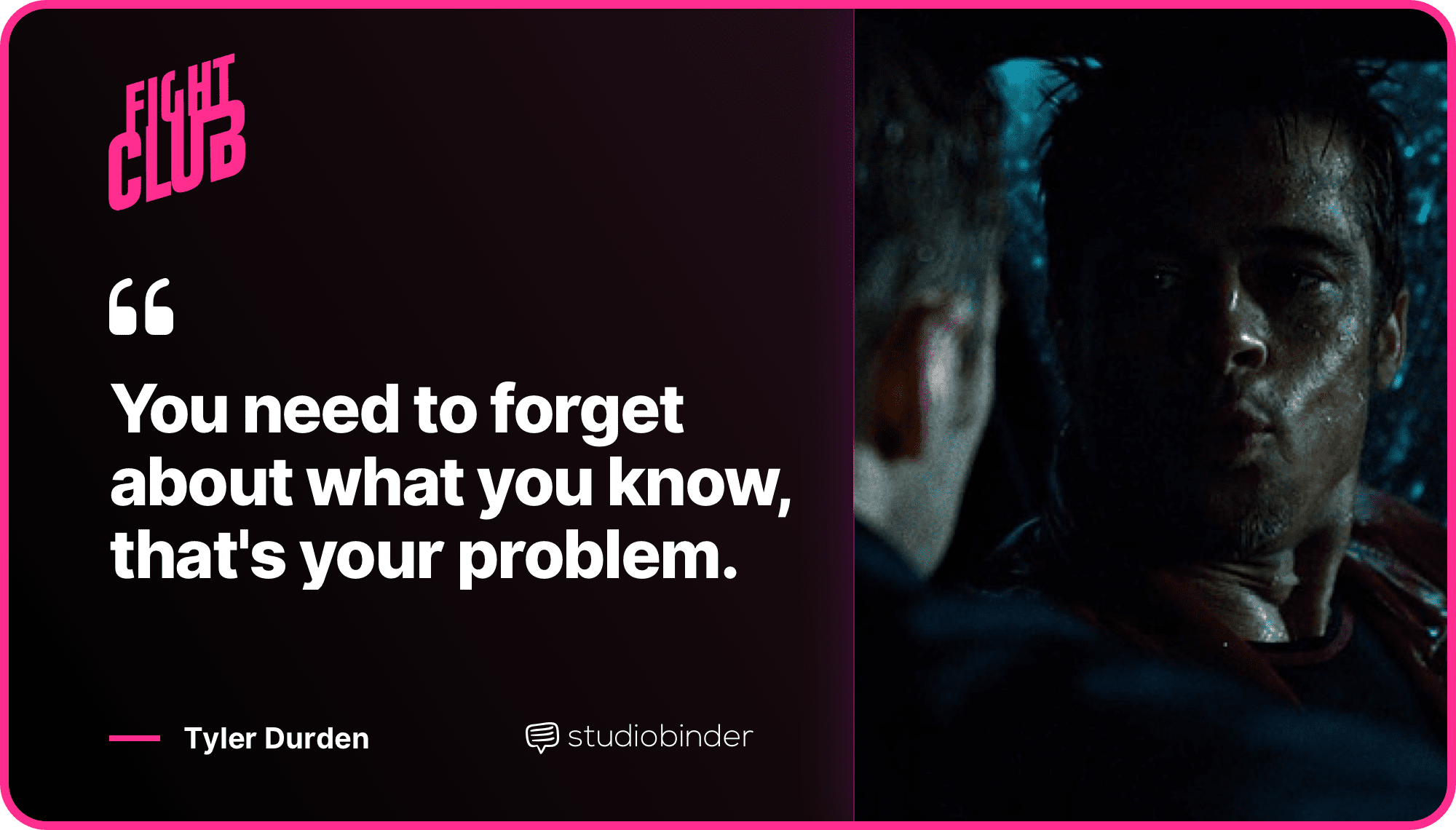
Marla Singer is one of the film's most memorable characters because she reflects the Narrator's own instability.
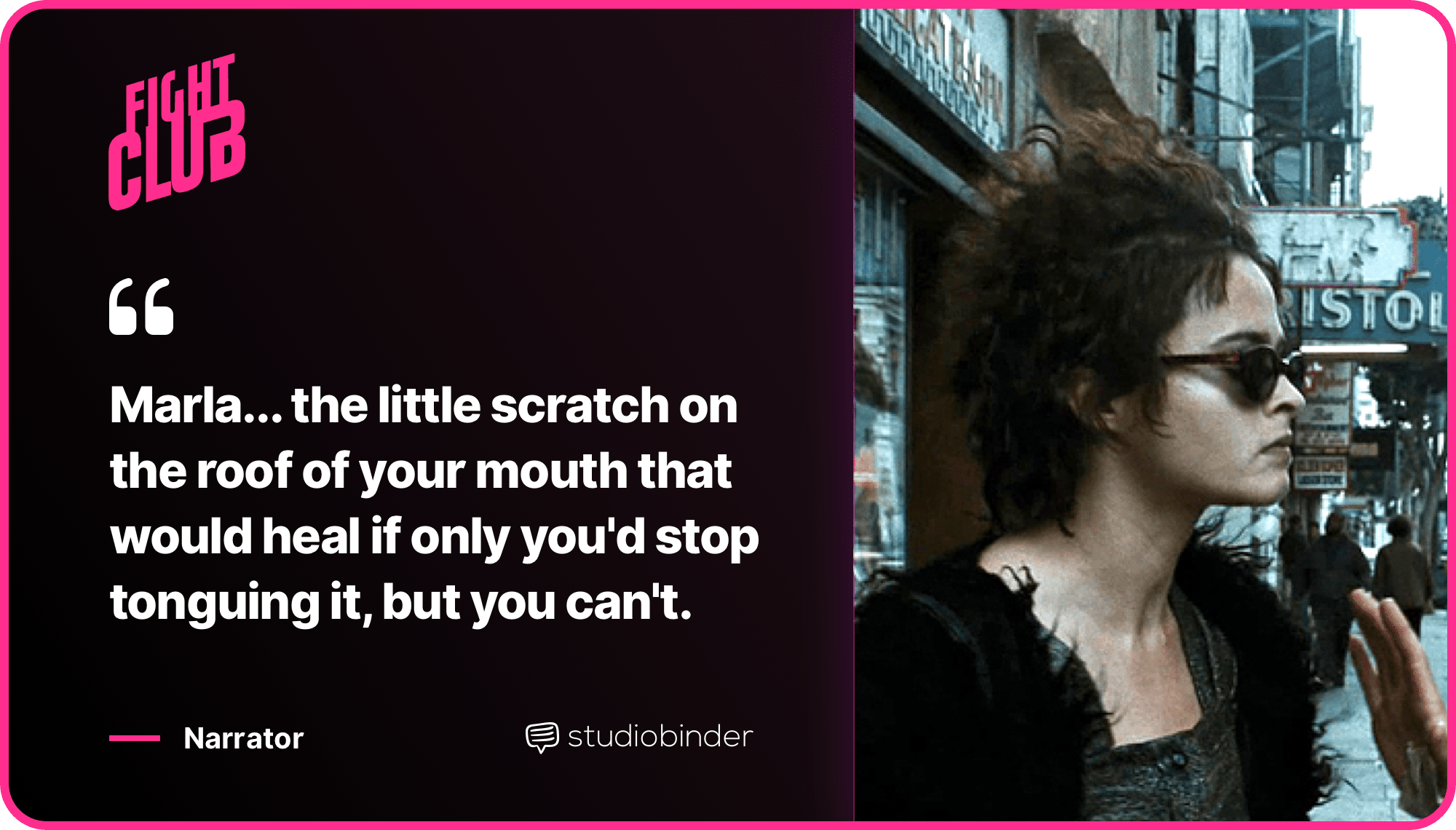
This quote captures his obsession with her and explains why their relationship remains central to the story's emotional core.
The narrator reads old medical articles to give language to his hidden emotions. His rage lives below the surface where his office job cannot reach it. He describes his organs because his feelings have no other words.
The narrator starts sabotaging his corporate job. For the first time he feels control. This is what winning feels like for someone who spent his whole life losing quietly.
The world is falling apart around him. He reacts with total numbness. Shock requires caring enough to be shocked. He is past that point.
The narrator reflects on his sleep deprivation and hollowed-out life. He hates who he has become. He desperately wants to be anyone else. The film's answer to this question is the entire plot.
The narrator describes his frequent work flights. His daily routine is so dead he wishes for a crash to break the monotony. One of the most unsettling sequences about modern boredom ever filmed.
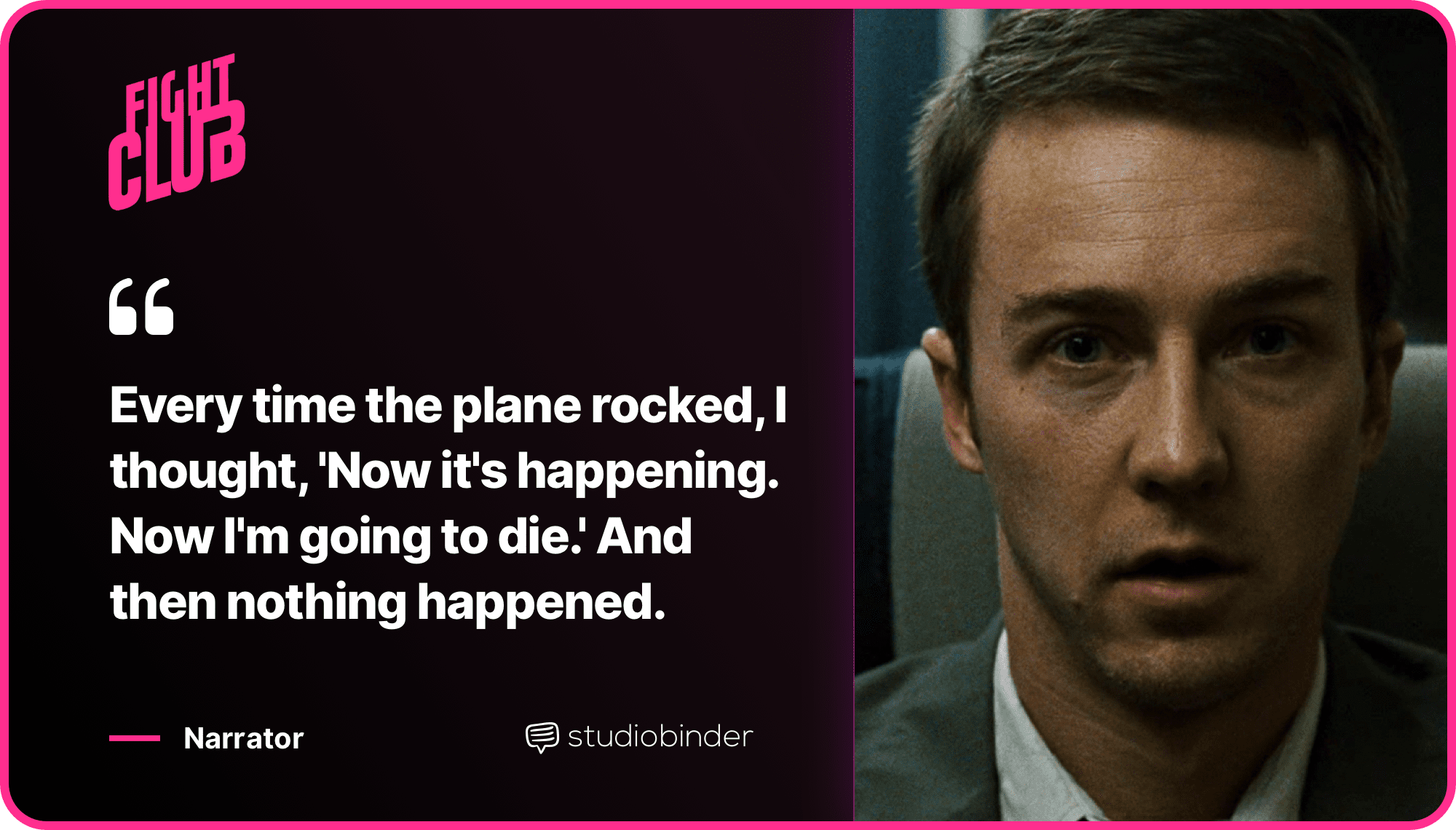
The narrator gives Tyler credit for his own thoughts without knowing what that means. He trusts Tyler completely. This line quietly foreshadows the film's biggest twist before most viewers think to notice it.
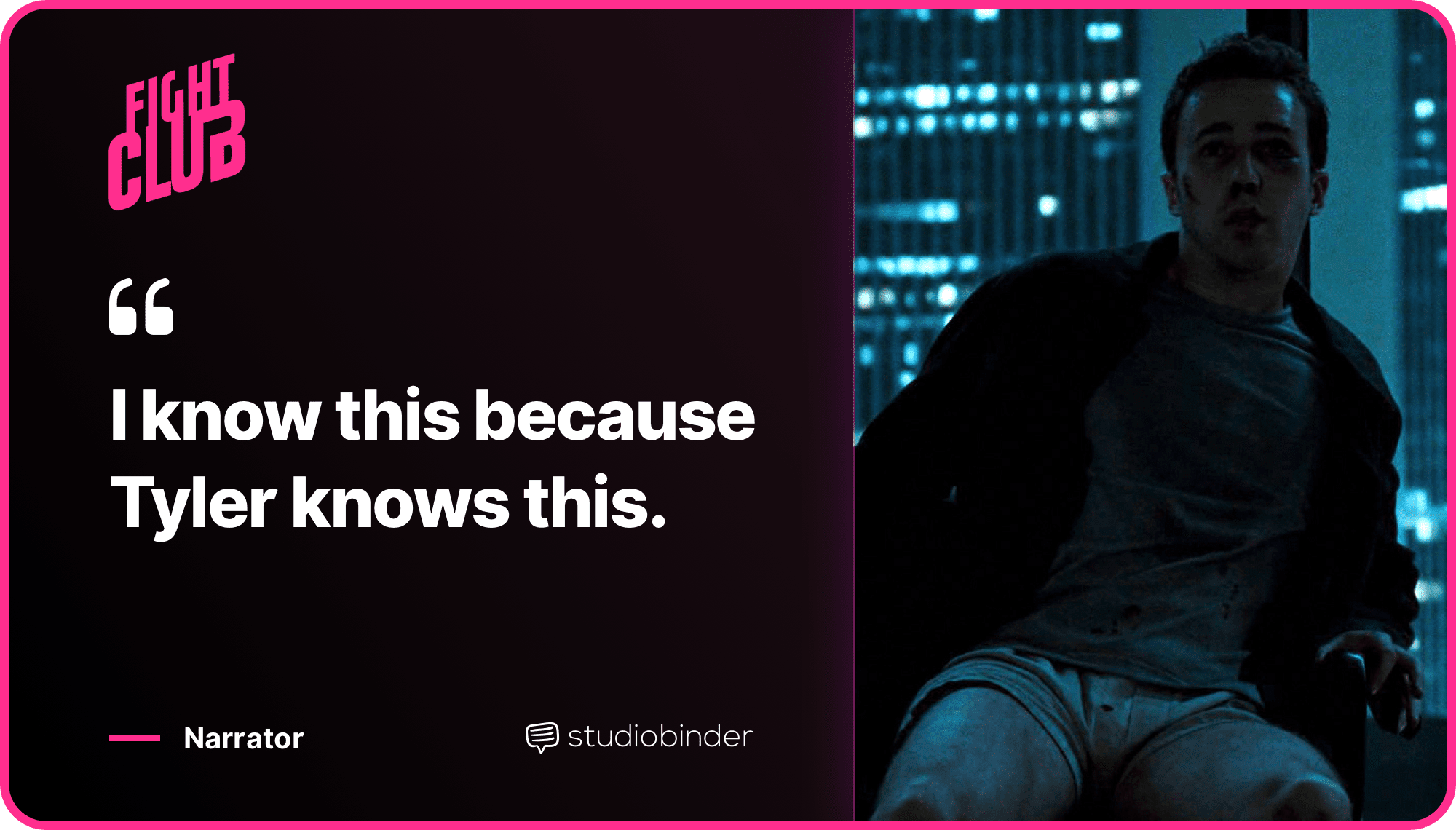
Tyler delivers this during the chemical burn scene. He believes pain is the only path back to something real after years of anesthetic comfort.
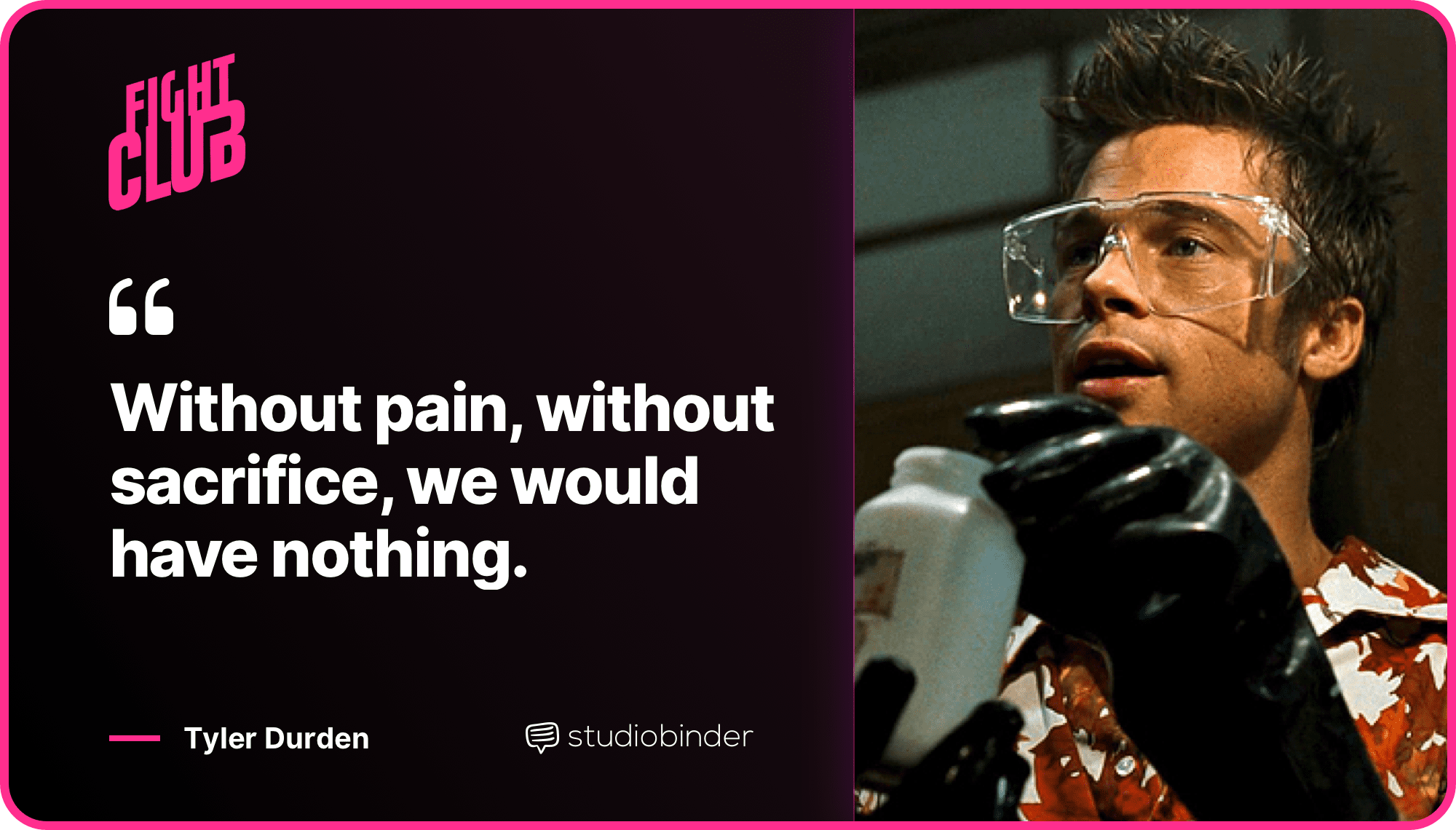
The narrator says this in a voiceover after he beats a fight club member bloody. He is striking out at the perfection he envies and can never reach.
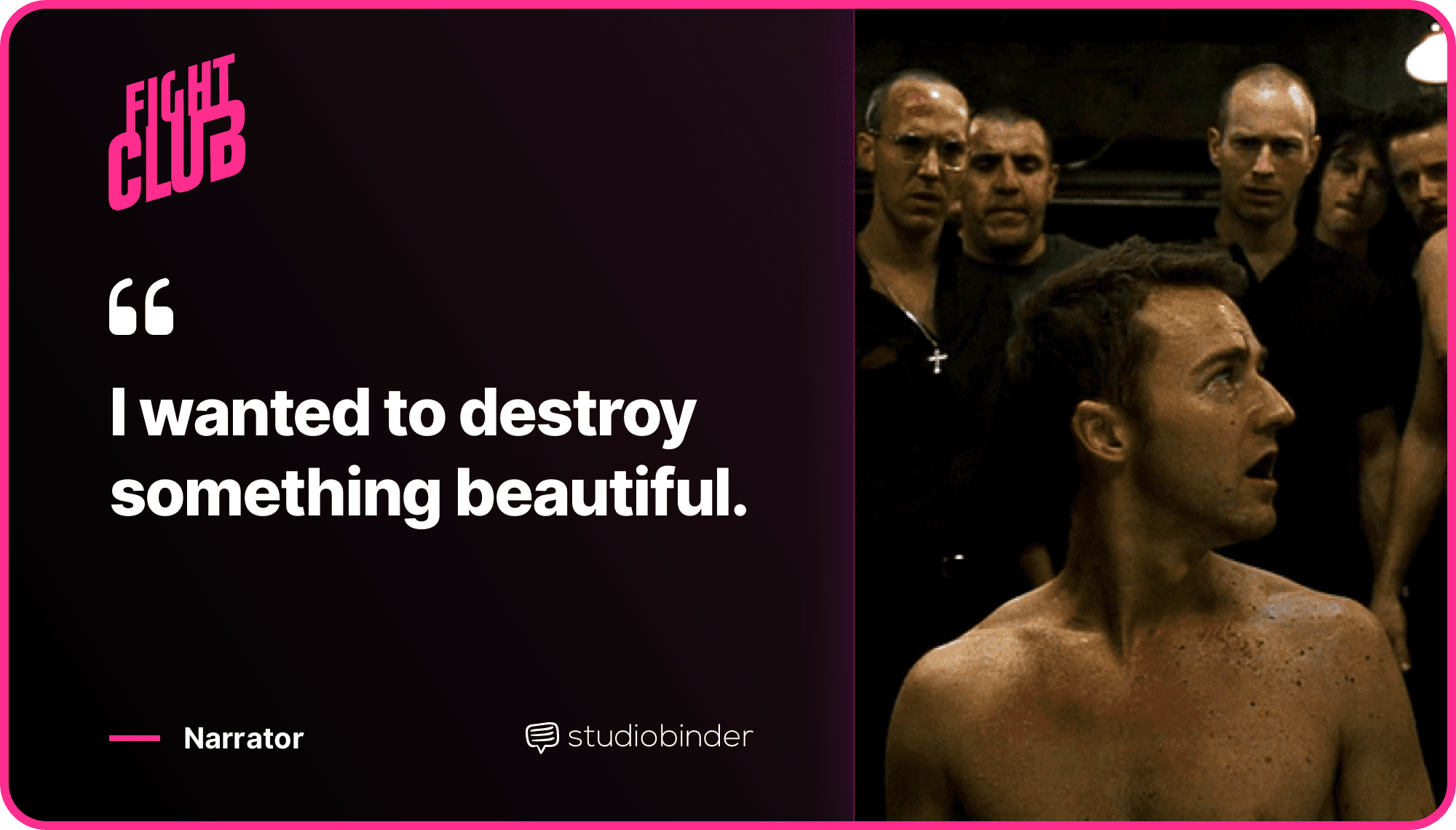
The narrator explains why the violence is addictive. For men who feel dead inside their office lives, the basement is the only place where they feel anything at all.
Tyler reveals himself to the narrator in a hotel room. He is not a separate person. He is the narrator's idealized self made flesh — everything the narrator wished he could be and was afraid to become.
Tyler addresses his followers about his bond with the narrator. He views their shared mental state as a single unified force. He is not wrong about this.
The narrator describes his past obsession with IKEA catalogs. He used consumer goods to simulate the feeling of having his life together. The sofa solves nothing. It just gives the anxiety a new shape.
More than two decades later, Fight Club continues to resonate because its themes remain relevant. Beneath the violence and dark humor lies a story about consumer culture, identity, and the search for meaning in modern life.
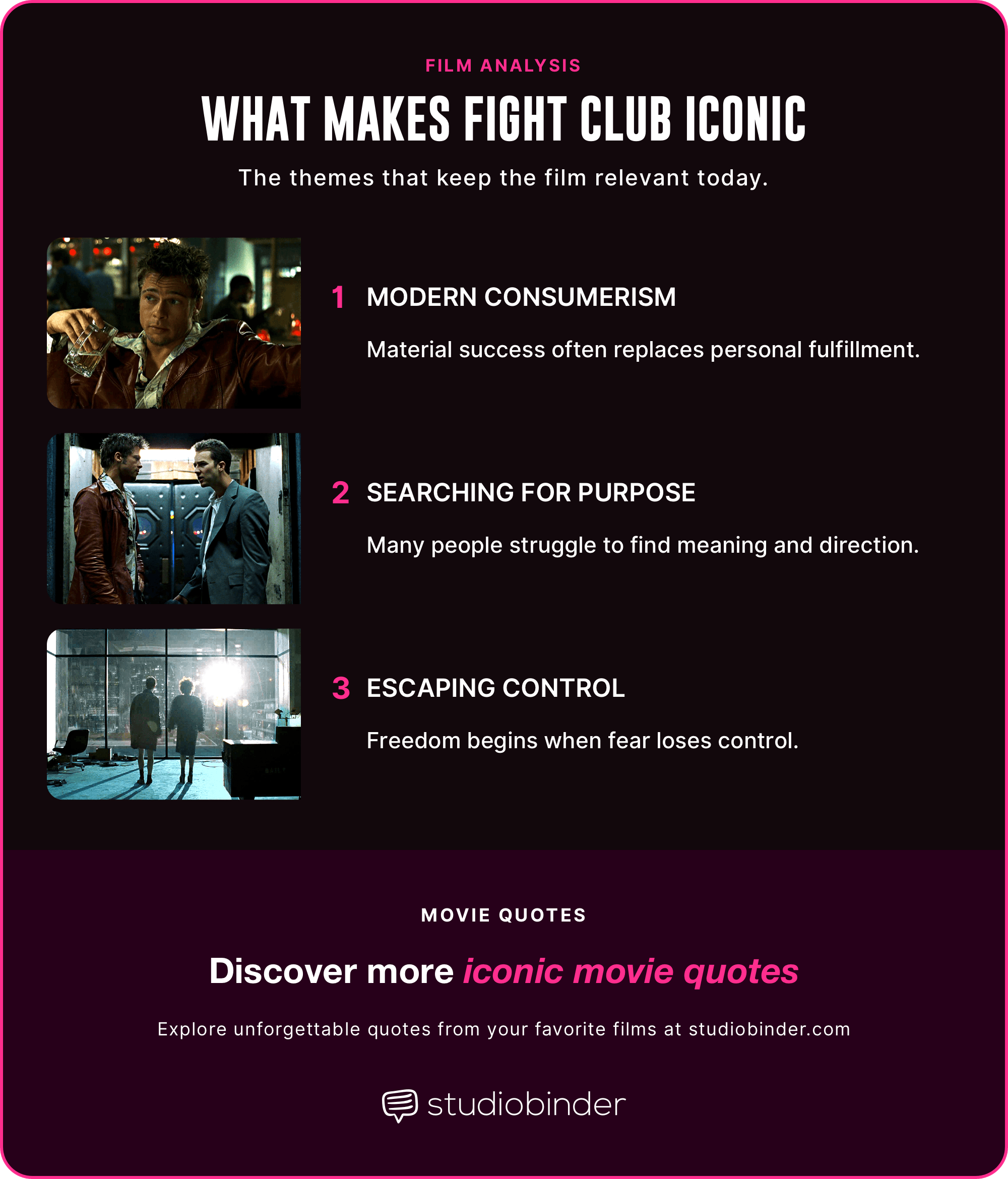
Tyler connects personal childhood abandonment to a wider collapse of faith. He is talking to a basement full of men whose fathers left. He is connecting private wounds to public failure.
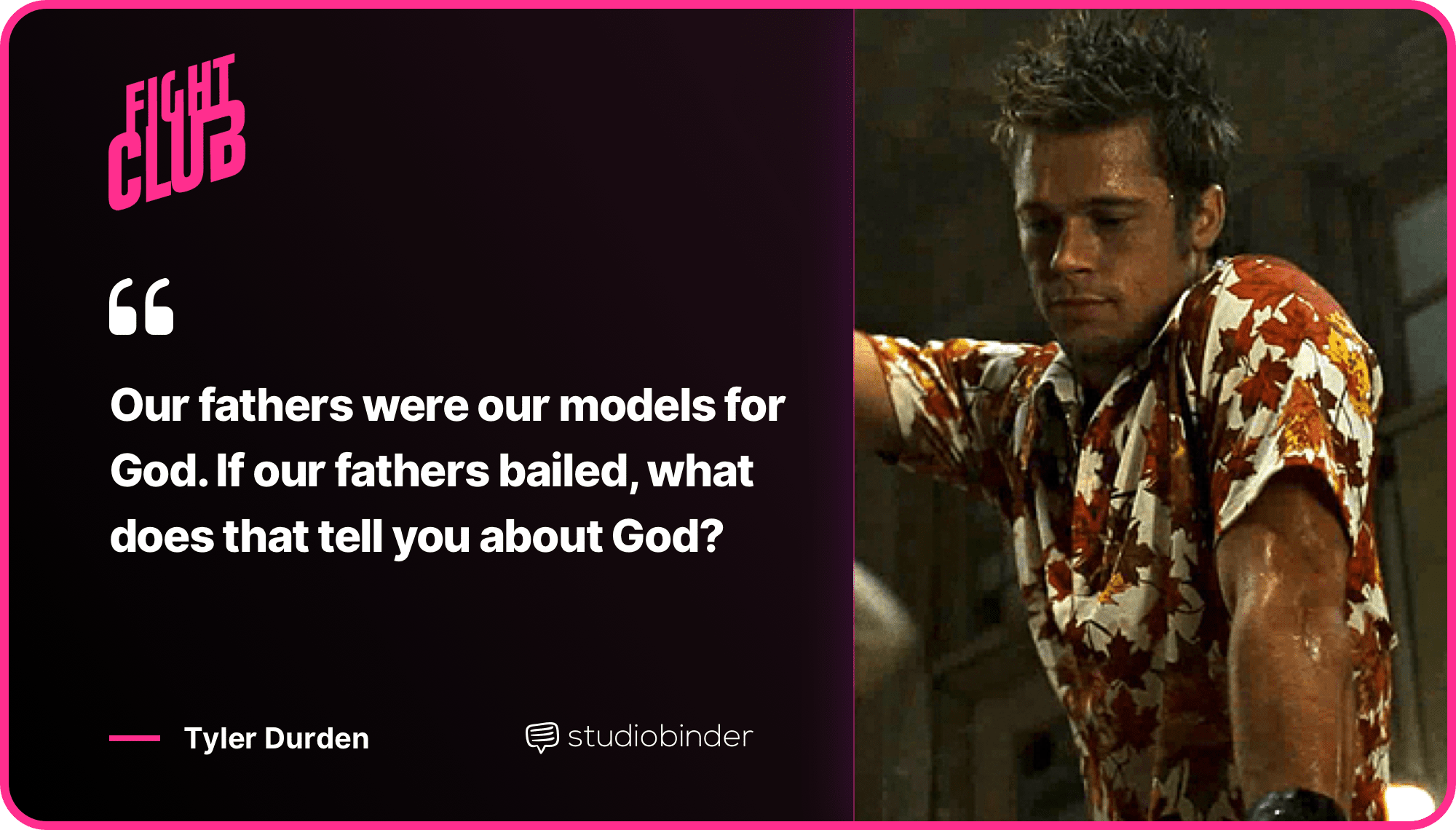
Tyler describes his anarchic vision for the future. Burn the infrastructure. Force humanity back to primal survival. This is not a metaphor. Tyler means it literally.
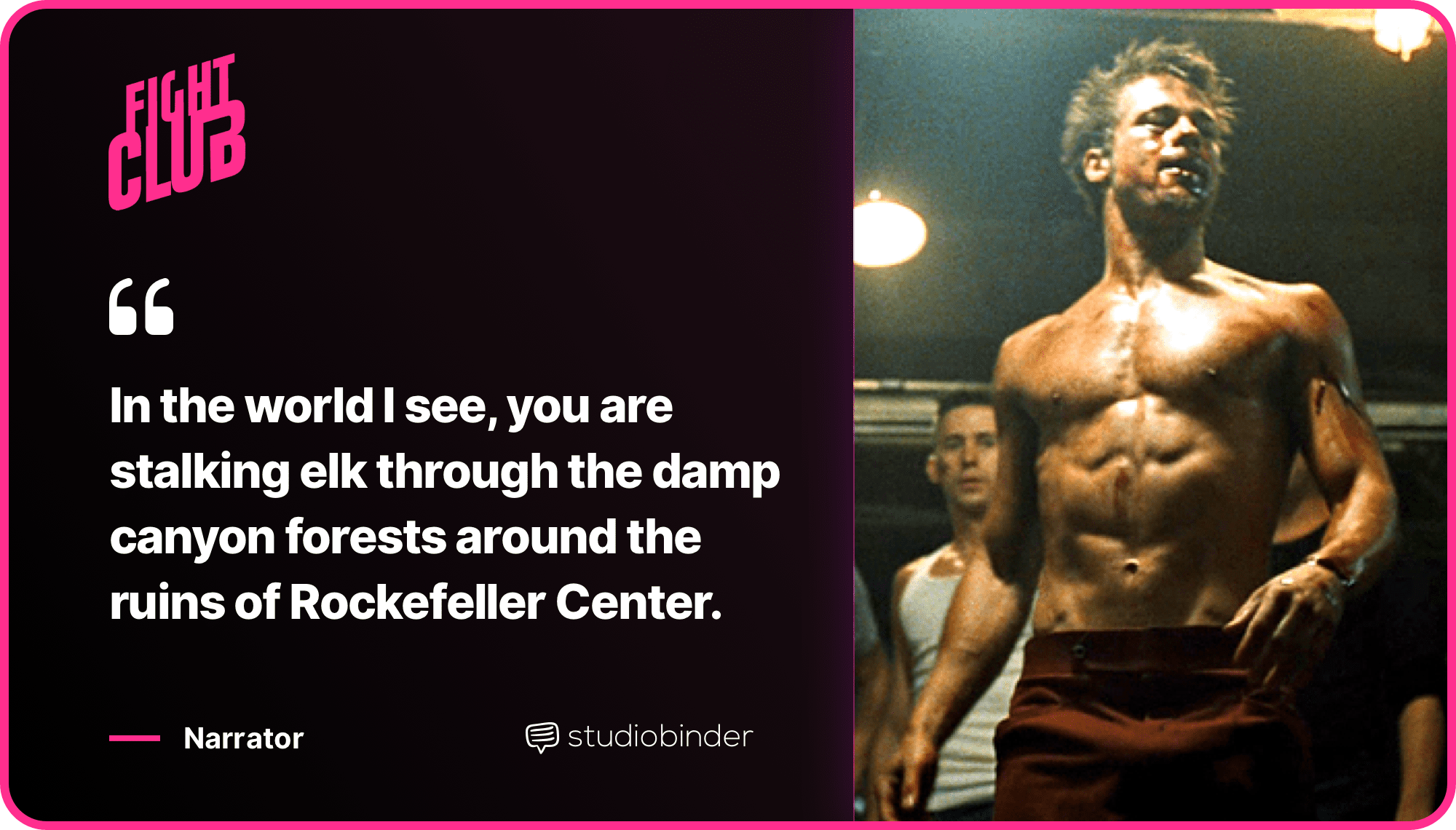
The narrator delivers this as a matter-of-fact voiceover. It sounds cold. It lands like a gut punch. If everyone dies eventually, what are you so careful about preserving?
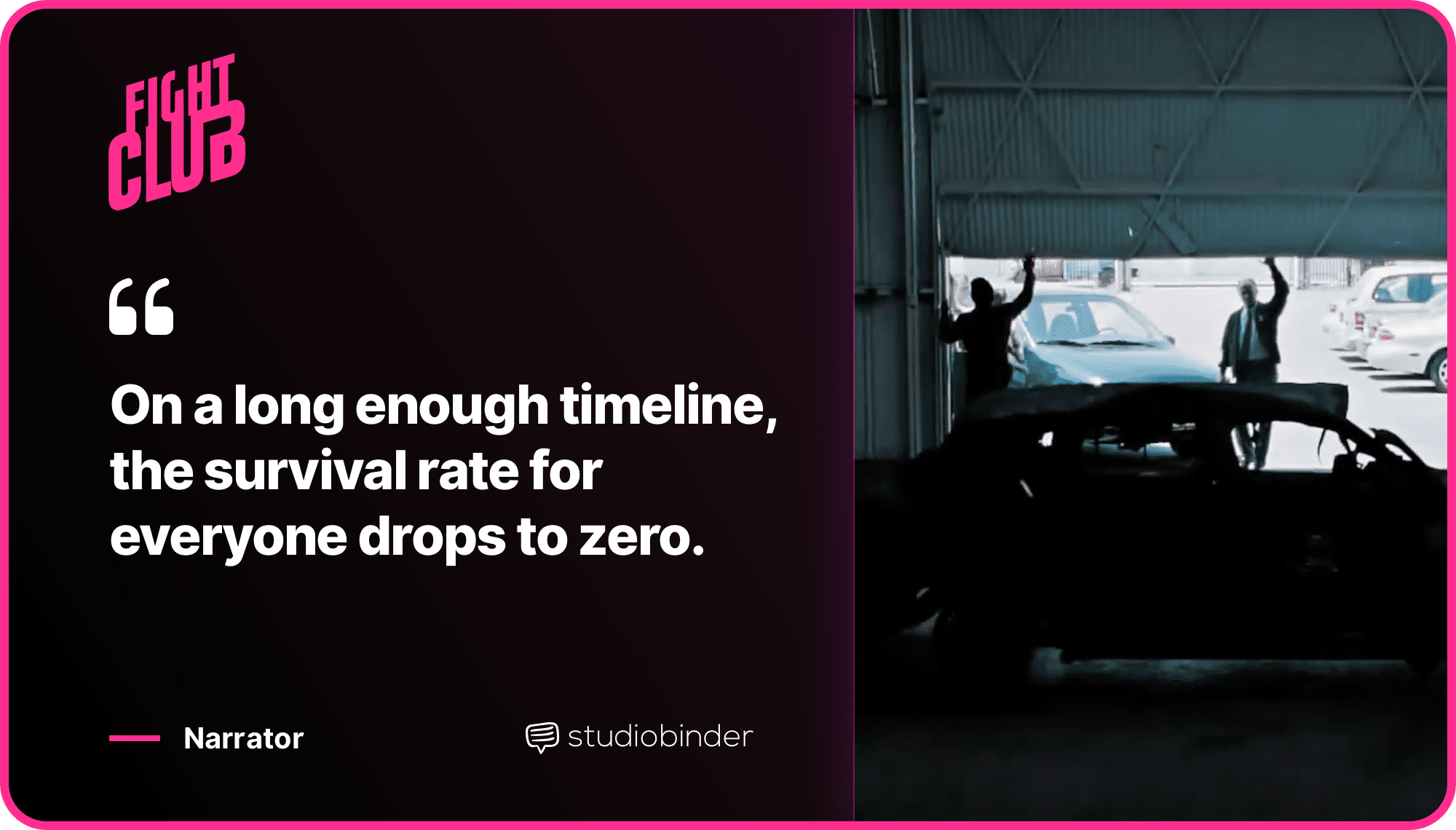
The narrator describes the strange peace of attending support groups under false pretenses. Hitting rock bottom removed the weight of expectation. Nothing left to protect means nothing left to fear.
A key lesson the narrator learns through his ordeal. Letting go of small things becomes his survival tool. Most of what we treat as urgent does not matter at all.
The narrator's plain self-description early in the film. No self-pity. No anger. Just an honest diagnosis of arrested development. It might be the most truthful line in the movie.
The full version of the snowflake line, delivered to Project Mayhem recruits. Tyler paces the Paper Street house barking this at the men. He strips their names and individuality to build soldiers who fear nothing. These are among the most quoted brad pitt fight club quotes from the film's second half.
The final line of the film. The narrator holds Marla's hand while buildings collapse outside the window. He has accepted every part of who he is — including the parts he spent the whole film trying to kill.
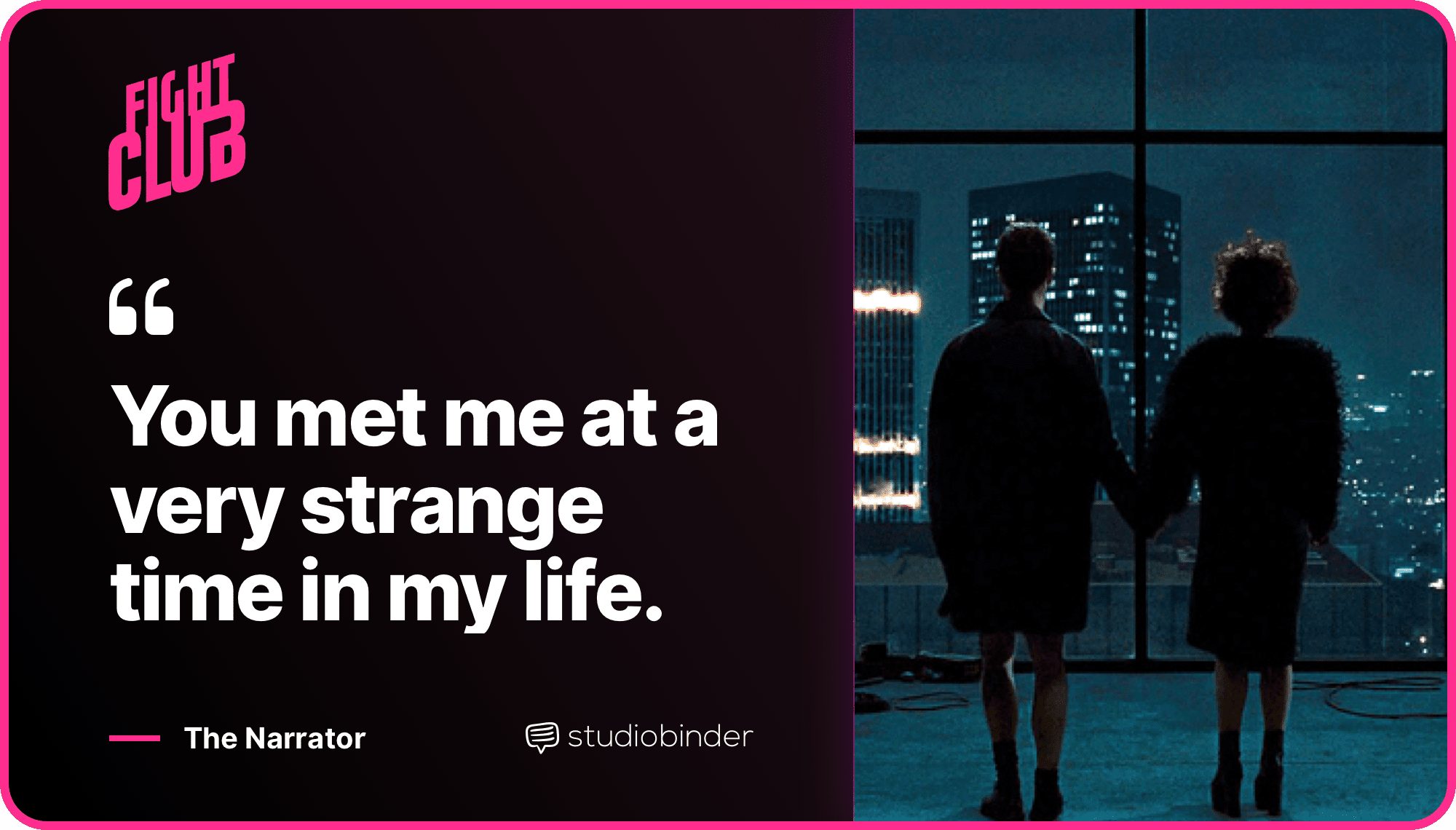
The final line of Fight Club is simple, but it perfectly captures the film's emotional journey. After chaos, violence, and self-destruction, the Narrator finally reaches a moment of acceptance and clarity.
FINAL THOUGHTS
Fight Club is a film that gets under your skin and stays there. It is not wise. It is just honest about how lost modern people feel.
Tyler Durden is not a hero. The Narrator is not a victim. Marla Singer is not a romantic prize.
The rules were always made to be broken. The characters break them. The movie breaks them. You break them every time you share these fight club quotes.
The source novel has sold over 5 million copies worldwide. The film holds an 80% critic score and a 96% audience score on Rotten Tomatoes. It currently ranks #10 on IMDb's Top 250. As noted on RogerEbert.com, the film "crystallized a kind of masculine anxiety" that only gets more relevant with time.
You already broke the first rule by reading this article.
Now go watch the movie again. You will notice something new this time.
The most famous fight club quote is: "The first rule of Fight Club is: you do not talk about Fight Club. The second rule of Fight Club is: you do not talk about Fight Club." Tyler Durden delivers both rules in Lou's Tavern basement. The lines became a universal shorthand for any secret that everyone openly discusses anyway.
Tyler Durden delivers both opening rules during the first official meeting in the basement of Lou's Tavern. He speaks them to a small group of ordinary men looking for purpose. The irony is that both rules are immediately broken by the film's massive success and 25-year cultural legacy.
Tyler Durden's philosophy demands total rejection of consumerism and material identity. He believes modern corporate life has stripped men of instinct and purpose. He argues that self-destruction is the only real path to freedom. The film frames his certainty as dangerous, not heroic — tyler durden quotes sound compelling right up until you see exactly where they lead.
Yes. Fight Club is based on the 1996 novel by Chuck Palahniuk, published by W.W. Norton. Screenwriter Jim Uhls adapted the novel for the film. Palahniuk wrote it as a dark satire of male anxiety and consumer culture. He has noted publicly that he was surprised when readers treated Tyler's manifesto as sincere advice rather than a warning.
David Fincher directed Fight Club in 1999. Fincher is known for Se7en, Gone Girl, and The Social Network. Fight Club earned $37 million domestically against a $63 million budget and was considered a box office disappointment on release. It found its audience on DVD and now ranks #10 on IMDb's Top 250 with a 96% audience score on Rotten Tomatoes.
Now that you have all the best fight club quotes in one place, go deeper into the films and filmmakers that shaped them.
此内容由惯性聚合(RSS阅读器)自动聚合整理,仅供阅读参考。 原文来自 — 版权归原作者所有。