





Most people who watch reality TV have no idea what a story producer does, but they’re feeling the work the whole time. When an episode feels clear, dramatic, emotional, and easy to follow, that usually doesn’t happen by accident. Someone had to take all that raw footage and shape it into a story. In unscripted TV, that’s often the job of the story producer.
In this article, we’ll break down what is a story producer, what the job actually looks like, how it compares to other TV jobs, and how people usually get into it.
What is a story producer? Let's begin by breaking down a direct definition of a story producer's job before we expand even further on the role and its responsibilities.
A story producer is a media professional responsible for developing and managing narrative content throughout the production process. The role centers on ensuring that editorial objectives are achieved through clear, engaging storytelling. A story producer oversees the progression of a story from concept to final presentation, coordinating research, content development, and narrative planning.
They work to maintain and oversee accuracy and consistency. The position serves as a bridge between creative vision and editorial execution, guiding how information, events, and characters are assembled into an effective narrative.
Before we go any further, let's familiarize ourselves with the job of a producer. The video below breaks down what a film producer does, which will be useful for our more narrowed in exploration of 'what is a story producer' in this article.

What is a story producer
A story producer is someone who helps shape raw unscripted footage into a real episode. In simple terms, they find the story after it’s been shot.
If you’re asking “what is a story producer”, the role is clear: they watch footage, track cast dynamics, find the important emotional story beats, and build the episode's story. The job is most common in reality TV and other forms of unscripted TV, where the story is not fully written ahead of time.
That’s what makes the role so important. In scripted television, the story is already on the page. In reality television, the footage comes first, and the story often has to be discovered later.
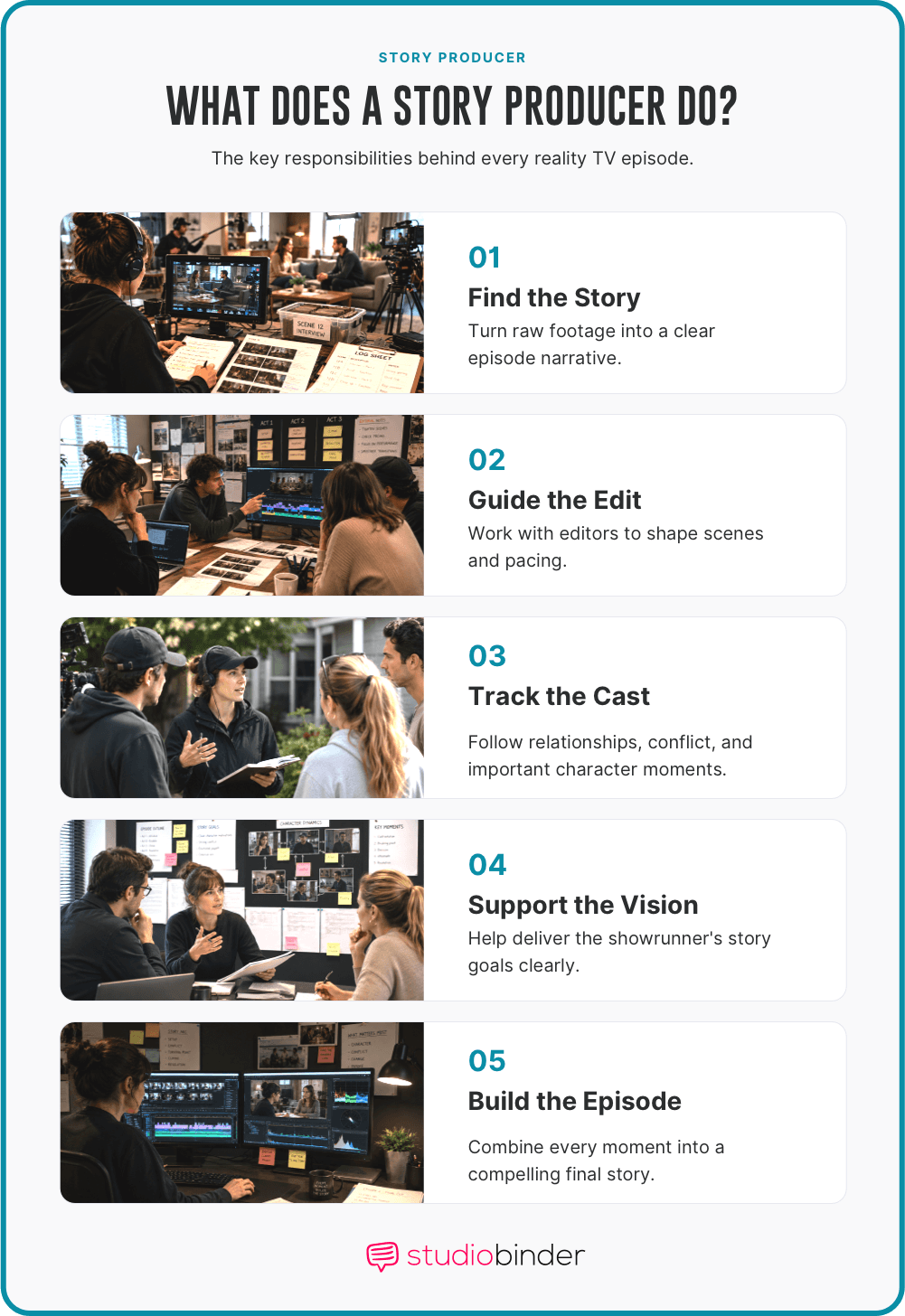
At the core of the job, a story producer takes messy footage and helps turn it into something clear and watchable. They look for conflict, character, tension, and momentum. Depending on the show, that work may happen mostly in post, mostly in the field, or both.
This is the heart of the role. A story producer reviews footage, transcripts, and field notes to figure out what the episode is really about.
That means asking basic but important questions. Who wants what? What changed in the scene? Where did the tension rise? What moment matters most? A good story producer is always looking for the emotional thread that can become a story arc.
A lot of this starts with logging and pulling selects. You go through interviews, confessionals, vérité, and scene footage and flag what feels important. In reality TV productions, a story producer's job often starts with finding order in footage that feels chaotic.
A story producer usually works closely with editors in post-production. They help shape scenes, give notes on cuts, and make sure the episode is actually tracking emotionally.
The editor is building the episode piece by piece, but the story producer is often helping answer the bigger questions. Is the character motivation clear? Is the conflict landing? Does the episode build properly? Are we missing something that would make the audience care more?
They may also write outlines, beat sheets, or story notes to guide the cut. These are not traditional scripts. They’re tools to help shape the footage into a stronger episode.
On some shows, a story producer also works directly with the cast. On others, that work may fall more to a field producer. It depends on the show.
This part of the job is not really about “making things fake.” It’s more about paying attention. A strong story producer knows how to listen, ask smart follow-up questions, and notice when a small moment could become a big part of the episode later.
In reality TV, that matters. Relationships shift quickly. Tension can build in small ways before it explodes. A good story producer knows how to track that without forcing it.
What is a story producer as far as who they work with? A story producer usually works under a senior producer, showrunner, or executive producer. They are part of the team helping turn the bigger vision of the show into an actual episode.
The showrunner or EP may know what matters most for the season overall. The story producer helps carry that into the footage. They help figure out what story is emerging, what is missing, and what should be pushed more clearly in the cut.
So even though the role may feel very close to the footage, it is also tied to the larger creative direction of the series.
Story Producer vs TV Roles
What is a story producer vs. other TV roles? In other words, how do story producers work compared to showrunners, executive producers and other key television roles? Let's break it all down to find out.
People get confused by this title because it sits near a lot of other producing jobs. The easiest way to understand it is to compare it to the jobs around it.
A showrunner oversees the whole show. They are responsible for the larger creative vision, the tone, the cast priorities, and the direction of the series.
A story producer works much closer to the episode level. They are not deciding the full direction of the series. They are helping shape story within that bigger plan.
A segment producer usually focuses on one specific section of the show. That could be one challenge, one story block, or one sequence.
A story producer is usually thinking about the full episode. They are tracking how all the pieces connect and whether the episode works as a whole.
What is a story producer compared to an executiuve producer? An executive producer works at a much higher level. They may be involved in major creative decisions, staffing, budgets, network communication, and overall oversight.
A story producer is much closer to the actual footage and the edit. They are more in the weeds of what the episode is becoming.
This is also different from a field producer, who manages film location logistics and day-of-shoot operations — a field producer captures the raw material, while a story producer shapes it into narrative. And unlike a line producer, who focuses on budget and operations, a story producer is focused entirely on the story.
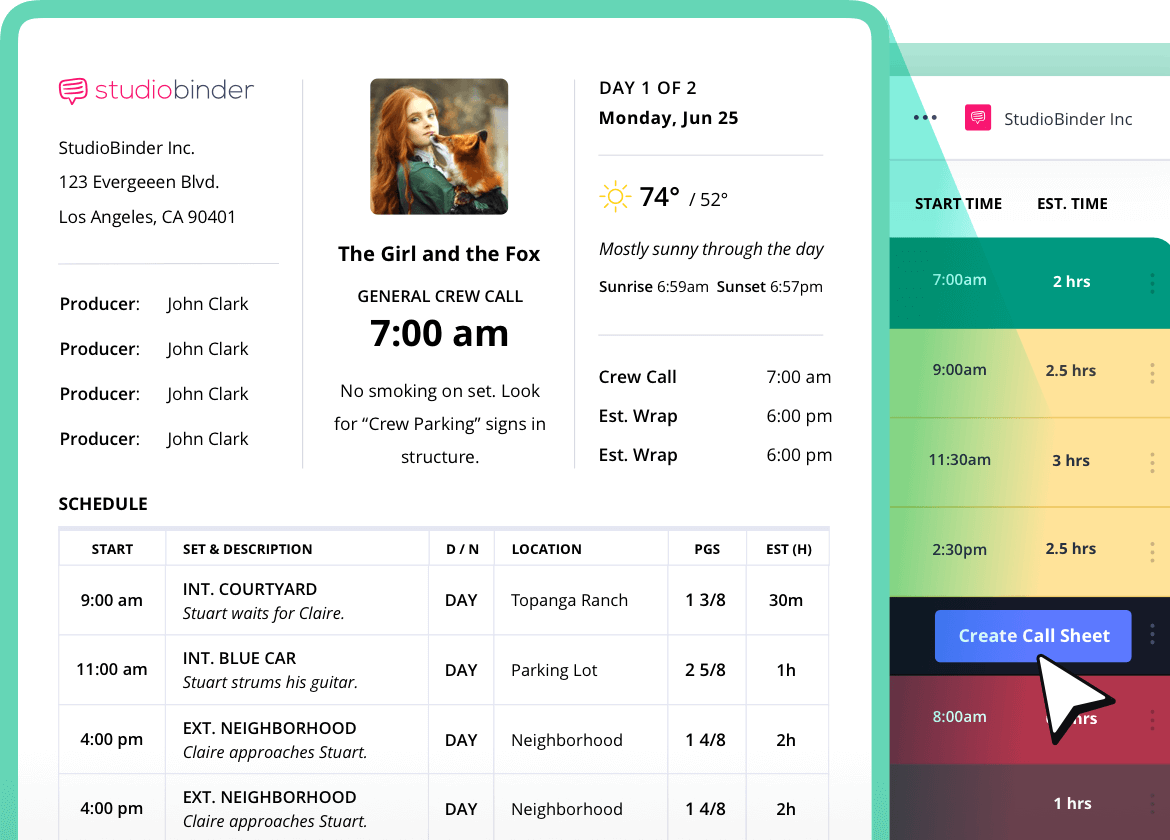
Productions using tools like StudioBinder can connect their call sheets, shot lists, and production schedules to keep field producers and story producers aligned — less back-and-forth, more time in the edit.
Trusted by over 1M creatives
Call sheets that save you time
Create personalized call sheets, send via email and text, and track confirmations.
What is a story producer
As we delve further into understanding the ins and out of what is a story producer, let's specify why story producers play a much larger role in unscripted television formats.
The role of story producer really matters most in reality television and unscripted TV. That’s because unscripted shows do not start with a finished script the way scripted TV does.
For a story producer, reality TV work means taking raw footage and figuring out how to shape it into an episode with tension, clarity, and payoff. The footage may be messy, repetitive, nonlinear, or incomplete. The story producer helps make it work.
In scripted TV, the title is less common and usually means something a little different. A similar job there is often closer to a story editor or someone in the writers room. In scripted television, the story is built before production. In unscripted, a lot of it gets built after.
That’s why the role has more weight in reality and documentary-style formats. Someone has to find the story in the material. That’s the job.
What is a story producer
Now that we're done going over what is a story producer, how exactly can you become one? Let's start with a simple 3 step process.

Most people do not start out as a story producer. Usually, they work their way into it by learning how footage is organized, tracked, and shaped in unscripted television.
A common first step is working as a story assistant, PA, or logger. This is where people learn how to organize footage, write timecoded notes, track interviews, and pull selects.
This is where the skill starts. You learn how to spot moments that matter.
If you want to become a story producer, spending time around the edit is huge. The edit bay teaches you how footage actually becomes a story.
That’s why assistant editor roles, post-assist jobs, and story assisting jobs can help so much. The closer you are to the cut, the better your story instincts become.
A story producer is not just organizing footage. They are shaping the story. That means understanding narrative structure, emotional beats, escalation, reversals, and payoff.
You do not need to treat it exactly like scripted screenwriting, but you do need to understand how the story works. The better your instincts are for pacing and tension, the stronger you’ll be in the role.
StudioBinder's script breakdown software can help you with exactly that. This way you can highlight and organize every story beat in your script. Before you know it, you'll be familiar with all the important mechanisms that make up a well-structured narrative.
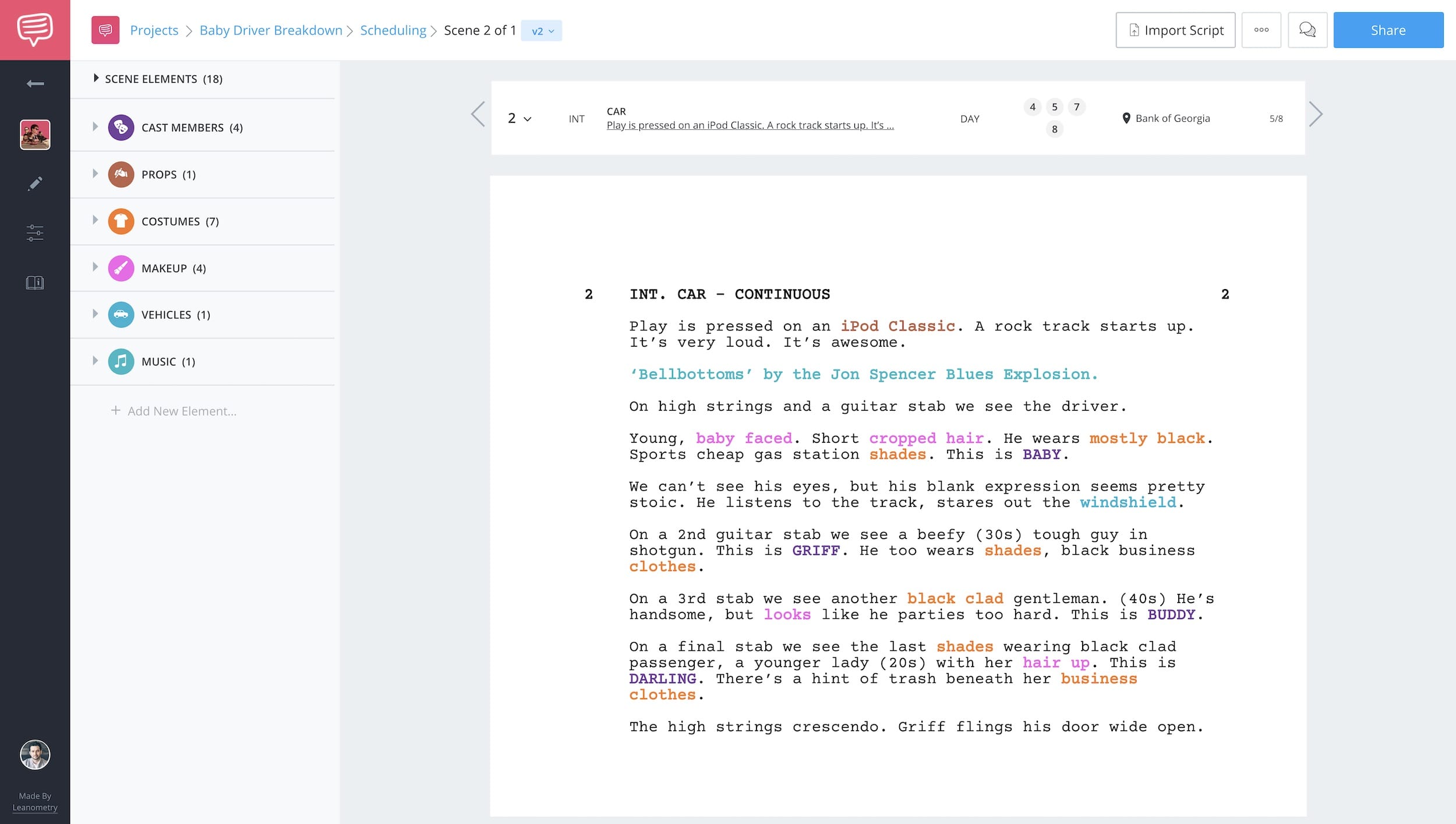
StudioBinder also lets you automatically sync shooting schedules, stripboards, shot lists, and call sheets, keeping you up to date with the entire production workflow so you can focus on guiding story development with confidence.
A story producer in TV helps shape raw unscripted footage into a coherent episode. They review footage, identify the important moments, work with editors, and help build the final story the audience sees.
A showrunner oversees the whole series. A story producer works closer to the episode level, helping shape the story within the larger vision of the show.
Not usually in the traditional sense. In unscripted television, story producers are more likely to write outlines, beat sheets, selects documents, and story notes that help guide the edit.
A field producer manages on-location logistics and day-of-shoot operations. A story producer focuses on narrative — finding and shaping the story in the footage alongside editors. The two roles are complementary: field producers capture the material, story producers shape it.
Most story producers start as loggers or story assistants, learning to identify story moments in raw footage. From there, edit bay experience — as an assistant editor or story assistant — is the clearest path toward a full story producer credit.
What is a story producer in relation to other on-set jobs? A story producer works closely with the people shaping the larger direction of the series, especially the showrunner and senior producers. So if you understand this role, the next natural step is understanding the job above it.
此内容由惯性聚合(RSS阅读器)自动聚合整理,仅供阅读参考。 原文来自 — 版权归原作者所有。