











In October 2019, dark web researcher Vinny Troia uncovered an unsecured server containing of more than 4 TBytes of personal information , totaling about 1.2 billion records. The leaked data included names, phone numbers, social media profiles, work histories, and email addresses. They were traced to Google Cloud Services and linked to prominent data brokers like People Data Labs and Oxydata, despite neither party claiming responsibility for the exposure1.
What is the dark web? First named in the early 2000s, the dark web is a hidden part of the internet that isn’t easily accessible and is mainly used by regular users. It is a section of the internet not indexed by standard search engines like Google and can only be reached through specialized tools like Tor (The Onion Router), I2P, or Freenet. Unlike the Deep Web – which includes legal, unindexed resources like medical databases, academic journals, or corporate intranets—the dark web primarily relies on encryption. It hosts encrypted hidden services, with routing masked to hide both the operators’ identities and the servers’ locations.
The services hidden by Tor use the .onion domain suffix, which operates through multilayered encryption and relay nodes. This makes traffic analysis and endpoint identification difficult. These services are primarily used to host forums, communication hubs, and illicit marketplaces, as they are difficult to track. However, they also support legal and legitimate use cases like privacy activism, secure whistleblowing, and journalism. Tor can be used by anyone with the Tor Browser.
Tor was first released in 2002 (v.01), and the Tor hidden services were introduced in Tor v0.2x around 2004. Version 3, or the next gen onion services with 56 – character addresses, was introduced in 2018, and the current Tor version is 0.4.8.17. Tor circuits are built using an incremental (telescoping) path – building design. This process involves the initiator negotiating independent session keys with each hop, ensuring perfect forward secrecy (PFS). Even if an intermediary key is compromised, previously transmitted data remains secure2.
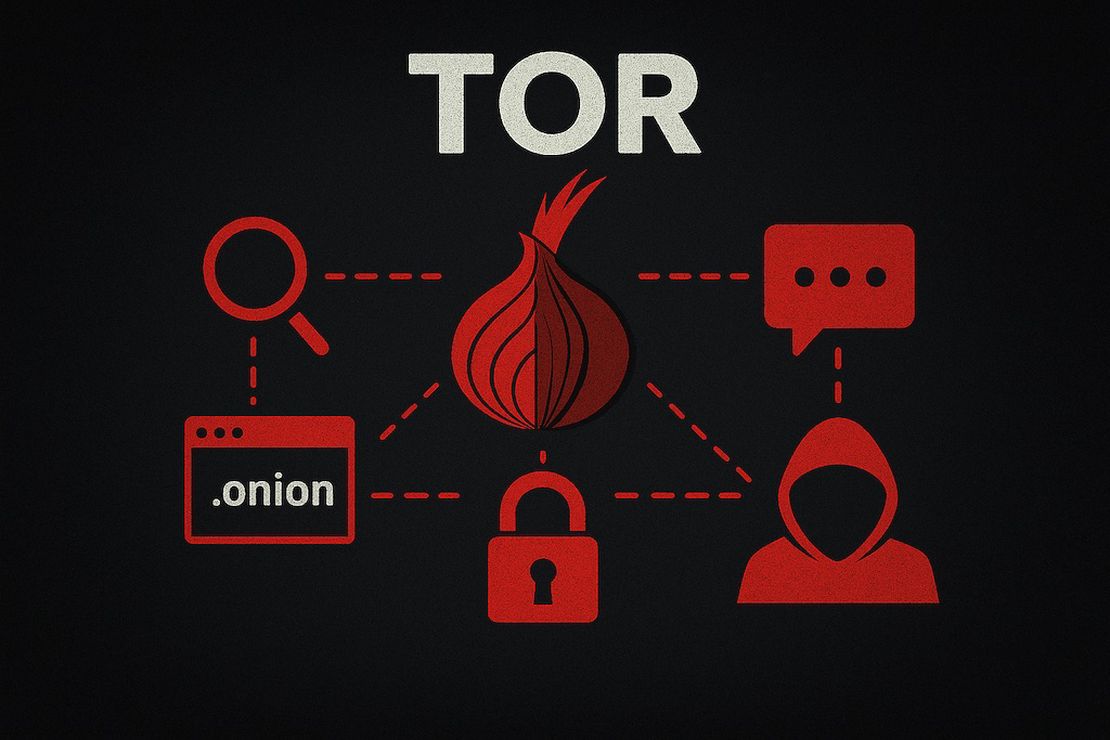
Mapping dark web infrastructure involves the process of discovering and analyzing the technical backend that supports hidden services such as marketplaces, forums, or ransomware leak portals, without directly interacting with them. Mapping primarily focuses on servers, domains, and technical fingerprints that help us access these sites.
The dark web operates on anonymity, but for security or threat teams, this very anonymity creates a critical blind spot.
For Threat Intelligence (TI) teams, mapping dark web infrastructure gives them critical visibility in:
Threat actor ecosystems Dark web marketplaces, leak portals, and forums are the hubs of dark web crimes. By mapping these infrastructures, threat intelligence teams can track where different actors involved in crime are engaged, including gathering, trading, and communicating. Mapping helps authorities create an ecosystem view of these actors to identify connections that might otherwise seem unrelated.
Infrastructure Overlapping Not all actors are geniuses; some are beginners trying to make quick money. Despite the anonymity TOR provides, operators often reuse elements of their setup — such as a hosting server, a domain pattern, or a misconfigured certificate. TI teams identify these overlaps, which can link the hidden services to each other and sometimes even to clearnet resources. Booletprof hosting is used as infrastructure for multiple dark websites. It is a technical hosting service that remains unaffected by complaints about illegal activities, serving as a basic building block for running dark websites and cyberattacks3.
Early warnings Monitoring provides organizations with an early warning system that helps defend against cyber threats. By tracking forums, marketplaces, and leak sites, security teams can identify the sale of exploits, compromised assets, and even discussions of planned attacks before they happen. For example, the Medusa ransomware group lists victims on its Tor-based leak sites, offering immediate visibility into data exposure. When such findings are combined with other threat intelligence feeds, analysts can distinguish background noise from genuine threats and improve their defensive strategies4.
A ransomware-as-a-service (RaaS) operation active since 2021. It uses a double-extortion model—encrypting files and stealing data, then threatening public leaks unless ransoms are paid. By 2025, it had hit hundreds of organizations worldwide, including healthcare, education, and even NASCAR. Authorities advise strong defenses like MFA, patching, backups, and network segmentation.
Unlike surface web websites that rely on DNS resolution, Onion services are resolved through Tor’s distributed hash table (DHT) system and function only within the Tor overlay. This design conceals both the server’s IP address and the client’s identity through multiple layers of encryption and onion routing.
Onion services enable users to set up their sites and other services without revealing their location, using onion routing instead of IP addresses. Onion services utilize onion addresses derived from the service’s cryptographic key, making them self-authenticating5.
Before a user can access a hidden service, the client first constructs a circuit to a randomly chosen Tor node, known as the rendezvous point. At this stage, the client sends an ESTABLISH_RENDEZVOUS cell to designate it as the meeting place. Then, the hidden service also builds its own circuit to the same node and sends a rendezvous cell. After both sides are present, the relay forwards the cell to the client and joins the two circuits together. We can say that the rendezvous point acts as a neural middleman linking both circuits without exposing the IP address of either6.
To complete a rendezvous, the hidden service host builds a circuit to the rendezvous point and sends a RENDEZVOUS1 cell containing:
RENDEZVOUS_COOKIE [20 bytes] HANDSHAKE_INFO [variable; depends on handshake type used.]Once the client receives the RENDEZVOUS2 cell, it verifies that HANDSHAKE_INFO properly completes a handshake. To do this, the client parses SERVER_PK from HANDSHAKE_INFO and reverses the final operations of the section.
rend_secret_hs_input = EXP(Y,x) | EXP(B,x) | AUTH_KEY | B | X | Y | PROTOID NTOR_KEY_SEED = MAC(ntor_secret_input, t_hsenc) verify = MAC(ntor_secret_input, t_hsverify) auth_input = verify | AUTH_KEY | B | Y | X | PROTOID | "Server" AUTH_INPUT_MAC = MAC(auth_input, t_hsmac)Even though hidden services mask these server locations, the physical infrastructure of these services must exist somewhere, and many dark web operators use bulletproof hosting (BPH) providers. These providers do not care about complaints or the law.
Here are two related cases:
“The authorities also arrested two Dutch nationals who had been running a Mirai botnet from the servers of KV Solutions BV (KV hereinafter) bulletproof hosting service.”
— SecurityAffairs, 20197
A malware that hijacks vulnerable IoT devices (like routers and cameras) using weak/default passwords, turning them into bots for massive DDoS attacks. Protect devices by updating firmware and changing default credentials.
“The hosting company was called ZServers/XHost… During the raid, 127 servers were taken offline and seized by police officers… The investigation revealed that these servers contained ransomware, botnets, and other malicious software, including hacking tools from two infamous ransomware operations: Conti and LockBit.”
— Cybernews, 20258
Conti & LockBit Ransomware
Two major ransomware operations that use double extortion — encrypting systems while threatening to leak stolen data. Both have targeted businesses and governments worldwide, often demanding large ransoms.
Misconfiguration, attempts to outsmart law enforcement, and depending only on central servers can cause problems. These issues might lead to servers being taken down, identities being exposed, or services being interrupted.
Operational Security Failures
Hidden services are only strong as their configurations. Misconfiguration can lead to reveal of real world IPs and other metadata which a analyst can exploit
Example: In 2017, a hacker breached Freedom Hosting II, a major Tor-based hosting provider. The hacker found that many of its hosted sites contained illegal content. The attacker claimed to have discovered that 50% of the hosted sites were involved in illegal activities, and this breach led to the takedown of more than 10,000 dark web sites and the exposure of sensitive user data, such as email addresses, some of which were government-affiliated. This incident highlighted vulnerabilities in the security of dark web hosting services9.
Single Points of Failure
Centralized bulletproof hosts have a critical vulnerability. If the hosts are seized, all hosted dark web services and sites go offline, making it easy to trace the operators. After seizing the physical servers, authorities can disrupt multiple illegal sites.
Example: In 2019, German police seized CyberBunker, a hosting provider operating in an old NATO bunker that supported dozens of dark web markets, including Wall Street Market (a leading darknet drug marketplace at the time).10

While Tor’s onion services are designed to hide IP addresses and hosting details, operational mistakes and leftover metadata often cause issues. This usually happens because of misconfigurations and protocol-level metadata artifacts. These leaks are often revealed through the HTTP host header, Apache vhost directives, or reused certificates.
Many hidden services accidentally link to resources on the clearnet, such as fonts, analytics scripts, or image files. Each of these resource requests occurs through Tor, carrying metadata like the destination, IP address, handshake details, and timing information. Even if the content is encrypted, traffic patterns can help analysts connect a hidden service to a real-world server.
Headers like Server, X-Powered-By, and caching directives can also leak significant information about the web server’s software and configuration. For example, a unique server header can serve as a fingerprint for a specific hosting setup.
Request URI: http://www.example.com

HTTP/1.1 200 OK
Content-Encoding: gzip
Age: 521648
Cache-Control: max-age=604800
Content-Type: text/html; charset=UTF-8
Date: Fri, 06 Mar 2020 17:36:11 GMT
Etag: "3147526947+gzip"
Expires: Fri, 13 Mar 2020 17:36:11 GMT
Last-Modified: Thu, 17 Oct 2019 07:18:26 GMT
Server: ECS (dcb/7EC9)
Vary: Accept-Encoding
X-Cache: HIT
Content-Length: 648HTTP Header Fingerprinting: Compare headers (Server, X-Powered-By, X-Cache) with known clearnet server fingerprints to identify hosting infrastructure.
Tools: Netlas, WhatWeb, Wappalyzer, custom Python scripts.
Resource Request Analysis: Track clearnet resources loaded by a hidden service (images, fonts, scripts) to infer hosting patterns.
Tools: Tor Browser network monitor, OnionScan, mitmproxy.
Metadata Extraction from Files: Extract embedded identifiers or geolocation from images, PDFs, or DOCs.
Tools: exiftool, pdf-parser
Favicon / Asset Hashing: Compare hashes of favicons, scripts, or images between onion and clearnet sites to find matches.
Tools: ssdeep, tlsh, Netlas favicon search.
TORhunter: It uses traffic asymmetry and path selection to deanonymize hidden services by automating scanning, brute forcing, and metadata collection at endpoints.
Tools: Torhunter
In the Silk Road takedown (2013), the hidden marketplace’s login page had an embedded CAPTCHA that relied directly on a clearnet service. Because of this dependence on the surface web, some HTTP requests from users exposed the site’s real IP address in response headers instead of routing entirely through Tor. Investigators entered that IP into a regular browser and accessed the Silk Road login page, confirming the real hosting server11.
Operators often host multiple services on the same VPS or dedicated servers, which creates opportunities for correlation and deanonymization.
IP Reuse Hosting an onion service alongside surface web sites on the same IP or subnet can reveal a link between both of those sites. Even if the onion service is anonymous, specialized external observers can connect them with other hosted services using public data resources like Netlas
TLS Fingerprinting The TLS handshake reveals subtle server details like the order of cipher suites, supported extensions, and protocol options. These patterns can act as a cryptographic fingerprint, uniquely identifying a server across different services.
SSH and TLS Keys
Every TLS or SSH service has a public cryptographic key during the handshake, such as SHA-256, which is a hash of the server’s RSA/Ed25519 key. If the same keypair is reused across multiple endpoints, like for an onion service and a surface web host, these fingerprints become a global identifier. Even with IP rotation, the certificates’ subjectPublicKeyInfo (TLS) or host key exchange (SSH) remains the same, allowing these services to be linked to the same machine.
Investigators can exploit these fingerprints to deanonymize and correlate multiple services:
The CARNOTE project (CCS 2015) actively collected internet endpoints and extracted unique strings from onion service content and certificate chains. Using TLS and SSH fingerprints, CARNOTE successfully exposed hosting IPs, co-located services, and physical server locations, demonstrating how cryptographic fingerprints can be leveraged to deanonymize hidden services12.
Recommended Reading
Proactive Threat Hunting: Techniques to Identify Malicious Infrastructure
Even without IP address disclosure, onion services can sometimes leak information through network-level and application-level metadata.
Attackers exploit these leaks using circuit timing and latency analysis. The main technique is the Sniper exploit path, operationalized by tools like HSDirSniper:
In 2016, researcher Jose Carlos Norte identified an issue in onion services using HTTP GZIP compression headers. These headers include a compression date field, which some servers fill with local time instead of UTC. Norte tested real .onion sites and discovered leaks, such as the one dated Thu, 22 Aug 2016 14:00:00 PST. His PHP script extracted these timestamps and demonstrated that a time zone leak occurred in about 10% of the tested servers13.

These hosting and metadata leaks show that onion services, although designed to be cryptographically anonymous, can still expose their infrastructure through side channels. Investigators analyze these weak signals to create a “fingerprint” that can identify the hosting provider and help locate the administrator.
Hidden services often accidentally expose surface web artifacts, including misconfigured services, forgotten directories, debug endpoints, and metadata files. These bypass Tor’s anonymity because the application stack – like web servers, CMS, and file servers –remains vulnerable to operator mistakes.
HOST: headers. If the server also hosts a clearnet site, probing with controlled headers can elicit responses that reveal the true domain or IP./server-status, Nginx stubs, phpMyAdmin, or forgotten WordPress panels often run in parallel to onion sites. Investigators can map these to public-facing admin pages.ahmia, OnionScan, and custom crawlers.Host: values to detect virtual host overlap.exiftool, strings, and PDF/DOC parsers to extract identifying metadata.In 2012 , the FBI conducted Operation Torpedo, they deployed malware known as Network Investigate Technique (NIT) . It identified users accessing tor hidden child abuse sites. The malware was delivered by drive-by downloads when users visited certain websites. This operation led to identification of several individuals .The operation highlighted how misconfigurations or vulnerabilities in hidden services can be exploited14.
The rise and fall of dark web marketplaces like AlphaBay and Hansa marked a turning point in global cybercrime investigations. Both platforms thrived on the anonymity of the Tor network, enabling the trade of narcotics, malware, counterfeit documents, and other illicit goods at massive scale. However, despite their technological sophistication, both marketplaces were ultimately dismantled due to critical operational security failures and coordinated law enforcement actions.
AlphaBay was a well-known dark web marketplace primarily involved in trading illicit goods and services. Despite operating within the anonymity provided by the Tor network, several failures in operational security and public data leaks led to the shutdown of AlphaBay.

AlphaBay’s downfall was not caused by a single fatal error but resulted from an accumulation of operational security leaks across multiple layers.
The first mistake occurred when the administrator Alpha02 reused the email address [email protected] during the setup of a marketplace and in automated emails. The Hotmail address was already linked to his LinkedIn, PayPal, merchant logs, and WHOIS records. Investigators obtained a definitive, searchable clue to the real-world identity of the Alpha02 user as Alexandre Cazes.
Alias Alpha02 appeared earlier in carding forums like Evolution and CardersMarket. This connection allowed investigators to link datasets that revealed past activity under the same name. They could now associate activity through account clustering and by analyzing linguistic fingerprints such as writing style and vocabulary, known as stylometry.
AlphaBay servers occasionally leaked backend fingerprints, such as misconfigured TLS certificates and mail headers, exposing surface web IPs. By continuously monitoring AlphaBay’s Tor hidden services, investigators identified instances of server-side misconfigurations where backend IPs leaked in error responses. These misconfigurations were cross-referenced against passive DNS databases, which provided a partial map of the infrastructure cluster, ultimately revealing servers connected to AlphaBay.
At the time of Alexandre Cazes’s arrest in Thailand, Cazes’ laptop was still logged into both the AlphaBay admin panel and related cryptocurrency wallets. This enabled live forensic extraction of credentials, databases, and private keys without needing to bypass any disk encryption. Investigators used tools such as FTK Imager and Volatility to dump system memory and capture active sessions, including Bitcoin wallet seeds and PGP private keys.
| Metric / Event | Number / Value | Sources |
|---|---|---|
| Users | 200,000 – 400,000+ | FBI, Wired, Wikipedia |
| Vendors | ~40,000 | Wired, Wikipedia |
| Product Listings (Total) | ~369,000 | Wired |
| Drug & Chemical Listings | 250,000+ | FBI |
| Fraud/Malware Listings | 100,000+ | FBI |
| Daily Revenue Estimate | $600k–$800k/day; up to $2M/day (Chainalysis est.) | Wired |
| Total Crypto Transactions | Over $1 billion lifetime | FBI, Wired |
Recommended Reading
Modern Cybercrime: Who’s Behind It and Who’s Stopping It
Hansa Market was a dark web marketplace launched in 2015. It was believed to be a successor to earlier sites like the Silk Road and Evolution. It specialized in illegal goods, mainly narcotics, counterfeit documents, and malware kits. Hansa gained popularity for its multisig escrow system, mandatory PGP encryption, and low commission rates compared to other sites. At its peak, it was considered one of the top three darknet markets by transaction volume.
Unlike AlphaBay, Hansa’s downfall resulted from an extensive infiltration in June 2017 during Operation Bayonet, executed by Europol and the FBI in partnership with Dutch authorities. By operating the site for several weeks to collect intelligence, they turned the active marketplace into an information-gathering tool, akin to a controlled honeypot, before ultimately shutting it down15.
While operating Hansa, authorities modified the Hansa site’s backend, enabling them to collect a vast amount of surveillance information. The changes the authorities made were:
These changes in the backend provided authorities with users’ shipping addresses, message plain text, and geolocation metadata.
Investigators replaced a small “backup key” file offered to sellers with a crafted Excel file. This Excel file, when opened by sellers on a non-TOR device, caused their client to send an outbound request to an LE-controlled endpoint, helping the police to capture the sellers’ public IPs. Sixty-four sellers were identified using the Beacon bait.
Hansa market website was operated by the police for 27 days, recording 1000 transactions daily. Authorities collected data on 420,000 users, including 10,000 postal addresses, and seized up to 1,200 BTC16.
After 27 days, the covert collection period ended, and Dutch police shut down Hansa and posted a seizure notice on the Tor site. The collected intelligence was forwarded to Europol and the FBI for arrests and referrals.
| Metric / Event | Number / Value | Sources |
|---|---|---|
| Users Identified | ~420,000 | Wired, Wikipedia |
| Vendors | Jumped from 1,000 → 8,000/day | Wikipedia |
| Transactions Captured | 27,000 illicit transactions | Wired |
| Home Addresses Captured | ~10,000 | Wired |
| Crypto Seized | 1,200 BTC (~$12M at 2017 value) | Wired |
Mapping hidden services and investigating dark web infrastructure can be valuable for threat intelligence, but it must be guided by clear ethical and legal frameworks to prevent crossing into illegal conduct.
Traffic correlation attacks involve monitoring entry and exit traffic on the Tor network to deanonymize users, as in the Hansa Market case. Such surveillance requires warrants, as unauthorized monitoring may violate laws. Investigators can also exploit misconfigured hidden services leaking metadata, but unauthorized scanning could violate the CFAA. Cryptocurrency tracing, linking Bitcoin or Monero transactions through blockchain analytics like Chainalysis, provides attribution but needs exchange cooperation and legal subpoenas.
Chris Monterio’s story effectively illustrates why you need to be cautious with any kind of investigation.
Chris Monterio, a cybersecurity researcher, discovered a dark web hitman-for-hire site called Besa Mafia. The site listed potential targets for murder and other violent crimes. Trying to do the right thing and stop the crimes, Monterio accessed the site’s private data to see who the targets were.

Monteiro exploited a security vulnerability on the Besa Mafia site and accessed its database. He collected sensitive user information from the site and all the target lists. To investigate further, he also created a fake hitman profile to interact and gather more intelligence.
His main mistake was that he lacked any legal warrant or authorization to access the private site, even though his intentions were good, technically, what he was doing was considered a crime under computer misuse laws.
Monteiro was not criminally punished during the investigation but was arrested on charges of incitement to murder based on misinformation spread by Yura. His creation of a fake profile as a hitman and investigating a dark web site without a warrant led to the arrest, but the charges were later dropped17.
Please be cautious with your investigations
The dark web is not a playground. Mapping or deanonymizing Tor users without legal permission is illegal and can result in prison, even if the target is involved in criminal activity.
The dark web is a double-edged sword: it is a vital space for privacy, whistleblowing, and free expression, but at the same time, it is also a hub for illicit marketplaces, ransomware operations, and cybercrime. Mapping its hidden infrastructure offers critical insights for threat intelligence teams; it helps them track the criminal ecosystem and identify vulnerabilities in hosting setups.
In the cases of AlphaBay, Hansa, and Freedom Hosting, even small operational mistakes like misconfigured servers, reused cryptographic keys, or exposed metadata led to the fall of those services. For investigators, these opportunities come with legal and ethical responsibilities. All these techniques can yield actionable intelligence, but without proper authorization, such actions quickly enter criminal territory.
The dark web’s cryptographic and operational protections are complex but not foolproof. Mapping and monitoring enable investigators to uncover infrastructure overlaps, track threat actors, and receive early warnings of upcoming cyber threats.

I can show you how deep the Internet really goes
Discover exposed assets, infrastructure links, and threat surfaces across the global Internet.
此内容由惯性聚合(RSS阅读器)自动聚合整理,仅供阅读参考。 原文来自 — 版权归原作者所有。