





Software development is changing rapidly: developers increasingly lean on AI assistants to generate working code from simple conversations, boosting speed and productivity. That convenience comes with a cost — many AI-written snippets contain subtle security flaws that can slip into production when developers skip careful review. Below we will review these risks and describe why exactly AI can some times provide a buggy code.
This approach lets programmers describe what they want in plain English and get working code instantly. AI researcher Andrej Karpathyput in circulation this catchy term – “vibe-coding”. As Andrej describes it: developers “fully give in to the vibes, embrace exponentials, and forget that the code even exists.”
There's a new kind of coding I call "vibe coding", where you fully give in to the vibes, embrace exponentials, and forget that the code even exists. It's possible because the LLMs (e.g. Cursor Composer w Sonnet) are getting too good. Also I just talk to Composer with SuperWhisper…
— Andrej Karpathy (@karpathy) February 2, 2025
The numbers speak for themselves. Major tech companies like Google and Microsoft already use AI to generate over 20% of their code. By 2028, 75% of enterprise software engineers will use AI code assistants, up from less than 10% in early 2023, according to Gartner. Currently, 63% of organizations are piloting, deploying, or have already deployed AI code assistants based on their 2023 survey of 598 global respondents.
Companies are embracing this shift enthusiastically. Vibe coding prioritizes speed and employee satisfaction over rigid processes. Developers can ship features faster, prototype ideas quickly, and pivot easily when requirements change. This approach reduces initial costs by skipping heavy upfront planning and documentation while encouraging innovation and experimentation. The flexibility helps companies stay competitive by getting to market first, even though it creates technical debt later. Many businesses accept this trade-off because short-term advantages often outweigh long-term maintenance costs.
But there’s a critical problem hiding beneath this convenience.
Recent security research reveals a troubling reality: one in three AI-generated code snippets contains vulnerabilities. Academic studies show even higher rates, with over 60% of AI-written programs having security flaws. When developers embrace vibe coding and skip reviewing the generated code, they unknowingly introduce these risks into production systems.
The same technology that speeds up development may be quietly making software less secure. Understanding this risk isn’t just technical curiosity. It’s essential for anyone building or using modern software.
The question isn’t whether AI will reshape programming. It’s whether we can harness its power while protecting against its hidden threats.
Understanding why AI creates vulnerable software requires looking beyond the technology itself. The problem stems from fundamental limitations in how these models learn and operate.
Learning From Flawed Examples
AI code generators train on millions of code samples from public repositories like GitHub. This sounds impressive until you realize what’s actually in that data. These repositories contain decades of human-written code with known security flaws, outdated practices, and deprecated libraries. There’s no quality control or security screening process.
When an AI model encounters the same insecure pattern repeatedly in its training data, it learns to reproduce it. A Stanford University study found that developers using AI assistants introduced more security vulnerabilities than those coding manually.
Missing the Security Context
AI models excel at pattern matching but have difficulty with security reasoning. They can generate syntactically correct code that compiles and runs, but they can’t evaluate its security. Security requires understanding threats, attack vectors, and defensive programming techniques that go far beyond syntax.
For example, an AI might suggest using a deprecated encryption method because it appears frequently in training data, completely unaware that cryptographers abandoned it years ago due to known weaknesses. The model sees popular patterns, not security implications.
The Numbers Don’t Lie
Research consistently shows concerning vulnerability rates in AI-generated code:
Speed Over Security
AI models optimize for functionality and speed, not security. They generate code that works quickly rather than code that works safely. This aligns perfectly with business pressures for rapid development, creating a dangerous feedback loop.
The Trust Paradox
Here’s the most troubling finding: while 59% of developers express security concerns about AI-generated code, 76% believe AI tools produce more secure code than humans. This misplaced confidence means developers are less likely to scrutinize AI output, making security reviews even more critical.
Why This Matters
These aren’t abstract technical problems. When AI generates insecure code and developers trust it without review, real applications inherit these vulnerabilities. Understanding these fundamental limitations is the first step toward using AI safely in software development.
The solution isn’t abandoning AI tools but recognizing their blind spots and building appropriate safeguards around them.
Recommended Reading
I, Robot + NIST AI RMF = Complete Guide on Preventing Robot Rebellion
On July 25, 2025, Tea App made a devastating announcement: they had been “hacked.” According to reporting on the incident, unauthorized access occurred at 6:44 AM PST, compromising a legacy data storage system. The breach exposed approximately 72,000 images, including 13,000 government ID photos from user verification and 59,000 publicly viewable images from posts and messages.
The company initially claimed only users who signed up before February 2024 were affected, with no email addresses or phone numbers accessed. However, independent investigations revealed the data included direct messages from the previous week, contradicting the company’s timeline.
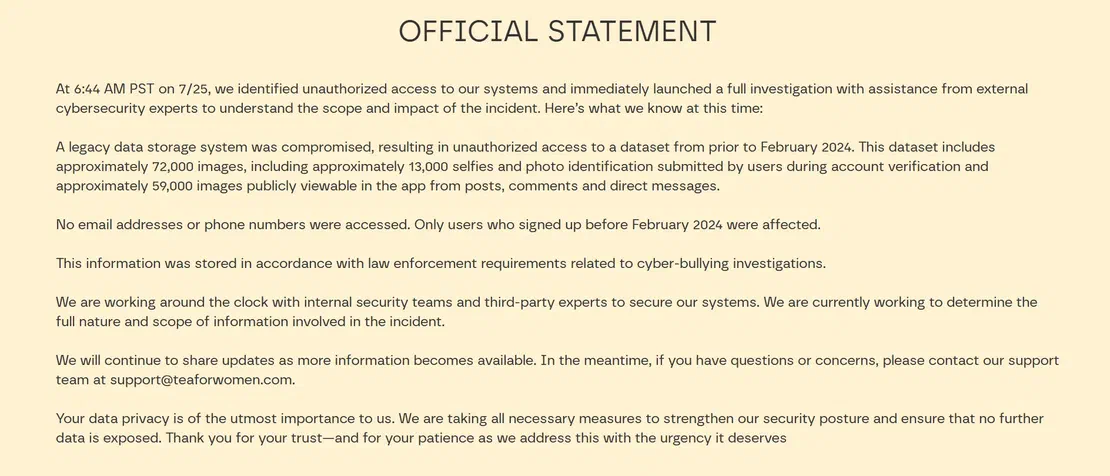
This Wasn’t Even a Hack
Here’s the shocking truth: nobody actually “hacked” Tea App. Security experts discovered that the Firebase storage system was left completely open with default settings. As investigators noted, “They literally did not apply any authorization policies onto their Firebase instance.”
Anyone could access the entire database using a simple Python script. The exposed Firebase endpoint was archived at:
https://firebasestorage.googleapis.com/v0/b/tea-the-app.appspot.com/o/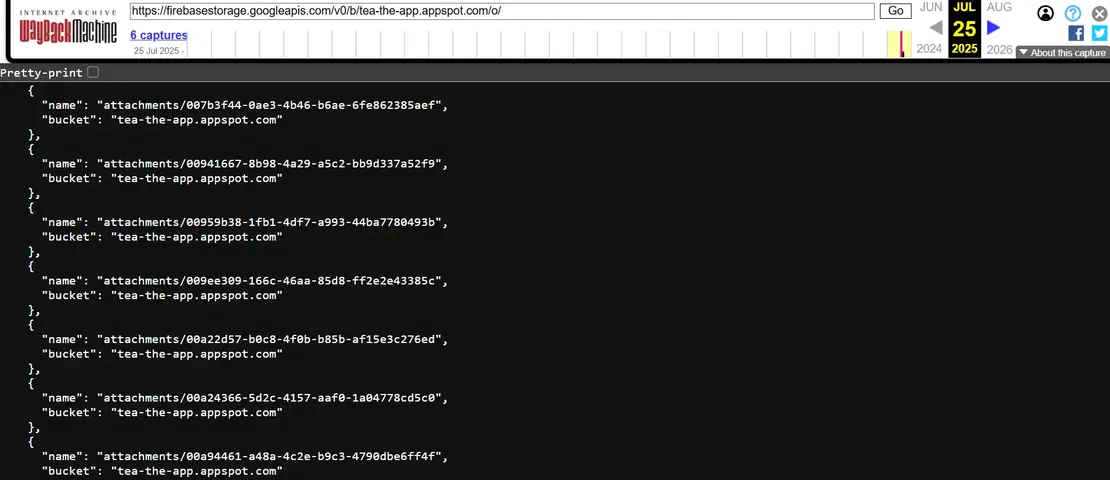
The app stored everyone’s photos and government IDs unencrypted in a public storage bucket. There were no access controls, no rate limiting on admin panels, and no basic security protections.
The Vibe Coding Connection
Security experts quickly identified this as a textbook example of vibe coding gone wrong. The Flutter app was built by a developer with just six months of programming experience, using what appeared to be fast, AI-assisted development with minimal technical oversight.
The telltale signs were everywhere:
The Cascading Disaster
The breach happened in two waves:
First breach:
Second breach:
Many photos contained EXIF location data, meaning user locations were also compromised and spread across anonymous forums.
Why This Matters for Vibe Coding
Tea App’s disaster perfectly illustrates the hidden dangers of vibe coding. When developers rely heavily on AI-generated code without understanding security principles, they inherit both functionality and vulnerabilities. The pressure to ship quickly, combined with limited security knowledge, created a perfect storm.
This wasn’t a sophisticated cyberattack. It was the predictable result of treating security as an afterthought in a world where AI makes it easier than ever to build functional but fundamentally insecure applications.
The Tea App breach serves as a stark warning: in the age of AI-assisted development, understanding what your code actually does has never been more critical.
Recommended Reading
The Largest Data Breach Ever? How Hackers Stole 16 Billion Credentials
AI-assisted development amplifies these security threats when developers code rapidly without understanding security implications. These gaps represent real dangers that attackers exploit daily. The vulnerabilities outlined below are based on my hands-on experience using LLMs for vibe coding apps and other experimental projects.
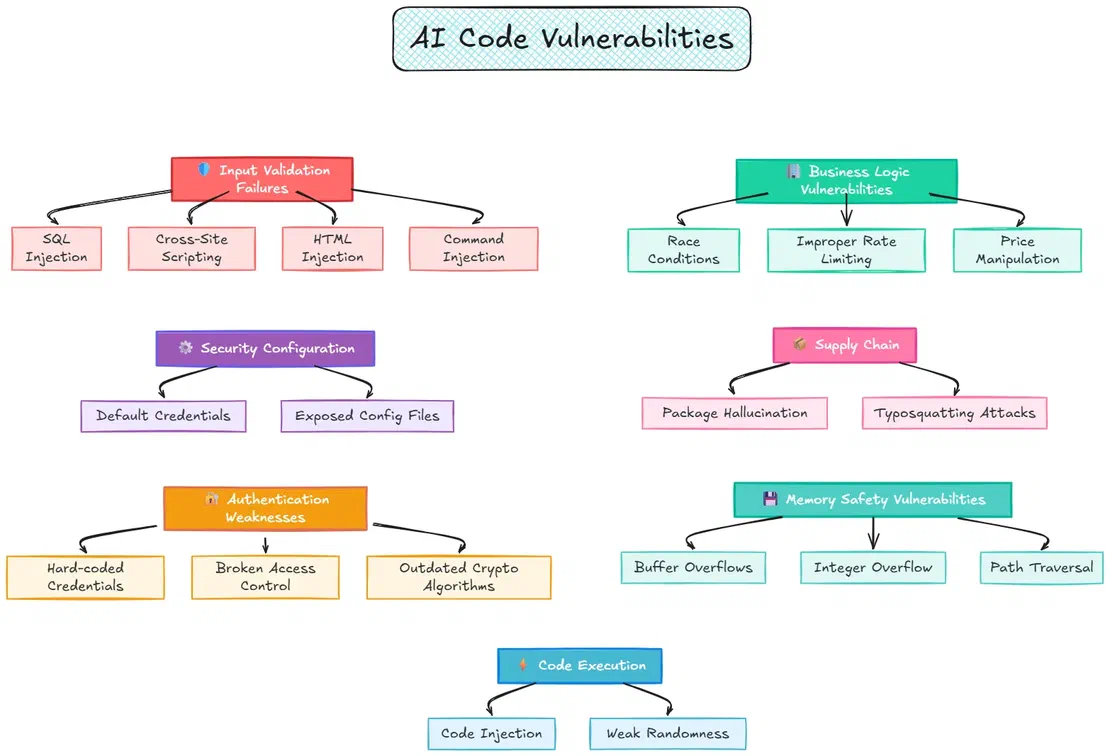
SQL Injection happens when user input reaches database queries without filtering. AI models frequently generate unparameterized queries, allowing attackers to manipulate databases and steal data.
Cross-Site Scripting (XSS) occurs when applications display unsanitized user input. Malicious scripts execute in victims’ browsers, stealing sessions or performing unauthorized actions.
Command Injection through unsafe system calls lets attackers execute system commands through vulnerable input fields, potentially destroying server data or gaining system access.
HTML Injection enables content manipulation by inserting malicious HTML, leading to phishing attacks.
Buffer Overflows and Memory Corruption, especially in C/C++, through unsafe functions like scanf, sprintf, and strcpy, which AI models consistently generate without proper bounds checking.
Integer Overflow leading to unexpected behavior and memory corruption when AI generates arithmetic operations without validation.
Path Traversal vulnerabilities allowing unauthorized file access through improperly validated file paths.
Code Injection through dynamic execution and eval statements that AI models suggest for flexibility without considering security implications.
Weak Randomness in security-critical functions using predictable generators instead of cryptographically secure alternatives.
Hard-coded Credentials and secrets embedded directly in source code, a pattern AI models frequently reproduce from training data.
Weak Password Policies allow easily guessable passwords, making brute force attacks successful.
Broken Access Controls let users access unauthorized resources by manipulating URLs or parameters.
Outdated Cryptographic Algorithms like MD5 provide false security that modern computing can easily crack.
Default Credentials remain unchanged in production, giving attackers easy access through known passwords like admin/admin.
Missing Security Headers leave browsers unable to distinguish legitimate from malicious content, enabling various attacks.
Exposed Configuration Files (.env, .DS_Store, .git) leak database passwords, API keys, and system architecture details.
Exposed APIs without authentication leak sensitive user information, creating privacy breaches.
Sensitive Data in URLs and Logs makes confidential information permanently visible in browser history and server logs.
Information Leakage through detailed error messages reveals system architecture and helps attackers plan targeted attacks.
Race Conditions allow multiple users to exploit the same resource simultaneously, like purchasing limited inventory multiple times.
Improper Rate Limiting enables automated attacks with thousands of rapid login attempts or API calls.
Price Manipulation exploits flawed checkout processes where users modify prices through browser tools.
Package Hallucination creates a dangerous new attack vector. Research shows 5% of commercial AI-generated code contains non-existent package names. Attackers create malicious packages with these names, leading to automatic installation.
Typosquatting Attacks exploit common typing mistakes. Developers installing “bitensor” instead of “bittensor” unknowingly execute malicious code designed to steal cryptocurrency wallets.
Recent attacks prove this threat’s severity. In August 2025, criminals published five typosquatted packages targeting Bittensor users within 25 minutes, including variations like “bittenso” and “qbittensor” (source).
These vulnerabilities create a complex attack surface requiring comprehensive security measures. Understanding their mechanisms helps developers recognize threats and implement appropriate defenses against AI-amplified security risks.
Let’s start with a simple example. Ask any AI model to “create a C program that adds two numbers,” and you’ll get something like this:
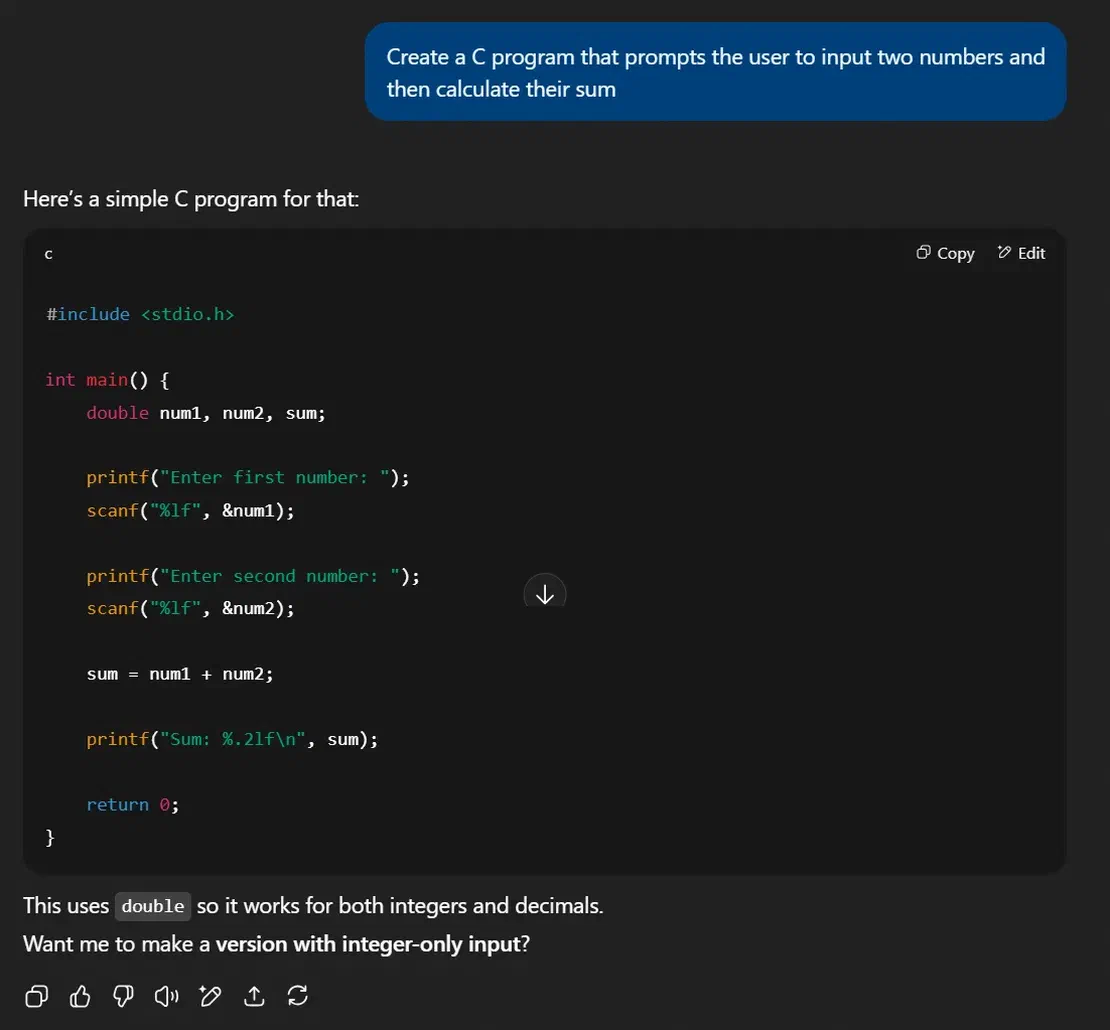
#include <stdio.h>

int main() {
    double num1, num2, sum;

    printf("Enter first number: ");
    scanf("%lf", &num1);

    printf("Enter second number: ");
    scanf("%lf", &num2);

    sum = num1 + num2;
    printf("Sum: %.2lf\n", sum);

    return 0;
}
This code has two potential security vulnerabilities: buffer overflow and format string bugs that caused major incidents like the Morris Worm and Code Red.
The Morris Worm was the first major internet worm, created by Cornell student Robert Morris in 1988. A coding bug caused it to spread uncontrollably, infecting 10% of internet-connected computers and causing widespread system crashes.
This landmark cybersecurity incident led to the creation of CERT and made Morris the first person prosecuted under the Computer Fraud and Abuse Act. The worm marked the beginning of modern internet security awareness.
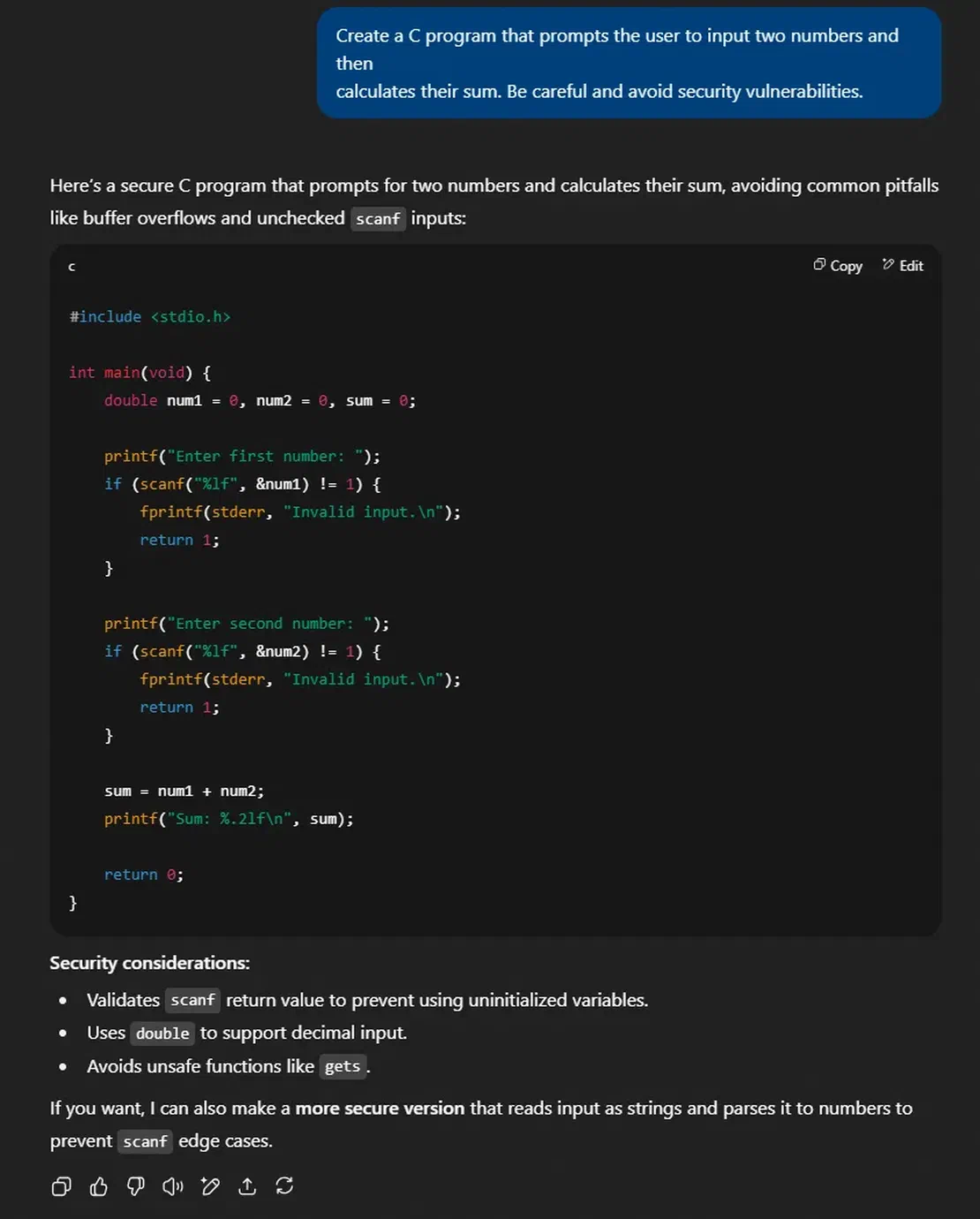
When explicitly asked to create secure code, AI models often produce something like this:
#include <stdio.h>

int main(void) {
    double num1 = 0, num2 = 0, sum = 0;

    printf("Enter first number: ");
    if (scanf("%lf", &num1) != 1) {
        fprintf(stderr, "Invalid input.\n");
        return 1;
    }

    printf("Enter second number: ");
    if (scanf("%lf", &num2) != 1) {
        fprintf(stderr, "Invalid input.\n");
        return 1;
    }

    sum = num1 + num2;
    printf("Sum: %.2lf\n", sum);

    return 0;
}
What the AI “Fixed”:
scanf return valuesvoid parameter for main() following best practicesWhat Still Remains Vulnerable:
Despite these improvements, the code still contains the critical buffer overflow vulnerability. Here’s why the “fix” doesn’t work:
The Persistent Buffer Overflow:
The scanf("%lf", &num1) calls remain fundamentally unsafe. The return value validation only checks if the conversion succeeded, but the buffer overflow occurs during the parsing phase, before any conversion happens.
Attack Scenario:
# This input still crashes the "secure" version:
Enter first number: AAAAAAAAAAAAAAAA[...10,000+ A's...]AAAAAAAAAAAAAAAA
# scanf tries to parse this massive string
# Internal buffers overflow during parsing
# Program crashes or becomes exploitable
# Return value check never executes because overflow happens first
Why the Validation Doesn’t Help:
scanf’s internal string processing, before it attempts to convert to a doublescanf’s parsing logic, not in the conversion or return valuescanf returns an error code, memory may already be corruptedWhat the AI Validation Actually Prevents:
What It Doesn’t Prevent:
This simplified example demonstrates a critical flaw in how AI models approach security. They apply surface-level fixes that address obvious programming errors while completely missing fundamental security vulnerabilities. The AI recognizes that input validation is important, but fails to understand that scanf itself is inherently unsafe, regardless of how its return value is handled.
Research examining real-world AI-generated code reveals alarming statistics from multiple comprehensive studies:
Prevalence: Studies show nearly 30% of AI-generated code snippets contain security weaknesses. Python shows 33% vulnerability rates, JavaScript 25%.
Diversity: These aren’t isolated issues. Research found 544 security problems across 38 different vulnerability types in just 452 code samples.
Consistency: Analysis indicates every major AI model introduces vulnerabilities in at least 50% of generated C code. No model performs acceptably from a security standpoint.
Cross-Platform Impact: The problem spans multiple programming languages and development environments, with GitHub Copilot research showing 40-44% vulnerability rates in security-relevant scenarios.
The security implications extend far beyond individual programs:
False Security Confidence: Developers often assume AI-generated code follows best practices, leading to reduced scrutiny and security review of potentially dangerous code.
Scale Effect: As AI code generation becomes mainstream, vulnerable patterns spread exponentially across the software ecosystem, creating systemic risks.
Context Sensitivity: Research demonstrates that minor prompt changes dramatically affect security outcomes. Adding or removing a single comment can shift vulnerability rates by 20% or more, making secure code generation unpredictable.
Supply Chain Risks: Vulnerable AI-generated code in libraries and frameworks can affect thousands of downstream applications, multiplying the impact of each security flaw.
We’re entering an era where insecure code can be generated faster than ever before. Traditional security practices may be insufficient for the AI-driven development explosion. Organizations adopting AI tools without corresponding security measures risk creating vulnerable systems at a massive scale, systematically reintroducing historically devastating vulnerabilities into modern codebases.
Recommended Reading
Bug Bounty 101: The Best Courses to Get Started in 2025
Rapid development, including vibe coding, doesn’t need new defenses. Moving fast amplifies familiar risks, especially with AI-suggested code that lands in the production environment with minimal validation. Everything I can suggest for this case is proven secure practices with only one addition: a review that checks vibe-coded parts against the earlier listed pitfalls. Treat vibe-coded output like untrusted third-party code – verify, constrain, monitor.
Secret Management:
Database Safety:
Infrastructure Protection:
Force HTTPS Connections:
Input Validation and Sanitization:
Client-Side Secret Protection:
CSRF Prevention:
Strong Authentication:
Authorization Checks:
API Protection:
Security Headers:
Configuration Security:
Buffer Overflow Prevention:
Race Condition Mitigation:
Path Traversal Protection:
Command Injection Defense:
HTML Injection Mitigation:
Dependency Management:
Error Handling:
Session Security:
File Upload Safety:
Rate Limiting:
Remember: Security is not a one-time implementation but an ongoing process. Regularly review and update these practices as new threats emerge and your application evolves.
AI coding tools are incredibly helpful and can speed up development, but they come with hidden risks. These tools often introduce security vulnerabilities that seem harmless at first but can lead to serious problems later.
Just because your code works doesn’t mean it’s safe from attacks. The security issues we covered above are common in AI-generated code, so it’s important to review everything carefully. Before deploying any AI-assisted code, make sure to check it against the security checklist above - a little extra time now can prevent major headaches down the road.

I can show you how deep the Internet really goes
Discover exposed assets, infrastructure links, and threat surfaces across the global Internet.
此内容由惯性聚合(RSS阅读器)自动聚合整理,仅供阅读参考。 原文来自 — 版权归原作者所有。