惯性聚合 高效追踪和阅读你感兴趣的博客、新闻、科技资讯
阅读原文 在惯性聚合中打开

推荐订阅源

GbyAI
GbyAI
Simon Willison's Weblog
Microsoft Security Blog
Y
Y Combinator Blog
The GitHub Blog
The GitHub Blog
Engineering at Meta
Engineering at Meta
F
Fortinet All Blogs
OSCHINA 社区最新新闻
OSCHINA 社区最新新闻
A
About on SuperTechFans
Last Week in AI
Last Week in AI
月光博客
月光博客
有赞技术团队
有赞技术团队
P
Proofpoint News Feed
MyScale Blog
MyScale Blog
Martin Fowler
Martin Fowler
钛媒体:引领未来商业与生活新知
钛媒体:引领未来商业与生活新知
C
Check Point Blog
U
Unit 42
The Register - Security
奇客Solidot–传递最新科技情报
奇客Solidot–传递最新科技情报
Cyber Security Advisories - MS-ISAC
Hugging Face - Blog
Hugging Face - Blog
阮一峰的网络日志
阮一峰的网络日志
V
Visual Studio Blog
酷 壳 – CoolShell
酷 壳 – CoolShell
D
DataBreaches.Net
WordPress大学
WordPress大学
aimingoo的专栏
aimingoo的专栏
H
Hacker News: Front Page
Recent Announcements
C
CXSECURITY Database RSS Feed - CXSecurity.com
Latest news
Latest news
小众软件
小众软件
P
Palo Alto Networks Blog
PCI Perspectives
PCI Perspectives
Security Latest
Security Latest
S
Secure Thoughts
Scott Helme
Scott Helme
Threat Intelligence Blog | Flashpoint
T
Threat Research - Cisco Blogs
P
Proofpoint News Feed
M
MIT News - Artificial intelligence
Application and Cybersecurity Blog
Google DeepMind News
Recorded Future
Recorded Future
O
OpenAI News
S
Securelist
云风的 BLOG
云风的 BLOG
H
Help Net Security
T
Troy Hunt's Blog

Mapping the <mark>Internet</mark> on Netlas: Comprehensive Internet-Wide Scanning & OSINT Platform

Weaponized RMM: Hunting the Adversary Abuse of Remote Monitoring Tools Device Code Phishing: Technical Analysis and Proactive Hunting via Netlas Discovering Data Exposure with Netlas Telegram Bot API Abuse - Netlas Blog Using OWASP Amass with Netlas Module - Netlas Blog How we hunt C2 infrastructure at RST Cloud using Netlas - Netlas Blog Using Uncover with Netlas.io module - Netlas Blog Netlas Updates Terms and API & Data License Agreement - Netlas Blog Top 10 Hacking Devices for Ethical Hackers in 2026 - Netlas Blog Inside ClickFix: How Fake Prompts Took Over the Web Top 10 Critical Threat Actors to Watch in 2026: Ransomware, APTs & Defensive Strategies - Netlas Blog Bug Bounty 101 - A Complete Bug Bounty Roadmap for Beginners (2026) - Netlas Blog Supply Chain Attack - How Attackers Weaponize Software Supply Chains - Netlas Blog The Evolution of C2: Centralized to On-Chain - Netlas Blog From Starlink to Star Wars - The Real Cyber Threats in Space - Netlas Blog LLM Vulnerabilities: Why AI Models Are the Next Big Attack Surface - Netlas Blog When AI Turns Criminal: Deepfakes, Voice-Cloning & LLM Malware - Netlas Blog Zero-Click Exploits - Netlas Blog When Patches Fail: An Analysis of Patch Bypass and Incomplete Security - Netlas Blog I Analysed Over 3 Million Exposed Databases Using Netlas - Netlas Blog Post-Quantum Now: From AES & RSA to ML-KEM Hybrids - Netlas Blog Bug Bounty 101: Top 10 Reconnaissance Tools - Netlas Blog Mapping Dark Web Infrastructure - Netlas Blog Top Vibe-Coding Security Risks - Netlas Blog From Chaos to Control: Kanvas Incident Management Tool - Netlas Blog Bug Bounty 101: The Best Courses to Get Started in 2025 - Netlas Blog I, Robot + NIST AI RMF = Complete Guide on Preventing Robot Rebellion - Netlas Blog The $1.5B Bybit Hack & How OSINT Led to Its Attribution - Netlas Blog Hannibal Stealer: A Deep Technical Analysis - Netlas Blog Proactive Threat Hunting: Techniques to Identify Malicious Infrastructure - Netlas Blog The Pyramid of Pain: Beyond the Basics - Netlas Blog SOCMINT: Intelligence in the Social Media Era - Netlas Blog Hannibal Stealer vs. Browser Security - Netlas Blog The Largest Data Breach Ever? How Hackers Stole 16 Billion Credentials - Netlas Blog DNS Cache Poisoning – Is It Still Relevant? - Netlas Blog Modern Cybercrime: Who’s Behind It and Who’s Stopping It - Netlas Blog AI-Driven Attack Surface Discovery - Netlas Blog Netlas vs Urlscan: Tools Comparison - Netlas Blog Track Adversary Infrastructure Challenge 2025 Recap - Netlas Blog What is Threat Intelligence - Netlas Blog Netlas vs IPinfo: Tools Comparison - Netlas Blog Best Nmap Alternatives - Netlas Blog Whois History: How to Check the Domain Owner History - Netlas Blog Top WHOIS & RDAP Tools for Fast IP Address Lookup - Netlas Blog ASN Lookup Explained: Tools, Methods & Insights - Netlas Blog How to Detect CVEs Using Nmap Vulnerability Scan Scripts - Netlas Blog Nmap Cheat Sheet: Top 10 Scan Techiques - Netlas Blog Netlas vs ZoomEye: Platforms Comparison - Netlas Blog Top 6 Most Widely Used Port Scanners in Cybersecurity - Netlas Blog FAQ: Understanding Root DNS Servers and the Root Zone - Netlas Blog Domain Recon: Must-Know Tools for Security Professionals - Netlas Blog DNS History: Exploring Domains Past by Inspecting DNS Trails - Netlas Blog DNSSEC: Should You Use It? An Expert’s View on the Pros, Cons, and When to Implement - Netlas Blog Which DNS Servers Offer the Best Balance of Speed, Security, and Privacy? - Netlas Blog theHarvester: a Classic Open Source Intelligence Tool - Netlas Blog - Netlas Blog Top 15 OSINT Tools for Expert Intelligence Gathering - Netlas Blog A Deep Dive into the Open Web Application Security Project Top 10 Vulnerabilities - Netlas Blog Using Subfinder with Netlas Module - Netlas Blog Netlas Chrome and Firefox Extensions - Netlas Blog Netlas vs Censys: Platforms Comparison - Netlas Blog OSINT in Cybersecurity: Exploring Its Spectrum and Tech - Netlas Blog Best Honeypots for Detecting Network Threats - Netlas Blog Using Maltego with Netlas Module - Netlas Blog Using theHarvester with Netlas - Netlas Blog Using TLDFinder with Netlas - Netlas Blog Netlas vs Fofa: Platforms Comparison - Netlas Blog Netlas vs Shodan: Platforms Comparison - Netlas Blog Google Dorking in Cybersecurity - Netlas Blog 7 Tools for Web Penetration Testing - Netlas Blog Using DNS History in Cybersecurity - Netlas Blog Mastering Online Camera Searches - Netlas Blog Complete Guide on Attack Surface Discovery - Netlas Blog How to find unprotected databases with Netlas.io: Chapter 2 - Netlas Blog
Best Attack Surface Visualization Tools - Netlas Blog
Vyacheslav Makhrov · 2024-07-13 · via Mapping the <mark>Internet</mark> on Netlas: Comprehensive Internet-Wide Scanning & OSINT Platform

Pinpointing the attack surface is vital for defensive and offensive cybersecurity teams alike. Undoubtedly, visual mapping outshines simple lists. Experts quickly grasp entity connections, spotting opportunities and threats. Specialists leverage the visual format to craft optimal plans, maximizing efficiency and insight.

This article offers top tools to help you visualize an attack surface.

Do we need to visualize attack surfaces?

Visualizing the attack surface serves multiple purposes. It helps pentesters better understand asset interconnections during attack planning. Internal security specialists can focus on protection by visual categorization of assets. For global organizations, geographical mapping reveals location-specific vulnerabilities. Organizational unit mapping enables targeted resource allocation based on departmental risk profiles.

Analysis becomes more accurate with visual representation. By seeing interconnections in the attack surface, security pros can better find and fix vulnerabilities. This leads to better attack surface management.

Attack surface analysis meme He definitely knows something about interconnections

Let’s review popular tools for visualizing the attack surface. We’ll see when each tool is best suited.

Netlas.io stands out as one of the premier Internet search engines. It enables users to retrieve comprehensive information about desired hosts. This includes WHOIS and DNS records, scanning results, TLS certificates, and more. Users can combine all data into an intuitive graph. It allows for quick searches across any node.
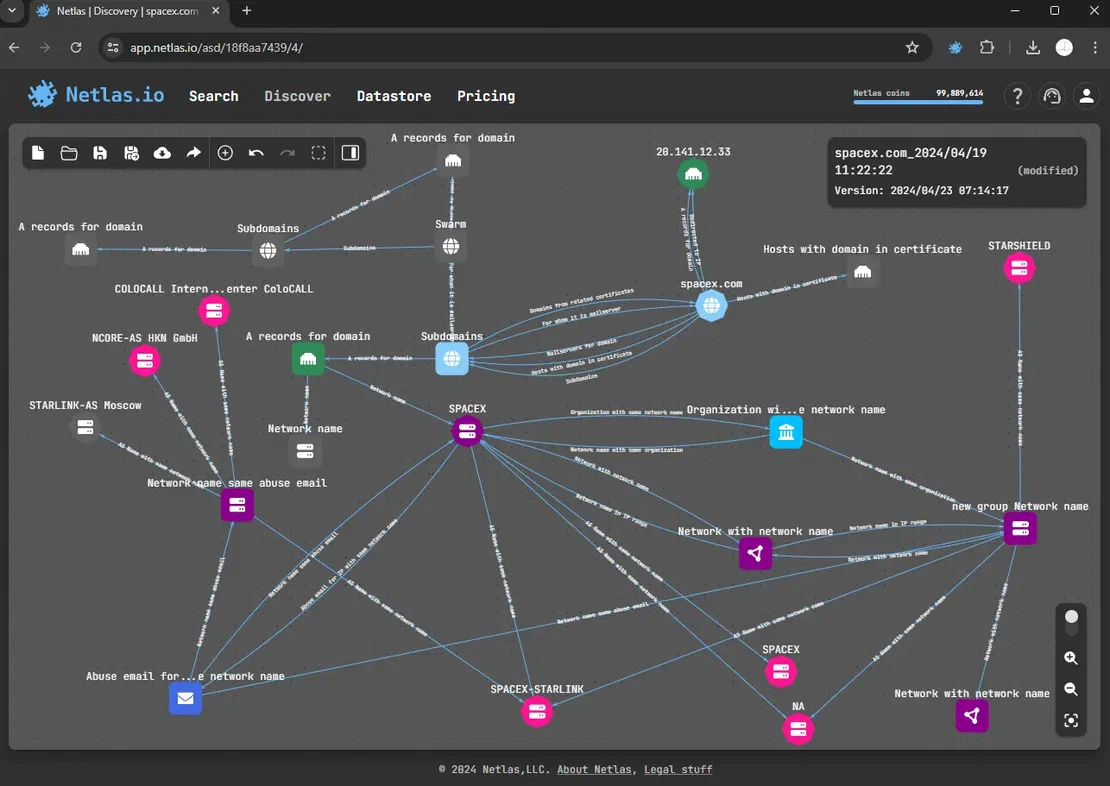
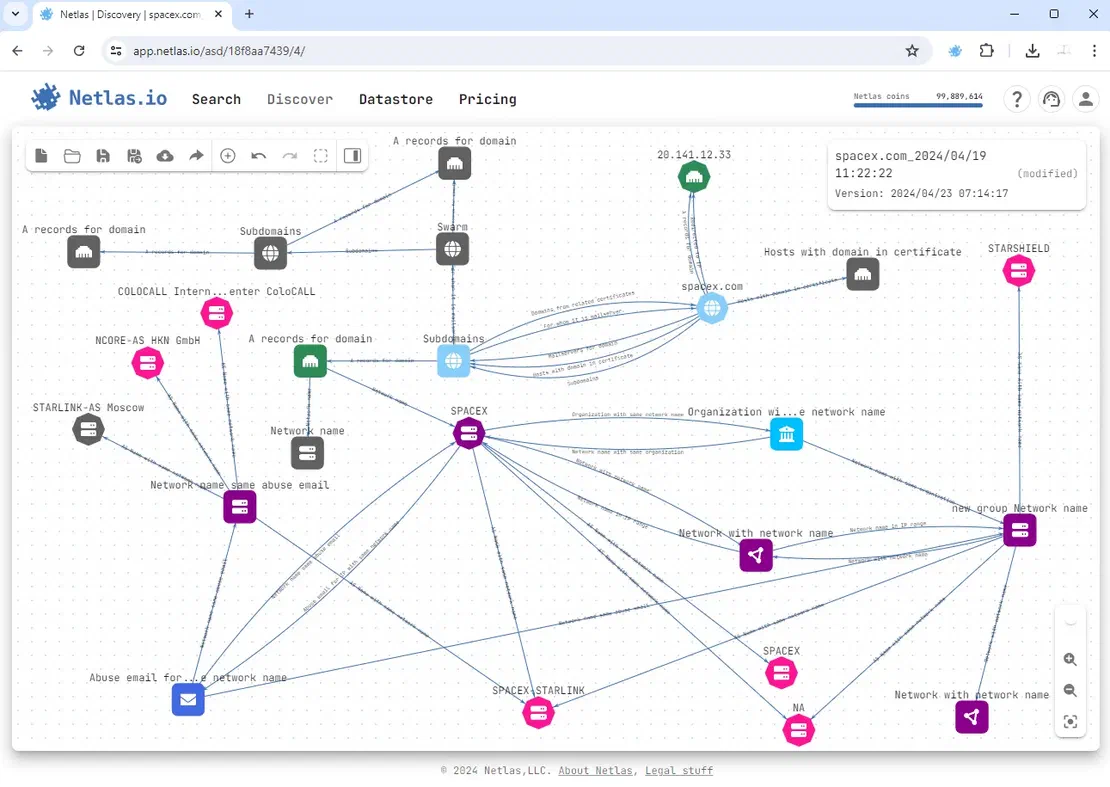
Attack Surface built in Netlas.io Visualized attack surface sample Attack Surface built in Netlas.io Visualized attack surface sample

To create such a surface, you’ll first need to register. After account activation, log in and navigate to the Discover tab.
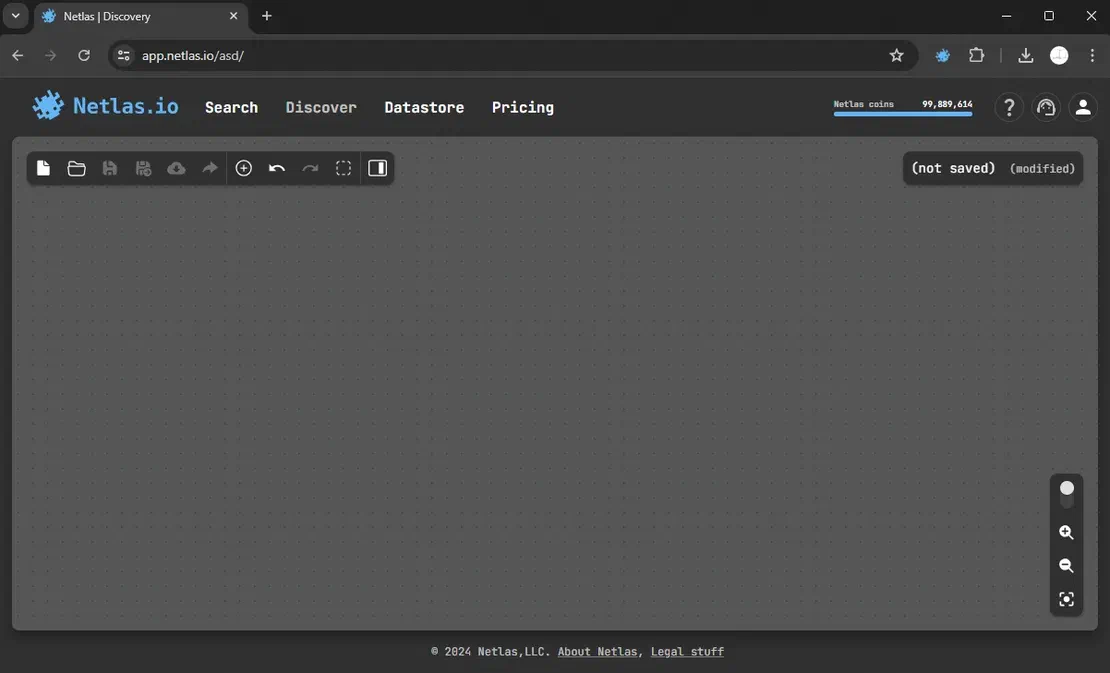
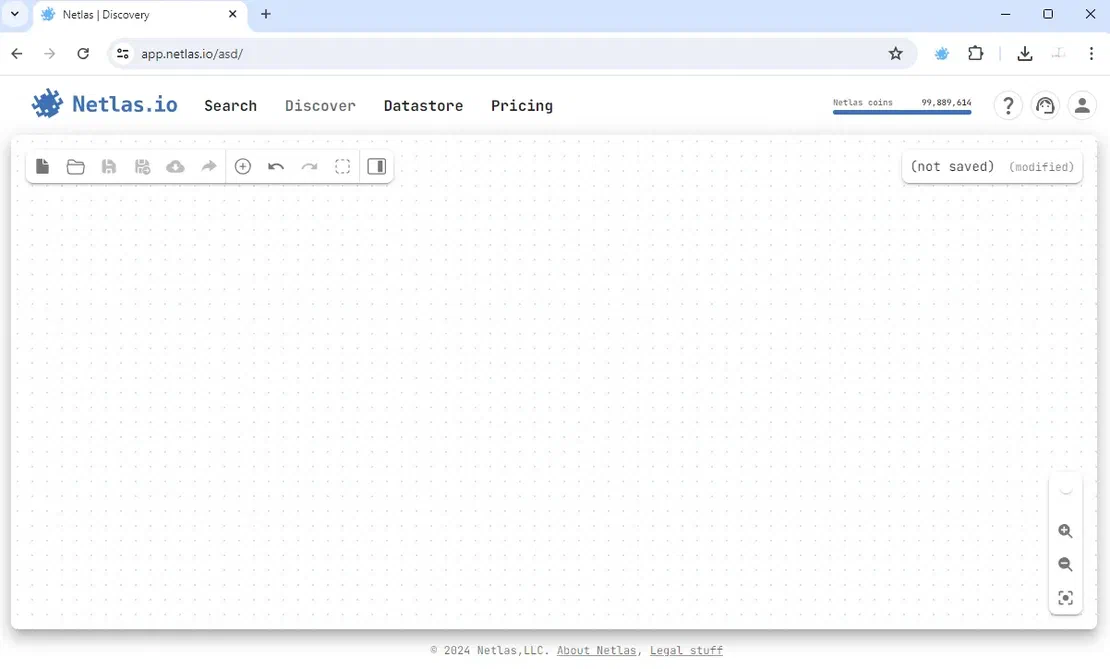
Netlas ASD Tool empty workspace Netlas ASD Tool empty workspace

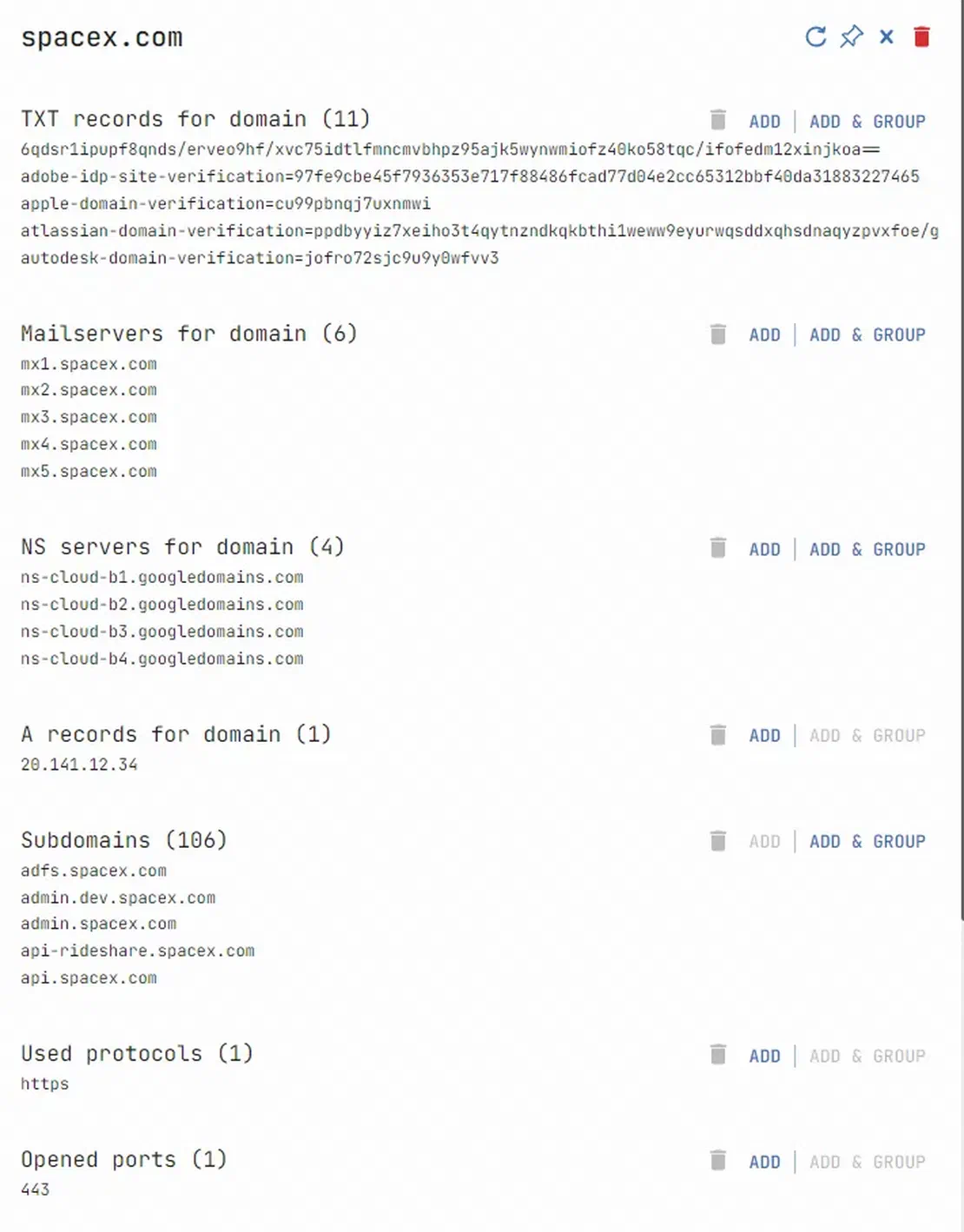
After adding a starting node, click on it to reveal all available search options.
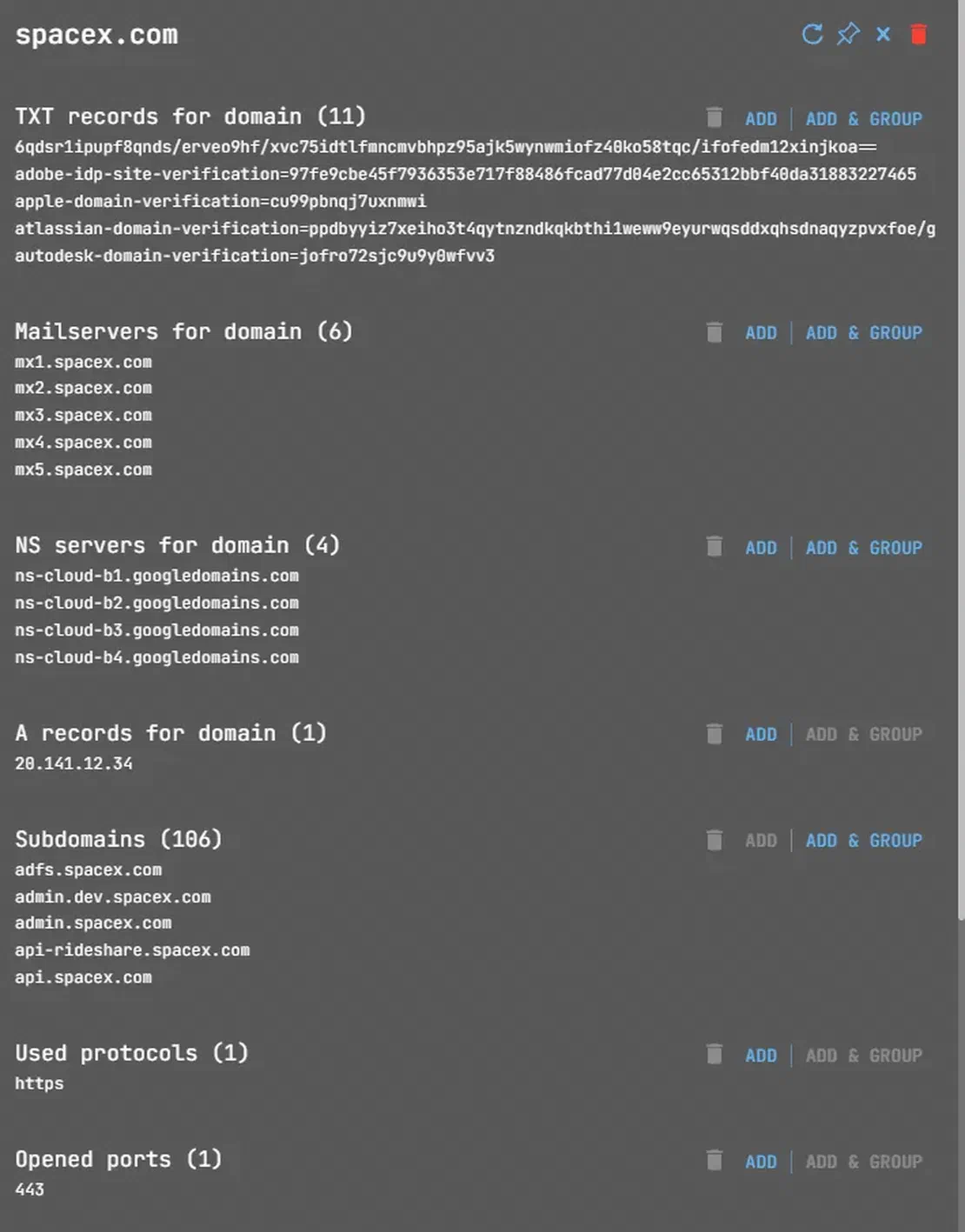
Searches for one node in Netlas ASD Tool Searches for one node in Netlas ASD Tool

Selecting a search option allows you to add corresponding objects to the graph. Multiple results prompt individual or grouped additions. For more detailed information, refer to this help article.
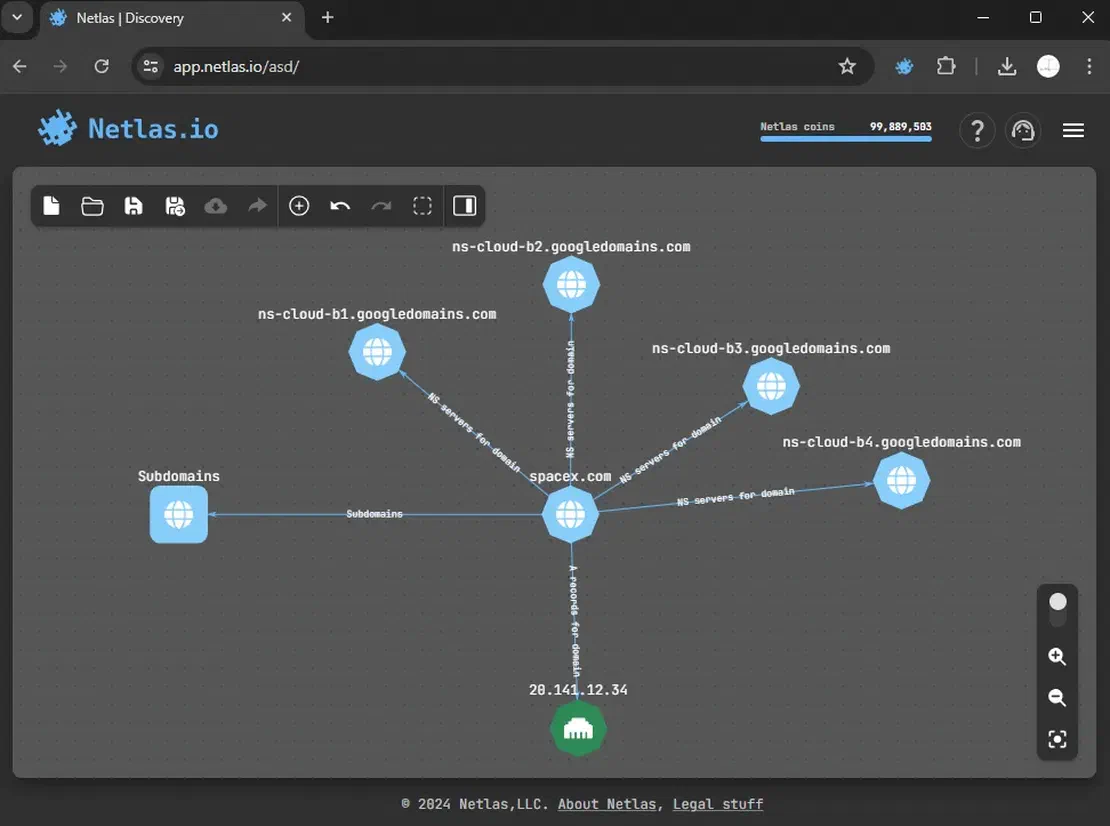
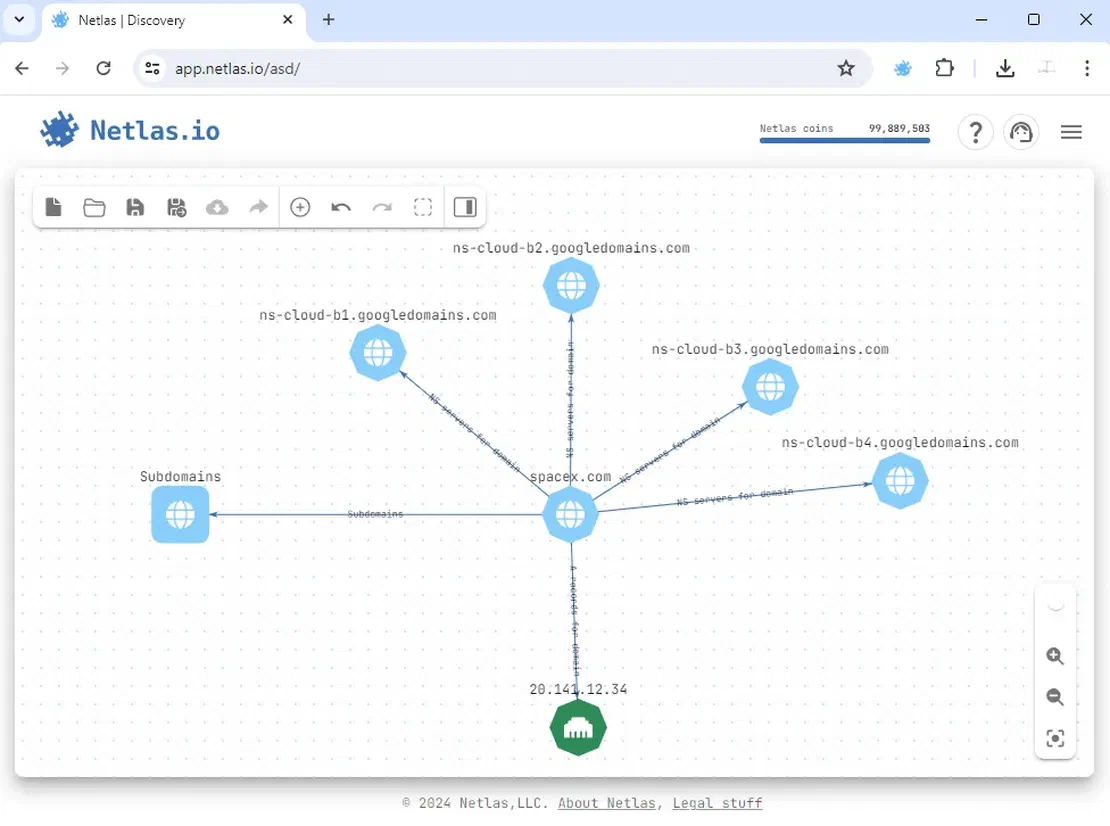
Nodes in Netlas ASD Tool Nodes added to the attack surface as search results Nodes in Netlas ASD Tool Nodes added to the attack surface as search results

Netlas is integrated into several tools, like Maltego and OWASP Amass. This integration lets you use Netlas’s results as extra data in these popular tools.

This powerhouse application transforms raw data into actionable intelligence. By tapping into over 100 official sources and countless unofficial ones, Maltego builds a comprehensive web around any target. Users convert objects with ease, recognizing subtle relationships. For pre-penetration reconnaissance and outcome analysis, Maltego’s unrivaled capabilities make it the go-to choice for savvy investigators.
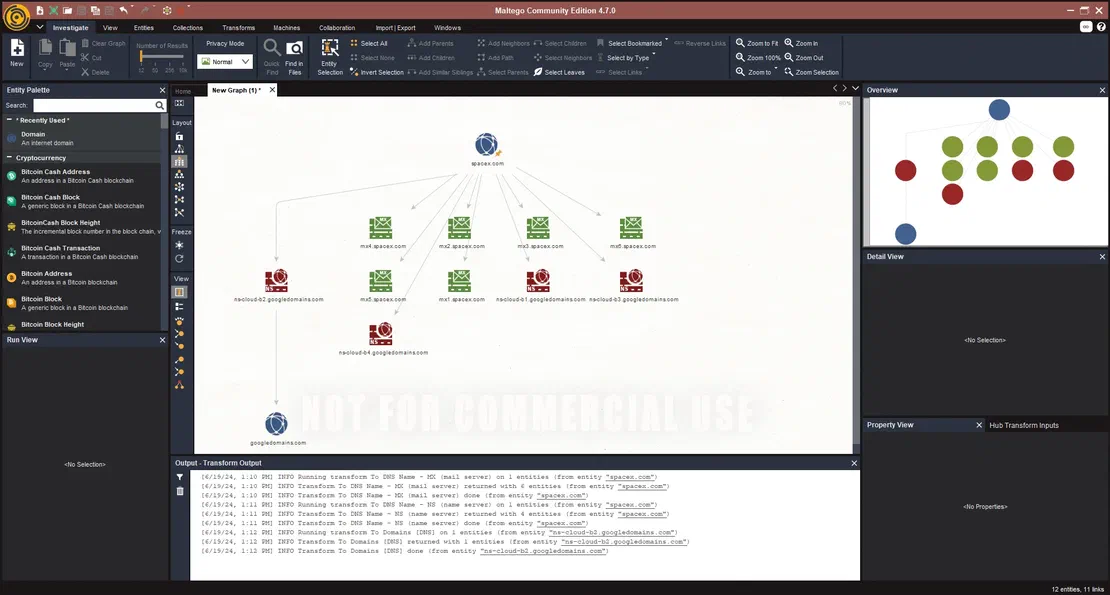
Attack Surface built in Maltego Usage example in Maltego Community Edition

Price proves to be the main obstacle. While a free version exists, it caps graphs at twelve objects. Full functionality demands payment, with some data sources costing extra. Despite its capabilities, the app’s cost structure may deter many potential users.

To begin using Maltego, download the application from its official website and create an account at https://www.maltego.com/. Once installed, open the application and add the desired data sources.
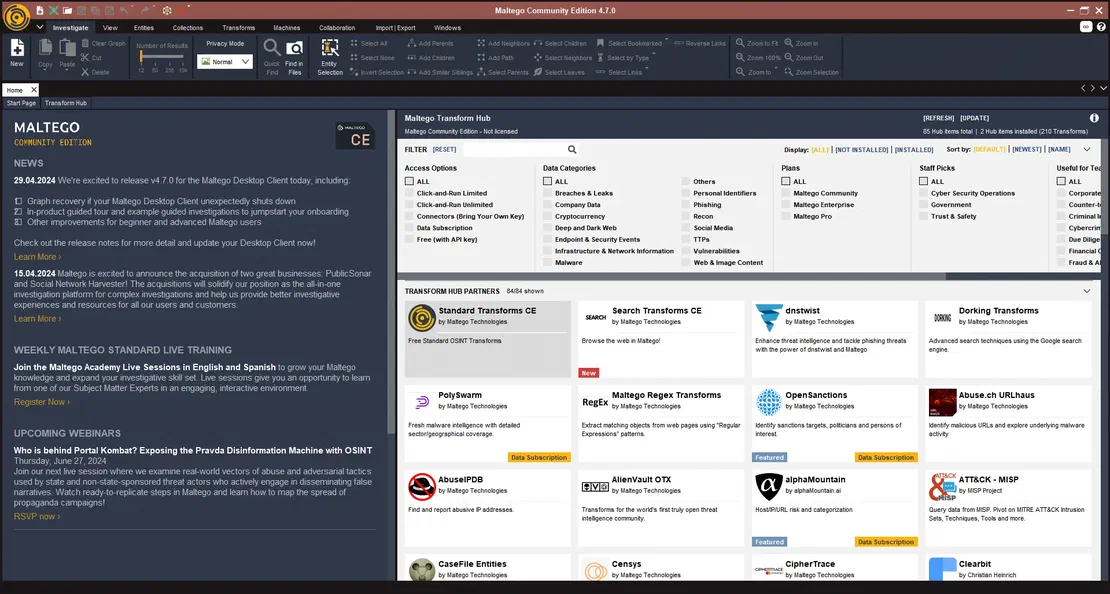
Maltego main page

Lastly, create a new workspace. Navigate to the Entity Palette tab, choose the object of your interest, and begin establishing transformations from there.
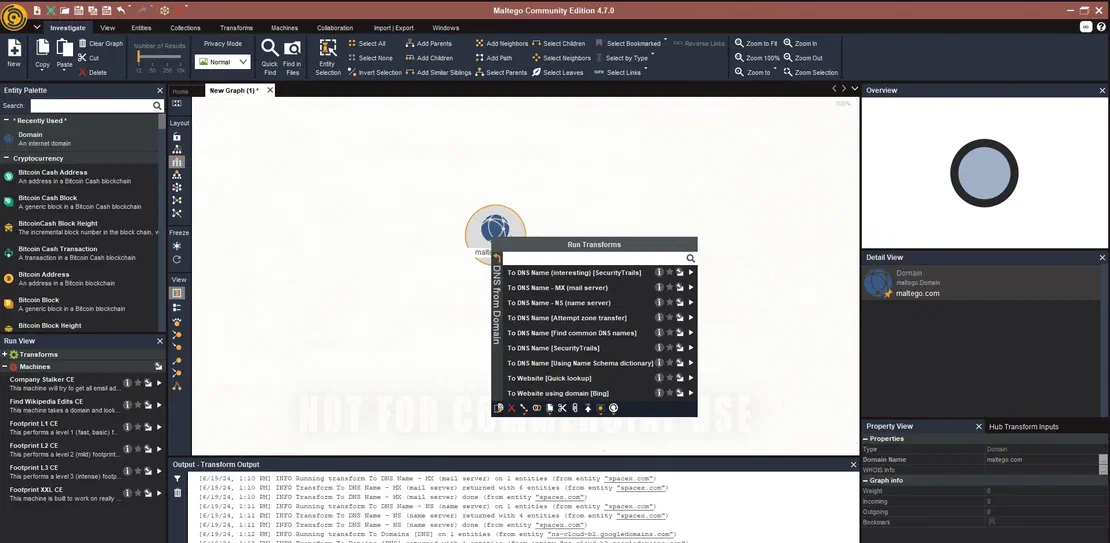
Maltego searches by node

Amass is a reconnaissance tool that simplifies building an attack surface with a single command. Unlike manual object placement, all you need is the root domain and a few specified flags for settings.
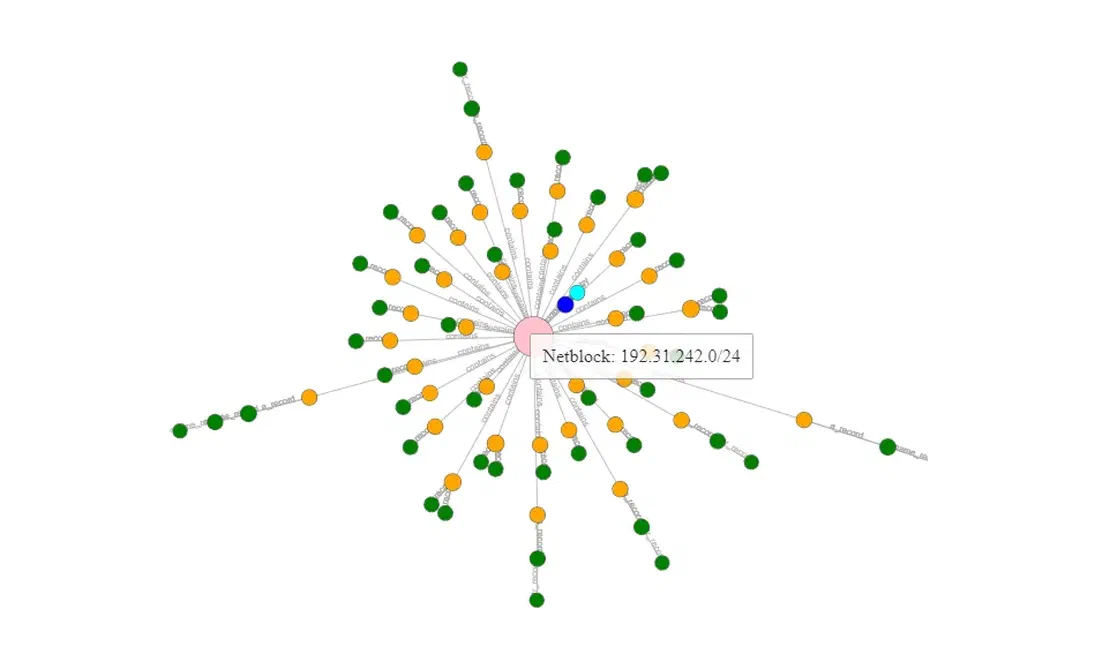
OWASP Amass attack surface Example of an attack surface graph

OWASP Amass operates as an open-source project, meaning it’s entirely free to use. To begin using Amass, you’ll need both the tool itself and auxiliary utilities called OAM Tools. Follow the instructions provided in the official project repository.

Once you set everything up, run a simple command to create an attack surface using the Amass tool:

Here’s the output you can expect (I used the demo version for privacy reasons):
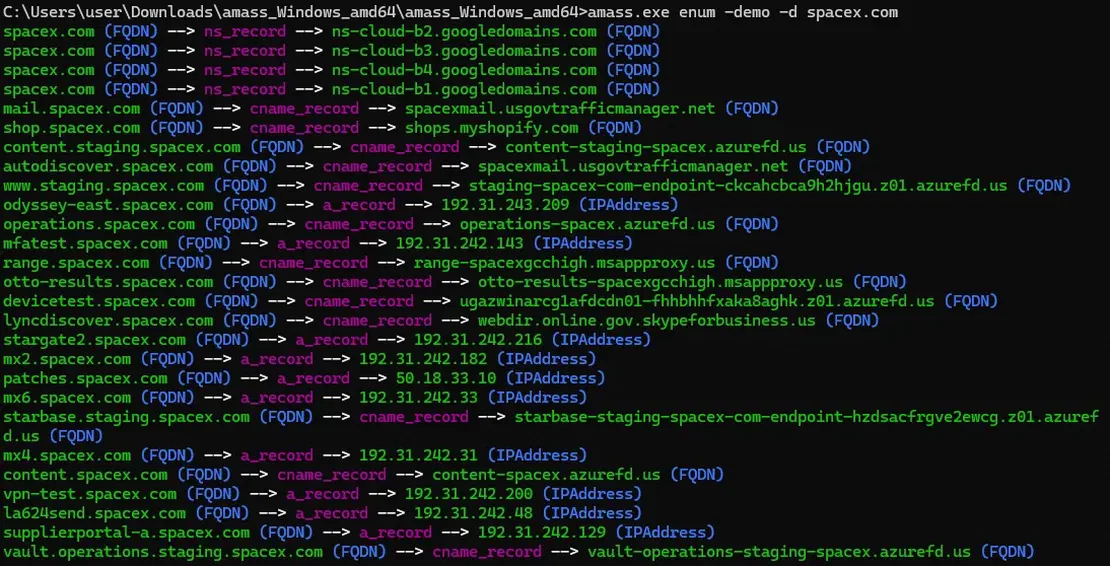
Amass scanning results

After installing OAM Tools, use the oam viz tool by entering the following command:

oam_viz -d3 -d yourTarget

Instead of using the -d3 flag, you can opt for a different rendering flag that suits your requirements. In this case, choosing that flag will create an .html file in your output folder. Opening this file will display a graph depicting the assembled attack surface.
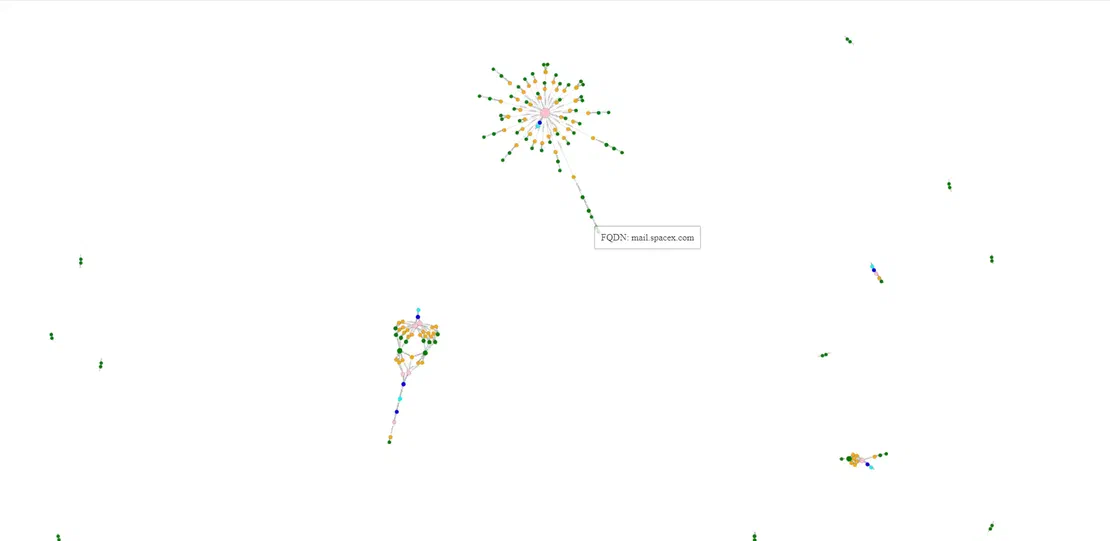
Another OWASP Amass attack surface

The final tool in this lineup is SpiderFoot. It’s an open-source framework for reconnaissance. It lets users scan any target with a single click. They can swiftly construct and visualize an attack surface.
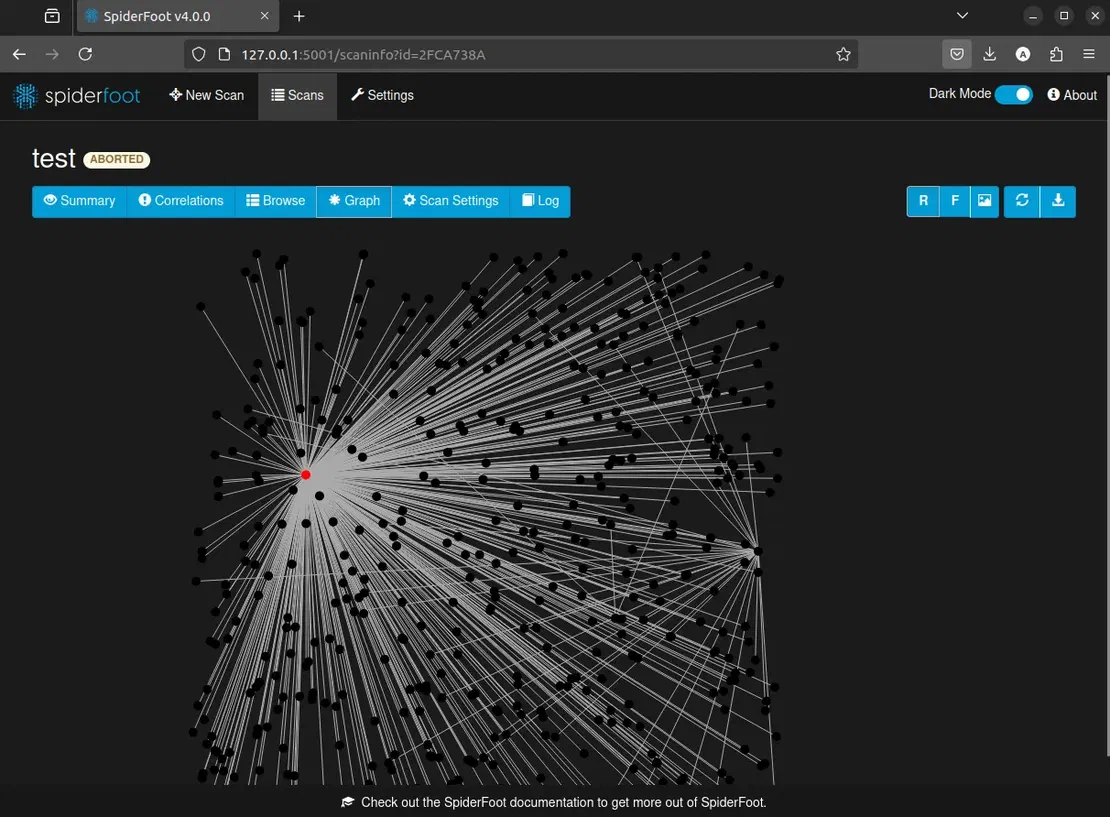
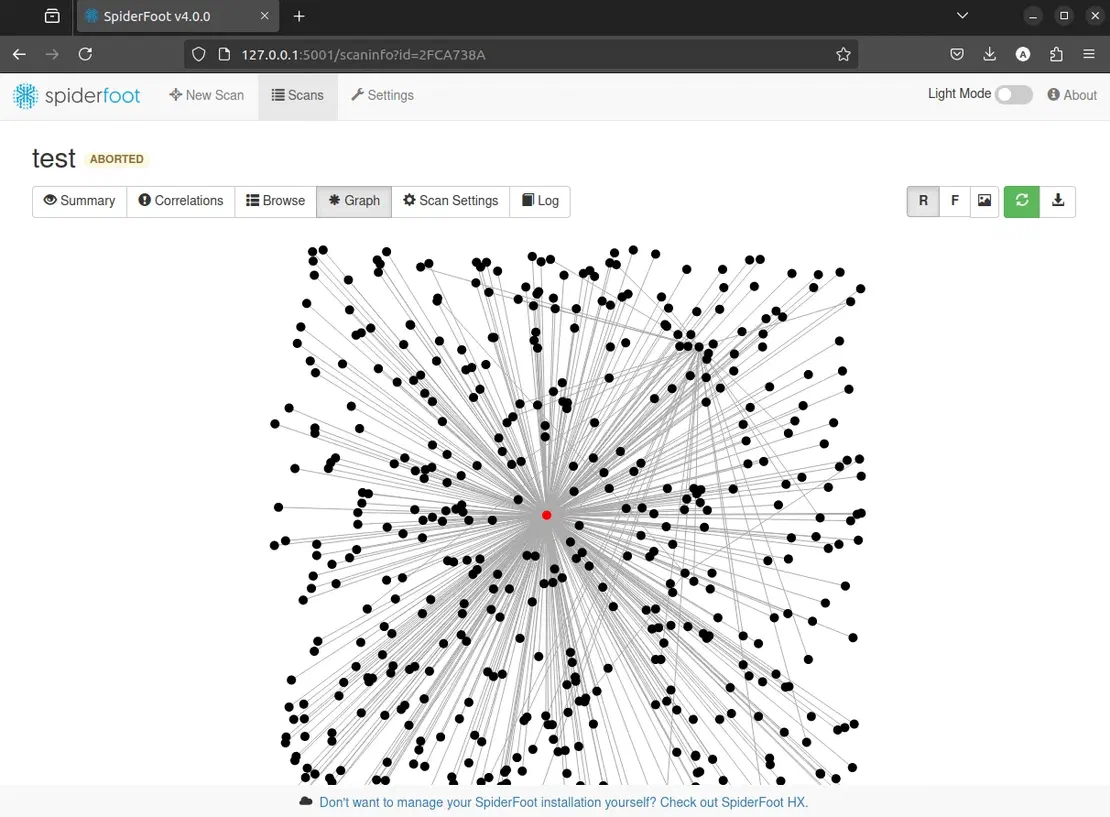
SpiderFoot attack surface SpiderFoot visualization graph

SpiderFoot attack surface SpiderFoot visualization graph

To install SpiderFoot, follow the instructions provided in its official repository. After installing SpiderFoot, run the program and create your first scan following the steps shown in the screenshot.
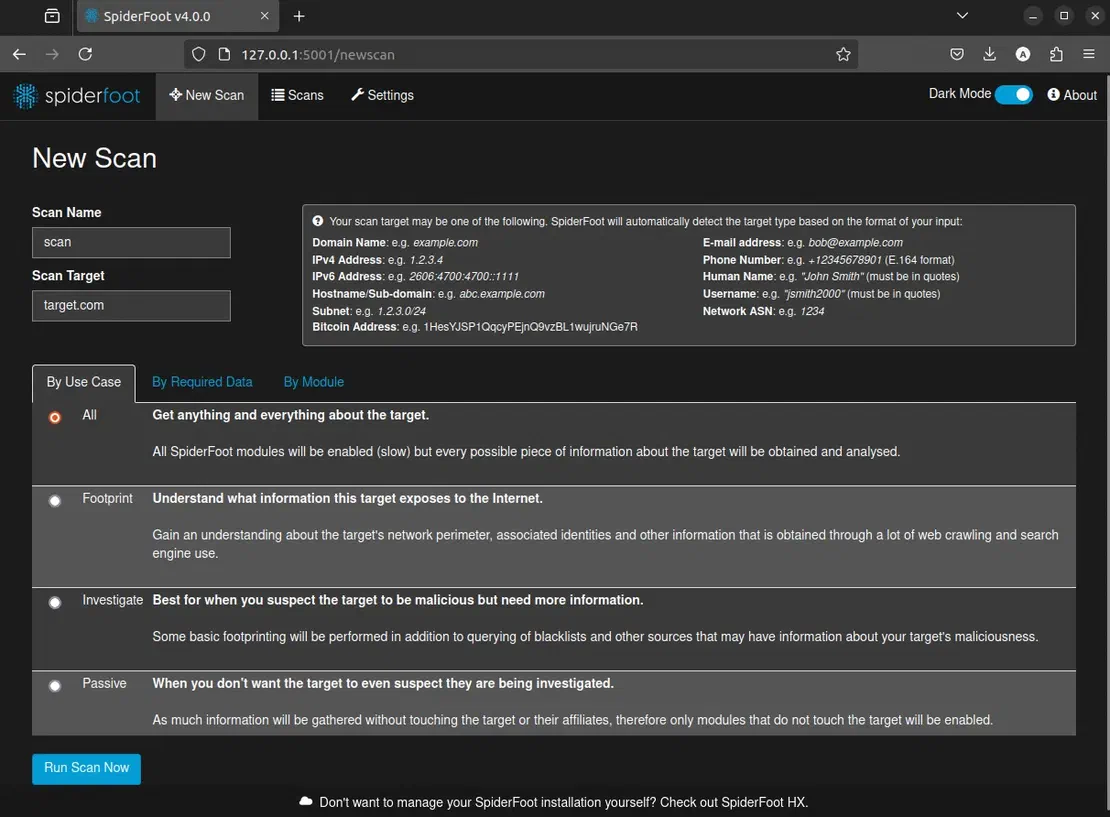
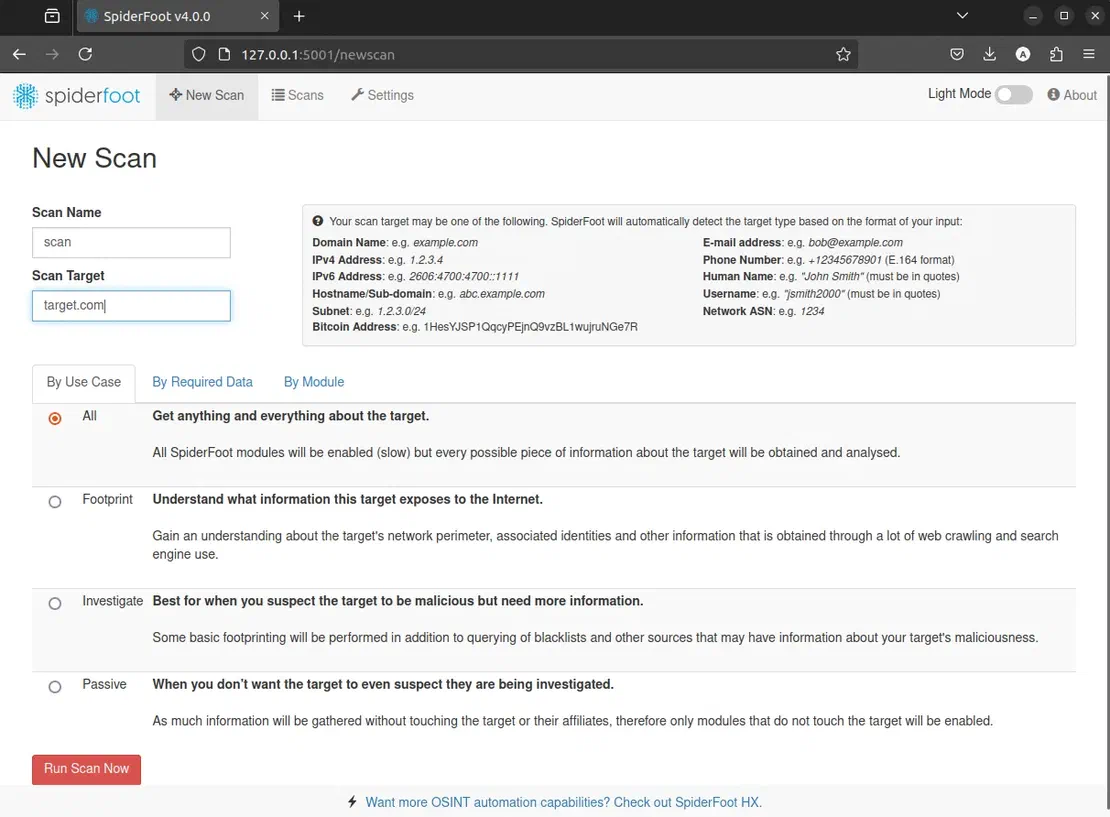
Creating new scan in SpiderFoot

Creating new scan in SpiderFoot

Here, name your scan, specify the target, and set the options. Once everything is set up, proceed to run the scan.
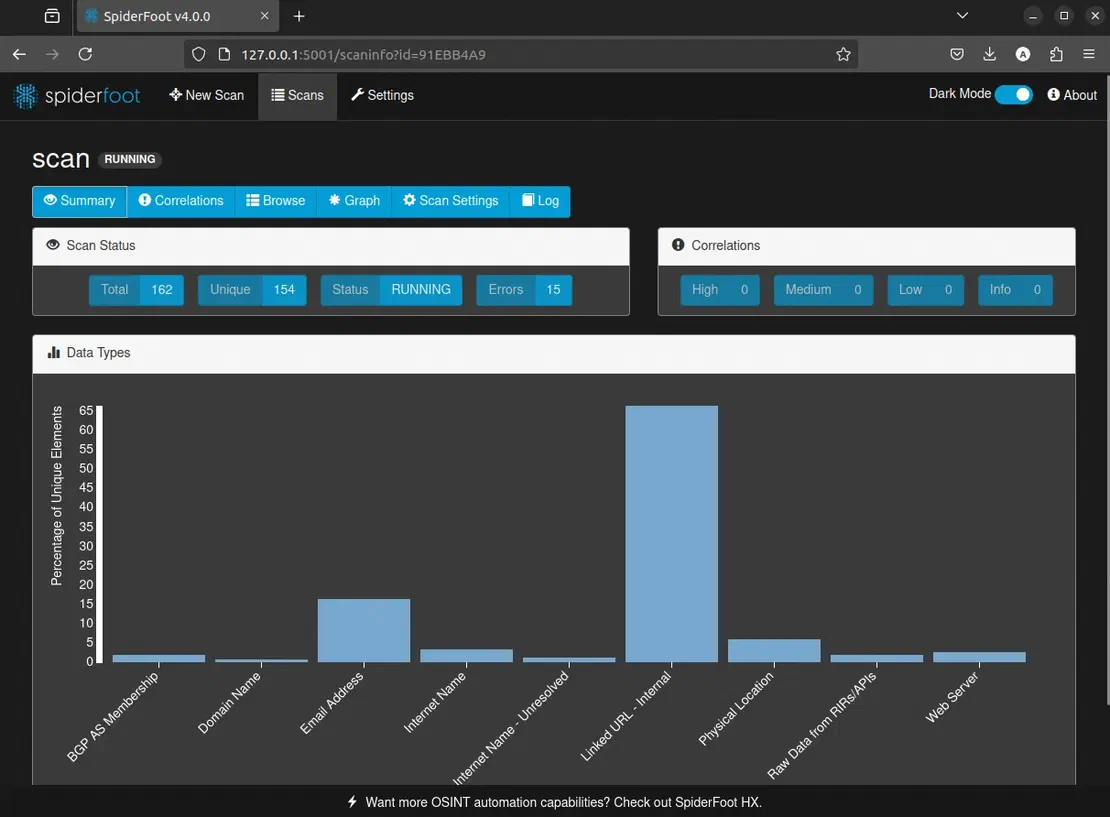
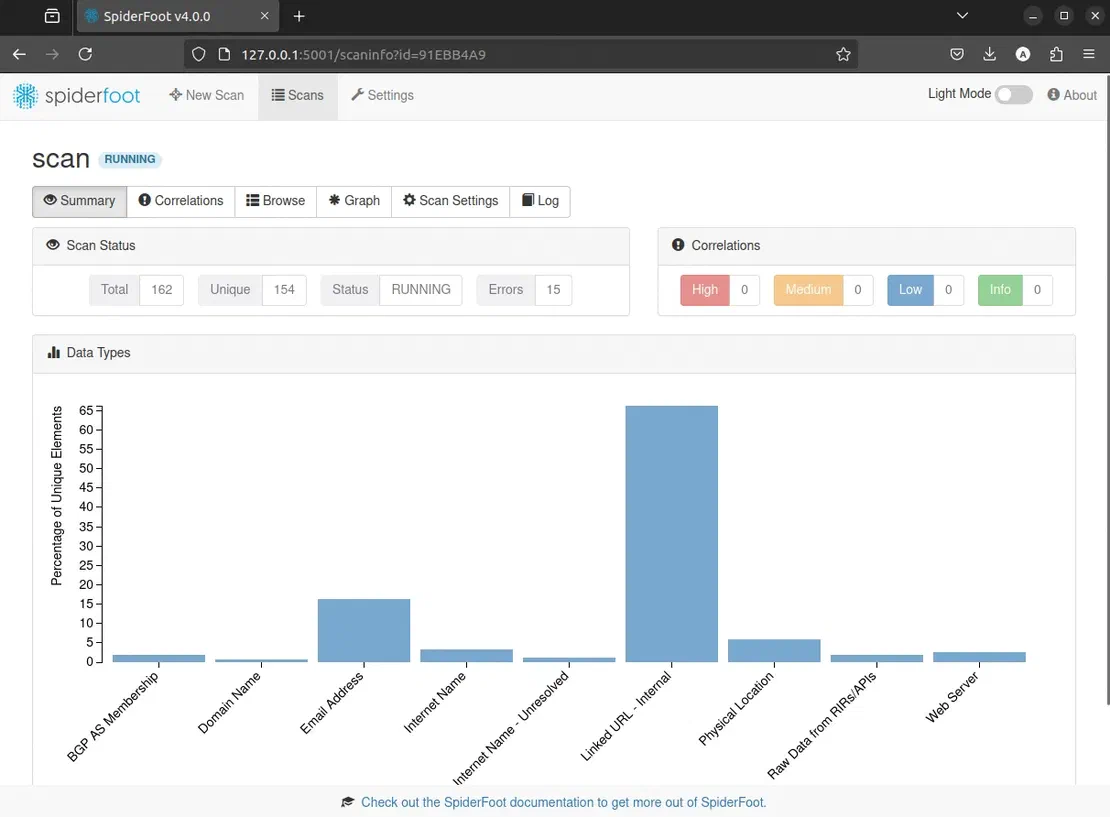
SpiderFoot running scan

SpiderFoot running scan

As the scan runs, new objects will appear in the report, and the graph will grow. You can stop the scan anytime to review the attack surface.

Summary

Netlas.io, Maltego, OWASP Amass, and SpiderFoot are great for attack surface visualization. Netlas excels in tool and data consolidation but relies on proprietary sources. Maltego, though pricier with an outdated interface, provides comprehensive enterprise-level analysis. Open-source enthusiasts may prefer OWASP Amass or SpiderFoot.

Each tool has strengths, catering to different needs in the cybersecurity landscape. Choose wisely based on your specific requirements and resources.

What is your choise

I can show you how deep the Internet really goes

Discover exposed assets, infrastructure links, and threat surfaces across the global Internet.