


As Linux dominates cloud-native infrastructure and macOS becomes the standard for high-value targets in development and executive leadership, the attack surface is no longer Windows-centric. Modern attack playbooks weaponize Living off the Land (LOTL) binaries–pre-installed, legitimate system tools–to blend malicious activity with normal operations and bypass standard detection telemetry.
To address this attack surface, Bitdefender is extending its Proactive Hardening and Attack Surface Reduction (PHASR) technology by adding support for Linux and macOS to its existing Windows hardening capabilities within the GravityZone unified security platform.
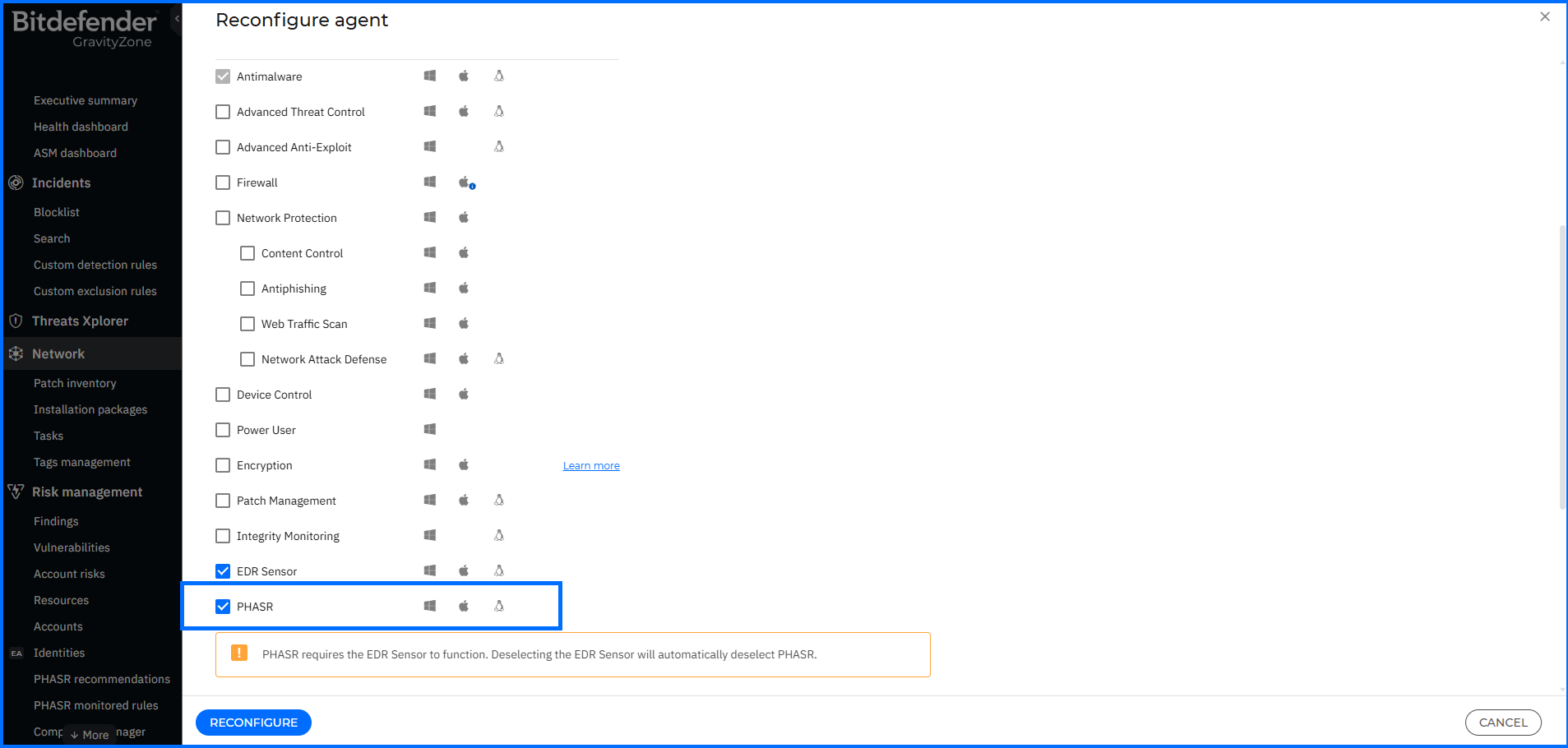
GravityZone PHASR serves as a foundational layer of your prevention strategy, utilizing an AI-powered behavioral engine to transition security from passive detection to active hardening. By continuously analyzing user and application activity, PHASR builds unique behavioral profiles for every machine-user combination. This allows you to identify and close unnecessary entry points and move beyond legacy, static rules to proactively neutralize threats at the moment of origin.
PHASR provides consistent, granular protection across Windows, macOS, and Linux environments when deployed as a component of Bitdefender Endpoint Security Tools (BEST) within the full GravityZone stack. For organizations looking to integrate these capabilities into an existing third-party security architecture, PHASR is also available as a standalone agent for Windows and macOS.
Unlike "one-size-fits-all" security, PHASR implements a seamless and adaptive defense. It provides granular, action-level blocking that selectively restricts high-risk behaviors without disrupting the legitimate use of system tools. For example, on Linux, rather than disabling a utility like shred entirely, you can specifically restrict its capability to modify file permissions for unauthorized write access. On Windows, you can restrict PowerShell from executing encoded scripts or making external network connections while keeping its core administrative functions available.
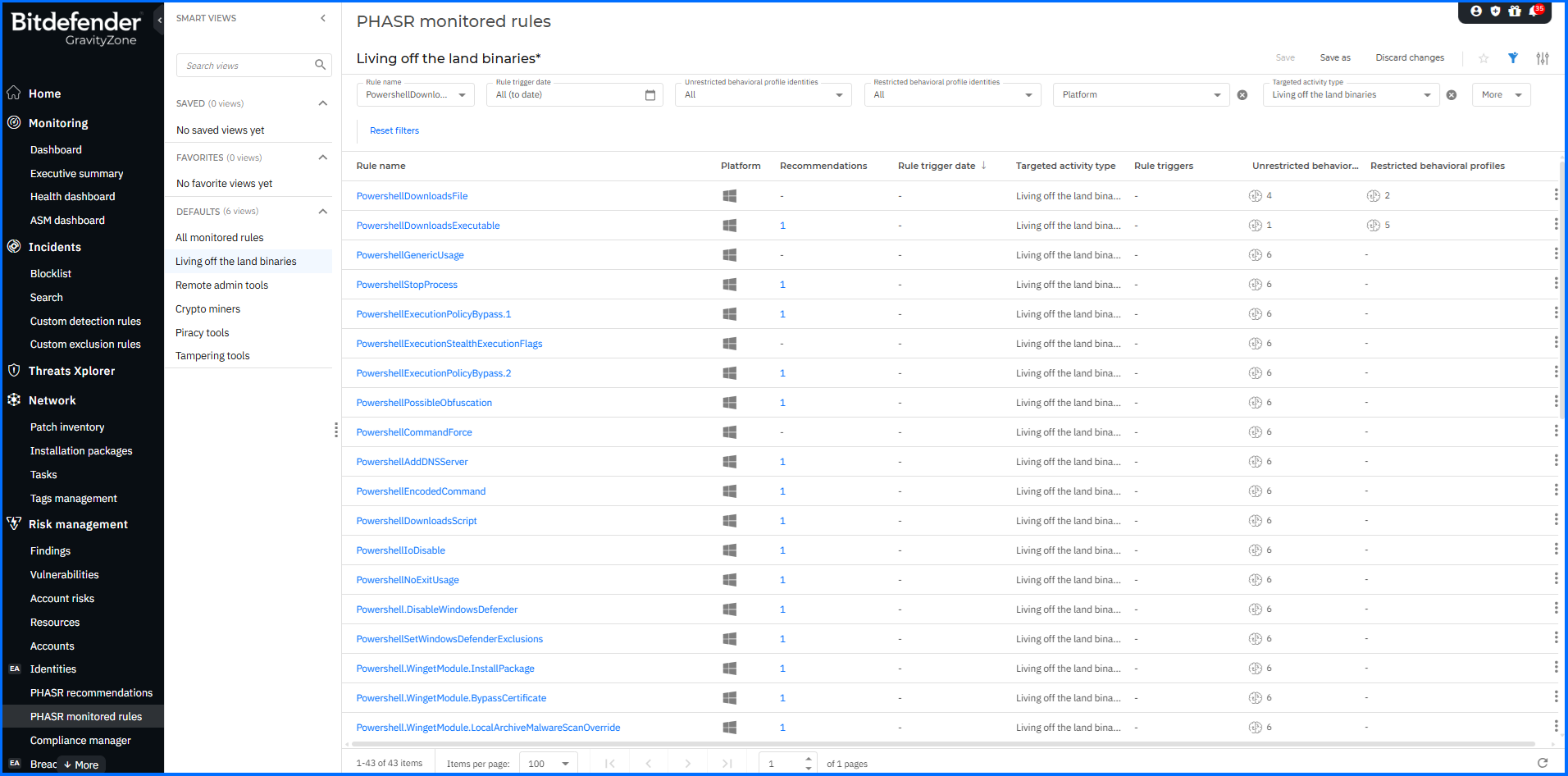
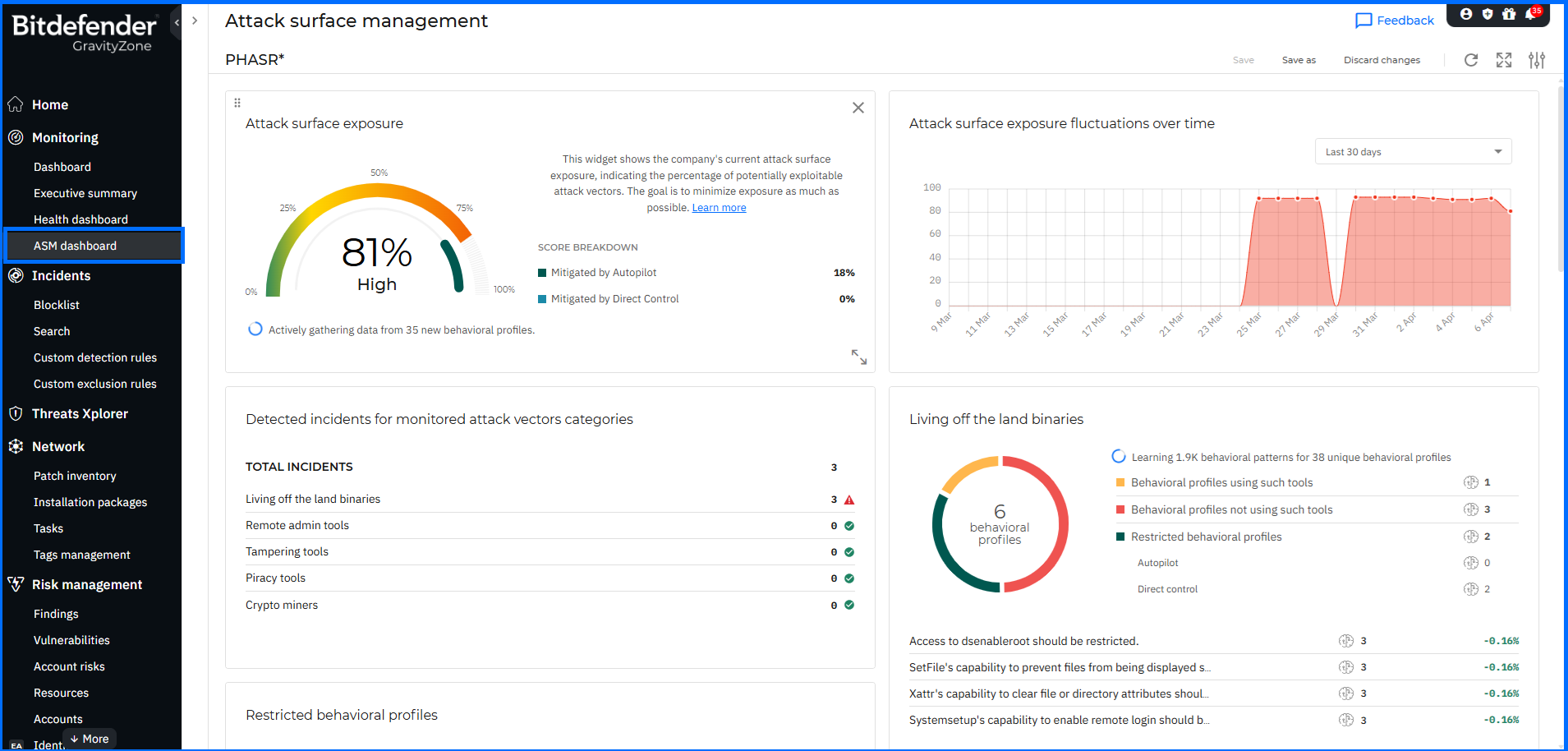
PHASR offers two operational modes to balance automation with administrative oversight. The first mode is Autopilot, which fully automates management of restrictions based on AI-driven behavioral insights. The second mode is Direct Control, which provides actionable recommendations for granular review and manual execution. This allows you to tailor your defense strategy across five attack vectors:
Even if a specific action or tool was blocked by an automated action or manually by you, the Request Access feature ensures business continuity. If a user requires a restricted command or tools for a legitimate task, they can simply request access.
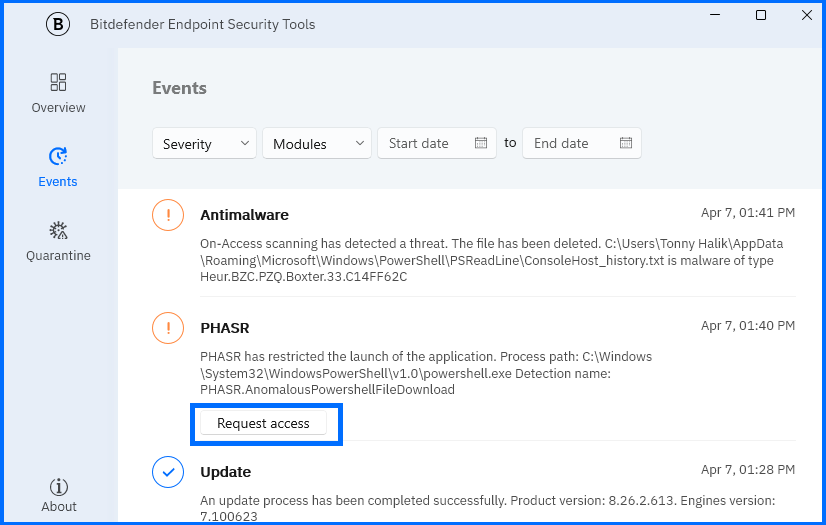
Once you approve the request, access is granted, and PHASR automatically updates the behavioral rules; however, the engine continues to monitor usage patterns for future changes to ensure your attack surface remains as minimal as possible.
To illustrate the impact of PHASR on your defense, let’s examine a practical attack scenario on a Linux system where attackers gain access by leveraging compromised credentials or unmanaged devices. This typically begins with a silent reconnaissance phase where the adversary can use nmap to map the network topology and identify high-value targets.
To ensure they can return even if their initial entry point is closed, they often abuse administrative tools like adduser to create hidden "backdoor" accounts for long-term persistence. Communication can be established through command-and-control (C2) mechanisms like dnscat2, which allows them to tunnel stolen data through standard DNS traffic to evade traditional firewalls.
To cover their tracks and evade forensic analysis, attackers can weaponize the shred utility to overwrite critical logs and forensic evidence, attempting to leave investigators without any visibility. In cloud-native Linux environments, the breach often culminates in resource monetization, where attackers deploy mining software such as cpuminer to hijack CPU resources, leading to degraded system performance and increase the operational costs.
PHASR applies restrictions, either through automated or manual actions, for each of the tools in this scenario as well as to specific actions within each tool. First of all, this reduces attacker pathways into your environment. And secondly, the PHASR restrictions force attackers to "make noise" rather than easily blend in. Even if an attacker manages to "log in," their ability to operate is limited, allowing earlier detection and remediation by security operation centers (SOC) teams like Bitdefender MDR.
Expanding PHASR across the major OS platforms enhances the prevention layer, transitioning your defensive posture from a reactive to a proactive one. It is no longer just about catching an attacker in the act, but about shrinking the attack surface. By blocking utilities such as LOTL binaries, PHASR forces adversaries to exhibit noisy behavior.
Ready to see where your organization stands? Bitdefender offers a free Internal Attack Surface Assessment to help you identify which LOTL binaries and administrative tools are currently creating risk in your environment.
For more information on PHASR and its benefits, please visit the Bitdefender GravityZone PHASR page.
If you prefer a more in-depth and technical understanding of PHASR's capabilities, visit the Bitdefender TechZone.
此内容由惯性聚合(RSS阅读器)自动聚合整理,仅供阅读参考。 原文来自 — 版权归原作者所有。