
惯性聚合 高效追踪和阅读你感兴趣的博客、新闻、科技资讯
阅读原文 在惯性聚合中打开

推荐订阅源

cs.CL updates on arXiv.org
B
Blog RSS Feed
宝玉的分享
宝玉的分享
腾讯CDC
博客园_首页
T
Tailwind CSS Blog
月光博客
月光博客
博客园 - 司徒正美
奇客Solidot–传递最新科技情报
奇客Solidot–传递最新科技情报
M
MIT News - Artificial intelligence
A
About on SuperTechFans
云风的 BLOG
云风的 BLOG
钛媒体:引领未来商业与生活新知
钛媒体:引领未来商业与生活新知
有赞技术团队
有赞技术团队
freeCodeCamp Programming Tutorials: Python, JavaScript, Git & More
大猫的无限游戏
大猫的无限游戏
MongoDB | Blog
MongoDB | Blog
博客园 - 聂微东
V
Visual Studio Blog
H
Hackread – Cybersecurity News, Data Breaches, AI and More
SecWiki News
SecWiki News
美团技术团队
P
Privacy International News Feed
H
Help Net Security
让小产品的独立变现更简单 - ezindie.com
Microsoft Security Blog
Know Your Adversary
Know Your Adversary
Y
Y Combinator Blog
D
DataBreaches.Net
Project Zero
Project Zero
T
The Blog of Author Tim Ferriss
Cyberwarzone
Cyberwarzone
C
Cybersecurity and Infrastructure Security Agency CISA
C
Cisco Blogs
S
Schneier on Security
G
GRAHAM CLULEY
博客园 - 三生石上(FineUI控件)
Cisco Talos Blog
Cisco Talos Blog
小众软件
小众软件
Forbes - Security
Forbes - Security
D
Docker
T
Tenable Blog
S
Secure Thoughts
雷峰网
雷峰网
S
Security @ Cisco Blogs
T
The Exploit Database - CXSecurity.com
The Cloudflare Blog
博客园 - 【当耐特】
Spread Privacy
Spread Privacy
阮一峰的网络日志
阮一峰的网络日志

JPost.com - Opinion | The Jerusalem Post

The in-demand profession at risk of extinction | The Jerusalem Post Lost decade: Haredi men's employment stagnates | The Jerusalem Post How much will the Torah Students Law cost? | The Jerusalem Post The state is not trying to solve the protection racket problem | The Jerusalem Post Compensation of millions of shekels for protection racket victims | The Jerusalem Post How the state will save National Insurance | The Jerusalem Post The pampering of young people in Israel could end in a security disaster | The Jerusalem Post The historic opportunity hidden within the tech layoff wave | The Jerusalem Post The new superpower: The lesson that Israel must learn | The Jerusalem Post Behind the layoff headlines lies a more complex reality - opinion The quiet path for Israeli companies to reach Nasdaq - opinion Victory for the Negev vision: Light Rail will reach gates of the intelligence campus - opinion A strategic miss: R&D is Israel's brain - so why does it develop, manufacture abroad? - opinion Why hi-tech recruitment must evolve: The role of AI in the new hiring landscape | The Jerusalem Post How deepfake scams are costing companies millions worldwide | The Jerusalem Post Are Polymarket, Kalshi illegal? | The Jerusalem Post Forget the robot apocalypse: AI's future is in teamwork, not superintelligence - opinion Barron Donald Trump worth soars via WLFI, Abu Dhabi investment | The Jerusalem Post Cyber 2026: Five trends that will redefine the rules of the game - opinion The printer is already on the wall: The unexpected solution to the housing crisis - opinion A strategic lesson for Israel post Venezuela- opinion | The Jerusalem Post AI revolution-made opportunity: When hi-tech expertise meets financial sector - opinion Israel's North needs a long-term plan, commitment to rebuild - opinion Why gaming is Israel's untapped growth engine | The Jerusalem Post Don’t waste Armis windfall: Invest it in Israel’s future | The Jerusalem Post Roblox and beyond: Keeping kids safe online | The Jerusalem Post Three bets Israel should make to ride the Nvidia wave into the AI age - opinion Bank Hapoalim revives free-share offer | The Jerusalem Post Why you should use publicly-available company printouts | The Jerusalem Post Your Investments: Abraham's example in retirement planning | The Jerusalem Post After war, Israel's next battle is fixing the economy | The Jerusalem Post Airlines return as Israel tourism revives | The Jerusalem Post Israel's financial systems need more language options | The Jerusalem Post Time to start all the tasks that have been put off | The Jerusalem Post Your Investments: Gambling and financial success | The Jerusalem Post Traditional industries key engines of growth in Israeli economy, but lack PR of hi-tech - opinion Israel stocks rallied 50%. How to rebalance for 2026 | The Jerusalem Post Your Investments: Yom Kippur and financial introspection | The Jerusalem Post Beyond the Sparta talk, Israel's unstoppable rise | The Jerusalem Post Tel Aviv Stock Market surging after Qatar strike is ‘rally ‘round the flag’ effect - opinion Your Investments: Estate planning lessons from the Torah - Keep wills fair and balanced - opinion Your Investments: September 1 and resolutions Paradox of Bitcoin’s maturity: The rebel becomes the establishment - opinion Your Investments: Affluence without effort
A tax disguised as profits: The real cost of unregulated interest - opinion
2025-08-23 · via JPost.com - Opinion | The Jerusalem Post
ByYAEL BENVENISTI

It adds up to billions of dollars, euros, or yen. The absolute numbers differ by country, but the story is universal: Banks across the globe distribute staggering sums to shareholders as dividends. These profits rarely emerge from innovation or the creation of real economic value. Instead, they are extracted directly from citizens through inflated interest rates and endless fees – a mechanism that functions like a tax in disguise. The public pays, the banks distribute, and governments collect again through dividend taxation. Citizens shoulder the cost twice, while regulators and policymakers stand aside.

The burden on the middle class

It is always the same groups that bear the heaviest weight: families, workers, and the already strained middle class.

They sacrifice time, stretch their incomes, and absorb constant economic uncertainty. On top of this, they face suffocating loan costs, meager returns on deposits, and opaque fees. Rather than protection, they are met with silence. The result is widening inequality: Those already carrying the burden are precisely the ones being squeezed harder.

Concentrated markets, hollow competition

The problem is not just extraordinary profitability. It is the concentrated structure of financial markets worldwide. Governments boast of reforms designed to “increase competition,” but too often these moves are cosmetic, like giving apples to someone with no teeth. In practice, the public continues to pay high interest on loans, earn negligible returns on savings, and shoulder unjustified fees.
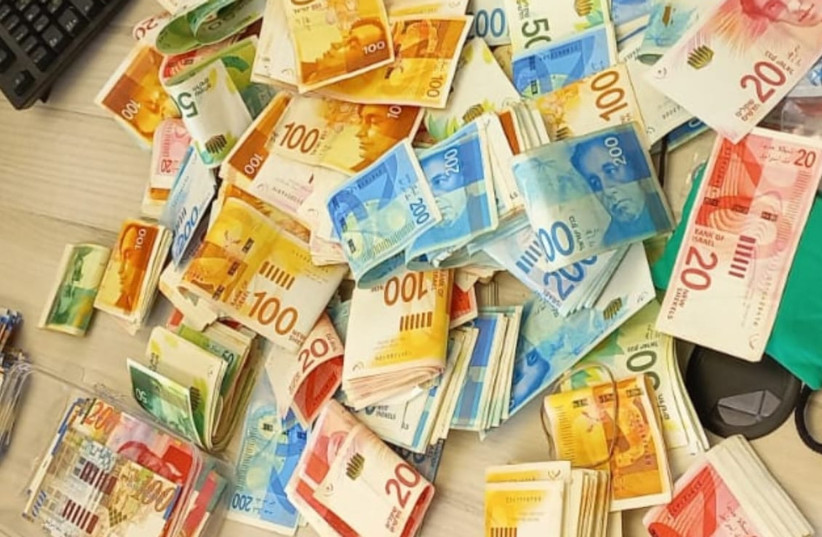
New Israeli Shekels (illustrative).
New Israeli Shekels (illustrative). (credit: ISRAEL POLICE SPOKESMAN)

Even when new competitors enter the market, the incentives remain unchanged: Why would a new bank or fintech drastically lower interest rates or cut excessive fees if the public does not fully understand the terms and does not push back?

The model is too profitable to disrupt, leaving citizens trapped in a system designed to funnel wealth upward. We see this in Europe, where the entry of online banks was expected to transform consumer finance.

Instead, many digital players quickly adopted the same pricing structures as traditional banks, charging high fees on overdrafts, offering minimal interest on deposits, and relying heavily on cross-subsidization from customer inattention. In the United States, too, despite dozens of “challenger banks,” the gap between what banks earn on lending and what they pay on savings remains enormous. New players promise innovation, but when the public does not demand better terms, they align themselves with the old model rather than challenge it.

The financial literacy gap

This reality underscores another deep divide: financial literacy. When citizens lack the tools to understand basic financial concepts or compare banking products, they remain dependent on the very system that exploits them.

Governments, unfortunately, often have little incentive to change this. A financially passive public makes it easier to collect taxes and fees without broad resistance. For states, it is more convenient to benefit from taxing dividends than to demand fair competition or invest seriously in financial education.

The illusion of responsibility

Banks respond to criticism with grand declarations of “standing alongside the public,” by suspending fees for a short period, easing payments temporarily, or launching campaigns wrapped in the language of solidarity. Yet behind the slogans, most of these measures are narrow, temporary, and filled with conditions. They serve more as brand polishing than real relief. Meanwhile, profits continue to flow, and inequality deepens.

What must change

The solution requires two parallel efforts. First, regulation: setting clear ceilings on interest rates and fees, mandating fair interest on deposits, simplifying financial language, and enforcing transparency in every transaction. Second, financial education: equipping citizens with the tools to understand, compare, and choose wisely. Without both, talk of “competition” will remain little more than an empty slogan serving the strong at the expense of the weak.

The question is not whether this system can be changed; it can. The real question is whether decision-makers have the courage to challenge entrenched financial power. As long as the preference is to protect extraordinary banking profits rather than the public, citizens worldwide will continue to pay the hidden tax once to the banks, and again to the state.

The writer is deputy CEO of InsurTech Israel.

Follow us on Google