
Fruit and vegetable prices rise year after year, and it appears the Agriculture Ministry is ignoring a major failure that allows growers to control the market and set prices.


Once upon a time, there was a land flowing with milk and honey, about which toddlers and children are taught, a land of the seven species mentioned in the Book of Deuteronomy regarding the fertility of the Land of Israel promised to Abraham in the Covenant between the Parts: A land of wheat, barley, grapevines, figs, pomegranates, olives, and dates. Once, there was an abundance of locally grown fruits and vegetables at prices affordable to all: Tomatoes, cucumbers, fresh lettuce, apples, onions, garlic, pomegranates, potatoes, dates used to produce date honey, oranges that Israeli settlement boasted of and marketed under the JAFFA brand, plums, and grapes. No longer. Prices have soared in recent years because the agricultural sector was neglected, and along with it, the land upon which agriculture sits to preserve the Land of Israel was abandoned, at times in favor of the land-hungry Arab sector, primarily in the Galilee. Grapes, plums, and even apples have become a luxury for many middle-income families among the population.
In 1950, with the establishment of the state, during the massive wave of immigration of refugees from Europe after a war that brought destruction and the Holocaust, along with immigrants from Islamic countries, most of whom were displaced due to the declaration of the State of Israel, there were many working hands, even more mouths to feed, and agriculture flourished. It accounted for 16% of output and employed 65,000 to 70,000 people, who also constituted 16% of total employment. In 2000, agriculture's share of output dropped to 2.1%, and in 2024, agriculture accounts for only 0.9% of output. The number of employed persons decreased in 2024 to 0.78% of total workforce in the economy, about 30,000 to 35,000 workers.
If you look at the roadsides, you will notice heads covered with a Thai hat featuring a neck guard with particularly wide brims to cover the nape and neck, or a legionnaire-style hat with fabric flaps. Alongside the Thais, whose numbers will continue to rise by tens of thousands of workers, it should be recalled that agriculture has become heavy on technology, mechanization, and automation that require fewer working hands. The success of high-tech swallowed talented young people just as it swallowed young people from other industries and services, and naturally, agriculture's share of output declined. Israel's population is still growing at the highest rate among industrialized and advanced Western countries, an annual growth of 1.6% to 2% per year between 2000 and 2024, and even after the wave of emigration from Israel, population growth still stands at 1.1% compared to about 0.4% in OECD countries. Conversely, agricultural output is shrinking. Real agricultural output in the five years spanning 2018–2022 was 4.5% lower than in 2000, while the population grew by 9.7% over the same period. The immediate result: Between 2018 and 2022, fruit and vegetable prices rose by a cumulative rate of about 16%, nearly double the increase in the consumer price index over that period.
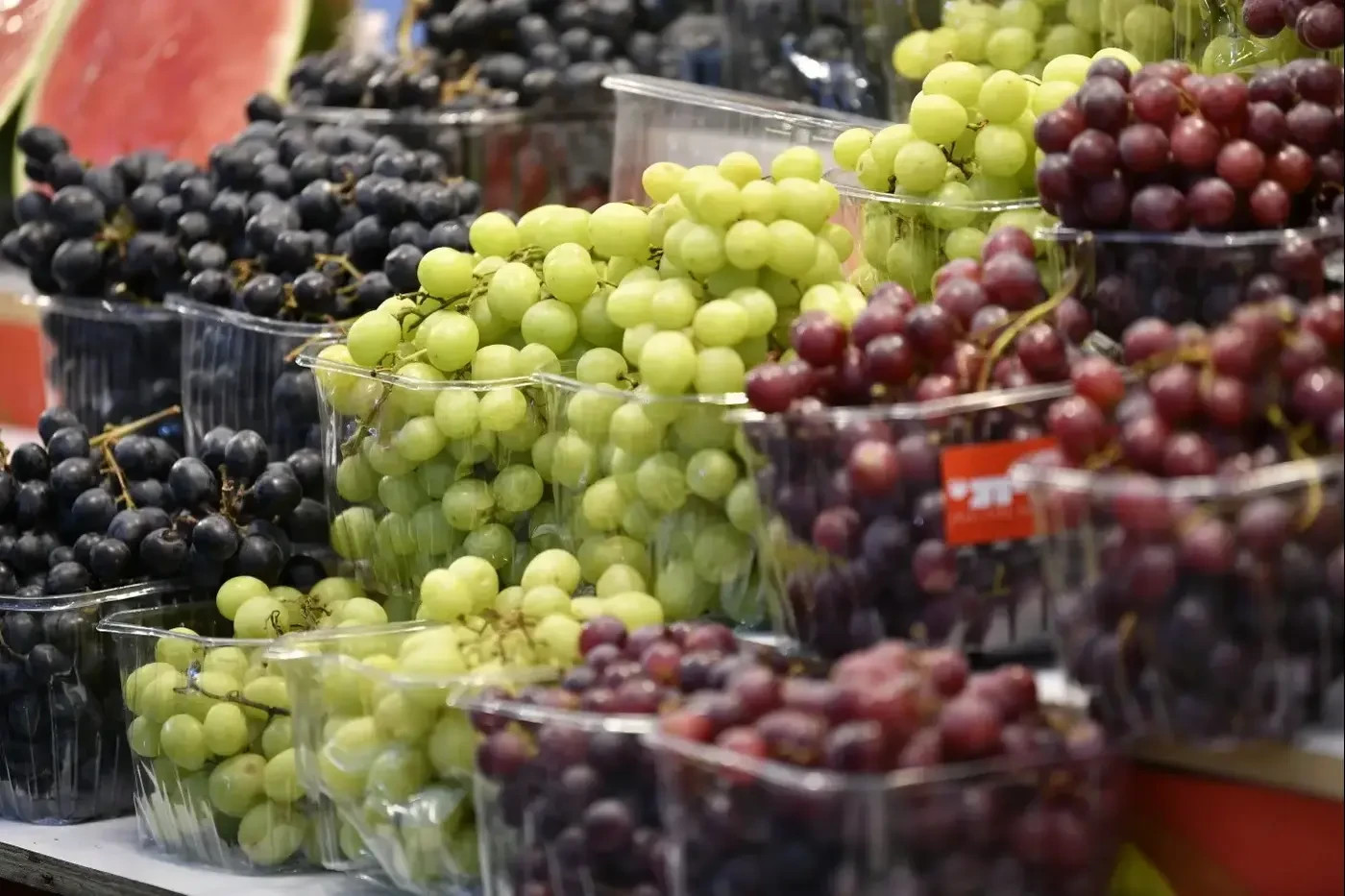
Prices of vegetables, and especially fruits, are rising steadily. Grapes are expensive during most months of the year, so much so that for some children, they appear only in illustrations and pictures in textbooks. Tali Grapes is estimated to account for about a third of all table grape production and marketing in Israel. Tali Grapes – the commercial name of the agricultural cooperative association of Moshav Lachish – holds such a large share of the table grape market that it ultimately has the power to dictate the price to the consumer in the market. Were it operating in another field in the Israeli economy, the Competition Commissioner might have examined the actions of the cooperative association of Moshav Lachish. However, Tali Grapes is not declared a monopoly and therefore is not breaking the law.
Under the Economic Competition Law, an agricultural exemption exists for growing and marketing agricultural produce, which allows for price coordination and centralized marketing of agricultural produce, all without it being considered a "restrictive arrangement" or an illegal monopoly. Is there competition from abroad? From where does the Agriculture Ministry permit grape imports in 2026? Only from one distant place: South Africa. A smart move for Israeli grape growers and bad for Israeli residents, is it not? Under these conditions, it is no wonder that the output price index for grapes rose by 88.5% from 2017 to 2024!
If there are no grapes, perhaps we will eat cucumbers? Have you asked yourselves why cucumber prices are so expensive most of the year? Very simple: In Moshav Ahituv, located in the Hefer Valley, they grow 70% of Israel's cucumbers. This allows them to dictate the price to the urban consumer, who views the cucumber as though it were a hard-to-obtain vegetable. No complaint has ever been filed against Moshav Ahituv for monopolistic behavior, even though it exceeds the threshold of 50% market control under Israeli law. The argument is that the moshav consists of many separate farmers, so it is not a monopoly. Are legislators blind? Does the Agriculture Ministry not notice the absurdity of such vast concentration in the hands of a single moshav, even if it consists of many moshavniks?
To reduce the power of Moshav Ahituv, the Agriculture Ministry publishes guidelines regarding assistance for anyone seeking to establish cucumber fields outside the Hefer Valley. And what happens if there is a frost in the Hefer Valley, or a disease striking the crops, or bad weather, say, hail for hours on end? This is poor risk management by the Agriculture Ministry, which boasts the title of "food security." It was bad enough in the past when cucumber imports from Turkey served as a regulator, but the Turks have been boycotting Israel for several years now. Will the Agriculture Ministry wake up to recruit additional import sources? Import from Jordan is insignificant and sometimes encounters warnings of vegetable diseases. The Agriculture Ministry requires approval of the growing location to ensure that sewage water is not used for irrigation. Theoretically, the Agriculture Ministry permits importing cucumbers from Cyprus, Greece, Poland, and Hungary. Have you found them in the markets? I haven't. What to do? Pay more and more in Israel, which has turned fruits and vegetables into luxury items. Under these conditions, what wonder is it that the output price index for cucumbers rose by 50.7% from 2017 to 2024, according to Central Bureau of Statistics data?
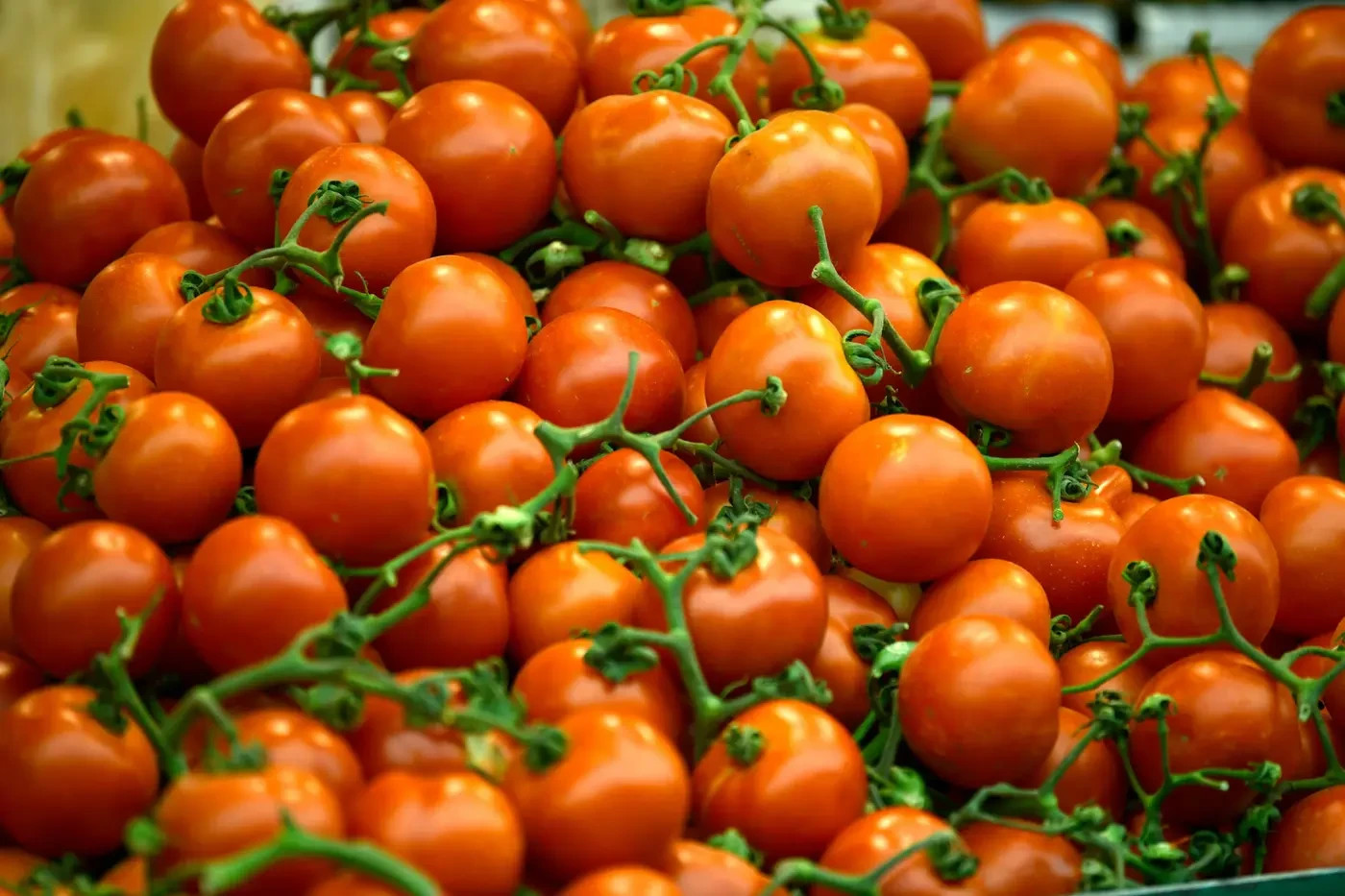
By the way, perhaps any entrepreneurs among the readers want to import tomatoes, whose prices often skyrocket, even though competition there is greater than among grapes and cucumbers. Importing tomatoes is permitted from countries from which transport is difficult, and according to the Agriculture Ministry, tomatoes can be imported – in addition to nearby Jordan, with reasonable growing approval – mainly from distant countries, including Ukraine, Azerbaijan, Albania, Georgia, Poland, and Moldova, but transport from there is expensive and unreasonable. Perhaps from Cyprus, and even from Romania and Hungary. In practice, the output price index for tomato production rose by 55.3% from 2017 to 2025.
Let us return to overall agricultural output. In 2023, output rose, specifically in the year of war that began in October. Subsequently came the call-up to reserve duty and the entrenchment of the war on Israel's borders, bringing with it enemy damage, the destruction of agricultural lands in the Tkuma region, and damage to the western Negev, which is Israel's fresh vegetable basket, as well as northern border communities, where poultry farmers stood bravely against enemy shelling. All this led to a 12.2% drop in agricultural output across all fields in 2024 compared to 2023, and an 8% drop compared to average agricultural output in the years 2018–2022. Thanks to the courage of the northern poultry farmers, who worked tens of meters from the border and secured eggs for Israelis, the output price index for table eggs in 2024 was still nearly 16% higher compared to 2017. The output price index for broilers rose by 41%, and the output price index for chicks rose by 27%. The output price index for turkeys, which you eat in shawarma joints, rose by 41%. The output price index for fish rose by 70%. The output price index for milk from Israeli dairy farms, which are forced to streamline because only the large ones can survive under government regulation, rose by 21% in 2024 compared to 2017. Despite this, an elusive cheese shortage persists. The output price index for hive honey yield rose by 17%, and the beef output price index jumped by 50%. The peak increase in the output price index for the agricultural sector is pigs, with a 70% surge, according to fresh CBS data.
Now there is a certain rehabilitation of farmers in the stricken area, to whom we owe much and do little for. The economic crisis brought a crisis to farmers' families: Loss of land, a severe labor shortage, and damage to infrastructure that reduced the economic power of family farms. The prolonged evacuation from home brought relentless emotional stress, and divorce and separation rates among these residents in frontier areas soared. Income tax and property tax compensation usually arrived late, and in any case, what solution can tax authorities offer for a unraveling marriage?
Immediately upon the formation of a new government following the elections, order will need to be brought to the agricultural sector: Streamlining the agricultural sector through large, generous government grants – not to sectors with monopolistic characteristics – to lead to greater supply and reasonable prices for all residents of Israel. Monopolistic power must be declared in several fields, such as grapes and cucumbers, followed by exposing the sector, which will streamline within two to three years, to competing imports from locations near Israel as well. The slogan of the new government should be food security at reasonable prices, today, tomorrow, and over the years, for the health of the entire public. Furthermore, more local production and more local competition, especially against the backdrop of the embargoes that some countries in the world tend to impose on Israel. At the end of the agricultural year this coming Sukkot, the Harvest Festival, we will celebrate gathering the yield, fruits, wine, and oil from the threshing floor and the winepress. L'chaim.
此内容由惯性聚合(RSS阅读器)自动聚合整理,仅供阅读参考。 原文来自 — 版权归原作者所有。