
惯性聚合 高效追踪和阅读你感兴趣的博客、新闻、科技资讯
阅读原文 在惯性聚合中打开

推荐订阅源

The Register - Security
云风的 BLOG
云风的 BLOG
U
Unit 42
F
Fortinet All Blogs
The GitHub Blog
The GitHub Blog
cs.CV updates on arXiv.org
D
Docker
Cyber Security Advisories - MS-ISAC
S
Secure Thoughts
Hacker News: Ask HN
Hacker News: Ask HN
Vercel News
Vercel News
S
Security @ Cisco Blogs
GbyAI
GbyAI
Stack Overflow Blog
Stack Overflow Blog
Exploit-DB.com RSS Feed
I
Intezer
MongoDB | Blog
MongoDB | Blog
AI
AI
MyScale Blog
MyScale Blog
Engineering at Meta
Engineering at Meta
Y
Y Combinator Blog
Threat Intelligence Blog | Flashpoint
P
Proofpoint News Feed
钛媒体:引领未来商业与生活新知
钛媒体:引领未来商业与生活新知
W
WeLiveSecurity
博客园 - 叶小钗
S
SegmentFault 最新的问题
N
News | PayPal Newsroom
WordPress大学
WordPress大学
freeCodeCamp Programming Tutorials: Python, JavaScript, Git & More
D
DataBreaches.Net
小众软件
小众软件
Microsoft Azure Blog
Spread Privacy
Spread Privacy
H
Help Net Security
美团技术团队
博客园 - 司徒正美
T
Threat Research - Cisco Blogs
cs.AI updates on arXiv.org
K
Kaspersky official blog
Application and Cybersecurity Blog
K
KPMG report finds enterprise disconnect between AI and its ROI | CIO
V
Vulnerabilities – Threatpost
TaoSecurity Blog
TaoSecurity Blog
N
Netflix TechBlog - Medium
L
Lohrmann on Cybersecurity
J
Java Code Geeks
量子位
Martin Fowler
Martin Fowler
博客园_首页

JPost.com - Business & Innovation | The Jerusalem Post

Your Investments: Financial freedom and Jerusalem unification Your Taxes: How Israel’s new war compensation system works Victory for the Negev vision: Light Rail will reach gates of the intelligence campus - opinion Only 45% of Tel Aviv Stock Exchange companies made donations in 2025, study finds “Within 5 to 6 Years, all of Israel will be connected to a single water network” Forget the model wars, the real AI challenge is orchestration -opinion Israeli-Cypriot cyber company to unveil Starlink de-anonymizing tool - report Cellular Intelligence strikes deal with Novo Nordisk to advance Parkinson’s cell therapy Israel’s inflation dynamics remain under control IDF reservists created 150 new startups during last year, innovation program reveals Trump to regulate AI development after Anthropic's Mythos posed cybersecurity threat - report Your Investments: Prosperity in Israel takes time, but aliyah is worth it Your Taxes: An agreement is an agreement Inside Inspiraction, the Jerusalem incubator helping young Israelis turn ideas into start-ups Israeli-founded AI biotech Immunai expands AstraZeneca cancer collaboration The death of the US Jewish Orthodox middle class- opinion Real estate giant invests $200 million into Miami’s high-tech hub: What’s Flow Wynwood? Almost half of operational decisions will be done by AI in 2030, IBM reveals - poll It’s all about timing! 2026 is a rare opportunity window for Tel Aviv real estate A new standard of hospitality How Israel’s new reporting rules change the olim tax holiday - opinion Senior R&D managers are paying the price of the AI revolution - opinion Consumer guilt costs companies billions in abandoned online shopping carts - study A strategic miss: R&D is Israel's brain - so why does it develop, manufacture abroad? - opinion Connecting neighbors under fire: The story behind Angels of the Shelter AI is ending era of ‘job immunity’ for young tech workers as it reshapes Israel's job market Israeli AI startup cracks code of who is at fault when system fails: What do they do? - interview Your Taxes: Israel’s lower mid-market is tempting international M&A buyers Your Investments: Second chances, respect, and newlywed finance Microbes coordinate activity to reduce competition, Israeli researchers discover Decoding the digital pulse: How Prof. Yaniv Dover maps the flow of information and human behavior UAE exit weakens OPEC+ power over oil market but group to stay together, sources say - analysis Cyber proxy wars escalate as hackers shift to infrastructure targets Fattal Hotels to transition THE JAFFA into kosher luxury hotel starting May 1 Israel's high-tech faces unexpected crisis as dollar slides 20% against shekel | The Jerusalem Post From the capital of the Negev to the decision-making tables of the world’s leaders From Caesarea to the Moon Hundreds of Google employees urge CEO not to sign deal with Pentagon in open letter AI startup Mercor faces mass litigation following data breach - report Omer Adam’s AI company signs billion-dollar deal with AI infrastructure giant Crusoe Beer, snacks and smart design: An Israeli innovation targets stadium crowds Shlomo Group turns to Indian technicians in NIS 50m service-center expansion Against all official odds: Jerusalem business owners struggle to survive as the state dithers Your Investments: Avoid repeating financial blunders Your Taxes: So you want to acquire an Israeli company? Amazon-backed nuclear reactor developer X-Energy raises over $1 billion in IPO The network effect: Orly Carmon’s ORCA is rewriting power for women across borders Israeli battery-swapping IP owners demand $250 million from Chinese EV giant | The Jerusalem Post Polymarket forecast: What does the platform predict for US-Israel-Iran war? | The Jerusalem Post A strong shekel, a weakened export engine US Iran tensions send oil higher, rattle global markets | The Jerusalem Post Tim Cook steps down as Apple CEO after 15 years, with insider John Ternus set to replace him Israel’s hidden strength: Institutional capital pools The banking system Israeli drone‑detection start-up scores major US commercial breakthrough | The Jerusalem Post Bypassing closed skies: First-of-its-kind solution keeps e-commerce shipments flowing to Israel Why hi-tech recruitment must evolve: The role of AI in the new hiring landscape | The Jerusalem Post Jerusalem razes Elie Wiesel Plaza for NIS 73m. underground passage to Shaare Zedek Shipping firms seek clarifications before crossing Hormuz as tankers move towards Strait Your Taxes: OECD, G20 launch plan to expose untaxed real estate funds and income Your Investments: Can you attain financial freedom in Israel? Between Israel and Latin America, Ilan Goldfajn builds a quiet economic bridge Luria: A Jerusalem-inspired project with modern boutique design | The Jerusalem Post S&P 500 closes at fresh record, recovering all losses since start of US-Iran war Dollar falls below three shekels for first time in over 30 years, annual inflation rate declines US gaming company sues Israeli game developer who claims no connection to company's failure US will not renew waiver on Iranian oil as it mounts pressure on Tehran, sources say While dating swipes decrease, JWed.com Marriages increase to record 4,100! | The Jerusalem Post IMF warns of potential global recession if Iran war worsens | The Jerusalem Post BHI extends $88m bridge loan for Midtown Manhattan tower acquisition | The Jerusalem Post How deepfake scams are costing companies millions worldwide | The Jerusalem Post Beyond a ceasefire, top IDF officer compromised- opinion Isracard, JFNA-backed fund says it has extended NIS 135m. in credit to war-hit small businesses Crisis contractor for OpenAI, Anthropic eyes a move to combat extremism Bank Hapoalim’s US arm funds $203m Manhattan housing conversion IMF warns Strait of Hormuz might never be back to normal Are Polymarket, Kalshi illegal? | The Jerusalem Post Rethinking risk: Why Israel is no longer the outlier - opinion Artemis II astronauts safely back on Earth after trip around moon Your Investments: Financial modesty Your Taxes: The budget’s tax breaks New Israeli app tracks disaster victims in real time, speeds emergency response | The Jerusalem Post US consumer inflation expected to have surged in March amid Iran war Former El Al chief rejects monopoly, price gouging claims after Iran war profits Global markets rally, oil drops below $100 after US-Iran ceasefire | The Jerusalem Post Strait of Hormuz closure has raised oil prices, but not without precedent - analysis Q-Factor emerges as Israel’s latest quantum computing developer with $24 million seed investment Enlight CEO: Iran war reinforces Israel's need for renewable energy Leviathan gas field resumes operations after risk of strikes from Iran war outbreak Can you really trust your ‘private’ AI assistant to keep your secrets? | The Jerusalem Post Your Taxes: You can't have your matzah and eat it, too Gulf states consider bypassing Strait of Hormuz with new oil pipelines via Haifa - FT ‘Perfect storm’: Israel's high-tech faces human capital crisis, lack of new students in age of AI Mekorot reports strong core growth in 2025, but regulatory changes drive heavy net loss Leumi, Shestovitz take stakes in Profit Finance Group with NIS 670 million investment Pentagon denies report of Hegseth-linked pre-strike defense investments Despite the war: Israeli high-tech opens 2026 with approximately $3.1 billion in funding Prediction 2026 Israeli AI optimization company ScaleOps surpasses $800 million valuation More than a port - a strategic anchor for Israel
The safest place: Why more Jews are buying homes in Israel after October 7 | The Jerusalem Post
IN COOPERATION WITH ALIYAH.IL · 2026-06-24 · via JPost.com - Business & Innovation | The Jerusalem Post
Follow us on Google
“For many diaspora Jews, an apartment in Israel has become both an investment and a source of security and belonging.”
(photo credit: SHUTTERSTOCK)
ByIN COOPERATION WITH ALIYAH.IL

For years, overseas purchases of Israeli real estate were largely associated with affluent families, second homes in Jerusalem, and investment portfolios parked in Tel Aviv towers. However, real estate agents working with diaspora buyers say something has shifted since October 7, as a growing number of Jews abroad are no longer buying property as a luxury or an investment. They are buying what they call a “security apartment.”

The not-especially-technical term keeps resurfacing in conversations with buyers abroad. “A lot of people are saying to us, ‘I need a safety apartment in Israel,’” says Eliyahu Kleinman, co-founder of Aliyah IL, a company that markets Israeli real estate exclusively to overseas Jewish buyers. “It’s not even framed first as an investment anymore. The first sentence is: ‘I need somewhere in Israel. I need an anchor.’”

The company, which until recently operated under the name Sparta and is now rebranded as Aliyah IL, works almost entirely with North American clients. Kleinman grew up in São Paulo after being born in Israel, speaks four languages, and spent years marketing projects to overseas residents before founding the firm with partner Avishai. For him, the change did not begin with the war. “I actually trace it back to COVID,” he says. “When the skies closed, and people suddenly felt disconnected from Israel, something changed. They realized that geography still matters, and they wanted a foothold here.”

On October 7, he argues, the process accelerated dramatically. “The rise in antisemitism abroad switched on a red light for people,” he says. “They started saying, ‘I can’t only rely on where I live today. I need a place in Israel.” The image that emerges is striking not because it is entirely new, but because of who is now participating in it.

Many Jews abroad who did not previously have a strong or active connection to Israel were suddenly required to take a clear position regarding Israel. Once they chose to align themselves with Israel, the emotional connection often intensified significantly, becoming more identity-driven than before. This shift strengthened their sense of belonging and, in many cases, created a renewed desire to maintain a tangible link to Israel, expressed through property ownership.

Avishay Buchbut CEO ALIYAH.IL
Avishay Buchbut CEO ALIYAH.IL (credit: ALIYAH.IL)

For decades, foreign purchases in Israel were associated with a relatively narrow demographic: Wealthier, often religious families buying in Jerusalem, Netanya, or select neighborhoods in Tel Aviv. According to field agents today, that profile is broadening. “The religious public was always active,” Kleinman says. “What changed is that now we’re seeing secular families too.”

He pauses before adding another category. “Also, second-generation Israelis abroad. People whose parents left Israel twenty years ago.” The motivations vary. Security sits alongside identity; investment alongside belonging.

This evolving demand is also reflected in real activity on the ground, with transactions being completed in cities such as Jerusalem, Netanya, Haifa, Tel Aviv, Ra’anana, and Modiin, reinforcing that the trend is already translating into active deal flow across major Israeli markets.

Kleinman recalls conversations with clients that have little to do with yields or square meters. “One person told me, ‘I didn’t serve in the army, and I’m not contributing to the security effort – buying in Israel is part of my contribution to the country.’ Another theme, he says, comes from younger diaspora Jews confronting campus antisemitism. “They see what’s happening at universities,” he says. “They experience it directly. That brings up questions of belonging.

In California, one acquaintance recently told him that his family had stopped going out at night. “He said, ‘It doesn’t feel safe anymore.’” The examples arrive quickly: French Jews avoiding visible symbols, mezuzahs moved inside homes after October , conversations about emigration that would once have seemed abstract becoming practical. “People say, ‘Maybe America isn’t the promise we thought it was,’” he says.

This feeling has translated, at least in part, into demand. The company reports rising inquiries despite a period that might otherwise have discouraged overseas buyers: Prolonged war, security instability, and an unfavorable exchange rate. “Closings are harder because of the dollar,” Kleinman admits. “But the number of inquiries and meetings is growing.”

In his telling, the paradox reflects a deeper shift in how Israel is perceived abroad. “People see resilience,” he says. “Despite October 7, despite Iran and the ongoing war, they see a strong country.” He goes further. “Diaspora Jews sometimes see Israel differently than Israelis do,” he says. “They’re very patriotic, sometimes more than us.” It is an observation heard frequently in conversations between Israelis and diaspora communities since the war: That distance has not necessarily diluted attachment; in some cases, it appears to have intensified it. Yet emotional motives alone do not explain the market.

Alongside identity and belonging sits another distinctly Israeli factor: Opportunity. “This is a buyer’s market,” Kleinman says bluntly, a phrase that has been recurring in industry conversations. Developers facing slower demand have become more flexible, payment schedules have expanded, and incentives have multiplied. “Clients today have more power,” he says. “Not unrealistic power. You’re not getting absurd bargains, but real negotiating power.”
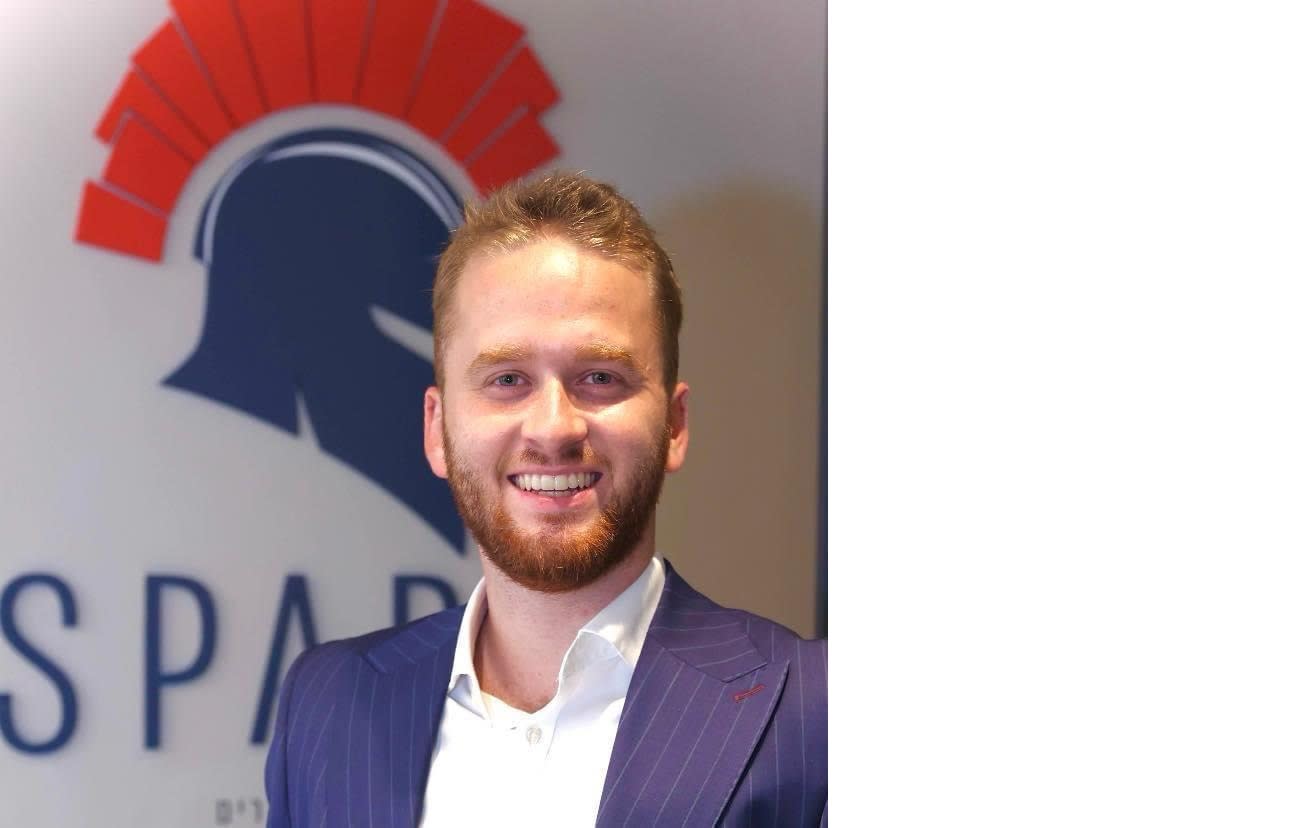
Eliahu Kleinman CEO ALIYAH.IL
Eliahu Kleinman CEO ALIYAH.IL (credit: ALIYAH.IL)

He points to a common structure: Buyers entering deals with 15 to 20 percent equity and paying the remainder only at delivery, sometimes years later. “For people whose money is tied up in investments, it changes everything,” he says. “They can enter the market without liquidating assets.” The pitch rests partly on history. “Historically,” he says, “Israeli real estate has tended to rise after wars and periods of uncertainty.”

It is a familiar argument in local property circles, though one that now intersects with a very different emotional landscape. For some buyers, the apartment is an investment. For others, insurance. Apparently, for many, it is both. One story Kleinman returns to involves a family that made aliyah with a 35-year-old son on the autism spectrum. “The apartment wasn’t the whole issue,” he says. “Their concern was: *Where will our son fit? How will this move work?” The company helped them locate an appropriate framework in Ra’anana. “That was part of the process,” he says. “Helping them feel they could actually move.”

The anecdote points to a broader transformation underway in this niche industry. Companies once focused primarily on transactions increasingly present themselves as ecosystem providers: Mortgages, legal support, property management, aliyah guidance, and integration assistance.

Kleinman is careful about the distinction. “We’re not an aliyah organization,” he says. “First and foremost, we’re a real estate company.” But, he adds, “People aren’t only buying apartments. They’re buying a transition.” His partner Avishai frames the current moment differently. “The dollar is low,” he says. “So what? The market conditions mean people can make deals they couldn’t make in the last decade.”

The symbolic “Jerusalem apartment” once represented aspiration: A place to retire, visit on holidays, or pass down to children. Today, agents increasingly describe a category entirely different – a backup plan, or as buyers themselves call it: “A security apartment.” And in a world where certainty feels increasingly scarce the idea of a spare set of keys in Israel appears to carry a value that cannot be measured only in shekels per square meter.

Connect with Aliyah IL today to explore your options>>>

This article was written in cooperation with Aliyah.il

Follow us on Google