

惯性聚合 高效追踪和阅读你感兴趣的博客、新闻、科技资讯
阅读原文 在惯性聚合中打开

推荐订阅源

T
Troy Hunt's Blog
F
Fortinet All Blogs
D
DataBreaches.Net
Google DeepMind News
Y
Y Combinator Blog
The Register - Security
T
Tailwind CSS Blog
OSCHINA 社区最新新闻
OSCHINA 社区最新新闻
月光博客
月光博客
V
Vulnerabilities – Threatpost
S
Securelist
S
SegmentFault 最新的问题
T
Threat Research - Cisco Blogs
CTFtime.org: upcoming CTF events
让小产品的独立变现更简单 - ezindie.com
P
Privacy International News Feed
S
Schneier on Security
钛媒体:引领未来商业与生活新知
钛媒体:引领未来商业与生活新知
L
LangChain Blog
GbyAI
GbyAI
Apple Machine Learning Research
cs.CL updates on arXiv.org
美团技术团队
Cyberwarzone
Cyberwarzone
C
Cisco Blogs
Application and Cybersecurity Blog
Google Online Security Blog
M
MIT News - Artificial intelligence
U
Unit 42
V
V2EX
C
CERT Recently Published Vulnerability Notes
云风的 BLOG
云风的 BLOG
B
Blog
博客园 - 叶小钗
Attack and Defense Labs
Security Archives - TechRepublic
aimingoo的专栏
aimingoo的专栏
Hacker News: Ask HN
Hacker News: Ask HN
博客园 - Franky
Engineering at Meta
Engineering at Meta
Schneier on Security
C
CXSECURITY Database RSS Feed - CXSecurity.com
酷 壳 – CoolShell
酷 壳 – CoolShell
T
The Blog of Author Tim Ferriss
IT之家
IT之家
W
WeLiveSecurity
Cisco Talos Blog
Cisco Talos Blog
K
Kaspersky official blog
Martin Fowler
Martin Fowler
SecWiki News
SecWiki News

JPost.com - Business & Innovation | The Jerusalem Post

The innovation bridge: A new paradigm for the US-Israel alliance - opinion Your Investments: Financial freedom and Jerusalem unification Your Taxes: How Israel’s new war compensation system works Victory for the Negev vision: Light Rail will reach gates of the intelligence campus - opinion Only 45% of Tel Aviv Stock Exchange companies made donations in 2025, study finds “Within 5 to 6 Years, all of Israel will be connected to a single water network” Forget the model wars, the real AI challenge is orchestration -opinion Israeli-Cypriot cyber company to unveil Starlink de-anonymizing tool - report Cellular Intelligence strikes deal with Novo Nordisk to advance Parkinson’s cell therapy Israel’s inflation dynamics remain under control IDF reservists created 150 new startups during last year, innovation program reveals Trump to regulate AI development after Anthropic's Mythos posed cybersecurity threat - report Your Investments: Prosperity in Israel takes time, but aliyah is worth it Your Taxes: An agreement is an agreement Inside Inspiraction, the Jerusalem incubator helping young Israelis turn ideas into start-ups Israeli-founded AI biotech Immunai expands AstraZeneca cancer collaboration The death of the US Jewish Orthodox middle class- opinion Real estate giant invests $200 million into Miami’s high-tech hub: What’s Flow Wynwood? Almost half of operational decisions will be done by AI in 2030, IBM reveals - poll It’s all about timing! 2026 is a rare opportunity window for Tel Aviv real estate A new standard of hospitality How Israel’s new reporting rules change the olim tax holiday - opinion Senior R&D managers are paying the price of the AI revolution - opinion Consumer guilt costs companies billions in abandoned online shopping carts - study A strategic miss: R&D is Israel's brain - so why does it develop, manufacture abroad? - opinion Connecting neighbors under fire: The story behind Angels of the Shelter AI is ending era of ‘job immunity’ for young tech workers as it reshapes Israel's job market Israeli AI startup cracks code of who is at fault when system fails: What do they do? - interview Your Taxes: Israel’s lower mid-market is tempting international M&A buyers Your Investments: Second chances, respect, and newlywed finance Microbes coordinate activity to reduce competition, Israeli researchers discover Decoding the digital pulse: How Prof. Yaniv Dover maps the flow of information and human behavior UAE exit weakens OPEC+ power over oil market but group to stay together, sources say - analysis Cyber proxy wars escalate as hackers shift to infrastructure targets Fattal Hotels to transition THE JAFFA into kosher luxury hotel starting May 1 Israel's high-tech faces unexpected crisis as dollar slides 20% against shekel | The Jerusalem Post From the capital of the Negev to the decision-making tables of the world’s leaders From Caesarea to the Moon Hundreds of Google employees urge CEO not to sign deal with Pentagon in open letter AI startup Mercor faces mass litigation following data breach - report Omer Adam’s AI company signs billion-dollar deal with AI infrastructure giant Crusoe Beer, snacks and smart design: An Israeli innovation targets stadium crowds Shlomo Group turns to Indian technicians in NIS 50m service-center expansion Against all official odds: Jerusalem business owners struggle to survive as the state dithers Your Investments: Avoid repeating financial blunders Your Taxes: So you want to acquire an Israeli company? Amazon-backed nuclear reactor developer X-Energy raises over $1 billion in IPO The network effect: Orly Carmon’s ORCA is rewriting power for women across borders Israeli battery-swapping IP owners demand $250 million from Chinese EV giant | The Jerusalem Post Polymarket forecast: What does the platform predict for US-Israel-Iran war? | The Jerusalem Post A strong shekel, a weakened export engine US Iran tensions send oil higher, rattle global markets | The Jerusalem Post Tim Cook steps down as Apple CEO after 15 years, with insider John Ternus set to replace him Israel’s hidden strength: Institutional capital pools The banking system Israeli drone‑detection start-up scores major US commercial breakthrough | The Jerusalem Post Bypassing closed skies: First-of-its-kind solution keeps e-commerce shipments flowing to Israel Why hi-tech recruitment must evolve: The role of AI in the new hiring landscape | The Jerusalem Post Jerusalem razes Elie Wiesel Plaza for NIS 73m. underground passage to Shaare Zedek Shipping firms seek clarifications before crossing Hormuz as tankers move towards Strait Your Taxes: OECD, G20 launch plan to expose untaxed real estate funds and income Your Investments: Can you attain financial freedom in Israel? Between Israel and Latin America, Ilan Goldfajn builds a quiet economic bridge Luria: A Jerusalem-inspired project with modern boutique design | The Jerusalem Post S&P 500 closes at fresh record, recovering all losses since start of US-Iran war Dollar falls below three shekels for first time in over 30 years, annual inflation rate declines US gaming company sues Israeli game developer who claims no connection to company's failure US will not renew waiver on Iranian oil as it mounts pressure on Tehran, sources say While dating swipes decrease, JWed.com Marriages increase to record 4,100! | The Jerusalem Post IMF warns of potential global recession if Iran war worsens | The Jerusalem Post BHI extends $88m bridge loan for Midtown Manhattan tower acquisition | The Jerusalem Post How deepfake scams are costing companies millions worldwide | The Jerusalem Post Beyond a ceasefire, top IDF officer compromised- opinion Isracard, JFNA-backed fund says it has extended NIS 135m. in credit to war-hit small businesses Crisis contractor for OpenAI, Anthropic eyes a move to combat extremism Bank Hapoalim’s US arm funds $203m Manhattan housing conversion IMF warns Strait of Hormuz might never be back to normal Are Polymarket, Kalshi illegal? | The Jerusalem Post Rethinking risk: Why Israel is no longer the outlier - opinion Artemis II astronauts safely back on Earth after trip around moon Your Investments: Financial modesty Your Taxes: The budget’s tax breaks New Israeli app tracks disaster victims in real time, speeds emergency response | The Jerusalem Post US consumer inflation expected to have surged in March amid Iran war Former El Al chief rejects monopoly, price gouging claims after Iran war profits Global markets rally, oil drops below $100 after US-Iran ceasefire | The Jerusalem Post Q-Factor emerges as Israel’s latest quantum computing developer with $24 million seed investment Enlight CEO: Iran war reinforces Israel's need for renewable energy Leviathan gas field resumes operations after risk of strikes from Iran war outbreak Can you really trust your ‘private’ AI assistant to keep your secrets? | The Jerusalem Post Your Taxes: You can't have your matzah and eat it, too Gulf states consider bypassing Strait of Hormuz with new oil pipelines via Haifa - FT ‘Perfect storm’: Israel's high-tech faces human capital crisis, lack of new students in age of AI Mekorot reports strong core growth in 2025, but regulatory changes drive heavy net loss Leumi, Shestovitz take stakes in Profit Finance Group with NIS 670 million investment Pentagon denies report of Hegseth-linked pre-strike defense investments Despite the war: Israeli high-tech opens 2026 with approximately $3.1 billion in funding Prediction 2026 Israeli AI optimization company ScaleOps surpasses $800 million valuation More than a port - a strategic anchor for Israel
Strait of Hormuz closure has raised oil prices, but not without precedent - analysis
2026-04-07 · via JPost.com - Business & Innovation | The Jerusalem Post
ByHERB KEINON
Updated:

At roughly $109 a barrel for Brent crude and about $4.10 for a gallon of gas in the US, energy prices feel high.

They are high. But, and here is the crux, they are not historically extraordinary, not by a long shot. Yet how those prices are framed matters, because it shapes how the public reacts and how policymakers respond.

And right now, the war and Iran’s moves to close the Strait of Hormuz, though with each deadline set and then extended, more ships are being allowed through, are widely being framed as something that could have a “lasting” impact on the global economy.

 “The war has killed thousands, sparked an energy crisis and threatened lasting damage to the world economy,” read a Reuters report on Saturday, reprinted widely in newspapers around the world.

 Yet “lasting” is a long time, and perhaps more than the situation, serious as it is, actually justifies. This is not the first time oil prices have spiked. The shock can be sharp, the impact real. But for it to be lasting, the disruption itself would have to last, over many months, not days or weeks, and that is not what we are seeing.
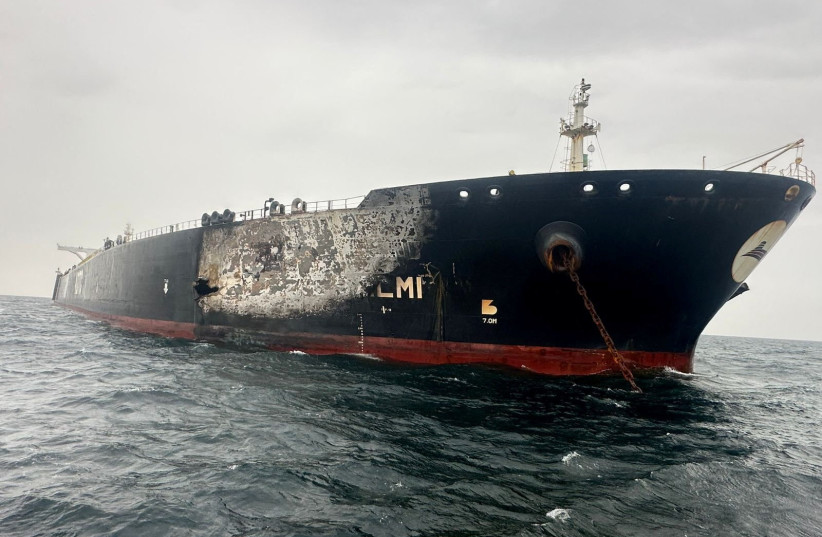
Damage to the Kuwait-flagged Al-Salmi crude oil tanker, following a reported Iranian strike, March 31, 2026; illustrative.
Damage to the Kuwait-flagged Al-Salmi crude oil tanker, following a reported Iranian strike, March 31, 2026; illustrative. (credit: Kuwait Petroleum Corporation/Handout via REUTERS)

Markets adjust. Supply finds its way, whether through the release of strategic reserves or the rerouting of shipments, and demand eases. What feels like a jolt often proves just that: a jolt.

The numbers, taken without historical context, suggest crisis. History suggests something more measured.

Adjusted for inflation, today’s oil prices remain well below the peaks of both 1980 and 2008, when prices climbed into the $140–$150 range in today’s dollars.

In 1980, prices surged after the Iranian Revolution and the Iran–Iraq War disrupted supply; in 2008, they spiked as booming global demand, led by China, outpaced what producers could supply.

Gasoline prices tell a similar story. At just over $4 a gallon, Americans are paying roughly what they did, again, in real terms, during the spikes of 2008, 2011–2012 amid the Arab Spring, when Libyan production went offline, and in 2022 following Russia’s invasion of Ukraine. Painful, yes. Unprecedented, no.

This context is lacking in much of the coverage and commentary on the war and its economic impact. Energy markets have always moved in cycles: sharp spikes driven by geopolitical shocks, followed by adjustment, shifts to alternative supplies, and, eventually, decline. What we are seeing now fits that pattern.

None of this suggests that the economic costs of the war are not real. They are. But they are not, at least not yet, as apocalyptic as some of the coverage suggests.

US President Donald Trump appears to understand this. In a March 9 Truth Social post, he wrote that “Short term oil prices, which will drop rapidly when the destruction of the Iran nuclear threat is over, is a very small price to pay for USA, and World, Safety and Peace. ONLY FOOLS WOULD THINK DIFFERENTLY!”

The argument is clear: the pain is temporary; the payoff is permanent. But that message is not being sufficiently amplified.

Nobody would accuse Trump of Churchill-style rhetoric. His tone can veer in the opposite direction, coarse and laced with insults. Yet the underlying logic he invoked in that March 9 post, though definitely not the style, is one Winston Churchill would have recognized: that the public may be asked to bear a cost in pursuit of a larger, historic goal.

Churchill captured that idea more directly, urging the British people on June 18, 1940, in his famous “Their Finest Hour” speech, to “brace ourselves to our duties” in the face of an immediate threat. The expectation of hardship was clear.

Trump, in far less elevated language, and about something far more mundane, gasoline prices, is making a related argument: that a temporary burden is worth bearing for a larger strategic objective.

The difference, however, is not only in tone but also in context.

In 1940, the Nazis were marching through Europe and were at Britain’s doorstep. The threat was immediate, existential, and visible. Britain stood alone. Under those conditions, the willingness to bear hardship, to pay the cost, was not merely rhetorical; it was a necessity.

The US today faces a different reality. Iran is far away. Its threat, while serious, is not immediate. It is not close to America’s shores. And distance matters.

Churchill was asking his people to bear a heavy burden for a tangible threat bearing down on them. Trump is asking Americans to bear a relatively light burden for a threat they do not yet tangibly feel. Sacrifice is always easier to rally when the danger is close and unmistakable. It is harder when the threat is abstract, the costs are real, and the connection between the two must be explained rather than felt.

The gap between a perceived threat and an immediate cost helps explain why energy prices carry such political weight in the US. Gasoline is not just another expense. It is a daily, visible one. When prices at the pump rise, the impact is immediate and broad. With a threat that, for many Americans, seems abstract, that is a price not easily accepted.

Even as gas prices rise, markets remain relatively stable

And yet, even as gas prices have risen in recent weeks, another set of numbers has remained relatively contained: the markets.

Oil has climbed, but it has not “gone off the charts.” Stock markets have wobbled but not collapsed. Compared to past crises, the 2008 financial meltdown, the early days of the COVID-19 pandemic, even the initial shock of the Ukraine war, the declines have been modest.

That, too, is telling. And here, Trump’s own rhetorical pattern may be playing a stabilizing role.

His approach has been familiar: issue a sharp threat, escalate the rhetoric, then signal a potential off-ramp, talk of ceasefires and negotiations, before returning again to deadlines and threats.

Only sustained escalation, pressure without pause, would likely push oil prices significantly higher and stock markets significantly lower. But a cycle of threats and pauses, escalation and potential de-escalation, creates a different environment: one of tension, but also of restraint.

In that sense, the roller-coaster nature of Trump’s rhetoric may be contributing to a kind of ceiling. Prices rise on the threat; then fall on the possibility of resolution. The result is volatility, but within a range.

Today’s oil prices are high, but they are not without precedent and should be kept in perspective. The economic damage, while real, is unlikely to be permanent unless the Strait of Hormuz is closed for many months. And the markets, for now, are behaving not as if the worst is inevitable.

That is a more nuanced picture than the headlines often suggest.

Or, to put it differently: this is not uncharted territory. It is a familiar landscape, one the global economy has traversed before, and one it has, time and again, managed to navigate.