
惯性聚合 高效追踪和阅读你感兴趣的博客、新闻、科技资讯
阅读原文 在惯性聚合中打开

推荐订阅源

罗磊的独立博客
G
Google Developers Blog
钛媒体:引领未来商业与生活新知
钛媒体:引领未来商业与生活新知
腾讯CDC
有赞技术团队
有赞技术团队
Vercel News
Vercel News
MongoDB | Blog
MongoDB | Blog
M
MIT News - Artificial intelligence
OSCHINA 社区最新新闻
OSCHINA 社区最新新闻
B
Blog RSS Feed
I
InfoQ
Blog — PlanetScale
Blog — PlanetScale
博客园_首页
The Cloudflare Blog
B
Blog
C
Check Point Blog
Stack Overflow Blog
Stack Overflow Blog
IT之家
IT之家
U
Unit 42
D
Docker
月光博客
月光博客
aimingoo的专栏
aimingoo的专栏
博客园 - Franky
A
About on SuperTechFans

JPost.com - Business & Innovation | The Jerusalem Post

Your Investments: Financial freedom and Jerusalem unification Your Taxes: How Israel’s new war compensation system works Victory for the Negev vision: Light Rail will reach gates of the intelligence campus - opinion Only 45% of Tel Aviv Stock Exchange companies made donations in 2025, study finds “Within 5 to 6 Years, all of Israel will be connected to a single water network” Forget the model wars, the real AI challenge is orchestration -opinion Israeli-Cypriot cyber company to unveil Starlink de-anonymizing tool - report Cellular Intelligence strikes deal with Novo Nordisk to advance Parkinson’s cell therapy Israel’s inflation dynamics remain under control IDF reservists created 150 new startups during last year, innovation program reveals Trump to regulate AI development after Anthropic's Mythos posed cybersecurity threat - report Your Investments: Prosperity in Israel takes time, but aliyah is worth it Your Taxes: An agreement is an agreement Inside Inspiraction, the Jerusalem incubator helping young Israelis turn ideas into start-ups Israeli-founded AI biotech Immunai expands AstraZeneca cancer collaboration The death of the US Jewish Orthodox middle class- opinion Real estate giant invests $200 million into Miami’s high-tech hub: What’s Flow Wynwood? Almost half of operational decisions will be done by AI in 2030, IBM reveals - poll It’s all about timing! 2026 is a rare opportunity window for Tel Aviv real estate A new standard of hospitality How Israel’s new reporting rules change the olim tax holiday - opinion Senior R&D managers are paying the price of the AI revolution - opinion Consumer guilt costs companies billions in abandoned online shopping carts - study A strategic miss: R&D is Israel's brain - so why does it develop, manufacture abroad? - opinion Connecting neighbors under fire: The story behind Angels of the Shelter AI is ending era of ‘job immunity’ for young tech workers as it reshapes Israel's job market Israeli AI startup cracks code of who is at fault when system fails: What do they do? - interview Your Taxes: Israel’s lower mid-market is tempting international M&A buyers Your Investments: Second chances, respect, and newlywed finance Microbes coordinate activity to reduce competition, Israeli researchers discover
Israel electric chairman: Supports competition, low elect...
YEHUDA SHARONI · 2026-06-26 · via JPost.com - Business & Innovation | The Jerusalem Post

Doron Arbely: Opposes tax hikes, calls for lower VAT and more business certainty.

Follow us on Google
Doron Arbely.
Doron Arbely.
(photo credit: Liron Moldovan/Flash90)
ByYEHUDA SHARONI

“We support competition that challenges us and forces us to improve ourselves. We have become more efficient, we have improved, we have reduced manpower, and we know how to become significantly more efficient than our competitors,” says Doron Arbely, Chairman of the Israel Electric Corporation, in a special interview with “Maariv Weekend.”

According to him, “I am not looking only at the country’s energy security, but also at the consumer’s pocket. I want to ensure that competition has truly affected the consumer’s pocket. The very fact that the Israel Electric Corporation is involved in generation means that electricity prices paid by consumers, including you and me, are much lower.”

“Unlike private producers, the Israel Electric Corporation does not look only at the bottom line, but also at the situation of the consumer and energy security. Private producers are afraid of the Israel Electric Corporation. I ask why, and no one can provide an answer. If they want real competition, I say come. Let’s see who is better, who is less efficient, who is not good. Please, we are waiting.”

In response to the question of why, then, there is a need to raise electricity tariffs, Arbely replies that “electricity prices in Israel are among the lowest in the world. We are simply demanding that we be paid what we are entitled to by law. We are competing with our hands tied.” The Chairman of the Israel Electric Corporation added that “our work plans for the coming years are at an advanced stage. We are investing NIS 7–8 billion per year in preparing for the future electricity sector, including building power stations. The total investment volume by 2030 will amount to NIS 50 billion.”

According to him, “the money for investments will come from the company’s ongoing activity and from capital raises abroad and in Israel. This year we raised NIS 500 million abroad, and in Israel we raised about NIS 1 billion. Investors in Israel and around the world believe in us and in our ability to repay debt, and this is reflected in our credit rating, which remained stable during the war.”
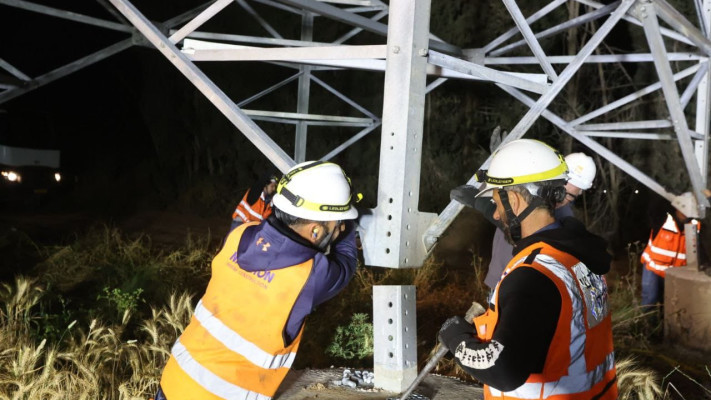
Israel Electric Corporation works.
Israel Electric Corporation works. (credit: YOSSI WEISS)

In response to a question about his recommendations as a former head of the Tax Authority regarding tax policy, Arbely emphasized that “the handling of indirect and direct compensation was at the center of the Tax Authority’s activity and required significant manpower. The Authority is doing sacred work, but at the same time it is necessary to deepen tax collection from the public. It has many legal cases in dispute, and it is advisable to resolve them.”

“It is forbidden to impose additional taxes, even if the deficit grows, but rather to create certainty so that there will be more investment. Additional taxes suffocate the public and economic activity. I recommend, if possible, lowering VAT. It cannot be that every other day there is new regulation, because in the end businesses will flee and banks will not want to finance them.”

Follow us on Google