
Next generation technology infrastructure companies are going public and becoming liquidity magnets. The financial drama will stream billions into Israeli high tech as well, but it will harm Europe.








It happened: A public offering on the stock exchange of the technology and space giant SpaceX, 69 years after the USSR launched the first artificial satellite in human history on October 4, 1957. The Soviet launch stunned the Western world and served as the official opening shot of the race that led 57 years ago to the launch of NASA's manned Apollo 11 spacecraft, which executed the first ever landing on a celestial body outside of Earth. Astronaut Neil Armstrong became the first person to step on lunar soil. The US, stunned by the Soviet achievement, has been in an endless race ever since to capture space for military, communication, and espionage purposes, and to thwart rivals in space.
The USSR was left essentially without sufficient economic resources and collapsed after American President Ronald Reagan dedicated a vast fortune in 1983 to the "Star Wars" program, whose goal was to develop a hermetic defense system, including space satellites and lasers, that could intercept Soviet nuclear missiles while still in space, thereby protecting the territory of the US. The Soviets tried to compete, and instead collapsed economically – and politically – in 1991. The bright red Soviet flag descended that December from above the Kremlin. Israel launched its first satellite, Ofek 1, in September 1988 using a Shavit rocket by Israel Aerospace Industries in cooperation with the Ministry of Defense.
The global capital market stands today before one of the most fascinating turning points in the 21st century. A combination of a space industry, artificial intelligence, and 2 nanometer memory chips, super smart chips that converse with one another like human beings and in the future will even build and design the next generation artificial intelligence by themselves. If in previous decades information technology and the internet were the engines of growth, then in the second half of the current century, two immense technological vectors are converging and creating an unprecedented synergetic effect: Generative artificial intelligence – Generative AI – and the new space economy. New Space.
The anticipated and imagined public offerings of the technology and space giants, SpaceX of the world's first trillionaire Elon Musk, and later Anthropic, a leader in the field of artificial intelligence, as well as OpenAI – all of these are not just large financial events. They establish the supremacy of the US for at least the next generation in the field of technology of the fourth industrial revolution. This supremacy in the military field has already found expression in the US military's use of Anthropic software in the sterile conquest of Venezuela and the collapse of the Iranian economy and power, despite the opposition of Anthropic's managers to the use of their software for military purposes.
The offerings constitute the "starting shot" for a drastic and comprehensive alteration of global capital flows. This article will analyze in depth the impact of these offerings on the American and global capital markets and compare their readiness and impact on the American economy, the European economy, and the countries of Southeast Asia, while answering the question: Are we at the threshold of an immense revolution?
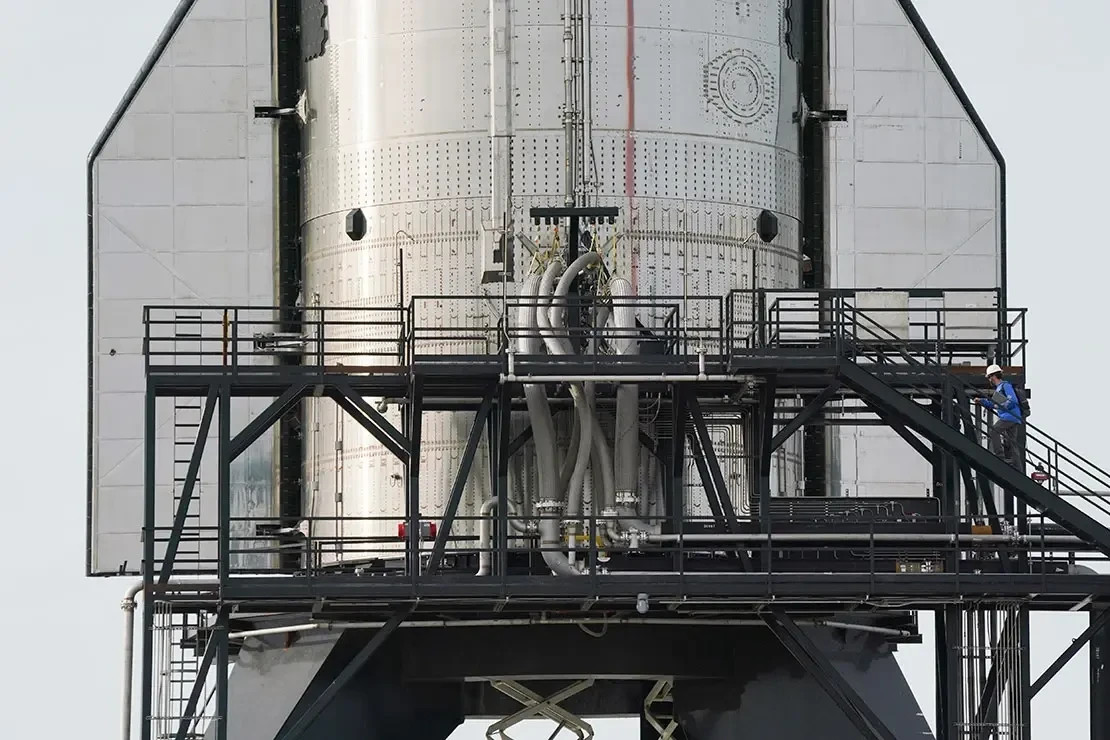
We shall examine the specific weight of these companies even before they become public companies. SpaceX constitutes the gateway to the space economy. This is not just a smart rocket company and the first to possess rockets that can be launched more than once – it is the future communication and logistics infrastructure of Earth and beyond. Through the Starlink project, "star communication," the company created a worldwide satellite internet network that changes the rules of the game for remote regions, defense industries, and global shipping. In addition, the development of the Starship promises to lower the cost of launching into space per weight unit to peak levels that will enable resource mining in space, the establishment of commercial space stations, and advanced research.
The offering of SpaceX together with Starlink as a company valued between 1.3–1.7 trillion dollars will turn it instantly into one of the strongest anchors in the US stock exchanges. Part of the sharp fluctuations in stock prices over the past week is attributed to the clearing of global capital in order to participate in this immense offering.
The super artificial intelligence giants OpenAI and Anthropic are redefining the concept of human labor productivity, manufacturing, development, transportation, medicine, the military, research, communication, and practically all spheres of life. The large language models, LLMs, such as GPT and Claude, have turned from experimental subsystems into critical work tools in the financial, legal, medical, and technological sectors. The transition from companies all over the world supported by tech giants, like Microsoft and Amazon, to publicly traded companies, will necessitate financial transparency and open the valves to capital streams of immense proportions from the public and institutional pension funds, which until now were blocked from investments in these areas.
Offerings of such magnitude operate as "liquidity magnets": They alter the composition of leading indices, like the S&P 500 and NASDAQ, and dictate anew the asset allocation strategies of public savings and investments through fund managers all over the world – or directly by the players in the capital markets.
The US holds the home advantage. The stock exchanges in New York are the natural destination for these offerings. The entry of these companies into the public market will generate a significant wealth effect; a flotation of value for insiders who managed to get their hands on shares allocated to them before the offerings, for early investors, employees and experts of the companies, founders, and select venture capital funds. If there is indeed an immense success in the offerings, it can re-stimulate the flow of capital to startups. Since Israel is considered a "startup nation," a part, even a quite significant one in terms of the Israeli economy, will be streamed into the Israeli high tech market.
Investors from all over the world will stream dollars to the US to achieve direct exposure to the core of the AI and space revolution, and the immediate result will be the strengthening of the American dollar and the renewal of the American dollar's status as the global reserve currency, to the displeasure of the Chinese. These offerings will lead to high price-to-earnings ratios in the American market, which are already very high today.

Conversely, for capital markets outside the US, these offerings constitute a complex challenge. The stock exchanges in London, Frankfurt, Tokyo, and Hong Kong are liable to suffer from a financial flight. When the companies of the future are all traded in the US, global investors have less incentive to hold shares of traditional industrial companies in Europe, which is deteriorating from year to year in business, economic, and technological terms, while losing the remnants of hegemony that it possessed. Europe, an end-consumer, leads in traditional industrial applications, and even the global automotive industry was taken from it in the last two years by China.
In Europe there is a decentralized capital market, reliance on conservative banking credit, a shortage of giant funds, with an outdated capital market structure of the 20th century. In an aging Europe there is rigid and strict regulation, meticulous protection of privacy, and entry barriers for private space companies.
Europe finds itself in a structural disadvantage position. The European Artificial Intelligence Act, EU AI Act, places heavy barriers on the development of advanced models, which causes companies like Anthropic or OpenAI to hesitate before launching full services in the Old Continent. In the field of space, Europe still relies to a large extent on slow governmental projects like Arianespace, and does not succeed (and perhaps does not even try) to generate a private competitor of scale against Musk.
The meaning is that the European economy risks becoming a "captive customer" of American technologies, with capital leaking outward to pay subscription fees and cloud services to the American companies – and later for the services of the space industry and artificial intelligence. The European anger led by France, headed by Emmanuel Macron, is childish and will not avail.

Asia will also be harmed, though less than Europe, whose glory is behind it. The harm is mainly to Japan and other countries, perhaps excluding South Korea which jumped on the technology wagon in time, quickly and efficiently. China, which is inherently closed in many areas, a rival to the US as the successor of the USSR, will not be able to keep up with the pace of development and the volume of capital that exists in the US.
The money will flow to the US of Donald Trump, who encourages industries in all fields and mainly in high tech to move to the US and win benefits. China, blocked by Trump as much as he can, is busy with an old perception of the question of what constitutes a superpower: China thinks in terms of the 19th and 20th centuries – to conquer small territories of India, to take over and erase the culture of the Tibetan people, to suppress the original Turkish people in Xinjiang province, who are also called the Uyghurs, and to plan to conquer Taiwan, which was never Chinese but originally Polynesian. With a decline in birth rates, China can no longer produce enough engineers for the next generation, and the shortage is prominent.
But besides China there are additional countries in Asia. South Korea, Taiwan, Singapore, Malaysia partially, and in recent years Vietnam – all of these are manufacturers of hardware, chips, an assembly and logistics center. These are nations that adopt technology quickly. The governments in Asia present focused governmental investments and foreign direct investment streams at a high rate. The aforementioned Asians possess a dynamic and flexible regulation, with an emphasis on improving labor productivity.
For the countries of Southeast Asia, this revolution is a double-edged sword – but with immense potential. The crazy growth in demand for artificial intelligence necessitates immense computing power. These countries are suppliers of hardware, semiconductors, raw materials, electronic assemblies. The new offerings in the US will guarantee purchase orders of vast volumes from factories in these countries. They are not trying to develop the next LLM, but rather to apply it quickly to streamline the fintech, maritime logistics, and agriculture sectors.
The global accessibility of a telephony system from anywhere to anywhere on the face of Earth through Starlink is critical for an immense archipelago nation, like Indonesia and the Philippines, to connect hundreds of millions of citizens, including ignorant villagers, to the digital economy. Yes, before us is an immense, world-changing revolution by means of artificial intelligence and the space industry. It is not just a technological revolution, but a deep cognitive revolution and a structural revolution of the economy, the global market, trade, connectivity, binding, global interaction. Whoever is left behind, his chances later are low.
The capital flow to the American market is liable to lead to the widening of valuation gaps between Wall Street and the rest of the world. The US is a pioneer, developing core technology and possessing the launch and computing infrastructure along with an abundance of venture capital funds and supporting and absorbing stock exchanges, and with massive government support, especially now under Trump – for security needs as well. In general, the traditional American approach encourages competitiveness, focused antitrust, but encourages innovation.
The American economy enjoys a perfect synergy. The combination of high-speed satellite internet from SpaceX along with artificial intelligence capabilities whose capacities rise in a geometric progression, enables automation and smoothing of business processes, management of smart supply chains, and even an infrastructure immune to natural disasters or geopolitical conflicts. American companies will be the first to implement these technologies, thereby increasing their labor productivity at a faster pace than any global competitor, even today American labor productivity is double that of Europe.
The future is here and today in America and Israel. A forming future of data processing from space, satellites producing an immense quantity of imaging, climate, and location data. The human brain is incapable of processing this in real time, and here enters artificial intelligence, which analyzes the information and issues insights for agriculture and security. This will include the management and operation of tens of thousands of satellites in low orbit, which necessitates completely autonomous systems based on artificial intelligence. The next generations of satellites will include AI chips that will enable information processing in space itself, and the sending of only the refined results to Earth, which will save critical bandwidth. In many respects, the AI and space revolution resembles the public offering of railroad companies in the 19th century or internet companies at the end of the 1900s. They create a new infrastructure upon which all other businesses in the world will be built in the next 50 years.
The offerings will mark the conclusion of the era of "cheap money" of the beginning of the decade and will open a new era focused on productivity based on depths of technology. While the American capital market is expected to fortify its status as the undisputed leader of this revolution, the American economy will enjoy a distinct first-mover advantage in value creation and efficiency. The countries of Southeast Asia will continue to thrive as suppliers of physical hardware and as flexible adopters, while Europe will need to perform a rethinking regarding its regulatory model strategy so as not to be left behind as historical scenery in a world managed by algorithms and satellites. We are not facing a passing "bubble," but rather a permanent change in the economic paradigm. These companies do not manufacture consumer products – they generate the future.
How does Israel enter the picture? It has already made use in its wars against the Iranians of artificial intelligence systems, with a satellite interface, unmanned aerial vehicles, and satellites circling Earth constantly and found all the time practically above Israel's enemies, and mainly Iran. Since the launch of the Shavit we have come a long way, perhaps except for monitoring Pakistani communication. Perhaps the time has come to study the Pakistanis too, who now claim to be mediators.
此内容由惯性聚合(RSS阅读器)自动聚合整理,仅供阅读参考。 原文来自 — 版权归原作者所有。