
惯性聚合 高效追踪和阅读你感兴趣的博客、新闻、科技资讯
阅读原文 在惯性聚合中打开

推荐订阅源

Security Latest
Security Latest
T
The Exploit Database - CXSecurity.com
Threat Intelligence Blog | Flashpoint
T
Tor Project blog
Help Net Security
Help Net Security
PCI Perspectives
PCI Perspectives
T
The Blog of Author Tim Ferriss
H
Heimdal Security Blog
The Register - Security
Schneier on Security
宝玉的分享
宝玉的分享
Google DeepMind News
人人都是产品经理
人人都是产品经理
cs.AI updates on arXiv.org
C
CERT Recently Published Vulnerability Notes
L
LangChain Blog
Security Archives - TechRepublic
MongoDB | Blog
MongoDB | Blog
美团技术团队
S
Security @ Cisco Blogs
Cloudbric
Cloudbric
Cisco Talos Blog
Cisco Talos Blog
C
Cybersecurity and Infrastructure Security Agency CISA
月光博客
月光博客
B
Blog RSS Feed
Cyberwarzone
Cyberwarzone
U
Unit 42
AWS News Blog
AWS News Blog
F
Fortinet All Blogs
L
LINUX DO - 最新话题
GbyAI
GbyAI
T
Threat Research - Cisco Blogs
cs.CV updates on arXiv.org
A
About on SuperTechFans
Hugging Face - Blog
Hugging Face - Blog
Attack and Defense Labs
Engineering at Meta
Engineering at Meta
MyScale Blog
MyScale Blog
Hacker News - Newest:
Hacker News - Newest: "LLM"
V2EX - 技术
V2EX - 技术
Y
Y Combinator Blog
T
Tailwind CSS Blog
酷 壳 – CoolShell
酷 壳 – CoolShell
Recorded Future
Recorded Future
TaoSecurity Blog
TaoSecurity Blog
博客园_首页
C
CXSECURITY Database RSS Feed - CXSecurity.com
M
MIT News - Artificial intelligence
K
KPMG report finds enterprise disconnect between AI and its ROI | CIO
H
Hacker News: Front Page

JPost.com - Business & Innovation | The Jerusalem Post

Your Investments: Financial freedom and Jerusalem unification Your Taxes: How Israel’s new war compensation system works Victory for the Negev vision: Light Rail will reach gates of the intelligence campus - opinion Only 45% of Tel Aviv Stock Exchange companies made donations in 2025, study finds “Within 5 to 6 Years, all of Israel will be connected to a single water network” Forget the model wars, the real AI challenge is orchestration -opinion Israeli-Cypriot cyber company to unveil Starlink de-anonymizing tool - report Cellular Intelligence strikes deal with Novo Nordisk to advance Parkinson’s cell therapy Israel’s inflation dynamics remain under control IDF reservists created 150 new startups during last year, innovation program reveals Trump to regulate AI development after Anthropic's Mythos posed cybersecurity threat - report Your Investments: Prosperity in Israel takes time, but aliyah is worth it Your Taxes: An agreement is an agreement Inside Inspiraction, the Jerusalem incubator helping young Israelis turn ideas into start-ups Israeli-founded AI biotech Immunai expands AstraZeneca cancer collaboration The death of the US Jewish Orthodox middle class- opinion Real estate giant invests $200 million into Miami’s high-tech hub: What’s Flow Wynwood? Almost half of operational decisions will be done by AI in 2030, IBM reveals - poll It’s all about timing! 2026 is a rare opportunity window for Tel Aviv real estate A new standard of hospitality How Israel’s new reporting rules change the olim tax holiday - opinion Senior R&D managers are paying the price of the AI revolution - opinion Consumer guilt costs companies billions in abandoned online shopping carts - study A strategic miss: R&D is Israel's brain - so why does it develop, manufacture abroad? - opinion Connecting neighbors under fire: The story behind Angels of the Shelter AI is ending era of ‘job immunity’ for young tech workers as it reshapes Israel's job market Israeli AI startup cracks code of who is at fault when system fails: What do they do? - interview Your Taxes: Israel’s lower mid-market is tempting international M&A buyers Your Investments: Second chances, respect, and newlywed finance Microbes coordinate activity to reduce competition, Israeli researchers discover Decoding the digital pulse: How Prof. Yaniv Dover maps the flow of information and human behavior UAE exit weakens OPEC+ power over oil market but group to stay together, sources say - analysis Cyber proxy wars escalate as hackers shift to infrastructure targets Fattal Hotels to transition THE JAFFA into kosher luxury hotel starting May 1 Israel's high-tech faces unexpected crisis as dollar slides 20% against shekel | The Jerusalem Post From the capital of the Negev to the decision-making tables of the world’s leaders From Caesarea to the Moon Hundreds of Google employees urge CEO not to sign deal with Pentagon in open letter AI startup Mercor faces mass litigation following data breach - report Omer Adam’s AI company signs billion-dollar deal with AI infrastructure giant Crusoe Beer, snacks and smart design: An Israeli innovation targets stadium crowds Shlomo Group turns to Indian technicians in NIS 50m service-center expansion Against all official odds: Jerusalem business owners struggle to survive as the state dithers Your Investments: Avoid repeating financial blunders Your Taxes: So you want to acquire an Israeli company? Amazon-backed nuclear reactor developer X-Energy raises over $1 billion in IPO The network effect: Orly Carmon’s ORCA is rewriting power for women across borders Israeli battery-swapping IP owners demand $250 million from Chinese EV giant | The Jerusalem Post Polymarket forecast: What does the platform predict for US-Israel-Iran war? | The Jerusalem Post A strong shekel, a weakened export engine US Iran tensions send oil higher, rattle global markets | The Jerusalem Post Tim Cook steps down as Apple CEO after 15 years, with insider John Ternus set to replace him Israel’s hidden strength: Institutional capital pools The banking system Israeli drone‑detection start-up scores major US commercial breakthrough | The Jerusalem Post Bypassing closed skies: First-of-its-kind solution keeps e-commerce shipments flowing to Israel Why hi-tech recruitment must evolve: The role of AI in the new hiring landscape | The Jerusalem Post Jerusalem razes Elie Wiesel Plaza for NIS 73m. underground passage to Shaare Zedek Shipping firms seek clarifications before crossing Hormuz as tankers move towards Strait Your Taxes: OECD, G20 launch plan to expose untaxed real estate funds and income Your Investments: Can you attain financial freedom in Israel? Between Israel and Latin America, Ilan Goldfajn builds a quiet economic bridge Luria: A Jerusalem-inspired project with modern boutique design | The Jerusalem Post S&P 500 closes at fresh record, recovering all losses since start of US-Iran war Dollar falls below three shekels for first time in over 30 years, annual inflation rate declines US gaming company sues Israeli game developer who claims no connection to company's failure US will not renew waiver on Iranian oil as it mounts pressure on Tehran, sources say While dating swipes decrease, JWed.com Marriages increase to record 4,100! | The Jerusalem Post IMF warns of potential global recession if Iran war worsens | The Jerusalem Post BHI extends $88m bridge loan for Midtown Manhattan tower acquisition | The Jerusalem Post How deepfake scams are costing companies millions worldwide | The Jerusalem Post Beyond a ceasefire, top IDF officer compromised- opinion Isracard, JFNA-backed fund says it has extended NIS 135m. in credit to war-hit small businesses Crisis contractor for OpenAI, Anthropic eyes a move to combat extremism Bank Hapoalim’s US arm funds $203m Manhattan housing conversion IMF warns Strait of Hormuz might never be back to normal Are Polymarket, Kalshi illegal? | The Jerusalem Post Rethinking risk: Why Israel is no longer the outlier - opinion Artemis II astronauts safely back on Earth after trip around moon Your Investments: Financial modesty Your Taxes: The budget’s tax breaks New Israeli app tracks disaster victims in real time, speeds emergency response | The Jerusalem Post US consumer inflation expected to have surged in March amid Iran war Former El Al chief rejects monopoly, price gouging claims after Iran war profits Global markets rally, oil drops below $100 after US-Iran ceasefire | The Jerusalem Post Strait of Hormuz closure has raised oil prices, but not without precedent - analysis Q-Factor emerges as Israel’s latest quantum computing developer with $24 million seed investment Enlight CEO: Iran war reinforces Israel's need for renewable energy Leviathan gas field resumes operations after risk of strikes from Iran war outbreak Can you really trust your ‘private’ AI assistant to keep your secrets? | The Jerusalem Post Your Taxes: You can't have your matzah and eat it, too Gulf states consider bypassing Strait of Hormuz with new oil pipelines via Haifa - FT ‘Perfect storm’: Israel's high-tech faces human capital crisis, lack of new students in age of AI Mekorot reports strong core growth in 2025, but regulatory changes drive heavy net loss Leumi, Shestovitz take stakes in Profit Finance Group with NIS 670 million investment Pentagon denies report of Hegseth-linked pre-strike defense investments Despite the war: Israeli high-tech opens 2026 with approximately $3.1 billion in funding Prediction 2026 Israeli AI optimization company ScaleOps surpasses $800 million valuation More than a port - a strategic anchor for Israel
The Asian restaurant group that is expanding when everyone else is closing | The Jerusalem Post
TALIA LEVIN · 2026-06-28 · via JPost.com - Business & Innovation | The Jerusalem Post

At the height of one of the most complex periods the restaurant world has ever known, Chen and Avichai Menachem never stop investing.

Follow us on Google
Chen and Avichai Menachem
(photo credit: Courtesy of those photographed)
ByTALIA LEVIN

The past three years have been among the most complex the Israeli restaurant industry has ever known. Following the COVID-19 crisis came long months of economic uncertainty, a sharp rise in operational costs, labor shortages, erosion of public purchasing power – and finally, a prolonged war that has affected nearly every aspect of life in Israel. For many restaurateurs, this meant transitioning to survival mode, cutting expenses, freezing development plans, and at times, even closing down.

Yet alongside these stories, there is another side to reality. It does not necessarily reflect the state of the entire industry, where many are still dealing with significant hardships, but it does indicate that in certain cases, entrepreneurs have managed to identify opportunities precisely at a time when others preferred to wait. Take, for instance, the story of Chen and Avichai Menachem, a restaurateur couple from Rehovot and owners of the Ototo Asian restaurant group, who in recent years chose to do exactly what conventional business logic would seemingly advise against: To expand operations, open new restaurants, and invest millions of NIS in the culinary brand they built.

Over the past year, the couple celebrated the one-year anniversary of their restaurant in Gedera, established with an investment of approximately NIS 5.5 million; completed a significant relocation and expansion of their Rehovot restaurant at a cost of more than NIS 2.5 million; and concurrently, they are moving forward with opening another restaurant in Ashdod, Mizo, which they say is expected to be their largest investment to date. These figures stand out sharply against the backdrop of the industry's reality, yet for them, the story does not begin with money at all.

"We've been in this field our whole lives," says Avichai. "I've been working in restaurants since I was 16. A year after the army, I already opened the first restaurant in which I was a partner. This is something we've been living and breathing for years. For us, the restaurant business is not just a profession. It's a way of life."

The professional connection between the couple was built right from the start. Avichai grew from within the kitchens, while Chen handled the service and hospitality side. "Avichai started in the kitchens and I was out front with the customers," she relates. "It was a natural combination of what he is good at and what I am good at. Even then, a very clear division of roles was formed, with each bringing their own strengths." Today, after 21 years together and three daughters, this partnership remains at the center of their business endeavors.

For a long time, Chen was not part of the daily operations at the restaurants at all. After years of intensive joint work in two restaurants they managed in Kastina, the couple decided to change direction. "We were 150% into it," Avichai recalls. "We were young parents, constantly at the restaurant, always chasing. Grandparents, a babysitter, another babysitter. Our lives revolved around work. At a certain point, we realized we needed to stop and make a change."

While Avichai continued to develop within the restaurant industry, Chen turned to a completely different world. "I started learning how to sew as a hobby," she says. "Slowly but surely, it grew and developed into a very successful business. I built my own brand, with tens of thousands of followers on social media and a large community around it."

A few years ago, the couple decided to join forces once again. "Avichai simply told me: 'I need you.' And in a way, he was right. I brought everything I had learned during those years into the business: The creative thinking, the understanding of branding, of customer experience, of creating something people remember."
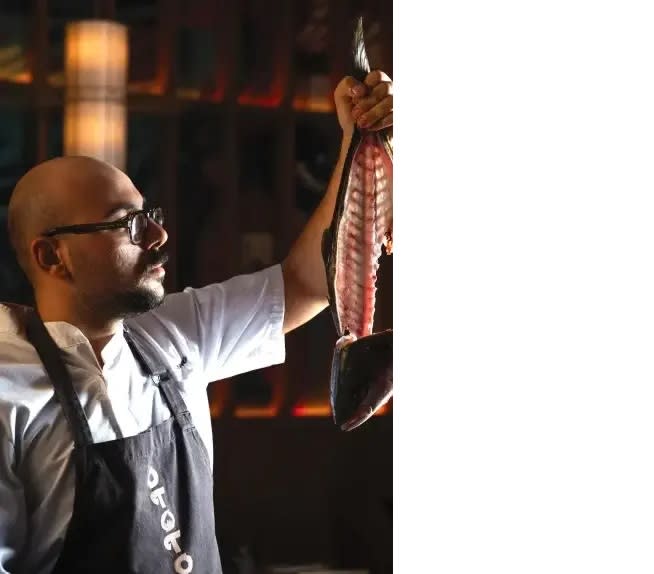
Ototo
Ototo (credit: Chen Moyal, official site)

Looking for an experience


One of the recurring claims today in the restaurant industry is that it is becoming increasingly difficult to get people to leave their homes. The cost of living, altered consumer habits, and numerous delivery options require restaurant owners to offer added value beyond the food itself. At Otototo, they decided to take this idea one step further. Not an innovative concept, but certainly not an obvious investment in days of an immense economic crisis in the industry. How is this expressed? On Thursdays, for example, mentalists wander between the tables.

On Mondays, rotating concept nights take place with dedicated menus. On special occasions, such as Valentine's Day, resources are invested in creating personalized experiences for guests, ranging from special activities to personal keepsakes. "I think that today it is no longer enough to serve good food," Chen says. "Of course, the food must be excellent, but people are looking for much more than that. They are looking for an experience. They are looking for a story. They are looking for an evening they will remember long after they leave the restaurant."

As mentioned, behind each of these initiatives lies a significant investment. "We invest a lot of money in this," she admits. "These are things that don't always pay off directly, but for us, they are an integral part of hospitality." This approach is also reflected in less conspicuous places. For instance, the couple invests in dedicated delivery packaging, developing special menus, and the ongoing training of their teams. "We don't do anything half-heartedly," Avichai emphasizes. "When we build a special evening, it can start months in advance. Tastings, photoshoots, branding, staff training, raw materials, sometimes even new serving dishes. We want whoever comes to feel that we invested in them."

Perhaps more than anything else, the couple's philosophy is expressed in the way they treat whoever enters the restaurant. During the conversation, they hardly use the word "customers." Instead, the word "guests" recurs time and again. "It's not by chance," Avichai says. "To us, they truly are guests. I want whoever walks in to feel as if they have come to our home."

According to the couple, every complaint, comment, or criticism from customers is handled personally. "We call people after they've visited us," Chen relates. "We ask how it was for them, how the experience was, how the service was. It is truly important for us to know." Avichai adds: "There is no complaint we aren't aware of. There's no such thing. If someone wasn't satisfied, we want to know why. Not because of the money, but because we want to improve."

There is no such thing as closing


The obvious question is why continue investing precisely now. Why not wait until the situation stabilizes, why take risks on the scale of millions of NIS at a time when many in the industry choose to sit on the fence? "Maybe it sounds strange," Avichai says, "but we don't know how to work any other way." He notes that even during the most complex periods, including during the war, he refused to close the restaurants. "I went through COVID. I went through wars. I went through crises. I have one rule: There is no such thing as closing. There is no such thing as not working. If someone wants to come to us or order from us, we need to be there for them."

Behind this statement also lies a clear management philosophy: Instead of focusing on the question of how to downsize, the couple prefers to focus on the question of how to improve. This was the case when they decided to expand the restaurant in Rehovot, even though the existing one was already working well. "We had a successful restaurant," Avichai says. "But I felt that it no longer gave guests the experience I wanted to provide. I felt crowding. I felt that we could do better. So we decided to move."

"I think that ultimately people feel it," he adds. "They feel when you invest in them." In the end, after all the talk about investments, restaurants, menus, and expansion plans, Avichai repeatedly returns to the same idea. "A lot of people think our difficulty is suppliers, employees, regulation, or bureaucracy," he says. "But for me, that's not the hardest thing."

According to him, the real challenge is understanding that sometimes the meal is only a small part of the story. "We never know what the person sitting across from us is going through. They might have come to eat, but they might have had a hard day. Maybe they need someone to smile at them. It could be that the treatment they receive will make their day. That is why I always tell our team: Do not take this for granted. People don't come just for the food. They come for the feeling. And ultimately, our hardest job is to make someone else happy."

Ototo
Ototo (credit: Chen Moyal, official site)

The question hovering over the story of Ototo is not how much the next restaurant cost or how much the next branch will cost. The question is whether, in an era where consumers think twice about every expense and many businesses struggle to look past the coming month, there is still financial value in investing in what cannot be measured in Excel spreadsheets: A sense of belonging, memory, personal attention, and an experience of hospitality. Chen and Avichai are convinced that there is.

In recent years, they have built a brand around this assumption, invested millions of NIS, and continued to expand. If there is a lesson to be drawn from their story, it is perhaps not related to the restaurant business alone, but rather to a broader question that occupies many businesses today: How loyalty is created in a world where the product alone is no longer enough.

Follow us on Google