


When Jerusalem’s Shaare Zedek Hospital was established by Dr. Moshe Wallach in 1902 on Jaffa Road at the entrance to the city, it had 20 beds and a small field for cows to graze. The cows supplied fresh milk for newborn babies and hospital patients.
The campus of Shaare Zedek Medical Center (SZMC), situated opposite Mount Herzl, currently has 1,000 beds, 30 inpatient departments covering all specialties, 70 outpatient clinics and units, and the capital’s busiest emergency department.
“I am grateful to our 6,000 staffers for their hard work that definitely played a part in Koum’s decision to fund the tower,” said Shaare Zedek Medical Center president, Prof. Jonathan Halevy.
With an unprecedented $200 million donation from the Koum Family Foundation, established by American Jewish Jan Koum, who sold WhatsApp to Facebook for $19 billion, SZMC will build a huge 800-bed hospitalization tower over the next six years and fill the entire space within a decade. It will be constructed adjacent to the medical center built at the initiative of the then director-general, Dr. David Maeir, which opened in 1979.
“This shows the Koum Family Foundation’s confidence in our abilities. I have been in touch with them for a decade, and in the past year we have worked with foundation head Yana Kalika on this project,” Halevy told In Jerusalem in an interview.
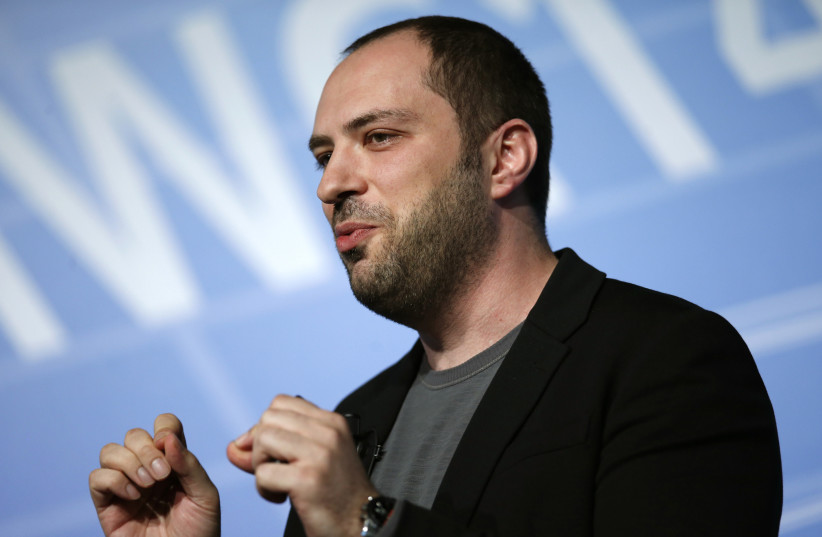
Halevy noted that Koum, who was born in Kyiv, Ukraine, to a Jewish family 50 years ago, is very modest and self-effacing and has only agreed to the medical center’s being renamed the Koum Shaare Zedek Medical Center.
It is the largest financial contribution ever made to a medical center in Israel, as well as Koum’s largest gift to any cause in the world, added Halevy, who previously served for more than three decades as the hospital’s director-general.
His successor, director-general Prof. Ofer Merin, who announced the gift last week, said this is one of the hospital’s “most important milestones.”
Both professors agreed that Koum is “the greatest philanthropist of the Jewish people in our generation. We feel incredibly grateful that one of the Jewish world’s great philanthropic visionaries has chosen to link his name with Shaare Zedek’s unique brand of medical excellence. We are sure that this investment in Israeli healthcare will continue to positively impact the Israeli and Jewish people for generations to come.”
The contribution surpasses the previous record donation to Israel’s healthcare sector, a $180 million gift made in 2025 by Anat and Shmuel Harlap to the Rabin Medical Center-Beilinson Campus in Petah Tikva.
“Ten years ago, the foundation looked for a hospital to give $15 million, and we were chosen,” recalled the SZMC president. “Since then, he gave more, and the contributions created a catheterization center, among others. As the foundation saw that we met deadlines, were trustworthy, and performed well, it now decided to add another $200 million.”
Meeting with Halevy – a highly accomplished fundraiser – and with the hospital’s special project manager, Akiva Holzer, Koum chose SZMC for the huge gift. He has not yet visited the campus in person, but he intends to come and see it with his own eyes.
Planning Jerusalem’s next major hospital expansion
Approvals for the new tower are advancing rapidly through Jerusalem’s municipal planning institutions. Upon completion, the tower will be among the largest and most advanced facilities of its kind in Israel. The tower will have 24 stories, encompass over 140,000 square meters, and include significant underground spaces, as well as a helipad on the building’s roof to enable direct helicopter access.
Very few members of the medical center’s staff knew about the donation until it was announced officially, and that was when the Hadassah Medical Organization learned about it as well.
The entire project will cost about $750 million. “We already have $300 million, but we expect to get more from the Treasury via the Health Ministry and other donors. Other new Israeli hospitals are being built completely with state money,” Halevy noted. SZMC is a voluntary hospital, not owned by the state or by a public health fund.
The tower’s design, created by Haifa’s Mochly-Eldar architectural firm, will provide less crowded conditions than in the existing hospital, such as fewer rooms with three beds. It will also double the emergency department and expand the internal medicine, orthopedic, and intensive care facilities. Four hundred in-patient beds will be added in six years, and the rest will come four years later.
“Every expert says that in 2035, there will be 1.5 million Jerusalemites, compared to the one million today. The capital needs more medical facilities, despite the use of AI, telemedicine, and hospital care at home,” said Halevy, who has been personally involved in the establishment of three more Israeli medical schools in the last few years.
As such, he doesn’t believe there will be a problem hiring enough doctors, which include immigrant physicians who will settle in Israel.
“And since academic colleges were permitted to teach nursing 15 years ago, there will be enough nurses. We also hope medical tourists will come to Jerusalem, but the expanded hospital is meant for Jerusalemites and all Israelis,” he added.
A record gift to Jerusalem medicine
Koum, who divides his time between California and Europe, has become a prominent philanthropist, supporting Jewish, educational, and pro-Israel causes around the world.
He is the co-founder and former CEO of WhatsApp, a mobile messaging app that was acquired by Facebook in 2014. According to Forbes magazine, he has an estimated net worth of $15.2 billion as of October 2023, making him one of the richest people in the world.
He immigrated to the US in 1992 and settled in Mountain View, California, with his mother and grandmother when he was 16. By the age of 18, Koum had become interested in computer programming, enrolling in San Jose State University and simultaneously working at Ernst & Young as a security tester, but he dropped out of his academic studies so he could work as an infrastructure engineer at Yahoo!. He applied to work at Facebook but was rejected.
In January 2009, Koum bought an iPhone and realized that the then seven-month-old App Store was about to give rise to a whole new industry of apps. He visited his friend Alex Fishman, and they talked for hours about Koum’s idea for an app. Koum almost immediately chose the name WhatsApp because it sounded like “what’s up.” A week later, he incorporated WhatsApp Inc. in California.
The phone and computer app were unpopular at first, but when Apple added push notification ability to apps in June 2009, Koum changed WhatsApp to “ping” users when they received a message. Koum granted Brian Acton co-founder status after Acton succeeded in collecting $250,000 in seed funding.
Twelve years ago. Facebook head Mark Zuckerberg asked Koum to have dinner at his home, and formally proposed to Koum a deal to join the Facebook board. Ten days later, Facebook announced that it was acquiring WhatsApp for $19 billion.