



惯性聚合 高效追踪和阅读你感兴趣的博客、新闻、科技资讯
阅读原文 在惯性聚合中打开

推荐订阅源

L
LangChain Blog
B
Blog RSS Feed
阮一峰的网络日志
阮一峰的网络日志
Cyber Security Advisories - MS-ISAC
H
Help Net Security
MyScale Blog
MyScale Blog
WordPress大学
WordPress大学
Microsoft Azure Blog
GbyAI
GbyAI
小众软件
小众软件
大猫的无限游戏
大猫的无限游戏
Martin Fowler
Martin Fowler
Vercel News
Vercel News
S
SegmentFault 最新的问题
M
MIT News - Artificial intelligence
Microsoft Security Blog
G
Google Developers Blog
Last Week in AI
Last Week in AI
Hugging Face - Blog
Hugging Face - Blog
酷 壳 – CoolShell
酷 壳 – CoolShell
博客园 - 【当耐特】
Google DeepMind News
Engineering at Meta
Engineering at Meta
云风的 BLOG
云风的 BLOG

JPost.com - Archaeology | The Jerusalem Post

What was the Qumran sect's mysterious calender used for? | The Jerusalem Post Ancient structure near Stonehenge may have inspired its solstice alignment | The Jerusalem Post Ancient tablet found at Roman fort bears Greek curse against enemies | The Jerusalem Post Archaeologists unearth ancient Byzantine-era city in Egypt’s Dakhla Oasis | The Jerusalem Post Ancient mosaics, coins to go on display in new exhibit in northern Israel | The Jerusalem Post Archaeologists find inscriptions of pharaohs, ancient deities in Egyptian temple | The Jerusalem Post Italy buys famed Etruscan tomb, displays it in Rome museum | The Jerusalem Post New AI project aims to uncover origins of the Dead Sea Scrolls | The Jerusalem Post Site of Alexander the Great’s battle with Persians under historic protection | The Jerusalem Post Previously unknown Iron Age grave found ahead of construction in Germany | The Jerusalem Post Collector finds rare Hebrew-inscribed Moroccan mortar in Jerusalem's Old City | The Jerusalem Post Stone from Tel Eton may hold evidence of ancient religious reforms, study claims | The Jerusalem Post Complete text of carbonized Herculaneum scroll unlocked for first time | The Jerusalem Post Study: New identification technique pushes back timeline of human fire use | The Jerusalem Post Over 3,000 artifacts from Stone Age to WWII found in Netherlands valley | The Jerusalem Post American family repatriates four ancient artifacts to Egypt | The Jerusalem Post Remains of Queen Elisenda, 24 others unearthed in Barcelona for study | The Jerusalem Post Two ancient statues uncovered during Israel Railways excavations near Haifa | The Jerusalem Post Marble bust believed to depict Roman goddess of love found during excavations at Alicante beach Ancient Greco-Roman cemetery unearthed at archaeological site in Egypt's Nile Delta Ancient jars unearthed at biblical Shiloh days before annual wine festival WATCH: A Paleolithic time capsule: Rare prehistoric cave discovered near highway outside of Haifa Ancient water reservoirs discovered at Red Sea's Port of Aydhab site near Egypt-Sudan border Collection of ancient Egyptian, Greek, Roman-era artifacts discovered at Egypt’s Heracleopolis First near-complete ancient Egyptian funerary set discovered at Heliopolis necropolis site WATCH: Norway recovers Chinese porcelain, European-made goods from 18th-century shipwreck Neanderthals' ancient toolkit included hammers, blades made from rhino teeth, study finds Evidence of ancient Native American life uncovered near Cape Canaveral Space Force Station Rare, intact ancient Roman burial unearthed during excavations in eastern Croatia - report Plaster-making technique attributed to Romans used at Motza some 8,000 years earlier, study shows
Early humans in South Africa used dedicated quarries for ...
2026-04-14 · via JPost.com - Archaeology | The Jerusalem Post

Based on this, researchers suggest that early homo sapiens planned for the long-term acquisition of resources earlier than previously thought.

Follow us on Google
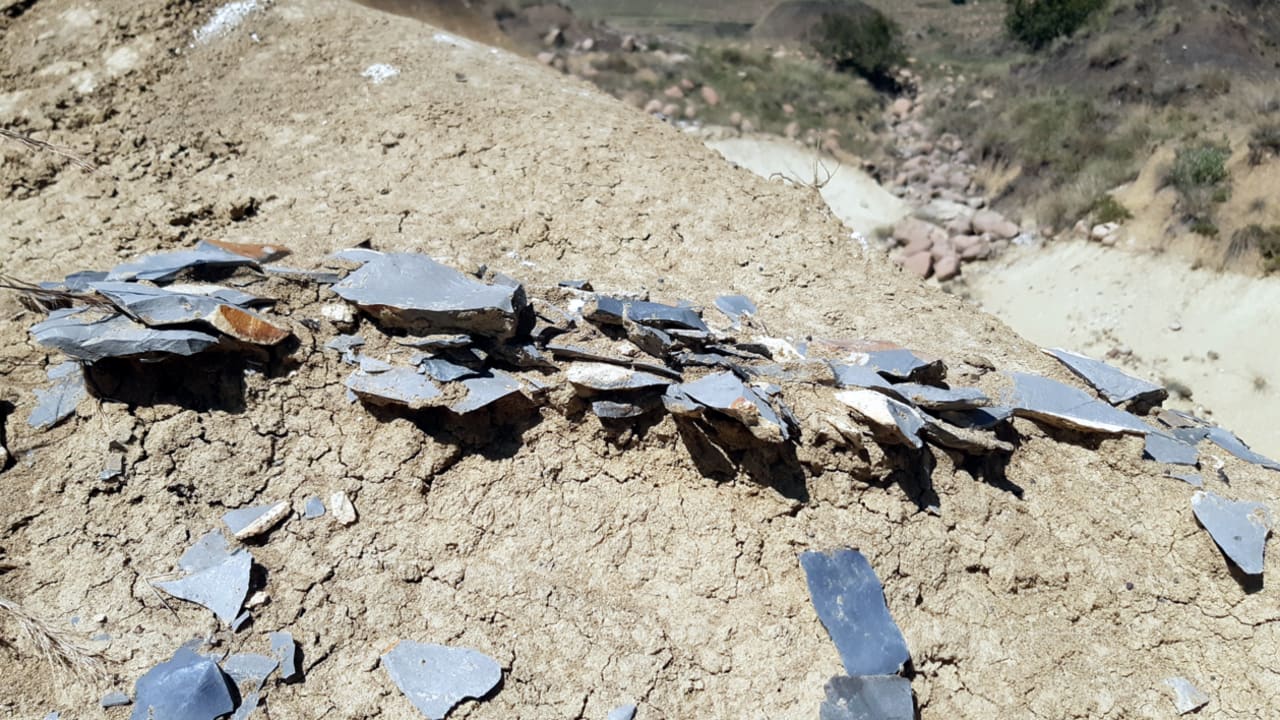
Dozens of large and small stone flakes and production waste found at the  Jojosi excavation site in eastern South Africa, April 11, 2026.
Dozens of large and small stone flakes and production waste found at the Jojosi excavation site in eastern South Africa, April 11, 2026.
(photo credit: University of Tübingen/Manuel Will)
ByMIRIAM SELA-EITAM

Paleolithic hunter-gatherers in South Africa would seek out specific areas to mine stone for their tools, according to a new study, challenging the idea that early humans collected their raw materials by accident.

The study, published on Tuesday in the journal Nature Communications, analyzed findings from the Jojosi excavation site in eastern South Africa, including numerous traces of hornfels, a metamorphic shale used in Stone Age tools

“On our very first visits, both on foot and using drones, we discovered about a dozen sites where perfectly-preserved, unweathered hornfels flakes were visible in eroded sediment, an absolute rarity for an open-air site,” Will said, adding that mainly “production waste” was found at the site.

According to the study, the absence of completed tools (end product) at the site, alongside the lack of other activity or settlement there, indicates that Jojosi was used only as a quarry.

“People worked cobbles on site here and knapped the material until they had achieved the desired shape from the rock,” Will said. “Probably to make tools from it later.”
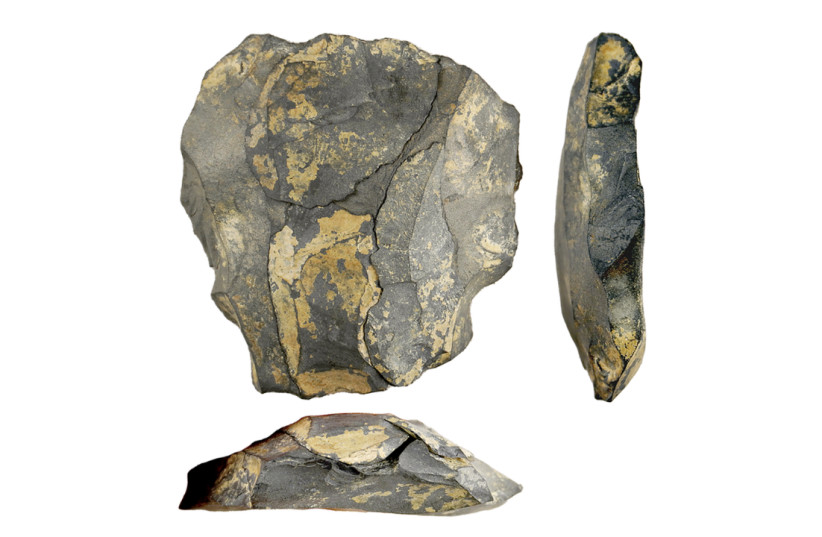
Reassembled stones found at the Jojosi excavation site in eastern South Africa, April 11, 2026.
Reassembled stones found at the Jojosi excavation site in eastern South Africa, April 11, 2026. (credit: University of Tübingen/Gunther H. D. Möller)

Over 350 pieces reconstructed 

Luminescence dating, which measures how long ago sediment grains were last exposed to sunlight or heat, showed that the site showed that it had been in use until approximately 110,000 BCE, the study explained.

Based on this, researchers suggest that early homo sapiens planned for the long-term acquisition of resources earlier than previously thought.

A total of 353 left-behind pieces found at the site were successfully reconstructed into their original forms by Gunther Möller, a PhD student at the University of Tübingen’s Institute of Prehistory, Early History and Medieval Archaeology.

“With these 3D puzzles, we were able to see precisely where and how material was chipped off and in what order,” Möller explained. “Several of these puzzles together then allow us to draw conclusions about the form of the actual end product, before it was taken to another place.”

Follow us on Google